Emerging Challenges and Data-driven Solutions for a Connected Future at FIFAfrica18

By Netblocks’ Writer |

At the 2018 Forum for Internet Freedom in Africa in Accra, Ghana, NetBlocks is demonstrating new tools and methodologies to defend human rights, empowering local communities and creating a space for open and progressive policies for internet access and telecommunications.

In a joint panel on data-driven advocacy on Friday, NetBlocks along with partners Access NowCIPESA, the GNI and ISF, soft-launched the Cost of Shutdown Tool, an initiative supported by the Internet Society which enables participants to calculate the economic cost of internet shutdowns, network disruptions and platform blocking in sub-Saharan Africa. Economic arguments have proven to be an effective means to bolster the case for human rights online with a view to development and prosperity, a trend which is being recognised and made accessible to internet freedom campaigners by way of the new initiative.

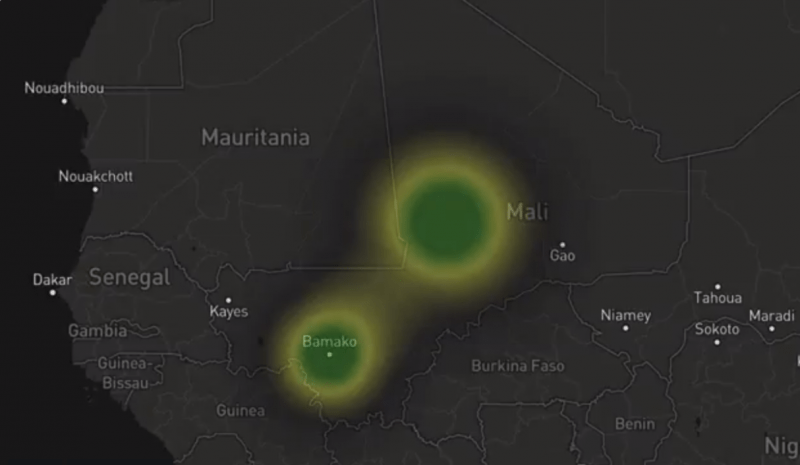
The panel explored how communities have been adopting new tools and developing new workflows as part of the KeepItOn initiative to support internet freedom across the continent, documenting recent incidents of network disruptions during elections in Mali and in Chad, as well as collecting bodies of technical evidence around disruptions in Ethiopia and Cameroon at critical moments for democracy and society.

Thursday saw the launch of the latest edition of The Internet Measurement Handbook, which provides civil society organisations and human rights defenders with practical technical and policy advice on managing internet disruptions, with a copy provided to each FIFAfrica participant.

NetBlocks director Alp Toker and advocacy manager Hannah Machlin demonstrated new internet freedom measurement techniques which present a more accurate, live view of emerging network incidents. Demonstrations and workshops provided a hands-on introduction to real-time internet freedom monitoring, web probes and internet-scale visualisation, which are now being adopted across the continent and globally as part of the internet observatory project.

Working with other civil society groups, the team explored issues around internet governance, internet protocols and their impact on human rights, free expression and trade, producing a series of new alliances and partnerships to strengthen digital rights and protect the integrity of elections regionally and worldwide.

Connecting data and human rights

Sessions over the course of three days have helped build a bridge between technical work to track restrictions on free expression online, connecting the personal experiences of victims of human rights violations with policy makers, governments and ICT industry stakeholders.

About FIFAfrica

Organised by the Collaboration for International ICT Policy in East and Southern Africa (CIPESA) in partnership with the Media Foundation West Africa (MFWA) the 2018 edition of the Forum on Internet Freedom in Africa  takes place on 26-28 September 2018 in Accra, Ghana.

The Forum is a landmark event that convenes various stakeholders from the internet governance and online rights arenas in Africa and beyond to deliberate on gaps, concerns and opportunities for advancing privacy, access to information, free expression, non-discrimination and the free flow of information online on the continent.

With strategic linkages to other internet freedom forums and support for the development of substantive inputs to inform the conversations on human rights online happening at national level, at the African Union and the African Commission on Human and People’s Rights (ACHPR), the African Internet Governance Forum (IGF), subregional IGFs, the global IGF, Stockholm Internet Forum (SIF), the Internet Freedom Festival (IFF), the Internet Freedom Forum (Nigeria) and RightsCon, among others, FIFAfrica provides a pan-African space where discussion from these other events can be consolidated at continent-wide level, drawing a large multistakeholder audience of actors.

Zambia Introduces Daily Tax on Internet Voice Calls

By Daniel Mwesigwa |
The government of Zambia is set to introduce a daily levy of 30 Ngwee (USD 0.03) on internet voice calls. In a press statement issued after a cabinet meeting on August 12, 2018, the government spokesperson said internet calls through platforms such as Viber, WhatsApp and Skype “threaten the telecommunications industry and jobs” in licenced telecom companies such as Zamtel, Airtel and MTN”.
Accordingly, the cabinet approved the issuance of a Statutory Instrument to “facilitate the  introduction of the tariff to be charged through mobile phone operators and internet providers.” In justifying the introduction of the levy, the government spokesperson cited research which showed that “80 percent of the citizens are using WhatsApp, skype, and Viber to make phone calls.”
The statement did not indicate when the statutory instrument would be introduced, or when the levy is anticipated to take effect. The new tax, according to reports quoting the communications minister, was expected to fetch USD 22 million annually.
The proposed levy adds to Zambia’s mixed record on ICT access and freedom of expression online. The Zambia Information & Communications Technology Authority (ZICTA) reports a mobile phone penetration rate of 81.9% and mobile internet penetration rate of 47.1%. However, mobile and internet proliferation is threatened by high costs of access, a digital divide between men and women and between rural and urban areas. Quality of service also remains poor as evidenced by the recent fines slapped by ZICTA on the three leading telecommunications service providers.  
The Media Institute of Southern Africa (MISA) Zambia Chapter and a collective of bloggers have expressed deep concern about the tariffs on internet calls. They asked government to shelve the plans to introduce the tariff and to instead undertake efforts to promote affordable internet access. They argued that the “underlying objective” of the tariff is to “stifle free expression of millions of Zambians who increasingly depend on online tools to communicate.” They added that it is a “threat to entrepreneurship and innovation as many youths and citizens are using internet platforms to advance their socio-economic activities.”
Meanwhile, the Zambian cabinet has also approved the introduction of the Cyber Security and Cyber Crimes Bill that will repeal and amend provisions of the Electronic Communications and Transactions Act No. 21 of 2009. The bill will purportedly “promote an increased cybersecurity posture, facilitate intelligence gathering, investigation, prosecution and judicial processes in respect of preventing and addressing cybercrimes, cyber terrorism and cyber warfare.”
In addition to facilitating the establishment of Zambia National Cyber Security Agency (ZNCSA), which is expected to serve as the “coordination centre for all matters related to cyber security at national and international levels”, the proposed law will also criminalise “computer-based offences and network-related crime in line with the Penal Code”. Furthermore, it will “provide for investigation and collection of evidence for computer and network related crime and also provide for the admission of electronic evidence for such offences” as well as “adequately deal with various crimes committed using social media platforms.”
Zambia’s move  becomes the latest in a string of steps taken by African governments to undermine internet access and affordability, and weaken the potential of the internet and related technologies to promote free expression, access to information and civic participation. In March 2018, Uganda’s communications regulator issued a directive requiring online content providers to register and pay an annual fee of USD 20. Shortly thereafter, in July 2018, social media taxes were introduced with users required to pay a daily levy of Uganda Shillings (UGX) 200 (USD 0.05) before regaining access to social media platforms which were blocked.
In neighbouring Tanzania, online content service providers and producers have to pay over USD 900 to register with the state for permission to maintain their platforms, according to new 2018 regulations. Meanwhile, in the Democratic Republic of Congo, in mid June, the ministry of communications issued a decree giving online media outlets a month to comply with new regulations or face harsh penalties.

Why Uganda’s Government Should Take a Different Path to Social Media and Mobile Money Taxation

Statement |
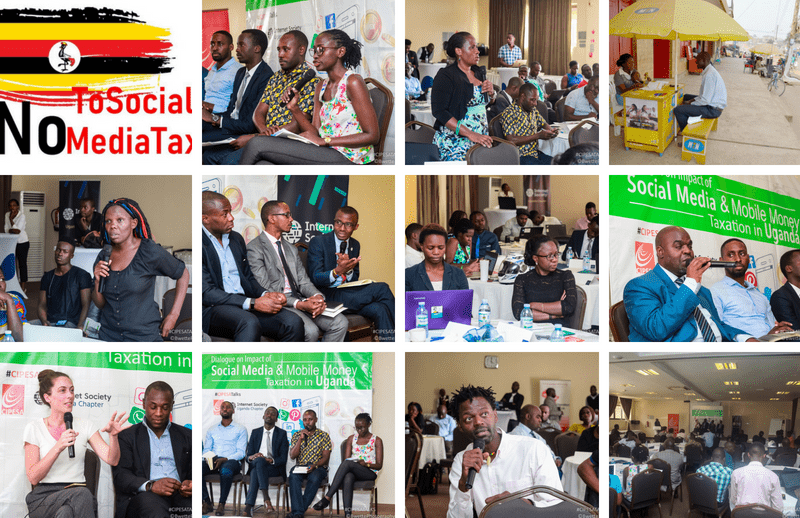
There has been widespread concern over newly introduced levies on social media access and mobile money transactions in Uganda, which are widely considered a threat to internet access and affordability, as well as to freedom of expression and access to information. The effects of the taxes that took effect on July 1, 2018, were the focus of discussions at a recent stakeholder dialogue  organised by the Collaboration on International ICT Policy for East and Southern Africa (CIPESA) and the Internet Society Uganda Chapter.
At the dialogue, entrepreneurs, journalists, lawyers, activists, technologists, and academics shared their perspectives and experiences, resulting in a set of recommendations to the government on alternatives to the current modes of taxation.
The government says the taxes are needed so as  to expand the country’s tax base. In the 2018/2019 national budget speech, the finance ministry estimates that up to UGX 486 billion (USD 131 million) could be collected annually by 2022 from taxes on social media Over-The-Top (OTT) services.
However,   presenting early results on an ongoing study on the impact of the taxes, Dr. Christopher Stork of Research ICT Solutions stated that the country’s rural-based users of social media and mobile money will be hardest hit by the taxes, increasing the percentage of the unconnected and resulting in decreased revenue for telecom/ internet operators. He said this would ultimately lead to reduced growth in the gross domestic product (GDP) and hamper job creation.

Image above: Comparison of taxes against average income across regions in Uganda | Source:  Research ICT Solutions

Image above: Prepaid products user tax burdens | Source:  Research ICT Solutions
This study’s preliminary results affirm earlier contentions, such as by the After Access researchers, that those who marginally afforded internet services before the taxes were introduced are likely to now find internet use totally unaffordable, thereby increasing the percentage of the unconnected.
Meanwhile, Dr. Abdul Busuulwa, Executive Director at Community Based Rehabilitation (CBR) Africa Network, said whereas social media and mobile money platforms had eased the lives of persons with disabilities (PWDs),However, the increased cost of accessing these platforms due to the new taxes had reversed these  gains. He said platforms like WhatsApp were helping in disseminating critical information among people with hearing difficulties before the added cost of using social media rendered them unaffordable to members of these groups, who he said already faced challenges in finding employment and often relied on financial support from others.
The impact of the taxes on the use of online platforms for civic engagement on local governance was described by Samuel Mumbere, ICT Officer at the Kasese District Local Government in Western Uganda. According to Mumbere, whereas introduction of the taxes had prompted a rise in the use of Virtual Private Networks (VPNs) by community members who needed to maintain avenues of social accountability and access to information in the district, many were concerned about the additional costs related to data usage by some VPN products.
On the access to justice front, the online legal knowledge and support platform, Barefoot Law, was cited as a social media-based service that had enabled citizens to access legal support and services which the poor are often excluded from due to financial constraints. Such platforms are also threatened with reduced use by citizens due to the taxes.
Those in e-commerce cited barriers to accessing their clients, and reduced competitiveness of their products and services, due to the taxes. The Managing Director of Jumia Uganda noted that the company’s work with some 3,000 different sellers, 1,000 hotels, and over 200 restaurants had experienced strained operations as their operations relied greatly on social media.
Although the mobile money transactions tax is under review, with a new bill tabled before parliament proposing to reduce the tax from 1% to 0.5%, this does little to address the impact the tax will still have on financial inclusion. Feminist and writer, Edna Ninsiima, highlighted the role that mobile money has played in empowering unbanked women. She said the new transaction fees are affecting the financial independence of women – including building a savings culture – where it had been growing steadily.
Meanwhile, Kojo Boakye, Public Policy Manager, Access and Connectivity, Facebook, cited the counter impact of the taxation on digital dividends including efforts to extend connectivity and broadband penetration. He questioned the likelihood of the tax raising the projected revenue, adding that  the tax could also have an impact on the investment decisions of investors in infrastructure. In 2017, Facebook, in partnership with Airtel Uganda and Bandwidth and Cloud Services (BCS) Uganda announced  a USD 100 million project to lay nearly 800 km of fibre optic cable in north-western Uganda. Like Facebook, Google has also worked to extend connectivity in Uganda with infrastructure investments including a wifi project in the capital, Kampala.
Overall, participants at the dialogue pointed out that the taxes are not only discriminatory in nature but also disenfranchise already marginalised and vulnerable communities including PWDs, women, youth and rural communities. They called on the government to reassess its position on the taxes without inhibiting growth in ICT usage and innovation. The dialogue was also introspective with many noting that more proactive and collaborative efforts should be pursued by non-state actors, especially research and participating in consultative policy processes, to enhance informed decision-making by the government.


The Reforms Ethiopia Needs to Advance Internet Freedom

Policy Brief |
Since April 2018, the new Ethiopian government has been undertaking unprecedented political and economic reforms. This follows countrywide protests that forced the former Prime Minister Hailemariam Dessalegn to resign in February 2018, leading to the appointment of a young and charismatic new premier, Abiye Ahmed two months later. Since then, the government has freed thousands of prisoners; announced measures to liberalise the telecom, aviation, and transportation sectors; and dropped charges against many opposition leaders, bloggers, and activists. Further, the new administration has lifted the state of emergency that had been reinstated in February 2018, reconnected mobile and broadband internet services that were cut off since 2016, and unblocked 246 websites, blogs, and news sites that have been inaccessible for over a decade.
These changes in Ethiopia did not come at a whim. The protests that started in November 2015 in the Oromia region spread to other parts of the country. In response to these protests, the previous government continuously blocked social media sites and implemented national and regional internet blackouts, often claiming it aimed to safeguard national security or to stem cheating during national exams. Consequently, the Oromia region lost internet connectivity for two weeks in March 2018, three weeks before the new prime minister was sworn in. Moreover, as access to the internet deteriorated in the country, the government criminalised freedom of expression online and offline. The arbitrary arrests, detention, and torture of members of the Zone Nine bloggers collective showed how far the government was willing to go to suppress dissenting voices.
The new Prime Minister and his cabinet have promised to open the democratic space in the country and expand freedom of expression online and offline. However, these reforms should go beyond the unblocking of a few hundred websites; they should bring in real changes that will make it impossible to regress to old habits. Therefore, reforms to be implemented must expand internet penetration from the current 15%, to the larger offline majority. Laws that prosecute freedom of expression online and offline like the Anti-Terrorism Proclamation and Computer Crime Proclamation must undergo substantial revisions to meet international standards. Further, the changes within the law enforcement and intelligence agencies should go beyond replacing old officials with new ones, but must tame the undue power given to these bodies to conduct unwarranted surveillance and censorship of netizens. Lastly, the new government should desist from internet shutdowns and censorship.
See this brief titled The Reforms Ethiopia Needs to Advance Internet Freedom which gives a detailed description of prevailing challenges to internet freedom in Ethiopia and proposed reforms the Ethiopian government needs to undertake to improve internet freedom in the country.

Register for the Forum on Internet Freedom in Africa 2018 (FIFAfrica18)

Register Now |
We are excited to open registration for the upcoming Forum on Internet Freedom in Africa 2018 (FIFAfrica18) set to take place on 26-28 September, 2018 in Accra, Ghana. The Forum is a landmark event that convenes various stakeholders from the internet governance and online rights arenas in Africa and beyond to deliberate on gaps, concerns and opportunities for advancing privacy, access to information, free expression, non-discrimination and the free flow of information online on the continent.
This year, the Collaboration on International ICT Policy in East and Southern Africa (CIPESA) hosts FIFAfrica18 in partnership with the Media Foundation West Africa (MFWA). It follows the the success of  last years Forum co-hosted with the Association for Progressive Communications in Johannesburg, South Africa.
Indeed, spreading the physical footprint of FIFAfrica across different regions of the continent ensures that the Forum lives up to its goal of unpacking internet freedom challenges and opportunities in sub-regions of Africa and developing responses that are collaborative, and informed by insights from the experience of other sub-regions of the continent. Hosting the Forum in in west Africa for the first time will not only open up the space to more west African civil society, private sector and public sector actors to contribute their experiences to the regional discussion, but will  also give life to the Forum’s commitment of ensuring broader regional representation and deepening conversations across the continent.
Register here – You can also make suggestions for session topics, panels, skills clinics, presentations or any additional activities that you’d like to see happen prior or alongside the Forum. Our vision is to have a Forum with representation from as many countries in Africa as possible.  There is limited funding to support participation at FIFAfrica18. Please note that preference will be given to applicants who can partially support their attendance.


Share your thoughts on your vision for Internet Freedom in Africa using #InternetFreedomAfrica  This year, the event hashtag is #FIFAfrica18

Independence Monument | Accra, Ghana