By reviewing and comparing literature on the role of ICTs in statebuilding and peacebuilding in Africa, with a particular focus on neighboring Somalia, Kenya, and Ethiopia, this paper examines whether the claims of the transformative power of ICTs are backed by evidence and whether local knowledge – e.g., traditional mechanisms for conflict resolution – is taken into consideration by ICT-based initiatives. Several key findings emerged, including: 1) empirical evidence on the successful use of ICTs to promote peacebuilding and statebuilding is thin; 2) few differences exist between scholarship emanating from the Global North and from Africa; and 3) the literature exhibits a simplistic assumption that ICTs will drive democratic development without sufficient consideration of how ICTs are actually used by the public.
Download the full paper here.
19Jan
Citizens’ Use of ICTs in Social Accountability in Uganda’s Kasese District
By Ashnah Kalemera
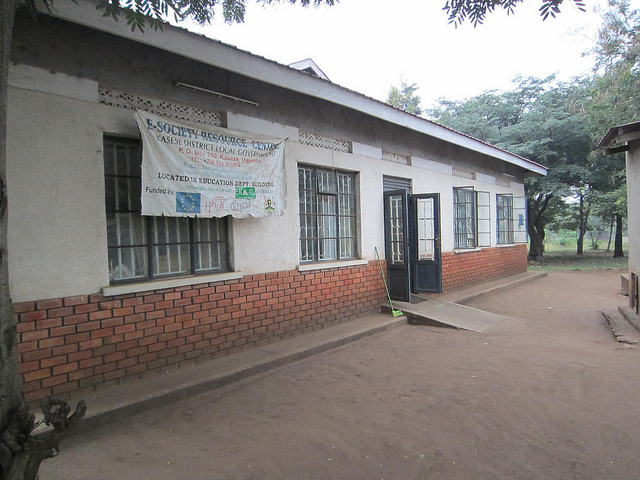
The eSociety Resource Centre Kasese is a community centre hosted by the Kasese district local government in Western Uganda. It acts as a one stop point for local government officials and community members to access various Information Communication and Technology (ICT) tools and services. The centre provides ICT training programmes, hosts an information library, runs an online discussion group, maintains a news blog and social media accounts (Facebook, Twitter, Youtube). These are all aimed at enhancing citizens’ competence in monitoring government services, promoting accountability, civic participation and good governance in Kasese District.
Since 2011, the Collaboration on International ICT Policy for East and Southern Africa (CIPESA) has provided support to the centre, including computer equipment, internet subscription, centre maintenance and support to an ICT training officer. The support is in the context of CIPESA’s project which seeks to promote citizens’ use of ICTs for improved governance partly through grassroots public ICT access centres. The other partner centres in the project are the Northern Uganda Media Club (NUMEC) and the Busoga Rural Open Source and Development Initiative (BROSDI).
The eSociety centre hosts an average of 250 users per month, mainly local citizens, journalists and local government officials. CIPESA has offered media and district officials training in citizen journalism, geocoding methodology and data collection, information access and dissemination.
During the course of the CIPESA-eSociety partnership in 2014, we conducted a poll survey amongst a random selection of the centre users to assess their capacity and proficiency in demanding for better services, and participation in governance processes.
The results of the poll survey
On the frequency of internet access through mobile (phone and tablet), and desktop/laptop computer at home, work, internet café or the eSociety Centre 34% indicated daily use of the internet and 33% weekly.
When queried on the frequency of using ICTs to engage with leaders, 28% of respondents said they contacted their local leaders at least once a week, while 22% contacted them daily. Another 22% admitted to never contacting their local leaders.
Discussing a governance/service delivery issue was the reason most people (77%) contacted their local leaders. Second was following up on election manifestos (16%). Only 11% contacted their leaders to request for district budget information.
Email was the most commonly used means of contacting leaders at 72%. None of the respondents used text messages to contact their leaders despite widespread mobile phone ownership. Also, with an increasing number of people, including leaders, using social media, the platform was only used by 11% of respondents to contact leaders.
Table 1: ICT tools used to contact local leaders
| Tool | Yes | No |
| Sending an email | 72% | 28% |
| Using social media (Facebook, Twitter) | 11% | 89% |
| Telephone call | 50% | 50% |
| Text message | 0 | 100% |
| Other | Physically/ Word of mouth | |
For 89% of respondents, drugs shortages in local hospitals/health centres was the most pressing community need. This was followed by corruption and poor road infrastructure.
Table 2: Pressing service delivery issues in Kasese district
| Issue | Percentage of respondents |
| Drugs shortages in hospitals/health centres | 89% |
| Corrupt officials | 83% |
| Poor state of roads | 83% |
| Lack of clean water | 78% |
| Poor state of hospitals (facilities and standards) | 72% |
| Low staff levels (doctors and teachers) | 72% |
| Poor state of schools (facilities) | 67% |
Challenges to using ICTs
The most widely cited challenge to the use of ICT tools in accessing service delivery information in the local community was the high cost of accessing and using tools – cited by 78% of survey participants. Another common challenge was the lack of immediate feedback from the responsible officials (17%). Other challenges cited by respondents included unreliable electricity supply, poor network coverage (voice and data), and the long distances that citizens have to travel to access ICT centres/services.
The poll results indicate a good level of citizen engagement and awareness of service delivery issues in Kasese District. They further show that free ICT services provision for the centre’s users has enhanced service delivery monitoring and citizen participation in governance through ICTs in Kasese district. However, there remains need to continue identifying emerging ICT participative practices and needs at the centre, and building citizens’ capacity to effectively engage with their leaders for improved service delivery and governance. There is also the need for more leaders to more proactively engage with the ICT tools that citizens are increasingly utilising to reach them.
CIPESA’s iParticipate Uganda project is part of the ICT4Democracy in East Africa Network which is supported by the Swedish Program for ICT in Developing Regions (Spider) and the Swedish International Development Cooperation Agency (Sida).
Featured image from: http://rwecovoice.blogspot.com/2010_11_21_archive.html
10Dec
Building Africa’s Capacity on Internet Governance
By Juliet N. Nanfuka
The growth of the internet has seen numerous efforts to ensure its equitable and sustainable use. A key outcome is the concept of Internet Governance (IG) based on the principle that no single entity owns or controls the internet but rather a range of players who reflect the diversity of users globally participates in its governance.
Over the years, IG has gained prominence through platforms such as the Internet Governance Forums which are hosted annually at national, regional and global level.
In 2013, the New Partnership for Africa’s Development (NEPAD) through its e-Africa Programme and the Association for Progressive Communication (APC) established the African School on Internet Governance. The school seeks to address IG issues from an African perspective while at the same time equipping more players from the continent to contribute and participate more meaningfully in the multi-stakeholder model of internet governance.
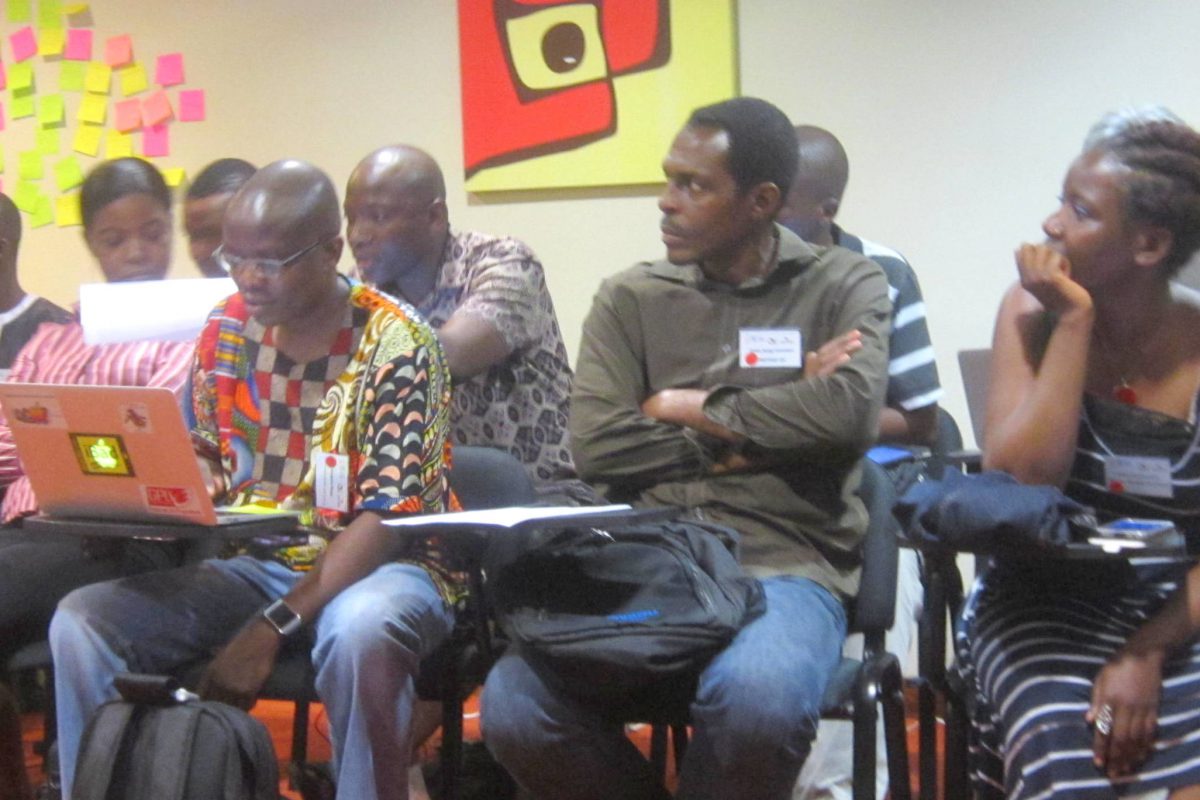
This year, CIPESA alongside participants and faculty members from over 20 countries collectively shared unique insights, experiences and understanding of internet governance at the school which took place between 21 and 25 November in Mauritius. The participants, from backgrounds including government, academia, civil society and the private sector, explored the complexities of internet governance with interactive talks and presentations. They mapped out the course that internet governance has taken to-date, the various institutions and policy processes, emerging human rights issues, and what different African countries are doing with regards to IG.
“As it often happens, Africans have not been at the forefront of the internet and its related issues, but gradually we are realising the potentials of the internet and the need to make our voices heard in its governance. With platforms such as AfriSIG building capacities of Africans from different stakeholder groups and the worth of information available on the internet, I see a brighter future for Africa in IG issues both at the continental and global levels.” Dora Mawutor of the Media Foundation for West Africa – Participant at the African School on Internet Governance
Central to the school was that participants garnered an understanding of the roles of the different internet stakeholders, the varied interests they have and how all this impacts upon outcomes at an IG multi-stakeholder meeting when trying to reach consensus on an issue.
While initiatives like the Africa IG school demonstrate movements to better equip more people from the African continent to drive IG locally and at international IG fora, in many countries local factors such as poor access, limited local content, low literacy and high costs remain areas that require more focus and locally driven solutions.
However, facets of IG in Africa especially where it applies to security, privacy, surveillance and intermediary liability still require further scrutiny. As seen in the State of Internet Freedoms in East Africa 2014 report, these issues are increasingly impacting upon human rights, freedom of the press, critical opposition and equality, among others, on the continent.
It is also essential that building Africa’s capacity in IG is tailored to also accommodate the unique needs and requirements of its internet users such as the availability of non-Latin script African languages online to contribute towards local content and cultural preservation.
It is, however, worth noting that despite existing challenges, many African governments and civil society actors are making progress in strengthening internet related frameworks that support the fundamentals of a free, open and secure internet. Helping shape the continent’s approach to protecting internet rights are initiatives such as the African Declaration on Internet Rights and Freedoms.
Similarly, the NetRightsNG initiative of Paradigm Initiative Nigeria is collaborating other players to champion a Digital Rights and Freedom Bill in Nigeria. In Uganda, the Ministry of Information and Communications Technology (ICT) in partnership with the Ministry of Justice and Constitutional Affairs (MoJCA) and National Information Technology Authority, Uganda (NITA-U) have developed a Draft Data Protection and Privacy Bill (2014) which is currently going through a process of review and commentary by citizens.
As more African countries map the way forward for the information age, there remains the need to ensure that valuable contributions are made to global Internet Governance as it is this very participation that will define the further adoption of internet governance principles in Africa.
06Dec
Internet Governance in Uganda
By Juliet Nanfuka |
The Uganda Internet Governance Forum (UIGF) has since 2006 been a platform for deliberation on internet governance concerns in the country. Debates at the annual forum have progressed from prioritising access and infrastructure to global trends in the internet governance agenda such as the need for increased advocacy of online freedoms, protection of vulnerable users – including children and women, intermediary liability, and net neutrality.
In 2006, when the UIGF was initiated, the government was embarking on the roll-out of the National Data Transmission Backbone Infrastructure and e-Government Infrastructure Project (NBI/EGI) to connect all major towns, Government Ministries, Departments and Agencies (MDAs) to the national optic cable grid. At the time, the Uganda Communications Commission reported just 175,568 active mobile internet users in the country.
As more Ugandan users came online, vulnerability to cyber crime and fraud were recognised,, which led to the government to enact the cyber security laws (Electronic Transactions Act, 2011, e-signatures Act 2011 and Computer Misuse Act, 2011) and the establishment of the Uganda Computer Emergency Response Team (CERT) in 2012.
By December 2014, the number of internet users in the country had grown to 8.5 million. Meanwhile, the NBI/EGI connected 27 ministries and departments, and 22 district headquarters through 1,400Kms of fibre optic cable. The infrastructure supports the integrated financial management system, video conferencing and secure messaging and collaboration platforms, among others.
To further address emerging internet governance issues, the government last December published the draft Data Protection and Privacy Bill 2014 and solicited stakeholder comments through the Ministry of Justice and Constitutional Affairs and the National Information Technology Authority, Uganda (NITA-U).
Also in 2014, the International Telecommunications Union (ITU)’s global cyber security index listed Uganda as second in Africa after Mauritius in adopting and driving polices that support cyber security.
The 8th national Internet Governance Forum hosted in Kampala in December 2014 drew participants from civil society, academia, private sector and government. The event also served as the launch of the Global Information Society (GIS) Watch 2014 Uganda report.
Issues discussed were internet affordability and increased access, the management of the .ug country code Top Level Domain (ccTLD), cyber security management, the transition stewardship of the Internet Assigned Numbers Authority (IANA) and the status of Internet Protocol version 4 (IPv4) transition to IPv6 in Uganda.
During the panel on “Cyber security versus data protection and privacy”, Jimmy Haguma, Acting Commissioner/Electronic Counter Measures of the Uganda Police Force (UPF), said the police have to protect the interests of national security as well as of users online from fraudulent activity.
According to the Uganda Police Annual Crime and Road Safety Report of 2013, a total of 45 cyber crime cases were reported and investigated, in which about 18.1 billion Uganda Shillings (UGX) equivalent to USD 579,000 – was lost through hacking victims’ mails, among other means. Between August and November 2014, mobile money fraud resulted in losses of UGX 207 million (USD 80,000) while, ATM fraud led to losses totaling over UGX 1.2 billion (USD 460,000)’.
Participants responded that while security is a legitimate concern, it should not be used to curtail human rights. They highlighted contradictory clauses in the cyber laws and other legislation that infringe upon privacy, as well as citizens right to freedom of expression online, particularly by groups such as the media and human rights activists.
Specific emphasis was placed on the issue of violence against women online and a call was made to adopt and implement gender-friendly ICT laws. Participants noted that women have fallen victim to misuse of the very laws that are meant to protect them, as was witnessed in the case of local artist Desire Luzinda whose nude images were shared online and as a result was faced with potential charges under the Anti-Pornography Act of 2014.
Intermediary liability and net neutrality were also fronted as significant issues to address given their impact on local content, free speech, and online economic opportunities.
Meanwhile, participants were urged by panelists to contribute to local and global internet governance discussions, so as to maintain multi-stakeholderism on the matter and to promote the African stake in the debates.
As the UIGF continues to mature into a platform for deliberating on internet development in the country, areas that need more attention include: development of relevant local online content, child online protection, increased stakeholder engagement in the development of progressive laws and policies as well as their speedy enactment.
UIGF 2014 was hosted by Internet Society (ISOC) Uganda in partnership with the Collaboration on International ICT Policy for East and Southern Africa (CIPESA) under the theme ‘Strengthening Uganda’s Critical Internet Resources’. As part of its work in research, advocacy, and awareness raising on how internet governance impacts on development and governance, CIPESA is currently implementing the OpenNet Africa project, which monitors and promotes internet freedoms primarily in East Africa.
28Nov
Documenting the Impact of Aid Cuts on the Peace Recovery and Development Plan (PRDP)
By Lillian Nalwoga
Between March and July 2014, the Collaboration on International ICT Policy in East and Southern Africa (CIPESA) in partnership with the Northern Uganda Media Centre (NUMEC) launched a project to document service delivery failures as a result of donor aid cuts to the Peace Recovery and Development Plan (PRDP) in Northern Uganda.

Focusing on the districts of Gulu, Nwoya and Amuru, service delivery failures under the education, health and infrastructure sectors were documented through Information and Communication Technology (ICT). Shoddy works, lack of coordination among project implementers, incomplete projects and inadequate funds are some of the challenges affecting the success of the PRDP.
Launched in 2007 in consultation with development partners, the PRDP was set up to consolidate the state authority, rebuild and empower communities, revitalise the economy and promote peace building and reconciliation in post-conflict Northern Uganda. The plan covers 55 districts and 9 municipalities. Although implementation begun in 2009, the PRDP has been dogged by corruption scandals and inadequate information on progress. The second phase of the PRDP which began in July 2012 and is due to end in June 2015, has faced similar challenges culminating in the suspension of support from key donors as a result of misappropriation of funds by officials under the Office of the Prime Minister.
In the education sector, the CIPESA-NUMEC documentation found that one school – Awoonyim Primary School in Patiko Sub County Gulu district – is reported to have received funding for the construction of a teacher’s housing unit, two classroom blocks and supply of sixty desks in the PRDP of 2009/2010. However, during field visits it emerged that the classrooms were poorly constructed while the housing unit construction was abandoned midway by the contractor without any explanation to the school administration. In another case, a vehicle meant to assist the District Education Officer in monitoring school activities was never procured despite a budget allocation of 80 million Uganda Shillings (UGX) under the 2010/2011 financial year under the PRDP.
Under the health sector, Koro Abili Health Centre II and Purongo Health Centre II in Gulu and Nwoya districts were reported to have also been affected. Although an outpatient unit had successfully been built at the Koro Abili Health Centre II, it was under staffed and the center porter was acting as the administrator on behalf of the Assistant Nursing Officer. Meanwhile, the construction of a maternity ward worth UGX 80 million at Purongo Health Centre II had been abandoned midway by the contractor despite having been fully paid.

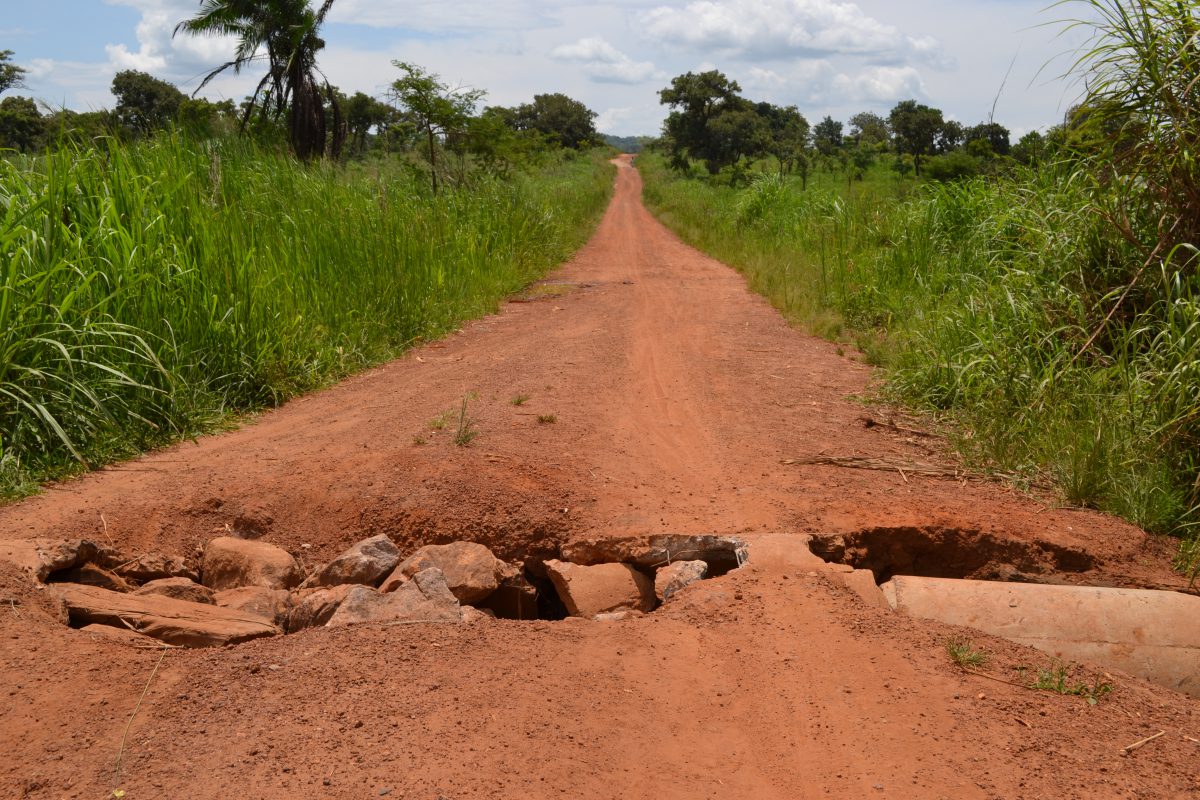
On the transport infrastructure front, the construction of the 70 kilometre (km) road linking Guru-Guru to Pabbo, a main entry in Lamogi Sub County in Amuru district, had been abandoned by the contractor. The road is impassible during the rainy season thus cutting off the communities from each other. The contractor had also not paid off locals who were employed during the construction. Atkinson Ojara, the Sub-County Chairman of Lamogi, attributed the road construction challenges to poor communication between sub-county officials.
The overall objective of the CIPESA and NUMEC partnership is to make Public Sector Information (PSI) more accessible and reusable by stakeholders such as citizens, civil society and the media in Northern Uganda. This involves repackaging information availing it online, in print and over radio,generating evidence on the impact of information access and use on transparency and accountability.
Other activities have included building ICT skills and knowledge for citizens and journalists to access and gainfully use open data and PSI to contribute to better service delivery; increasing interactions between citizens and leaders; and promoting greater access to PSI for citizens in Northern Uganda.
Watch the 15 minute documentary capturing the service delivery challenges under PRDP here. A picture story is also available here.
This work is supported by the Swedish Programme on ICTs in Developing Countries (SPIDER) and is part of the ICT4Democracy in East Africa project.