By Juliet Nanfuka |
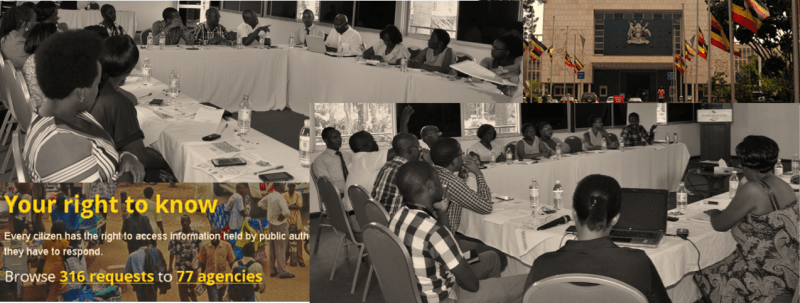
On May 2, a total of 27 Ugandan journalists were trained in digital security procedures. The training was held in commemoration of World Press Freedom Day (May 3), which this year was celebrated under the theme “Let Journalism Thrive! Towards Better Reporting, Gender Equality, and Media Safety in the Digital Age”.
The training, which was organised by the Collaboration on International ICT Policy in East and Southern Africa (CIPESA) in partnership with Uganda Journalists Union (UJU) and the East and Horn of Africa Human Rights Defenders Project (EHARDP), explored the status of journalism in Uganda as well as the legal and regulatory frameworks affecting freedom of expression in the country. Participants at the training workshop represented print, online and broadcast media houses from across Uganda.
During the training, it emerged that some journalists are not cautious about their online security, similar to those in a previous training hosted by CIPESA. The reuse of one password across different websites and platforms, and overexposure of personal information online were common among the training participants. Email encryption, the use of Virtual private networks (VPNs) and Multi Factor Authentication for passwords, were taught as skills that can aid journalists when investigating sensitive stories that may be prone to surveillance.
Norman Katende, an international award winning journalist, shared his experiences of being threatened while reporting on controversial stories and encouraged journalists to practice caution both online and offline. He questioned how journalism can thrive in the face of police attacks on the media, noting that journalists should not compromise on their security when covering sensitive stories just to earn a living.
According to the Committee to Protect Journalists (CPJ), an international organisation that defends the rights of journalists, over the past two decades, 1125 journalists across the world lost their lives while reporting or investigating stories. The medium increasingly used by journalists to source and disseminate information is the internet.
Last month, Somalia journalist Daud Ali Omar and his wife were murdered. The same month, Kenyan journalist Johan Kituyi, proprietor of the newspaper Mirror Weekly, which has covered controversial national issues, was also murdered.
Increasingly, online publishers and bloggers are also coming under attack in Africa. For instance, a year after their arrest, the Ethiopian Zone9 bloggers remain behind bars and in Burundi, civil unrest related to upcoming elections has led to government restrictions of information flow through various media houses – and radio stations.
Such attacks necessitate digital safety skills for journalists. “When you look at the level of knowledge on ICT that a journalist has – it’s really basic. We have several unsecured email accounts and we visit any website without [considering] security,” noted a journalist at the training in Kampala.
Journalists noted that they do not always exercise their rights and do not request security from their media houses when pursuing sensitive stories. They also indicated a lack of awareness of the laws in place that can aid them in developing stories, such as the Access to Information Act (2005), which compels Ministries, Departments and Agencies to release information.
Following a CIPESA presentation on the legal and regulatory frameworks affecting internet freedom, especially freedom of expression online in Uganda, a Soroti-based journalist said the training had made him re-evaluate how he used his mobile phone and the internet, saying that he had been using these tools “without considering their implications.”
Further to the commemoration of World Press Freedom day, CIPESA participated in the “Digital safety for journalists” plenary session of the global event hosted by UNESCO. CIPESA and its partners in various countries were also involved in a series of Twitter engagements which explored press freedom, including in the digital world, particularly for African journalists.
The training was conducted in the context of CIPESA’s OpenNet Africa initiative that promotes internet freedom in Africa and is supported by the Open Technology Fund, Hivos and the Association for Progressive Communications (APC).
Let Journalism Thrive! Towards Better Reporting, Gender Equality, and Media Safety in the Digital Age
UNESCO |
Every year, 3 May is a date which celebrates the fundamental principles of press freedom; to evaluate press freedom around the world, to defend the media from attacks on their independence and to pay tribute to journalists who have lost their lives in the exercise of their profession.
Over 100 national celebrations take place each year to commemorate this Day. UNESCO leads the worldwide celebration by identifying the global thematic and organizing the main event in different parts of world every year.
The international day was proclaimed by the UN General Assembly in 1993 following a Recommendation adopted at the 26th Session of UNESCO’s General Conference in 1991. This in turn was a response to a call by African journalists who in 1991 produced the landmark Windhoek Declaration on media pluralism and independence.
To mark the 2015 World Press Freedom day, UNESCO will lead the global celebration with a main event under the theme “Let Journalism Thrive! Towards Better Reporting, Gender Equality, and Media Safety in the Digital Age”. The event is co-organized by UNESCO and the Government of Latvia, and will take place from 2-4 May 2015 in Riga, Latvia.
The Collaboration on International ICT Policy in East and Southern Africa (CIPESA) will be participating in the event represented by Wairagala Wakabi as one of the speakers in the Plenary 3 Session on “Digital Safety for Journalists” on 4 May 2015. The discussions during this session will be enriched by CIPESA’s experience and expertise, particularly under its OpenNet Africa initiative.
Meanwhile, on May 2, CIPESA will convene journalists in Kampala, Uganda for digital safety training as part of its ongoing online security capacity building efforts for human rights defenders, minority groups, activists and the media in East Africa.
Tanzania Cybercrime Bill Should Safeguard Citizens’ Rights on the Internet
By Juliet Nanfuka |
Tanzania has published a Cybercrime Bill that makes “provisions for criminalizing offences related to computer systems and Information Communication Technologies” and provides for investigation, collection, and use of electronic evidence.
However, the release of the Cybercrime Bill has been met with apprehension by the public due to its overt disregard for press freedom and freedom of expression, the excessive powers granted to police, and the limited protections afforded to ordinary citizens.
On social media, critics have suggested that the timing and content of the Bill were intended to control the media and bloggers ahead of the October 2015 elections. According to the 2014 State of Internet Freedom in Tanzania report, the process of making Cybercrime laws began in 2013 with proposals for the development of the Cyber security Act, Data Protection Act and the Electronic Transacting Act by the end of 2014.
Some of the problematic clauses in the Bill that affect freedom of expression and privacy include Sections 7, 8, 14, 16, 31, 32, 34, 35, 37, 41 and 45.
Section 7 (2) criminalises citizens who receive unauthorized computer data. There should be consideration of content received with intent and without.
Section 8 and 16 provide vague descriptions of phrases including “unauthorized data” and “false information.” In Section 8, one can be charged with data espionage for obtaining “computer data protected against unauthorized access without permission.” The parameters that define unauthorized data need to be indicated as this could have an impact upon investigative journalists and confidentiality of their sources.
In Section 16, on the Publication of false information, the terms “deceptive, misleading and inaccurate information” are subjective and open to abuse by implementers of the law. A clear definition of what constitutes these terms needs to be stipulated in the bill. Moreover, there should be consideration of the intent of those who publish such information, failing which the law would ultimately stifle freedom of expression, including of creative expression.
Also the lack of definition for ‘unauthorised data’ in Section 7 (2b) and “unsolicited messages” in Section 30 makes the bill open to misinterpretation and abuse by state authorities.
On the issue of pornography, the Bill should not proscribe the offence of pornography in general, particularly where not shared in public and where all parties that access it are adults. As is currently framed, Section 14 can be used to abuse individuals’ right to privacy. Besides, a clear definition of pornography which is “lascivious” or “obscene” should be added to the Bill.
Sections 31, 32, 33, 34 and 35 of the bill provide excessive powers to the police for search and seizure of computer systems; and disclosure of data. These sections should provide clear guidelines, safeguards and oversight, including the requirement for a warrant issued by a competent court of law before any search and seize or disclosure of data is to be undertaken.
For section 31, owners of the property or other independent parties should also be witness to such activity by the police for the safety of the equipment and data seized to be guaranteed.
According to Section 32 (1), “where disclosure of data is required for purposes of criminal investigation or the prosecution of an offence, a police officer in charge of a police station or a law enforcement officer of a similar rank may issue an order to anyperson in possession of such data compelling him todisclose such data.” This section needs to be adjusted to include police officers first obtaining a court order before compelling any person to disclose data.
On the disclosure of data in Clause 32 (3) b, there should be a clear indication as to the kind and extent of information a service provider can provide. Service providers should be required to report subscriber information requests in the public domain on a regular basis.
Further, there needs to indicate means of storage, retention period and methods of disposal for data collected or recorded through technical means as provided under Section 35 (b).
In regard to Section 37 (9), where service providers are required to support the installation of forensic tools, for purposes of transparency they should be compelled to provide reports of such requests made to them.
Section 41 provides for that a hosting provider is not liable for information stored at the request of a user of the service, however following orders from any “competent authority” or court, the provider has to take down offending information. The Bill should name the authority or authorities who can issue an order to a hosting provider. The Bill should also indicate what the course of action in the event that a hosting provider does not comply with the order or where the owner of the information wants to contest
the take-down order issued by the competent authority.
In regard to “Take down notifications” as provided in Section 45, service providers should notify the persons upon whom a complaint has been lodged, including the reason for the take down.
Also a section compelling service providers to periodically release takedown requests and actions taken to the public should be included.
There is no indication on the rights the users have of their data nor how it is protected once in the hands of the state, thus further putting citizens’ data at risk especially in the absence of a data privacy and protection law.
The Bill was this week tabled in Parliament by Communication, Science and Technology Minister Professor Makame Mbarawa. However, in their discussions Members of Parliament should consider the amendments proposed by civil society so that the country gets a progressive law that strongly supports freedom of expression and the right to privacy.
Access to Information in Tanzania: Laws, Policies and Practice
By Lillian Nalwoga |
Despite the absence of a Right to Information law in Tanzania, advancements in the adoption of Information and Communication technology (ICT) in the country are enabling wider information availability in the public domain.
However, several impediments still stand in the way of citizens’ enjoyment of the right to information as guaranteed by the Constitution.
According to a new report by the Collaboration on International ICT Policy in East and Southern Africa (CIPESA), provisions under various laws and regulations, some as old as 40 years, have been used to restrict access to information.
“ Every person – (a) Has a freedom of opinion and expression of his ideas; (b) Has a right to seek, receive and/or disseminate information regardless of national boundaries; (c) Has the freedom to communicate and a freedom with protection from interference from his communication; and (d) has a right to be informed at all times of various important events of life and activities of the people and also of issues of importance to the society” Article 18 of the Constitution of the United Republic of Tanzania of 1977.
There has been slow progress in drafting an access to information law, with the process stalling since 2006, when the first Freedom of Information Bill was introduced by government. The absence of this law has made it cumbersome for those seeking information from public bodies.
The country is currently undergoing a Constitutional review process, with Articles 29 and 30 of the draft Constitution containing more elaborate and explicit provisions on freedom of expression, freedom of information and media freedom.
Although the proposed Constitution has been commended by civil society as a positive step towards promoting access to information in Tanzania, other existing laws such as The Newspapers Act, 1976, The National Security Act, 1970, The Public Service Act, 2002 and The Public Leadership Code of Ethics Act, 1995, would undermine these freedoms.
The Newspaper Act in particular has been used by law enforcement agencies against independent media and journalists. The Mwanahalisi newspaper was in July 2012 banned indefinitely under Section 25 of the Act, while Mwananchi was suspended for 90 days in September 2013.
Nonetheless, the government has in recent years made various attempts to make more public sector information available and to allow citizens to file queries, opinions, and complaints and provide feedback to public bodies. Notable efforts include the Open government data portal, Tanzania Government Portal, the central government portal, e-Government portal, the publication of reports by the National Audit Office and the Tanzania Extractive Industry Transparency Initiative (TEITI).
However, the CIPESA report notes that the information provided through these efforts is not regularly updated, is often in non-reusable formats and may not necessarily meet the needs of the public in terms of language or nature of information released.
On the positive side, some results can be pointed towards these government efforts in fostering improved government openness and accountability. The move by the Controller and Auditor General (CAG) to release its financial audit reports sparked public debate online and in Parliament over the mismanagement of funds, leading to the resignation and demotion of some public leaders in December 2014.
Meanwhile, civil society advocacy efforts to advance access to information are also on the rise. Initiatives such as that launched by the Media Institute of Southern Africa (MISA) Tanzania in 2010 to assess the most transparent and most secretive government institutions in the country have led to government recognition and acknowledgment of the need for increased transparency.
In addition, the Coalition on the Right to Information (CORI) consisting of 11 member organisations is working towards campaigns and awareness workshops to influence the government to enact the Freedom to Information law.
With a teledensity of 68 phone connections per 100 inhabitants and internet usage estimated at 9.3 million users, more Tanzanians are starting to realise the opportunities ICT offers in promoting transparency and good governance.
The research report recommends the use of a combinations of ICT, such as radio, print media, bulk SMS and automated calls in addition to public notice boards and community meetings to advance access to information in Tanzania.
Other recommendations towards improving freedom of expression, media freedom and access to information include the enactment of the Access to information legislation, amending or repealing outdated laws such as The Newspapers Act of 1976, the Public Leadership Code of Ethics (Declaration of Interests, Assets and Liabilities) Regulations, and the National Security Act of 1970.
There is also the need to safeguard the rights and privacy of internet users through the enactment of cyber laws, including the adoption of a data protection and privacy law.
Further, the report recommends that all government Ministries, Departments and Agencies should make use of available ICT platforms including portals and social media to release more information into the public domain while awareness on use of ICT among citizens to access or seek public information should be promoted by all stakeholders.
Read the full CIPESA study on The Right to Information in Tanzania: Insights on the Laws, Policies and Practices
Women And Internet Freedom In East Africa
On March 8, International Women’s Day was marked across the world under the theme “Make It Happen.” The OpenNet Africa initiative, which monitors and promotes internet freedom in Africa, participated in a series of online discussions focused on women in the digital sphere.
A shared theme across all discussions to mark the day was the call for greater protections of women’s rights both online and offline. Many of the disadvantages faced by women offline have been transferred online, leaving many excluded from the information society, while those with access are sometimes targets of online hostility, such as gender based reputation and privacy attacks. In Africa, a key offline disproportionality is the education level and in turn ICT literacy variance between men and women.
ALL stakeholders, from govs to end-users, must actively participate in enhancing Internet governance for vulnerable groups #WomenOnlineEA
— NEPAD IG (@NEPAD_IG) March 9, 2015
Pan-African efforts such as the African Declaration on Internet Rights and Freedoms call for the creation and promotion of online content that “reflects women’s voices and needs, that promotes and supports women’s rights – in order to address existing gender inequalities and encourage active participation and empowerment of women via online spaces.” The Declaration recognises the need for mechanisms that enable the full, active and equal participation of women and girls in decision-making about how the Internet is shaped and governed.
In #Ethiopia women make a little over 50 % of the population but they have less access to Internet #womenonlineea @OpenNetAfrica @EHAHRDP — endalk2006 (@endalk2006) March 9, 2015
@EHAHRDP @jamiiforums @nkurunzizajp Are there govt led initiatives to increase access for women online in your countries? #womenonlineEA
— OpenNetAfrica (@OpenNetAfrica) March 9, 2015
@JamiiForums @endalk2006 @nkurunzizajp Is there legislation that protects women online? #cyberviolence #womenonlineEA #internetfreedom
— OpenNetAfrica (@OpenNetAfrica) March 9, 2015
@OpenNetAfrica @EHAHRDP @jamiiforums @nkurunzizajp There is no one that I know in #Ethiopia.#womenonlineEA — endalk2006 (@endalk2006) March 9, 2015
@OpenNetAfrica in #Tanzania, the April Parliamentary Session is expected to have a bill that ‘might’ do! @endalk2006 #WomenOnlineEA — Jamii Forums (@JamiiForums) March 9, 2015
On March 7, the Unwanted Witness and the Women of Uganda Network (WOUGNET) held a twitterthon using the hashtag #WomenOnlineEA to highlight and create awareness on the important role women have played in the development of Uganda through ICT.
Using the hashtag #ICT4Women and reflections from a report titled Cyber Infrastructure: A Women’s Issue Too!, the discussions focused on the impact digital communications have had on women globally and in Uganda. According to the report, as ICT access and use increases in Uganda, a balanced ICT policy that includes women as key stakeholders should be pursued.
The sentiments of the twitterthon were echoed during a post-International Women’s Day twitter chat held amongst OpenNet Africa partners including Jamii Forums (Tanzania), East & Horn of Africa Human Rights Defenders Project (EHAHRDP) and experts from Ethiopia and Burundi on March 9. This chat used the hashtag #WomenOnlineEA and also touched on issues discussed during Safer Internet Day which explored Promoting Online Safety in Africa on February 10.
Participants in this chat concluded that efforts to increase internet access for women should be complemented with the fundamental rights to privacy, access to information and data protection as some of the key requirements of internet freedom. Increased mobile phone access in particular was pointed out as a key driver for inclusivity and participation online for women.
According to the 2014 State of Internet Freedom in East Africa report, increased mobile penetration has contributed towards more internet users. Conversely, women on average are 14% less likely to own a mobile phone than men, according to a recent GSMA report which also indicates that despite women seeing value in mobile phones as life enhancing tools, there are 200 million fewer women than men owning mobile phones globally.
According to the ITU, there are fewer women in developing countries online than there are men. In 2013, this figure stood at 16% fewer women than men accessing the internet in developing countries. Indeed, some twitter chat participants pointed out that internet access was not a key priority for women in developing countries. Rather, focus should be given to access to clean water, electricity and sanitation needs, among others. This was, however, countered with the argument that access to the internet is no less a priority for women than access to other basic needs.
#Internet is a utility like clean water & electricity says @endalk2006 #internetfreedom @EHAHRDP @OpenNetAfrica #womenonlineEA
— OpenNetAfrica (@OpenNetAfrica) March 9, 2015
@OpenNetAfrica @JamiiForums @nkurunzizajp We envision more women empowered to use the internet for #Social #Economic change #WomenOnlineEA
— Defend Defenders (@EHAHRDP) March 9, 2015
Gender divide is yet to b addressed nation-wide but is sparkling interest among a few for institutional gains #WomenOnlineEA @OpenNetAfrica
— Jamii Forums (@JamiiForums) March 9, 2015
Throughout the discussions, participants shared reports and insights on internet freedom from their respective countries in what is an increasingly transforming area in the region. See A brief look into Internet Freedom and women in East Africa for a summary of the twitterthon.