What Should be on the 2016 Agenda for Internet Freedom in Africa?

By Juliet Nanfuka |
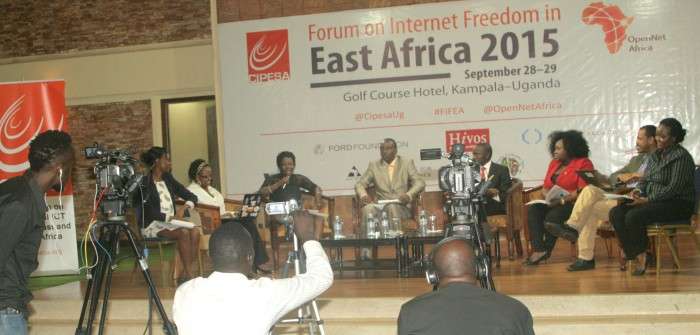
Towards the end of 2015, the Collaboration on International ICT Policy for East and Southern Africa (CIPESA) under the OpenNet Africa initiative convened some of Africa’s leading thought leaders to discuss the various facets of internet freedom in Africa.
The Forum on Internet Freedom in East Africa is one of very few gatherings that assemble an African audience within the continent to discuss matters related to upholding internet freedom. The Forum brought together 200 participants from 18 countries – triple the number of those who attended the inaugural 2014 forum, which hosted 85 participants from six countries. The event drew up a set of actionable recommendations that will inform onward engagements on advancing internet freedom in Africa by CIPESA and its partners, and hopefully for other actors in this space.
Over the course of two days, several issues were discussed, including how to address online violence against women (VAW), whose magnitude and manifestation is not clearly known, as most cases in Africa go unreported.
Another key highlight was the increase in freedom of expression violations for critical media and bloggers especially during periods of electioneering. One way to address this could be through the use of counter speech and transparency in combating hate speech, misinformation and false claims. The media’s role in advancing internet freedom in Africa – both as a vulnerable group but also as infomediaries –  was highlighted.
Africa has registered a rise in abuses and attacks on internet freedom, including a proliferation of laws, legal and extralegal affronts, as well as limited judicial oversight over surveillance and interception of communications. Discussions on the balance between national security and its perpetual clash with freedom of expression, access to information and the right to privacy reflected the need to address gaps in existing laws that do not adequately protect citizens from mass surveillance and privacy infringements.
Meanwhile, the appreciation of digital safety tools and practices remains paramount, for citizens, the media, human rights defenders and activists. Thus, the continued need for capacity building and awareness raising efforts on internet freedom was stressed by Forum participants. Closely related to this is the need for localisation exercises between tools developers and end users, given the diverse contexts of African internet users.
Internet freedom could also be supported by the budding community of artists and creatives on the continent, who are currently not adequately involved in discussions around freedom of expression and privacy online.
Read the full Forum Report, which also explores the relationship between internet freedom and online economics, press freedom, online creative expression, access to information, cybercrime and digital safety, from the perspectives of law enforcement, regulators, intermediaries, artists, the media and human rights defenders. On each of these themes, the report discusses the challenges and opportunities and suggests actions to take in order to advance internet freedom in Africa.

Dialogue on Internet Rights and Freedom in Kenya

By Marilyn Vernon |
In Kenya, whereas the use of the internet had expanded into all areas of day to day living, the threat of government surveillance and interference has impacted upon user confidence in the security of their online interactions. This comes after several local bloggers and social media users have been arrested and in some cases charged with misuse of licensed telecommunications equipment.
“The Kenya Government continues to use national security as a bigger right that trumps constitutional rights,” said Henry Maina, Regional Director of Article 19 East Africa. He said arrests and intimidation of government critics for expressing their opinions online “had become the norm” under the guise of national security.
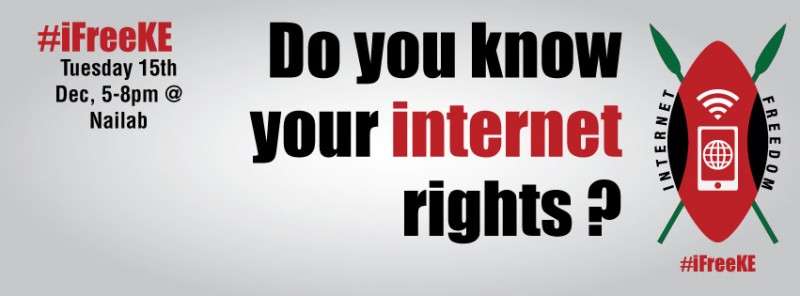
Maina was speaking at an event aimed at promoting awareness on internet freedoms in Kenya. Organised by the Bloggers Association of Kenya (BAKE) under its Internet Freedoms Citizen Education Campaign, the event also aimed to help participants develop a deeper understanding of human rights online based on the African Declaration on Internet Rights and Freedoms. The declaration outlines 13 principles of human rights standards in internet policy formulation and implementation in Africa. These include openness, internet access and affordability, freedom of expression, right to information, and freedom of association and assembly.
The other principles are cultural and linguistic diversity, right to development and access to knowledge, privacy and personal data protection, security, stability and resilience of the internet, equality (gender and marginalized groups), right to due process, and democratic multi-stakeholder internet governance.
Kenya has one of the fastest growing rates of internet users in Sub-Saharan Africa, with the Communications Authority of Kenya (CAK) reporting an internet penetration rate of 54.8%. Coupled with the installation of fibre optic networks, the country also boasts the highest bandwidth with the fastest speed within the East African Community.
Social media remains a key contentious area on internet freedom in Kenya, where content posted has resulted in prosecution on unclear grounds. In December 2014, blogger Robert Alai was arrested and charged with undermining the authority of a public officer contrary to Section 132 of the Penal Code, by allegedly calling President Kenyatta an “adolescent president” in a blog. He was again arrested in February 2015 for offending a businessman online by linking him to a land saga that involved the illegal acquisition of the Langata Primary School playground.
Journalist Abraham Mutai was arrested following tweets he posted on corruption in the Isiolo County Government and was charged with the “misuse of a licensed communication platform to cause anxiety.”Another case in January 2015, involved a Kenyan student, Alan Wadi who was prosecuted and jailed for one year for insulting President Uhuru Kenyatta on social media.
More recently, the eruption of a Twitter storm dubbed #uhuruinkenya which mocked government spending on foreign trips had led to the alleged take down of a website created under the same hashtag. However, the Kenya Network Information Centre (Kenic), Kenya’s domain registry operator, denied taking down the site. The website isuhuruinkenya.co.ke which, is set to display a “YES” or “NO” when the president is in or out of the country respectively, has since been restored and is accessible within the country.
Also speaking at the event, Nanjira Sambuli, iHub Research Manager, stated that such incidents demonstrated that user vulnerability “is a very real threat” and reiterated the need to help users understand and make sense of digital safety and security, particularly the Terms of Service for social media platforms.
The issue of hate speech across ethnic and religious lines was also discussed, during which participants highlighted the need for user ethics and responsibility such as questioning and verifying sources before sharing information. “Security starts with you as the user,” noted Sambuli.
Kenya is party to a number of international human rights instruments and is a member of the Freedom Online Coalition – an intergovernmental coalition committed to advancing freedom of expression, association, assembly, and privacy online – worldwide. In 2012, Kenya hosted the Annual Freedom Online Coalition meeting in Nairobi. The previous year, it had hosted the global Internet Governance Forum (IGF) under the theme Internet as a catalyst for change: access, development, freedoms and innovation. However, these positive steps in the country’s recognition of internet freedom are subject to legislative and institutional hurdles, thereby making it difficult for citizens to freely enjoy their rights online.
The online conversation around the event was conducted with the hashtag #iFreeKE.
For further reference on what internet freedom means to Kenyan users see the Kenya Internet Freedoms campaign video.


Open letter to the Nigeria Senate on the “Social Media” Bill

By Civil Society |
An open letter has been delivered to the Nigeria Senate President stressing concerns over the Frivolous Petitions Bill which has provisions which threaten the use of social media in Nigeria.


Distinguished Senators,
We are a coalition of Nigerian, African, and international organisations writing to you about the proposed Frivolous Petitions (Prohibitions, etc) Bill that has provisions for social media regulation. We believe that the bill is a dangerous encroachment upon free expression and we urge you to reject it from further consideration. The use of social media is a mainstay of free expression in the digital age, and criminalising its use under the guise of “frivolous petitions” will adversely impact human rights while violating the principles underpinning Nigeria’s own constitution.
Background and relevant law

The bill, introduced by Senator Bala Ibn Na’Allah, is officially called “An act to prohibit frivolous petitions; and other matters connected therewith,” and has been nicknamed “Social Media Bill” by concerned citizens. The bill requires any person submitting a petition to the government to have an accompanying affidavit. This requirement would harm government transparency, making it more difficult, and costly, to complain about public services or graft. However, the bill goes much further. Section 3(4) states:

Where any person through text message, tweets, WhatsApp or through any social media post any abusive statement knowing same to be false with intent to set the public against any person and / or group of persons, an institution of government or such other bodies established by law shall be guilty of an offence and upon conviction shall be liable to an imprisonment for 2 years or a fine of N2,000,000 or both such fine and imprisonment.

Nigeria’s constitution provides strong free expression protections (Art. 39). Furthermore, Article 66(2) of the Revised Treaty of the Economic Community of West African States stipulates protections for the press. The African Charter on Human and Peoples’ Rights, which Nigeria has ratified, also guarantees the right to freedom of expression (Art. 9). These protections were reaffirmed in the 2014 judgment in the case Lohé Issa Konaté v. Burkina Faso finding that imposing criminal penalties for defamation fails to comport with Nigeria’s obligations. Internationally, free expression is protected under Article 19 of the International Covenant on Civil and Political Rights, and the United Nations (UN) has specifically stated that the right to free expression applies to the online world — including social media platforms. In 2011, then UN Special Rapporteur on freedom of expression Frank La Rue specifically called for decriminalizing defamation.
The bill violates Nigerian law and international law

The bill’s overbroad language would have a chilling effect upon free speech online. A user cannot be sure how to comply with the law, or know whether their posts are intended to “set the public against” an undefined group or the government. At the same time, the bill is illogically specific, and does not justify its targeting of WhatsApp, a private messaging application, and Twitter, a microblogging platform. In this way, the bill criminalizes defamation against individuals or groups, as well as dissent against the government, with wholly vague and disproportionate restrictions that do not strictly pursue legitimate purposes.
The bill also presents unbalanced and short-sighted policy calculations. This bill cuts against Nigeria’s spirit of openness and support for a vibrant free press and an innovative internet ecosystem. Journalists would be at risk of criminal penalties for reporting on public officials, silencing a crucial tool to combat corruption and encourage accountable governance. Already the continent’s largest economy, Nigeria has 15 million Facebook users, and its technology sector is rapidly expanding. This restrictive law will only harm innovation and deter investment.
We also note that this is not the only legislation that criminalises free expression in this way. The unrelated Cybercrime Act of 2015, now in force, imposes strong penalties (3 years in prison or N7 million) in the name of security under sections 24(a) and 24(b), again violating the right to free expression.RecommendationsWe were encouraged by President Muhammadu Buhari’s indication that he will not support a law that violates free speech, and by the statement credited to the House of Representatives that they will not do anything to close the space for free speech. We also remind you that civil society groups have drafted the Digital Rights and Freedom Bill, a forward-looking proposal that will promote human rights while enabling Nigeria to thrive economically in the digital age.
Specifically, we urge you to:
  • Reject the Frivolous Petitions Prohibition Bill (aka “Social Media Bill”) in its entirety
  • Ensure that, should the Senate choose to continue with the process of considering the bill, the required public hearing before the third reading of the Social Media Bill is announced publicly and enables full civil society input and participation
  • Amend or remove the penalties under Section 24(a) and 24(b) of the Cybercrime Act of 2015
  • Support the Digital Rights and Freedoms Bill, as a guarantor of human rights in the digital age.

We are available to meet with you about this matter at your earliest convenience.
Sincerely,
Access Now
Association for Progressive Communications
Centre for Information Technology and Development
Civil Society Legislative Advocacy Centre (CISLAC)
Collaboration on International ICT Policy in East and Southern Africa (CIPESA)
Committee to Protect Journalists
Electronic Frontier Foundation
Enough is Enough Nigeria
Freedom House
International Service for Human Rights
Internet Sans Frontieres
Media Rights Agenda
Paradigm Initiative Nigeria
PEN International
PEN Nigeria
Rudi International
Social Media Exchange (SMEX)
Web Foundation
West African Journalists’ Association
Zimbabwe Human Rights NGO Forum

South Africa Bill Threatens Internet Freedom

By Juliet Nanfuka |
South Africa’s Cybercrimes And Cybersecurity Bill (2014) has been met with apprehension among civil society due to its vague definitions, its limited safeguards for access to information and freedom of expression. In many ways, it resonates with the equally stifling Draft Online Regulation Policy gazetted in March 2015, which contains clauses that have the potential of blocking online content including films, games and certain publications.
Civil society welcomed the invitation by the Department of Justice and Constitutional Development to provide comment to the draft document. However, concerns have been raised across the board including by the Interactive Advertising Bureau South Africa on the grounds that the bill “broadens the definitions of copyright and creates requirements that do not exist in current copyright law.”
The Association for Progressive Communications in their submission stated that the bill does not make sufficient distinction between unlawful intention and a lack of intention by an internet user, such as an inexperienced internet user downloading illegal malware, but being ignorant of this fact. According to APC, given the low levels of digital literacy in South Africa, this is an important concern. it also noted that the Bill lacks a clear perspective on the culpability of minors and the evolving capacity of minor.
The Right2Know campaign in their comments  pointed out that the bill gives the state excessive authority by granting “the power to declare any data, database, device, network, infrastructure – publicly or privately owned – to be a ‘National Critical Information Infrastructure.’”
Many clauses in the South African Bill are similar to clauses present in a spate of bills that have emerged in East Africa.  In Part V of the Kenya Security Laws (Amendment) Act 2014, the surveillance capabilities of the Kenyan intelligence and law enforcement agencies are expanded without sufficient procedural safeguards. A similar stance is present in the Tanzania Cybercrime Act (2015), which was signed into law with limited public review. The Act makes no indication on the rights the users have of their data nor how it is protected once in the hands of the state, putting citizens’ data at risk especially in the absence of a data privacy and protection law.
Meanwhile in Nigeria, the controversial Social Media Bill was met with criticism as it “completely negated important international conventions to which Nigeria was a signatory”. The Partnership for Media and Democracy in Nigeria (PAMED) raised the concern that “the bill constitutes a threat to democracy because it seeks to repress the social media, the conventional media, the civil society and the citizenry as a whole.”
A recurring theme across many of these new legislations is the continued attempt of states to muzzle opinion of the media, independent social commentators (popular bloggers) and various other non-state actors who are involved in the promotion of freedom of expression, accession to information, increased state transparency and accountability.
Further, the contradictory nature of the new and proposed laws with existing legislation compromises the security and privacy of citizens and their data and leaves gaps for the abuse of internet rights as prescribed in the African Declaration of Internet Rights and Freedoms  remain largely ignored.


CIPESA at the Internet Governance Forum 2015

The annual Internet Governance Forum (IGF) this year takes place in Joao Pessoa, Brazil from October 10-13. We are excited to participate at the forum which is themed “Evolution of Internet Governance: Empowering Sustainable Development”, during which we will share our insights on internet governance and related issues in East Africa.
An initiative of the United Nations, the IGF is a multi-stakeholder dialogue forum open to representatives from Government, NGOs, academia, private sector, as well as any other entities and individuals interested in Internet Governance issues. This year’s forum will explore the main theme through eight sub-themes including: Cyber security and trust; The internet economy; Inclusiveness and diversity; Openness; Enhancing multi-stakeholder cooperation; The internet and human rights; critical internet resources; and emerging issues.
Through our membership of the Association for Progressive Communications (APC) and partnerships with Paradigm Initiative Nigeria (PIN), Facebook Africa Policy and the Deutsche Welle (DW) Akademie, among others, CIPESA is directly participating in the forum in the following events:
Pre-Events
November 8 – 9, 2015

  • Deutsche Welle Preparatory Workshop
  • Local Actions to Secure Internet Rights (LASIR) Learning Meeting

Workshops
November 10, 2015

  • Workshop 187 on Promoting Local Actions to Secure Internet Rights

November 11, 2015

  • Civil Society Round Table with the United States Department of State Cyber Coordinator Chris Painter
  • Round Table – #AfricanInternetRights: Whose rights are these anyway?

Side Events
November 12, 2015

  • State of the Internet in Africa
  • APC 25th Anniversary Celebrations @APC

Follow us on twitter – @cipesaug for updates. Also follow the Forum proceedings using the hashtag #IGF2015.
More information about the IGF is available here.