OpenNet Africa Project Introduction Meetup

(Updated)
Since 2013, the Collaboration on International ICT Policy for East and Southern Africa (CIPESA) has been coordinating the OpenNet Africa projectwhich is aimed at monitoring and promoting internet freedoms, primarily in East and Southern African states.
As part of the initiative’s 2015 strategies, Outbox community has been chosen to undertake certain in-country activities.
To this end, on Thursday 16th April, 2015, from 5:00 PM to 7:00 PM, a team from CIPESA will meet-up with selected techies with knowledge of Internet usage and security, to share about what OpenNet Africa is, what objectives we want the techies to test, what to test and what success would look like after the test.
Tools to be used:

  1. Cryptocat
  2. Mailvelope
  3. Martus
  4. Textsecure
  5. Redphone

All these tools are open source and should be easily available online.
Participants will be supported for 3 weeks to work on their ideas with support from mentors after which there will be a pitching event to showcase the test/familiarisation findings and localisation ideas to adapt/ improve the tools.
Judges will determine participants with the best findings and localisation ideas for prizes.
If you would like to participate, please apply here and wait for confirmation email.
OpenNet Africa is aimed at monitoring and promoting internet freedoms, primarily in East and Southern African states.
The objective is to provide a centralised platform that acts as a focal point for information on African internet freedoms and cyber security. OpenNet Africa therefore provide access to research materials on internet freedom, legal regimes on internet openness or the lack of it, censorship incidents, African initiatives that are promoting internet rights, and policy advocacy materials. Learn more

When it’s at..
Thursday, 16 April 2015
Where it’s at
Outbox Hub

Uganda Gov’t Officials Trained in Using Right to Information Portal

By Ashnah Kalemera
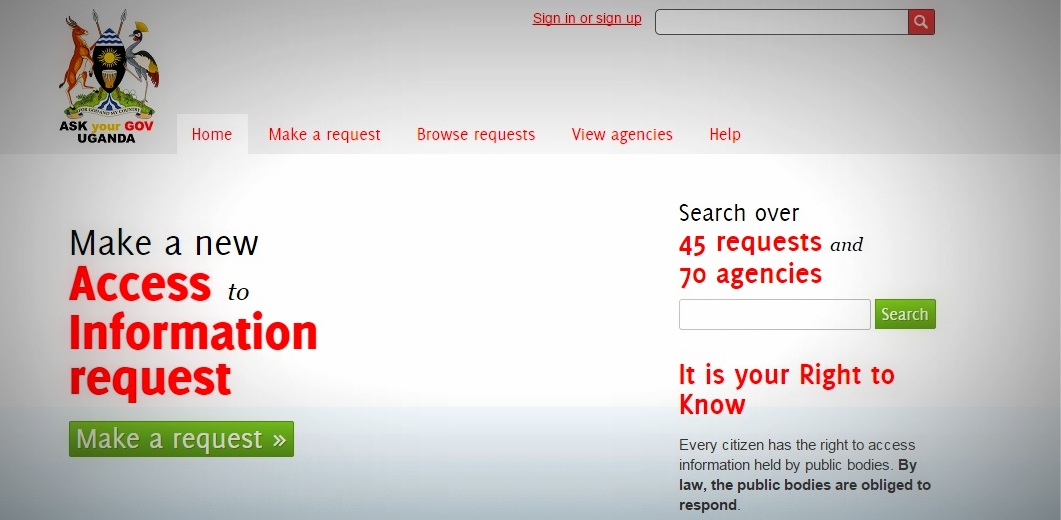
On November 7, officials from 40 Uganda Government Ministries, Departments and Agencies (MDA) were trained in promoting citizens’ right to information, including through the use of the Ask Your Government portal.
Launched on August 14, 2014, www.askyourgov.ug allows Ugandan citizens to directly send requests for information to information officers in Government MDAs. Responses to the requests are relayed directly to the email address of the person who makes the requests and are also publicly displayed on the portal. In accordance with Uganda’s Access to Information Act of 2005, the portal promotes citizens’ right to information in support of transparency, accountability and good governance.
The dialogue aimed to increase the number of information officers registered on the portal and encourage the officers to respond to information requests within 21 days as required by the law.

Government officials at the workshop on the Right to Information online portal

Currently there are 70 MDAs registered on the AskYourGov portal and so far 45 requests for information have been logged through the portal, of which 20 have received responses. Only 8 of the 20 responses have been classified as successful by requesters.
In an effort to encourage the Officers to improve the response rate, Sylvia Biraahwa, the Principal Information Officer, Directorate of Information and National Guidance, Office of the Prime Minister (OPM), urged officials to adopt internal practices that promote transparency and accountability without waiting for directives to be handed down from the central government. Ms. Biraahwa commended the Lands Ministry for taking positive steps in information disclosure by developing an access to information manual, setting a great example for other MDAs to follow suit.
However, one official argued that the best way to motivate information officers to respond to right of information requests was through a top-down approach. “OPM and the Directorate of Information should demand that there be sections in annual Ministerial Policy statements regarding what has been done and achieved in the area of ATI [access to information],” he said. This would “motivate and give support” to low-ranking officers to act in compliance with the law.
The dialogue, which was organised by the OPM in partnership with CIPESA and the Africa Freedom of Information Centre (AFIC) also sought to sensitise officials in emerging media platforms for increased openness and citizen engagement. Ms. Juliet Nanfuka Nakiyini of CIPESA said cabinet, in May 2013 directed the Ministry of Information and Communications Technology (ICT) to ensure that every MDA opens a Twitter and Facebook account to improve communication with the public. This directive, together with the Websites and Social Media standards and guidelines developed by the National Information Technology Authority (NITA), provided immense opportunities for attracting more citizens into the democratic process and building accessible information repositories.
Ms. Nanfuka urged officials to exploit the push and pull symbiotic relationship that can exist between government and citizens through askyourgov.ug and MDAs’ social media platforms. For instance, they could initiate discussion topics on Facebook and Twitter on readily available information and invite discussants to send requests through the AYG website for information to inform the debate. She encouraged the MDAs to share on their websites and social media platforms the queries they receive via AskYourGov and the responses they provide.
Simon Mayende, the Director of Information and National Guidance, urged the participating MDAs to also utilise Public Education Programmes in print and broadcast media spaces for citizens sensitisation on RTI as provided for under the government communications strategy.
Mr. Mayende said the Uganda Law Reform Commission was working to identify laws with provisions that contradict the access to information law so as to draft progressive amendments for tabling before parliament.
Read more about the day’s activities here. Visit the portal on www.askyourgov.ug to register and make information requests. See also the Ask Your Government Uganda User Guide and Information Sheet.
Follow requests and responses on social media:
Facebook: www.facebook.com/askyourgovug
Twitter: @AskYourGovUg

Online Privacy and Security: The Debate And The Dilemma

By Ashnah Kalemera
The issue of internet users’ privacy and security has been widely debated since the Edward Snowden revelations last June put a magnifying glass on the extremes that some governments, such as the U.S., are prepared to go to in the fight against terrorism and cybercrime.
To-date, debate rages on amongst human rights activists, government, media, academia and the private sector on the effects of surveillance on internet freedoms. It is also becoming apparent that some developing countries are also taking to surveillance of their citizens’ communications.
These discussions continued at this year’s Stockholm Internet Forum (SIF), themed “Internet: privacy, transparency, surveillance and control”. The annual forum hosted by the Swedish Ministry for Foreign Affairs in partnership with the country’s Internet Infrastructure Foundation (.se) and the Swedish Development Cooperation Agency (Sida), took place in Stockholm, Sweden, May 27–28, 2014.
In her opening address, Anna-Karin Hatt, Sweden’s Minister for Information Technology, said there would be grave consequences to basic human rights if states across the world continued to undertake unrestricted surveillance.
“During the last year, we have had more than one reason to discuss the behaviour between states and the behaviour of states within their borders,” she said. “The most valuable lesson has been that all surveillance must be subjected to strict limitations.” She added that “no system of surveillance must be justified because it is technologically possible.”
Rather, where legitimate cause exists, “surveillance must be proportional to the benefits it brings to citizens in terms of reduction in crime and improved security”. Furthermore, she argued, it must be based on transparent laws that are adopted through democratic processes.
She also noted that the last year had seen many multi-stakeholder meetings and processes on the matter. These included the 2013 global Internet Governance Forum, NetMundial, the Freedom Online Coalition, and the 2014 Cyber Dialogue. However, she added, it was still important to continue these discussions with participation from a broad range of state and non-state stakeholders in order to reach a consensus.
According to the International Telecommunications Union (ITU), only 19% of Africans use the internet compared to 75% (Europe), 32% (Asia) and 65% (the Americas). Africa also has the lowest mobile phone penetration rates. Low literacy levels, high cost of accessing and owning ICT, acute shortages of electricity, gender inequalities and a shortage of skilled human resources have contributed to the continent’s low ICT use. Even with this limited access, internet use is further impeded by government policies and practices that threaten internet freedom.
While African governments may not be blatantly or capably conducting surveillance on the scale of the National Security Agency (NSA) in the U.S., in recent years they have not shied away from requesting for social media users’ information and seeking content take downs. This is a reflection of the growing interest in what citizens are doing online.
According to the recently published State of Internet Freedom in East Africa report, national constitutions and a number of legislations on the continent provide for freedoms of expression, assembly, privacy and access to information. However, various recently enacted laws take away from citizens’ enjoyment of these freedoms in the online space.
James A. Lewis, director and senior fellow at the American Centre for Strategic and International Studies, asserted that post-Snowden, the debate had shifted from freedom of expression to privacy versus security. The latter were not guaranteed on the internet. “I have never seen a government that does not conduct surveillance on its own citizens. The challenge is extending sovereignty without sacrificing human rights,” he said.
But what is the perception in the developing world where it is estimated that the next billion internet users will come from? Should Africa prioritise access over security? Alison Gillwald, executive director of Research ICT Africa, noted that many people on the continent are more concerned about getting access to the internet and less so their privacy online.
Meanwhile, emerging threats from terrorist and militia groups in Africa seem to have influenced the way some governments perceive internet freedom. In Nigeria, Gbenga Sesan noted that the abduction of 300 schoolgirls by a Muslim extremist group had re-enforced state surveillances measures. “The government is using such incidents to justify ‘rule of law’: ‘if we should provide you with more security, we need to access your privacy’,” said Mr. Sesan.
Perhaps, as Eileen Donahue, Director of Global Affairs at Human Rights Watch pointed out, even with continued discussion and research on the matter, “we may not be able to figure out how to proactively reconcile the internet and human rights.”

Are East African States Using ‘Terrorism’ to Stifle Internet Freedoms?

By Edris Kisambira
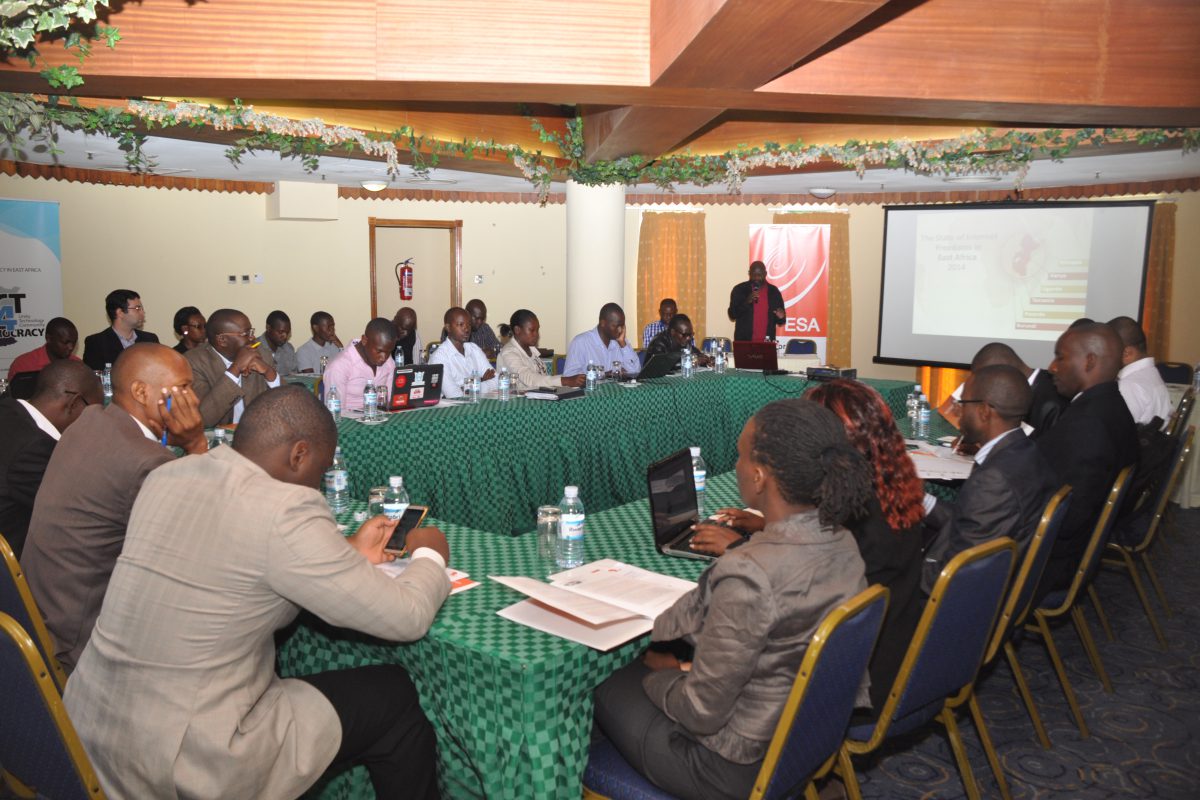
On May 23, 2014, the Collaboration on International ICT Policy in East and Southern Africa (CIPESA) launched a report on the State of Internet Freedom in East Africa. The report is an investigation into the policies and practices that define internet freedom in the region. The event, which took place in Kampala, Uganda, was attended by ICT thought leaders, media and human rights activists from Uganda, Rwanda, Kenya, Tanzania, Burundi and Nigeria, among others.
A number of East Africa countries such as Kenya, Tanzania, Uganda and Rwanda boast over 50% teledensity and a growing number of internet users.
But as internet user numbers grow, so does content questioning governments’ democratic credentials. In turn, governments are enacting laws to counter freedom of expression, including online. These curtails are often framed under the guise of fighting terrorism, cyber crime and hate speech.
The CIPESA report noted that, regrettably, despite increased usage of the internet and infringements on freedoms, East Africans are not engaging enough in discussions around the issues of internet freedoms.
In his keynote address at the launch, the Chairperson of the ICT Committee in Uganda’s parliament, Vincent Waiswa Bagiire, noted that internet use by East African citizens has grown exponentially over the last five years. Considering the importance of the internet to improving livelihoods, the economy, and to security and stability, it had become necessary to make regulations to govern the online space.
“The issue becomes whether the rules are fair, inclusive, allow the growth of the internet and associated digital technologies, or whether they suppress citizens’ rights and creativity, lock out some sections of society and stifle creativity and innovation,” said Bagiire.
Panel discussions centred on how to find a balance between users’ freedoms and national security, as well as on online safety, security and privacy.
Arnold Mangeni, the Data Centre Manager at the National Information Technology Authority of Uganda (NITA-U) noted that when one goes online, they need not to expect security and privacy granted at the same time. He added that governments are mandated to protect citizens and as such have to curtail some freedoms while protecting citizens.
This sentiment was in sharp contrast to that of Neil Blazevic from the Pan African Human Rights Defenders Network. He encouraged citizens to take more active measures to ensure their privacy and security both offline and online. “Privacy is something we rely on in basic existence without which we face an existential crisis,” he said.
Patrick Mutahi, a Safety & Security Programme Officer from Article 19 Kenya raised the concern that while pursuing national security, governments are collecting citizen’s personal information during SIM card and national Identity registration exercises with no regulations on how this information is used. He further said governments are moving to curtail some of the freedoms because of vices like hate speech.
Lydia Namubiru, a Programme Officer at the African Centre for Media Excellence (ACME), said privacy and security online, like transport infrastructure for example, was a public service and should be guaranteed by governments. She said government surveillance online is akin to “placing a police officer at someone’s bedroom window”.
Panelists pointed to a need for competent judicial authorities to provide oversight over surveillance and monitoring. They also called for governments to consult citizens in enacting laws related to internet freedoms.
It was also pointed out that individuals and the private sector should take responsibility for their own online privacy and security.
“The Police alone cannot protect everyone online. The private sector has got to play a major role too. For example the problem of unsolicited SMS messages and online fraud where people lose millions of shillings in bogus transactions,” said Jimmy Haguma, the Acting Commissioner for Electronic and Counter Measures, Uganda Police Force.
He was backed by legislator Bagiire who said online safety is complex and needs continuous stakeholder collaborative efforts and user sensitisation efforts.
“Whereas government will put in place laws to protect users like the Computer Misuse Act and the e-signatures Ac, we the individuals have to be careful online,” he said.
Conducted between January 2010 and April 2014, CIPESA’s research found that the state of internet freedom in East Africa is littered with legislation and state actions which contradict constitutional rights provisions.
The legacy of colonial laws still lingers in countries like Tanzania and Uganda where public information disclosure is severely restricted. Besides, some laws, without being explicit on the internet and related technologies, are used in contexts that they were not intended for. Meanwhile, in Kenya, Rwanda and Burundi, hate speech content regulations posed a threat to internet freedoms. In Ethiopia, the state monopoly over telecommunications was found to enable mass surveillance and content filtering, particularly that of the regime’s critics.
The full report can be found here.

Local leaders in Kasese District Trained in e-Governance

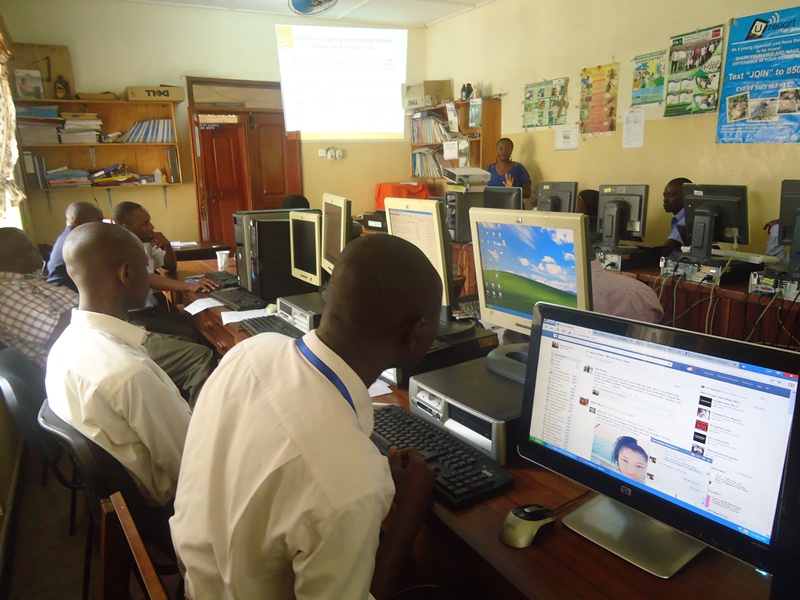
This month, the Collaboration on International ICT Policy in East and Southern Africa (CIPESA) and the E-Society Resource Centre Kasese trained local leaders in Kasese district in the use of ICTs for improved governance and service delivery. During the March 20-21 2014 workshop, local leaders of the western Uganda district were also trained in using ICTs for information sharing and promoting citizen participation.
Speaking at the workshop, District Information Officer John Thawite urged local leaders to break away from the culture of secrecy and work in accordance with the 2005 Uganda Access to Information Act. “Meaningful participation in democratic processes requires informed participants hence the need for increased access to information,” he said.
However, Mr. Thawite noted some challenges to better access to information: poor facilitation for information officers, lack of ICT tools to process information requests, the Official Secrets Act of 1964 which bars public servants from releasing certain information, and poor coordination of information systems between departments.
During introductory sessions, participants were introduced to the basic elements of computer use, the internet and information security. Later, they were introduced to the concept of e-governance and its role in improving service delivery. The training included an interaction with the district e-government tools such as the district portal (www.kasese.go.ug), district discussion group (https://dgroups.org/iicd/kasese), E-library for district e-resources (https://elibrary.kasese.go.ug) and the district news portal (https://kasesenews.blogspot.com/).
The workshop also sought to enhance the leaders’ capability to engage with citizens through social media, and illustrated how this engagement could contribute to improved services delivery. According to Alexa.com, Facebook, Twitter, blog post and youtube are among the top ten accessed websites in Uganda and their potential in catalysing citizen participation in governance was emphasised.
Leaders were further encouraged to use the Rwenzururu facebook group (https://www.facebook.com/groups/nokasesesplit/) created in 2012 by community members in Kasese during a CIPESA citizen journalism training to discuss prevailing issues in the region..
Participants welcomed the training with one saying that he would henceforth be able to get access more information about various operations of the government through the various e-governance platforms shared. Another participant asked the e-society Resource Centre to work with heads of departments so that they always send their budgets, minutes of meetings, work plans and other communication to the e-platforms.
CIPESA has since 2011 spearheaded the iParticipate Uganda project. Through grassroots based ICT access centres in Eastern, Western and Northern Uganda, CIPESA creates awareness and builds the capacity and skills of citizens, media and local government to leverage ICTs to catalyse civic participation, democracy monitoring and access to information in Uganda. The E-society Resource Center Kasese is CIPESA’s western region partner. The centre provides support, promotes ICT literacy and the use of ICT for transparency in the Kasese local government.
Article complied by Mr. Samuel Mumbere – E-Society Resource Centre Kasese and Ms. Lillian Nalwoga – CIPESA