PRESS RELEASE: Tanzania Should Immediately Release Digital Rights Activist Maxence Melo

By CIPESA Writer |
The police in Tanzania has detained Maxence Melo, a freedom of expression activist and co-founder of the popular online discussion platform, Jamii Forums. Although no charges have been brought against Melo, who was arrested at 1pm on Tuesday, December 13, his lawyer says the detention is an intimidation tactic on the backdrop of an ongoing case before the courts on the constitutionality of the Cybercrime Act of 2015.
The Collaboration on International ICT Policy for East and Southern Africa (CIPESA) strongly condemns this unjustifiable arrest, and urges Tanzanian authorities to immediately release Melo and henceforth cease any intimidation of Jamii Media (the company under which Jamii Forums is run), its staff, and other social media users. Melo’s arrest extends the steady and worrying deterioration in media freedom and internet freedom since President Pombe Magufuli took the reins of power at the end of last year. As one user on the platform noted, Jamii Forums provides Tanzanians with an alternative source of information in addition to “relying on traditional media outlets, which are increasingly becoming state-controlled.”
According to Melo’s lawyer, Benedict Alex Ishabakaki, the activist was arrested because of Jamii Media’s refusal to comply with police demands for disclosure of the identities of users who posted “sensitive information” on the platform. Last July, police officials issued a letter to Melo indicating intention to sue him for criminal liability for failure to comply with disclosure notices. In the letter, police put Melo on notice under Section 22 of the Cybercrimes Act 2015 for obstruction of investigations.
Section 22 of the Act states:
(1) A person who intentionally and unlawfully destroys, deletes, alters, conceals, modifies, renders computer data meaningless, ineffective or useless with intent to obstruct or delay investigation commits an offence and on conviction, is liable to a fine of not less than three million shillings or to imprisonment for a term not less than one year or both.
(2) A person who intentionally and unlawfully prevents the execution or fails to comply with an order issued under this Act, commits an offence and is liable, on conviction, to a fine of not less than three million shillings or to imprisonment for a term of not less than one year or to both.
See Cybercrimes Act 2015
A number of Tanzanian social media users have been charged under this law that took effect in September 2015. According to Ishabakaki, Jamii Media’s refusal to comply with the police disclosure notices was partly informed by a lack of regulations governing the Act. “At the time [the notices were issued], there were no mechanisms in place or procedures for disclosure of the requested information,” said Ishabakaki. Moreover, he added, “We refused to disclose the information because it is against the constitutional guarantees of individuals’ right to privacy under Article 18.”
In April 2016, after being issued with eight letters by Tanzanian police demanding the disclosure of the Internet Protocol (IP) addresses of users, Jamii Media went to court challenging the disclosure orders by the law enforcement agency. The users whose identities authorities sought were linked to bringing to light corruption scandals in the oil and banking sectors. According to the State of Internet Freedom in Africa 2016 report, the disclosure notices indicate a bias towards protecting notable figures implicated in scandals or against whom users have used profanities.
In its petition, Jamii Media challenged the arbitrary letters from the police and specifically the provisions of Section 32 and 38 of the Cybercrime Act that appear to infringe the right to be heard, the right to privacy and freedom of expression as provided for under the constitution. Initially, the government responded by raising six preliminary points of objection against the petition, which it termed frivolous and vexatious. The government stated that Jamii Media should explore other remedies rather than file a constitutional petition. During preliminary hearings, judges dismissed the objections and the case proceeded in court. A ruling on the case is due on February 20, 2017.
According to Ishabakaki, Melo’s detention tantamounts to police interference in the ongoing case, the issues of which are still before the constitutional court. “Police officers are misusing their power,” he said.
Prior to his arrest, Melo was summoned to appear in court, by way of telephone call. Upon arrival at the court, an officer told him to appear at a police station, where he was immediately detained.
“No charges have been filed. We were unable to apply for bail yesterday as the law requires detention for 24 hours before formal application of bail,” Ishabakaki told CIPESA on the morning of December 14. He added that police officials had indicated that Melo would appear in court this morning but as at 11am local time, this had not happened. “They are not prepared. It is just harassment. They want information from him,” said the lawyer.
Back in 2008, Melo, along with Jamii Forums co-founder Mike Mushi, were detained and interrogated by police for 24 hours in Dar es Salaam in what was believed to be a politically motivated attempt to shut down their site. Police confiscated computers used to host the website, causing it to go off air for five days while the equipment remained in police custody.
In September 2015, the Tanzania Human Rights Defenders Coalition (THRDC) filed a case challenging the constitutionality of some provisions of the Cybercrime Act, which it contends infringe constitutional provisions on freedom of expression, right to information, and privacy.
The Tanzanian government is accordingly urged to refrain from applying this law, or any other of the repressive laws that remain on its statute books, to gag legitimate expression by citizens be it in the online or offline domain.

#KeepitOn: Joint letter on the internet and the election in Gambia

Joint Letter |
President Yahya Jammeh
cc: Gambia Public Utilities Regulatory Authority (PURA)
Gambia Permanent Mission to the United Nations
African Commission on Human and Peoples’ Rights
30 November 2016
Your Excellency,
We are writing to urgently request that you ensure the stability and openness of the internet during the forthcoming elections in Gambia on December 1. Elections represent the most critical moment in a democracy, and the internet enables free expression and the fulfillment of all human rights.
However, we have received unconfirmed reports through a variety of sources that your government intends to shut down the internet. We implore you to keep the internet on.
Research shows that internet shutdowns and state violence go hand in hand. [1] Shutdowns disrupt the free flow of information and create a cover of darkness that allows state repression to occur without scrutiny. Worryingly, Gambia would be joining an alarming global trend of government-mandated shutdowns during elections, a practice that many African Union member governments have recently adopted, including:  Burundi, Congo-Brazzaville, Egypt, Sudan, the Central African Republic, Niger, Democratic Republic of Congo. [2], [3], [4], [5], [6], [7], [8]
Internet shutdowns — with governments ordering the suspension or throttling of entire networks, often during elections or public protests — must never be allowed to become the new normal.
Justified for public safety purposes, shutdowns instead cut off access to vital information, e-financing, and emergency services, plunging whole societies into fear and destabilizing the internet’s power to support small business livelihoods and drive economic development. In addition, a study by the Brookings Institution indicates that shutdowns drained $2.4 billion from the global economy last year. [9]
International Law
A growing body of jurisprudence declares shutdowns to violate international law. The United Nations Human Rights Council has spoken out strongly against internet shutdowns. In its 32nd Session, in July 2016, the Council passed by consensus a resolution on freedom of expression and the internet with operative language on internet shutdowns. The resolution, A/HRC/RES/32/13, “condemns unequivocally measures to intentionally prevent or disrupt access to or dissemination of information online in violation of international human rights law and calls on all States to refrain from and cease such measures.” The Council intended this clear declaration to combat the blocking and throttling of networks, applications, and services that facilitate the freedoms of expression, opinion, and access to information online. In addition, the African Commission on Human and Peoples’ Rights stated in its November 2016  Resolution on the Right to Freedom of Information and Expression on the Internet in Africa that it was “Concerned by the emerging practice of State Parties of interrupting or limiting access to telecommunication services such as the Internet, social media and messaging services, increasingly during elections.” [10]
In 2015, various experts from the United Nations (UN) Organization for Security and Co-operation in Europe (OSCE), Organization of American States (OAS), and the African Commission on Human and Peoples’ Rights (ACHPR), issued an historic statement declaring that internet “kill switches” can never be justified under international human rights law, even in times of conflict. [11] General Comment 34 of the UN Human Rights Committee, the official interpreter of the International Covenant on Civil and Political Rights, emphasizes that restrictions on speech online must be strictly necessary and proportionate to achieve a legitimate purpose. Shutdowns disproportionately impact all users, and unnecessarily restrict access to information and emergency services communications during crucial moments.
The internet has enabled significant advances in health, education, and creativity, and it is now essential to fully realize human rights including participation in elections and access to information.
We humbly request that you use the vital positions of your good offices to:

  • Ensure that the internet, including social media, remains on in Gambia throughout the election and beyond
  • Publicly declare your commitment to keep the internet on, including social media
  • Encourage telecommunications and internet services providers to respect human rights, including through public disclosures and transparency reports.

We are happy to assist you in any of these matters.
Sincerely,
Access Now
Association for Progressive Communications (APC)
CIPESA
Heliopolis Institute
Human Rights Foundation
iFreedom Uganda
Internet Sans Frontières
Media Foundation for West Africa
Paradigm Initiative Nigeria
Social Media Exchange (SMEX)
Strathmore University Centre for IP and It Law (CIPIT)
Unwanted Witness Uganda
 
[1] Sarah Myers West, ‘Research Shows Internet Shutdowns and State Violence Go Hand in Hand in Syria’ (Electronic Frontier Foundation, 1 July 2015)
<https://www.eff.org/deeplinks/2015/06/research-shows-internet-shutdowns-and-state-violence-go-hand-hand-syria> accessed 18 February 2016.
[2] ‘Access urges UN and African Union experts to take action on Burundi internet shutdown’ (Access Now 29 April 2015) <https://www.accessnow.org/access-urges-un-and-african-union-experts-to-take-action-on-burundi-interne/> accessed 18 February 2016.
[3] Deji Olukotun, ‘Government may have ordered internet shutdown in Congo-Brazzaville’ (Access Now 20 October 2015) <https://www.accessnow.org/government-may-have-ordered-internet-shutdown-in-congo-brazzaville/> accessed 18 February 2016.
[4]  Deji Olukotun and Peter Micek, ‘Five years later: the internet shutdown that rocked Egypt’ (Access Now 21 January 2016) <https://www.accessnow.org/five-years-later-the-internet-shutdown-that-rocked-egypt/> accessed 18 February 2016.
[5] Peter Micek, ‘Update: Mass internet shutdown in Sudan follows days of protest’ (Access Now, 15 October 2013) <https://www.accessnow.org/mass-internet-shutdown-in-sudan-follows-days-of-protest/> accessed 18 February 2016.
[6] Peter Micek, ‘Access submits evidence to International Criminal Court on net shutdown in Central African Republic’(Access Now 17 February 2015) <https://www.accessnow.org/evidence-international-criminal-court-net-shutdown-in-central-african-repub/> accessed 18 February 2016.
[7] ‘Niger resorts to blocking in wake of violent protests against Charlie Hebdo cartoons.’ (Access Now Facebook page 26 January 2015) <https://www.facebook.com/accessnow/posts/10153030213288480> accessed 18 February 2016.
[8] Peter Micek, (Access Now 23 January 2015) ‘Violating International Law, DRC Orders Telcos to Cease Communications Services’ <https://www.accessnow.org/violating-international-law-drc-orders-telcos-vodafone-millicon-airtel/> accessed 18 February 2016.
[9] Darrell West, (Brookings Institution, October 2016) “Internet shutdowns cost countries $2.4 billion last year” https://www.brookings.edu/wp-content/uploads/2016/10/intenet-shutdowns-v-3.pdf
[10] African Commission on Human and Peoples’ Rights, (November 2016) ‘362: Resolution on the Right to Freedom of Information and Expression on the Internet in Africa – ACHPR/Res. 362(LIX) 2016’ http://www.achpr.org/sessions/59th/resolutions/362/
[11] Peter Micek, (Access Now 4 May 2015) ‘Internet kill switches are a violation of human rights law, declare major UN and rights experts’ <https://www.accessnow.org/blog/2015/05/04/internet-kill-switches-are-a-violation-of-human-rights-law-declare-major-un> accessed 18 February 2016.
This join letter first appeared on the Access Now website

The Internet Shutdown In Ethiopia Costs The Country Approximately $500,000 A Day In Lost GDP


By Tefo Mohapi |
In October 2016, Ethiopia declared a state of emergency which saw it impose certain measures that included telecommunications, media and Internet shutdowns along with travel restrictions on diplomats and a dusk-to-dawn curfew, to name a few of the measures implemented. The state of emergency, effective from 08 October 2016, comes as a result of about five hundred people being killed in protests in the Oromiya region surrounding the capital Addis Ababa and other parts of Ethiopia since 2015. This is, as reported, after anger over a development scheme for the capital sparked broader anti-government demonstrations over politics and human rights abuses.
Ethiopia is not new to Internet shutdowns with another Internet shutdown taking place as recently as July 2016 with the government stating that it took this drastic measure to prevent leakages during the national exams.
Internet Shutdowns Across Africa
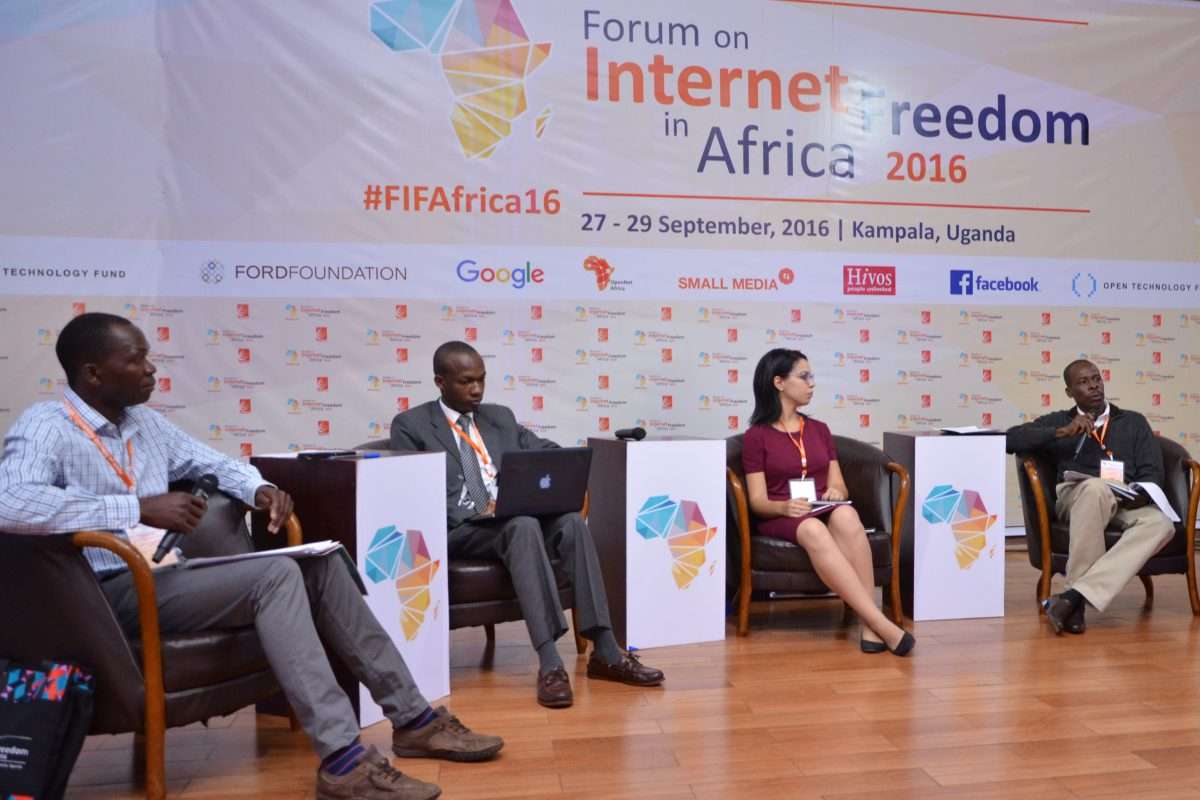
At the recently held Forum for Internet Freedom in Africa 2016 in Kampala, Uganda a panel on the opening day discussed “Internet Shutdowns and Internet Rights” and asked the pertinent question – “Where do we draw the line?

Internet Shutdowns CIPESA FIFAfrica16
Panel on “Internet Shutdowns and Internet Rights” featuring Ephraim Kenyanito, Yosr Jouini, Arthur Gwagwa, Arsene Tungali and Wisdom Donko.

In 2016 alone, the panel noted, Africa has experienced Internet shutdowns or social media bans in several countries including Zimbabwe, Uganda as well as Ethiopia. Notably, these shutdowns or bans typically revolved around political unrest or elections.
Furthermore, as noted during the discussion, Internet shutdowns can cost a country’s economy quite a substantial amount of money with the 2016 Uganda Internet shutdowns rumored to have cost the country $26 million considering it also involved the shutdown of mobile money services for several days around the 2016 Ugandan Presidential election period.

  • But what exactly is an Internet shutdown?
  • What role do telcos play during an Internet shutdown?
  • Are we perhaps overstating the severity of Internet shutdowns considering low Internet penetration rates?

$500,000 A Day
Technically speaking, and as witnessed across different countries in Africa and as discussed on the panel, an Internet shutdown usually involves a government’s ministry typically issuing a letter or instruction to the telcos and mobile service providers operating in that country requesting they cut off Internet access completely (or specific services) to their customers.
In Ethiopia, it is even easier for the government to effect an Internet shutdown as the East African country has only one telecommunications company, Ethio Telecom, which is also state-owned and the only provider of Internet access in the country. This further raises the question of who should be entrusted with provision open and unfettered Internet access to citizens. That’s just the tip of the proverbial iceberg, as Internet shutdowns come with a cost to a country’s economy. Continuing with Ethiopia as a case study, is perhaps the impact and cost of the Internet shutdown exaggerated given that the country only has an Internet penetration rate of 2,9% (as per 2015 Freedom House Report)?

Ethiopia Freedom House 2015
Ethiopia Feedom of the Net 2015 Report

A recent report released on 27 October 2016 by the Global Network Initiative along with Deloitte suggests that the current ongoing Internet shutdown in Ethiopia is costing the country approximately $500,000 a day. The report explains that, in dollar terms, it is estimated that for the average highly-connected country, the per-day impact of a complete Internet shutdown would amount to US$23.6 million per 10 million people. For the average country with medium and low levels of connectivity, the estimated GDP impact amounts to US$6.6 million and US$0.6 million per 10 million people, respectively.

“This analysis suggests that the ongoing Internet shutdown in Ethiopia, a low-connectivity country with a population of 94 million and a per capita GDP of US$505, is costing its economy just under half-a-million US dollars a day in lost GDP. “The economic impact of disruptions to Internet connectivity 2016 Report

The report sheds light on the impact on Internet shutdowns and illustrates that irrespective of low Internet penetration rates in country’s like Ethiopia, the impact is still quite high given how the Internet is used in various economic activities.
Furthermore, it is encouraging to hear the United Nations Human Rights Committee condemn Internet shutdowns in their recent resolution.
The United Nations Human Rights Council stated that it condemns unequivocally measures to intentionally prevent or disrupt access to or dissemination of information online in violation of international human rights law.” Specifically calling on all States to “refrain from and cease such measures.”
This article was first published at iafrikan on October 28, 2016.

Africans Want Cross-Border Data Access Reform, But They Might Get Left Out


By Mailyn Fidler |
At the first session of the 2016 Forum on Internet Freedom in Africa, questions about cross-border data access—usually a dry topic—took center stage. The moderator and participants grilled representatives from Google and Facebook about the fairness of limited African access to African data held by U.S. companies, invoking the need for greater “internet sovereignty.” These remarks contrasted with one year ago, when I could find no one at this forum talking about African data access problems. Africans are now thinking about this issue, but the U.S. government is not really considering Africa as it debates the future of cross-border data requests. The standards outlined in the Obama administration’s draft proposal will be most easily met by favored U.S. partners; the United Kingdom appears to be first in line for a deal. Left-out countries will have few viable options for accessing data and may turn to damaging alternatives.
Background: A Year of MLAT Reform
The past year brought cross-border data access into the limelight. Countries have grown frustrated with the primary mechanism for accessing data held by U.S. tech companies: Mutual Legal Assistance Treaties (MLATs). As communications increasingly depend on U.S. tech companies, data needed for run-of-the-mill criminal investigations often resides in the United States, and countries turn to MLATs for access. MLATs with the United States generally require countries to meet U.S. legal standards when seeking data stored in the United States.
The MLAT process is usually slow and opaque, frustrating countries using it. It can take six weeks to ten months to process requests, depending on the request’s complexity and compliance with U.S. legal standards. Countries also take issue with U.S. law essentially dictating global practices. Countries have sought other troubling means of accessing data, with the UK seeking extraterritorial powers, Russia exploring data localization, and Brazil threatening companies with legal action.
Over the past year, efforts to reform cross-border data access have progressed. The United States and the United Kingdom have negotiated a proposed agreement, and the Department of Justice released draft legislation to make such agreements possible for approved countries. (The legislation is unlikely up for consideration until after the U.S. election.)
Africans Want Improved Data Access
Although Africa currently has low levels of internet penetration, it also has some of the highest internet use growth rates. Internet policy issues are increasingly important to Africans, and African internet policy wonks are joining the call for cross-border data access reform. Tefo Mohapi, the moderator of the opening panel, asked company representatives about building mirror datasets in African countries to allow African countries greater access to data held by U.S. companies, a form of data localization. “It all goes back to internet sovereignty,” Mohapi argued. “You operate with legal impunity without regard for state sovereignty.”
Participants continued to criticize the United States, adding that, “America has ceased to be the shining jewel of internet freedom” post-Snowden. African countries are often portrayed as untrustworthy and undeserving of data, even by the company representatives at this conference. Post-Snowden, African countries “want the discourse to expand beyond bad African governments, with the kind United States coming to save us.” African governments should have the same access as the now-untrustworthy United States, participants argued.
The company representatives responded to these criticisms by highlighting ongoing cross-border data access reform efforts. They emphasized that existing cross-border data access procedures are burdensome, and that they are in conversation with governments to change the process. They eagerly pointed out that ultimate responsibility for fixing this problem rests with governments, not companies.
Only two African countries, South Africa and Egypt, currently have MLATs with the United States. The proposed U.S. legislation could allow countries without MLATs to gain legal access to data (see Section 4), in theory addressing African concerns. In practice, however, it could be difficult for some African countries to meet the legislation’s legal standards. The United States must determine that a country has an independent judiciary, adequate substantial and procedural cyber laws, and adequate international human rights practices. The lack of adequate cyber laws alone would be enough to thwart most African data access agreements with the United States. More generally, the United States will likely not consider countries without MLATs a priority for new data access agreements. African countries’ general lack of political pull could considerably slow or reduce new African data access agreements.
Left Out of MLAT Reform: Potential Consequences
Cross-border data access reform is generally portrayed as the solution to the data localization laws, prosecutions of tech companies, and extraterritorial application of laws that countries have pursued when frustrated with MLATs. Most countries who have been turning to these methods, however, at least have MLATs, while African countries do not. African countries will likely be last in line for new data access agreements. Being shut out of both data access options means African countries will be twice marginalized.
African countries lacking an MLAT and a data access agreement with the United States will have few options for pursuing data. Countries can submit emergency requests to companies or ask for a joint investigation with the United States. African countries are already sensitive to concerns that they lack autonomy, and autonomy-constrained states are often most motivated to protect their autonomy. African countries might respond to their double marginalization by enacting data mirroring requirements, as the moderator at the forum suggested. Another forum participant suggested that African governments might increase internet shutdowns if they lack post-hoc data access, as a way of preemptive control. Ironically, U.S. efforts to allow countries greater access to data in the United States may result in African citizens having less access to the internet.
Cross-border data access should not be extended without qualification. Still, current reform plans seem likely to place African countries in a difficult position on a policy area that is increasingly important to them. If the United States really seeks to limit the proliferation of damaging data-access workarounds, it should think about what will happen to those who are left out of cross-border data access reform.
Mailyn Fidler is a fellow at the Berkman Klein Center for Internet and Society at Harvard University. You can follow her @mailynfidler. This article was first published at Council on Foreign Relations on October 26, 2016.

Forum on Internet Freedom in Africa 2016 – My Testimony

By Blaise Ndola |
Through presentations and interventions at the Forum on Internet Freedom in Africa 2016 (FIFAfrica16),I learned about different ways Africans countries are stifling citizens digital rights. But the most important at this level is that through these presentations and experiences shared, I realized that the battle for Internet freedoms is as important as ever because internet shutdowns, abuses of courts of law, blockages of websites and content removals continue to find their place on the continent.
Coming from the Democratic Republic of Congo (DRC), I became aware of the work I have to do as an Internet freedom fighter and web activist once back home. Apart from that, I also realized the high level of danger faced by internet users when their privacy or personal data are not protected by themselves and by intermediaries (Telecoms). We need to fight at all the levels, first against practices of telecoms who are ready to respond governments’ requests to release information of their customers and then, to call upon policy makers to enact laws that will reinforce rights of citizens to privacy and freedom of expression.
Access to the internet and internet freedom should now become fundamental rights in African societies. At the same time, we should also fight the normalization of online violence against women and for gender equity in access to digital tools.
As suggestions to African governments, they should make efforts to put in place conducive legal frame works for the ICT sector. For instance, make laws that will not be restrictive of some rights as it’s the case nowadays. And also, they shouldincreasingly respect the rights of citizens to access  information, to freedom of expression and toprivacy.To intermediaries (telecoms), I suggest they remain neutral and aim to protect the privacy anddata of users of their services despite pressure from government.
To us, as part of civil society, I will suggest to continue advocating for internet freedoms in law and in practice and to require other stakeholders to respect certain fundamentals rights. Civil society, through campaigns and advocacy must raise awareness among internet users of the need for responsibility in their actions and usage of internet.
Finally, having attended two forums (2015 and 2016), I am proud to have networked and got connected to influencers and internet freedom activists in Africa and beyond. Thanks to the Collaboration on International ICT Policy for East and Southern Africa (CIPESA) and to all the partners for facilitating my attendance.
To follow the online discussion: #FIFAfrica16 @Cipesaug
This article was first published at blaisendola on October 11, 2016.