Inaugural Winners of the Africa Digital Rights Fund Announced

Announcement |
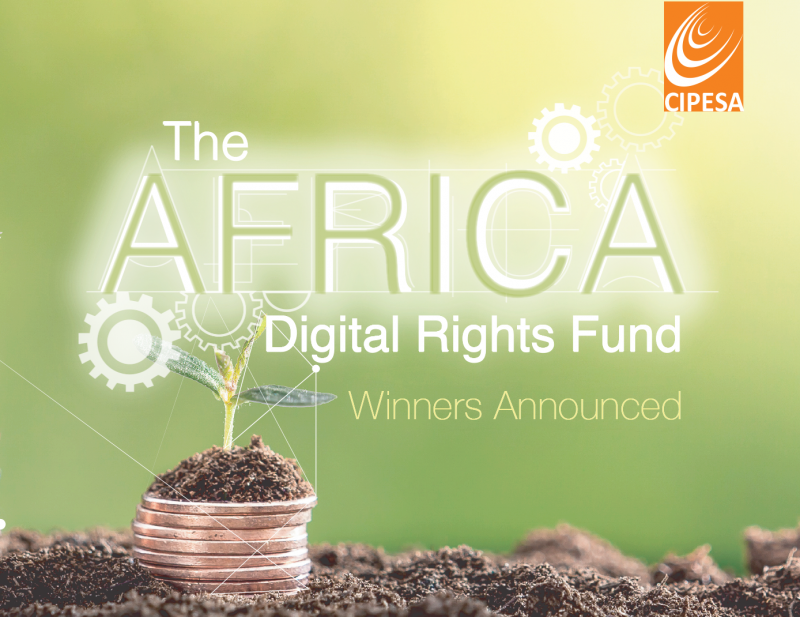
The Collaboration on International ICT Policy for East and Southern Africa (CIPESA) is pleased to announce the winners of the first round of the Africa Digital Rights Fund (ADRF). A total of USD 65,000 has been awarded to 10 initiatives that will advance digital rights in 16 African countries – Algeria, Burundi, Egypt, Ethiopia, Gambia, Mozambique, Namibia, Nigeria, Sierra Leone, Senegal, South Sudan, Tanzania, Tunisia, Uganda, Zambia and Zimbabwe.
Launched in April 2019, the ADRF is aimed at growing the number of individuals and organisations that work to advance digital rights in Africa, amidst rising digital rights violations such as arrests and intimidation of internet users, network disruptions, and a proliferation of laws and regulations that hamper internet access and affordability, and undermine the potential of digital technologies to catalyse free expression, civic participation, and innovation.
Although it is still early days, the Fund has received profuse interest from across the continent, with several worthy initiatives proposing projects including in countries with numerous digital rights challenges but little effort to address them. 
According to Ashnah Kalemera, the CIPESA Programmes Manager, the first call for proposals attracted more than 150 applications from 30 countries. “Digital rights advocacy, digital safety and security skills building, innovating for social enterprises’ efficiency, litigating for digital rights, and empowerment for marginalised communities, were among the prevalent lines of work proposed. There were few proposals in the area of research, and much fewer on engagement in legislative processes, despite the ongoing enactment of often retrogressive laws and regulations governing digital rights,” she said. 
The applicants were assessed by a panel of experts based on the following attributes:

  • The applicant’s experience in advancing digital rights/track record on similar work;
  • Demonstrated need for the project including relevance to described context and  priorities of the Fund;
  • Eligibility in terms of geographic coverage, proposed activities, duration, and evidence of the applicant’s formal registration or operations;
  • Demonstration of innovation with regards to approach, feasibility of deliverables and timelines, and potential impact of the intervention;
  • Budget feasibility; and
  • Diversity considerations.

The review panel consisted of three internal CIPESA programme staff and four external experts with extensive experience in the digital rights field. The external reviewers were Neil Blazevic -Technology Manager at DefendDefenders (formerly East and Horn of Africa Human Rights Defenders Project), Sadibou Sow – West and Central Africa Regional Technology Advisor of Amnesty International, Dr. Edgar Napoleon  Asiimwe – Research Manager at the Swedish Programme for ICT in Developing Regions (Spider), and Koliwe Majama – Organiser of the Africa School of Internet Governance at the Association for Progressive Communications (APC).
The winners of the ADRF’s first call are:
1. Access for All – South Sudan
Access for All will  build the advocacy and digital security capacity of South Sudanese women refugees and human rights defenders. These engagements, which will be conducted in Arabic and English, will explore current human rights defenders’ security/ protection concerns in South Sudan, and the mechanisms to address them.  
2. African Human Rights Network (AHRN) Foundation – Tanzania
The project will strengthen the capacity of human rights defenders (HRDs) and their organisations on digital security and provide them with essential tools. A total of 60 Tanzania HRDs will be provided with training and exchange opportunities to reduce digital security risks. The project complements the activities of Shelter City Dar es Salaam which is a regional temporary relocation program for HRDs in the Great Lakes region.
3. Burundi Youths Training Centre – Burundi
The project will build the capacity of human rights defenders and media organisations in digital rights advocacy. The engaged organisations will be mentored to develop and implement strategic advocacy campaigns for digital rights, including the right to privacy and personal data protection in Burundi.
4. Centre for Human Rights, University of Pretoria – South Africa
The centre will document and analyse threats and mounting pushbacks against civil society in the digital age in Egypt, Sierra Leone, Uganda, and Zambia. Leveraging its network of former graduates and local partner tertiary institutions, the centre will map the legal and digital threats to civil society in the focus countries in order for stakeholders to have full evidence-based knowledge of these threats and how to navigate them. The bilingual (French and English) research outputs will feed into the centre’s Master’s programme curriculum module on civil society studies in Africa and short courses on human rights and good governance.
5. Freedom of Expression Hub (FoE Hub) – Uganda
In collaboration with the Uganda Law Society, the Freedom of Expression Hub will conduct digital literacy and litigation surgeries for lawyers and journalists in northern Uganda’s West Nile sub-region on emerging digital rights issues affecting freedom of expression, access to information and media rights. The surgeries aim to promote collaboration and rapid response to digital rights violations especially through courts of law. Furthermore, the Hub will work on creating a database of advocates who can adequately respond to digital rights cases in the sub-region.
6. Global Voices – Sub-Saharan Africa, Middle East and North Africa 
As part of its wider Advox programme, Global Voices will document experiences of  online mis/disinformation and the impact of internet shutdowns on citizens’ rights to freedom of expression and access to information during elections and protests in seven countries – Algeria, Ethiopia, Mozambique, Nigeria, Tunisia, Uganda and Zimbabwe. Through translation and targeted outreach, the project will contribute African perspectives to the global debate on mis/disinformation and shutdowns, and train local writers to improve their digital rights reporting skills.
7. Internet Society (ISOC) Namibia Chapter – Namibia
In the run up to the November 2019 elections, ISOC Namibia will work to build the capacity of journalists and editors to fact-check misinformation. It will also work with women parliamentarians, political activists and various other actors in a campaign to tackle politically motivated-gender based violence online.
8. Jonction – Senegal 
Jonction will  implement advocacy and awareness creation campaigns among state, private sector and civil society actors in Senegal to foster an enabling environment for freedom of expression, privacy and data protection online.
9. Kuza STEAM Generation (KsGEN) and Centre for Youth Empowerment and Leadership (CYEL) – Tanzania
The grant will be used to organise “Schools” on Internet Governance (IG) and digital rights through which various stakeholders will be trained and mentored to lead IG-related discussions at national and regional level. One of the schools will specifically target girls and women in Arusha so as to increase Tanzanian women’s participation in internet governance
10. YMCA Computer Training Centre and Digital Studio – The Gambia
Building on its youth-empowerment initiatives, YMCA Gambia will undertake a sensitisation drive on cyber-bullying and online safety among youths as a means of combating harassment and online abuse of women and girls.


Deux études sur la cybersécurité et la cybercriminalité au Sénégal

Jonction |
Jonction vient de produire deux (02) études; l’une portant sur l’état des lieux de la cybersécurité et de la cybercriminalité au Sénégal et l’autre sur une analyse critique de la stratégie nationale de cybersécurité du Sénégal. Ces études ont été menées dans le cadre du programme «Intégration des droits de l’homme dans les processus de cybersécurité et de cybercriminalité» ; mené en partenariat avec Global Partner Digital.
Le programme «Intégration des droits de l’homme dans les processus d’élaboration de politiques en matière de cybersécurité et de cybercriminalité» au Sénégal a pour objectif général de:

  • Faciliter l’engagement de la société civile dans les processus décisionnels nationaux clés en matière de cybersécurité et de cybercriminalité.

En effet ; le gramme vise à renforcer la liberté de l’Internet au Sénégal en facilitant la participation de la société civile aux principaux processus nationaux en matière de cybersécurité et de cyberdécision.
Le projet est guidé par deux (2) objectifs stratégiques globaux, chacun d’eux ayant des activités bien conçues pour garantir que les objectifs seront atteints :

  • Objectif 1 : Renforcer la capacité des organisations de la société civile du Sénégal à s’engager efficacement dans les principaux processus d’élaboration des politiques en matière de cybersécurité et de cybercriminalité
  • Objectif 2 : Renforcer l’engagement stratégique de la société civile dans les principaux processus d’élaboration des politiques en matière de cybersécurité et de cybercriminalité au niveau national ; les résultats des politiques au niveau national s’inspirent des contributions de la société civile et, par conséquent, des normes et du droit internationaux relatifs aux droits humains.

How Social Media Taxes Can Burden News Outlets: The Case of Uganda

By Juliet Nanfuka |
In July 2018, the government of Uganda implemented a tax on individual users of social media platforms. In the first three months following the introduction of the tax in the country, internet penetration dropped from 47 percent to 35 percent. Given that a significant amount of news circulation now happens via social media and messaging apps, how might this new tax impact the news media ecosystem? The negative effects on news media are less direct and arguably more pernicious than might be expected.
See the full report published on the Center for International Media Assistance (CIMA) website as part of the Open Internet for Democracy Leaders Initiative.

UN Human Rights Council Called to Address Deterioration of Freedoms in Tanzania

Open Letter |
In recent months, Tanzania has faced increased measures resulting in the shrinking of civic and democratic space in the country. Draconian legislation enacted since 2015 and legal and extra-judicial methods used to harass human rights defenders, threaten independent journalism, and to restrict freedoms of opinion and expression, peaceful assembly and association have been used to reduce the avenues for civic expression.
Recent legislative, policy and practical developments have led to increased international and regional attention on Tanzania. The surge in the number, and strengthening of the wording, of statements delivered by the UN High Commissioner for Human Rights indicate that global concern is growing over the situation in the country, which for decades demonstrated a commitment to improving the human rights of all people, both nationally and within East Africa.
Ahead of the 41st regular session of the UN Human Rights Council (“the Council”), which will
take place from 24 June-12 July 2019, 38 organisations have written to the Permanent Representatives of Member and Observer States of the United Nations Human Rights
Council to deliver statements, both jointly and individually, and to engage in bilateral démarches to address the ongoing deterioration of the human rights situation in the United Republic of Tanzania.
See the open letter here.

2019 Edition of the Forum on Internet Freedom in Africa (FIFAfrica) Set To Take Place in Addis Ababa, Ethiopia

Announcement |
On September 23-26, 2019 the Collaboration on International ICT Policy for East and Southern Africa (CIPESA) will host the sixth Forum on Internet Freedom in Africa (FIFAfrica). This landmark event convenes a spectrum of stakeholders from across the internet governance and online rights arenas in Africa and beyond to deliberate on gaps, concerns and opportunities for advancing privacy, free expression, non-discrimination and the free flow of information online.
This year, FIFAfrica will take place in Addis Ababa, Ethiopia, where since April 2018 the new Ethiopian government has undertaken unprecedented political and economic reforms. These have included release from jail of thousands of prisoners, announcing plans to liberalise the telecom, aviation, and transportation sectors, and dropping charges against many opposition leaders, bloggers, and activists. On the internet freedom front, the new administration has restored mobile and broadband internet services that had been disrupted since 2016, and unblocked 246 websites, blogs, and news sites that had been inaccessible for over a decade. These pivotal developments serve as an avenue to advance more progressive efforts on internet governance and promotion of human rights online, not only in the country that hosts the African Union (AU) but on the continent at large.
Hosting FIFAfrica in Addis Ababa is also in keeping the stride of expanding the conversation, as well as knowledge and skills development to different parts of the continent. In its inaugural years, the Forum took place in Kampala, Uganda. Since then, FIFAfrica’s expanding footprint has seen it being hosted in Johannesburg, South Africa in partnership with the Association for Progressive Communications (APC) in 2017 and in Accra, Ghana in partnership with the Media Foundation West Africa (MFWA) in 2018.
The Forum responds to rising challenges to the enjoyment of internet freedom in various countries, including arrests and intimidation of online users, internet disruptions, and a proliferation of laws and regulations that undermine the potential of digital technology to drive socio-economic and political development on the continent. FIFAfrica therefore puts internet freedom on the agenda of key actors including African policy makers, regulators, human rights defenders, law enforcement representatives, and the media, paving the way for broader work on advancing online rights in Africa and promoting the multi-stakeholder model of internet governance.
Registration and call for session proposals will open later this month. For the latest on the Forum, follow @cipesaug. The event hashtags are #FIFAfrica19 and #InternetFreedomAfrica.