Africa Digital Rights Fund Supports Mainstreaming of Online Freedoms in Somali Territories

By Ashnah Kalemera |

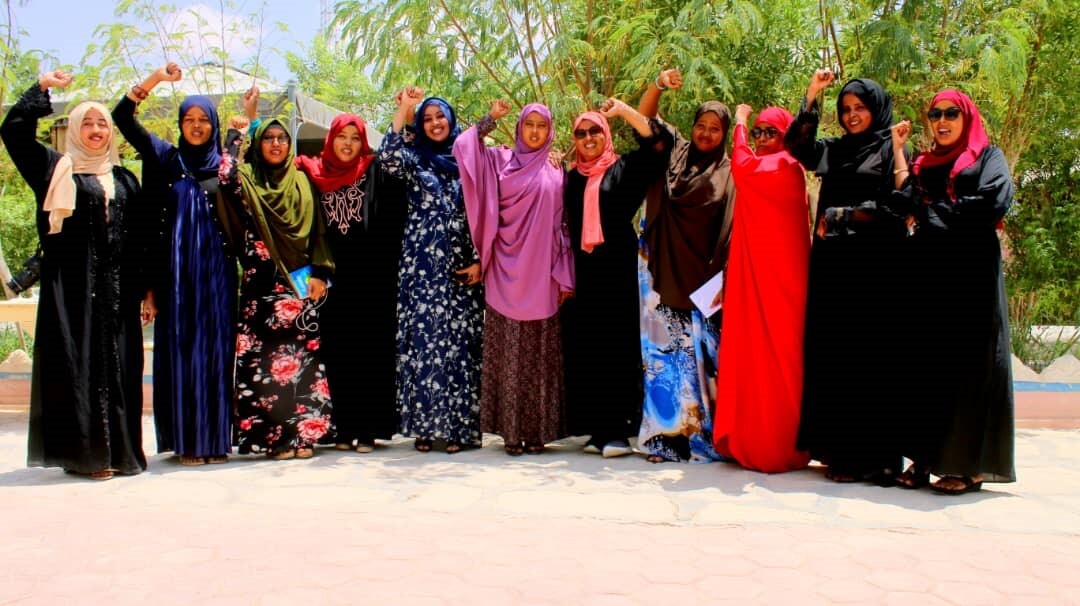
The digital landscape of Somalia and the breakaway states of Somaliland and Puntland is largely shaped by the region’s history of terrorism and political turmoil. Website censorship, internet disruptions and crackdowns on the media co-exist in a fast-evolving technology sector, within a regressive policy and regulatory environment. With support from the Africa Digital Rights Fund (ADRF), three Somali initiatives are working to positively influence this landscape by raising the visibility of digital rights issues, alongside pushing for policy and practice reforms to ensure effective and inclusive use of technology for socio-economic and political development. 

Combined, the initiatives have skilled 235 human rights defenders, media practitioners and activists in safety and security online, and convened multiple stakeholder forums featuring government authorities, the private sector, civil society and law enforcement to promote wider awareness on digital rights and the need to prioritise rights-respecting technology adoption. The initiatives have also amplified efforts on effective utilisation of technology in Covid-19 response measures and worked to close the digital gender gap, focusing some interventions on addressing barriers to women’s meaningful participation in online spaces.

Freedom House’s Freedom in the World 2020 report ranks Somaliland as ‘partly free’, citing a “consistent erosion of political rights and civic space” evidenced by numerous arrests and detention of journalists and critics, and suspension of media outlets, among others. Assessed separately, Somalia is ranked as ‘not free’ with “impunity for human rights abuses by both state and nonstate actors” being the norm. As a combined region, Somalia’s press freedom ranking is dismal too – at position 163 out of 180 countries assessed as part of the 2020 World Press Freedom Index.

Somalia’s telecommunications sector, which is largely unregulated, has recorded steady growth, with 2020 figures indicating mobile subscriptions at 48% of the population and 10% internet penetration. Mobile money usage is widespread and, according to GSMA’s Mobile Money Regulatory Index, Somalia is ahead of many regional counterparts, having formalised sector regulations during 2019, allowed non-banks to offer electronic and mobile-based financial services, and permitted international mobile money transfers.

The ADRF’s partners – Digital Shelter, the Somaliland Journalists Association (SOLJA), and the Women in Media in Somalia (WIMISOM)- recognise that increased use of online platforms has the potential to positively shape political participation, innovation, inclusion and the realisation of human rights in Somalia and its breakaway regions.

In response to arrests and intimidation of several journalists and social media activists by the Somali federal government and federal states, digital attacks, and threats from terrorist groups, Digital Shelter spearheaded the “protect our online space” initiative with ADRF support. Under the initiative, Digital Shelter hosted a groundbreaking dialogue on shrinking online civic space in Mogadishu, which was attended by 80 human rights defenders, journalists, bloggers and artists. The dialogue was followed by two digital security training sessions (hosted over three days each), also held in Mogadishu, benefiting 100 participants (47% female), including women human rights defenders, media practitioners and activists. Besides risk assessment, device security, encryption and circumvention, the training featured sessions on tackling misinformation and disinformation. 

Digital Shelter hosted a second dialogue on digital transformation and the future of online civic space in Mogadishu in partnership with the Ministry of Posts, Telecommunications and Technology (MPTT). This forum brought together 80 government officials, tech activists, ICT experts, media practitioners, and civil society representatives. Speaking as a panelist at the forum, Abdiaziz Duwane, Director General of MPTT, reiterated the government’s commitment to prioritise the use of technology in private and public sectors, and to improve rural connectivity. 

With the success of the two dialogues, Digital Shelter went on to support Somalia’s Covid-19 response measures by hosting an engagement on misinformation and media coverage around Covid-19. Additionally, since September 2020, it has hosted monthly meet ups on digital rights topics, featuring various guest speakers. 

Recognising the role of media practitioners and digital platforms in promoting peace in conflict regions, the Somaliland Journalists Association (SOLJA), with ADRF support, equipped 120 journalists (40% female) with skills in innovative content development, safety and security online, and journalism for peace and humanitarianism. In addition, SOLJA organised a multi-stakeholder dialogue aimed at understanding misinformation and fact checking. Speaking at the dialogue, Muna Toosane, the Director of Communication at the Somaliland Ministry of Information and National Awareness, stated that ongoing government interventions were focused on increased adoption of technology, while mindful of emerging concerns over the spread of false and misleading information online. 

The engagements by SOLJA were informed by a knowledge, attitudes and perceptions survey on the impact of online platforms on print and broadcast media in Somaliland. Conducted during February and March 2020, the survey targeted 51 media stakeholders including the Ministry of Information, local print, broadcast and online media agencies, independent media practitioners, academia, human rights  and civil society organisations. The survey found that online platforms were perceived to have had a positive impact on governance and human rights in Somaliland. However, journalists’ use of the platforms was being undermined by limited understanding of online safety and security, pervasive hate speech and misinformation.

Further, SOLJA monitored Covid-19 coverage by five public and private media entities during April and May 2020. The assessment of Geeska Afrika, Jamhuuriya, Radio Hargeisa, Horn Cable TV and Saab TV, found that briefings from the Ministry of Health, the activities of the national response committee and prevention measures were the leading topics of reporting. However, messaging was often repetitive with little on societal and behavioural change. The report also found cases of misinformation on social media being reproduced in print and broadcast stories, as well as limited inclusion of women’s voices.

SOLJA has since gone on to engage Somaliland Members of Parliament, legal and religious leaders and the Deputy General Secretary of Somaliland parliament on a draft media bill to replace the Press Law 24/2004.

Digital Shelter and SOLJA’s interventions set the foundation for the third ADRF Somali grantee – Women in Media Initiative Somalia (WIMISOM) – whose work during 2020/2021 is focused on building the digital security skills and knowledge of women journalists (print, broadcast and online) and women-led media organisations in Puntland, Somalia and Somaliland as a means of combating threats against female journalists and their sources. 

Towards the end of 2020, WIMISON conducted a three days training of trainers (ToT) in Puntland, which was launched by a representative from the Puntland Ministry of Women Development and Family Affairs (MOWDAFA). The 15 trained trainers are due to support regional training during January and February 2021. In commemoration of the 16 Days of Activism Against Gender-based Violence, WIMISOM organised a roundtable discussion on the challenges facing women in journalism and their role in fighting gender-based violence. 

The July 2020 profiling of Digital Shelter’s work by the United Nations Assistance Mission in Somalia (UNSOM) is testament to the need for continued elevation of digital rights advocacy and network building within wider efforts to advance human rights in Somalia, Puntland and Somaliland – a need that ADRF is proud to have set the pace for by supporting Digital Shelter, SOLJA and WIMISOM.

The ADRF is an initiative of the Collaboration on International ICT Policy for East and Southern Africa (CIPESA) with support from the Omidyar Network, Ford Foundation, the German Society for International Cooperation Agency (GIZ) and the Swedish International Development Cooperation Agency (Sida).
Empowering Journalists to Deescalate Conflict and Hate Speech at Election Times

By CIPESA Staff |

Elections are an essential democratic process during which citizens need access to a range of credible information in order to participate meaningfully and to make informed choices. But elections can also be highly charged affairs and, with the increasing proliferation of digital technologies, there is always a danger of rising cases of online hate speech.

This scenario requires that the media – particularly in conflict-prone communities – have the skills for conflicting-sensitive reporting, are able to identify and call out hate speech online and offline, counter misinformation, and develop comprehensive plans for election coverage. Yet, the pressures which the Covid-19 pandemic has exerted on the budgets of media houses, and the restrictions some governments have increasingly placed on media freedom, all undermine the ability of the media to play the role of peace mediators, agenda-setters, and watchdogs.

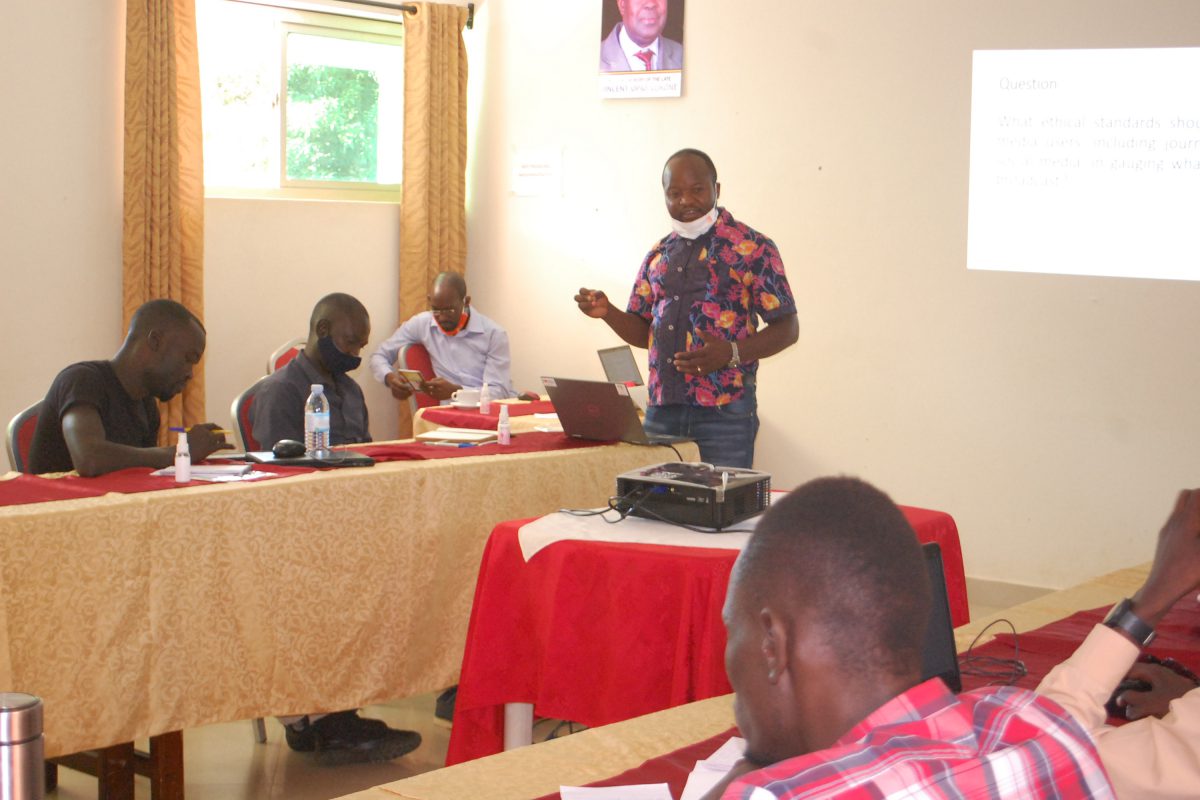
That is where the role of civil society becomes crucial in ensuring the media to play its needed role at such important democratic processes as elections. It is against this background that, ahead of Uganda’s January 2021 elections, the Collaboration on International ICT Policy for East and Southern Africa (CIPESA) conducted a series of training workshops to equip journalists with the relevant skills, knowledge and tools to aid them to report on the elections in a more professional and balanced manner.

“In the 2021 general election, since public rallies were limited to a small number of people, or banned altogether in some districts, there was a heavy reliance on the media by the candidates to reach out to the electorates. It is important that media workers are up to the task of delivering information to citizens in a balanced and neutral manner,” said Paul Kimumwe, Senior Program Officer for Research and Advocacy at CIPESA.

Due to the on-going Covid-19 pandemic, the government initially suspended all public gatherings, among other restrictions although these were progressively eased to allow political rallies in some districts provided they did not exceed 200 attendees.

As part of efforts to discourage mass rallies, the communication regulator, Uganda Communication Commission (UCC), in November 2020 issued the Guidelines on the Use of Media during the General Elections and Campaigns 2021. According to the guidelines, all media stations shall not discriminate against any political party or candidate or subject any political party or candidate to any prejudice in the broadcasting of political adverts.

On the other hand, all private media stations are required to ensure that all their advertising space and airtime was not bought out by one party. Yet, leading opposition candidates were barred from accessing some radio stations and campaigning in several towns.

In the lead up to the elections, journalists had fallen victim to arrests and assaults, there was an attempted block to media outlets running online – the state requested Facebook to block mainly opposition owned YouTube channels, reports of denials of accreditation to cover the elections emerged, thus threatening the plurality of the media.

With the media and digital platforms including social media providing key campaign platforms, there were concerns about the proliferation of disinformation, misinformation, and hate speech online. Earlier in March 2020, UCC had issued a public advisory notice against individuals (including journalists) misusing digital platforms to publish, distribute and forward false, unverified, or misleading stories and reports. In September 2020, the regulator issued a renewed order for online publishers and broadcasters to apply for operating licences.

According to Kimumwe,  the training was structured to provide the trainees with both knowledge and skills-based competences to help them cover elections more effectively and professionally.

“The curriculum included topics such as the role of media in electoral democracy, technology and journalism, electoral media-related laws and policies, peace journalism, how to prepare for and cover election day and the post-election period, and how journalists can ensure their safety,” noted Kimumwe.

He said it was important to include conflict-sensitive reporting given Uganda’s past history of a violent election process and the proliferation of hate speech during the campaigns, especially online. “We believe that the media could help in de-escalating the tensions through reporting as well as providing the much needed context and fact-checking certain utterances by politicians on the campaign trail,” he said.

Ahead of the training, there were various incidents of attacks against journalists on the campaign trail by security forces. It was important therefore that the trainees were equipped with safety and security skills as they covered the elections.

The training included editors and reporters from more than 50 media houses in the Acholi, Bukedi, Busoga, Elgon, and Teso  sub-region benefited from the training,  of whom 36% were female.

“The training helped me acquire skills to report on the elections as well as knowing my role and rights as a journalist” – Julius Wasike, Apex FM reporter, Jinja

“The training awakened my conscience and alertness towards safety and conflict-sensitive reporting” – Gerald Matembu, NBS reporter, Mbale

“I have learnt how to write stories that do not ignite the emotions” – Agnes Aromo, Radio Pacis journalist, Gulu

The campaign period was characterised by high levels of violence, including beatings of journalists, arrests of presidential candidates, and the killing of more than 50 people during a riot. Whereas this created fears that the election day and its aftermath would be marred by violence, the election day and the post-election period have been calm.

Nonetheless, there are allegations that the winning candidate, incumbent Yoweri Museveni, was fraudulently declared winner with 59% of the votes, and the runner-up, Robert Kyagulanyi, also known as Bobi Wine, has petitioned the Supreme Court to overturn Museveni’s victory. The blockage of the internet ahead of the elections undermined electoral transparency, severely hindered the work of journalists, and denied citizens’ access to badly needed information.

In November 2020, CIPESA partnered with Media Focus on Africa to bring together 80 key media practitioners and stakeholders including media support organisations, media houses, journalists’ associations, government bodies, independent content producers, civil society, and security organs to deliberate on challenges and opportunities for media during elections in a digital era. Conducted in Kampala, the engagement also gave journalists tips on digital security and fact-checking.

Besides the journalists’ training, CIPESA conducted other engagements that brought together key actors including Members of Parliament, Electoral Commission (EC) officials, election observer groups, and human rights organisations. A December 2020 roundtable saw officials from Facebook and WhatsApp present their efforts to combat cyber violence, harassment,  incitement, bullying, misinformation, fight hate speech and other objectionable content. Political party leaders and the EC officials explained how pivotal digital platforms had become in an election where physical meetings were heavily curtailed.

Internet Shutdowns Threaten Elections in Uganda

By Access Now |

Amidst a growing crackdown on media, human rights defenders, and opposition politicians, the Republic of Uganda will hold general elections on Thursday, January 14. With a dark history of internet and social media blocking during national events, and alarming reports of disruptions already emerging, Ugandan voters’ rights to access information and express opinion are under threat. The #KeepItOn coalition, via an open letter, is calling on the government to ensure open, accessible, and secure internet access for all throughout the election period and beyond.

“Shutting down or blocking the internet while reports of state violence and oppression are emerging is incredibly worrisome,” said Felicia Anthonio, Campaigner and #KeepItOn Lead at Access Now.“Uganda disconnected voters during the 2016 elections, and the #KeepItOn coalition is imploring authorities to set a new standard in 2021 by ensuring reliable, accessible internet to all — during this critical time, and hereafter.”

Access to the internet and social media platforms during the elections in Uganda will help foster transparency around the democratic process and promote active citizen participation. Access Now and 55 other organizations are urging the government of Uganda to:

  • Ensure that the internet, including social media and other digital communication platforms, remains open, accessible, and secure across Uganda throughout the election;
  • Ensure that mobile money, banking, and other financial avenues for transactions remain accessible and secure;
  • Order internet service providers to provide everyone with high-quality, secure, and unrestricted internet access; and
  • Order internet service providers to inform internet users of any potential disruptions and to take all reasonable steps to fix any identified disruptions likely to impact the quality of service they receive.

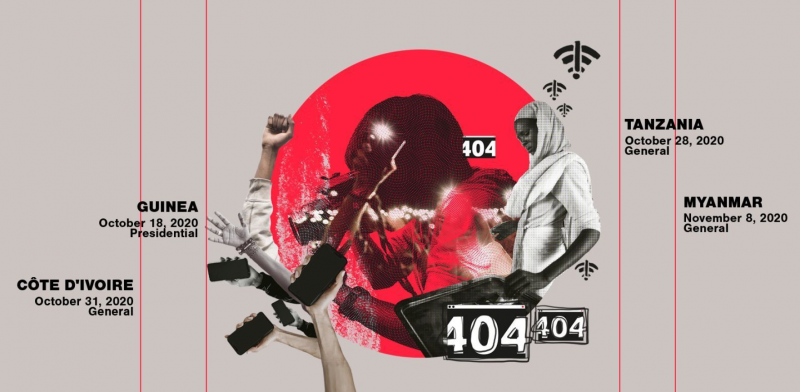
Internet shutdowns and blockings were a go-to tool for authorities during national events and protests in 2020, including in MyanmarBurundiTanzaniaEthiopiaBelarus, and many other countries. The Ugandan general election will be the African continent’s first in the new decade, and has the potential to set the stage for all other national events that follow.

Calling Out the African Union and Telecoms Associations to Prioritize ICT Access for Persons with Disabilities

By Edrine Wanyama |

The International Day of Persons with Disabilities (IDPD) has been observed every December 3 since 1992. The annual event aims to “promote the rights and well-being of persons with disabilities in all spheres of society and development, and to increase awareness of the situation of persons with disabilities in every aspect of political, social, economic and cultural life.”

The theme for 2020 was “Building back better: towards an inclusive, affordable, accessible and sustainable post COVID-19 world by, for and with persons with disabilities”. This is in line with the 2030 Agenda for Sustainable Development Goals (SDGs), which pledges to leave no one behind, and five of whose goals outline inclusion of persons with disabilities.

In the past year, the Collaboration on International ICT Policy for East and Southern Africa (CIPESA) has highlighted the need to remove barriers to ICT accessibility for persons with disabilities in Kenya, Tanzania and Uganda. Likewise, it has called for greater access to information for persons with disabilities, especially during the COVID-19 pandemic. Further, CIPESA has pointed out the need for telecommunications service providers, governments and donors to do more to promote ICT accessibility for persons with disabilities in Africa.

CIPESA is now shining the spotlight on the African Union Commission (AUC), the African Telecommunications Union (ATU) and the East African Communications Organisation (EACO) as critical regional bodies with  mandates to promote inclusive, affordable, accessible and sustainable information and communications technology (ICT) for persons with disabilities.

In separate  letters addressed to the  three organisations on International Day of Persons with Disabilities (IDPD), CIPESA acknowledges their critical roles, and that of their respective members, in promoting the rights of persons with disabilities in the digital sphere.

Specifically, the letters recall these organisations’ obligation to protect and advance the rights of persons with disabilities in line with the African Charter on Human and Peoples’ Rights, the United Nations’ Convention on the Rights of Persons with Disabilities and its Optional Protocol, the Treaty to Facilitate Access to Published Works for Persons Who Are Blind, Visually Impaired or Otherwise Print Disabled (the Marrakesh Treaty); the SDGs; and the Protocol to the African Charter on Human and Peoples’ Rights on the Rights of Persons with Disabilities in Africa (the Protocol).

The Protocol is critical for the promotion and effective protection of the rights of persons with disabilities. However, it is yet to be ratified by any African Union (AU) Member State and only has nine signatoriesAngola, Burkina Faso, Cameroon, Central African Republic, Gabon, Mali, Rwanda, South Africa, and Togo.

The Protocol  calls upon AU Member States to take “effective and appropriate measures to facilitate full enjoyment by persons with disabilities of the right to access “information, communications, sign language and tactile interpretation services, braille, audio and other services, including electronic services and emergency services.” Further, the Protocol calls upon States to ensure that persons with disability have access to quality and affordable mobility aids and assistive devices or technologies.

Despite states’ obligations in regional instruments, the letters point to continued inequality in accessing assistive technologies such as screen readers, screen magnification software, text readers, and speech input software; and  digital inaccessibility of websites mobile applications and services. e.

In the advent of the Covid-19 pandemic, the digital exclusion of persons with disabilities has deepened, as many cannot access vital information on the pandemic, lack access to education and remote working opportunities, which increasingly require the use of ICT..

The recommendations made in the letters include the following:

  • Ratify the Protocol to the African Charter on Human and Peoples’ Rights on the Rights of Persons with Disabilities in Africa as a matter of utmost priority, and promote awareness on its content and the rights it protects.
  • Provide incentives for innovation and investment in accessible ICT products and services, such as software solutions and accessible handsets and mobile devices.
  • Offer tax exemptions on handsets and mobile devices tailored to the needs of persons with disabilities.
  • Support the implementation of the International Telecommunications Union (ITU) Resolution 175 on Telecommunication/information and communication technology accessibility for persons with disabilities and persons with specific needs.
  • Ensure that information on COVID-19 is inclusive and provided in accessible and appropriate formats and languages.
  • Support the development, implementation and enforcement of relevant and enabling national policies and legislation on accessible communication products and services such as disability laws, Codes of Practice, consumer rights regulations, and ICT and disability policies.
  • Promote awareness on, and access of persons with disabilities to specialist devices and technologies such as manual Perkins Brailler, hand-held magnifiers, hand frames/slates and communication boards, screen readers, text-to-speech software and Augmentative and Alternative Communication (AAC).
  • Promote the participation of persons with disabilities in decision-making and policy development processes at national and regional levels.
  • Ensure the systematic collection, analysis, storage and dissemination of national statistics and data covering disability to increase the availability of high-quality, timely and reliable disaggregated data by disability, in order to facilitate the protection and promotion of the rights of persons with disabilities.
  • Promote multi-stakeholder cooperation between governments, the private sector, civil society and other relevant actors to incorporate diverse perspectives and promote the rights of persons with disabilities in accordance with the Protocol.

The detailed letters can be found here: African Union Commission (AUC) letter, the African Telecommunications Union (ATU) letter, and the East African Communications Organisation (EACO) letter.

Civil Society Organisations Call For a Full Integration of Human Rights in The Deployment of Digital Identification Systems

Press Release |

The Principles on Identification for Sustainable Development (the Principles), the creation of which was facilitated by the World Bank’s Identification for Development (ID4D) initiative in 2017, provide one of the few attempts at global standard-setting for the development of digital identification systems across the world. They are endorsed by many global and regional organizations (the “Endorsing Organizations”) that are active in funding, designing, developing, and deploying digital identification programs across the world, especially in developing and less developed countries.

Digital identification programmes are coming up across the world in various forms, and will have long term impacts on the lives and the rights of the individuals enrolled in these programmes. Engagement with civil society can help ensure the lived experience of people affected by these identification programs inform the Principles and the practices of International Organisations.

Access Now, Namati, and the Open Society Justice Initiative co-organized a Civil Society Organization (CSO) consultation in August 2020 that brought together over 60 civil society organizations from across the world for dialogue with the World Bank’s ID4D Initiative and Endorsing Organizations. The consultation occurred alongside the first review and revision of the Principles, which has been led by the Endorsing Organizations during 2020.

The consultation provided a platform for civil society feedback towards revisions to the Principles as well as dialogue around the roles of International Organizations (IOs) and Civil Society Organizations in developing rights-respecting digital identification programs.

This new civil society-drafted report presents a summary of the top-level comments and discussions that took place in the meeting, including recommendations such as:

  1. There is an urgent need for human rights criteria to be recognized as a tool for evaluation and oversight of existing and proposed digital identification systems – including throughout the Principles document
  2. Endorsing Organizations should commit to the application of these Principles in practice, including an affirmation that their support will extend only with identification programs that align with the Principles
  3. CSOs need to be formally recognized as partners with governments and corporations in designing and implementing digital identification systems, including greater country-level engagement with CSOs from the earliest stages of potential digital identification projects through to monitoring ongoing implementation
  4. Digital identification systems across the globe are already being deployed in a manner that enables repression through enhanced censorship, exclusion, and surveillance – but centering transparent and democratic processes as drivers of the development and deployment of these systems can mitigate these and other risks

Following the consultation and in line with this new report, we welcome the opportunity to further integrate the principles of the Universal Declaration of Human Rights and other sources of human rights in international law into the Principles of Identification and the design, deployment, and monitoring of digital identification systems in practice. We encourage the establishment of permanent and formal structures for the engagement of civil society organizations in global and national-level processes related to digital identification, in order to ensure identification technologies are used in service of human agency and dignity and to prevent further harms in the exercise of fundamental rights in their deployment.

We call on United Nations and regional human rights mechanisms, including the High Commissioner on Human Rights, treaty bodies, and Special Procedures, to take up the severe human rights risks involved in the context of digital identification systems as an urgent agenda item under their respective mandates.

We welcome further dialogue and engagement with the World Bank’s ID4D Initiative and other Endorsing Organizations and promoters of digital identification systems in order to ensure oversight and guidance towards human rights-aligned implementation of those systems.

Press Release Endorsed By:

  1. Access Now
  2. AfroLeadership
  3. Asociación por los Derechos Civiles (ADC)
  4. Collaboration on International ICT Policy for East and Southern Africa (CIPESA)
  5. Derechos Digitales
  6. Development and Justice Initiative
  7. Digital Welfare State and Human Rights Project, NYU Law School
  8. Haki na Sheria Initiative
  9. Human Rights Advocacy and Research Foundation (HRF)
  10. Myanmar Centre for Responsible Business (MCRB)
  11. Namati