The Collaboration on International ICT Policy for East and Southern Africa (CIPESA) has made a submission to the Parliament of Uganda’s Committee on Physical Infrastructure on the controversial digital number plate project. Officially known as the Intelligent Transport Monitoring System (ITMS), the project is justified on public interest grounds such as fighting crime, improving traffic safety and management.
However, the system’s proposed capabilities, including automated vehicle identification, potential real-time tracking of vehicles and their occupants, and integration with other government databases, raise substantial concerns about privacy, data protection, and constitutional rights and freedoms.
The submission calls on the Committee to assess the ITMS not merely as a motor vehicle identification exercise, but as a large-scale vehicle monitoring and personal data processing system with wide potential for surveillance.
The submission highlights the major legal, technical, and operational concerns that could undermine the project’s compliance with the Data Protection and Privacy Act, Cap. 97. These include the absence of a published Data Protection Impact Assessment, and inconsistent public information about the system’s technical specifications, such as the use of SIM chips, GPS trackers, and Bluetooth beacons.
The submission argues that the design and potential effects of the ITMS go to the root of fundamental rights and freedoms, as they could have a chilling effect on freedom of movement, assembly, and association. Because the project involves foreign contractors and cross-border data processing, it also poses cybersecurity and data sovereignty risks.
To address these concerns, CIPESA makes recommendations to the Committee aimed at establishing robust oversight and safeguarding fundamental digital rights. It also calls on Parliament to require full disclosure of the project’s technical architecture, data-flow maps, retention schedules, and contract terms to enable meaningful public and parliamentary scrutiny.
Furthermore, CIPESA calls on Parliament to require statutory purpose limitations, judicial oversight, enhancement of powers of the Personal Data Protection Office, and conduct of independent privacy and security audits prior to any further rollout of similar projects.
Meanwhile, the ITMS is under Parliamentary scrutiny over legality encompassing the procurement process, financial model and implementation. Several questions as to whether the deployed technology and infrastructure meet the government’s aims and objectives are a going concern.
Children have one job: to make mistakes, try things out, and figure out who they are becoming. Generative AI tools, by handing children ready-made answers, risk taking that job away before children ever get the chance to do it themselves. Yet, a blanket ban is never really a comprehensive solution.
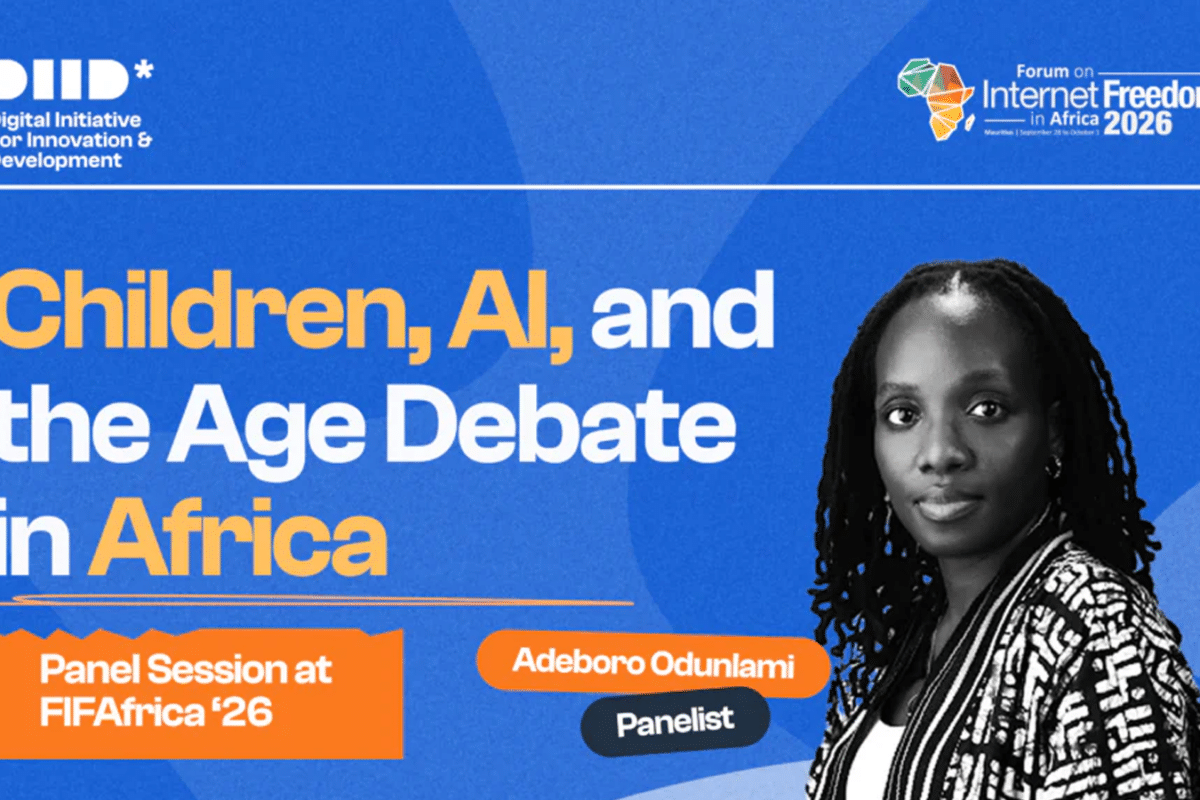
At this year’s forum on Internet Freedom in Africa (FIFAfrica ‘26), our Executive Director, Adeboro Odunlami, raised the above as a quiet but pointed concern.
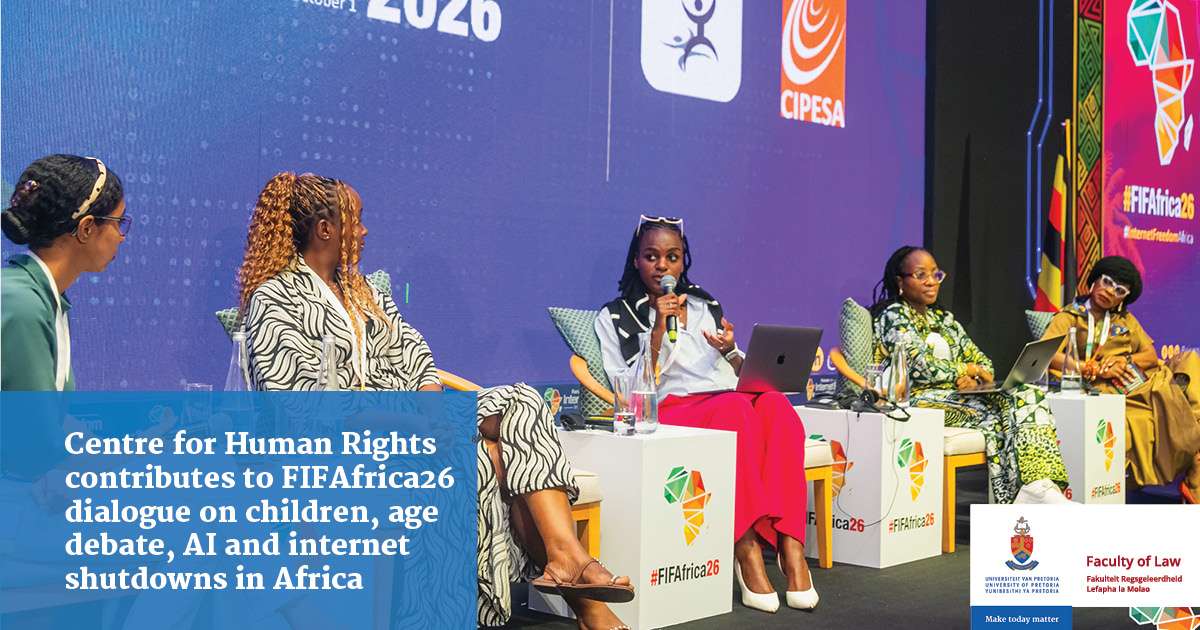
The forum, organized by CIPESA, ran from 28 September to 1 October 2026 in Mauritius. Adeboro represented DIID on the panel “Children, AI, and the Age Debate in Africa”, speaking alongside Belinda Matore (University of Pretoria), Afia Asantewaa Asare-Kyei (Meta’s Oversight Board), Yasmin Ahmed (FemTech Law Initiative) and Lillian Kariuki (Africa Child Online Safety Alliance).
The panel’s focus was to discuss a question of AI, social media and age-based bans in Africa, as countries like Australia, Gabon, and the UK have moved to ban under-16s from social media.
A ban gives political salience, but it is not a holistic solution.
Adeboro opened with a wider picture of what is at stake. Africa is projected to be home to the youngest population in the world by 2030. She also noted a Research where only about 2 percent of adults passed a test on divergent thinking, while roughly 90 percent of children in nursery school passed the same test. This showed that children have a natural capacity for creative, outside-the-box thinking. Generative AI tools, used without guidance, risk handing them answers before they ever practice using that capacity. A generation raised this way enters the labour force well served by tools, but under-trained in thinking for themselves. A child’s pre-existing disadvantage may compound problems here too. That is, children who start behind stay behind, carried further apart by how differently they get to use these tools.
Against that backdrop, Adeboro’s case against a blanket ban has several layers.
A ban offers real political value to politicians. To the public, it comes off as a decisive action; much stronger than saying “we conducted a risk assessment”. This is why policymakers reach for it since many parents already clamour for it.
A blanket ban can also regulate the wrong place. Platforms flagged by UNICEF for risk include messaging apps that are outside Meta’s own oversight structures, and non-consensual images frequently move through platforms like Telegram that a social-media ban might not reach at all.
And the evidence has not caught up to the policy. Bans are spreading fast. Australia, the UK, Rwanda and Gabon have all moved on it, and more countries are following. But the early data from countries further along only tells part of the story. The number of accounts are dropping on major platforms, while usage rises on smaller, less regulated ones. However, a reduction in accounts is not the outcome anyone is actually after. Child online safety is.
Adeboro’s conclusion on this point was that children’s attention has become a commodity, and the fix starts with the design of the platforms built to capture it. Safety by design and platform accountability, using the least restrictive method available, address the actual mechanism at work. Whereas, a ban only addresses its visibility.
Where DIID stands
This is the version of child online safety DIID keeps advocating for. Rather than look for a single switch to flip, policy should be based on a set of deliberate, evidence-led choices. Regulation should target the actual harm and be built with an honest view of who it reaches, and the practical capacity to enforce it. Children should be treated as participants rather than subjects.
We were glad to bring this thinking to FIFAfrica26, in a room full of people working on the same questions from different corners of the continent.
This article was first published by the Digital Initiative for Innovation and Development (DIID). Click here to read more on its website.
Study warns that expanding digital ID and public service systems could deepen exclusion without stronger governance and human rights safeguards.
A new report from CIPESA (Collaboration on International ICT Policy for East and Southern Africa) finds that the expansion of digital public infrastructure (DPI) systems across 11 African countries could have significant implications for human rights, democratic governance and civic participation.
The State of Internet Freedom in Africa 2026 report examines DPI developments in Egypt, Ethiopia, Ghana, Kenya, Nigeria, Senegal, South Africa, Tunisia, Uganda, Zambia and Zimbabwe. Governments across the continent are investing heavily in digital identity, payment and data-sharing systems to modernize public services and drive digital transformation.
But the report argues that insufficient attention has been paid to the governance and human rights implications of these systems. It calls for stronger rights-respecting frameworks before DPI becomes further entrenched in public administration and everyday life.
“Foundational credentials such as mandatory gateways and access to essential public and private services are increasingly facing flaws in architectural design and utility, technical failures, and inaccurate records,” the report claims in its conclusion.
The result is often widespread exclusion of vulnerable groups, according to the report, particularly affecting people with limited digital skills, poor connectivity or difficulties accessing civil registration systems which include rural communities, women, children and the elderly.
The report lists an extensive number of recommendations that can offset such problems. The recommendations include establishing robust governance such as rights-respecting national policies and laws, along with investment in complementary infrastructure to foster connectivity and capacity enhancement.
It recommends replacing coverage-only targets with disaggregated meaningful-connectivity and service-completion indicators; stopping internet shutdowns and other blanket connectivity restrictions as tools of political or security management, among other suggestions. The full State of Internet Freedom in Africa 2026 report can be read here.
The report was launched at the closing ceremony of the Forum on Internet Freedom in Africa (FIFAfrica26) held in Mauritius. Mauritius’ Minister of Information and Communication Technology, Dr Avinash Ramtoh, described DPI as “a critical infrastructure in any forward-looking country” and stressed the need to ensure digital systems are inclusive, accessible and rights-respecting.
The report’s release marked the conclusion of FIFAfrica26, a four-day gathering that brought together policymakers, researchers, civil society organizations, journalists, technologists, activists and development partners from across Africa and beyond. Discussions focused on issues including AI, data governance, platform accountability, digital inclusion and security, and civic participation. A recurring message was that technology is inseparable from society and that decisions about the design, governance and use of digital systems have profound consequences for rights, participation and power.
As Africa’s digital transformation accelerates, the report argues that these questions will become increasingly important in shaping how citizens access services, engage with governments and exercise their rights in the years ahead.
Africa’s rapid adoption of digital public infrastructure is transforming how citizens access government and private services, but weak safeguards, digital exclusion and fragmented oversight are creating growing risks to human rights and democratic participation, a new continental report warns.
The 2026 State of Internet Freedom in Africa(SIFA) report, unveiled by Collaboration on International ICT Policy for East and Southern Africa (CIPESA) during Forum on Internet Freedom in Africa 2026 (FIFAfrica26) in Mauritius, examines the growing use of Digital Public Infrastructure (DPI) across 11 African countries and its implications for privacy, inclusion, civic participation and democratic governance.
The study covered Egypt, Ethiopia, Ghana, Kenya, Nigeria, Senegal, South Africa, Tunisia, Uganda, Zambia and Zimbabwe.
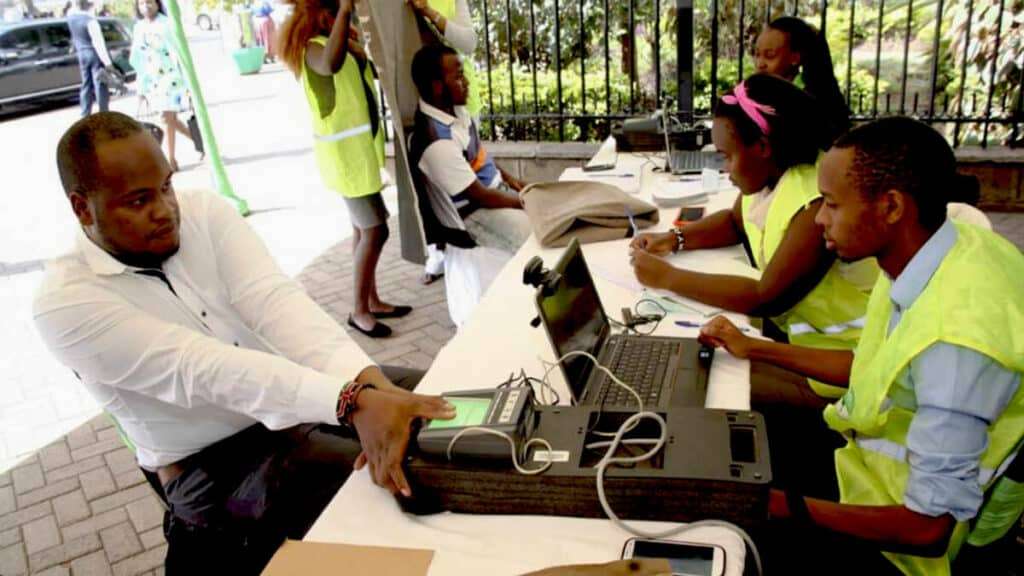
“DPI refers to foundational digital systems that allow governments, businesses and citizens to interact electronically. The report identifies three main components: digital identity, digital payments and data exchange platforms” the report explains.
According to the study, African governments are increasingly replacing fragmented government systems with interconnected digital platforms capable of sharing data, verifying identities, processing payments and delivering public services.
By the end of September 2026, 17 African countries were among 39 countries globally participating in the 50-in-5 campaign, an initiative aimed at helping countries design, launch and scale components of digital public infrastructure.
The report says early progress in countries including Ethiopia, Ghana, Kenya, Nigeria, Rwanda, Togo and Uganda, alongside continental digital transformation ambitions and support from development partners, has accelerated the adoption of DPI.
But the report cautions that technological progress is moving faster than the institutions and safeguards needed to protect citizens.
Digital Exclusion Remains A Major Concern
The study finds that people who are already digitally connected, formally documented and living in urban areas tend to benefit first from DPI systems.
Those facing barriers such as poor connectivity, limited digital literacy, disability, poverty or weak civil registration systems risk being left behind.
“Rural communities, low-income people, older people, persons with disabilities, migrants and communities facing contested citizenship are particularly vulnerable to exclusion” the report identifies.
It cites concerns raised over digital identity systems in Kenya and Uganda, where refugees, stateless people and some rural communities have faced exclusion.
The report warns that DPI can reproduce existing inequalities when a person’s ability to access services depends on documentation, biometric records, addresses or other foundational data that may be missing or inaccurate.
As more public and private services rely on the same foundational systems, a failure in one record can have consequences across multiple areas of a person’s life.
A citizen, for example, could face difficulties accessing a service because of an incorrect or missing identity, citizenship, address or birth record held by another government agency.
Connectivity Failures Could Have Wider Consequences
The report also highlights the growing dependence of essential services on connectivity and interconnected digital infrastructure.
“A cable cut, power failure, cloud outage or internet disruption could simultaneously affect identity systems, payments and public services” the report warns.
For landlocked countries, the report says resilience can also depend on neighbouring states, border crossings and regional infrastructure-restoration arrangements.
The study further finds that although governments are increasingly pursuing digital sovereignty, including local data centres, data localisation and domestic digital infrastructure where many national DPI systems remain dependent on foreign financing, technology companies and international standards.
AI generated image/CoPilot
The report identifies organisations and actors including the World Bank, development partners, Modular Open-Source Identification Platform (MOSIP), telecommunications operators, global payment networks and technology vendors as playing significant roles in financing, developing or operating various DPI systems.
Democracy And Civic Participation At Risk
The report says the consequences of DPI extend beyond service delivery to democratic participation.
It warns that the growing convergence of foundational identity systems with electoral processes and telecommunications infrastructure could expose citizens to democratic risks.
“Network disruptions, inaccurate administrative records and restrictions on digital platforms can affect people’s ability to participate in public life and exercise civic freedoms”, according to the study.
“Technology-facilitated gender-based violence, online harassment and misogynistic disinformation are also identified as factors that can discourage women from participating in political and civic life” the report shows.
The report argues that DPI does not necessarily create underlying inequalities, but can reproduce or intensify them when systems fail to account for differences in documentation, disability, gender, income, geography or language.
No Clear Continental Leaders or Laggards
The study cautions against ranking African countries simply according to their level of digital development.
It finds that countries can make significant progress in one aspect of DPI while continuing to face serious weaknesses in areas such as oversight, access or legal remedy.
According to the report, Nigeria, Ethiopia and Ghana perform strongly on aspects of scale and payments, while Kenya and South Africa are comparatively stronger on institutional contestability.
The broader finding, however, is that progress is uneven.
The report says technical development, institutional safeguards and rights protection can advance at different speeds within the same country.
Call For Stronger Safeguards
The report recommends that governments conduct human rights, data protection and equality impact assessments before major DPI systems are introduced or significantly expanded.
It also calls for transparent information about the agencies responsible for systems, suppliers and financiers, as well as accessible complaint and correction mechanisms.
Governments are urged to maintain non-digital alternatives so that citizens who cannot access digital systems are not excluded from essential services.
Oversight institutions, meanwhile, should conduct regular audits of national identity databases, interoperability platforms and government-to-person payment systems, according to the report.
The study also calls on technology companies, telecommunications operators, banks and payment firms to conduct human-rights due diligence on high-risk DPI projects, particularly those involving identity, biometrics, data exchange and surveillance.
Development partners and DPI financiers are urged to link funding and expansion to evidence of inclusion, rights protection, effective oversight and access to remedy rather than relying primarily on measures such as enrolment numbers, infrastructure coverage or transaction volumes.
For civil society and the media, the report recommends greater scrutiny of DPI before systems are deployed, including investigation of procurement, system design, vendor arrangements, identity and authentication failures and the use of digital systems in elections.
Building Trust Into Africa’s Digital Future
The report concludes that DPI is becoming an increasingly important part of the relationship between African states and their citizens.
While interconnected digital systems can improve administrative efficiency and financial inclusion, the study warns that they are not neutral simply because they are technological systems.
“Technical failures, inaccurate records and poorly designed access requirements can trigger cascading exclusion, particularly among people already facing barriers to connectivity, documentation and digital literacy” the report notes.
The report argues that the long-term legitimacy and public trust of DPI will depend on whether rights protections are built into the systems from the beginning rather than introduced later as compliance measures.
It recommends accessible non-digital channels, stronger data-protection enforcement, independent oversight, resilient connectivity and timely access to legal remedies as key elements of a rights-respecting digital future for Africa.
This article was first published by TalkAfrica on October 12, 2026. Click here to read more on their website
The Centre for Human Rights, Faculty of Law, University of Pretoria participated in the 13th Forum on Internet Freedom in Africa (FIFAfrica26), held in Mauritius from 28 September to 1 October 2026. Hosted by the Collaboration on International ICT Policy for East and Southern Africa (CIPESA) in partnership with the Mauritius-based Halley Movement Coalition, the Forum brought together policymakers, regulators, civil society organisations, academics, journalists, technology practitioners, private sector actors and digital rights advocates from across Africa and beyond to engage on the continent’s evolving digital landscape. CIPESA highlighted Mauritius’ growing role in technology-driven governance and digital transformation, including its work on AI regulation and digital public services, noting it as one of the reasons for hosting FIFA.
Dr Avinash Ramtohul, Mauritius’ Minister of Information Technology, Communication and Innovation delivered the Forum’s keynote address. His Keynote centred on the emerging debate on responsible AI governance through his book, Safeguarding Democracy in the Age of Artificial Intelligence – AIRA: Who Serves Whom? The publication examines the expanding role of AI in public administration and democratic decision-making and considers regulatory approaches aimed at ensuring that AI systems are developed and deployed responsibly, with appropriate safeguards for rights, transparency and accountability.
FIFAfrica26 provided a platform for discussions on some of the most pressing questions facing Africa’s digital future, including digital democracy and civic participation, data governance and sovereignty, artificial intelligence and emerging technologies, platform accountability, digital inclusion, the digital economy and trade, movement building, and digital security and safety. The Forum also sought to strengthen African participation in global digital governance processes and shape the continent’s contribution to emerging debates on technology and rights.
Our Belinda Matore participated as a panellist in a discussion on “Children, AI and the Age Debate in Africa,” alongside Adeboro Odunlami, Lillian Kariuki and Afia Asantewaa Asare-Kyei. The session examined the growing debate over restricting social media access for children under 16 and questioned whether blanket age restrictions are appropriate for African contexts. The discussion focused on the need to balance child protection with children’s rights to participation, expression, information, education and digital access. Panellists considered whether African countries should adopt emerging international approaches or develop regulatory responses that reflect local realities. The panel also explored the growing use of AI and conversational technologies by children, highlighting emerging concerns around privacy, safety, autonomy, discrimination and harmful content. This raised the need for regulatory frameworks that anticipate technological developments and address risks at the design and deployment stages, rather than responding only after harm occurs. A further focus was age assurance, including the tension between protecting children and safeguarding their privacy and personal data. The discussion emphasised that age-verification mechanisms should incorporate data minimisation and should not create additional risks through unnecessary collection of sensitive information. The session advocated for a rights-based and context-sensitive approach to child online safety. Rather than relying solely on restricting access, African regulatory approaches should promote safer digital environments, platform accountability and age-appropriate protections while recognising differences across the continent in connectivity, affordability, language, disability, digital literacy, identification and patterns of technology use.
Michael Aboneka, also from the Centre for Human Rights, attended and participated as a panellist in two sessions starting with day zero’s panel discussion on AI governance in Africa where his major discussion revolved around meaningful participation of all communities of Africa in the framing of these governance frameworks. He further discussed the role of Civil Society, emphasizing advocacy and holding governments and tech platforms accountable to ensure that AI benefits all persons without exclusion and that its harms are checked and mitigated at every stage. The second panel, organised by the Digital Rights Alliance Africa, focused on the role of bar associations in protecting and promoting internet Freedom through challenging internet shutdowns. Michael emphasised that the greatest of all, is ensuring the promotion of rule of law which will ensure enjoyment of freedom of expression online without arbitrarily being gagged. Internet shutdowns should not happen at all and any state must demonstrate any internet throttling or shutdown through the law. He called upon bar associations in Africa to rise to the occasion and enhance research advocacy and strategic litigation to protect the freedoms both online and offline. He further called upon the judiciary to exercise their judicial power in accordance with the will of the people and the constitutions of Africa in protecting these freedoms.
For the Centre for Human Rights, participation in FIFAfrica26 provided an important opportunity to contribute to continental discussions at the intersection of children’s rights, digital rights, artificial intelligence and technology governance. It also reinforced the importance of ensuring that African voices remain central to debates about how emerging technologies should be regulated and how rights can be protected in increasingly digital societies.
As AI and digital platforms become increasingly embedded in children’s everyday lives, questions of age, access and protection will require continued engagement between human rights practitioners, policymakers, regulators, technology companies, researchers and, importantly, children themselves. The Centre for Human Rights was pleased to contribute its expertise to these important regional conversations at FIFAfrica26, working alongside CIPESA and ICNL, and to the Day Zero Forum on Regional AI Governance convened by the Global Centre on AI Governance. These spaces are critical to advancing rights-respecting approaches to AI and digital governance that are grounded in African realities and perspectives.
This article was first published by the Center for Human Rights on October 13, 2026, on its website.