
By Jimmy Kainja |
Mobile devices such as smartphones, computers, and tablets have transformed how journalists, activists, public figures, and ordinary citizens access, produce, and circulate information. By connecting people to a global communication infrastructure, these technologies have expanded opportunities for public debate, civic engagement, and accountability. Yet the same technologies can also facilitate surveillance, particularly targeting individuals and groups whose work challenges established power structures.
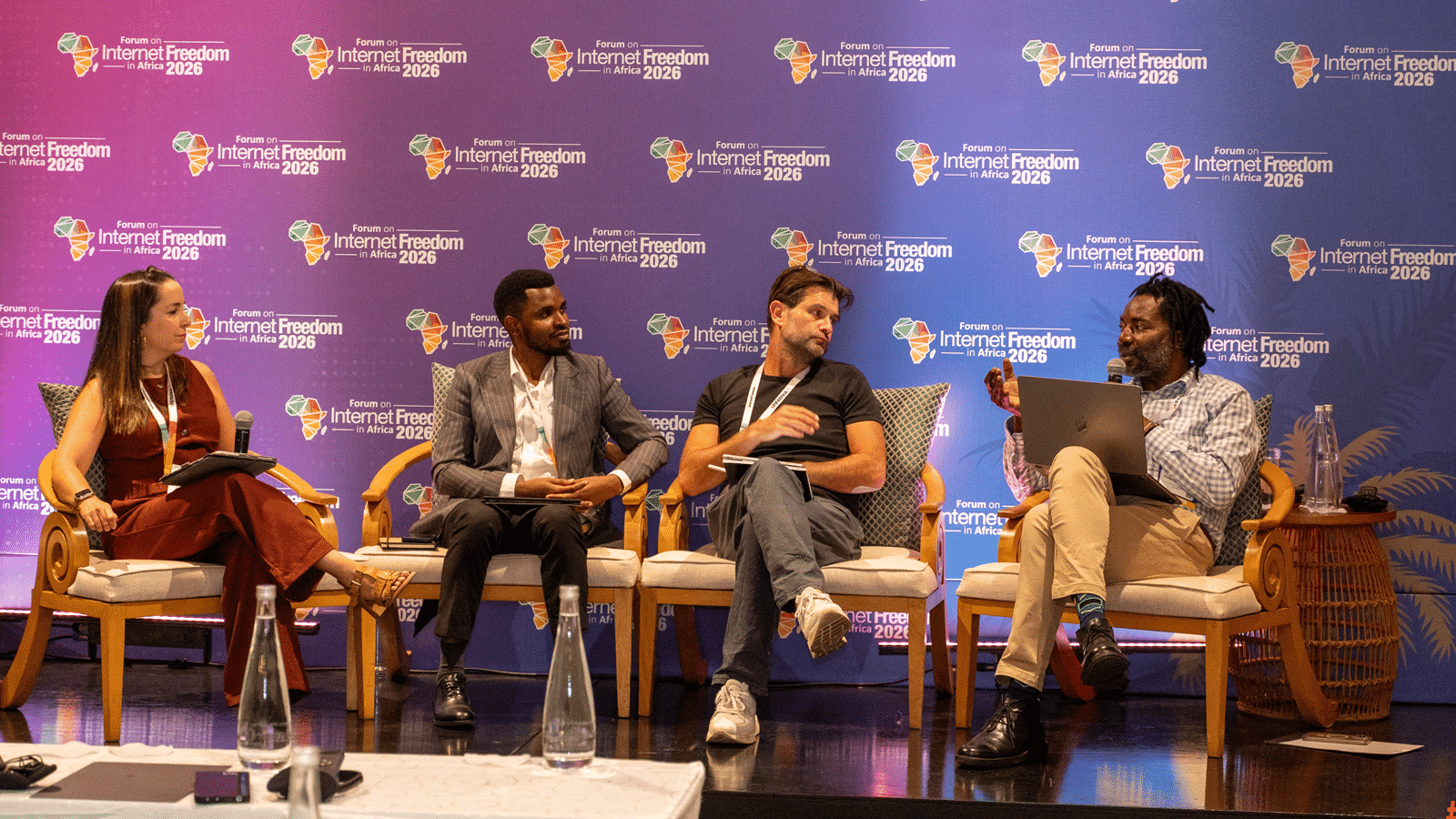
These tensions were explored at a panel discussion titled Spyware on Trial: A Comparative Discussion Across Jurisdictions, held at the recent Forum on Internet Freedom in Africa (FIFAfrica26). The panel hosted by Media Defence examined how spyware operates within surveillance systems and how its effects extend beyond individual privacy, undermining journalism, collective organising, and democratic participation.
Spyware as Part of a Wider Surveillance Ecosystem
A key argument that emerged during the discussion was that spyware should not be seen as an isolated technology, but as part of a broader surveillance ecosystem. As one panellist observed, surveillance takes multiple forms, including physical monitoring and confiscating personal devices for further examination. Spyware, however, adds a distinct dimension because it enables remote, often less visible monitoring, increasing uncertainty about whether an individual’s communications, activities, or personal information are being accessed.
Importantly, the panellist argued that the mere possibility of surveillance can have consequences, even when there is no definitive evidence of its occurrence. The uncertainty surrounding spyware can generate fear and distrust, prompting individuals to reconsider whom they communicate with, what information they share, and whether they should continue engaging with particular networks.
As the panellist explained, although spyware’s effects may initially seem individual, their consequences extend well beyond the person targeted. Peers may stigmatise or ostracise individuals suspected of being compromised, weakening their relationships and isolating them from the networks on which their work depends. In this sense, surveillance can disrupt social relationships and collective action without necessarily targeting an entire organisation or movement.
The Chilling Effect on Journalism and Collective Organising
The investigative journalist on the panel reinforced this argument by recounting his own experience in Malawi. He explained that a Non-Governmental Organisation (NGO) leader who had pledged his support before the journalists were arrested and had their devices confiscated stopped communicating with the journalist after it became known that Malawian authorities had confiscated and tampered with his devices. The incident illustrated how the perceived risk of surveillance can undermine trust between journalists and their sources, even when the sources themselves have not been directly targeted.
The chilling effect of surveillance is often discussed in relation to freedom of expression, but it can be difficult to demonstrate how it operates in practice. This example provided a concrete illustration of how the fear of compromised communications can alter people’s behaviour and relationships. The NGO leader’s decision to stop communicating with the journalist suggests that the perceived risk of surveillance can be enough to discourage engagement, even in the absence of conclusive evidence that spyware has been deployed against a particular person or communication channel.
The implications extend way beyond individual privacy and a journalist’s ability to communicate freely. When people become reluctant to exchange information, attend meetings, or associate with individuals perceived to be under surveillance, the consequences can include restrictions on freedom of association, reduced opportunities for mobilisation, and weakened democratic participation. Surveillance therefore affects not only those directly targeted but also the wider networks and movements that depend on trust, communication, and collaboration. For civil society organisations and public interest groups, this can undermine the very relationships necessary for collective organising and movement building.
Device Confiscation, Legal Mechanisms, and Digital Surveillance
The panel also explored how surveillance operates across African countries through different but interconnected practices. These include physically confiscating mobile phones and computers, examining or manipulating seized devices, and using legal mechanisms to justify or facilitate their seizure. Once authorities possess devices, they may access sensitive information, examine communications, and expose confidential material. When spyware is installed, or devices are compromised and the risks may persist even after authorities return the devices to their owners.
The discussion also highlighted the use of law as an instrument to facilitate surveillance, a practice that may be understood as lawfare. In this context, legal powers can justify actions such as seizing activists’ devices, potentially creating opportunities to access information about their communications and networks. Panellists cited examples of the seizure and alleged tampering with activists’ mobile phones in Kenya, illustrating how these practices can affect people working on public interest issues across the region.
For investigative journalists, these practices pose a particular threat because their work often depends on maintaining confidential relationships with sources. Investigative journalists often handle sensitive information, and their sources often have a lot to lose, including the threat of death if their identities are known or disclosed. The security of a journalist’s device is therefore not merely a matter of personal privacy; it is also central to protecting their sources, preserving sensitive evidence, and ensuring that information can be reported in the public interest. When authorities confiscate or compromise devices, the consequences can extend to the people whose identities, communications, or disclosures may be exposed.
Reflecting on the impact of his arrest and the confiscation of his and his organisation’s devices, the Malawian journalist described the consequences for his work:
We’ve lost a big chunk of information that we used to get from the Anti-Corruption Bureau, and we’ve lost a good number of our sources because of the idea [that our gadgets spied on] that is being planted in our sources out there, making the job of journalists so difficult because you cannot just wake up one day and do the stories that we do without sources of information, so the impact of spyware is huge on the public. When investigative journalism fails, the biggest victim is the public.
This testimony highlights the broader public consequences of surveillance. The loss of sources and information does not merely inconvenience a journalist or compromise an individual investigation; it can also prevent important stories from reaching the public. When sources fear that their identities or communications may be exposed, they may withhold information about corruption, misconduct, or abuses of power. Investigative journalism becomes harder, and those whose actions might otherwise be scrutinised face fewer opportunities for public accountability.
Citizens ultimately bear the cost, as they depend on independent journalism to access information, assess the conduct of public institutions, and make informed decisions about public affairs.
Spyware and the Erosion of Democratic Freedoms
The discussion demonstrated that spyware raises concerns extending far beyond digital security and the protection of personal data. Its use, or even the perception that it is being used, can undermine several fundamental freedoms, including freedom of expression, freedom of association, and access to information. These freedoms are closely interconnected: citizens need to communicate freely, associate with others, and access reliable information to participate meaningfully in democratic processes. Although surveillance may target particular individuals, its broader effect can weaken the relationships and institutions that sustain public interest work and democratic participation.
A key insight from the panel was that understanding contemporary surveillance requires moving beyond a narrow focus on what a particular technology can do. The more important question is how spyware interacts with other surveillance practices, legal powers, institutional arrangements, and social relationships. Device confiscation, legal intimidation, digital monitoring, and the erosion of trust can reinforce one another, producing consequences greater than any single practice in isolation.
Looking Beyond the Technology
The session offered an important reminder that digital technologies are not inherently democratic or repressive; their effects depend substantially on how they are deployed, by whom, and within what political and legal contexts.
Addressing these challenges requires more than technical safeguards against spyware. It also demands scrutiny of the legal and institutional arrangements that enable surveillance, protection for journalists and their sources, and stronger accountability mechanisms to prevent the misuse of surveillance capabilities.
Ultimately, the question is not simply whether spyware can be brought to trial, but whether the broader surveillance ecosystem in which it operates can be subjected to meaningful democratic oversight. Without such scrutiny, technologies that promise greater connectivity and participation may instead contribute to an environment in which communication becomes a source of vulnerability and the exercise of fundamental democratic freedoms carries increasing risks.