
By Doreen Elizabeth Namuyanja |
Civil society staff are rapidly embracing Artificial intelligence (AI). They use it to research, draft content, analyse data and write funding proposals. Using it responsibly, without compromising the rights we defend, is the harder part.
A human rights defender’s testimony. A partner’s financial records. An unpublished research draft. Every civil society organisation (CSO) holds material like this, and it takes a single paste into a free AI tool to put any of it at risk.
Many organisations will recognise the temptation, because AI is already in the room. These tools can strengthen organisational capacity and advocacy. However, their adoption also brings responsibilities, including protecting sensitive information, verifying outputs and ensuring that the technologies organisations use uphold the human rights principles they promote. The real question is whether our safeguards, skills and advocacy can keep pace with how quickly AI is being adopted.
Findings from the Global Index on Responsible AI (GIRAI) 2026, alongside national discussions and comparative analyses, highlight recurring governance gaps, including inadequate investment in AI skills, insufficient worker safeguards and limited oversight. Some countries show progress. Nigeria, for example, combines AI literacy and skills initiatives with legal safeguards for children’s data, while Kenya’s AI strategy recognises local language technologies as a means of promoting linguistic diversity.
Across these contexts, challenges remain in translating policy commitments into effective implementation, multi-stakeholder collaboration and enforceable safeguards. These governance challenges also have implications for civil society, which must navigate evolving regulatory environments while developing its own capacity to use AI safely and hold governments and technology providers accountable.
Adoption of AI remains uneven among civil society actors. A 2025 CIVICUS report, AI and Civil Society: Threats and Obstacles to Deployment and Advocacy, found that 63 of 293 survey respondents said their organisations did not deploy AI. Among those using it, more than half reported limited applications, primarily research, while only 49 respondents reported broader use across six to nine tasks. These findings suggest that civil society’s engagement with AI encompasses different levels of experience and institutional readiness, requiring support that responds to organisations’ actual practices and needs.
Civil society also faces risks from AI deployed by others. Surveillance technologies can threaten activists’ privacy and safety, while content moderation systems and AI-generated disinformation can undermine public communication and civic participation. The CIVICUS report identifies financial and technical constraints that limit organisations’ ability to adopt AI responsibly and engage in accountability efforts. For CSOs, internal capacity development and external advocacy are therefore closely connected.
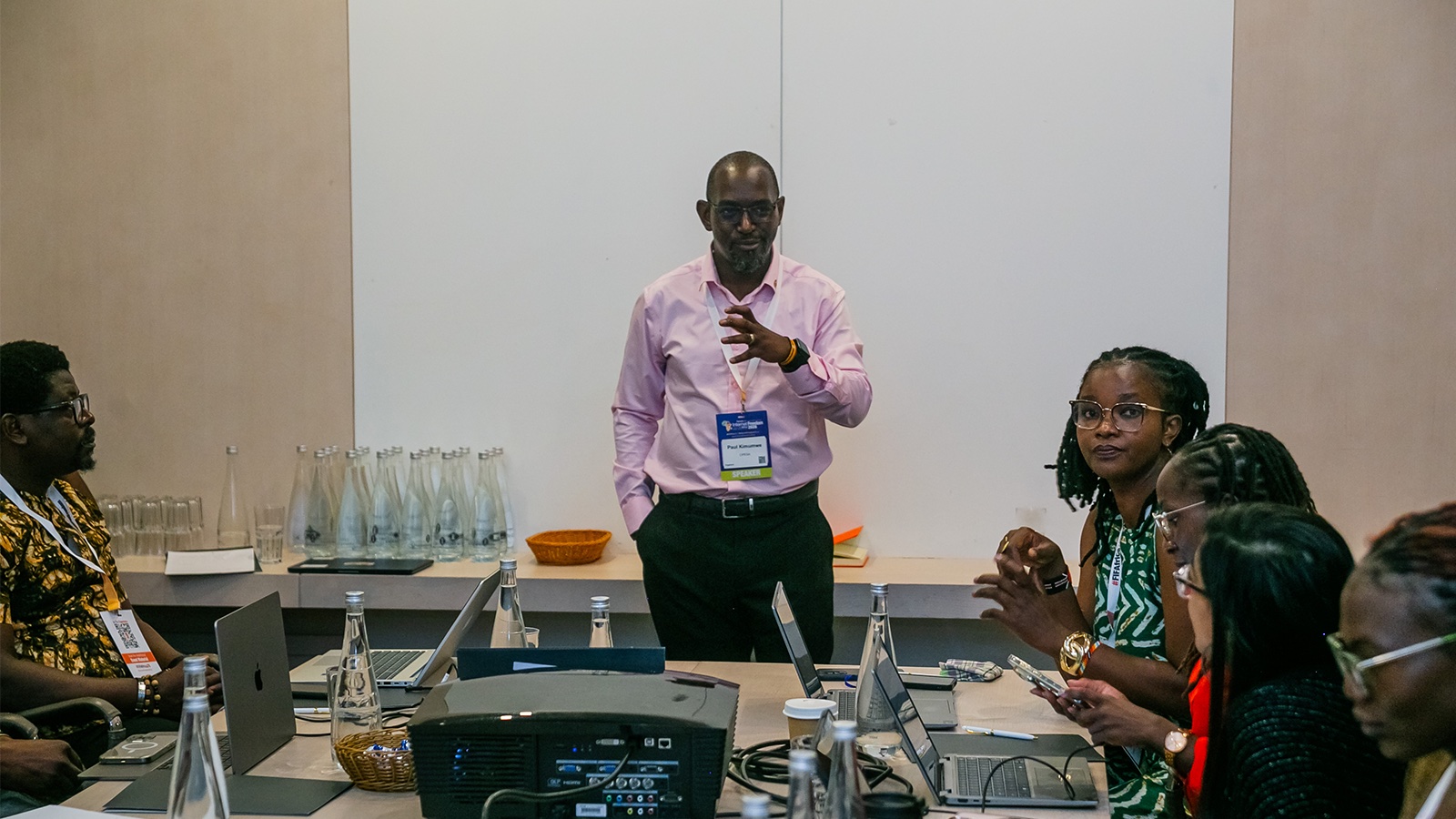
These interconnected challenges were explored during the workshop on Navigating African Artificial Intelligence Governance: Legal Risks and Safeguards for CSOs, hosted by CIPESA and the Thomson Reuters Foundation at the Forum on Internet Freedom in Africa (FIFAfrica) held in Mauritius in September 2026. The engagement supported CSOs to consider how they could build internal capacity to use AI responsibly while strengthening their ability to advocate for ethical governance. Discussions examined practical concerns around privacy, disinformation, bias, human oversight and accountability.
A poll conducted during the workshop found that 19 of the 20 respondents used AI tools weekly. Although the sample was small, the finding illustrates the extent to which AI has entered the everyday working practices of participating CSOs. It also showed that organisations need shared expectations and safeguards, while individual users need the skills and judgement to apply them.
At the organisational level, CIPESA’s own experience offers a useful starting point. To inform the development of its internal AI policy, CIPESA surveyed staff on their knowledge, attitudes, practices and expectations. All respondents reported using AI tools at work, although most did so occasionally. A quarter of the staff did not consider themselves familiar with the tools, and half were not very confident in their ability to fact-check AI-generated content. The findings helped identify the guidance and training needed to support responsible use.
A central element of this approach is a structured framework for identifying, classifying and mitigating AI risks. In organisational practice, a risk-based assessment should consider the purpose of a proposed use, the sensitivity of the information involved, the people who could be affected, and the potential consequences of error or misuse. The level of risk, and the safeguards required, will depend on the nature of the AI application and its potential impact. Summarising a public document requires different safeguards from processing confidential testimony or using AI to support decisions about individuals. The assessment should inform whether to proceed, what controls and human review are needed, or whether the proposed use is unsuitable.
Protecting sensitive information is particularly important. CSOs may hold testimonies from human rights defenders, partner records, personnel files and unpublished research. Before entering such material into an AI platform, staff need to know how the service handles data and whether the people the material concerns have agreed to it being shared. Staff need clear procedures for identifying sensitive information, assessing whether a tool is suitable and seeking guidance when in doubt.
Choosing an AI tool is also a data protection decision. Before approving a service, organisations should find out whether the provider retains prompts and uploaded files, whether it uses them to train its models, where it stores data, and what its terms of service promise. Free versions of popular tools often offer weaker protections than paid versions. Where the answers are unclear, organisations should exclude the tool from the list of those approved for handling sensitive information.
Accountability also extends to the quality of AI-assisted work. Workshop participants raised concerns about generated information being reproduced and eventually treated as fact without adequate verification. For organisations whose advocacy depends on credible evidence, human review must include checking sources, verifying claims and assessing whether interpretations reflect the context. Responsibility for published findings and recommendations remains with the organisation and its authors.
Putting this guidance into practice requires staff training, clear responsibility for implementation and opportunities to discuss emerging concerns. Policies should be reviewed as tools and working practices change. This allows organisations to benefit from useful applications while maintaining the safeguards and professional judgement on which their credibility depends.
Priorities for strengthening responsible AI use in civil society
- Develop an AI Policy with the involvement of staff across functions, defining acceptable uses, approved tools, limits on sensitive information, how AI-assisted work is checked, and when its use should be disclosed. Tie the policy to your existing research, publications, data protection and safeguarding procedures.
- Train staff to understand the limitations of AI tools, identify bias, verify AI-generated claims and assess privacy risks, using exercises drawn from everyday tasks.
- Assign clear responsibility for reviewing AI-assisted work, especially research, public communications and decisions affecting people. Designate someone to coordinate the guidance, provide staff channels to raise concerns, and review safeguards regularly as AI tools change.
- Funders and capacity building partners should support staff training, technical advice, suitable tools and information security. Expecting responsible use without providing the necessary resources leaves small, stretched teams behind.
- Document the benefits, limits and risks encountered, and share lessons without exposing sensitive information. Combined with evidence from affected communities, these experiences can strengthen the case for transparency, independent oversight, meaningful participation and remedies when AI causes harm.
Every organisation holds something worth protecting, and AI is already within reach of much of it. The test for civil society is whether our safeguards, skills, and advocacy keep pace. That will require sustained support beyond any single workshop: peer learning, practical guidance, and follow-up support that turn these priorities into daily practice and strengthen civil society’s contribution to rights-respecting AI governance across Africa.