By Lister Namumba |
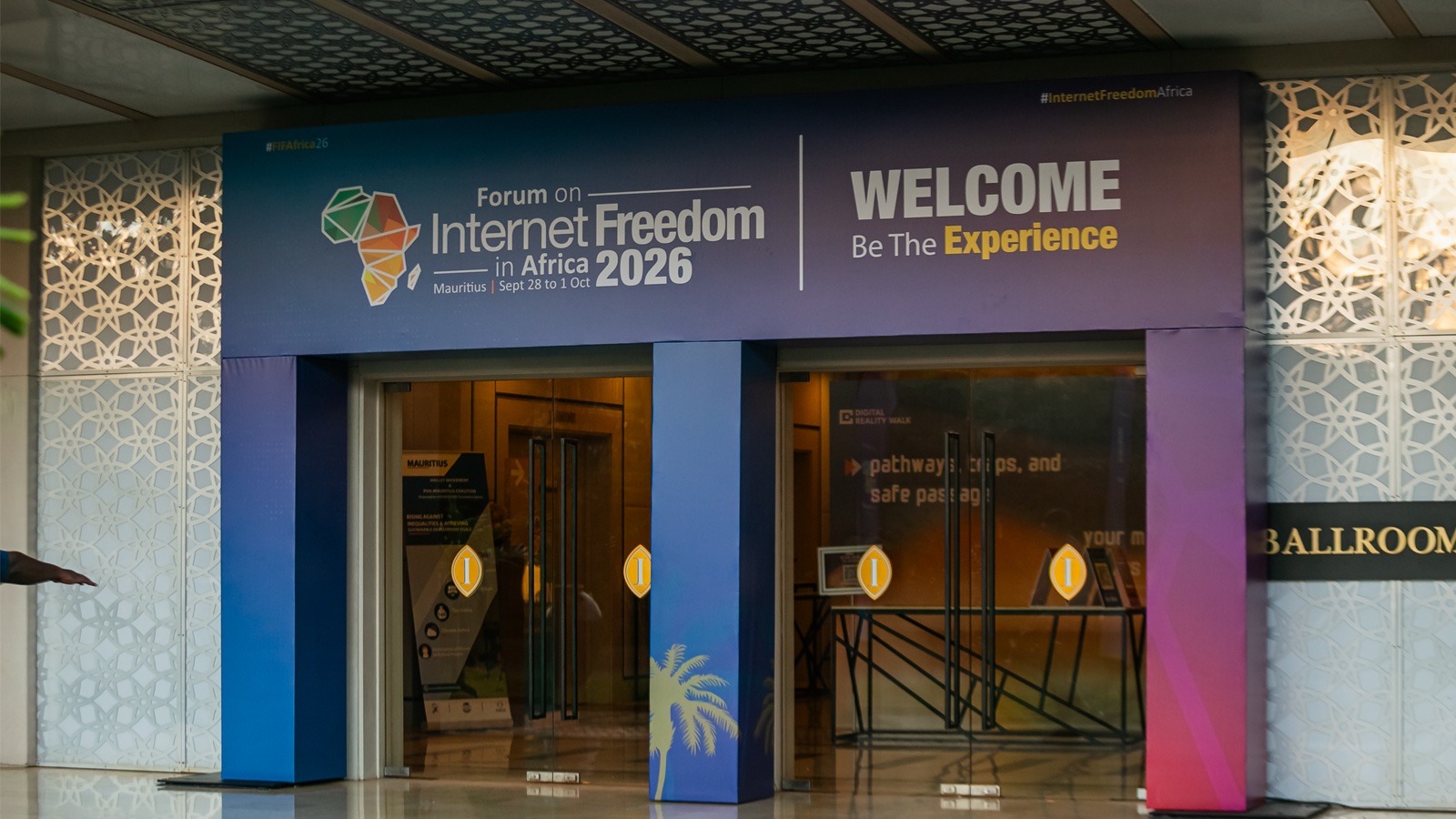
Moxii Africa, formerly Media Monitoring Africa, participated in the 13th edition of the Forum on Internet Freedom in Africa (FIFAfrica) convened by the Collaboration on International ICT Policy for East and Southern Africa (CIPESA). Moxii Africa, represented by Lister Namumba, Program Manager for Monitoring, Research and Analysis, delivered a keynote on the update of the African Commission on Human and Peoples’ Rights (ACHPR) Resolution 630 Draft Guidelines.
The update followed consultations held at the 2025 edition of FIFAfrica in Windhoek, Namibia, where delegates were consulted on what should inform the Guidelines. Moxii Africa supported the ACHPR Special Rapporteur for Freedom of Expression and Access to Information in Africa, Honourable Commissioner, Ourveena Geereesha Topsy-Sonoo in the development of the Draft Guidelines with support from UNESCO and the European Union (EU). The work was implemented within the framework of the EU-funded project, “Safeguarding Freedom of Expression and Access to Information through the implementation of UNESCO’s Guidelines for the Governance of Digital Platforms.”
The days of Africa simply adopting standards from elsewhere because that is what others are doing are over. As we seek to address our continent’s unique challenges and strengths, it is essential that Africa is a norm-setter for technology governance standards. Further, it is essential that these standards are focused on African human rights principles and values, and are developed drawing on African expertise.
At the Forum, we engaged with different stakeholders across the continent and heard about different languages, different levels of connectivity, different media environments and different experiences of elections, conflict, inequality, discrimination and access to information. We asked what information integrity means in African contexts, while grounding the process in African human-rights principles and values. That is important because we need to utilise our own understanding and context for technology governance standards.
Meanwhile, Moxii Africa has held approximately 30 in-person consultations across the African continent with various stakeholders, including civil society organisations, journalists, human rights defenders, researchers, regulators, technology companies and even young people. The Draft Guidelines were presented to and reviewed by the ACHPR during its 88th Ordinary Session in July 2026. A call for public comment has since been published with the Commission receiving submissions on the Draft Guidelines until 21 December, 2026.
“We encourage anyone with an interest in good governance, human rights, technology and the future of information integrity to go to the African Commission on Human and Peoples’ Rights website. Read the Draft Guidelines. Engage with them and participate in the public comment process. If something needs strengthening, tell the Commission. If something does not adequately reflect your country’s reality, tell the Commission. If you have concerns about how information integrity, freedom of expression, platform responsibility or independent fact-checking should work in your context, tell the Commission. Because this is precisely how African standards should be developed, through African participation,” Lister Namumba.
Moxii Africa also participated in several other sessions at the Forum, including a Masterclass on climate change and information integrity. The Masterclass, convened by CIPESA in partnership with UNESCO, explored the climate change information integrity ecosystem, displacements, false narratives and practical tips for documenting and reporting climate change.
Having conducted several media monitoring activities on how climate change is reported by news media in terms of issues prioritised and voices dominating, among others, Moxii Africa shared key findings and stressed the need for issue-based coverage and the need for deliberate sourcing decisions so that experts and affected communities are represented in media coverage.
Moxii Africa also shared its work on building societal resilience to anti-foreigner migrants in South Africa through an initiative implemented in partnership with the Office of the United Nations High Commissioner for Refugees (UNHCR) and the South African Department of Basic Education. The initiative aimed at building inclusive communities, equips learners across several South African provinces with practical digital citizenship skills that they can share with their peers and their broader school communities.
A panel discussion on engaging with international frameworks and mechanisms to advocate for women’s digital rights also featured Moxii Africa who responded to questions around structural gaps in existing national human rights institutions, drawing on experience from engagements on the ACHPR Resolution 630 Draft Guidelines. Moxii Africa also shared strategies on how civil society organisations can support the monitoring and implementation of the Universal Peer Review (UPR) recommendations, as the session also explored strategies for leveraging the United Nations Human Rights Council’s UPR mechanism.
On the panel discussion titled, “Safeguarding Democracy in the Digital Era: Information Integrity and a Heightened Duty of Care During African Elections,” Moxii Africa shared its broader work on information integrity and tools to safeguard democracy, spotlighting Real411, the official public complaints reporting mechanism for electoral disinformation and other online harms in the South African 2026 Local Government Elections. Moxii Africa also shared work on the Partnership for Information Integrity in Elections (PIIE) as a collaboration framework that can be replicated in other African contexts to safeguard electoral information integrity.
Discussions and initiatives on information integrity and what this looks like, whether around climate disinformation, electoral disinformation, platform accountability and transparency or broader issues around access to information, freedom of expression, and protection of online civic spaces, are taking place across the African continent. Actors from various sectors are shaping platform accountability, safe and inclusive digital online spaces, data governance and sovereignty and Artificial Intelligence (AI) for Africa and this must be supported to ensure an African rights-respecting information ecosystem that holds power to account and empowers the public. All this while ensuring an enabling environment where there are no hindrances to access to information, freedom of expression, among other digital rights.
Moxii Africa is delighted to contribute to these and more efforts to instil and safeguard information integrity.