
By Patricia Ainembabazi |
Child online safety has returned to the forefront of digital governance discussions across Africa and globally. New regulatory initiatives from the United Nations, the African Union, and industry coalitions reflect growing concern about the risks children face in increasingly digital societies. Yet, while policy commitments are multiplying, implementation continues to lag.
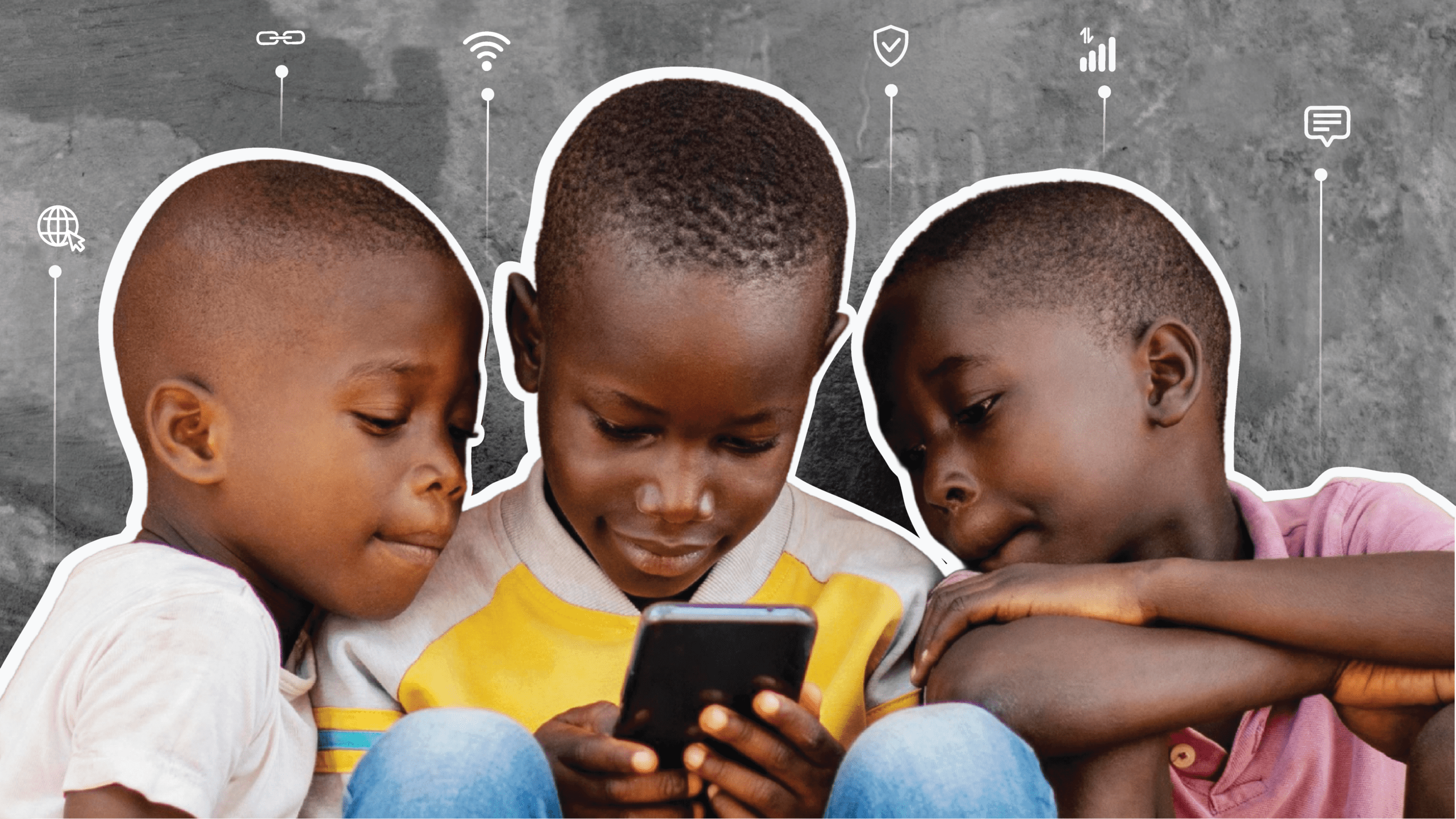
The challenge is particularly acute in Africa, where internet access is expanding rapidly while child protection systems struggle to keep pace. As more children go online, they are increasingly exposed to cyberbullying, online grooming, sexual exploitation, harmful content, privacy violations, and emerging Artificial Intelligence (AI)-enabled risks such as disinformation and misinformation.
Just last month, the United Nations Human Rights Office called for stronger regulation and government oversight, publishing 10 key points to make platforms safer for children, urging technology companies to embed child safety into their product design and address the growing risk posed by AI. This reflects a broader shift in global digital policy. The Global Digital Compact has committed states to strengthen legal and policy frameworks for children’s rights in digital spaces and to prioritise national online child safety policies and standards by 2030.
At the continental level, the African Union Child Online Safety and Empowerment Policy of 2024 sets out principles on children’s safety and privacy, and participation to guide member states in developing national strategies, while the Global System for Mobile Communications Association (GSMA), UNICEF, and partners recently launched the Africa Taskforce on Child Online Protection to strengthen coordination among governments, mobile operators, technology companies, regulators, law enforcement, civil society, and young people.
Some African countries are already taking steps to strengthen child protection online. Rwanda is considering restrictions on social media access for children under 16, while Zimbabwe recently approved a National Child Online Protection Policy for 2026–2030 aimed at addressing online sexual exploitation, cyberbullying, grooming, harmful content, sextortion, and privacy violations.
These developments reflect a broader global shift in approaches to child online safety. Australia has legislated to restrict social media access for children under 16, while the United Kingdom recently concluded a national consultation examining age-based protections and enforcement mechanisms. Across several countries, governments, regulators, and civil society organisations are increasingly calling on technology companies to strengthen safeguards and take greater responsibility for protecting children online.
A broader strategy would expand efforts to ensure that while policies and frameworks on child protection are being developed, children are involved. This would help them understand the several platforms available for use, associated risks, pressures, and opportunities for digital life. The Africa Taskforce on Child Online Protection recognises this mode of participation and has now included youth representatives by integrating their voices for a child-centered digital future in Africa. Replicating this approach at the national level, through wide youth consultations, school-based dialogues, child-friendly policy forums, and participatory design of reporting and safety tools, will foster a healthy digital environment for the young.
It is against this backdrop that the Digital Rights Alliance Africa (DRAA) report, “Child Protection and Safety Online in Africa: The Law, Privacy, Challenges and Solutions, provides crucial, ground-level evidence across 10 countries – Algeria, Botswana, Egypt, Ghana, Kenya, Nigeria, Rwanda, South Africa, Tanzania, and Uganda. It highlights the gaps in child safety and protection online despite technological advancement and expansion.
The report highlights several recommendations that could help foster child safety and protection online, which are directed to different stakeholders, including the government, civil society organisations, international organisations, development partners, the technology sector, media, academia, parents, and the general community, and among others include;
- Parliaments should enact specific national laws that protect children’s privacy and safety in digital spaces, with clear safeguards tailored to children’s particular vulnerabilities, such as cyberbullying, grooming, online sexual exploitation, image-based abuse, harmful content, misuse of children’s data, profiling, and age-inappropriate design.
- Governments should invest in the implementation of national strategies that set out the roles of government agencies, the judiciary, data protection authorities, law enforcement actors, educators, parents, and the private sector in protecting children in the digital age.
- Platforms and telecom companies should design child-friendly products and services, minimise the collection and retention of children’s data, introduce age verification and parental controls, publish transparency reports, and submit protection measures to independent audits.
- The media should monitor, document, and report objectively, and expose all cases of online child abuse and demand accountability from the responsible parties.
- Civil society organisations should engage in advocacy, awareness raising, legal reform, evidence-based research, and documentation of issues affecting child safety online in order to demand and push for accountability of all the relevant stakeholders.
- All stakeholders must ensure that children are meaningfully included in innovation and programming, and that children and young people are actively engaged as participants in discussions, collaborations, and co-design of digital solutions.
Ultimately, for children to stay online, measures must go beyond mere policy expressions and aspirations as reiterated in the Global Digital Compact’s 2030. Laws and frameworks specific to child protection and safety online should be developed and stringently implemented. Moreover, digital service providers must be held accountable, and other stakeholders, including parents, schools, and communities, should join efforts to ensure that children are empowered to safely utilise digital technologies.
CIPESA and partners continue to advocate for rights-respecting policies that advance children’s protection, participation, access, and safe use of digital technologies, while calling on technology companies to embed these principles in platform design, governance, and accountability systems.