SMS System Boosts Reporting of Human Rights Abuses in Tanzania

Growing the capacity of citizens and civic groups including human rights networks to use Information and Communication Technology (ICT) to foster free speech, human rights, access to information and open governance is one of the objectives of the ICT4Democracy in East Africa Network. Since April 2014, the Commission for Human Rights and Good Governance (CHRAGG) in Tanzania has conducted a campaign to raise awareness about the SMS for Human Rights system throughout Tanzania.
The system, which was launched on Human Rights Day in December 2012, has made it easier for citizens to report human rights violations to the Commission. In 2013, a total of 173,493 complaints were received through the system. Since then, the number of complaints filed with the Commission has averaged more than 100 per week compared to 10 per week prior to the system’s installation.
Given that CHRAGG has only four regional offices to cover a large country, the system has reduced the amount of time, inconvenience and cost to citizens for submitting complaints and following up on case progress, particularly for those in rural areas. The electronic case handling system has also eased the work of investigators by reducing their travel burden and enabling more efficient evidence gathering. Besides text message, the platform allows for video and image capabilities for complainants and informers.
The SMS for Human Rights System is a mobile phone based Complaints Handling Management Information System aimed at expanding CHRAGG’s case handling and tracking. An individual is able to file a complaint by texting the word ‘REPORT’ or ‘TAARIFA’ to the toll free number:  +255 (0) 754 460 259. The individual receives a text message confirming receipt of the complaint. Thereafter, a follow up phone call is made by investigators at the Commission to obtain further information, authenticate the report and assign the individual a reference number. The same number can be used to track the progress of a complaint by texting the word ‘STATUS’ followed by the reference number.
However, although many complaints are received through the system, many citizens, particularly on the semi-autonomous island of Zanzibar, were not aware of its existence.  With an estimated population of 45 million people, Tanzania has about 28 million mobile phone subscriptions representing a teledensity of 61 phones per 100 inhabitants.
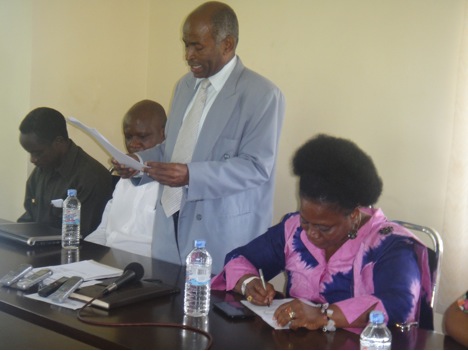
The system’s awareness campaign launch in Zanzibar in April was officiated by CHRAGG’s Commissioner Zahor Kharmis. CHRAGG’s Director of Human Rights Francis Nzuki and Wilfred Warioba, the Head of Management Information System Unit demonstrated how the system works and fielded questions from the attendees who included journalists, representatives from civil society organisations and ordinary citizens.
The event was televised live on Television Zanzibar (TVZ) and broadcast on Coconut FM radio station. It was also featured on Zanzibar Broadcasting TV and Radio, Independent TV, Radio Coconut, Radio Chuchu, Radio Hits, Radio Zenj, Radio Alnoor and two local print newspapers.
Since the launch, two public awareness meetings have been held in the North Unguja and Urban West regions of Zanzibar island. Furthermore, five similar events have been held in Mtwara, KilwaKivinje, Pwani and Dar es Salaam regions on the mainland.
In addition to the meetings, over four million print leaflets have been distributed encouraging citizens to seek redress for human rights violations particularly in the areas of poor service delivery, police brutality, corruption and employment rights.
The awareness raising campaign is expected to cover at least 18 more regions in the coming months. It is expected to incorporate nationwide TV and radio talk shows as well as social media as part of its outreach campaign.
Established in 2001 in fulfillment of Tanzania’s national constitution, CHRAGG plays the dual role of an ombudsman and a human rights commission for the protection and promotion of human rights as well as good governance.
CHRAGG is a member of the ICT4Democracy in East Africa Network whose work is supported by the Swedish International Development Cooperation Agency (Sida) and the Swedish Programme for ICT in Developing Regions (Spider). The network is coordinated by the Collaboration on International ICT Policy in East and Southern Africa (CIPESA).

New Laws in Uganda Restrict Citizens’ Rights

By Juliet Nanfuka
Recently introduced laws and regulations in Uganda have caused a stir both within the country and internationally for restricting citizens’ rights to freedom of expression on the internet and offline.
The most contentious of these are the Anti-Pornography Act 2014, the Public Order Management Act 2013, the Anti-Homosexuality Act 2014, the 2014 Press and Journalist regulations and the Non Government Organisation (NGO) Amendment bill. They are criticised for creating unwarranted restrictions to liberties granted by the country’s 1995 constitution.
As a result, the space in which civil society, the media and citizens can enjoy constitutionally granted rights to freedom of expression, opinion, assembly, and information is steadily shrinking.
In an April 2014 brief, CIPESA takes a look at how the recently enacted laws and proposed amendments impact on citizens’ rights, including internet rights, as well as on the work of human rights defenders. Read the full brief here.

Call for Consultants – Policy Analysis: Kenya, Tanzania and Uganda

The Collaboration on International ICT Policy in East and Southern Africa (CIPESA) is seeking Consultants to study how current Information and Communications Technologies (ICT)-related policies and practices affect democratic governance in Kenya, Tanzania and Uganda.
Closing date for applications: Monday April 28, 2014.
Further details on scope, requirements and how to apply are available here.

Local leaders in Kasese District Trained in e-Governance

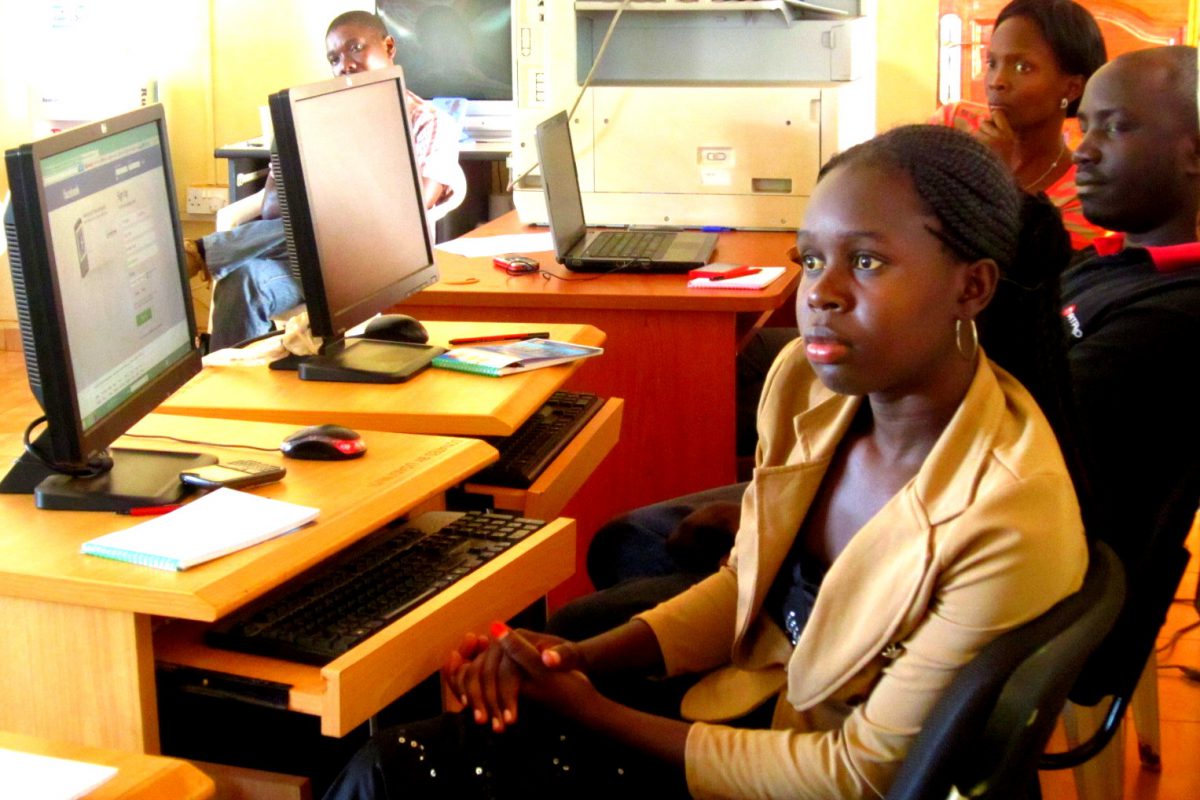
This month, the Collaboration on International ICT Policy in East and Southern Africa (CIPESA) and the E-Society Resource Centre Kasese trained local leaders in Kasese district in the use of ICTs for improved governance and service delivery. During the March 20-21 2014 workshop, local leaders of the western Uganda district were also trained in using ICTs for information sharing and promoting citizen participation.
Speaking at the workshop, District Information Officer John Thawite urged local leaders to break away from the culture of secrecy and work in accordance with the 2005 Uganda Access to Information Act. “Meaningful participation in democratic processes requires informed participants hence the need for increased access to information,” he said.
However, Mr. Thawite noted some challenges to better access to information: poor facilitation for information officers, lack of ICT tools to process information requests, the Official Secrets Act of 1964 which bars public servants from releasing certain information, and poor coordination of information systems between departments.
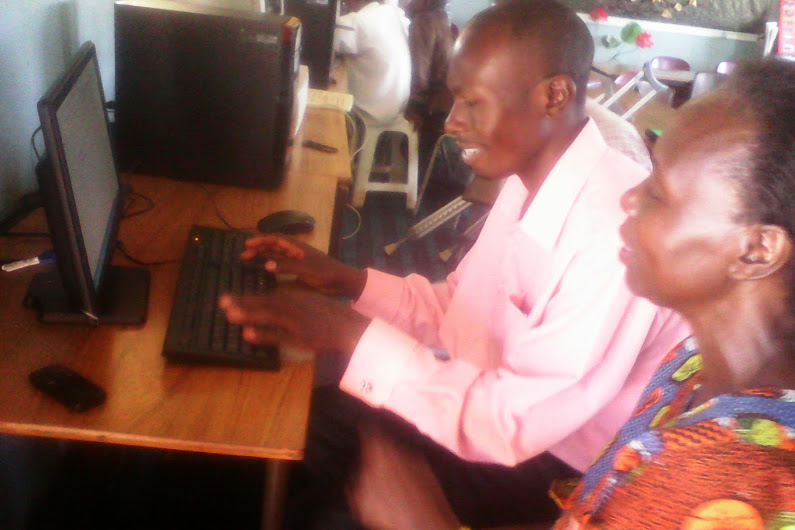
During introductory sessions, participants were introduced to the basic elements of computer use, the internet and information security. Later, they were introduced to the concept of e-governance and its role in improving service delivery. The training included an interaction with the district e-government tools such as the district portal (www.kasese.go.ug), district discussion group (https://dgroups.org/iicd/kasese), E-library for district e-resources (https://elibrary.kasese.go.ug) and the district news portal (https://kasesenews.blogspot.com/).
The workshop also sought to enhance the leaders’ capability to engage with citizens through social media, and illustrated how this engagement could contribute to improved services delivery. According to Alexa.com, Facebook, Twitter, blog post and youtube are among the top ten accessed websites in Uganda and their potential in catalysing citizen participation in governance was emphasised.
Leaders were further encouraged to use the Rwenzururu facebook group (https://www.facebook.com/groups/nokasesesplit/) created in 2012 by community members in Kasese during a CIPESA citizen journalism training to discuss prevailing issues in the region..
Participants welcomed the training with one saying that he would henceforth be able to get access more information about various operations of the government through the various e-governance platforms shared. Another participant asked the e-society Resource Centre to work with heads of departments so that they always send their budgets, minutes of meetings, work plans and other communication to the e-platforms.
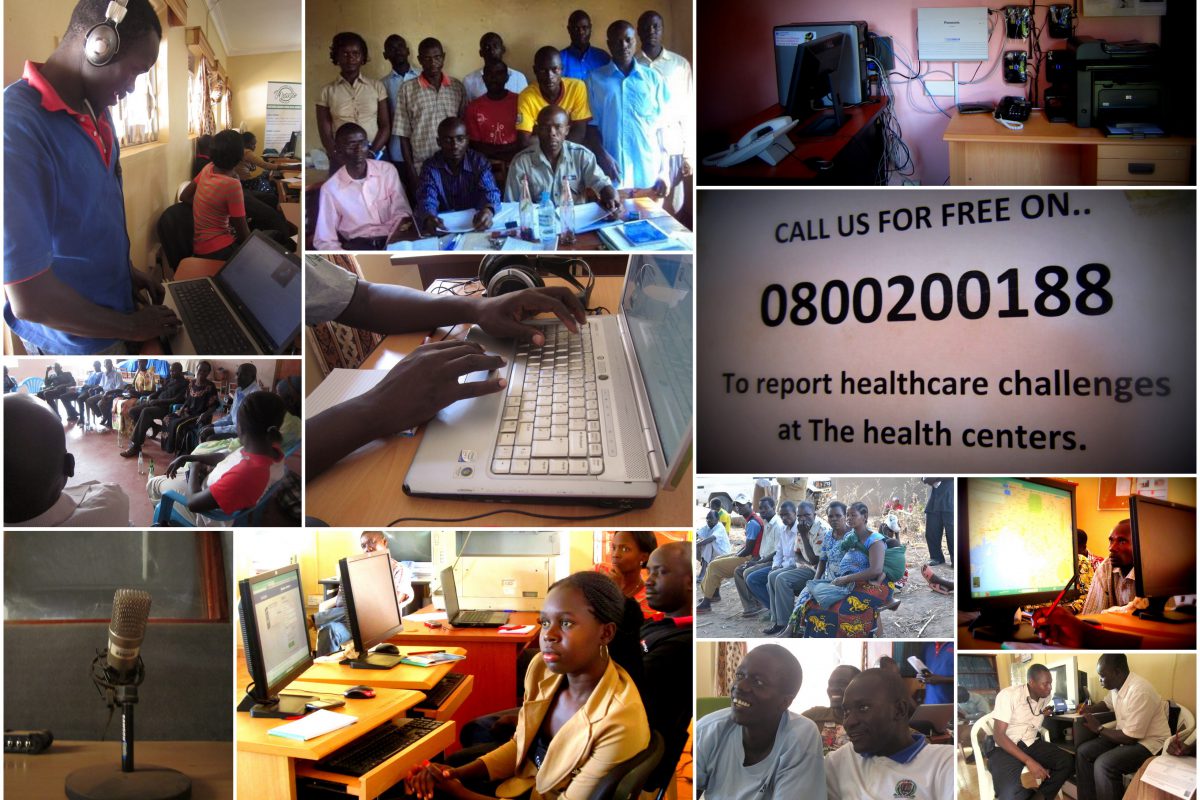
CIPESA has since 2011 spearheaded the iParticipate Uganda project. Through grassroots based ICT access centres in Eastern, Western and Northern Uganda, CIPESA creates awareness and builds the capacity and skills of citizens, media and local government to leverage ICTs to catalyse civic participation, democracy monitoring and access to information in Uganda. The E-society Resource Center Kasese is CIPESA’s western region partner. The centre provides support, promotes ICT literacy and the use of ICT for transparency in the Kasese local government.
Article complied by Mr. Samuel Mumbere – E-Society Resource Centre Kasese and Ms. Lillian Nalwoga – CIPESA 

AfricaICTResearch.org: New Portal on ICTs, State and Peace Building Research in Africa

Although the use of Information and Communication Technologies by citizens and governments in Africa is growing exponentially, there is limited evidence of how these technologies are affecting statebuilding and peace building on the continent. Where such evidence exists, it is often in diverse locations and hard to reach for researchers, practitioners, the media and government bodies.
In order to increase access to information on ICTs in Africa, the Centre for Global Communications Studies (CGCS) at the University of Pennsylvania has launched a new website that offers news and updates on research and events related to ICTs, peace building and governance. The portal features a repository of reports and articles with empirical evidence on the role of ICTs in peace building and governance.
In addition, the website offers access to articles typically blocked by journal paywalls by obtaining pre-print versions of articles from authors.
As a partner in CGCS’s project titled “Reframing Local Knowledge: ICTs, State building, and Peace building in Eastern Africa”, CIPESA undertook a review of literature on the role of ICTs in governance, peace-building and state-building in Africa, with a focus on three neighbouring countries: Ethiopia, Kenya, and Somalia.
An increasing number of Africa’s estimated one billion people are accessing modern communication technologies. According to the International Telecommunications Union, as of 2013, internet penetration stood at 16% and mobile access at 63% of Africa’s population.
It follows that online service provision, placing a wide array of information in the public domain, an empowered citizenry that holds leaders to account and smartly embrace ICT, could potentially catalyse peace, democracy and good governance in Africa.
There is a considerable amount of research by scholars, government agencies, civil society, development partners and many more on the use of ICTs in governance in Africa, covering a broad range of definitions and dimensions. A central place to find this research has hitherto been lacking, which is why scholars, practitioners and public officials will find the new portal a vital resource.
The work for the project is being carried out in collaboration with the Programme in Comparative Media Law and Policy (PCMLP) at the University of Oxford, the Centre for Intellectual Property and Information Technology at Strathmore University (Kenya), the School of Journalism and Communication at Addis Ababa University (Ethiopia), CIPESA, The Heritage Institute for Policy Studies and SIMAD University (Somalia).
Read more about the project here.