Reflecting on ICT for Democratic Engagement in Uganda’s Rwenzori Region

By Ashnah Kalemera |
In the Rwenzori sub-region of western Uganda, Information and Communication Technology (ICT) tools have been key tools in promoting public accountability and improved service delivery. Through an ICT “convergence approach” that combines SMS, radio and online polling, Toro Development Network (ToroDev) has for the past five years promoted information and knowledge sharing for citizens’ engagement with their leaders on priority service delivery needs and concerns in the region.
ToroDev’s project, which is part of the ICT4Democracy in East Africa Network, has empowered local citizens in offline and online advocacy and engagement with duty bearers, trained radio journalists in reporting and promoting debate on accountability issues, facilitated quarterly accountability meetings between citizens and leaders, and supported the initiation of 15 civic groups in the region. The civic groups, also known as rural advocacy forums, consist of 80 members each, and are involved in citizen journalism and community mobilisation for the radio debates and accountability meetings.
Over the years, the project has seen increased levels of citizen participation and engagement. In 2014, each monthly advocacy forum meeting was attended by at least 50 members. Outcomes from the monthly meetings are discussed on radio talk shows. Meanwhile, 60 leaders at sub-county and parliamentary level participated in the deliberations and jointly with citizens drew up action plans, among them, the State Minister for Finance.

In western Uganda’s Rwenzori region, citizens’ participation on radio talk shows on governance issues through SMS, call ins, and social media grew from 304 in June 2014 to 4,835 by Nov 2014. See ICT4Democracy in East Africa Annual Review 2014.

Citizens have also gone on to leverage social media to engage in discussions on governance and service delivery. See for instance State of Service Delivery in Rwenzori Region, Orukurato, Rwenzori Journalists Forum and Listeners’ Forum Facebook with active membership pages.
However, at a national level participation of citizen in public affairs remains low. During the 2011 presidential elections, only 59% of registered voters cast their ballot. According to the 2013 Uganda National Household Survey, only 7% of households have a member that participates in governance at the local level, down from 10% in 2010.
The 2013 survey estimates that household participation in local governance in Western Uganda stands at 8.1% and the region boasts the highest proportion of citizens registered as voters (89%).
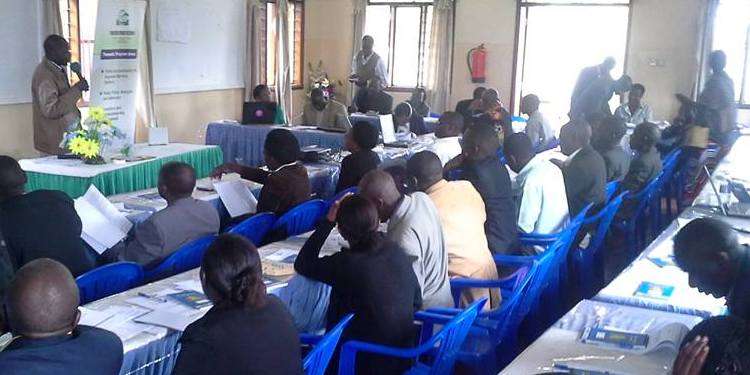
In the run up to the 2016 national elections, ToroDev convened regional stakeholders at a conference to reflect on the role of ICT in the electioneering processes. Uganda will hold local, parliamentary, and presidential elections in February 2016.
Speaking at the conference, Dr. Paschal Kabura, the director of Uganda Martyrs University Fort Portal campus, urged local citizens to take interest in staying informed of regional concerns that directly affect their livelihoods. “Voter apathy must be overcome,” he said, while calling for more active citizen participation in local governance processes through the use of ICT.
Discussions at the conference also included mainstreaming gender in governance processes. Goretti Amuriat from the Women of Uganda Network (WOUGNET) highlighted the need for building women’s capacity to participate in advocacy and accountability engagements, and for promoting awareness of gender issues at community level. She also stressed the need to consider women’s special needs such as child care facilities at local government consultation meetings, and suitable timing and conducive locations of accountability forums for both women and men.
Amuriat urged workshop participants to fight “biased cultural attitudes” in the region such as only men being leaders, what a man says being “right and final” and women being undermined due to their domestic responsibilities. She said it was important for women to realise that such attitudes “are not biological but socially constructed.”
The conference provided a platform for feedback and knowledge sharing on the performance of existing rural advocacy forums and the potential for establishing forums consisting of local government officials and civil society organisations at district level.
“As a result of the work of advocacy forums we have seen water put in place for example in Mugusu and Katebwa sub-counties in Kabarole district, two class room blocks have been put in place in Bufunjo Seed school in Kyenjojo district, roads [have been] improved in Kichwamba, Rwebisengo and Ntoroko District,” said Tumwesigye Andrew, the leader of Bufunjo Forum in Kyenjojo District, during the panel discussion on the performance of advocacy forums. “We have improved staff in health centres in Bufunjo, improved accountability and improved participation of women in budgetary processes and meetings,” he added.
The conference, which was held on November 19, and 20, 2015 drew more than 80 stakeholders from the districts of Kabarole, Kyegegwa, Kyenjojo, Kasese, Kamwenge, Bundibugyo and Ntoroko. They included district planners, radio, print and TV journalists, civil society organisations, religious leaders, advocacy forum members, youth leaders, district information officers and other local government officials.
The ICT4Democracy in East Africa Network is a regional coalition of civil society organisations leveraging ICT to promote civic participation, human rights and democracy in Kenya, Uganda and Tanzania. Coordinated by the Collaboration on International ICT Policy for East and Southern Africa (CIPESA), it was established in 2011 with seed funding from the Swedish Programme for ICT in Developing Regions (Spider) and is currently supported by the Swedish International Development Cooperation Agency (Sida).
 

Call for Evaluation Consultant: ICT4Democracy in East Africa Network

The Collaboration on International ICT Policy in East and Southern Africa (CIPESA) is seeking an evaluation consultant to establish the achievements, outcome and challenges registered by the ICT4Democracy in East Africa Network during the period November 2013 – October 2015. The evaluation will assess the appropriateness, effectiveness and outcomes of the network in relation to the program objectives.
Closing date for applications: 17:00 hours East African Time (EAT) on Thursday November 19, 2015
Further details on the scope, eligibility and how to apply are available here.

ICT in Governance in Kenya – Policies and Practice

In November 2014, internet statistics source Socialbakers estimated that there were 3.6 million Kenyans on Facebook, with 64% of them male and 36% female. The majority of Facebook users (75%) were aged 18-34 years. As of September 2015, the Kenyan Twitter account with the highest number of followers was @UKenyatta, the Kenyan President’s account that had over one million followers, followed by @ntvkenya with 979,838 followers.”

This report reviews government and non-government Information and Communication Technology (ICT) initiatives in Kenya, and examines how ICT-related policies and other legislation affect citizen participation and democratic governance. Among others, the study covers the link between ICT and political participation, social accountability, public services delivery and citizen engagement. The report is based on policy analysis,
stakeholder interviews and literature review, and aims to inform awareness raising initiatives and advocacy for more progressive policies and practices regarding the use of ICT in governance and civic participation in Kenya.

Analysis of ICT in Governance Policies and Practice in Uganda

In our research series this month, we review government and non-government ICT initiatives in Uganda. We examine how ICT-related policies and other legislation affect citizen participation, democratic governance and influence the link between ICT and public services delivery.
The report is based on policy analysis, stakeholder interviews and literature review, and aims to inform awareness raising initiatives and advocacy for more progressive policies and practices regarding the use of ICT in governance and civic participation in Uganda.
Read the full report

Promoting e-participation in Western Uganda

By ToroDev Staff Writer |
Radio has proved to be a key tool in promoting public accountability and improved service delivery in the Rwenzori region of western Uganda. Toro Development Network (ToroDev), a non-governmental organisation that trains marginalised communities on service delivery monitoring and participation in governance processes, has reached wide audiences by supplementing their radio activities with additional Information and Communication Technologies (ICT) tools and traditional offline engagements.

ToroDev members in an online training session led by WOUGNET in Fort Portal
ToroDev members in an online training session led by Women Of Uganda Network (WOUGNET)

ToroDev is working in partnership with two popular regional radios stations, Hits FM and Better FM, on public accountability radio talk shows focusing on topics such as corruption, politics, poor public infrastructure and health services delivery. ToroDev has enabled wider participation in the radio discussions through the installation of the online polling application Trac.FM at partner radio stations which is supported by pre-paid SMS enabling citizens to share their opinions. Journalist Forums, social media platforms and live call ins further facilitate the debates.
The convergence of these ICT tools has spurred audience participation from 304 monthly responses from citizens in early 2014  to 4,835 responses per month by November 2014, based on aggregated social media responses, radio station SMS and call in figures as well as Trac.FM statistics.
In December 2014, the Orukurato radio talk show on Hits FM discussed the issue of electricity load shedding in the region.  According to the show’s host William Kasigazi, over 5,000 responses through call ins on, Trac.FM and social media were received on the topic, of which 85% of respondents were affected by lack of electricity for a few hours at least once every day.
This unusual influx of responses during the December 2014 load shedding debate led to the regional Director of Umeme (the national electricity supplier) to request for a slot on the show to educate citizens on the cause of the power cuts.
Meanwhile, in order to promote more rural debate and participation (where access and cost of ICT remains a limiting factor), ToroDev also conducts monthly physical accountability meetings as opportunities for communities to directly engage with local duty bearers. The number of citizens participating in these meetings rose from 60 individuals per meeting in December 2013 to an average of 200 per meeting by August 2014. An increase in women participation in these meetings was also registered, from five in 2013 to 50 in December 2014. Half of the participants at each meeting were youths.
Instrumental to the success of the project has also been the use of 15 advocacy forums which were initiated to encourage rural service delivery monitoring and monthly governance deliberations.
Andrew Twesige of the Bufunjo Peoples Forum noted that its lobbying work for improved service delivery at the Bufunjo Health Centre III was a success. Through online and offline community engagements and increased awareness on the state of service delivery at the health centre by the Forum, the issue of low staff levels at the Centre reached the attention of local duty bearers and six additional nurses were recruited for the health centre.
Such outcomes are helping more citizens in communities where ToroDev works to embrace the use of ICT tools in public services monitoring.
“Before the radio talk shows were introduced, leaders were very hard to reach and we used to fear them, beg them, they were taken as special people. But radio talk shows, TracFM and accountability meetings have helped citizens to work hand in hand with both political and technical leaders,” said Jane Ahimbisibwe who heads the Butiti Peoples Forum in Kyenjojo district. She added that through these tools citizens are shedding the fear previously held for duty bearers noting, “we are brave enough to approach any leader because we have been given a good platform.”
Indeed, the increasing popularity of the talk shows, the use of polls on on Trac.FM and the accountability meetings have attracted national and local duty bearers to more willingly engage with citizens on the platforms availed through ToroDev. During 2014, a total of 60 leaders at sub-county and parliamentary level participated in the monthly accountability meetings, and jointly with the advocacy forums drew up action plans for priority public service issues. A notable participant in such engagements was the State Minister for Finance (Uganda), Aston Kajara.
ToroDev’s work is part of the ICT4Democracy in East Africa Network, a regional coalition of civil society organisations coordinated by the Collaboration on International ICT Policy for East and Southern Africa (CIPESA). The network is supported by the Swedish International Development Cooperation Agency (Sida).