CIPESA Welcomes Namibia Ministry of ICT and the Namibia IGF as Co-Hosts of FIFAFrica25

By FIFAfrica |

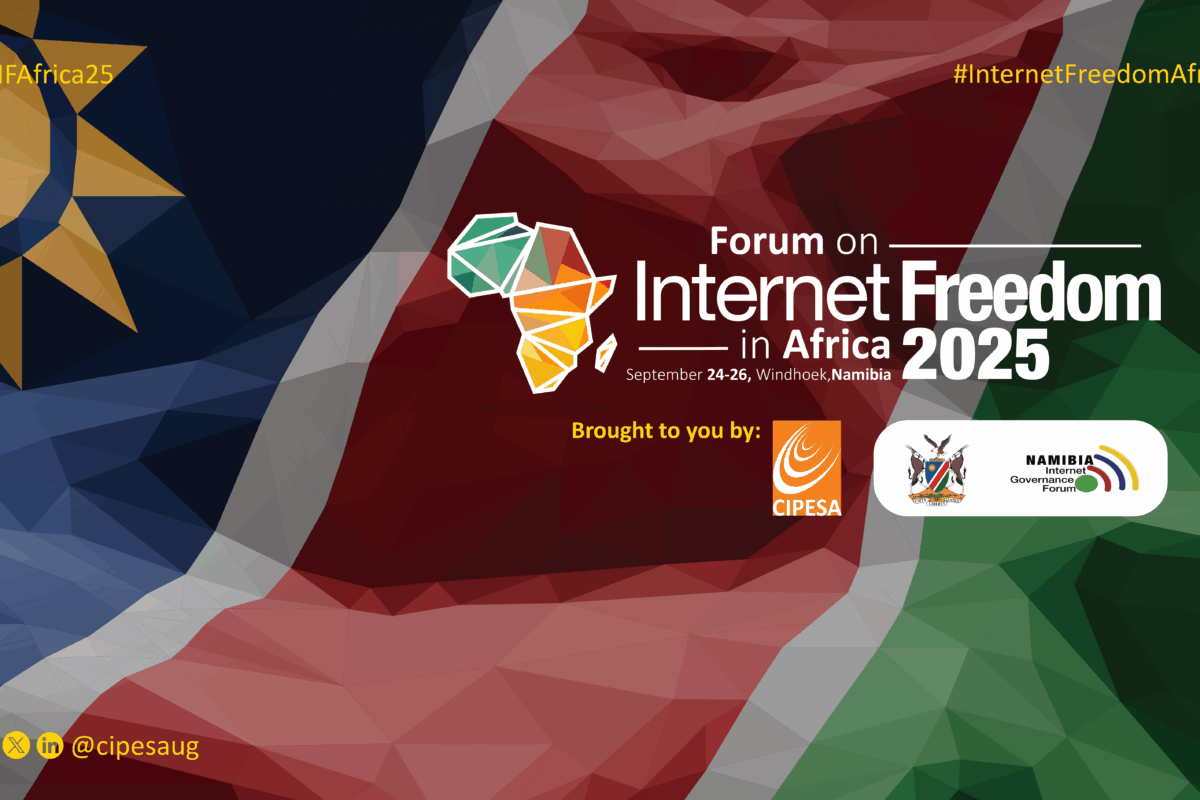
The Collaboration on International ICT Policy for East and Southern Africa (CIPESA) is pleased to announce that the 2025 edition of the Forum on Internet Freedom in Africa (FIFAfrica25) will be co-hosted in partnership with the Namibian Ministry of Information and Communication Technology (MICT) and the Namibia Internet Governance Forum (NamIGF).

Set to take place in Windhoek, Namibia, from September 25–27, 2025, this year’s Forum will serve as yet another notch in FIFAfrica’s 12-year history of assembling digital rights defenders, policymakers, technologists, academics, regulators, journalists, and the donor community, who all have the shared vision of advancing internet freedom in Africa.

With its strong commitments to democratic governance, press freedom, and inclusive digital development, Namibia offers fertile ground for rich dialogues on the future of internet freedom in Africa. The country holds a powerful legacy in the global media and information landscape, being the birthplace of the 1991 Windhoek Declaration on promoting independent and pluralistic media. In a digital age where new challenges are emerging – from information integrity and Artificial Intelligence (AI) governance to connectivity gaps and platform accountability – hosting FIFAfrica in Namibia marks a key moment for the movement toward trusted information as a public good, including in the digital age.

“Through the Ministry of Information and Communication Technology, Namibia is proud to co-host FIFAfrica25 as a demonstration of our commitment to advancing technology for inclusive social and economic development. This Forum comes at a critical moment for Africa’s digital future, and we welcome the opportunity to engage with diverse voices from across the continent and beyond in shaping a rights-respecting, secure, and innovative digital landscape,” Minister of Information and Communication Technology (ICT), Emma Inamutila Theofelus

This sentiment is shared by the NamIGF Chairperson, Albertine Shipena. “We are honoured to co-host the FIFAfrica25 here in Namibia. This partnership with MICT and CIPESA marks a significant step in advancing digital rights, open governance, and meaningful multistakeholder engagement across the continent. As the NamIGF, we are proud to contribute to shaping a more inclusive and secure internet ecosystem, while spotlighting Namibia’s growing role in regional and global digital conversations.”

The NamIGF was established in September 2017, through a Cabinet decision, as a multistakeholder platform that facilitates public policy discussion on issues pertaining to the internet in Namibia.

Dr. Wairagala Wakabi, the CIPESA Executive Director, noted that FIFAfrica25 presents a timely opportunity to advance progressive digital policy agendas that uphold fundamental rights and promote digital democracy in Africa. “As global debates on internet governance, data sovereignty, and platform accountability intensify, it is essential that Africans inform and shape the frameworks that govern our digital spaces. We are honoured to partner with the Namibian government and NamIGF to convene this critical conversation on the continent,” he said.

Since its inception in 2014, FIFAfrica has grown to become the continent’s leading assembly of actors instrumental in shaping conversations and actions at the intersection of technology with democracy, society and the economy. It has become the stage for concerted efforts to advance digital rights and digital inclusion. These issues, and new emerging themes such as mental health, climate and the environment, and the content economy, will take centre stage at FIFAfrica25, which will feature a mix of plenaries, workshops, exhibitions, and a series of pre-events.

Meanwhile, FIFAfrica will also recognise the International Day for Universal Access to Information (IDUAI), celebrated annually on September 28. The commemoration serves to underscore the fundamental role of access to information in empowering individuals, supporting informed decision-making, fostering innovation, and advancing inclusive and sustainable development – tenets which resonate with the Forum. This year’s celebration is themed, “Ensuring Access to Environmental Information in the Digital Age”.

At the heart of the Forum is a Community of Allies that have, over the years, stood alongside CIPESA in its pursuit of effective and inclusive digital governance in Africa.

Feedback on Session Proposals and Travel Support Applications

All successful session proposals and travel support applicants have been contacted directly. See the list of successful sessions here. Thank you for your patience and for contributing to what promises to be an exciting FIFAfrica25.  

Prepare for FIFAfrica25: Travel and Logistics

Everything you need to plan your attendance at the Forum can be found here – visit this page for key logistical details and tips to help you make the most of your experience!

Apply To Participate in Disinformation and Human Rights Online Training Series

Call for Applications |
To allow for interactive discussion about specific cases and in-country contexts, we are limiting participant numbers to 20. Please see below for eligibility criteria and details about how to apply.Details:
This online training series is aimed at expert and non-expert members of civil society with an interest in tackling misinformation and disinformation using a rights-respecting approach.
The training series will consist of two interactive workshops to be held via Zoom on:
Thursday 5 November, 2-4pm EAT and Wednesday 11 November, 2-3pm EAT;
OR
Wednesday 18 November 2-4pm EAT and Wednesday 25 November, 2-3pm EAT.
Participants will also be invited to participate in a one hour follow up call during December.
The series will be delivered by international, regional and local experts on disinformation and human rights and seeks to:

      1. Increase participants’ understanding of human rights issues relating to disinformation and misinformation.
      2. Increase participants’ understanding of policy and legal responses to disinformation in their region.
      3. Introduce participants to basic tools and methodologies to detect mis/disinformation
      4. Increase participants’ capacity to engage with representatives from government, business and journalism on disinformation and human rights (particularly the right to freedom of expression and the right to privacy) in policymaking processes and debates relating to disinformation and misinformation.

Please note that sessions will be delivered in English.
Eligibility criteria:
Applicants from the following countries are eligible to apply: Burundi, Comoros, Djibouti, Eritrea, Ethiopia, Ghana, Kenya, Liberia, Madagascar, Malawi, Mauritius, Nigeria, Rwanda, Seychelles, Sierra Leone Somalia, Somaliland, Tanzania, Uganda.
Applicants affiliated to NGOs, social enterprise companies and think tanks are eligible to apply. Media, academic and non-affiliated applicants will also be considered.
Applicants from governments and private companies (except social enterprises) are not eligible for this training series. 
Selection criteria:
Eligible applicants will be assessed by the quality of their motivation to participate in the training, as set out in answer to their application.
We particularly welcome applications from individuals and organisations that are interested in engaging in this policy area within the region and/or their countries in the longer term.

Tanzania Entrenches Digital Rights Repression Amidst Covid-19 Denialism and a Looming Election

By Edrine Wanyama |

On July 17, 2020, the Tanzania government issued new Electronic and Postal Communications (Online Content) Regulations, 2020 that apply to online content production, hosting and dissemination. The regulations entrench the licencing and taxation of bloggers, online discussion forums, radio and television webcasters, and repress online speech, privacy and access to information.

The passage of the new regulations raises concerns over free speech and access to information as they come into force barely three months before Tanzania holds presidential elections on October 28, 2020, a period when civic engagement and transparency and accountability in governance requires access to a range of information and viewpoints. The regulations also come amidst Covid-19 denialism by President Pombe Magufuli’s government, which has denied citizens access to vital information and undermined efforts to contain the spread of the virus in the east African country.

Tanzania has been widely criticised for its lacklustre response to the Covid-19 pandemic, yet the regulations aim to further stifle access to health information by prohibiting the publication of “content with information with regards to the outbreak of a deadly or contagious disease in the country or elsewhere without the approval of the respective authorities.”

Earlier this year, the communications regulator, Tanzania Communications Regulatory Authority (TCRA), banned the independent Mwananchi newspaper from publishing online for six months, after accusing it of carrying a false and misleading news report on Covid-19. At the time, TCRA said the publisher had flouted the much-criticised Electronic and Postal Communications (EPOCA) (Online Content) Regulations, 2018, which have been replaced by the new regulations. On July 9, 2020, the TCRA suspended the independent Kwanza Online TV for 11 months, over a report on its Instagram account that cited a health alert issued by the United States embassy in Tanzania, on the Covid-19 situation in the country.

In July 2020, United Nations experts noted that Covid-19 had compounded pre-existing human rights concerns in Tanzania, notably regarding the right to freedom of expression, including freedom to seek, receive and impart information. They added that Tanzania’s government was not meeting its commitments on information sharing and transparency after it stopped releasing statistics on Covid-19 cases at the end of April, and President Magufuli declared the country virus-free in early June.

The new regulations require online content service providers, internet service providers, and application services licensees to pay exorbitant fees for licensing and renewal of licences. Providers of “online content service”, described as “content broadcasting to the public through internet websites, application software, forums, blogs, weblogs, microblogs, public account, instant messaging tools, online live streaming, aggregators and other related platforms”, pay an application fee of Tanzania Shillings (TZS) 100,000 (USD 44); initial licence fee of USD 440 or USD 220; annual licence fee of USD 440 or USD 220; and a licence renewal fee of USD 440 or USD 220. The higher fees are to be paid by providers of “news and current affairs”; the lower ones by providers of entertainment, educational or religious content.

Radio and television operators that stream content online will pay USD 22 in application fees, USD 88 for the initial license, another USD 88 in annual licence fees, and USD 88 in licence renewal fees. The duration of all licences is three years.

Similar measures have previously been adopted to gag online content providers including broadcasters and bloggers during elections as was in the Broadcasting Services (Content) (The Political Party Elections Broadcasts) Code 2015.

The new regulations introduce a problematic definition of “news related content”, namely online news information gathering, compiling, editing, publication and broadcasting in a manner similar or that bears a resemblance to traditional media services provision. This essentially covers all information provided online. Similarly, the definition of an “online forum” has been expanded compared to that in the 2018 regulations, to cover every possible online fora and “online platforms”. These definitions are so vague that their application is potentially boundless in scope. With the past experiences of crackdown on media houses and journalists in Tanzania, these definitions appear to be calculated to target individuals and organisations such as Jamii Forums that champion free expression.

The new regulations raise the requirements for applicants, as well as the obligations of licensees, which could have a chilling effect on digital rights. Under regulation 6(2), applicants must provide certified copies of the certificate of registration, tax identification number, tax clearance certificate (for companies or non-government organisations) and national identity card. Furthermore, the applicant must provide a list of owners and the management team, editorial guidelines (if applying to provide “news and current affairs”) and technical description of facilities to be used. Moreover, under regulation 6(i), the TCRA may require additional documents.

The regulations expand the obligations of online content service providers and, under regulation 9(g),   require licensees to remove prohibited content immediately upon being ordered by TCRA. This does not provide room for verification or the right to be heard before removal is effected. Further regulation 9(h) and regulation 14 hold the licensee accountable for all information published. This imposes a heavy burden on licensees, including bloggers with no journalistic skills or resources to verify all information before publication, which curtails freedom of expression and denies citizens access to a variety of information. Moreover, for some unexplained reason, regulation 10 bars radio and television stations that hold district or regional license from live streaming content.

Some provisions potentially violate the right to privacy and undermine free expression. The requirement to install cameras in internet cafes and to store images recorded for 12 months has been retained under regulation 13. Further, the requirement to assign static public Internet Protocol (IP) addresses to computers in cafes would discourage usage of circumvention tools, such as Virtual Private Networks (VPN), which enable users to bypass network restrictions and to enhance their anonymity.

Furthermore, regulation 6 in as far it requires attachment of a tax identification number certificate, national identity card of the applicant and curriculum vitae, as well as academic qualifications of staff in regulation 12 (b), exposes private data. In the absence of a law on data protection and privacy in Tanzania, there is no guarantee that individuals’ data will be safeguarded against unauthorised access and disclosure.

The new regulations expand the list of prohibited content to a wide and ambiguous scope that  fails to meet the internationally acceptable limitations to freedom of expression. For instance, while para.2 of the Third Schedule protects personal privacy and human dignity, it renders a publisher liable for slander and defamation even where the published information is true. This ignores the widely acceptable defence of truth to defamation. Moreover, it is increasingly recommended globally that defamation should be decriminalised.

Furthermore, para.3 prohibits publication of information on public security, violence and national security, including undefined “news, statements or rumors for the purpose of ridicule, abuse or harming the reputation, prestige or status of Tanzania or its national anthem, symbols and logos.” This prohibition is contrary to freedom of expression guarantees provided for under article 8 of the Constitution of Tanzania. The prohibition of publication of information on demonstrations and marches potentially inhibits freedom of assembly and association, which are also guaranteed by article 20 Tanzania’s Constitution.

Failure by the regulations to clearly define prohibited information, such as that considered a threat to national security or public order in paras. 3(d) and (h), to the national currency or the national economy in para.3(f), or information relating to terrorist attacks, droughts, weather forecasts or occurrence of natural calamities para.8(b), could be used by advantaged authorities to wantonly punish critics of government and its leaders.

Regulation 21 introduces a general penalty for breaching the regulations where no specific punishment has been prescribed: a fine of not less than USD 2,200 or imprisonment for a term of not less than 12 months, or both.

In their current state the regulations will further narrow the already shrinking space for digital rights and freedoms in Tanzania, as they will muzzle freedom of expression, access to information, and individual privacy. Such freedoms are particularly important in times of elections and a pandemic. The government should therefore consider repealing or amending the EPOCA (Online Content) Regulations, 2020 so that they progressively promote the enjoyment of digital rights and freedoms.

Why Access to Information on Covid-19 is Crucial to Persons with Disabilities in Africa

By Paul Kimumwe |

While the Coronavirus disease (Covid-19) continues to ravage the world, there is growing concern that critical messages about the disease that are disseminated by health authorities, telecom companies, and broadcasters are not reaching persons with visual and hearing impairments.

In order to create public awareness about the pandemic, African governments are using mass media, notably radio and television, as well as Information and Communication Technologies (ICT), particularly  social media and mobile telephony platforms. The countries with confirmed Covid-19 cases, such as the Democratic Republic of Congo, Eritrea, Ivory Coast, Kenya, Nigeria, Rwanda, Senegal, South Africa, Tunisia, and Uganda, have restricted people’s movements and banned public meetings.

Various telecommunication companies, such as MTN Uganda, Safaricom in Kenya, MTN Ghana, have also removed service charges on mobile money transactions and discounted internet data prices so as to increase accessibility and affordability of the internet.

In South Africa, Vodacom and MTN are “zero-rating” information portals run by the country’s Department of Health, meaning they allow users to access vital information about the disease even when they do not have data bundles. Vodacom customers can get free vital information about the Covid-19 pandemic by visiting the website, www.sacoronavirus.co.za. 

However, concern is growing that some persons with disabilities are being left behind in accessing information on Covid-19. This is because, despite the recent expansion in the usage of ICT in the region, a large section of persons with disabilities faces digital exclusion due to lack of access and affordability of the requisite ICT tools and equipment,  as well as failure by broadcasters and telecom operators to provide information and services in disability friendly formats. 

Ms. Judy Okite, a disability rights activist and founder of the Association for Accessibility and Equality, says that in Kenya, it is “once in a while when they [media and government] remember there is a [need for a] sign language interpreter during Covid-19 related press briefing but, it’s very unsatisfactory.” She adds that there are no messages in braille, and for live broadcasts of discussions by national experts leading the fight against Covid-19, there is neither sign language nor captions.

The situation is similar in Ethiopia, according to Awoke Dagnew, who works with the Ethiopian charity organisation Together! He says most persons with disabilities in Ethiopia are being excluded because “most of the messages and platforms are in formats and via [electronic] channels that persons with disabilities have limited access to,” namely, television, radio, social media and telephone messages.

While several African countries have  enacted laws and policies to advance the rights of persons with disabilities, including those on access and use of ICT, these laws have largely remained on paper as key provisions are neither being implemented nor enforced. For example, while broadcasters are required by law in many African countries to have sign language insets or subtitles in newscasts, educational programmes and other programmes covering national events, there is little evidence of this being done. Indeed, some key television broadcasts and public service announcements related to Covid-19 have neither sign language interpretation nor sub-titling.

See: Removing Barriers to ICT Accessibility for Persons with Disabilities in  Kenya, Tanzania and Uganda

“In Uganda, [whereas] the Ministry of Health released a video in sign language with general information, still graphics used in most informative materials are not in font types, sizes and colour combinations [optimised] for the visually impaired,” observed Mohamed Kimbugwe, the Digitalization and Human Rights Technical Advisor at the GIZ office in Uganda. Moreover, while major television stations have sign language interpretation on major new bulletins, this is not always the case for other crucial public awareness campaigns, such as press conferences and updates from the national Covid-19 task force.

In Nigeria, sections 24 and 25 of the Discrimination Against Persons with Disabilities (Prohibition) require public hospitals and the government to ensure that persons with disabilities are given special considerations, including provision of special communication during situations of risk, emergicies (such as Covid-19) and other natural causes.

 In the wake of declaring Covid-19 a global pandemic, the WHO  issued guidelines to mitigate the impact of the outbreak on persons with disabilities. It called upon governments to take action to ensure that persons with disabilities are not left behind in the fight against Covid-19. Regarding Covid-19 public health information and communication,  the WHO urged governments to:

  • Include captioning and, where possible, sign language for all live and recorded events and communications. This includes national addresses, press briefings, and live social media. 
  • Convert public materials into “Easy Read” format so that they are accessible for people with intellectual disability or cognitive impairment. 
  • Develop accessible written information products by using appropriate document formats, (such as “Word”), with structured headings, large print, braille versions and formats for people who are deafblind. 
  • Include captions for images used within documents or on social media. Use images that are inclusive and do not stigmatise disability. 
  • Work with disability organisations, including advocacy bodies and disability service providers to disseminate public health information.

The International Disability Alliance (IDA) has also issued key recommendations towards a disability-inclusive Covid-19 response, including the requirement that persons with disabilities must receive information about infection mitigating tips, public restriction plans, and the services offered, in a diversity of accessible formats with use of accessible technologies.

The implementation of the WHO and IDA guidelines and recommendations need not be treated as a favour, as African governments are obligated under both the United Nations Convention on the Rights of Persons with Disabilities (CRPD) and the Protocol to the African Charter on Human and Peoples’ Rights on the Rights of Persons with Disabilities in Africa (ACHPER PD) to provide equal opportunities, accessibility and inclusion of persons with disabilities. Specifically, Article 9(b) of the CRPD requires states to take appropriate measures to ensure that persons with disabilities have access, on an equal basis with others, to information, communications and other services, including electronic services and emergency services.

Additionally, Article 25(b) of the CRPD requires states to take all appropriate measures to ensure access for persons with disabilities to health services (and information) that are gender-sensitive, including health-related rehabilitation.

On the other hand, state are required, under Article 19(2) of the ACHPER PD Protocol to put in place policy, legislative, administrative and other measures to ensure these rights, on the basis of equality, including requiring private entities, such as telecom and television companies, to provide information and services in accessible and usable formats for persons with disabilities.

Re-echoing the WHO guidelines, Okite recommends that governments and other agencies, including telecom and broadcasting companies involved in the design and dissemination of Covid-19 related public information, should ensure that they make all the information accessible to persons with disabilities. “If it’s online content, let it be in an accessible format, in some instances use diagrams, in a live interview /discussion let there be transcriptions or sign language that all persons may get information first-hand to avoid anxiety and fear and misunderstanding.” 

Televised programmes that feature experts discussing Covid-19 should have sign language interpreters and transcriptions to enable persons with visual and hearing impairments to benefit from the expert knowledge.

In Uganda, the National Union for Persons with Disability (NUDIPU) has called for the suspension of the social media tax (OTT) whose introduction in 2018 exacerbated the digital exclusion of marginalised populations, to enhance access to information and ease communication for persons with disabilities, especially the deaf.

In designing and disseminating Covid-19 related messages, telecom companies need to ensure that these are in multiple formats – including SMS, audio, visual and in disability friendly formats.

Silencing Critical Voices: Our Online Civic Space is Shrinking

By Digital Shelter |

Somalia had recorded steady growth in telephone penetration – with 7.6 mobile subscribers. However, internet penetration remains low – 2% as at 2017, according to the International Telecommunications Union (ITU). The adoption of technology has expanded civic space in the post conflict era, with social media platforms and blogs empowering journalists, activists and human rights defenders to document and report human abuses, mobilize public opinioncampaign for reforms, share relevant content and information, and build networks at national and global level.

However, the past three years have seen a rise in threats against online freedom of expression, such as the arrest and intimidation of several journalists and social media campaigners for comments posted on social media. There are reports of dissenting social media accounts being hacked, while others have deactivated their accounts due to fear of attacks. A culture of censorship prevails, amidst a rise in sponsored trolls spreading misinformation and propaganda to counter factual narrative reported by journalists, human rights defenders and activists online.

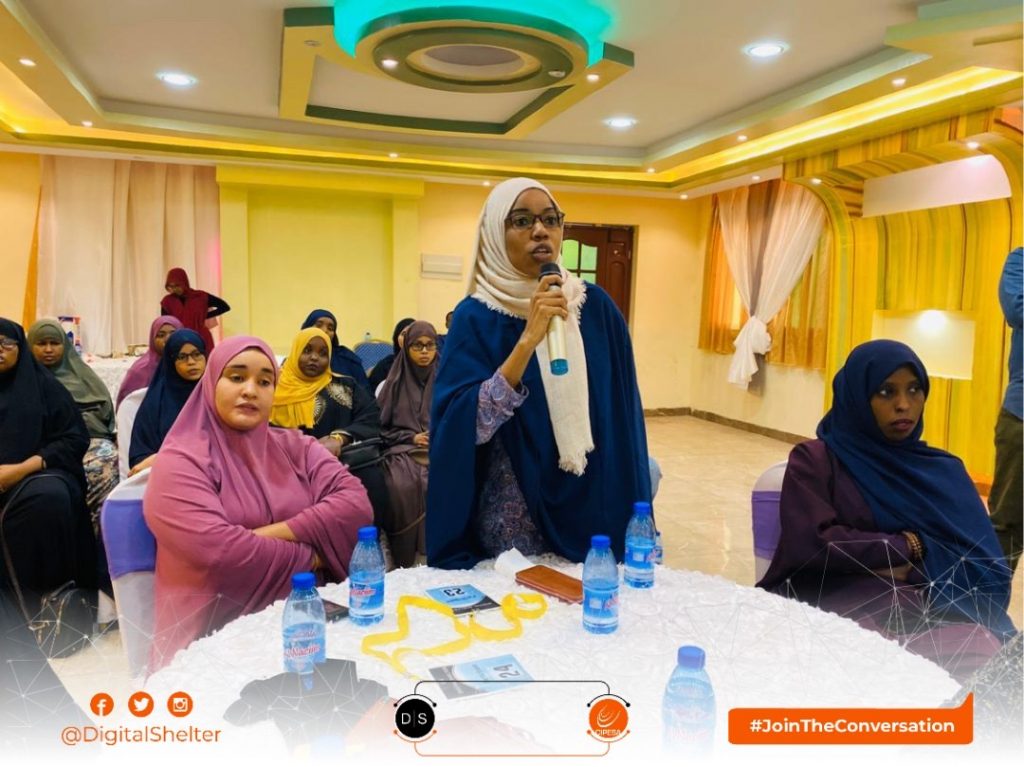
It is against this background that Digital Shelter hosted a panel discussion on the shrinking online civic space in Somalia and the growing digital threats faced by media professionals, bloggers and human right defenders in the digital space on February 13, 2020. The event was part of series of activities under the theme “Protect our Online Space”, supported by the Africa Digital Rights Fund (ADRF) – an initiative of the Collaboration on International ICT Policy for East and Southern Africa (CIPESA).

Among the panelists was Mohamed Irbad, a prominent blogger and researcher known for his critical writings on governance, human rights, freedom of expression and censorship on social media platforms. In early 2019, after publishing an article titled “Media Censorship In Somalia: A Nation Risk Into Information Darkness” on his personal blog, Mohamed faced serious online and physical threats which forced him to flee the country for six months due to fear for his safety.
“All critical voices, particularly individuals who are based inside Somalia have been silenced with online and physical threats altogether. For instance, when your raise critical issue on Twitter or Facebook you have two options, you either end up battling with anonymous trolls in their hundreds by answering to their toxic comments or you feel intimidated and sacred of writing about certain issues, hence, your remain silenced . And that is exactly what happened to me after writing that article. And therefore, it is fair to stay that we are witnessing the worst shrinking of our online/offline civic and democratic spaces” Mohamed Irbad.
Also speaking at the event was Hassan Ali Osman, a journalist, with the New Humanitarian newsletter. Hassan actively uses Twitter to disseminate local and international news as it breaks for his 90,000 followers. He shared that he has been constantly attacked by trolls merely because of reporting the truth on social media platforms.
Highlighting the issue of online violence against women was Sucdi Dahir Diriye, a passionate community volunteer and member of CaawiWalaal loosely translated as “HelpYourBrother” –  a digital campaign launched three years ago to support local communities affected by droughts in Somalia. As in most of the world, the internet has provided a platform for Somali women to amplify their voices. However, it has also enabled perpetuation of different forms of online violence against women including harassment, doxing, threats, stalking and blackmail, sometimes leading to physical violence. The targets of these attacks are women that are vocal on issues such as gender equality, sexual violence, free expression, or challenging the patriarchal structure of the society. This has created a hostile online environment for women and girls in Somalia, fraught with shaming, intimidation and degrading, leading to withdraw of from the online space.
As part of her work, Sucdi documents cases of online blackmailing and extortion against young girls in Mogadishu and other regions of Somalia. She stated that limited recognition of the existence of online violence and harassment against women in Somalia is allowing the abuse to continue inexorably. Relevant policies to address online violence against women need to be put in place and more women and girls need to be skilled in digital safety and security.
Based on their personal and professional experiences, the panelists stressed the need for counter measures against the prevailing threats. Among the recommendations made was increased digital security skills and knowledge building among activists, bloggers and media professionals. Specialized training on gendered online harassment was encouraged. Panelists also emphasized a dual approach in voice amplification – online and offline to reach wider audiences.  Furthermore, more stakeholder dialogue to raise awareness on online civic space and digital rights, including data protection and privacy inline with Somalia’s growing technology sector. Other recommendations included research undertakings on current digital threats in Somalia, to inform advocacy and policy interventions; and establishment of a solidarity network to support victims of online attacks.
“Digital Shelter is proud to be in a unique position to amplify voices in the most difficult time where the online civic space is shrinking in Somalia”, said Abdifatah, co-founder of Digital Shelter in the closing remarks of the forum.
Digital Shelter continues its “Protect our Online Space” drive during March 2020 with series of trainings on digital security. Digital Shelter is also planning to host other forums on expanding online civic space in Somalia.

This article was first published by the Digital Shelter on March 04, 2020