Accelerating Digital Accessibility and Solutions for Africa’s Future

By Raylenne Kambua |

More than 150 million persons with disabilities across Africa navigate a digital landscape not designed for them, with inaccessible websites, unusable mobile applications, unreachable government services, and educational platforms that often lock them out. This exclusion carries a direct economic cost, which the World Bank estimates at 3–7% of countries’ Gross Domestic Product.

Increasingly, connectivity for persons with disabilities has become less a question of infrastructure coverage and more about accessibility and meaningful usage. While internet services are available to 85% of Africa’s population, 64% of those within coverage do not use them, with persons with disabilities among the most excluded groups. The exclusion has been reinforced by the high costs of devices, with some markets taxing entry-level smartphones up to 50%, making them unaffordable for low-income households.

Figures from the Assistive Technology Landscape in Africa Report show that only one in ten people who need assistive technologies across the continent have access to them, while 85% of mobility devices are still imported. This is a reflection of weak local production systems and heavy reliance on external supply chains.

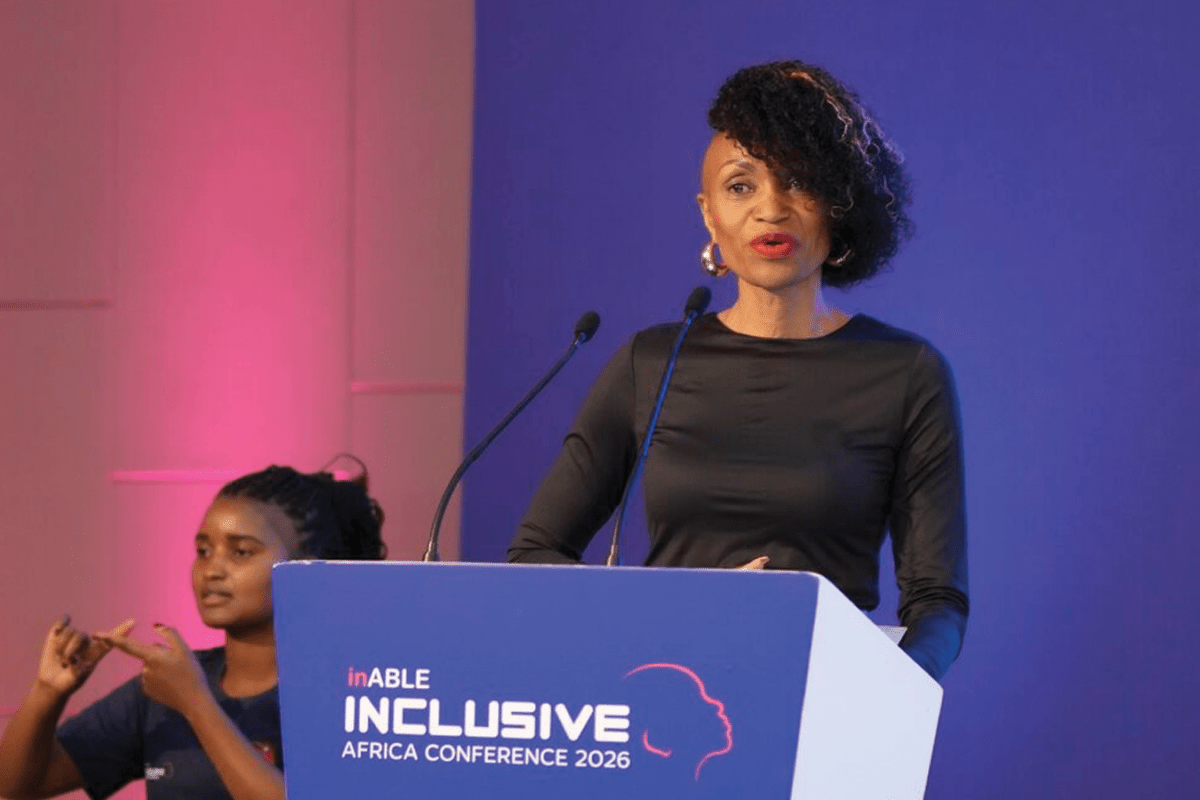
At the seventh Inclusive Africa Conference, convened by inABLE in Nairobi from June 2–4, 2026, conversations examined whether Africa’s fast-expanding digital economy works for everyone or reproduces recurring forms of exclusion.

As Irene Mbari-Kirika, Executive Director of inABLE, noted, many technologies continue to fail because they are not developed with persons with disabilities in mind. This means that such devices can not be used by millions of potential users, and it has direct consequences for several users’ financial autonomy, privacy, and safety, especially in digital financial services such as mobile money.

Africa’s challenge is therefore not only access to assistive technologies, but the absence of a coherent local ecosystem for their design, production, distribution, and implementation. Building a sustainable assistive technologies value chain grounded in local materials, regional manufacturing, and culturally and linguistically relevant design is increasingly central to closing this gap.

The structural barriers to inclusion are deeply embedded across sectors, including in the education sector, where teacher training often excludes digital accessibility, curricula are rarely tested with assistive technologies, and assessment methods continue to assume uniform modes of learning and expression. These gaps, including digital literacy gaps, are compounded by the limited availability of African-language datasets, particularly for learners with communication disabilities, which constrains the development of inclusive digital and artificial intelligence (AI)-enabled learning tools.

Notably, AI presents both opportunity and risk for digital inclusion. The outcome depends on whether inclusion is embedded in design, data, and deployment. On the upside, AI-enabled tools have expanded access for blind and low-vision users, while applications in healthcare are widening access to psychosocial support on a continent with less than two mental health professionals per 100,000 people. Real-time sign language translation and voice-to-text tools are also creating new pathways for participation.

At the same time, without targeted upskilling and bias audits, AI risks simultaneously opening one door for persons with disabilities while closing others. For example, AI systems are automating roles such as data entry, transcription, and customer service, which have historically provided key employment pathways for persons with disabilities. Yet, AI models trained on biased or unrepresentative datasets and automated decision-making processes risk excluding persons with disabilities from recruitment systems.

Mercy Ndegwa, Director of Public Policy for Africa at Meta, stressed this point, noting that AI systems can only reflect communities whose data and voices are included in their design and training. This makes the inclusion of organisations of persons with disabilities in AI governance not only a rights imperative but also a technical requirement for building functional systems.

However, African-language datasets remain severely underdeveloped,  and the cost of building them at scale is prohibitive for most actors.

The launch at the summit of the development of Africa’s first Harmonised Digital Accessibility Standard for ICT Products and Services marks an important step toward continent-wide alignment. The 24-month participatory process targets adoption across all 45 African Organisation for Standardisation (ARSO) member countries. The regional standard will be adapted to African languages, culture, and infrastructural realities, changing the procurement baseline for governments while setting a compliance reference for private technology developers across the continent. Fourteen countries have reportedly confirmed participation.

Throughout the discussions, the principle “Nothing about us without us” remained central, with an acknowledgement that persons with disabilities are contributors, decision-makers, and leaders in designing systems that affect them, and not merely end-users or research subjects to be consulted only after decisions are made. Design consultant Rama Gheerawo framed this through three registers: designing for, designing by, and designing with persons with disabilities as co-creators throughout all processes.

CIPESA has been emphatic that governments, regulators, and telecommunication operators bear the greatest responsibility for digital inclusion for persons with disabilities. Civil society efforts cannot substitute for enforceable action and measurable implementation. Limited capacity to engage in technical standard-setting also continues to hinder progress on digital rights for persons with disabilities. At the same time, fragmented approaches and shifting donor priorities are placing increasing strain on the sustainability of this work.

The European Union (EU) AI Act sets a benchmark for how regulation can protect marginalised groups, while the African Union (AU) Continental AI Strategy provides guiding principles on how AI should be developed, governed, and used across the continent. However, no African has developed definitive AI legislation, although several are developing policies or strategies. As CIPESA has emphasised, AI policy frameworks across Africa must include persons with disabilities from the outset.

More specifically, efforts must be geared toward fixing AI at the source by including representatives of persons with disabilities in training data, ensuring algorithmic accountability, and making AI-powered public services accessible to all. Moreover, all AI regulations and policies must have explicit disability provisions.

Additionally, governments must reduce sector-specific taxes on entry-level assistive devices and assistive technology hardware, and mandate that Universal Service Access Fund disbursements include explicit, measurable targets for connectivity for persons with disabilities.
Protecting Children Online in Africa Must Move from Policy to Practice

By Patricia Ainembabazi |

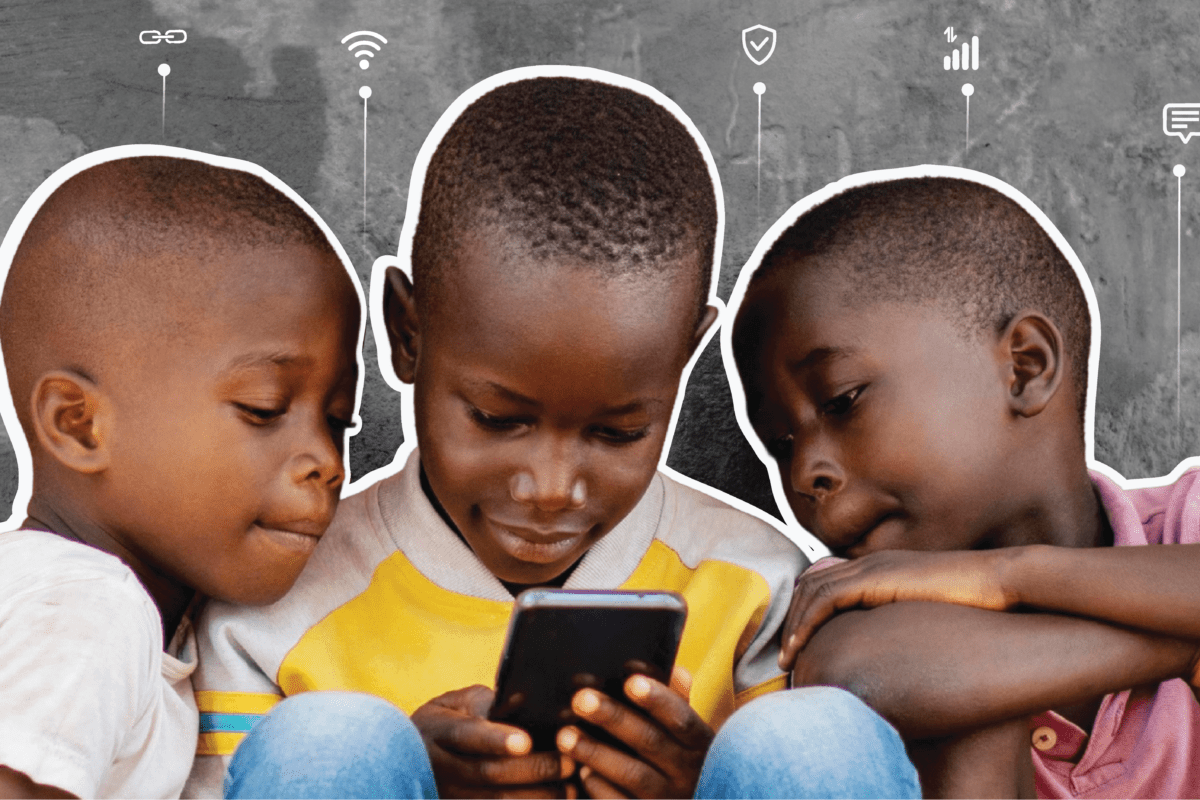
Child online safety has returned to the forefront of digital governance discussions across Africa and globally. New regulatory initiatives from the United Nations, the African Union, and industry coalitions reflect growing concern about the risks children face in increasingly digital societies. Yet, while policy commitments are multiplying, implementation continues to lag.

The challenge is particularly acute in Africa, where internet access is expanding rapidly while child protection systems struggle to keep pace. As more children go online, they are increasingly exposed to cyberbullying, online grooming, sexual exploitation, harmful content, privacy violations, and emerging Artificial Intelligence (AI)-enabled risks such as disinformation and misinformation.

Just last month, the United Nations Human Rights Office called for stronger regulation and government oversight, publishing 10 key points to make platforms safer for children, urging technology companies to embed child safety into their product design and address the growing risk posed by AI. This reflects a broader shift in global digital policy. The Global Digital Compact has committed states to strengthen legal and policy frameworks for children’s rights in digital spaces and to prioritise national online child safety policies and standards by 2030.

At the continental level, the African Union Child Online Safety and Empowerment Policy of 2024 sets out principles on children’s safety and privacy, and participation to guide member states in developing national strategies, while the Global System for Mobile Communications Association (GSMA), UNICEF, and partners recently launched the Africa Taskforce on Child Online Protection to strengthen coordination among governments, mobile operators, technology companies, regulators, law enforcement, civil society, and young people.

Some African countries are already taking steps to strengthen child protection online. Rwanda is considering restrictions on social media access for children under 16, while Zimbabwe recently approved a National Child Online Protection Policy for 2026–2030 aimed at addressing online sexual exploitation, cyberbullying, grooming, harmful content, sextortion, and privacy violations.

These developments reflect a broader global shift in approaches to child online safety. Australia has legislated to restrict social media access for children under 16, while the United Kingdom recently concluded a national consultation examining age-based protections and enforcement mechanisms. Across several countries, governments, regulators, and civil society organisations are increasingly calling on technology companies to strengthen safeguards and take greater responsibility for protecting children online.

A broader strategy would expand efforts to ensure that while policies and frameworks on child protection are being developed, children are involved. This would help them understand the several platforms available for use, associated risks, pressures, and opportunities for digital life. The Africa Taskforce on Child Online Protection recognises this mode of participation and has now included youth representatives by integrating their voices for a child-centered digital future in Africa. Replicating this approach at the national level, through wide youth consultations, school-based dialogues, child-friendly policy forums, and participatory design of reporting and safety tools, will foster a healthy digital environment for the young.

It is against this backdrop that the Digital Rights Alliance Africa (DRAA) report, “Child Protection and Safety Online in Africa: The Law, Privacy, Challenges and Solutions, provides crucial, ground-level evidence across 10 countries – Algeria, Botswana, Egypt, Ghana, Kenya, Nigeria, Rwanda, South Africa, Tanzania, and Uganda. It highlights the gaps in child safety and protection online despite technological advancement and expansion.

The report highlights several recommendations that could help foster child safety and protection online, which are directed to different stakeholders, including the government, civil society organisations, international organisations, development partners, the technology sector, media, academia, parents, and the general community, and among others include;

  1. Parliaments should enact specific national laws that protect children’s privacy and safety in digital spaces, with clear safeguards tailored to children’s particular vulnerabilities, such as cyberbullying, grooming, online sexual exploitation, image-based abuse, harmful content, misuse of children’s data, profiling, and age-inappropriate design.
  2. Governments should invest in the implementation of national strategies that set out the roles of government agencies, the judiciary, data protection authorities, law enforcement actors, educators, parents, and the private sector in protecting children in the digital age.
  3. Platforms and telecom companies should design child-friendly products and services, minimise the collection and retention of children’s data, introduce age verification and parental controls, publish transparency reports, and submit protection measures to independent audits.
  4. The media should monitor, document, and report objectively, and expose all cases of online child abuse and demand accountability from the responsible parties.
  5. Civil society organisations should engage in advocacy, awareness raising, legal reform, evidence-based research, and documentation of issues affecting child safety online in order to demand and push for accountability of all the relevant stakeholders.
  6. All stakeholders must ensure that children are meaningfully included in innovation and programming, and that children and young people are actively engaged as participants in discussions, collaborations, and co-design of digital solutions.

Ultimately, for children to stay online, measures must go beyond mere policy expressions and aspirations as reiterated in the Global Digital Compact’s 2030. Laws and frameworks specific to child protection and safety online should be developed and stringently implemented. Moreover, digital service providers must be held accountable, and other stakeholders, including parents, schools, and communities, should join efforts to ensure that children are empowered to safely utilise digital technologies.

CIPESA and partners continue to advocate for rights-respecting policies that advance children’s protection, participation, access, and safe use of digital technologies, while calling on technology companies to embed these principles in platform design, governance, and accountability systems.

Building Digital Safety and Agency for Young Women in Somalia

By Digital Shelter |

Digital inclusion is often framed as access and numbers – how many people are trained, device ownership, and how many users are connected. In Somalia, however, the reality is far more complex. While recent data suggest that internet penetration has reached approximately 55 percent of the population, and there are over 10 million internet users, social media adoption remains low and skewed toward male users, with women constituting a smaller proportion of those who are online.

Meanwhile, the political and civic space remains constrained. Due to protracted conflict, fragmented governance and insecurity, Somalia is classified as “Not Free” in global democracy assessments. The country also ranks near the bottom in press freedom indices, with journalists and media houses facing threats, harassment, arbitrary closures, and censorship pressures, particularly in conflict-affected regions, making open expression online and offline perilous.

Young Somali women are joining digital spaces shaped by these fragile conditions, coupled with unequal power relations and persistent safety concerns. Many are navigating unstable job markets, expectations to contribute to family livelihoods, and social norms that continue to question women’s visibility and voice, both online and offline. In such a context, digital upskilling is not merely technical but rather deeply social, economic, and political. If approached narrowly, it risks reproducing existing exclusions by focusing only on tools and outputs.

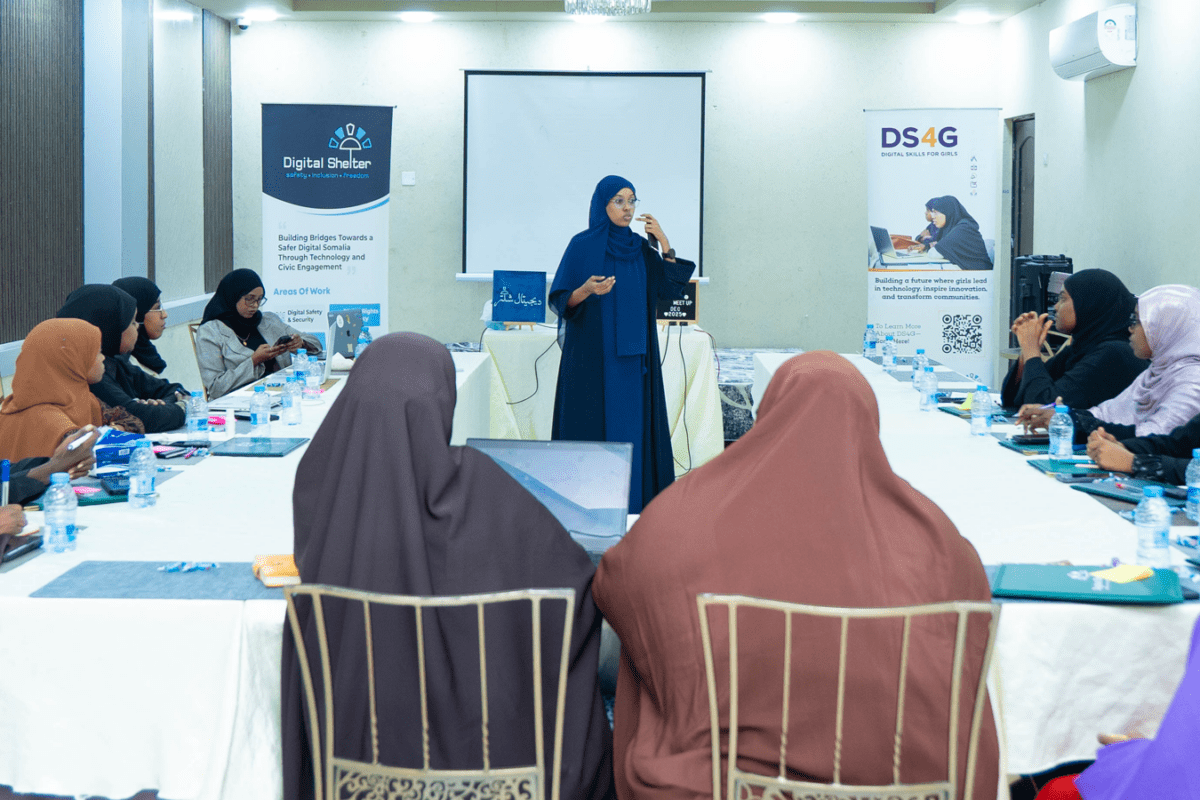
The Digital Skills for Girls (DS4G) programme by Digital Shelter is designed with this in mind, treating digital skilling and inclusion not as isolated competencies but as entry points into broader questions of participation, agency, and voice within Somalia’s evolving digital ecosystem. Combining practical digital skills, digital safety and rights awareness, DS4G has supported 35 women and girls, conducted monthly meet ups and stakeholder engagements to empower young Somali women.

With initial funding from AccessNow in 2024, the US funding cuts affected the continuity of DS4G. A discretionary award under the Africa Digital Rights Fund (ADRF) – an initiative of the Collaboration on International ICT Policy for East and Southern Africa (CIPESA)—supported continued implementation through 2025.

As noted by Ali, “At a time when many organisations were forced to scale back activities due to funding instability, CIPESA’s discretionary support allowed Digital Shelter to remain operational and responsive, ensuring that young women continued to access skills and learning spaces designed to support meaningful participation in digital, social and civic life”. He added that through DS4G, Digital Shelter had strengthened its role as a trusted, women-centered digital rights actor with a replicable programme model.

The DS4G’s sessions included graphic design, personal branding, emerging technologies, data protection and privacy, online threats and risks, and career development. A key component of DS4G was the Cyber Safety for Women event, which reinforced digital safety as a collective concern. The event featured a documentary screening on lived digital experiences and panel discussions on gender, online safety, and participation.

“DS4G recognised that technical skills alone are insufficient unless young women are also equipped to navigate digital environments safely, communicate confidently and position themselves for future opportunities,” said Digital Shelter’s Executive Director, Abdifatah Ali.

According to Digital Shelter, the inclusion of graphic design in the DS4G programme was a strategic one. The team argues that sitting at the intersection of creativity, communication, and influence, design shapes how information is interpreted, whose stories are amplified, and which messages gain traction. For the participants of DS4G, many of whom were students or recent graduates, it offered an accessible entry into digital work.

“As the training progressed, participants moved beyond executing tasks to interrogating purpose and impact, asking who messages are for, what they communicate, and how design can support causes, campaigns, and community conversations,” said Ayan Khalif, Digital Shelter’s Program Manager.

Indeed, participant feedback reflects positive outcomes – both skills acquisition and agency. “Before this project, I used social media without thinking much about safety. Now I understand how to protect myself online and how important digital security is for women like us,” said one participant. As part of reflection exercises, participants explored how design could support community initiatives, advocacy efforts and communicate messages. Another participant stated, “The monthly meetups helped me gain confidence. Speaking in front of others was difficult at first, but now I feel more comfortable expressing my ideas.”

The DS4G initiative has empowered a cohort of young women to navigate digital spaces with confidence and security, equipped with skills to exploit economic opportunities, advocate for change, and engage safely and confidently in community affairs.

Why Digital Security Training Is No Longer Optional for Ugandan Journalists

By Byaruhanga Brian |


Ugandan journalists are increasingly facing intertwined physical and digital threats which  intensify during times of public interest including elections and protests. These threats are compounded by  internet shutdowns, targeted surveillance, account hacking, online harassment, and regulatory censorship that directly undermines their safety and work.  A study on the Daily Monitor’s experience found that the 2021 general election shutdown constrained news gathering, data-driven reporting, and online distribution, effectively acting as digital censorship. These practices restrict news gathering, production, and dissemination and have been documented repeatedly from the 2021 general election through the run‑up to the 2026 polls.

Over the years, CIPESA has documented digital rights violations, challenged internet shutdowns, and worked directly with media practitioners to strengthen their ability to operate safely and independently. This work has deepened as the threats to journalism have evolved.

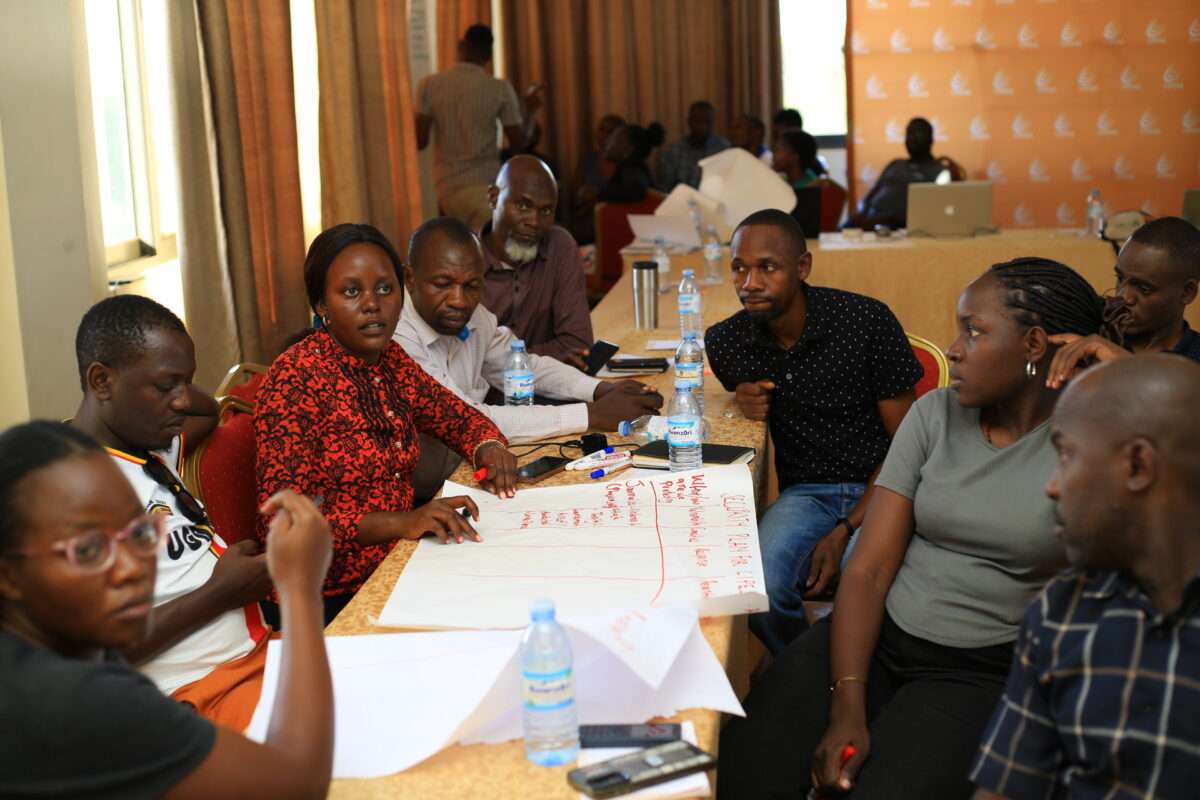
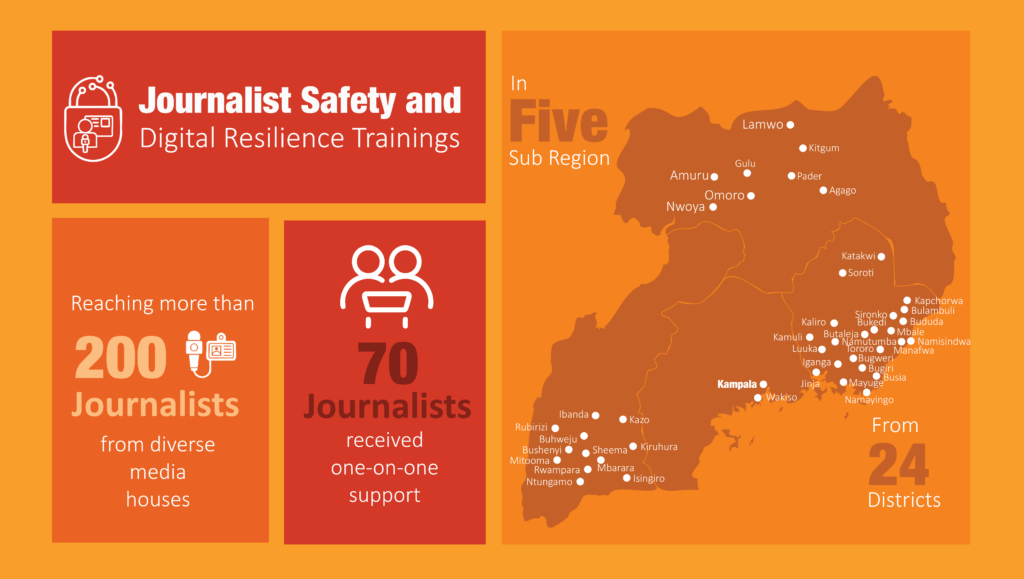
In recent  months CIPESA has conducted extensive journalist safety and digital resilience trainings across the country, reaching more than 200 journalists from diverse media houses and districts across the country, in the Acholi subregion (Gulu, Kitgum, Amuru, Lamwo, Agago, Nwoya, Pader, and Omoro), Ankole sub region (Buhweju, Bushenyi, Ibanda, Isingiro, Kazo, Kiruhura, Mbarara (City & District), Mitooma, Ntungamo, Rubirizi, Rwampara, and Sheema), Central (Kampala, Wakiso), Busoga Region (Bugiri, Bugweri, Buyende, Iganga, Jinja, Kaliro, Kamuli, Luuka, Mayuge, Namayingo, and Namutumba), and the Elgon, Bukedi, and Teso subregions (Mbale, Bududa, Bulambuli, Manafwa, Namisindwa, Sironko, Tororo, Busia, Butaleja, Kapchorwa, Soroti, and Katakwi).

The trainings aimed to strengthen the capacity of media actors to mitigate digital threats and push back against rising online threats and censorship that enable digital authoritarianism. The training was central to helping journalists and the general media sector to understand media’s role in democratic and electoral processes, ensure legal compliance and navigate common restrictions, buttressing their digital and physical security resilience, enhancing the skills to identify and counter disinformation and facilitating the newsroom safety frameworks for the media sector.

The various trainings were tailored to respond to the needs of the journalists, covering media, democracy, and elections; electoral laws and policies; and peace journalism, with attention to transparent reporting and the effects of military presence on journalism in post-conflict settings.

Meanwhile, in Mbale and Jinja, reporters unpacked election-day risks, misinformation circulating on social media, and the legal boundaries that are often used to intimidate them. Across the different regions, newsroom managers, editors and reporters worked through practical exercises on digital hygiene, safer communication, and physical-digital risk intersections.

CIPESA’s digital security trainings respond to the real conditions journalists work under. The sessions focus on election-day and post-election reporting, verifying information and claims under pressure, protecting sources, and strengthening everyday digital security through strong passwords, two-factor authentication, and safe device handling. Journalists also develop newsroom safety protocols and examine how peace journalism can help de-escalate tension rather than inflame it during contested political moments

One of the most important shifts for the participants,  came from the perspective that safety stopped being treated as an individual burden and started being understood as an organisational responsibility. Through protocol-development sessions, journalists mapped threats, identified vulnerabilities such as predictable routines and weak passwords, and designed “if-then” responses for incidents like account hacking, detention, or device theft. For many journalists, this was the first time safety had been written down rather than improvised.

Beyond the training for journalists, CIPESA hosted several digital security clinics and help desks for human rights defenders and activists. At separate engagements, close to 70 journalists received one-on-one support during a digital security clinic at Ukweli Africa held from the 15 December 2025 including the at the Uganda Media Week. These efforts sought to  enhance their digital security practices. The support provided during these interventions included checking the journalists’ devices for vulnerabilities, removal of malware, securing accounts, enabling encryption, and secure data management approaches.

“Some journalists who had arrived unsure, even embarrassed, about their digital habits, left lighter, not because the risks had vanished, but because they now understood the tools and how to manage risks.”

These engagements serve as avenues to build the digital resilience of journalists in Uganda, especially as the media faces heightened online threats amidst a shrinking civic space.Such trainings that speak the language of lived experience often travel further than any policy alone. In Uganda, where laws can be used to narrow civic space, where the internet can be switched off, and where surveillance blurs the line between public and private, practical digital security becomes a necessity.

By training journalists across Uganda, supporting them through digital security desks, and standing with them during moments like Media Week, CIPESA has helped journalists strengthen their resilience to keep reporting in spite of the challenges and threats they encounter daily.

Inform Africa Expands OSINT Training and DISARM-Based Research With CIPESA

ADRF |

Information integrity work is only as strong as the methods behind it. In Ethiopia’s fast-changing information environment, fact-checkers and researchers are expected to move quickly while maintaining accuracy, transparency, and ethical care. Inform Africa has expanded two practical capabilities to address this reality: advanced OSINT-based fact-checking training and structured disinformation research using the DISARM framework, in collaboration with the Collaboration on International ICT Policy for East and Southern Africa (CIPESA).

This work was advanced with support from the Africa Digital Rights Fund (ADRF), administered by CIPESA. At a time when many civic actors face uncertainty, the fund’s adaptable support helped Inform Africa sustain day-to-day operations and protect continuity, while still investing in verification and research methods designed to endure beyond a single project cycle.

The collaboration with CIPESA was not only administrative. It was anchored in shared priorities around digital rights, information integrity, and capacity building. Through structured coordination and learning exchange, CIPESA provided a partnership channel that strengthened the work’s clarity and relevance, and helped position the outputs as reusable methods that can be applied beyond a single team. The collaboration also reinforced a regional ecosystem approach: improving practice in one context while keeping the methods legible for peer learning, adaptation, and future joint work.

The implementation followed a phased timetable across the project activity period from April through November 2025. Early work focused on scoping and method design, aligning the training and research approaches with practical realities in newsrooms and civil society. Mid-phase work concentrated on developing the OSINT module and applying DISARM as a structured research lens, with iterative refinement as materials matured. The final phase focused on consolidation, documentation discipline, and packaging the outputs to support repeatable use, including onboarding, internal training, and incident review workflows.

A central focus has been an advanced OSINT training module built to move beyond tool familiarity into a complete verification workflow. Verification is treated as a chain of decisions that must be consistent and auditable: how to intake a claim, determine whether it is fact-checkable, plan the evidence, trace sources, verify images and videos, confirm the place and time, and document each step clearly enough for an editor or peer to reproduce the work. The aim is not only to reach accurate conclusions but also to show the route taken, including which evidence was prioritized and how uncertainty was handled.

This documentation discipline is not bureaucracy. It is a trust technology. In high-risk information environments, preserved sources, verification logs, and clear decision trails protect credibility, strengthen editorial oversight, and reduce avoidable errors. The module prioritizes hands-on, production-style assignments that mirror real newsroom constraints and trains participants to avoid overclaiming, communicate uncertainty responsibly, and present evidence in ways that non-expert audiences can follow.

In parallel, Inform Africa has applied the DISARM framework to disinformation research. DISARM provides a shared language for describing influence activity through observable behaviors and techniques, without drifting into assumptions. The priority has been to remain evidence-bound: collecting and preserving artifacts responsibly, maintaining a structured evidence log, reducing harm by avoiding unnecessary reproduction of inflammatory content, and avoiding claims of attribution beyond what the evidence supports. This DISARM-informed approach has improved internal briefs, strengthened consistency, and made incidents easier to compare over time and across partners.

Three lessons stand out from this work with CIPESA and ADRF. First, quality scales through workflow, not only through talent. Second, evidence discipline is a strategic choice that protects credibility and reduces harm in both fact-checking and research. Third, shared frameworks reduce friction by improving clarity and consistency across teams. Looking ahead, Inform Africa will integrate the OSINT module into routine training and onboarding and continue to apply DISARM-informed analysis in future incident reviews and deeper studies, reinforcing information integrity as a public good.

This article was first published by Informa Africa on December 15, 2025