“Be The Experience” Immersive Exhibition and Digital Security Hub

FIFAfrica25 |

We welcome you to enter this space where digital rights come alive. The FIFAfrica25 “Be The Experience” immersive exhibition is a showcase of the creativity, innovation, and resilience of Africa’s digital rights ecosystem. It includes interactive installations and live demonstrations as well as visual art and storytelling, and is designed to bridge the gap between policy debates and lived experiences. 

FIFAfrica attendees will learn, discover, and also engage with an amazing lineup of exhibitors who are dedicated to the cause of advancing #InternetFreedomAfrica.

This exhibition is a shared experience that turns abstract digital policy concepts into tangible realities. Exhibtors are placed into zones to help navigate from a journey that starts from a moment of self-reflection and ends in a gathering of wisdom. 

The Internet i Carry
Self Reflection!

In a hut specially built for the Forum, we invite you to take a moment to reflect on your relationship with the internet. What has your journey online been? This is not necessarily a discussion on laws, or advocacy strategies or digital security protocols but about our intimate and emotional relationships with digital technologies

The Trap of Uncertainity
Am I Safe Online?

Enter this zone and reflect on who has access to your data. Ask yourself, How secure are my devices? What are the habits that make me vulnerable online? Confront your vulnerabilities and the myths around online safety and digital security

The Exposure
Unmasking the Risks

Here, risks that we face online are made visible. Visit this zone to see the work of entities dedicated to helping us spot the risks we face online as well as the campaign associated with amplifying the movement for a safer digital ecosystem.

Zone of Awareness
Know Your Rights, And Your Tools!

Learn about some of the tools of resistance and why they matter in everyday digital life. In this zone, take time to explore and discover tools that can help you navigate online spaces even in the most trying of times - including when the internet is shut down. Delve into what rights are affected by poor digital health practices and strengthen your legal resilience knowledge

Building Our Digital Futures

In this zone, explore efforts aimed at showcasing the evolving African digital ecosystem. bridging the different communities of the digital ecosystem and why these communities of practice are important.

Olupale

The Olupale (an Oshiwambo word) is a space within a traditional Ovambo homestead (eumbo) where people gather to share stories, receive guests, and impart wisdom.

For FIFAfrica this is an extension of the spirit of our gathering to share knowledge and put into practice the lessons from the immersive exhibition including on digital resilience. 

Be sure to visit the Digital Security Hub which features a lineup of digital securuty experts eagerly waiting to address any concerns you may have on digital safety and your devices, Among them will also be Andrew Gole fresh off a solo biking adventure coupled with stops to engage and highlight the role that digital safety and security has in our everyday lives and work.

FIFAfrica25 Invites YOU to “Be The Experience”!

FIFAfrica25 |

This year, we invite participants of the Forum on Internet Freedom in Africa (FIFAfrica25) to “Be the experience!” The Forum will encourage attendees, onsite or participating remotely to engage in various interactions that bring digital rights issues to life.  These experiences aim to break down barriers between complex digital rights policy concepts and real-world lived experiences. Ultimately, whether you are a policymaker, activist, journalist, academic, technologist, or artist, FIFAfrica25 will have a space for you to contribute.

Here is what we have lined up: 

  • An online community of attendees already meeting and engaging with each other on various topics. Be sure to be registered on the event platform to join in. 
  • An immersive exhibition where various organisations and individuals will share their work and artworks.
  • A biker doing a round trip across 10 countries (more details below) to advance the call for the #RoadToDigitalSafety 

A Run for #InternetFreedomAfrica that aims to bring together participants to jog, or walk in solidarity with the call for a free, fair and open internet. More details below.

“Be The Experience” and Win!

We have some goodies lined up to reward those who have lived up to the FIFAfrica’s Be The Experience experience, this could be through vibrant engagement that gets you high scores on the event leader board, sharing compelling post online – and tagging us, through to active engagement in sessions and with the different exhibitors at the Forum.  Use the hashtags #InternetFreedomAfrica and #FIFAfrica25 to join a vibrant community working to shape a more open, inclusive, and rights-respecting digital future for the continent. Be sure to also follow CIPESA (@cipesaug) on XFacebook and LinkedIn.

The Journey To FIFAfrica25 Already Begun

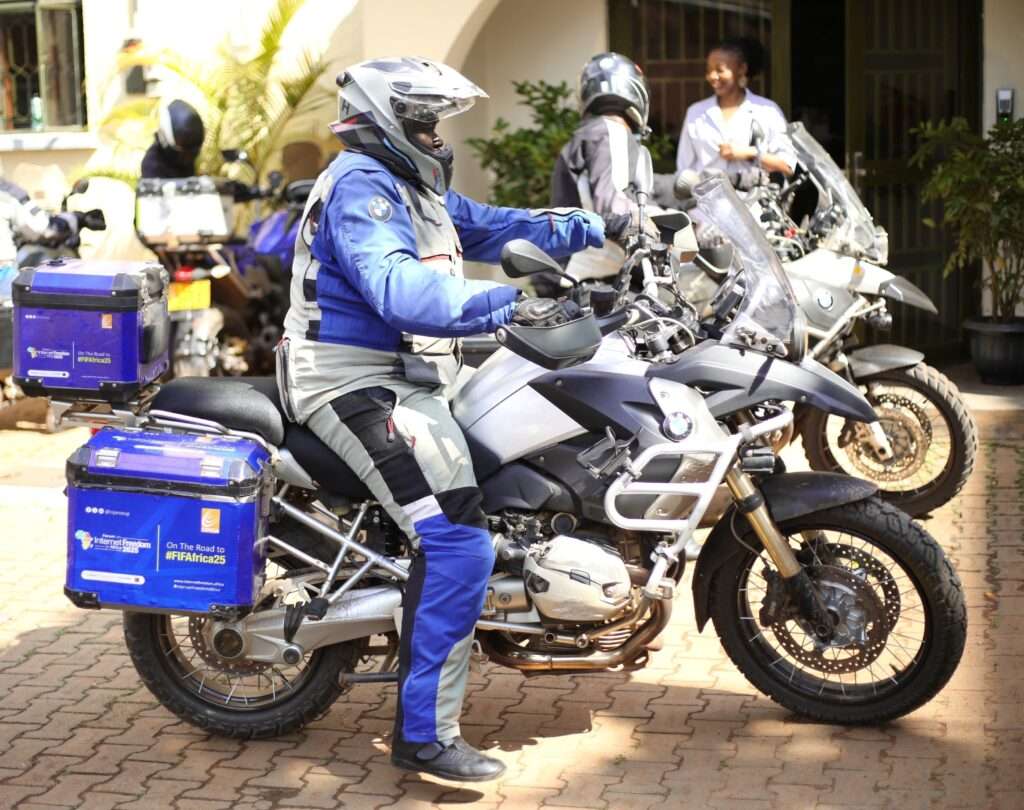
A week ago, Andrew Gole set off on an extraordinary solo motorbike journey that will span over 13,000 km across 10 African countries. His mission is to ride from Uganda all the way to Windhoek, Namibia – arriving just in time for the Forum on Internet Freedom in Africa (FIFAfrica25) where he will also be part of the Digital Security Hub. Here are some pictures of Gole at the Kenya – Uganda border alongside members of the bikers club the accompanied him from Kampala to the border.

Andrew Gole set off from Kampala, Uganda on September 12, 2025 and as of today, has traversed five of the ten countries he is expected to journey through on hos #RoadToDigitalSafey.

Join the Run for #InternetFreedomAfrica Is Heading to Windhoek


We are taking the movement for digital rights beyond the conference halls and onto the streets. On September 24, 2025, join a community of attendees and everyday internet users for a run and walk that celebrates our collective call for a free, open and secure internet across Africa.

The run is set to coincide with the arrival of Andrew Gole who is riding from Uganda to Namibia. By being a part of the run – and several other morning runs that will be part of the Forum (look out for updates in the event platform).  Whether you’re jogging, walking, or cheering from the sidelines, the Run for Internet Freedom is a moment to be part of a movement that builds digital resilience. digital inclusion and pushes back against digital repression.

More details will be shared about the run soon.

Digital Access As A Tool To Defend Democracy

By Juliet Nanfuka | 

The link between digital access and democracy has come to inform civic engagement, access to information and freedom of expression in Africa. With most of the continent navigating flawed or fragile democracies, digital access has become a tool of both empowerment for citizens, and a tool of control by states. This makes the International Day of Democracy a vital commemoration of what is at risk if democracy is not defended. 

This year, in various African countries, through affronts to the media, clampdown on critical voices and opposition actors as well as network disruptions, states have used their position to undermine human rights and breed  distrust in electoral integrity.

Since July 2024, a block to internet access remains enforced in the Equatorial Guinean island of Annobón following public protest against environmental degradation by Somagec, a Moroccan construction company. Despite the public outcries, the company’s operations on the island continue. Equatorial Guinea, is headed by Teodoro Obiang Nguema Mbasogo, Africa’s longest-serving president. His son serves as the Vice President and is accused of spending state funds on a lavish lifestyle.

In Kenya, in the wake of a May 2025 landmark ruling against network disruptions, a Telegram block was initiated. The disruption occurred close to the anniversary of the June 2024 protests against the rising cost of living in the country that resulted in the #RejectThefinanceBill outcry. The May ruling noted that disruptions to digital access are unconstitutional and amount to the violation of fundamental rights.

On September 6, 2025, the online license of the popular online discussion group, JamiiForums was suspended by the Tanzania Communications Regulatory Authority (TCRA)  for three months for reportedly publishing content that violates the Electronic and Postal Communications Regulations regarding online content. In a public post, Jamii Forums noted that TCRA’s decision arose from the platform’s publication of details of share ownership in Tanzania’s largest coal mine (Ngaka), as well as reports about meetings between the President of Tanzania and controversial Zimbabwean businessman Wicknell Chivayo  “without verifying the facts.” In a statement, Community to Protect Journalists (CPJ) Regional Director Angela Quintal noted that, “JamiiForums’ suspension is the latest sign of the Tanzanian government’s deepening suppression of public discourse and raises concerns about access to information ahead of the October 29 elections.”

Meanwhile, Uganda remains in the shadow of a Facebook block initiated nearly five years ago ahead of the 2021 elections. On January 11, 2021 Facebook suspended the accounts of a number of government officials and members of the ruling National Resistance Movement (NRM) party  for what it described as Coordinated Inauthentic Behaviour (CIB) aimed at manipulating public debate. Twitter (now X) also suspended similar accounts. The state consequently blocked social media access and thereafter access to the entire internet and mobile money services. Although access to the internet and mobile money services was restored a few days after the January 14, 2021 election, access to Facebook remains blocked. Uganda heads to the polls in early 2026 and will see incumbent Yoweri Museveni run for re-election in a bid to extend his 40-year rule.

In the 2024 edition of the State of Internet Freedom in Africa report, the Collaboration on International ICT Policy for East and Southern Africa (CIPESA) highlighted the interplay between technology and elections and the practice of the majority of authoritarian governments to selectively limit access as a tool to exert power.

The report indicated various concerns including the intensification of digital authoritarianism amidst shrinking civic space. It noted that digital surveillance has become a defining tool of state power, moving beyond traditional intelligence agencies into everyday governance through digital ID  projects, biometric databases, Closed Circuit Television (CCTV) networks, and covert spyware. All this in contexts where there are weak safeguards for personal data and insufficient regulatory oversight, leaving citizens vulnerable.

Meanwhile, misinformation and disinformation, significantly enhanced by Artificial Intelligence (AI) generated content, adds yet another threat electoral processes. It is increasingly distorting public perception and undermines informed decision-making, particularly in contexts with low digital literacy. This is in addition to the use of bots and paid  influencers to amplify propaganda and “demote” opposing views, making inauthentic content appear genuine. Social media platforms are often criticised for deploying insufficient resources for content moderation in Africa, leading to slow responses and poor enforcement of policies against harmful content, including online gender-based violence.

Ultimately, more actors in the digital ecosystem including civil society organisations, the tech community, media and academia should leverage their watchdog role to document digital rights abuses; educate and raise awareness on the importance of access to information, free expression, data privacy; and promote equitable AI governance, in order to advance transparency and accountability of platforms and governments.
At the upcoming September 24-26, 2025, Forum on Internet Freedom in Africa (FIFafrica25), a series of sessions will critically examine digital democracy on the continent. The goal is to chart practical pathways for strengthening civic participation and ensuring that Africa’s digital future is inclusive, accountable, and rights-respecting.

CIPESA Endorses the Johannesburg Declaration of the M20 Summit

By Juliet Nanfuka | 

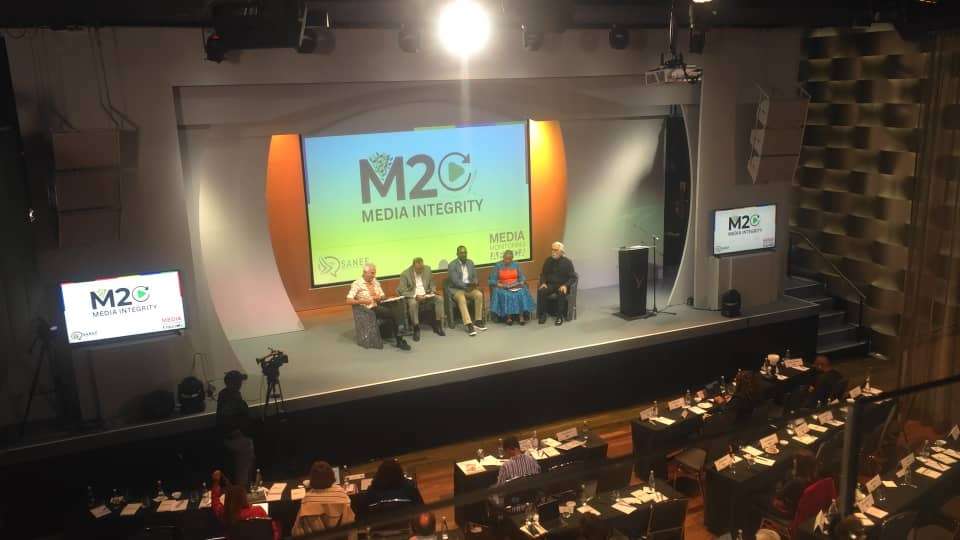
The Collaboration on International ICT Policy for East and Southern Africa (CIPESA) has endorsed the Johannesburg Declaration, adopted at the M20 Summit held in Johannesburg, South Africa, on September 1-2,2025. The Summit, convened by the South African National Editors’ Forum (SANEF) and Media Monitoring Africa (MMA) is a parallel independent initiative to the Group of Twenty (G20) – an international forum of both developing and developed countries that seeks to find solutions to global economic and financial issues. CIPESA was proud to not only support the Summit but to also participate and to contribute to the drafting process of the Declaration. 

The Declaration is a response to the global crisis in the integrity of information, peace and respect for human rights, including environmental rights. It serves as a call to the media, the G20 and the wider public to recognise that the information integrity crisis is “intensifying as the spaces for independent news media and civic engagement contract.”

Further, the Declaration reinforces the fact that democratic societies grow through the supply of reliable information in a timely manner. Yet today there is a widescale erosion of sources of information and knowledge. The Declaration also notes that independent journalism is a vital public good, and fundamental to people’s right of access to information, and to the sustenance of peace and democratic governance. 

CIPESA joins over fifty organisations in this call that serves an injunction to everyone to do more to protect press freedom, and support the role of journalism, and a human rights-based media ecosystem in its contribution to the public good. 

You can read the full text of the Johannesburg Declaration here.

Information integrity has featured on CIPESA programming including in May 2025 when Media Monitoring Africa (MMA) and UNESCO officially launched regional consultations to develop the African guidelines for monitoring technology companies’ roles in ensuring information integrity on their platforms. CIPESA participated in a high-level panel discussion on the March 2025 adoption of the Resolution on developing Guidelines to assist States monitor technology companies in respect of their duty to maintain information integrity through independent fact checking – ACHPR/Res.630 (LXXXII) 2025 by the African Commission on Human and Peoples’ Rights (ACHPR). The discussion was held at the Digital Rights and Inclusion Forum (DRIF) 2025 hosted by Paradigm Initiative (PIN),

CIPESA has also made a series of recommendations to the Resolution which instructs the Special Rapporteur to collaborate with civil society, regulators, and technology companies to create Guidelines that enable effective monitoring of platforms, including assessing the role and effectiveness of independent fact-checking initiatives.

At the September 2025 Forum on Internet Freedom in Africa (FIFAfrica25), information integrity is among the themes up for debate and discussion including through a dedicated consultation on  ACHPR/Res.630 (LXXXII) 2025.  

CIPESA’s endorsement of the Johannesburg Declaration serves as a testament to the belief that a free, plural, and rights-respecting information ecosystem is the cornerstone of Africa’s digital and democratic future.

The FIFAfrica25 Agenda and Speaker Lineup Is Live!

By FIFAfrica |

The Forum on Internet Freedom in Africa (FIFAfrica25) is fast approaching, and the excitement is building. This year’s edition, hosted by the Collaboration on International ICT Policy in East and Southern Africa (CIPESA) in partnership with the Namibian Ministry of Information and Communication Technology (MICT) and the Namibia Internet Governance Forum (NamIGF), will take place in Windhoek, Namibia, from 22–26 September 2025. We are pleased to announce that the speaker line-up and full agenda is now available, offering a comprehensive line-up of conversations, experiences, and networking opportunities.

This year’s Forum will serve as yet another edition in FIFAfrica’s 12-year history of assembling digital rights defenders, policymakers, technologists, academics, regulators, journalists, and the donor community, who all have the shared vision of advancing internet freedom in Africa. FIFAfrica25 promises to build on this legacy, with an agenda that is engaging and inclusive of the many shifts we have witnessed since last year.

Here is What You Can Expect

Pre-Events by invitation (September 22-24, 2025)
FIFAfrica25 kicks off with a series of pre-events designed to engage allies, stock-take and build skills and knowledge ahead of the main programme. These include community-driven workshops, closed-door strategic dialogues, and network member meetings that allow participants to dive deeper into niche areas of digital rights and governance. Over the years, pre-events have served as an exciting avenue for various organisations to connect early, showcase their work, sharpen ideas, and prepare new communities for the various sessions at the main event.

The pre-events are by invitation only. However, limited spots are available for additional participants in select events. Are you arriving in Windhoek early and interested? Express interest in attending a pre-event here.

A Diverse Main Programme (September 25-26, 2025)
The main agenda features plenary sessions, workshops, consultations, breakout discussions, and networking moments. Sessions cover a wide array of topics reflecting themes that emerged from our public call for proposals, including digital inclusion, digital resilience and safety; freedom of expression & access to information; platform accountability; the implications of AI; digital economy; and digital democracy.

Strategic Consultations
As part of the Forum, various strategic meetings have been set up with the goal of deeper-level discussion and interrogation of specific issues and processes. These include efforts aimed at influencing action on areas such as various resolutions of the African Commission on Human and People’s Rights (ACHPR) and Digital Public Infrastructure. Additionally, this year a book launch on internet shutdowns features amongst the strategic engagements. These engagements will allow for frank exchanges on some of the challenges in the digital ecosystem, but will likely also cast a light on more opportunities for collaboration across Africa and beyond.

Immersive Experience
This year, we want participants at FIFAfrica to “Be the experience!” Accordingly, the Forum will encourage attendees, onsite or participating remotely to partake in various interactions that  bring digital rights issues to life.  These experiences aim to break down barriers between complex digital rights policy concepts and real-world lived experiences.

These include:

  • An interactive FIFAfrica25 exhibition showcasing research, campaigns, and various digital resilience tools.
    • Storytelling spaces where the #InternetFreedomAfrica community can share personal accounts of resilience and advocacy in digital spaces.
    • An art and activism installation reflecting FIFAfrica’s tradition of merging creativity with digital justice.
    • For the third time, the Digital Security on Wheels is back on a one-of-a-kind journey which will see biker Digital Security expert Andrew Gole set off from Kampala, Uganda, weaving through Kenya, Tanzania, Malawi, Mozambique, Zimbabwe, and Botswana before crossing the finish line in Windhoek, Namibia just in time for the opening of FIFAfrica25. His route back to Uganda will also include Zambia and Rwanda.
    • The Run for Internet Freedom in Africa aims to bring together participants to jog, or walk in solidarity with the call for a free, fair and open internet. More details to follow.

Celebrating the International Day for Universal Access to Information
FIFAfrica25 will continue the practice of commemorating the International Day for Universal Access to Information (IDUAI) celebrated annually on September 28. While the Forum this year precedes the IDUAI, many sessions and plenary discussions will highlight the essential role of access to information in enabling civic participation, inclusion, and digital democracy. This year’s global theme, “Ensuring Access to Environmental Information in the Digital Age”, focuses on the vital importance of timely, comprehensive, and cross-border access to environmental information in an increasingly digital world and resonates deeply with many of the Forum’s discussions.

Join Us in Windhoek

We invite you to explore the full agenda on the FIFAfrica website and begin planning your journey through the sessions, meetings, and immersive experiences (remember to register on the event platform and join the community there). Whether you are a policymaker, activist, journalist, academic, technologist, or artist, FIFAfrica25 will have a space for you to contribute.