Inside a Masterclass on Investigating Climate Claims

Q&A with Joy Kirigia |

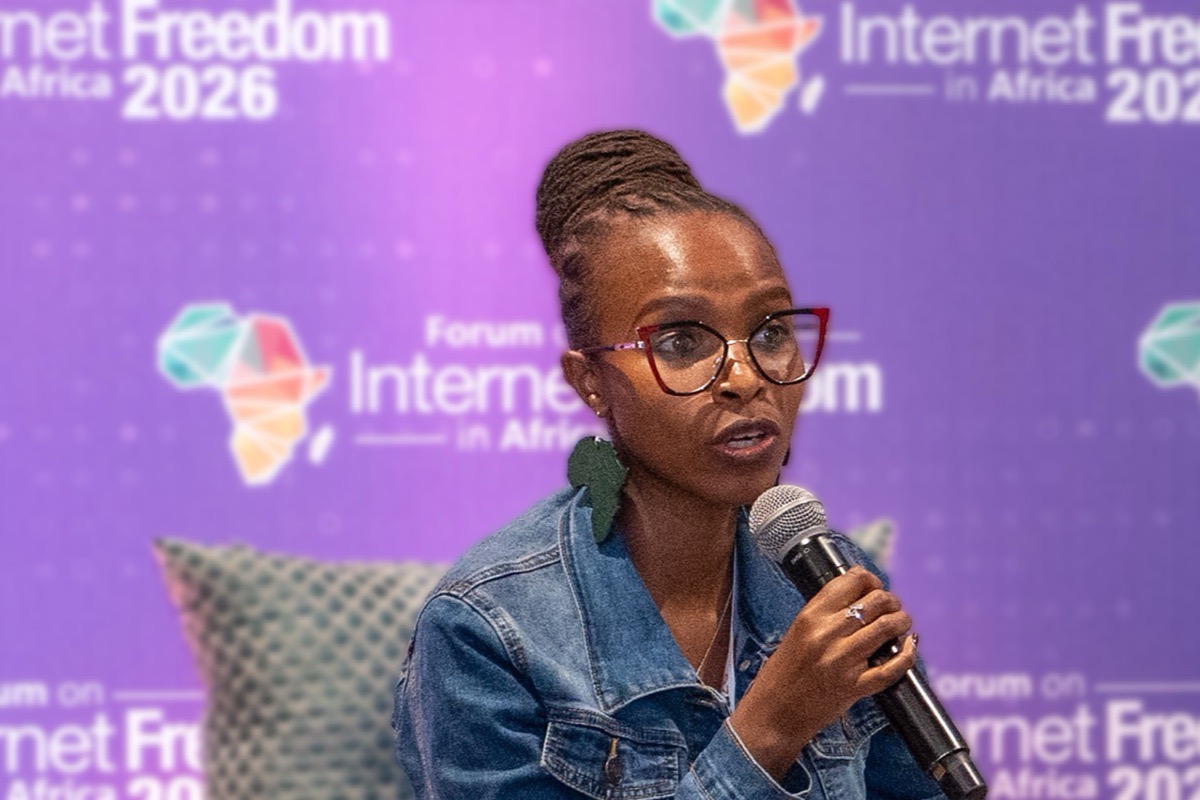
Joy Kirigia is a multi-award-winning journalist who also works with Africa Uncensored. She was one of the facilitators at a Climate Change and Information Integrity Masterclass co-hosted by UNESCO and CIPESA. In this Q and A with Juliet Nanfuka, she narrates her insights from the session and highlights various warnings about disinformation. She points out how African journalists build a climate investigation from the ground up.

1. You noticed participants were curious but often unaware of the tools and datasets already available to them. Why does that gap matter for the stories African newsrooms aren’t telling?

One of the most encouraging things about the masterclass was the level of interest and curiosity around the subject. There was clearly an appetite to understand how climate change stories can be investigated, particularly where data, accountability and information integrity intersect. However, we also noticed that while the interest was there, many participants were not fully aware of the resources, datasets and practical tools available to help them pursue these stories.

That observation was important for us because it highlighted a gap in how we approach climate storytelling. We often focus on the finished product: the documentary, the investigation, the article or the visualisation. But there is an entire process behind getting to that final product, and that process is not always visible or accessible to other journalists.

We therefore made a deliberate effort to take participants through the storytelling journey, using both raw and refined data to demonstrate how an investigation develops. We looked at where journalists can find evidence, how to interrogate documents and datasets, how to verify what they find against what is happening on the ground, and how to turn that evidence into a compelling and understandable story.

One of the important insights was that journalists do not necessarily have to begin with climate change as the subject of an investigation. Sometimes, a better starting point is a concrete decision, a business deal, a promise made to a community or a harm that people are experiencing. These can provide an entry point into much bigger questions about climate change, environmental accountability, land rights and the people affected by these decisions.

We also explored how information that appears credible on paper, including information contained in official registries and project documents, still needs to be independently verified. For instance, a carbon registry may tell you what a project has submitted or what has been certified, but it cannot, on its own, establish whether communities have been adequately consulted, whether their rights have been respected or whether promised benefits have reached them.

This is where climate reporting and information integrity intersect. It is not enough to repeat figures, project claims or official statements. Journalists have to interrogate where the information comes from, what it actually establishes and what may be missing.

The appreciation participants showed for the process was particularly encouraging. It reminded us that there is value in making investigative methods and resources more accessible, not just sharing the final findings. If journalists can access the underlying data, understand how it was analysed and see how evidence was built into a story, they are better placed to develop their own investigations and independently scrutinise claims.

2. What are some of the key gaps in climate change reporting in Africa? In particular, where are journalists and media organisations falling short in reporting climate change issues and responding to disinformation narratives?

One of the key gaps we see in climate reporting in Africa is that many stories remain focused on the visible effects of climate change, while some of the decisions, interests and financial arrangements behind those effects receive less scrutiny.

Reporting on droughts, floods, food insecurity and the loss of livelihoods is important. These are real experiences that deserve attention. However, there is also a need to investigate the systems and decisions shaping these outcomes. Who is making decisions about land and natural resources? Who is financing climate-related projects? Who stands to benefit? What promises are being made to communities and are those promises being fulfilled?

Take carbon projects, for example. There is considerable room for more reporting on the agreements behind these projects, how communities are involved, how benefits are shared, who controls the money and whether the outcomes match what project promoters claim. These are questions that require journalists to go beyond the press release or the official project description and examine contracts, company records, payment records, community agreements and what is happening on the ground.

Another gap is access to, and the ability to work with, data. There are useful resources available, but knowing that they exist, understanding how to navigate them and knowing how to interpret the information they contain are different things. Some journalists may have access to datasets but lack the technical support or confidence to interrogate them. Others may not know where to begin looking.

There is also a challenge around how climate information is communicated. Technical language, complicated datasets and scientific findings can make stories difficult for audiences to understand. At the same time, oversimplifying these issues can leave out important context. We need reporting that is accurate but also accessible and that helps audiences understand how climate issues connect to their everyday lives.

On disinformation and information integrity, we need to be more deliberate about interrogating claims rather than simply repeating them. Climate-related projects, policies and investments often come with claims about environmental benefits, restoration, community livelihoods or economic opportunities. Those claims need to be tested against evidence. We should also be careful not to treat every disagreement, criticism or unanswered question as disinformation. Sometimes the problem is incomplete information, poor communication, a lack of transparency or genuine public concern. Journalists need to establish what is inaccurate, what is misleading, what is unverified and what remains unknown before making those distinctions.

Ultimately, the gap is not simply a lack of climate stories. It is the need for deeper, more evidence-led reporting that connects environmental issues to governance, money, power, accountability and the lived experiences of communities.

3. Climate change cuts across land, finance, governance and human rights yet it’s still treated as a separate beat. What would it take to turn that intersection into an advantage, and who needs to be in the room for it to work?

We see a significant opportunity in making climate reporting more investigative and collaborative. Climate change is not an isolated subject. It intersects with land, finance, governance, public policy, business, health and human rights. This means journalists do not have to approach it as a completely separate beat. There are opportunities to bring existing investigative skills and areas of expertise into climate reporting.

There is also an opportunity to make better use of data that is already publicly available. Resources such as Climate TRACE, Carbon Majors, carbon project registries and the World Bank’s Climate Change Knowledge Portal can provide useful starting points for investigations. Satellite imagery, historical maps, company records and public documents can also help journalists test claims and identify gaps between what is promised and what is happening on the ground.

But having access to data is only one part of the equation. We need to invest in helping journalists understand how to use it, question it and combine it with traditional reporting. A dataset may point to a possible finding, but it is the interviews, documents, field visits and independent verification that help establish what that finding actually means.

Collaboration is another major opportunity. Climate stories can be technically demanding and often involve information that sits across different institutions, sectors and countries. Journalists can work more closely with data analysts, researchers, climate scientists, fact-checkers and civil society organisations to strengthen their investigations. Newsrooms can also collaborate across borders, particularly where projects, companies, financing arrangements or environmental impacts extend beyond national boundaries.

Each stakeholder has a role to play. Journalists need to ask difficult questions, independently verify claims and make complex information understandable to the public. Researchers and climate scientists can help journalists interpret technical findings and identify areas that require further investigation. Civil society organisations can provide community perspectives, research and access to information that may otherwise be difficult to obtain. Public institutions and project developers also have a responsibility to make relevant information accessible and explain decisions that affect communities.

There is, equally, an opportunity to bring communities into the centre of climate reporting. People living with the consequences of environmental decisions often have information, records and experiences that are not reflected in official accounts. Their perspectives should not simply be used to illustrate a story; they can help journalists identify what needs investigating in the first place.

For us, strengthening information integrity also means being transparent about how we arrive at our findings. Journalists should be willing to explain where their data came from, how they analysed it, what they could and could not verify, and where uncertainty remains. This is particularly important in climate reporting, where inaccurate figures, misleading comparisons or claims presented without context can distort public understanding.

4. What are some of the approaches, tools or collaborations that participants should take forward following the masterclass?

One of the things we hoped participants would take away from the masterclass was that they do not need to wait until they have advanced technical skills or expensive equipment to begin investigating climate-related issues. They can start with the resources available to them, ask better questions and build their capacity as they go.

A practical starting point is to identify a specific decision, project, promise or problem that can be investigated. Rather than approaching a story with the broad question of climate change, journalists can ask more focused questions: What was promised to this community? Who signed the agreement? Where is the money coming from? Who is receiving the benefits? Has the project delivered what it said it would?

From there, they can begin building an evidence trail. This could involve collecting contracts, memoranda of understanding, meeting minutes, land records, environmental impact assessments, company records and other relevant documents. They can then compare what the documents say with what communities and other affected parties are experiencing.

We also encouraged participants to explore some of the available datasets and tools. These included:
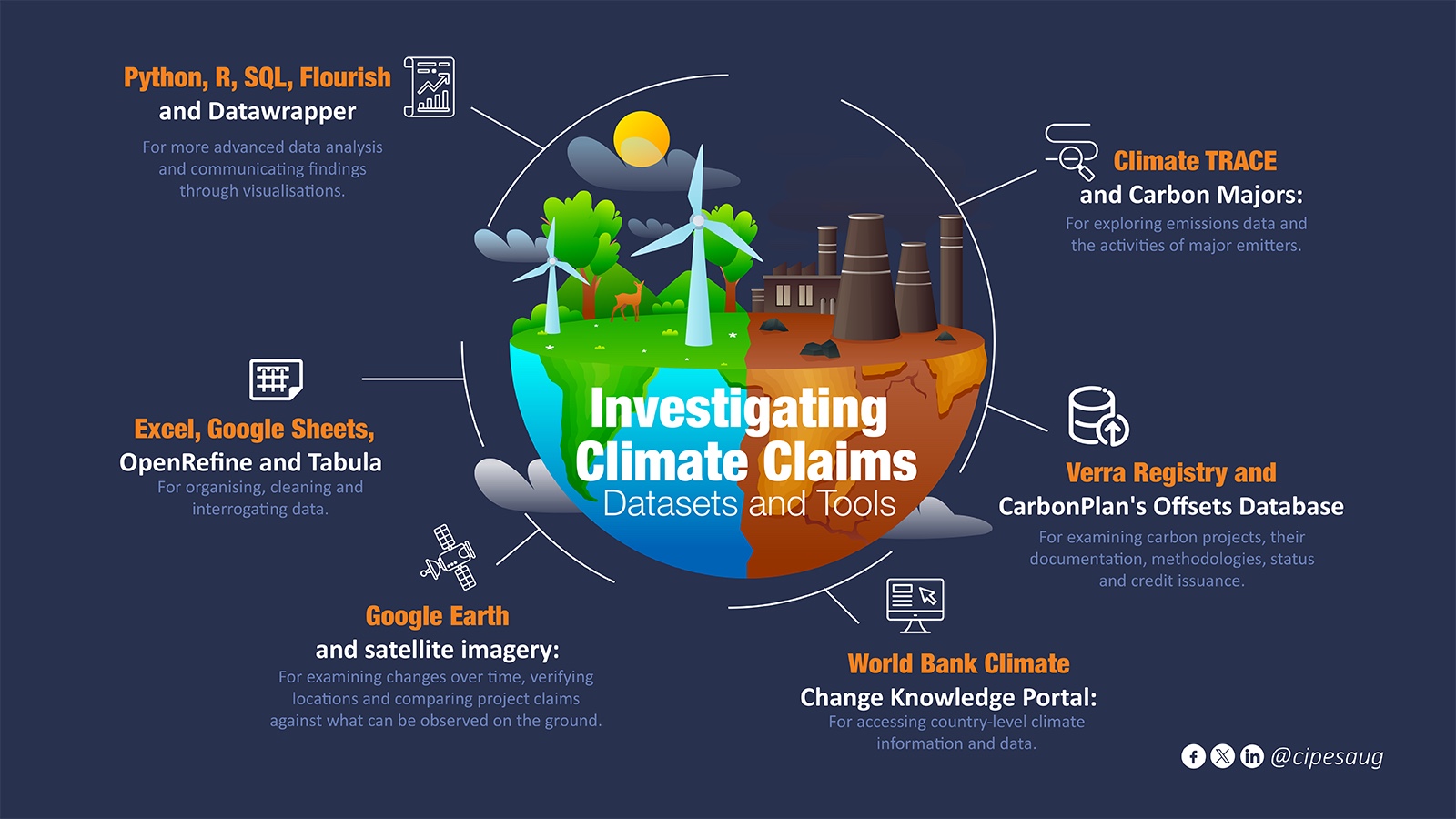
Graphic titled Investigating Climate Claims: Datasets and Tools. It names six groups. Climate TRACE and Carbon Majors: for exploring emissions data and the activities of major emitters. Verra Registry and CarbonPlan’s Offsets Database: for examining carbon projects, their documentation, methodologies, status and credit issuance. World Bank Climate Change Knowledge Portal: for accessing country-level climate information and data. Google Earth and satellite imagery: for examining changes over time, verifying locations and comparing project claims against what can be observed on the ground. Excel, Google Sheets, OpenRefine and Tabula: for organising, cleaning and interrogating data. Python, R, SQL, Flourish and Datawrapper: for more advanced data analysis and communicating findings through visualisations.

Importantly, we encouraged participants to start simple and scale up as the investigation demands. Not every story requires coding or sophisticated data analysis. Sometimes, a well-organised spreadsheet, a timeline, a comparison of documents or a carefully annotated map can reveal something significant.

Another practical takeaway is the importance of collaboration. Journalists should not feel that they have to possess every technical skill themselves. Building relationships with data journalists, researchers, analysts and fact-checkers can help strengthen the reporting process. Editors also need to be part of this process early enough to help interrogate the evidence and identify gaps before publication.

Finally, we emphasised the importance of verification and responsible storytelling. Data should support the story, not dominate it. Journalists should reproduce their analysis, double-check calculations, explain their sources and methods, avoid misleading visualisations and take care not to expose sensitive personal information or put individuals at risk.

Perhaps most importantly, participants should carry forward the understanding that data is a starting point, not a conclusion. It can reveal patterns, raise questions and point journalists towards possible findings, but those findings must still be questioned, verified and tested against the realities on the ground.

The real value of the masterclass will be seen in how participants apply these methods to the stories they pursue after leaving the room. We hope they leave with not just a list of resources, but a clearer sense of where to look, what to question and how to build a climate investigation from the ground up.

Details: The Climate Change and Information Integrity Masterclass was part of a project by the Collaboration on International ICT Policy for East and Southern Africa (CIPESA), in partnership with UNESCO aimed at addressing the growing challenge of climate change disinformation and strengthen information integrity in the public sphere.
Information Integrity as Africa Shapes Digital Platforms Governance

By Lister Namumba |

Moxii Africa, formerly Media Monitoring Africa, participated in the 13th edition of the Forum on Internet Freedom in Africa (FIFAfrica) convened by the Collaboration on International ICT Policy for East and Southern Africa (CIPESA). Moxii Africa, represented by Lister Namumba, Program Manager for Monitoring, Research and Analysis, delivered a keynote on the update of the African Commission on Human and Peoples’ Rights (ACHPR) Resolution 630 Draft Guidelines.

The update followed consultations held at the 2025 edition of FIFAfrica in Windhoek, Namibia, where delegates were consulted on what should inform the Guidelines. Moxii Africa supported the ACHPR Special Rapporteur for Freedom of Expression and Access to Information in Africa, Honourable Commissioner, Ourveena Geereesha Topsy-Sonoo in the development of the Draft Guidelines with support from UNESCO and the European Union (EU). The work was implemented within the framework of the EU-funded project, “Safeguarding Freedom of Expression and Access to Information through the implementation of UNESCO’s Guidelines for the Governance of Digital Platforms.”

The days of Africa simply adopting standards from elsewhere because that is what others are doing are over. As we seek to address our continent’s unique challenges and strengths, it is essential that Africa is a norm-setter for technology governance standards. Further, it is essential that these standards are focused on African human rights principles and values, and are developed drawing on African expertise.

At the Forum, we engaged with different stakeholders across the continent and heard about different languages, different levels of connectivity, different media environments and different experiences of elections, conflict, inequality, discrimination and access to information. We asked what information integrity means in African contexts, while grounding the process in African human-rights principles and values. That is important because we need to utilise our own understanding and context for technology governance standards.

Meanwhile, Moxii Africa has held approximately 30 in-person consultations across the African continent with various stakeholders, including civil society organisations, journalists, human rights defenders, researchers, regulators, technology companies and even young people. The Draft Guidelines were presented to and reviewed by the ACHPR during its 88th Ordinary Session in July 2026. A call for public comment has since been published with the Commission receiving submissions on the Draft Guidelines until 21 December, 2026.

“We encourage anyone with an interest in good governance, human rights, technology and the future of information integrity to go to the African Commission on Human and Peoples’ Rights website. Read the Draft Guidelines. Engage with them and participate in the public comment process. If something needs strengthening, tell the Commission. If something does not adequately reflect your country’s reality, tell the Commission. If you have concerns about how information integrity, freedom of expression, platform responsibility or independent fact-checking should work in your context, tell the Commission. Because this is precisely how African standards should be developed, through African participation,” Lister Namumba.

Moxii Africa also participated in several other sessions at the Forum, including a Masterclass on climate change and information integrity. The Masterclass, convened by CIPESA in partnership with UNESCO, explored the climate change information integrity ecosystem, displacements, false narratives and practical tips for documenting and reporting climate change.

Having conducted several media monitoring activities on how climate change is reported by news media in terms of issues prioritised and voices dominating, among others, Moxii Africa shared key findings and stressed the need for issue-based coverage and the need for deliberate sourcing decisions so that experts and affected communities are represented in media coverage.

Moxii Africa also shared its work on building societal resilience to anti-foreigner migrants in South Africa through an initiative implemented in partnership with the Office of the United Nations High Commissioner for Refugees (UNHCR) and the South African Department of Basic Education. The initiative aimed at building inclusive communities, equips learners across several South African provinces with practical digital citizenship skills that they can share with their peers and their broader school communities.

A panel discussion on engaging with international frameworks and mechanisms to advocate for women’s digital rights also featured Moxii Africa who responded to questions around structural gaps in existing national human rights institutions, drawing on experience from engagements on the ACHPR Resolution 630 Draft Guidelines. Moxii Africa also shared strategies on how civil society organisations can support the monitoring and implementation of the Universal Periodic Review (UPR) recommendations, as the session also explored strategies for leveraging the United Nations Human Rights Council’s UPR mechanism.

On the panel discussion titled, “Safeguarding Democracy in the Digital Era: Information Integrity and a Heightened Duty of Care During African Elections,” Moxii Africa shared its broader work on information integrity and tools to safeguard democracy, spotlighting Real411, the official public complaints reporting mechanism for electoral disinformation and other online harms in the South African 2026 Local Government Elections. Moxii Africa also shared work on the Partnership for Information Integrity in Elections (PIIE) as a collaboration framework that can be replicated in other African contexts to safeguard electoral information integrity.

Discussions and initiatives on information integrity and what this looks like, whether around climate disinformation, electoral disinformation, platform accountability and transparency or broader issues around access to information, freedom of expression, and protection of online civic spaces, are taking place across the African continent. Actors from various sectors are shaping platform accountability, safe and inclusive digital online spaces, data governance and sovereignty and Artificial Intelligence (AI) for Africa and this must be supported to ensure an African rights-respecting information ecosystem that holds power to account and empowers the public. All this while ensuring an enabling environment where there are no hindrances to access to information, freedom of expression, among other digital rights.

Moxii Africa is delighted to contribute to these and more efforts to instil and safeguard information integrity.

Uganda’s Climate Change Knowledge and Accountability Gap is Fuelling Disinformation

By Frank Kisakye |

Uganda’s climate change situation came to the fore this month – a troubling
 knowledge
and accountability gap.

Deputy speaker of Parliament Thomas Tayebwa told the plenary on October 20, 2026, that the committee on climate change had not presented a single report during the five-year term of the 11th parliament, despite receiving and utilising public funds.

For starters, parliamentary committees are expected to scrutinise government programmes, assess policy implementation and hold public institutions accountable. Now, at a time when climate-related misinformation and disinformation are gaining ground, the absence of parliamentary scrutiny risks weakening public trust, undermining policy implementation and leaving vulnerable communities further exposed.

The 39-member committee failed to adequately scrutinise the implementation of Uganda’s National Climate Change Policy, the National Climate Change Act, 2021, and the country’s climate finance commitments.

The National Climate Change Policy was inaugurated in 2018 and provides the framework for coordinating climate action, including adaptation, mitigation, public awareness and resilience in vulnerable sectors.

Meanwhile, the National Climate Change Act establishes responsibilities for coordinating climate action, monitoring greenhouse gas emissions, preparing climate plans, mobilising finance and reporting on progress.

Uganda has also developed climate finance instruments, including the National Climate Finance Strategy and the Green Taxonomy, intended to improve how climate finance is mobilised, tracked and reported, and to identify activities that qualify as environmentally sustainable.

These are not merely documents for government shelves. They should guide decisions on how Uganda prepares for floods, droughts, food insecurity and other climate-related risks. Parliamentary scrutiny is essential to establishing whether the commitments translate into tangible benefits for citizens.

Without committee reports, parliament has less evidence on which to base debate, question government priorities or demand corrective action. When the committee on climate change was inaugurated, its then chairperson, Lawrence Biyika Songa, promised decisive action.

“We assure Ugandans that this committee will, on their behalf, and without fear or favour, treat the matter of climate change as a national emergency and therefore, employ a strict code of operation that will ensure and enforce compliance with guidelines by all stakeholders and citizens,” Songa said.

However, beyond parliament, climate change is increasingly discussed through the lens of misinformation and disinformation, which can distort public understanding, erode trust in credible institutions and undermine support for evidence-based responses.

At the Climate Change and Information Integrity Masterclass organised by the Collaboration on International ICT Policy for East and Southern Africa (CIPESA) and UNESCO during the Forum on Internet Freedom in Africa 2026 (#FIFAfrica26) in Mauritius, participants examined the growing reach and complexity of climate misinformation and disinformation in African digital spaces.

The discussions highlighted how misleading narratives can encourage harmful environmental practices, exhaust communities through repeated exposure to false claims, and undermine confidence in trusted sources of information. 

These effects can deepen existing inequalities, particularly where people have limited access to reliable, timely and locally relevant climate information.

Climate misinformation takes several forms including through narratives that deny climate change exists or question the reliability of climate modelling without engaging with the available evidence. 

Others use “whataboutism”, arguing that Uganda’s contribution to global emissions is too small anyway to justify action, while overlooking the country’s need to prepare for climate impacts and protect its natural resources.

Another tactic shifts responsibility to individuals and consumers, suggesting that personal lifestyle changes alone can solve a problem that also requires institutional action, public investment and effective regulation.

​​But like MTN Group president and chief executive Ralph Mupita said in the 2022 report, climate change still remains one of the most pressing challenges of the time and affects even the less concerned people or entities.

For example, the April 2022 devastating storms that struck South Africa and killed more than 400 people in the Eastern Cape also affected and disrupted connectivity at more than 500 MTN sites. 

“We are proud of our progress [on climate], but there is still much complex and challenging work to do — within our own
 business
and as an industry. No single company can do it alone, and we intend to use our influence, technology and reach to inspire and enable wider action to tackle the climate emergency — by our customers, our suppliers, our industry and beyond,” he said.

The company’s climate commitments to protecting the environment and achieving net-zero emissions by 2040 include working with its 208 suppliers to support the target and is transitioning some network sites to alternative energy sources. It also diverted over 817 tonnes of network waste from landfills for refurbishment and reuse at new sites in underserved areas.

Other narratives argue that society will accept only voluntary policies and that restrictive measures are inevitably doomed to fail. The ongoing controversy surrounding Uganda’s charcoal restrictions illustrates how climate and environmental policies can become contentious when communities are not adequately consulted or when affordable alternatives are unclear.

A further tactic is to redirect responsibility by insisting that someone else should act first. In Uganda, debates about budget allocations, industrial emissions and the responsibilities of wealthier countries have become opportunities to evade scrutiny of domestic action.

While the historical responsibility of industrialised countries for greenhouse gas emissions is a legitimate issue, it should not be used to dismiss Uganda’s own climate risks or the need for effective policies.

Doomism presents another challenge. It portrays climate impacts as irreversible and all mitigation efforts as futile, encouraging resignation rather than informed action. The so-called climate “doomers” claim humanity should just wait for its extinction because, according to them, nobody is capable of fighting nature, and that humanity is being punished for its past mistakes against the planet.

Such claims, which are gaining popularity among young social media users, can weaken public support for measures that still have the potential to reduce risks and strengthen resilience. And as UN scientists have repeatedly pointed out, according to the BBC, there must be “rapid, deep and immediate” cuts in carbon dioxide (CO2) emissions within three years to stave off the worst impacts.

The media has a critical role in challenging these narratives, but journalists themselves face significant obstacles. Limited resources, insufficient specialist knowlede, limited factual information and data, as well as a lack of fact-checking capacity can make it difficult to investigate climate change-related claims and explain complex scientific findings accurately.

Climate change affects communities differently. A report about drought, flooding or changing rainfall patterns needs to reflect local realities and the experiences of the people directly affected. Generic information from foreign publications may provide useful context, but it cannot always substitute for local research, community voices and evidence relevant to Uganda.

Social media has further complicated the information environment. Influencers and online commentators can reach large audiences without necessarily having the scientific expertise or editorial safeguards needed to assess climate claims.

Misleading content can remain accessible long after it has been challenged, while the absence of clear reporting channels makes correction difficult.

Recent public debate over El Niño forecasts in Uganda illustrates the challenge. When social media commentators mock or question meteorological warnings, the issue is not whether public institutions should be scrutinised. They should. The question is whether criticism is grounded in evidence or whether it spreads claims that discourage people from taking credible warnings seriously.

Even when environmental policies pursue legitimate objectives, poor communication and uncertainty about alternatives can make them vulnerable to ridicule and public resistance. The concerns of households that depend on charcoal cannot simply be dismissed as ignorance. Effective policy must address affordability, access to alternative fuels, and the practical circumstances of vulnerable communities.

Yet at the same time, fear of disruption can become an excuse for delaying necessary action. The pursuit of a policy that satisfies every affected party before implementation may leave the government unable to respond to urgent environmental threats. 

The challenge is to develop workable, evidence-based measures, communicate their purpose clearly and provide support to those likely to bear the greatest costs.

Climate misinformation can also aggravate tensions over land, forests and scarce resources. During the masterclass at FIFAfrica, participants discussed how climate-related hazards can compound displacement and protection risks. 

In Terego district, a refugee-hosting area, MP Wilfred Erima Babanga recently raised concerns about forest clearing by refugees compared with local communities’ conservation efforts. Such claims require careful verification and context.

Without reliable evidence, attributing environmental degradation to refugees or another vulnerable group risks turning a complex problem involving land pressure, resource management and climate stress into a source of social hostility. Climate and conflict can overlap, with women, children and men facing displacement as internally displaced people, refugees or victims of trafficking.

Those most exposed to climate risks are often also the people most vulnerable to misleading information. They need accessible forecasts, credible early warnings and practical guidance that supports informed decisions about livelihoods, movement and access to resources.

Public institutions should provide timely, transparent and accessible information. Journalists need training, resources and reliable sources. Civil society organisations and technology partners can help develop fact-checking tools, strengthen collaboration and improve the visibility of evidence-based reporting.

Initiatives such as those supported by Code for Africa can help journalists use technology and collaborative methods to investigate climate-related claims.

Citizens, too, need media literacy skills to distinguish credible information from false or misleading claims. Climate change must not be presented as an elite concern divorced from the daily struggles of ordinary Ugandans. It affects food production, household incomes, health, housing and access to natural resources.

The discussions at the CIPESA-UNESCO masterclass also underscored the importance of examining how rapid internet growth, dependence on digital platforms, shrinking space for environmental journalism, surveillance and harassment can affect climate reporting across Africa. These challenges make it even more important to protect credible information and ensure that climate debates remain open to evidence and scrutiny.

As Uganda prepares for future international climate negotiations, including COP31 in Ankara in November 2026 and COP32 in Ethiopia in 2027, the country needs more than ambitious announcements. It needs transparent implementation, credible public information and institutions that can account for their decisions and spending.

Parliament has a particularly important role to play. The reported failure of its committee on climate change to table a report during the 11th parliament should prompt a clear explanation of what the committee did, how its funds were used, and why its oversight work did not produce reports for the House.

When institutions fail to explain their actions, they leave gaps that rumours, conspiracy theories and misleading narratives can exploit.

The Observer first published this article on October 29, 2026, on its website

Digital public infrastructure reshaping state-citizen relations in Africa, report warns

By Lu-Hai Liang |

Study warns that expanding digital ID and public service systems could deepen exclusion without stronger governance and human rights safeguards.

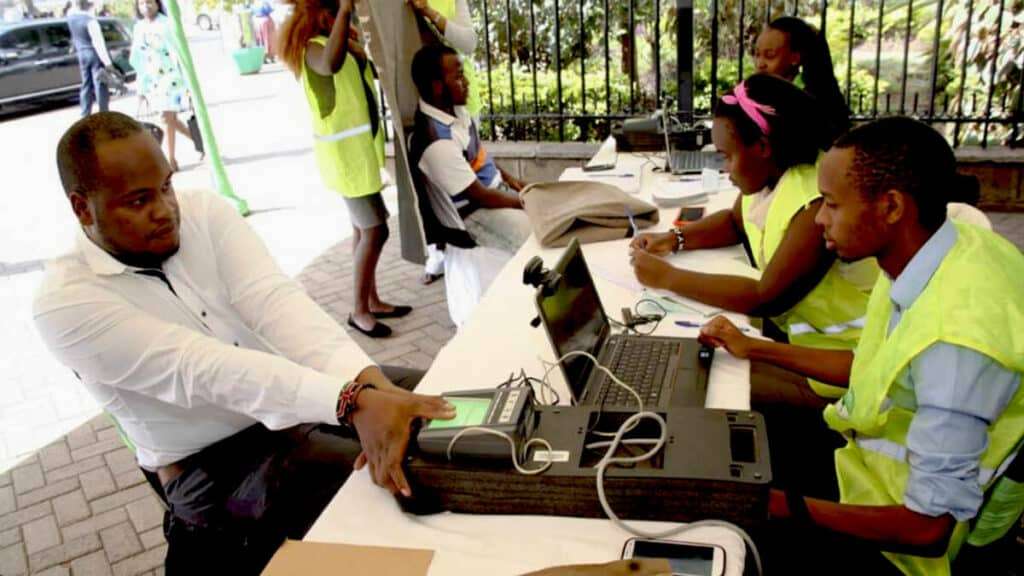
A new report from CIPESA (Collaboration on International ICT Policy for East and Southern Africa) finds that the expansion of digital public infrastructure (DPI) systems across 11 African countries could have significant implications for human rights, democratic governance and civic participation.

The State of Internet Freedom in Africa 2026 report examines DPI developments in Egypt, Ethiopia, Ghana, Kenya, Nigeria, Senegal, South Africa, Tunisia, Uganda, Zambia and Zimbabwe. Governments across the continent are investing heavily in digital identity, payment and data-sharing systems to modernize public services and drive digital transformation.

But the report argues that insufficient attention has been paid to the governance and human rights implications of these systems. It calls for stronger rights-respecting frameworks before DPI becomes further entrenched in public administration and everyday life.

“Foundational credentials such as mandatory gateways and access to essential public and private services are increasingly facing flaws in architectural design and utility, technical failures, and inaccurate records,” the report claims in its conclusion.

The result is often widespread exclusion of vulnerable groups, according to the report, particularly affecting people with limited digital skills, poor connectivity or difficulties accessing civil registration systems which include rural communities, women, children and the elderly.

The report lists an extensive number of recommendations that can offset such problems. The recommendations include establishing robust governance such as rights-respecting national policies and laws, along with investment in complementary infrastructure to foster connectivity and capacity enhancement.

It recommends replacing coverage-only targets with disaggregated meaningful-connectivity and service-completion indicators; stopping internet shutdowns and other blanket connectivity restrictions as tools of political or security management, among other suggestions. The full State of Internet Freedom in Africa 2026 report can be read here.

The report was launched at the closing ceremony of the Forum on Internet Freedom in Africa (FIFAfrica26) held in Mauritius. Mauritius’ Minister of Information and Communication Technology, Dr Avinash Ramtoh, described DPI as “a critical infrastructure in any forward-looking country” and stressed the need to ensure digital systems are inclusive, accessible and rights-respecting.

The report’s release marked the conclusion of FIFAfrica26, a four-day gathering that brought together policymakers, researchers, civil society organizations, journalists, technologists, activists and development partners from across Africa and beyond. Discussions focused on issues including AI, data governance, platform accountability, digital inclusion and security, and civic participation. A recurring message was that technology is inseparable from society and that decisions about the design, governance and use of digital systems have profound consequences for rights, participation and power.

As Africa’s digital transformation accelerates, the report argues that these questions will become increasingly important in shaping how citizens access services, engage with governments and exercise their rights in the years ahead.

This article was originally posted by Biometric Update.Com on October 13, 2026.

Centre for Human Rights contributes to FIFAfrica26 dialogue on children, age debate, AI and internet shutdowns in Africa

By Centre for Human Rights |

The Centre for Human Rights, Faculty of Law, University of Pretoria participated in the 13th Forum on Internet Freedom in Africa (FIFAfrica26), held in Mauritius from 28 September to 1 October 2026. Hosted by the Collaboration on International ICT Policy for East and Southern Africa (CIPESA) in partnership with the Mauritius-based Halley Movement Coalition, the Forum brought together policymakers, regulators, civil society organisations, academics, journalists, technology practitioners, private sector actors and digital rights advocates from across Africa and beyond to engage on the continent’s evolving digital landscape. CIPESA highlighted Mauritius’ growing role in technology-driven governance and digital transformation, including its work on AI regulation and digital public services, noting it as one of the reasons for hosting FIFA.

Dr Avinash Ramtohul, Mauritius’ Minister of Information Technology, Communication and Innovation delivered the Forum’s keynote address. His Keynote centred on the emerging debate on responsible AI governance through his book, Safeguarding Democracy in the Age of Artificial Intelligence – AIRA: Who Serves Whom? The publication examines the expanding role of AI in public administration and democratic decision-making and considers regulatory approaches aimed at ensuring that AI systems are developed and deployed responsibly, with appropriate safeguards for rights, transparency and accountability.

FIFAfrica26 provided a platform for discussions on some of the most pressing questions facing Africa’s digital future, including digital democracy and civic participation, data governance and sovereignty, artificial intelligence and emerging technologies, platform accountability, digital inclusion, the digital economy and trade, movement building, and digital security and safety. The Forum also sought to strengthen African participation in global digital governance processes and shape the continent’s contribution to emerging debates on technology and rights. 

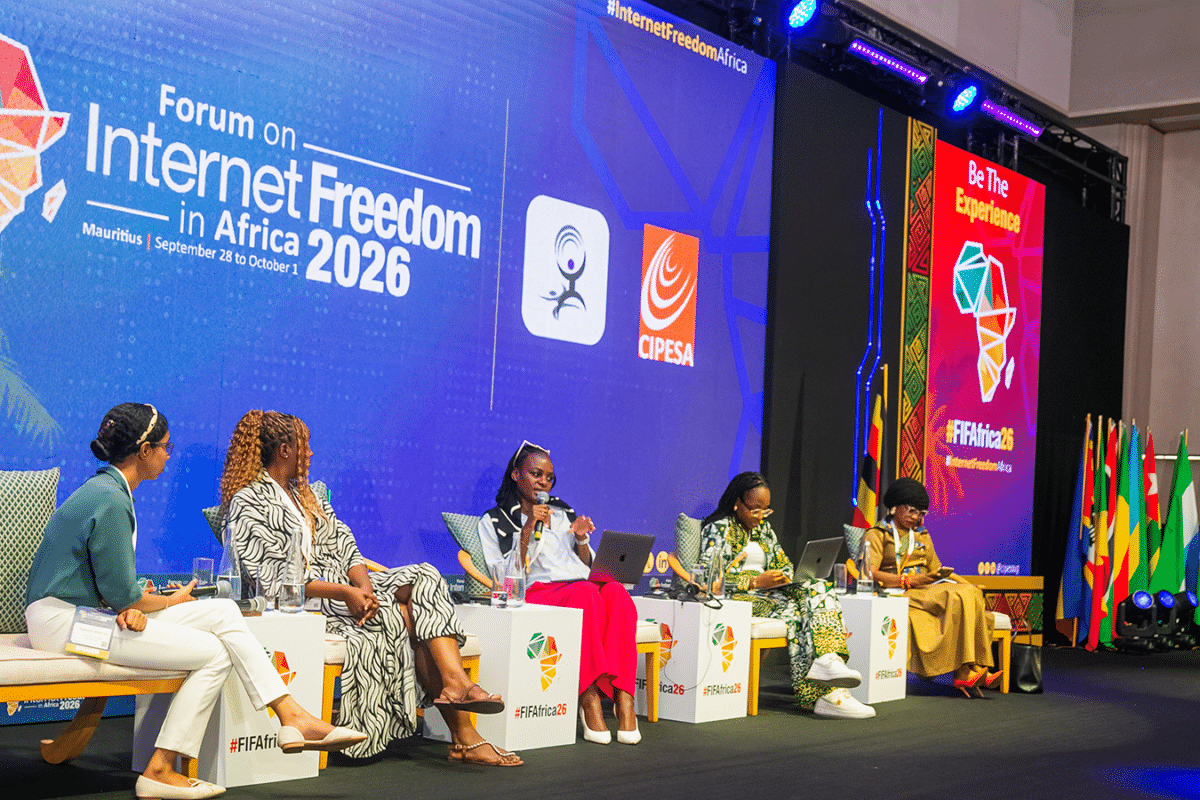
Our Belinda Matore participated as a panellist in a discussion on “Children, AI and the Age Debate in Africa,” alongside Adeboro Odunlami, Lillian Kariuki and Afia Asantewaa Asare-Kyei. The session examined the growing debate over restricting social media access for children under 16 and questioned whether blanket age restrictions are appropriate for African contexts. The discussion focused on the need to balance child protection with children’s rights to participation, expression, information, education and digital access. Panellists considered whether African countries should adopt emerging international approaches or develop regulatory responses that reflect local realities. The panel also explored the growing use of AI and conversational technologies by children, highlighting emerging concerns around privacy, safety, autonomy, discrimination and harmful content. This raised the need for regulatory frameworks that anticipate technological developments and address risks at the design and deployment stages, rather than responding only after harm occurs. A further focus was age assurance, including the tension between protecting children and safeguarding their privacy and personal data. The discussion emphasised that age-verification mechanisms should incorporate data minimisation and should not create additional risks through unnecessary collection of sensitive information. The session advocated for a rights-based and context-sensitive approach to child online safety. Rather than relying solely on restricting access, African regulatory approaches should promote safer digital environments, platform accountability and age-appropriate protections while recognising differences across the continent in connectivity, affordability, language, disability, digital literacy, identification and patterns of technology use.

Michael Aboneka, also from the  Centre for Human Rights, attended and participated as a panellist in two sessions starting with day zero’s panel discussion on AI governance in Africa where his major discussion revolved around meaningful participation of all communities of Africa in the framing of these governance frameworks. He further discussed the role of Civil Society, emphasizing advocacy and holding governments and tech platforms accountable to ensure that AI benefits all persons without exclusion and that its harms are checked and mitigated at every stage. The second panel, organised by the Digital Rights Alliance Africa, focused on the role of bar associations in protecting and promoting internet Freedom through challenging internet shutdowns. Michael emphasised that the greatest of all, is ensuring the promotion of rule of law which will ensure enjoyment of freedom of expression online without arbitrarily being gagged. Internet shutdowns should not happen at all and any state must demonstrate any internet throttling or shutdown through the law.  He called upon bar associations in Africa to rise to the occasion and enhance research advocacy and strategic litigation to protect the freedoms both online and offline. He further called upon the judiciary to exercise their judicial power in accordance with the will of the people and the constitutions of Africa in protecting these freedoms.

For the Centre for Human Rights, participation in FIFAfrica26 provided an important opportunity to contribute to continental discussions at the intersection of children’s rights, digital rights, artificial intelligence and technology governance. It also reinforced the importance of ensuring that African voices remain central to debates about how emerging technologies should be regulated and how rights can be protected in increasingly digital societies.

As AI and digital platforms become increasingly embedded in children’s everyday lives, questions of age, access and protection will require continued engagement between human rights practitioners, policymakers, regulators, technology companies, researchers and, importantly, children themselves. The Centre for Human Rights was pleased to contribute its expertise to these important regional conversations at FIFAfrica26, working alongside CIPESA and ICNL, and to the Day Zero Forum on Regional AI Governance convened by the Global Centre on AI Governance. These spaces are critical to advancing rights-respecting approaches to AI and digital governance that are grounded in African realities and perspectives.

This article was first published by the Center for Human Rights on October 13, 2026, on its website.

OONI at FIFAfrica 2026

By Maria Xynou |

Last week, we had the opportunity to participate in the Forum on Internet Freedom in Africa (FIFAfrica) 2026, one of Africa’s largest and most important digital rights conferences. We are grateful to have had the opportunity to share OONI tools at the conference and learn from participants.

This year, the 13th edition of FIFAfrica took place in Mauritius between September 28, 2026 to October 1, 2026. The first two days included pre-conference events, while the last two days included the program of the main conference. The FIFAfrica 2026 agenda covered a wide range of important digital rights topics, including tech-facilitated gender-based violence, internet shutdowns, and AI governance, among many others.

FIFAfrica 2026

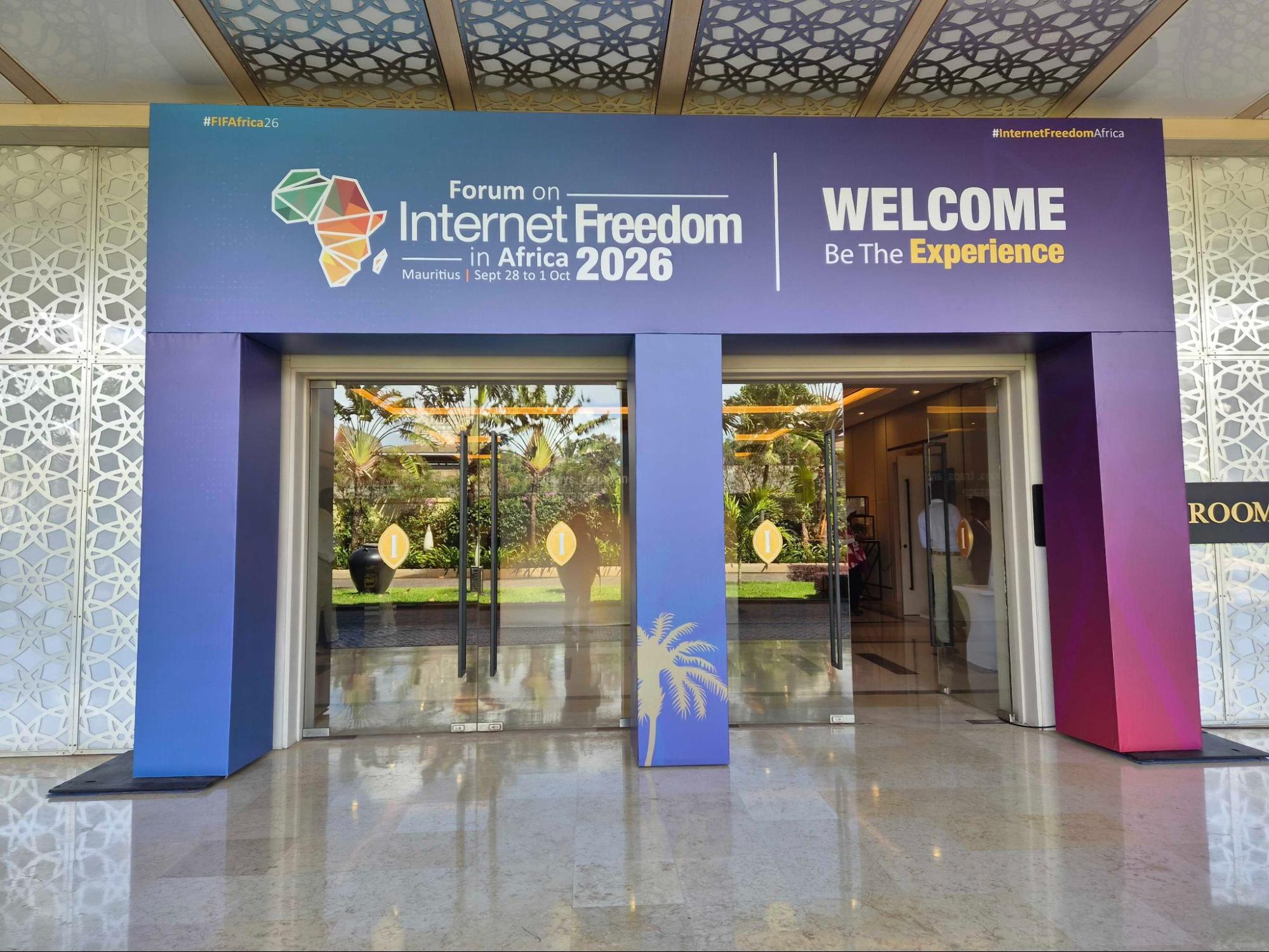
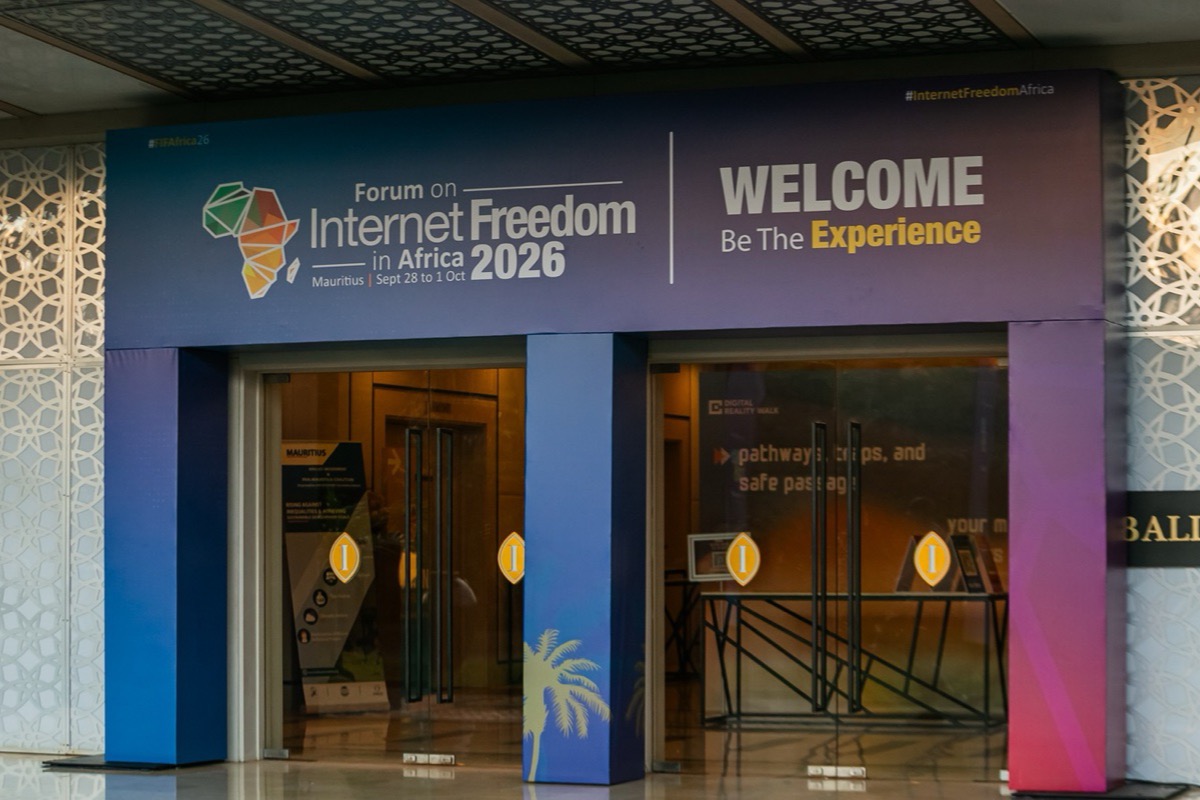
Image: Entrance of the Forum on Internet Freedom in Africa (FIFAfrica) 2026 in Mauritius.

Organized and hosted annually by the Collaboration on International ICT Policy for East and Southern Africa (CIPESA), the Forum on Internet Freedom in Africa (FIFAfrica) is one of Africa’s leading digital rights conferences. Each year, FIFAfrica brings together internet governance and digital rights stakeholders from across Africa to discuss the most pressing digital rights topics.

This year, the 13th edition of FIFAfrica took place in Mauritius between September 28, 2026 to October 1, 2026. The first two days included pre-conference events, while the last two days included the program of the main conference. The FIFAfrica 2026 agenda covered a wide range of important digital rights topics, including tech-facilitated gender-based violence, internet shutdowns, and AI governance, among many others.

As part of our participation, we attended several FIFAfrica 2026 sessions. Highlights include a litigation surgery for an Advisory Opinion on internet shutdowns, as well as a session on challenges and lessons learned from a decade of fighting internet shutdowns with the #KeepItOn campaign. As part of these sessions, we shared how OONI data can support litigation efforts in Africa, as well as lessons learned from OONI’s participation in the global #KeepItOn campaign since 2016.

Notably, during the main conference days (September 30th and October 1st, 2026), OONI was one of the tools featured in the Digital Reality Walk, which provided participants an immersive experience to learn about digital security and internet shutdown related tools.

Digital Reality Walk

Image: Digital Reality Walk at the Forum on Internet Freedom in Africa (FIFAfrica) 2026.

This year, FIFAfrica 2026 launched the Digital Reality Walk: a fun and interactive way to learn about a variety of digital security and internet shutdown related tools.

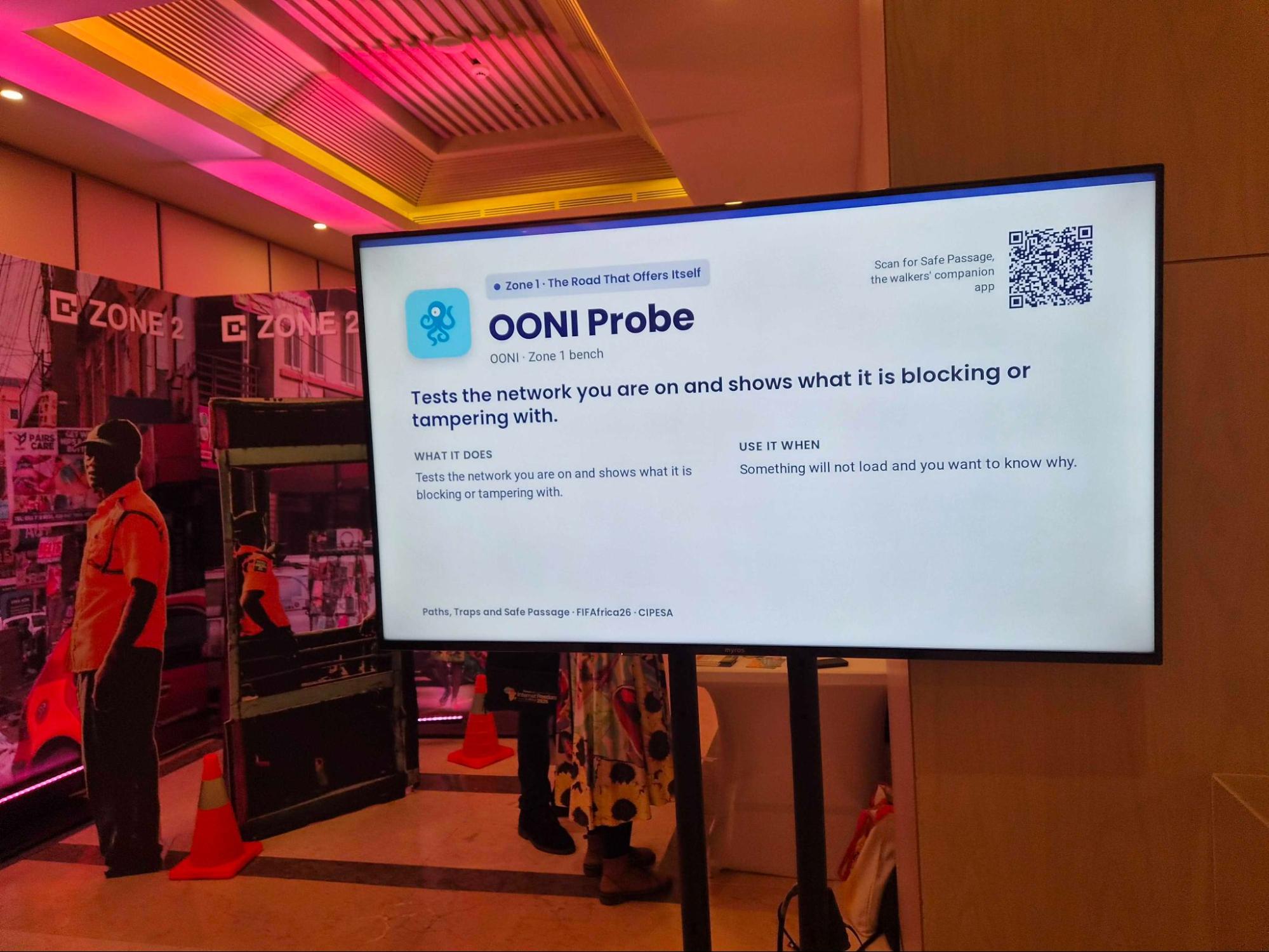
Hosted on both days of the main conference (September 30th and October 1st, 2026), participants used the Safe Passage app, developed specifically for the Digital Reality Walk. The Safe Passage app illustrated the route of the Digital Reality Walk, comprising four zones, each featuring different tools and their developers. The tools featured as part of FIFAfrica’s Digital Reality Walk were ButterBox, Orbot, Tor Browser, OONI Probe, Tella, Shira, Dash Chat, and Shout Messages.

To navigate the Digital Reality Walk, participants used a mission log which provided a storyline, guiding them towards several zones where different tools (and their developers) were stationed. OONI was stationed in zone 1, where we engaged with FIFAfrica 2026 participants of the Digital Reality Walk. The storyline that brought participants to zone 1 involved difficulty with internet access and concerns of an upcoming internet shutdown. As participants approached us, we engaged them with the use of our OONI Probe app to measure network interference.

Image: OONI Probe featured in the Digital Reality Walk at the Forum on Internet Freedom in Africa (FIFAfrica) 2026.

As Mauritius does not currently implement major blocks, we collaborated with the conference organizers on setting up an exhibition network that blocked access to major social media platforms (e.g., Facebook, WhatsApp, Instagram, TikTok, YouTube, Linkedin, etc.), providing a simulated environment of internet censorship. This enabled participants (who connected to the exhibition network) to gain a practical, hands-on experience of measuring social media blocks with OONI Probe. To avoid sending false measurements for publication, we ensured that participants had the publication of results disabled in their OONI Probe apps when running tests on the exhibition network.

Through our two-day engagement with participants at the Digital Reality Walk, some key things we learned are:

  • OONI Probe users need a faster and easier way to test major social media platforms;
  • While many participants were already familiar with OONI Probe (and many already promote the use of OONI Probe in their communities), fewer were familiar with OONI Explorer: our web platform that hosts all OONI measurements published from around the world.

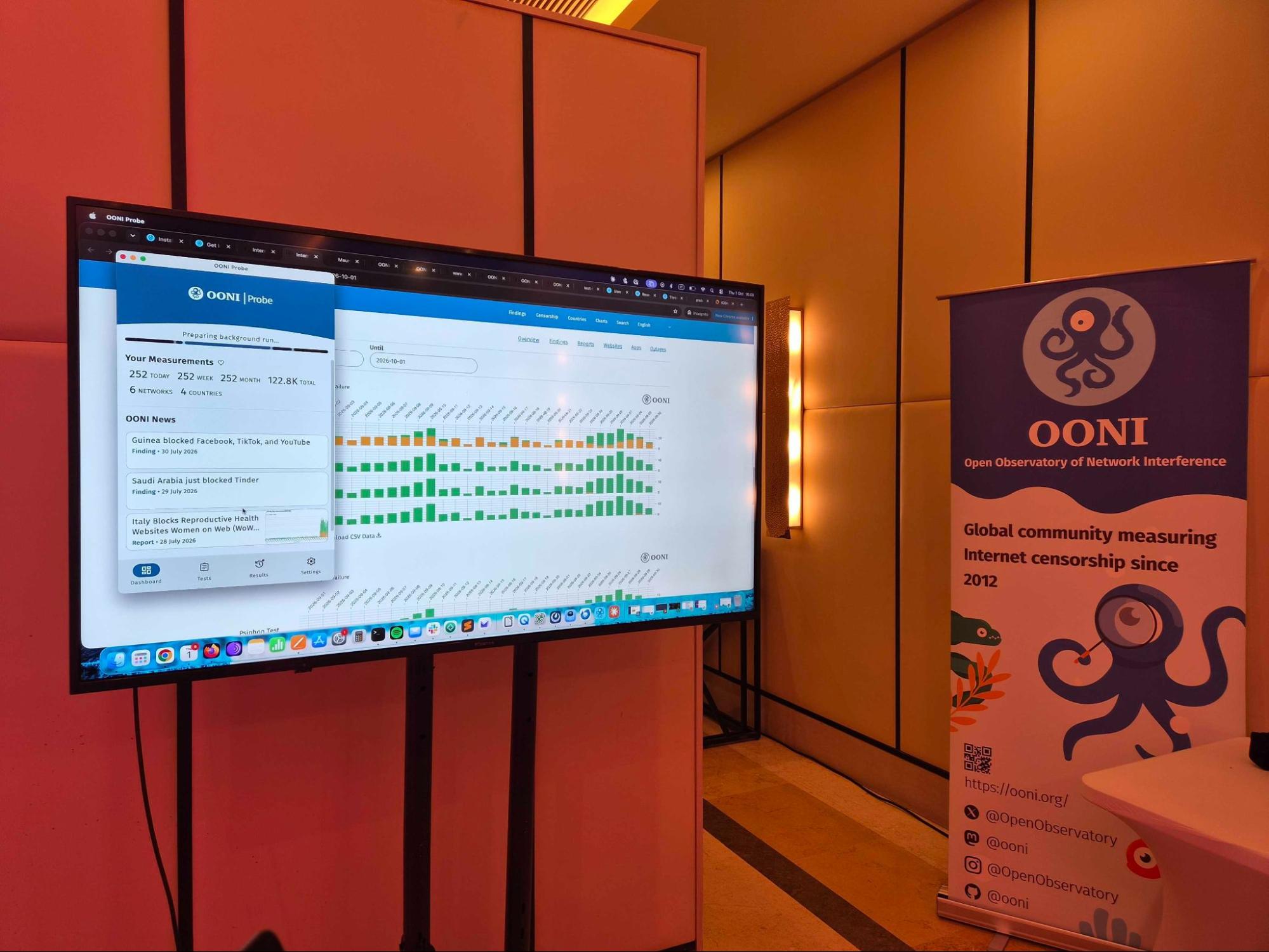
We therefore provided live demos for both OONI Probe and OONI Explorer in our zone of the Digital Reality Walk. As part of our OONI Probe live demos, we walked participants through the latest features and settings, illustrating how they can customize their use of the tool to measure specific forms of censorship (such as the blocking of specific social media websites). Even though OONI Probe automatically prioritizes the testing of major social media websites, we learned that there is still a need to enable users to more dynamically measure such websites when social media blocks emerge during protests or elections (which frequently occurs across Africa). This is valuable feedback that will inform our OONI Probe app development efforts.

As part of our OONI Explorer live demos, we walked participants through the platform to investigate various cases of censorship based on OONI data. We customized the experience, digging into cases from the countries of origin and based on the research interests of participants. For example, we looked into the previous blocking of Telegram in Kenya, the previous blocking of social media in Guinea, the ongoing blocking of Facebook in Uganda, and the ongoing blocking of social media platforms in Gabon.

Image: Live demo of OONI Probe and OONI Explorer at the Digital Reality Walk of the Forum on Internet Freedom in Africa (FIFAfrica) 2026.

Through the OONI Explorer live demos, we showed how participants can generate charts based on aggregate views of OONI data, interpret measurements, and compare measurements across networks and countries over time. This not only helped participants gain practical skills and knowledge on how to access and interpret OONI data from around the world, but it also helped illustrate the value of running OONI Probe and the need to increase measurement coverage across Africa. As an outcome, we hope that more digital rights defenders in Africa will use OONI data as part of their research and advocacy efforts over the next few years.

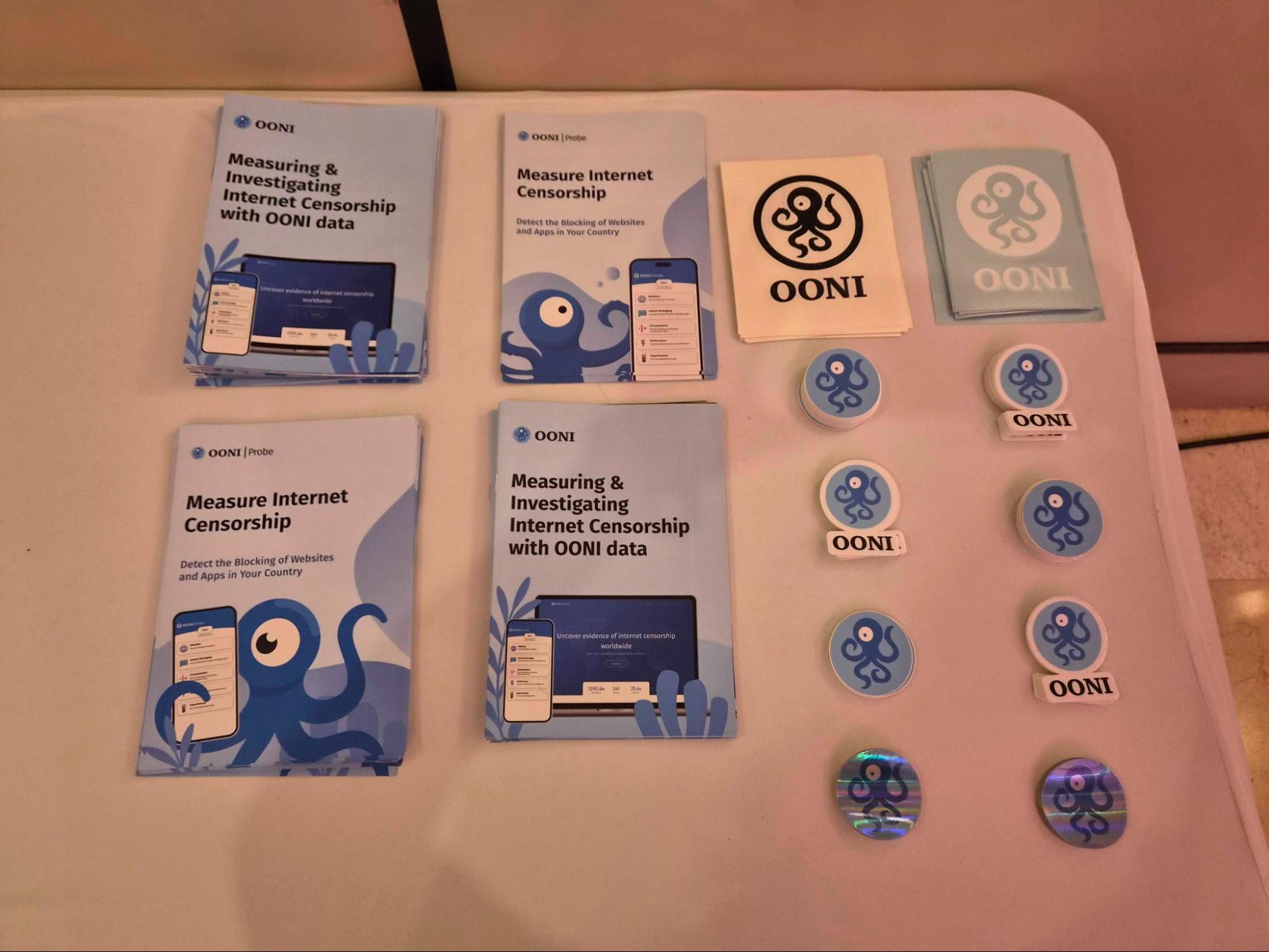
Beyond live demos and simulated censorship testing, we also had the opportunity to share OONI flyers and stickers with participants of the Digital Reality Walk. We thank all participants for their feedback and questions, and for engaging with the use of OONI tools and data!

Image: OONI stickers and flyers at the Digital Reality Walk of the Forum on Internet Freedom in Africa (FIFAfrica) 2026.

Overall, participating at FIFAfrica 2026 provided us a valuable opportunity to learn about current and emerging digital rights threats and needs in Africa, engage with many of our African partners, meet many other organizations doing important digital rights work, and learn about new initiatives in the region. We expect that this will help with strengthening our existing collaborations, and fostering the development of new collaborations. We are also grateful to have had the opportunity to share OONI tools and data, and to collect feedback which will help inform the improvement of our tools and methods.

Our deepest thanks to CIPESA for organizing and hosting FIFAfrica 2026, and for having us in the Digital Reality Walk! Warm thanks to all participants, and to everyone else who helped make this important event possible.

Image: Forum on Internet Freedom in Africa (FIFAfrica) 2026.

OONI posted this article on 6 October 2026. Read more on its website here.

State of Internet Freedom in Africa 2026 Report Launched at FIFAfrica26

FIFAfrica26 |

For four days, the Forum on Internet Freedom in Africa (FIFAfrica26) brought together voices from across Africa and beyond to engage in discussions and debates on the state and future of internet freedom in Africa. The Forum concluded with the launch of the 2026 edition of the State of Internet Freedom in Africa report.

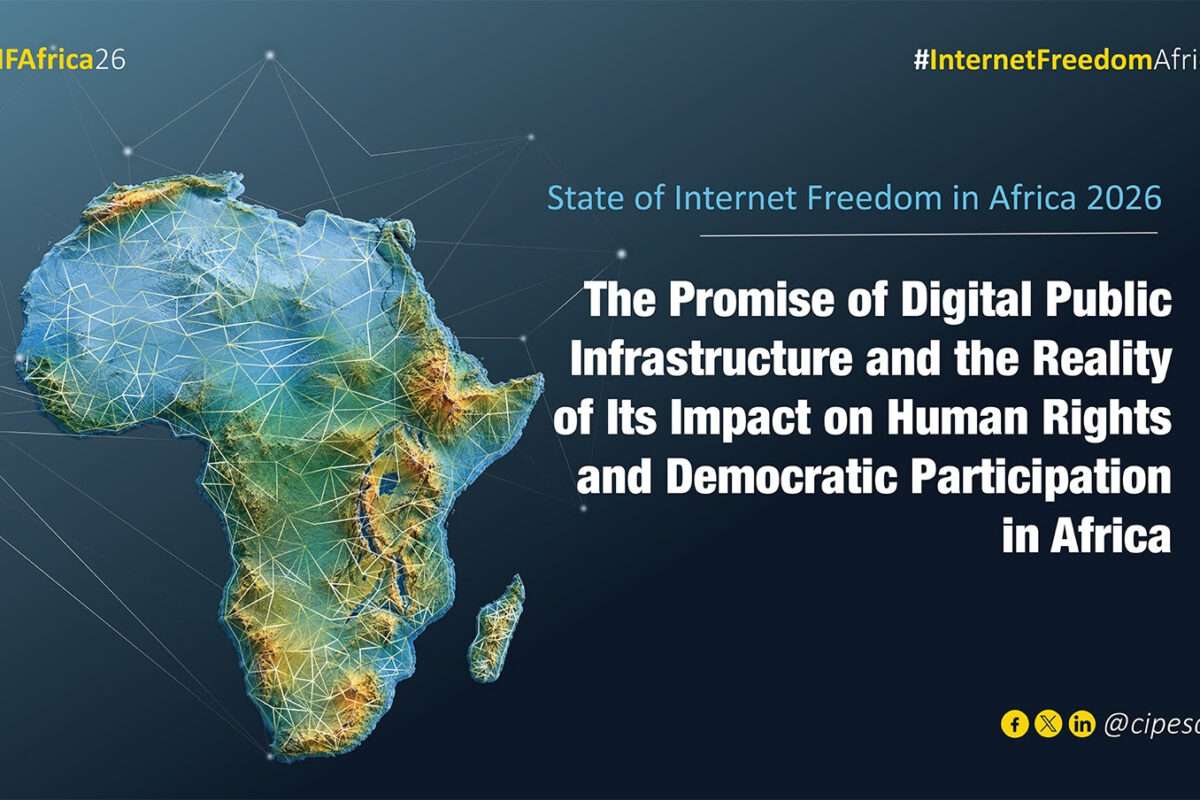
This year’s report examines how Digital Public Infrastructure (DPI) systems are reshaping the relationship between states and citizens, particularly in relation to digital rights, democratic governance and civic participation. Much of the existing work on DPI has focused on technical design, economic efficiency and service delivery outcomes, with far less attention given to the human rights implications of DPI governance and implementation.

The report was officially launched during the FIFAfrica26 closing ceremony by Dr the Hon. Avinash Ramtoh, Minister of Information and Communication Technology of Mauritius. “DPI is a critical infrastructure in any forward-looking country,” he said. “We must make our internet more inclusive, accessible and rights-respecting.”

The report documents how DPI deployment is affecting human rights, governance and democratic participation across 11 African countries: Egypt, Ethiopia, Ghana, Kenya, Nigeria, Senegal, South Africa, Tunisia, Uganda, Zambia and Zimbabwe. It provides evidence that can support civil society organisations, policymakers, development partners, regional institutions and technology providers in strengthening rights-respecting DPI governance frameworks before these systems become further entrenched in public administration and everyday life.

DPI is increasingly positioned as a foundation for digital transformation, offering systems that can support services such as digital identification, payments and data exchange. Across Africa, governments and development actors are investing in these systems as part of broader efforts to modernise public services and expand digital economies.

Hosted in Mauritius, FIFAfrica26 created space for policymakers, researchers, civil society organisations, journalists, technologists, activists, development partners and others to exchange experiences, challenge assumptions and interrogate some of the most pressing questions facing Africa’s digital society.

Since its inception in 2014, FIFAfrica has become an important convening space for shaping debates on digital rights, internet governance and civic freedoms across the continent. Its continued relevance lies in its ability to remain closely attuned to the changing realities of Africa’s digital landscape.

Across conversations on artificial intelligence, digital public infrastructure, data governance, platform accountability, digital inclusion, civic participation and digital security, the theme that remained constant was that technology is not separate from society. The systems we build, the rules that govern them and the choices made about their use have consequences for rights, participation and power.

As Africa’s digital transformation accelerates, these questions are becoming increasingly important. The systems being built today will shape how people access services, engage with governments, participate in public life and exercise their rights for years to come.

Find the full report here: State of Internet Freedom in Africa 2026