By CIPESA Writer in Stockholm
An interesting conversation is taking place in the Swedish capital Stockholm. At the Stockholm Internet Forum (SIF), which is being watched online by audiences around the world, a journalist with Uganda’s Daily Monitor newspaper asked a question that is central to much of the debate here. Should people in his country be concerned about the so-called internet rights when majority of them do not even have access to the internet, and when big numbers of them lack access to clean water? As the journalist addressed a global audience of online rights activists, back home his newspaper, the two radio stations it runs, and another independent newspaper (The Red Pepper), remained shut down for a fourth day. Under the guise of searching for a document allegedly authored by the head of Uganda’s intelligence services, which President Yoweri Museveni’s government deemed a threat to national security. The police ransacked and cordoned off the media houses. Their computers and servers were being searched; the radio transmitters switched off despite a court order for the security agencies to vacate the media premises.
However, his concerns rhyme with concerns from other participants at the forum. Questions such as, should developing countries prioritise giving access to the internet to more of their citizens or should they instead dwell on improving security and privacy for current internet users?, were at the center of the discussions.
For many of the participants from Africa who spoke to CIPESA, access to the internet remains a key concern on the continent. Only a fraction of people on the continent are users of the Internet (estimated at 15% of the continent’s population). But user numbers are rising fast, driven by increased availability of affordable marine fibre optic bandwidth, a rise in private sector investments, the popularity of social media and innovative applications, not forgetting an increased use of the mobile phone to access the internet.
But as more Africans are getting online, more African governments are moving to curtail online freedoms using both legal and non-legal means. The pity, said the African observers, was that there was little understanding in African countries of the need to protect and to promote these internet rights and freedoms. More so, in most countries there were few actors talking about these matters and creating awareness about the citizens’ right to seek, receive and impart information and ideas through digital technologies.
But back to the question: should African countries priorities access or security? “It is important when you talk of the internet not to think of it chronologically,” said Ross LaJeunesse, Global Head of Free Expression and International Policy at Google. “The internet as we know it is supposed to be free and open… you would be doing a disservice to people if you offer it otherwise.” Anja Kovacs of the Internet Democracy Project in Delhi, India, agreed: we do not need to get everyone online before we start thinking of making it secure for people to be on the internet. “Security has to come at the same time as access,” said Kovacs.
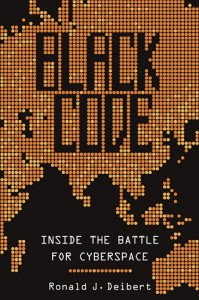
Protecting internet freedoms is becoming of growing interest to academics, human rights activists and media worldwide, including in developed countries, where some governments are using the excuse of fighting cybercrime to limit citizens’ online freedoms. Ron Deibert, head of the Citizen Lab at the University of Toronto, Canada, has led a 10-year research into this issue, and on Tuesday, May 21 launched a well-received book, Black Code in which he contends that the internet’s original promise of a global commons of shared knowledge and communications is now under threat.
Intelligence agencies that were less accountable are taking over aspects of monitoring internet freedoms. Meanwhile, citizens are placing a growing amount of data into the hands of private companies which are increasingly being asked to monitor the internet. Worryingly too is that most of the new users are coming from countries with fragile democratic systems, where internet rights could more easily be trampled.
These concerns/fears are also being investigated by CIPESA under the OpenNet Africa Project. The project is monitoring internet freedoms in a number of African countries such as Ethiopia, Kenya, Rwanda, South Africa and Uganda. We are documenting internet rights violations and reviewing cyber security policies and legislations in these countries to see how they enhance, or undermine, internet freedom.
More on SIF: http://www.stockholminternetforum.se/
Follow on twitter: @sif13
Monitoring Internet Openness in Africa
With internet usage continuing to spread across Africa, there are numerous purposes to which African users are putting the internet – from mobile banking, to connecting with fellow citizens and with leaders, tracking corruption and poor service delivery, innovating for social good, and just about everything else.
The increasing usage of the internet, however, has in some countries attracted the attention of authorities, who are eager to provide caveats on the openness of the internet and the range of freedoms which citizens enjoy online. The popularity of social media, the Wikileaks diplomatic cables saga and the Arab Spring uprisings have led many governments including those in Africa to recognise the power of online media.
The year 2012 saw a number of African states put curbs on Internet Rights, in what portends tougher times ahead for cyber security. According to the Freedom on the Net 2012 report published by Freedom House, both physical and technical mechanisms of filtering, monitoring or otherwise obstructing free speech online have been employed by states concerned with the power of internet-based technologies.
In its study, Freedom House covered developments in internet freedom in 47 countries around the world. Based on an examination of obstacles to access, limits to content, and violation of user rights on the internet, countries were scored as ‘Free’, Partly Free’ or ‘Not Free’. The study found that in Sub Saharan Africa, Ethiopia was the only country to implement nationwide internet filtering. Meanwhile, South Africa and Kenya were reported as the most free. The former was credited for its high internet usage compared to other countries at the same level of development and the latter for its “growing diversity in content and fewer cases of arrest or censorship than in previous years.”
Ethiopia was reported as using paid pro-government commentators to manipulate internet discussions. There were also crackdowns and prosecutions of online,journalists as well a law that since 2002 prohibits the use of VoIP (Voice Over Internet Protocol). In Zimbabwe, regime critics were said to often be faced with politically motivated cyber attacks.
Even Kenya, all its ICT sector positives notwithstanding, was reported as one of the governments seeking “less visible means” to control internet freedoms. The Country’s communications regulatory is reportedly setting up a surveillance system to monitor email communications due to cyber security threats. Pending legislation in South Africa, which requires telecommunications service providers to broaden their surveillance obligations, was also noted as having the potential to mass monitor communications.
Despite having relatively low restrictions on internet usage, Rwanda was reported as a ”country at risk” in 2013 owing to its “strict” controls over traditional media which are feared may extend to digital media.
Freedom House ranked Nigeria, Uganda, and Zimbabwe as ‘Partly Free’.
In 2013 through to 2014, CIPESA will be undertaking a project to monitor and promote internet freedoms in Ethiopia, Kenya, Rwanda, South Africa and Uganda. We shall be reporting on legal regimes on internet openness or the lack of it, censorship incidents and African initiatives that are promoting internet rights, among others.
Read more about CIPESA’s Internet Governance and Online Freedoms work.
Intermediary Liability in Uganda
The rapid growth in internet access and use in Africa, particularly through the mobile internet, makes it imperative for civil society and for internet companies committed to the free flow of information and freedom of expression to better understand how intermediary liability works (or does not work).
This paper looks at the state of intermediary liability in Uganda. In particular, it explores regulations relevant to the responsibilities of intermediaries. It cites incidences of content takedowns, attempts to block access to internet content, mobile content filtering and media persecutions, and the applicable sections of the law.
Download the full paper here
This Independent research was commissioned by the Association for Progressive Communications and supported by Google Africa.
See Policing the Internet: Intermediary Liability in Africa for further details.
Phone tapping: Uganda Govt seeks 200bn
By Edris Kiggundu
The government is looking for Shs 205bn to purchase equipment and establish systems for the interception of communication and registration of simcards.
This request is contained in the ministerial policy statement for the Office of the Presidency for financial year 2012/2013. The money will be channelled through the Internal Security Organisation, which will work closely with the Office of the President. The statement, tabled before Parliament this week, neither gives details about the nature or type of equipment to be purchased nor a breakdown of how the money will be spent.
All the statement says is that the money will be used to “procure and acquire assorted classified communication equipment.”
The statement says the equipment was supposed to be purchased last year but it was not possible because of financial constraints.
How it works
In July 2010, Parliament passed a bill, seeking to authorise the tapping of telephones and other private communication for security purposes. President Museveni assented to it a couple of months later. Now law, it provides for interception and monitoring of certain communication in the course of transmission. It also allows the monitoring of postal or any other related service or system.
The law stipulates that only a designated judge issues a warrant of interception if there is reasonable ground to believe that the offence might result into a threat to life. A warrant would also be issued if the judge believes that information to be gathered concerns an actual threat to national security, national economic interest, and/or threat to national interest involving the state’s international relations. A warrant shall be valid for only three months.
Reliable sources in intelligence told us yesterday that at the moment government has limited capacity to tap phones. Government, they added, uses equipment it procured from Libya in the early 1990s.
“What is done is to get a printout from the telecommunication companies whereby they can know that phone number X called Y,” one source told us.
Even then, in most cases, security agencies are not in position to know exactly what X told Y. The new equipment is, therefore, expected to bridge this gap. According to various internet sites, there are a number of ways a telephone conversation can be monitored. For instance, Wikipedia says, one of the parties may record the conversation either on a tape or solid-state recording device, or on a computer running call recording software.
The recording, whether overt or covert, may be started manually, automatically by detecting sound on the line (VOX), or automatically whenever the phone is off the hook. As for mobile phones, especially the 3G type, the same website points out that they are harder to monitor because they use digitally-encoded and compressed transmission.
However, they can be tapped with the cooperation of the phone company, something the government has done before. For instance, in the aftermath of the 2010 July bombings, security agencies working with a major telecom company, were able to track and arrest three suspects – Idris Magondu, 42, Hussein Hassan Agad, 27, and Muhammed Aden Addow, 25 – thanks a phone that had been abandoned at a bar in Makindye.
Using the serial number of the phone, investigators were able to discern records related to calls made or received on the phone. That’s how they got to know that the phone belonged or was at least one time frequently used by Hussein Hassan. The ministerial policy statement notes that regional threats of terrorism have since increased and so has subversion, espionage and politically motivated crime. Therefore, the equipment will help government curtail these vices.
Simon Mulongo, the Bubulo West lawmaker who doubles as Vice Chairman of Parliamentary committee on Internal Affairs, told The Observer that he supported government’s decision to intercept communication provided this was not abused. On the price of the equipment, Mulongo said: “It is something that Parliament will have to crosscheck to establish whether the figure is reasonable.”
This article was published by the The Observer newspaper on July 13, 2012.
Tanzania Should Support Its Netizens
By Lillian Nalwoga
Tanzanian citizens are increasingly using social media networks to share information and, to a lesser extent, demand more transparency in the conduct of public affairs. But there are concerns about the apparent intolerance by Tanzanian authorities of online activity deemed critical of the government.
For over 40 years, Tanzania under the Chama Cha Mapinduzi (CCM) party has enjoyed political stability and national unity more than most of the country’s neighbours. However, the October 2010 election won by incumbent president Jakaya Kikwete saw CCM’s popularity slide from 80.2% of the vote in December 2005 to 61.2%.
This decline seems to have brought with it a worrying intolerance for critical media, both online and offline. Journalists have been intimidated and harassed by state officials for questioning the government’s democratic credentials. Some political and social demonstrations have been repressed. To fight this new authoritarianism, several Tanzanians, including politicians, have resorted to social media to express their views.
The country has laws that seem to improve citizens’ rights to information and the freedom of expression, parts of the legislation are restrictive. Article 18 of the Tanzanian Constitution for instance guarantees the right to freedom of expression, and to seek, receive and impart information. These constitutional guarantees are insufficiently implemented in the Tanzanian domestic legislation. Besides, the government has been implicated in attempts to block websites and weblogs whose content it perceives as a threat.
Despite the above scenario, Tanzanian web forums such as Jamiiforums serve as citizens’ channels to comment on key issues such as corruption. The website editors have been interrogated on numerous occasions over issues that government has considered sensitive information. Unconfirmed reports have also surfaced that the Tanzanian government is attempting to clone these forums to portray information that befits it.
Social media has also played a part in sharing vital information about sensitive topics in Tanzania. Such a case was the Gongo la Mboto blasts that killed over 20 people and injured at least 184 people in the Dar es Salaam army base in February 2011.
Although army officials declined to discuss the cause of the blasts, netizens captured events of the blasts by uploading and sharing photos of victims. Tanzanian twitters using #BombsInDar shared information about the possible causes of the blast while calling on government to investigate their cause. The netizens demanded the resignation of the Minister of Defence, a call supported by the country’s opposition.
This rise in use of social media can perhaps be attributed to the growth in internet penetration from 5% in 2005 to 11% in June 2010 (Tanzania Communications Regulatory Authority statistics). In addition, there are 21 million mobile phone subscribers.
The Tanzania government needs to make information more accessible to the public for transparency and accountability, as well as to invest in infrastructure, literacy, policy and regulatory frameworks to boost internet usage in empowering citizens.