MLDI to Host a Strategic Digital Rights Litigation Workshop at FIFAfrica18

Announcement |

Litigation has been recognised as a potentially effective tool in removing restrictions on the free flow of information online in countries with repressive internet regimes. Increasingly, some initiatives are seeking to encourage collaboration among different actors in strategic litigation for a free and open internet.

Indeed, various cases in litigation for the respect and realisation of digital rights have recently been recorded in Cameroon, Kenya, Burundi and Gambia, among other countries in Africa.

Yet still, litigation remains under-utilised because of a lack of effective collaboration between different actors: lawyers, activists, academics, technical experts and other members of civil society.

Accordingly, the Forum on Internet Freedom in Africa (FIFAfrica) 2018 will serve as an opportunity for the Media Legal Defense Initiative (MLDI) to build the capacity of internet activists to collaborate across disciplinary silos to more effectively push back against regressive legal frameworks that are not conducive to access and use of the internet in Africa.

Sessions at the workshop will explore the meaning of strategic litigation and examine relevant comparative and international legal standards drawing on judgments from regional courts. Together with participants, MLDI will analyse the legal issues that can arise in the context of digital rights and freedom of expression through three case studies. Through interactive group sessions, participants will examine how the comparative and international standards can be applied in practical terms.

The workshop, scheduled to take place on September 26, 2018, is aimed at enhancing the strategies for future digital rights and online freedom of expression litigation and advocacy in Africa. It builds on the foundations set in knowledge and skills for collaboration in research for internet policy advocacy as well as regional efforts targeting the legal fraternity in East and West Africa.

The 2018 workshop is the second digital rights litigation training to be held on the sidelines of FIFAfrica. The first workshop was hosted at the 2017 edition of FIFAfrica in Johannesburg, South Africa by the Berkman Klein Centre for Internet and Society at Harvard Law School and MLDI.

The Reforms Ethiopia Needs to Advance Internet Freedom

Policy Brief |
Since April 2018, the new Ethiopian government has been undertaking unprecedented political and economic reforms. This follows countrywide protests that forced the former Prime Minister Hailemariam Dessalegn to resign in February 2018, leading to the appointment of a young and charismatic new premier, Abiye Ahmed two months later. Since then, the government has freed thousands of prisoners; announced measures to liberalise the telecom, aviation, and transportation sectors; and dropped charges against many opposition leaders, bloggers, and activists. Further, the new administration has lifted the state of emergency that had been reinstated in February 2018, reconnected mobile and broadband internet services that were cut off since 2016, and unblocked 246 websites, blogs, and news sites that have been inaccessible for over a decade.
These changes in Ethiopia did not come at a whim. The protests that started in November 2015 in the Oromia region spread to other parts of the country. In response to these protests, the previous government continuously blocked social media sites and implemented national and regional internet blackouts, often claiming it aimed to safeguard national security or to stem cheating during national exams. Consequently, the Oromia region lost internet connectivity for two weeks in March 2018, three weeks before the new prime minister was sworn in. Moreover, as access to the internet deteriorated in the country, the government criminalised freedom of expression online and offline. The arbitrary arrests, detention, and torture of members of the Zone Nine bloggers collective showed how far the government was willing to go to suppress dissenting voices.
The new Prime Minister and his cabinet have promised to open the democratic space in the country and expand freedom of expression online and offline. However, these reforms should go beyond the unblocking of a few hundred websites; they should bring in real changes that will make it impossible to regress to old habits. Therefore, reforms to be implemented must expand internet penetration from the current 15%, to the larger offline majority. Laws that prosecute freedom of expression online and offline like the Anti-Terrorism Proclamation and Computer Crime Proclamation must undergo substantial revisions to meet international standards. Further, the changes within the law enforcement and intelligence agencies should go beyond replacing old officials with new ones, but must tame the undue power given to these bodies to conduct unwarranted surveillance and censorship of netizens. Lastly, the new government should desist from internet shutdowns and censorship.
See this brief titled The Reforms Ethiopia Needs to Advance Internet Freedom which gives a detailed description of prevailing challenges to internet freedom in Ethiopia and proposed reforms the Ethiopian government needs to undertake to improve internet freedom in the country.

Challenges and Prospects of the General Data Protection Regulation (GDPR) in Africa

Policy Brief |
Privacy is a fundamental human right guaranteed by international human rights instruments including the Universal Declaration of Human Rights in its article 12 and the International Covenant on Civil and Political Rights, in its article 17. Further, these provisions have been embedded in different jurisdictions in national constitutions and in acts of Parliament.
In Africa, regional bodies have invested efforts in ensuring that data protection and privacy are prioritised by Member States. For instance, in 2014 the African Union (AU) adopted the Convention on Cybersecurity and Personal Data Protection. In 2010, the Southern African Development Community (SADC) developed a model law on data protection which it adopted in 2013. Also in 2010, the Economic Community of West African States (ECOWAS) adopted the Supplementary Act A/SA.1/01/10 on Personal Data Protection Within ECOWAS. The East African Community, in 2008, developed a Framework for Cyberlaws. Notwithstanding these efforts, many countries on the continent are still grappling with enacting specific legislation to regulate the collection, control and processing of individuals’ data.
On May 25, 2018, the European Union’s General Data Protection Regulation (GDPR) came into effect. The GDPR is likely to force African countries, especially those with strong trade ties to the EU, to prioritise data privacy and to more decisively meet their duties and obligations to ensure compliance.
See this brief on the Challenges and Prospects of the General Data Protection Regulation (GDPR) in Africa, where we explore the consequences of GDPR for African states and business entities.

Dialogue on Social Media and Mobile Money Taxation in Uganda

CIPESATalks |
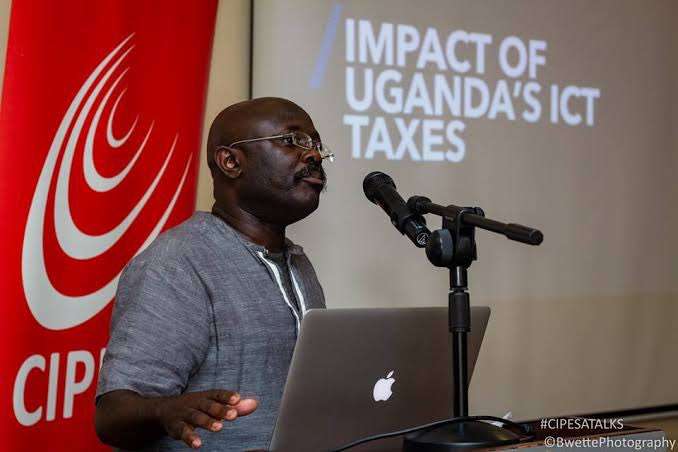
The evolution of the digital economy in Uganda over the last 20 years has broken barriers associated to geography and time and thus enabled information flows critical for business processes, innovation, entrepreneurship, civic participation, learning and research, and government service delivery.
Following concerns on the growing public debt bill, and a constrained tax base, the Uganda government introduced a raft of taxes in the Excise Duty Act (Amended), notably on Over the Top (OTT) services and mobile money transactions. Beginning July 1, 2018, users must pay a tax of UGX 200 (USD 0.05) per day to access various social media platforms including Facebook, WhatsApp, Twitter and LinkedIn. For mobile money, a 1% levy applies to deposits and withdrawals, on top of a revised excise duty of 15% up from 10% on transfers. These taxes pose a huge threat on internet access and affordability, and financial inclusion for low income and marginalized groups such as women, youth and rural communities. In fact, the Alliance for Affordable Internet (A4AI) estimatesthat the social media tax will cost Uganda’s poorest up to 40% of their average monthly income to buy a basket of 1GB of data.
Accordingly, CIPESA in partnership with the Internet Society Uganda Chapter seeks to convene stakeholders to deliberate on the economic, social and human rights impact arising from the new taxes. The dialogue will deliberate on how policy making processes can advance inclusive and equitable access to the internet, promote innovation and consumer rights protection. The dialogue builds on previous ones convened by CIPESA, for multiple stakeholders in the ICT eco-system.
See full agenda here.

Register for the Forum on Internet Freedom in Africa 2018 (FIFAfrica18)

Register Now |
We are excited to open registration for the upcoming Forum on Internet Freedom in Africa 2018 (FIFAfrica18) set to take place on 26-28 September, 2018 in Accra, Ghana. The Forum is a landmark event that convenes various stakeholders from the internet governance and online rights arenas in Africa and beyond to deliberate on gaps, concerns and opportunities for advancing privacy, access to information, free expression, non-discrimination and the free flow of information online on the continent.
This year, the Collaboration on International ICT Policy in East and Southern Africa (CIPESA) hosts FIFAfrica18 in partnership with the Media Foundation West Africa (MFWA). It follows the the success of  last years Forum co-hosted with the Association for Progressive Communications in Johannesburg, South Africa.
Indeed, spreading the physical footprint of FIFAfrica across different regions of the continent ensures that the Forum lives up to its goal of unpacking internet freedom challenges and opportunities in sub-regions of Africa and developing responses that are collaborative, and informed by insights from the experience of other sub-regions of the continent. Hosting the Forum in in west Africa for the first time will not only open up the space to more west African civil society, private sector and public sector actors to contribute their experiences to the regional discussion, but will  also give life to the Forum’s commitment of ensuring broader regional representation and deepening conversations across the continent.
Register here – You can also make suggestions for session topics, panels, skills clinics, presentations or any additional activities that you’d like to see happen prior or alongside the Forum. Our vision is to have a Forum with representation from as many countries in Africa as possible.  There is limited funding to support participation at FIFAfrica18. Please note that preference will be given to applicants who can partially support their attendance.


Share your thoughts on your vision for Internet Freedom in Africa using #InternetFreedomAfrica  This year, the event hashtag is #FIFAfrica18

Independence Monument | Accra, Ghana