Now More Than Ever, Africa Needs Participatory AI Regulatory Sandboxes 

By Brian Byaruhanga and Morine Amutorine |

As Artificial Intelligence (AI) rapidly transforms Africa’s digital landscape, it is crucial that digital governance and oversight align with ethical principles, human rights, and societal values

Multi-stakeholder and participatory regulatory sandboxes to test innovative technology and data practices are among the mechanisms to ensure ethical and rights-respecting AI governance. Indeed, the African Union (AU)’s Continental AI Strategy makes the case for participatory sandboxes and how harmonised approaches that embed multistakeholder participation can facilitate cross-border AI innovation while maintaining rights-based safeguards. The AU strategy emphasises fostering cooperation among government, academia, civil society, and the private sector.

As of October 2024, 25 national regulatory sandboxes have been established across 15 African countries, signalling growing interest in this governance mechanism. However, there remain concerns on the extent to which African civil society is involved in contributing towards the development of responsive regulatory sandboxes.  Without the meaningful participation of civil society in regulatory sandboxes, AI governance risks becoming a technocratic exercise dominated by government and private actors. This creates blind spots around justice and rights, especially for marginalised communities.

At DataFest25, a data rights event hosted annually by Uganda-based civic-rights organisation Pollicy, the Collaboration on International ICT Policy for East and Southern Africa (CIPESA), alongside the Datashphere Initiative, hosted a session on how civil society can actively shape and improve AI governance through regulatory sandboxes.

Regulatory sandboxes, designed to safely trial new technologies under controlled conditions, have primarily focused on fintech applications. Yet, when AI systems that determine access to essential services such as healthcare, education, financial services, and civic participation are being deployed without inclusive testing environments, the consequences can be severe. 

CIPESA’s 2025 State of Internet Freedom in Africa report reveals that AI policy processes across the continent are “often opaque and dominated by state actors, with limited multistakeholder participation.” This pattern of exclusion contradicts the continent’s vibrant civil society landscape, where various organisations in 29 African countries are actively working on responsible AI issues and frequently outpacing government efforts to protect human rights.

The Global Index on Responsible AI found that civil society organisations (CSOs) in Africa are playing an “outsized role” in advancing responsible AI, often surpassing government efforts. These organisations focus on gender equality, cultural diversity, bias prevention, and public participation, yet they face significant challenges in scaling their work and are frequently sidelined from formal governance processes. The consequences that follow include bias and exclusion, erosion of public trust, surveillance overreach and no recourse mechanisms. 

However, when civil society participates meaningfully from the outset, AI governance frameworks can balance innovation with justice. Rwanda serves as a key example in the development of a National AI Policy framework through participatory regulatory processes.

Case Study: Rwanda’s Participatory AI Policy Development

The development of Rwanda’s National AI Policy (2020-2023) offers a compelling model for inclusive governance. The Ministry of ICT and Innovation (MINICT) and Rwanda Utilities Regulatory Agency (RURA), supported by GIZ FAIR Forward and The Future Society, undertook a multi-stakeholder process to develop the policy framework. The process, launched with a collective intelligence workshop in September 2020, brought together government representatives, private sector leaders, academics, and members of civil society to identify and prioritise key AI opportunities, risks, and socio-ethical implications. The Policy has since informed the development of an inclusive, ethical, and innovation-driven AI ecosystem in Rwanda, contributing to sectoral transformation in health and agriculture, over $76.5 million in investment, the establishment of a Responsible AI Office, and the country’s role in shaping pan-African digital policy.

By embedding civil society in the process from the outset, Rwanda ensured that its AI governance framework, which would guide the deployment of AI within the country, was evaluated not just for performance but for justice. This participatory model demonstrates that inclusive AI governance through multi-stakeholder regulatory processes is not just aspirational; it’s achievable. 

Rwanda’s success demonstrates the power of participatory AI governance, but it also raises a critical question: if inclusive regulatory processes yield better outcomes for AI-enabled systems, why do they remain so rare across Africa? The answer lies in systemic obstacles that prevent civil society from accessing and influencing sandbox and regulatory processes. 

Consequences of Excluding CSOs in AI Regulatory Sandbox Development???
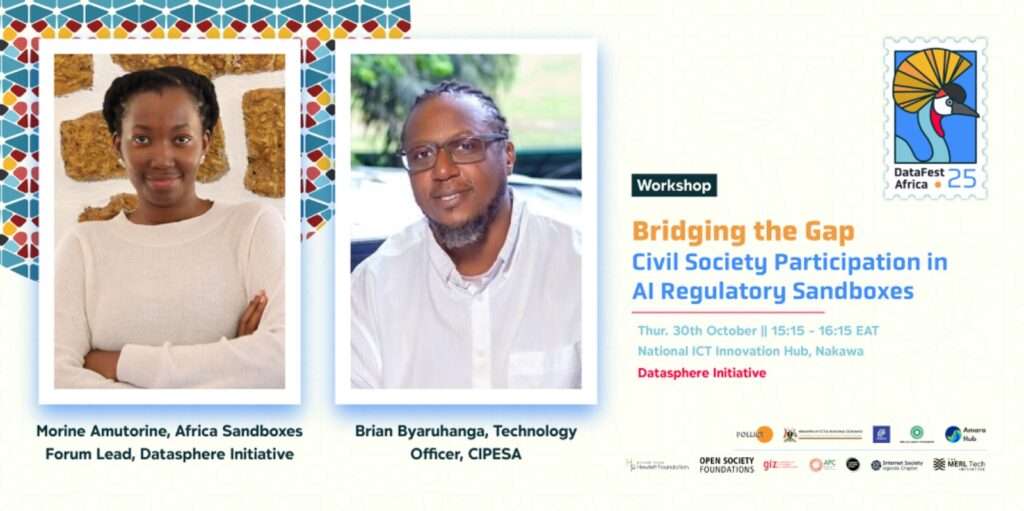
The CIPESA-DataSphere session explored the various obstacles that civil society faces in the AI regulatory sandbox processes in Africa as it sought to establish ways to advance meaningful participation.

The session noted that CSOs  are often simply unaware that regulatory sandboxes exist. At the same time, authorities bear responsibility for proactively engaging civil society in such processes. Participants emphasised that civil society should also take proactive measures to demand participation as opposed to passively waiting for an invitation. 

The proactive measures by CSOs must move beyond a purely activist or critical role, developing technical expertise and positioning themselves as co-creators rather than external observers.

Several participants highlighted the absence of clear legal frameworks governing sandboxes, particularly in African contexts. Questions emerged: What laws regulate how sandboxes operate? Could civil society organisations establish their own sandboxes to test accountability mechanisms?

Perhaps most critically, there’s no clearly defined role for civil society within existing sandbox structures. While regulators enter sandboxes to provide legal oversight and learn from innovators, and companies bring solutions to test and refine, civil society’s function remains ambiguous with vague structural clarity about their role. This risks civil society being positioned as an optional stakeholder rather than an essential actor in the process. 

Case Study: Uganda’s Failures Without Sandbox Testing

Uganda’s recent experiences illustrate what happens when digital technologies are deployed without inclusive regulatory frameworks or sandbox testing. Although not tested in a sandbox—which, according to Datasphere Initiative’s analysis, could have made a difference given sandboxes’ potential as trust-building mechanisms for DPI systems– Uganda’s rollout of Digital ID has been marred by controversy. Concerns include the exclusion of poor and marginalised groups from access to fundamental social rights and public services. As a result, CSOs sued the government in 2022.    A 2023 ruling by the Uganda High Court allowed expert civil society intervention in the case on the human rights red flags around the country’s digital ID system, underscoring the necessity of civil society input in technology governance.

Similarly, Uganda’s rushed deployment of its Electronic Payment System (EPS) in June 2025 without participatory testing led to public backlash and suspension within one week. CIPESA’s research on digital public infrastructure notes that such failures could have been avoided through inclusive policy reviews, pre-implementation audits, and transparent examination of algorithmic decision-making processes and vendor contracts.

Uganda’s experience demonstrates the direct consequences of the obstacles outlined above: lack of awareness about the need for testing, failure to shift mindsets about who belongs at the governance table, and absence of legal frameworks mandating civil society participation. The result? Public systems that fail to serve the public, erode trust, and costly reversals that delay progress far more than inclusive design processes would have.

Models of Participatory Sandboxes

Despite the challenges, some African countries are developing promising approaches to inclusive sandbox governance. For example, Kenya’s Central Bank established a fintech sandbox that has evolved to include AI applications in mobile banking and credit scoring. Kenya’s National AI Strategy 2025-2030 explicitly commits to “leveraging regulatory sandboxes to refine AI governance and compliance standards.” The strategy emphasises that as AI matures, Kenya needs “testing and sandboxing, particularly for small and medium-sized platforms for AI development.”

However, Kenya’s AI readiness Index 2023 reveals gaps in collaborative multi-stakeholder partnerships, with “no percentage scoring” recorded for partnership effectiveness in the AI Strategy implementation framework. This suggests that, while Kenya recognises the importance of sandboxes, implementation challenges around meaningful participation remain.

Kenya’s evolving fintech sandbox and the case study from Rwanda above both demonstrate that inclusive AI governance is not only possible but increasingly recognised as essential. 

Pathways Forward: Building Truly Inclusive Sandboxes

Session participants explored concrete pathways toward building truly inclusive regulatory sandboxes in Africa. The solutions address each of the barriers identified earlier while building on the successful models already emerging across the continent.

Creating the legal foundation

Sandboxes cannot remain ad hoc experiments. Participants called for legal frameworks that mandate sandboxing for AI systems. These frameworks should explicitly require civil society involvement, establishing participation as a legal right rather than a discretionary favour. Such legislation would provide the structural clarity currently missing—defining not just whether civil society participates, but how and with what authority.

Building capacity and awareness

Effective participation requires preparation. Participants emphasised the need for broader and more informed knowledge about sandboxing processes. This includes developing toolkits and training programmes specifically designed to build civil society organisation capacity on AI governance and technical engagement. Without these resources, even well-intentioned inclusion efforts will fall short.

Institutionalise cross-sector learning.

Rather than treating each sandbox as an isolated initiative, participants proposed institutionalising sandboxes and establishing cross-sector learning hubs. These platforms would bring together regulators, innovators, and civil society organisations to share knowledge, build relationships, and develop a common understanding about sandbox processes. Such hubs could serve as ongoing spaces for dialogue rather than one-off consultations.

Redesigning governance structures

True inclusion means shared power. Participants advocated for multi-stakeholder governance models with genuine shared authority—not advisory roles, but decision-making power. Additionally, sandboxes themselves must be transparent, adequately resourced, and subject to independent audits to ensure accountability to all stakeholders, not just those with technical or regulatory power.

The core issue is not if civil society should engage with regulatory sandboxes, but rather the urgent need to establish the legal, institutional, and capacity frameworks that will guarantee such participation is both meaningful and effective.

Why Civil Society Participation is Practical

Research on regulatory sandboxes demonstrates that participatory design delivers concrete benefits beyond legitimacy. CIPESA’s analysis of digital public infrastructure governance shows that sandboxes incorporating civil society input “make data governance and accountability more clear” through inclusive policy reviews, pre-implementation audits, and transparent examination of financial terms and vendor contracts. 

Academic research further argues that sandboxes should move beyond mere risk mitigation to “enable marginalised stakeholders to take part in decision-making and drafting of regulations by directly experiencing the technology.” This transforms regulation from reactive damage control to proactive democratic foresight.

Civil society engagement:

  • Surfaces lived experiences regulators often miss.
  • Strengthens legitimacy of governance frameworks.
  • Pushes for transparency in AI design and data use.
  • Ensures frameworks reflect African values and protect vulnerable communities, and
  • Enables oversight that prevents exploitative arrangements

While critics often argue that broad participation slows innovation and regulatory responsiveness, evidence suggests otherwise. For example, Kenya’s fintech sandbox incorporated stakeholder feedback through 12-month iterative cycles, which not only accelerated the launch of innovations but also strengthened the country’s standing as Africa’s premier fintech hub.

The cost of exclusion can be  seen in Uganda’s EPS system, the public backlash, eroded trust, and potential system failure, ultimately delaying progress far more than inclusive design processes. The window for embedding participatory principles is closing. As Nigeria’s National AI Strategy notes, AI is projected to contribute over $15 trillion to global GDP by 2030. African countries establishing AI sandboxes now without participatory structures risk locking in exclusionary governance models that will be difficult to reform later.

The future of AI in Africa should be tested for justice, not just performance. Participatory regulatory sandboxes offer a pathway to ensure that AI governance reflects African values, protects vulnerable communities, and advances democratic participation in technological decision-making.

Join the conversation! Share your thoughts. Advocate for inclusive sandboxes. The decisions we make today about who participates in AI governance will shape Africa’s digital future for generations.
Uganda to Namibia: Biking for Digital Security and Internet Freedom in Africa

By FIFAfrica |

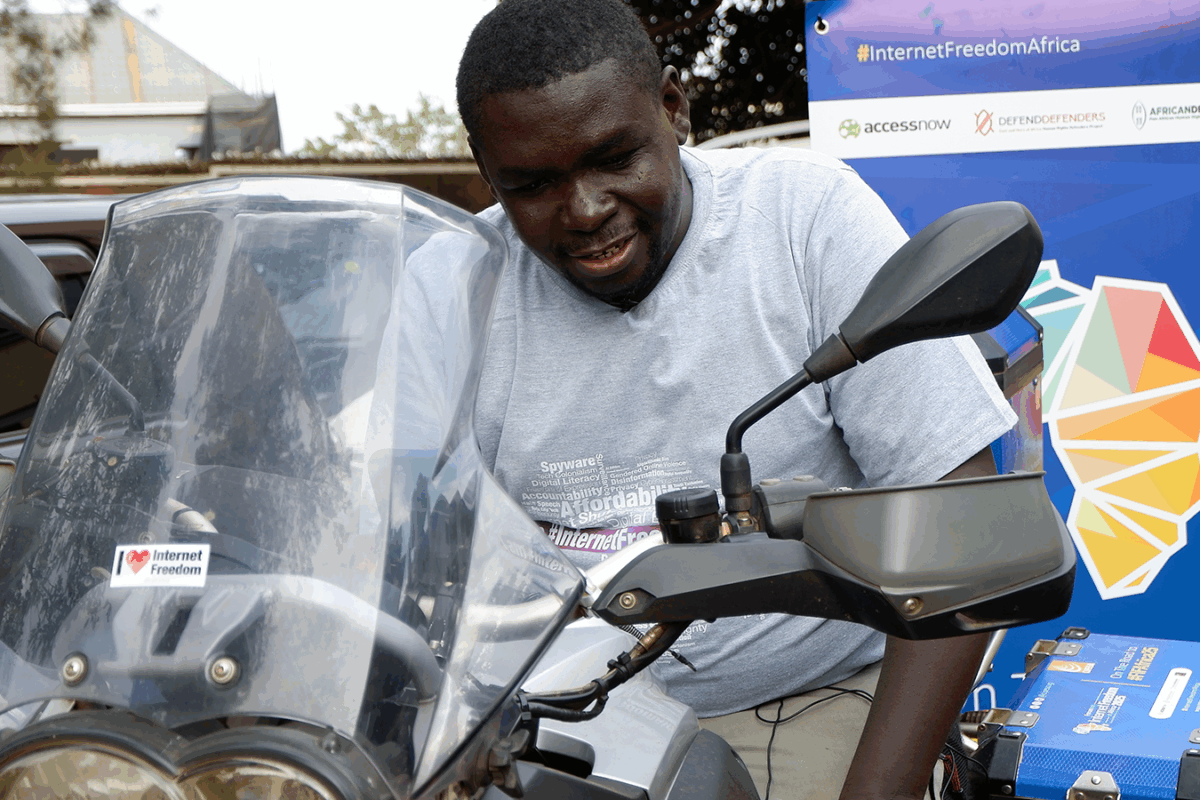
On Friday September 12, 2025, digital security expert and biker, Andrew Gole will set off on a solo motorbike journey spreading awareness about safety and security online. This will be the third time that Gole will travel across various countries on the continent ahead of the annual Forum on Internet in Africa (FIFAfrica). The effort is supported by the Collaboration on International ICT Policy for East and Southern Africa (CIPESA), Defend Defenders and Access Now.

Gole will commence his trip in Kampala, Uganda and over a round trip distance of 13,000 kilometers (km) traverse through Kenya, Tanzania, Malawi, Mozambique, Zimbabwe, and Botswana,  culminating in  Windhoek, Namibia, where the 2025 edition of FIFAfrica will convene this September 24-26, 2025. On his return journey to Uganda, Gole will also ride through Zambia and Rwanda, making it a total of 10 countries travelled through over the course of the journey. 

“I am truly excited to be hitting the road once again as part of the upcoming Forum on Internet Freedom in Africa. On my previous trips, I had the privilege of witnessing firsthand how diverse communities warmly embrace digital security as a key practice that empowers and protects their daily lives online and offline. These communities are often those left on the margins of mainstream efforts to enhance digital security, yet their eagerness to adopt these measures have been inspiring. I look forward to engaging with new communities on this trip and to  continuing this important work and deepening these connections as we move forward together.” – Andrew Gole, Digital Security Expert

Gole notes that traveling on his motorbike allowed him the mobility to connect directly with grassroots organisations. His “Digital Security on Wheels” initiative started in 2020 during the Covid-19 pandemic to address urgent digital security concerns beyond urban centers in Uganda and grew into a regional effort across East and Southern Africa through FIFAfrica.

In September 2022, ahead of the Forum which was held in Lusaka, Zambia and also served as the return to in-person meetings following a two year hiatus due to Covid-19, Gole pioneered the the #RoadToFiFAfrica Digital Security campaign. Gole embarked on the ambitious solo motorbike journey traversing approximately 3,300 kilometers.

The following year in 2023, ahead of the Tanzania edition of FIFAfrica, Gole led a major expedition that involved a team doing a round trip covering almost 10,000 km from Uganda through Kenya to Tanzania (and into the Indian Ocean island of Zanzibar via ferry). Gole was once again on his motorbike, supported by a team of digital rights experts from the Defenders Protection Initiative (DPI) in a passenger van.

We applaud Gole’s effort and celebrate the spirit he carries every mile to Windhoek. Andrew’s ride is a testament to the ongoing effort of building Africa’s internet freedom community. It embodies the practical, peer-led approach to digital safety that empowers often-overlooked communities. His journey to Windhoek mirrors CIPESA’s core mission of promoting the inclusive and effective use of ICT for improved governance and livelihoods in Africa. Gole’s remarkable endurance underscores that protecting our digital spaces demands mobility, resilience, and solidarity. We applaud his effort as he carries this message all the way from Kampala to Windhoek.”
– Brian Byaruhanga, Technology Officer, CIPESA

In all instances, Gole’s efforts culminated in the Digital Security Hub that has become a staple at FIFAfrica and serves as a one-stop-shop for attendees online and offline to secure their devices while also attaining practical skills and information on how to navigate online spaces safely. 

The Digital Security Hub convened by CIPESA has featured experts from across the world and this year will include experts from Africa Interactive Media, Base Iota, Co-creation HUB, Defenders Protection Initiative (DPI), Digital Society Africa, Greenhost/Frontline Defenders and Defend Defenders alongside SocialTic, and Foundacion Accesso bringing learnings and expertise from South America.

About the Forum on Internet Freedom in Africa: Now in its 12th year, the annual Forum on Internet Freedom in Africa (#FIFAfrica25) is the continent’s leading platform for shaping digital rights, inclusion, and governance conversations. This year, the Forum will be held in Windhoek, Namibia, a beacon of press freedom, gender equity, and progressive jurisprudence, and is set to take place on September 24–26, 2025. 

FIFAfrica offers a unique, multi-stakeholder platform where key stakeholders, including policymakers, journalists, global platform operators, telecommunications companies, regulators, human rights defenders, academia, and law enforcement representatives convene to deliberate and craft rights-based responses for a resilient and inclusive digital society for Africans. 

FIFAfrica25 will be the third edition to be hosted in Southern Africa. Previous editions have been hosted in Uganda, South Africa, Ghana, Ethiopia, Zambia, Tanzania and Senegal. Namibia, with its strong democratic credentials and progressive stance on digital transformation, provides a fitting host for FIFAfrica25.

About the Digital Security Hub: At the heart of FIFAfrica has been a Digital Security Hub designed to equip participants with practical knowledge and tools for staying safe in an increasingly digital environment. The Hub offers practical demonstrations and expert guidance on how to strengthen digital safety and resilience practices.

The Hub serves as a meeting for digital security trainers, technologists, and frontline users from across Africa and this year, Latin America as well. Digital security practices shared by the teams include advice on encryption and secure communications, through to countering online harassment and building safer digital infrastructures. 

The Digital Security hub is a vital feature of FIFAfrica25 and continues to serve as a space where communities can tangibly build their capacity to navigate the  constantly evolving digital ecosystem.

About the Collaboration on International ICT Policy for East and Southern Africa (CIPESA): CIPESA works to promote inclusive and effective use of Information and Communication Technology. (ICT) in Africa for improved governance and livelihoods. CIPESA was established in 2004 in response to the findings of the Louder Voices Report for the UK’s then Department for International Development (DFID), which cited the lack of easy, affordable and timely access to information about ICT-related issues and processes as a key barrier to effective and inclusive ICT policy making in Africa. CIPESA’s work continues to respond to a shortage of information, resources and actors consistently working at the nexus of technology, human rights and society.

Initially set up with a focus on research in East and Southern African countries, CIPESA has since expanded its work to include advocacy, capacity development and movement building across the African continent.

Today CIPESA is a leading ICT policy and governance think tank in Africa. CIPESA has strongly exhibited its passion about raising the capacity of African stakeholders in effective ICT policy making and in engendering ICT in development and poverty reduction, as per its mandate. 

For Queries about CIPESA and the Digital Resilience Hub

[email protected]
[email protected]

Registration For FIFAfrica25 Now Open!

By FIFAfrica |

We are excited to announce that registration for the 2025 Forum on Internet Freedom in Africa (FIFAfrica25) is officially OPEN!

Taking place in Windhoek, Namibia, FIFAfrica25 comes at a pivotal time for Africa’s digital future. As governments, civil society, technologists, and the broader digital society and ecosystem grapple with the evolving dynamics of Artificial Intelligence, platform regulation, surveillance, and internet shutdowns as well as funding for digital rights and governance efforts, this year’s Forum offers a much-needed space for bold conversations, collaborative thinking, and collective action.

Building on the momentum from CIPESA’s and partners’ recent engagements at the regional and global Internet Governance Forums (IGF), contributions to the World Summit on the Information Society (WSIS) +20 Summit, and preparations for the upcoming G20 Summit, the Forum will serve as a key bridge between global digital policy conversations with lived realities, governance priorities, and contexts within the African continent. As digital technologies shape Africa’s political, economic, and social landscape, safeguarding digital rights is essential to building inclusive, participatory, and democratic societies. 

Key themes at FIFAfrica25 will include:

  • AI, Digital Governance, and Human Rights
  • Disinformation and Platform Accountability
  • Internet Shutdowns
  • Digital Inclusion
  • Digital Trade in Africa
  • Digital Public Infrastructure (DPI)
  • Digital Safety and Resilience

Since 2014, FIFAfrica has created a leading pan-African space for shaping digital rights, inclusion, and governance conversations. Whether you’re a returning member of the FIFAfrica family or joining us for the first time, we invite you to register now and be part of shaping the digital rights agenda on the continent. 

Feedback on Session Proposals and Travel Support Applications

We received an incredible response for the call for session proposals and travel support. While we had anticipated providing feedback on July 4, 2025, we will now be able to provide feedback by July 14, 2025. Thank you for your patience and for contributing to what promises to be an exciting FIFAfrica25.   

Prepare for FIFAfrica25: Travel and Logistics

Everything you need to plan your attendance at the Forum is right here – visit this page for key logistical details and tips to help you make the most of your experience!

Democratising Big Tech: Lessons from South Africa’s 2024 Election

By Jean-Andre Deenik | ADRF

South Africa’s seventh democratic elections in May 2024 marked a critical turning point — not just in the political sphere, but in the digital one too. For the first time in our democracy’s history, the information space surrounding an election was shaped more by algorithms, platforms, and private tech corporations than by public broadcasters or community mobilisation.

We have entered an era where the ballot box is not the only battleground for democracy. The online world — fast-moving, largely unregulated, and increasingly dominated by profit-driven platforms — has become central to how citizens access information, express themselves, and participate politically.

At the Legal Resources Centre (LRC), we knew we could not stand by as these forces influenced the lives, choices, and rights of South Africans — particularly those already navigating inequality and exclusion. Between May 2024 and April 2025, with support from the African Digital Rights Fund (ADRF), we implemented the Democratising Big Tech project: an ambitious effort to expose the harms of unregulated digital platforms during elections and advocate for transparency, accountability, and justice in the digital age.

Why This Work Mattered

The stakes were high. In the run-up to the elections, political content flooded platforms like Facebook, YouTube, TikTok, and X (formerly Twitter). Some of it was civic-minded and constructive — but much of it was misleading, inflammatory, and harmful.

Our concern wasn’t theoretical. We had already seen how digital platforms contributed to offline violence during the July 2021 unrest, and how coordinated disinformation campaigns were used to sow fear and confusion. Communities already marginalised — migrants, sexual minorities, women — bore the brunt of online abuse and harassment.

South Africa’s Constitution guarantees freedom of expression, dignity, and access to information. Yet these rights are being routinely undermined by algorithmic systems and opaque moderation policies, most of which are designed and governed far beyond our borders. Our project set out to change that.

Centering People: A Public Education Campaign

The project was rooted in a simple truth: rights mean little if people don’t know they have them — or don’t know when they’re being violated. One of our first goals was to build public awareness around digital harms and the broader human rights implications of tech platforms during the elections.

We launched Legal Resources Radio, a podcast series designed to unpack the real-world impact of technologies like political microtargeting, surveillance, and facial recognition. Our guests — journalists, legal experts, academics, and activists — helped translate technical concepts into grounded, urgent conversations.

We spoke to:

Alongside the podcasts, we used Instagram to host

Holding Big Tech to Account

A cornerstone of the project was our collaboration with Global Witness, Mozilla, and the Centre for Intellectual Property and Information Technology Law (CIPIT). Together, we set out to test whether major tech companies (TikTok, YouTube, Facebook, and X) were prepared to protect the integrity of South Africa’s 2024 elections. To do this, we designed and submitted controlled test advertisements that mimicked real-world harmful narratives, including xenophobia, gender-based disinformation, and incitement to violence. These ads were submitted in multiple South African languages to assess whether the platforms’ content moderation systems, both automated and human, could detect and block them. The findings revealed critical gaps in platform preparedness and informed both advocacy and public awareness efforts ahead of the elections.

The results were alarming.

  • Simulated ads with xenophobic content were approved in multiple South African languages;
  • Gender-based harassment ads directed at women journalists were not removed;
  • False information about voting — including the wrong election date and processes — was accepted by TikTok and YouTube.

These findings confirmed what many civil society organisations have long argued: that Big Tech neglects the Global South, failing to invest in local language moderation, culturally relevant policies, or meaningful community engagement. These failures are not just technical oversights. They endanger lives, and they undermine the legitimacy of our democratic processes.

Building an Evidence Base for Reform

Beyond exposing platform failures, we also produced a shadow human rights impact assessment. This report examined how misinformation, hate speech, and algorithmic discrimination disproportionately affect marginalised communities. It documented how online disinformation isn’t simply digital noise — it often translates into real-world harm, from lost trust in electoral systems to threats of violence and intimidation.

We scrutinised South Africa’s legal and policy frameworks and found them severely lacking. Despite the importance of online information ecosystems, there are no clear laws regulating how tech companies should act in our context. Our report recommends:

  • Legal obligations for platforms to publish election transparency reports;
  • Stronger data protection and algorithmic transparency;
  • Content moderation strategies inclusive of all South African languages and communities;
  • Independent oversight mechanisms and civil society input.

This work is part of a longer-term vision: to ensure that South Africa’s digital future is rights-based, inclusive, and democratic.

Continental Solidarity

In April 2025, we took this work to Lusaka, Zambia, where we presented at the Digital Rights and Inclusion Forum (DRIF) 2025. We shared lessons from South Africa and connected with allies across the continent who are also working to make technology accountable to the people it impacts.

What became clear is that while platforms may ignore us individually, there is power in regional solidarity. From Kenya to Nigeria, Senegal to Zambia, African civil society is uniting around a shared demand: that digital technology must serve the public good — not profit at the cost of people’s rights.

What Comes Next?

South Africa’s 2024 elections have come and gone. But the challenges we exposed remain. The online harms we documented did not begin with the elections, and they will not end with them.

That’s why we see the Democratising Big Tech project not as a one-off intervention, but as the beginning of a sustained push for digital justice. We will continue to build coalitions, push for regulatory reform, and educate the public. We will work with journalists, technologists, and communities to resist surveillance, expose disinformation, and uphold our rights online.

Because the fight for democracy doesn’t end at the polls. It must also be fought — and won — in the digital spaces where power is increasingly wielded, often without scrutiny or consequence.

Final Reflections

At the LRC, we do not believe in technology for technology’s sake. We believe in justice — and that means challenging any system, digital or otherwise, that puts people at risk or threatens their rights. Through this project, we’ve seen what’s possible when civil society speaks with clarity, courage, and conviction.

The algorithms may be powerful. But our Constitution, our communities, and our collective will are stronger.

Africa’s Digital Dilemma: Platform Regulation Vs Internet Freedom

By Brian Byaruhanga |

Imagine waking up to find Facebook and Instagram inaccessible on your phone – not due to a network disruption, but because the platforms pulled their services out of your country. This scenario now looms over Nigeria, as Meta, the parent company of Facebook and Instagram, may shut down its services in Nigeria over nearly USD 290 million in regulatory fines. The fines stem from allegations of anti-competitive practices, data privacy violations, and unregulated advertising content contrary to the national laws. Nigerian authorities insist the company must comply with national laws, especially those governing user data and competition. 

While this standoff centres on Nigeria, it signals a deeper struggle across Africa as governments assert digital sovereignty over global tech platforms. At the same time, millions of citizens rely on these platforms for communication, activism, access to health and education, economic livelihood, and self-expression. Striking a balance between regulation and rights in Africa’s evolving digital landscape has never been more urgent.

Meta versus Nigeria: Not Just One Country’s Battle

The tension between Meta and Nigeria is not new, nor is it unique. Similar dynamics have played out elsewhere on the continent:

  • Uganda (2021–Present): The Ugandan government blocked Facebook after the platform removed accounts linked to state actors during the 2021 elections. The block remains in place, effectively cutting off millions from a critical social media service unless they use Virtual Private Networks (VPNs) to circumvent the blockage.
  • Senegal (2023): TikTok was suspended amid political unrest, with authorities citing the app’s use for spreading misinformation and hate speech.
  • Ethiopia (2022): Facebook and Twitter were accused of amplifying hate speech during internal conflicts, prompting pressure for tighter oversight.
  • South Africa (2025): In a February 2025 report, the Competition Commission found that freedom of expression, plurality and diversity of media in South Africa had been severely infringed upon by platforms including Google and Facebook. 

The Double-Edged Sword of Regulation

Governments have legitimate reasons to demand transparency, data protection, and content moderation. Today, over two-thirds of African countries have legislation to protect personal data, and regulators are becoming more assertive. Nigeria’s Data Protection Commission (NDPC), created by a 2023 law, wasted little time in taking on a behemoth like Meta. Kenya also has an active Office of the Data Protection Commissioner, which has investigated and fined companies for data breaches. 

South Africa’s Information Regulator has been especially bold, issuing an enforcement notice to WhatsApp to comply with privacy standards after finding that the messaging service’s privacy policy in South Africa was different to that in the European Union. These actions send a clear message that privacy is a universal right, and Africans should not have weaker safeguards.

These regulatory institutions aim to ensure that citizens’ data is not exploited and that tech companies operate responsibly. Yet, in practice, digital regulation in Africa often walks a thin line between protecting rights and suppressing them.

While governments deserve scrutiny, platforms like Meta, TikTok, and X are not blameless. They often delay to respond to harmful content that fuels violence or division. Their algorithms can amplify hate, misinformation, and sensationalism, while opaque data harvesting practices continue to exploit users. For instance, Branch, a San Francisco-based microlending app operating in Kenya and Nigeria, collects extensive personal data such as handset details, SMS logs, GPS data, call records, and contact lists in exchange for small loans, sometimes for as little as USD 2. This exploitative business model capitalises on vulnerable socio-economic conditions, effectively forcing users to trade sensitive personal data for minimal financial relief.

Many African regulators are pushing back by demanding localisation of data, adherence to national laws, and greater responsiveness, but platform threats to exit rather than comply raise concerns of digital neo-colonialism where African countries are expected to accept second-tier treatment or risk exclusion.

Beyond privacy, African regulators are increasingly addressing monopolistic behaviour and unfair practices by Big Tech as part of a broader push for digital sovereignty. Nigeria’s USD 290 million fine against Meta is not just about data protection and privacy, but also fair competition, consumer rights, and the country’s authority to govern its digital space. Countries like Nigeria, South Africa and Kenya are asserting their right to regulate digital platforms within their borders, challenging the long-standing dominance of global tech firms. The actions taken against Meta highlight the growing complexity of balancing national interests with the transnational influence of tech giants. 

While Meta’s threat to exit may signal its discomfort with what it views as restrictive regulation, it also exposes the real struggle governments face in asserting control over digital infrastructure that often operates beyond state jurisdiction. Similarly, in other parts of Africa, there are inquiries and new policies targeting the market power of tech giants. For instance, South Africa’s competition authorities have looked at requiring Google and Facebook to compensate news publishers  (similar to the News Media and Digital Platforms Mandatory Bargaining Code in Australia). These moves reflect a broader global concern that a few platforms have too much control over markets and need checks to ensure fairness.

The Cost of Disruption: Economic and Social Impacts

When platforms go dark, the consequences are swift:

  • Businesses and entrepreneurs lose access to vital marketing and sales tools.
  • Creators and influencers face income loss and audience disconnection.
  • Activists and journalists find their voices limited, especially during politically charged periods.
  • Citizens are excluded from conversations and accessing information that could help them make critical decisions that affect their livelihoods.
  • Students and educators experience setbacks in remote learning, particularly in under-resourced communities that rely on social media or messaging apps to coordinate learning.
  • Access to public services is disrupted, from health services to government updates and emergency communications.

A 2023 GSMA report showed that more than 50% of small businesses in Sub-Saharan Africa use social media for customer engagement. In countries such as Nigeria, Uganda, Kenya or South Africa, Facebook and Instagram are lifelines. Losing access even temporarily sets back innovation, erodes trust, and impacts livelihoods.

A Call for Continental Solutions

Africa’s digital future must not hinge on the whims of a single government or a foreign tech giant. Both states and companies should be accountable for protecting rights in digital contexts, ensuring that development and digitisation do not trample on dignity and equity. This requires:

  • Harmonised continental policies on data protection, content regulation, and digital trade.
  • Regional norm-setting mechanisms (like the African Union) to enforce accountability for both governments and corporations.
  • Investments in African tech platforms to offer resilient alternatives.
  • Public education on digital rights to empower users against abuse from both state and corporate actors.
  • Pan-African contextualised business and human rights frameworks to ensure that digital governance aligns with both local realities and global human rights standards. This includes the operationalisation of the UN Guiding Principles on Business and Human Rights, following the examples of countries like Kenya, South Africa and Uganda, which have developed national action plans to embed human rights in corporate practice.

The stakes are high in the confrontation between Nigeria and Meta. If mismanaged, this tension could lead to fragmentation, exclusion, and setbacks for internet freedom, with ordinary users across the continent paying the price. To avoid this, the way forward must be grounded in the multistakeholder model of internet governance which aims for governments to regulate wisely and transparently, and for tech companies to respect local laws and communities, and for civil society to be actively engaged and vigilant. This will contribute to a future where the internet is open, secure, and inclusive and where innovation and justice thrive.