Participant Reflection on #FIFAfrica22: Effective Engagement in the UPR Process for Digital Rights Promotion

By Murungi Judith |

The Collaboration on International ICT Policy for East and Southern Africa (CIPESA) and Small Media held a workshop on the Universal Periodic Review (UPR) process as part of  Forum on Internet Freedom in Africa (FIFAfrica 22), which was held in Lusaka Zambia from September 26-29, 2022. The workshop is a product of the UPROAR project aimed at advancing the cause of digital rights globally by supporting engagement in international advocacy at the UPR. 

The 32 participants at the workshop represented a diverse array of backgrounds including  civil society, digital rights activism and advocacy, legal, journalism, and academia.  A total of  20 countries were also represented -Benin,Burundi, Botswana,  Cameroon, Democratic Republic of Congo, Ethiopia, Ghana, India Kenya, Mozambique, Nigeria,  Senegal, Sri Lanka, Sudan, Tanzania,Uganda,United Kingdom, United States of America, Zambia, and Zimbabwe.

The workshop entailed an overview of the UPR, its  purpose and the processes. Also included were in depth  discussions on international and regional normative frameworks on digital rights. Specific attention was drawn to the Universal Declaration of Human Rights as the first normative framework on freedom of expression. The International Convention on Civil and Political Rights (ICCPR) was also explored under the core tenets of the right to hold opinions without interference (freedom of opinion), the right to seek and receive information (access to information) and the right to impart information (freedom of expression).

It was noted that the right to freedom of expression is not absolute and that the three-part test is key in determining the circumstances which potentially justify limitations. Under Article 19 (2) of the ICCPR, limitations are specifically listed as ( i) it must be provided for in law (ii) it must pursue a legitimate aim (iii) it must be necessary for a legitimate purpose.

The three-part-test formed the basis of heated debate related to electoral democracy and internet shutdowns in countries like Cameroon and Tanzania when compared to Kenya where the government did not impose an internet shutdown during their recent elections. As a result of the comparative discussions, participants reached  the conclusion that there are still actions of governments that are a threat to internet freedom such as arrests, detention and assassination of some journalists. It is the responsibility of civil society, activists and human rights defenders to hold governments accountable through the use and increased participation in the UPR process. 

The presence of Hon. Neema Lugangira from Tanzania, a member of Tanzanian Parliament and the Chairperson of the African Parliamentary Network on Internet Governance in the sessions was priceless and a beacon of hope in bridging the gap between civil society and policy makers towards promoting digital rights through the UPR.

The workshop also explored various case law on freedom of expression in Africa including precedent such as in Lohé Issa Konaté v Burkina Faso. Participants deliberated on the relevance of evaluating and critically assessing the law and ensuring that cases are framed in a manner that is in line with the jurisdiction of the particular court of law approached without which matters could be thrown out. This session gave the participants a clear understanding of the link between offline and online rights and specific laws that apply to minority and marginalised groups such as children, women, persons with disabilities and other vulnerable communities. 

The session on campaign and advocacy planning aimed at equipping participants with the necessary tools required to engage partners on how to carry out campaigns and to execute advocacy strategies through the UPR. It highlighted the eye-catching and precise advocacy materials that could be used in social media as well as other platforms for the UPR at local level. It led to discussions on the critical role played by local stakeholders in leveraging the UPR for digital rights development in their various contexts. The session helped the participants understand how to engage with local partners and to ensure that there is effective implementation of recommendations made to their respective countries. This involved fact sheets and how to use them during the UPR process. 

Participants engaged in a practical lobbying session where they had to appear before a UN delegate and present the issues affecting digital rights in their respective countries and recommendations for reform. This practical group exercise was very beneficial and informative because it gave the participants a chance to apply what they had learnt in regard to the UPR process. It gave them an opportunity to experience the review process at Geneva. 

Through the UPROAR Website, participants were guided on how to leverage research and social media platforms online for effective design and branding as part of UPR engagements  related to digital rights. The workshop also entailed guidance on what stakeholder mapping is and its importance.

In a subsequent panel entitled ‘Stemming the Tide: Has the Universal Periodic Review Mechanism Contributed to Changes in the Digital Rights Landscape of States Under Review?’ panelists shared experiences from Namibia, Democratic Republic of Congo, Uganda, Rwanda and many others. This gave the participants in the workshop an understanding on how to prepare for stakeholder engagements and how to conduct evidence-based advocacy at the United Nations Human Rights Council.

It was noted that the Covid-19 pandemic led to the imposition of travel restrictions which caused difficulties in traveling to Geneva to physically participate in the UPR process. Online opportunities were a welcome alternative but the lack of reliable internet access among civil society on the continent during the sessions presented an additional barrier

Beyond making submissions and engaging during review sessions, participants were urged to also take part in monitoring recommendations. Experiences were shared about governments such as that of Uganda which rejected all the recommendations that were given in regard to digital rights. In such instances participants were encouraged not to give up and draw back due to such government response but to keep doing the work of advocacy in line with digital rights since the same is also a notable step in the right direction. They were also encouraged to collaborate with law and policy members to ensure that they know about the UPR process and that they are able to positively respond to the recommendations given. They were also encouraged to ensure that there is in-country pressure from civil society to ensure that governments act on the recommendations given to them. It was noted that in Tanzania there has been a significant increase in the acceptance of recommendations after there has been collaboration between civil society and parliamentarians.  

The UPR sessions at FIFAfrica22 were very informative and intriguing as it engaged well-equipped workshop trainers. Experiences from those who had participated in Geneva engagements on digital rights stirred the urge for proactive engagement and participation by those coming up for review like Botswana.

FIFAfrica22: Recognising Access To Information As A Fundamental Digital Right

Greetings from #FIFAfrica22 |

On September 28 the International Day for Universal Access To Information (IDUAI) will be commemorated globally. The day was proclaimed by the United Nations Educational and Scientific and Cultural Organisation (UNESCO) General Conference in 2015, following the adoption of the 38 C/Resolution 57 which recognised the significance of access to information. The 2022 edition of the Forum on Internet Freedom in Africa (FIFAfrica) will also commemorate this day through a series of discussions pertaining to access to information as a fundamental digital right.
Since its inception, FIFAfrica has coincided with  IDUAI commemorations every September 28 during which it has endevoured to create awareness about access to information offline and online and its connection to wider freedoms and democratic participation. These engagements have drawn consistent partnerships from UNESCO, among other global and regional actors.

In 2017, the African Commission Special Rapporteur for Freedom of Expression and Access to Information, Advocate Pansy Tlakula, addressed FIFAfrica, where she received special recognition for her contributions to promoting access to information.

The theme for IDUAI 2022 is “Artificial Intelligence, e-Governance and Access to Information” which echoes various sessions that will feature at FIFAfrica22.

The opening of FIFAfrica22 will feature Honourable Ourveena Geereesha Topsy-Sonoo, the Africa Commission on Human and Peoples Rights (ACHPR) Commissioner on Freedom of Expression and Access to Information. Further sessions like Building Resilient Access to Information Legislation in the Digital Age; The Internet as a Tool for Promoting Information Integrity, Addressing Information Pollution Online and Offline; Artificial Intelligence Policy and Practice: Towards a Rights-Based Approach in Africa; Data Protection Trends and Advocacy in Africa; and Digital Inclusion: Acces, Data Governance and Ethical Innovation in Africa which resonate with this year’s global IDUAI theme will form part of the discussions at FIFAfrica22.

Speakers at the sessions will represent a diversity of actors working on advancing the free flow of information,  each of whom brings new insights and approaches to addressing practice and policy gaps affecting the realization of access to information in Africa.  The speaker lineup includes representatives from  Panos Institute, Africa Freedom of Information Centre (AFIC), African Centre for Media Excellence (ACME), Bloggers of Zambia, International Training Programme on Media Development in a Democratic Framework (ITP), International Centre for Non-For-Profit Law (ICNL), ALT Advisory, Center for Intellectual Property and Information Technology (CIPIT), Paradigm Initiative, Lawyers Hub Kenya, World Benchmarking Alliance, Development Initiatives, Data Science for Health Discovery and Innovation in Africa (DSI-Africa), Internet & Jurisdiction Policy Network, Internews, and Access Now.

Be part of the online conversation using #FIFAfrica22 and share your vision for #InternetFreedomAfrica! | Follow @cipesaug on FacebookTwitterLinkedInVisit the event website

About FIFAfrica
The Forum on Internet Freedom in Africa (FIFAfrica) is an annual landmark event which convenes a spectrum of stakeholders from across the internet governance and digital rights arenas in Africa and beyond. Hosted the Collaboration on International ICT Policy for East and Southern Africa (CIPESA), the Forum will offer a platform for government representatives, civic actors, journalists, policymakers and technologies to come face to face.

Forum on Internet Freedom in Africa 2022 (#FIFAfrica22):  Four Days of Workshops, Exhibitions, Panel Discussions and More!

#FIFAfrica22 |

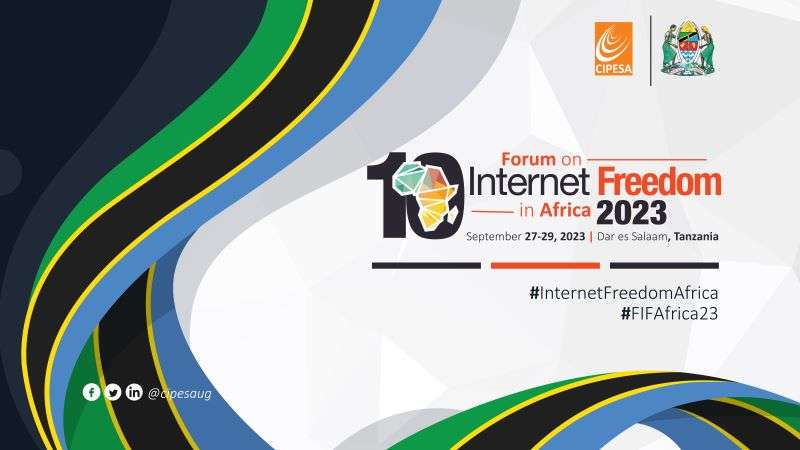
Since its inception in 2014, the Forum on Internet Freedom in Africa (FIFAfrica) has offered a platform for policymakers, government officials, civil society, media, tech companies and technologists to convene and deliberate on various aspects of internet governance and digital rights arenas in Africa. This year’s FIFAfrica marks the return to a physical event following two years of hybrid events in the wake of the Covid-19 pandemic and will take place in Lusaka, Zambia, on September 26-29, 2022. It will feature two days of network meetings and skills workshops (September 26-27,2022) ahead of a two-day main event (September 28-29, 2022).

The FIFAfrica22 agenda is spread over 21 tracks with speakers and session organisers representing an extensive diversity of national, regional and international organisations, governments, tech platforms and think tanks. The largest agenda to date represents the growth in interest in digital rights as well as the concerns that have emerged and prevail on the continent’s digital landscape.

Tracks at FIFAfrica22
Access to Information Cybercrime
Artificial Intelligence Data Governance
Artivism and Creative Expression Online Digital Economy
Business and Human Rights Digital Health
Child Online Protection Digital Resilience
Digital Sovereignty Internet Rights and Governance
Digitalisation and Access to Justice Movement Building
Disinformation Network Disruptions
Inclusive Access and Affordability Platform Accountability
Infrastructure Strategic Litigation for Digital Rights
Technology and Education Women’s Rights Online

FIFAfrica22 will also feature a dedicated Digital Security Hub will also feature at the Forum with digital security and resilience experts from CIPESA, the Digital Society of Africa, the Digital Security Alliance, Internews, Jigsaw/Google and Zaina Foundation.

FIFAfrica is hosted by the Collaboration on International ICT Policy for East and Southern Africa (CIPESA), an Uganda-based technology policy think-tank with a pan-African footprint. CIPESA has previously hosted physical Forums in  Kampala, UgandaJohannesburg, South AfricaAccra, Ghana; and Addis Ababa, Ethiopia.

See the agenda

For more details email [email protected]

Confronting the Challenges to Journalism in the Digital Age

By Edrine Wanayama |

Across the world, journalists face daily affronts physically and online for the work they do. Although the proliferation of technology has come with benefits for the practice of journalism, it has also adversely affected the media landscape to the extent that in some countries journalism has come under siege under the digital era. 

Technology has served to enable major shifts in how journalism is practiced, in addition to enhancing freedom of expression and access to information in addition to  complementing the promotion of accountability and transparency. However,  negative aspects such as digital surveillance are endangering the practice of journalism. The use of sophisticated technologies by governments is fuelling rights violations as it is now easier to track, arrest, detain, persecute and prosecute media professionals whose content is deemed unacceptable to the authorities.

This year, World Press Freedom Day (WPFD) was commemorated under the theme ‘Journalism Under Siege and recognised  how recent developments in technological means of monitoring and surveillance impact journalism and freedom of expression.

Digitisation offers several  benefits for the journalism sector, including the pace at which content can be collected and shared across online platforms. However, the risks and harms that come with digitisation, such as the elimination of professional gatekeepers who also uphold journalistic ethics, fabrication of content, falsification of information, misinformation and disinformation, hate speech, and online harassment, have become major threats to the sector.  

While in the pre-Internet world, freedom of expression and privacy were thought to only interact when journalists reported on public figures in the name of the right to know, the rights have become increasingly interdependent. This linkage reflects digital business models and the development of new surveillance technologies and large-scale data collection and retention. The changes pose risks in terms of reprisals against media workers and their sources, thereby affecting the free exercise of journalism, UNESCO

Even though the digital space offers broad opportunities for the practice of the journalism profession, various  countries in Africa have taken systematic steps to limit the enjoyment of freedom in the digital space. Many states across the continent including Egypt, Kenya, Lesotho, Mozambique, Nigeria, Rwanda, Tanzania, Uganda, Zambia, and Zimbabwe have enhanced their surveillance capacities including through enactment of enabling legislation which is often used against state critics and journalists.

Furthermore, mass data collection initiatives such as registration of persons for national identification documents, SIM card registration, voter registration and the creation of interlinked databases by the government for various services, have increased the precision with which state authorities can identify their targets. This is of particular concern for the media and their sources.s.

As such, at the WPFD commemoration in Uganda organised by the Uganda’s Media Sector Working Group (UMSWG) in conjunction with the African Centre for Media Excellence (ACME), the Collaboration on International ICT Policy for East and Southern Africa (CIPESA), the Makerere University Department of Journalism and Communication, the Media Council of Uganda, Uganda Communications Commission, and the Uganda Human Rights Commission, attendees discussed the country’s shrinking digital space, surveillance, arrests and persecution amidst growing digitalisation practices across sectors and the population. 

These concerns were echoed at the Africa Media Convention held  in Arusha, Tanzania around the WPFD and organised by UNESCO and the East Africa Editors’ Guild. The convention discussions were largely informed by a research report by CIPESA and UNESCO on journalism under siege in the digital era. In turn, the discussions resulted in the  Arusha Declaration on Journalism Under Digital Siege, which reaffirms the importance of human rights and freedom of the press and states’ commitments to provide an enabling environment for freedom of expression and the press. 

Journalists should use technology responsibly to guard against counter productivity.  There should be deliberate efforts aimed at guarding against online vices such as disinformation and misinformation, false news and hate speech to ensure reporting events and stories is based on truth and objectivity. 

Similarly, states must take all measures to ensure their compliance with universally recognised human rights standards by repealing all laws, policies and practices that limit journalism practice. They should also progressively enact laws that promote digital rights and freedoms including those of journalists. 

Specifically, recommendations in the 2022 Arusha Declaration on the World Press Freedom Day should be adopted by states, media, civil society, technology companies and development partners  if the media sector is to become better and operate with minimal interruptions.

Lawyers Trained to Defend Digital Freedoms 

By Edrine Wanyama |

On July 28, 2022, 82 practicing advocates in Uganda were trained on defending digital rights and freedoms. The training was organised by the International Senior Lawyers Project, the Collaboration on International ICT Policy for East and Southern Africa (CIPESA), Uganda Law Society, and the Centre for Law and Democracy.

The sessions included an assessment of Uganda’s digital rights landscape, human rights issues affecting women journalists in Uganda, international freedom of expression norms, using international law to defend freedom of expression, and practices for shaping the legal framework for cybersecurity to effectively defend human rights.

In her opening remarks, the Uganda Law Society (ULS) vice president Diana Angwech stressed that it was crucial for the society to promote digital rights as they continued to face challenges.  She added that rights abuses tend to grow during certain seasons such as elections. The ULS Rule of Law Report of 2021 documented abuses such as the state revoking of broadcasting licenses without due process, attacks on journalists, including the assault of over 20 journalists and the shooting of journalists by state security agents while covering opposition campaigns and proceedings in 2021.

In setting the pace for the capacity building training, CIPESA unpacked Uganda’s legal regime for digital rights. The session covered the meaning, scope and importance of digital rights and emerging issues for lawyers’ attention. The rights covered include freedom of expression, access to information, data protection and privacy, rights of children and their protection, intellectual property, assembly and association, the right to be forgotten, anonymity, and equal access to digital technologies.

Uganda’s constitution provides for the rights to privacy, freedom of expression, and the right of access to information. However, the country’s legislation including the Press and Journalist Act, Penal Code Act, Data Protection and Privacy Act, 2019, Anti-Terrorism Act 2002 as amended 2015 and 2016, the Access to Information Act, 2005, the Official Secrets Act, Uganda Communications Act, 2013, Regulation of Interception of Communications Act, 2010, the Computer Misuse Act, 2011, the Anti-Pornography Act, 2014 and the Public Health (Control of COVID-19l) Rules 2021 limit the enjoyment of digital rights. These laws are largely marred by vague provisions and wide limitations which enable communications monitoring and interception, and undermine free expression.

Catherine Anite of the Small Media Foundation spoke about how Uganda was experiencing a deterioration in respect for press freedom. In 2022 Uganda fell seven places on the World Press Freedom Index ranking at 132 out of 180 countries analysed.

According to Anite, while gender equality is a prerequisite for human rights, democracy and social justice, gender disparities remain evident in the media. Female journalists across the globe face similar challenges, in addition to increased and appalling levels of violence both online and offline when compared to their male counterparts. She noted:

“Female journalists have reported suffering physical and online violence perpetrated by colleagues, public figures, strangers, anonymous perpetrators. We might be speaking about journalists but as lawyers some of these things apply to our contexts as well but we don’t speak about them. These trends have negatively impacted on diversity in media because of the exodus of female journalists, which has affected their equal participation in reporting, civil and political participation due to fears of violence.”

Toby Mendel and Raphael Vagliano, from the Centre for Law and Democracy, discussed international and regional laws  on freedom of expression which are applicable to Uganda. They highlighted provisions of such as  the Universal Declaration of Human Rights (Article 19), the International Covenant on Civil and Political Rights (Article 19), the African Charter on Human and Peoples’ Rights (Article 9), and the Declaration of Principles of Freedom of Expression and Access to Information in Africa which, among others, require member states to facilitate the rights to freedom of expression and access to information online. Under these instruments Uganda is obligated to respect, protect, promote and fulfill rights.

Richard Wingfield, the Head of the Media Law Working Group at the International Senior Lawyers Project (ISLP), explored case studies on using international law to defend freedom of expression, including approaches to arguments, support and intervention as well as the filing of amicus briefs to support litigation. He explained that lawyers in Uganda could support litigation, even in cases where they are not directly involved such as by offering professional support towards impactful and successful litigation, so as to contribute to the realisation of justice for freedom of expression rights.

Practices for shaping the legal framework for cybersecurity to effectively defend human rights were discussed. Cybersecurity is critical for ensuring confidentiality of personal data at all levels.

Advanced digital surveillance and forensic tools are needed to deal with modern cyber  threats; but governments can abuse those tools if government authority is not adequately checked by confidence-inducing institutions.

Tools for cyber security such as BitDefender, malware-bytes, full disk encryption with bitlocker or file vault and strong password are critical tools for cyber security. Individuals must always be aware of potential data breaches by state authorities which often compromise individual privacy through surveillance and forensics. Common state excuses for cyber security violations were often justified by a need to protect national security, crime prevention and public order. Similarly, while laws create obligations for collectors and processors of personal data, those actors often violate the laws and, this necessitates legal intervention.

The lawyers were called upon to pay particular attention to problematic laws and policies, bills and practices so as to challenge them with the aim of establishing an enabling environment for the protection and enjoyment of digital rights.

The specific key emerging recommendations for lawyers from the capacity building training included to:

  • Collaborate with other stakeholders like civil society and academia to engage in litigation to promote freedom of expression, data and privacy rights.
  • Analyse bills and laws to establish gaps and push for repeal of regressive laws and amendment of regressive provisions.
  • Constantly write on topical issues on freedom of expression, data protection and privacy so as to raise awareness among individuals of their rights and expose any cases of violation for enhanced accountability and transparency.
  • Push telecommunication companies and internet service providers to comply with human rights when doing business, in compliance with the UN Guiding Principles on Business and Human Rights.
  • Respect individual data protection and privacy rights in their dealings to minimise conflict with the Data Protection and Privacy Act, 2019 and regional and international human rights instruments on freedom of expressions, data protections and other human rights.
  • Make use of human rights reporting mechanisms such as the Universal Periodic Review and Special Rapporteur engagements to hold the government accountable for decisions undertaken in respect to digital rights.
  • Push and demand that the government complies with regional and international human rights standards, and signs and ratifies key instruments such as the African Union Convention on Cyber Security and Personal Data Protection so as to enhance digital rights protection.

Take deliberate efforts aimed at skilling themselves in the digital rights field. This will ensure that they are equipped with knowledge and skills on dealing with issues that affect digital rights.