
By Lyndcey Oriko |
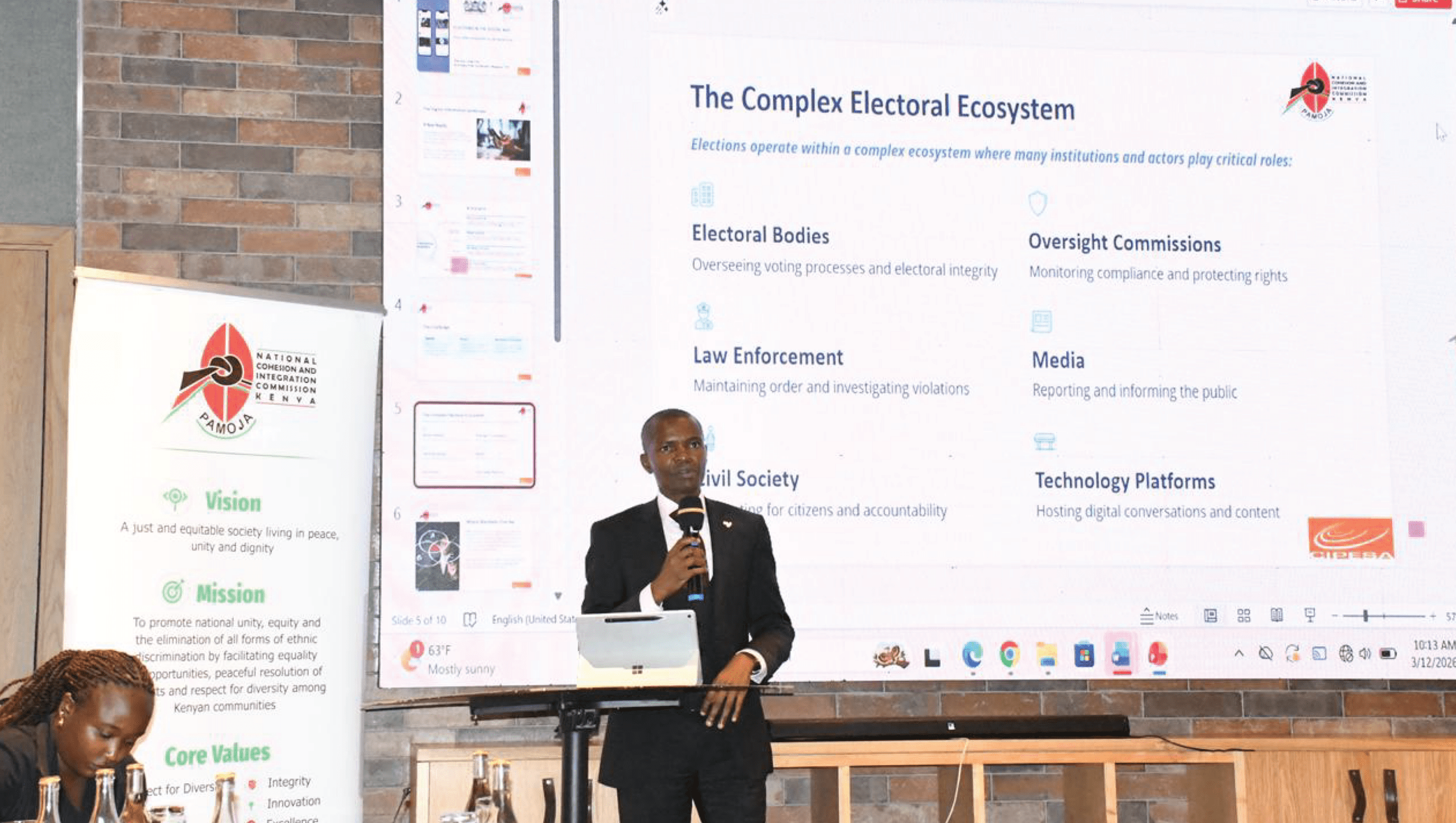
As Kenya looks ahead to the 2027 general elections, the rapid digitisation of the civic space presents both opportunities and risks. A February 2026 multi-stakeholder engagement organised by the National Cohesion and Integration Commission (NCIC), in partnership with the Collaboration on International ICT Policy for East and Southern Africa (CIPESA), reflected on preparedness for the 2027 elections, with a strong emphasis on moving from reactive responses to proactive, coordinated action.
The Nairobi convening brought together electoral bodies, oversight institutions, law enforcement, regulators, and media actors to deliberate on the need to safeguard rights, strengthen coordination, and build trust in an increasingly digital electoral environment.
Across Africa, digital platforms are reshaping how elections unfold. They have opened up participation, especially for young people, but also introduced new challenges. Increased online regulation, network disruptions, hate speech and disinformation are commonplace, while women, particularly those actively involved in politics, face rising levels of technology-facilitated gender-based violence.
This shifting environment highlights a key reality: the same digital tools that enable participation can also erode trust and weaken social cohesion. And what begins online does not stay online. It often carries real consequences offline, and vice versa. Kenya is no exception. The country’s upcoming 2027 elections are high-stakes, closely contested and in an environment fraught with disinformation.
More recently, there has been a heightened crackdown on activism, including through the abduction and intimidation of activists and journalists, politically motivated internet censorship, rising disinformation, cyber threats, data breaches, and a decline in freedom.
CIPESA’s Kenya’s Digital Crossroads brief, published in February 2025, offers a detailed account of the scale of this challenge. In June 2024, Kenya experienced its first nationwide internet shutdown, imposed during the #RejectFinanceBill2024 protests that disrupted mobile payments, health services, and education systems alongside social media.
The Kenya National Commission on Human Rights (KNCHR) documented 50 deaths, 413 injuries, 59 abductions, and 682 arbitrary arrests as of July 2024, with over 82 people subsequently abducted by armed plainclothes officers. The Communications Authority recorded 657.8 million cyber threats in just three months between July and September 2024, while government and media institutions — including KBC, K24 TV, and the DCI’s account on X — faced successful cyberattacks. The Computer Misuse and Cybercrimes Act was deployed to target critics, bloggers, and political activists. And in January 2025, the incoming Cabinet Secretary for ICT publicly pledged readiness to shut down the internet again if national security is threatened. These patterns have direct implications for 2027.
Opening the discussion, Ashnah Kalemera, Programmes Manager at CIPESA, emphasised the importance of balancing electoral integrity and national security with the protection of civic space. She noted that core freedoms such as free speech, access to information, and participation should continue to be prioritised, even as institutions address digital risks. She also highlighted the need for stronger collaboration, responsible content sharing, and inclusive approaches that bring citizens, especially young people, into the conversation.
Commissioner Ken Williams Nyakomitah of the Independent Policing Oversight Authority (IPOA) stressed that the scale and complexity of digital harms require collective action. He noted that institutions must adapt to evolving technological realities and work in complementarity, emphasising that no single actor can effectively address digital threats in isolation. Strengthening coordination, avoiding duplication, and ensuring timely information sharing were highlighted as critical to improving institutional effectiveness.
The NCIC Chief Executive Officer, Dr. Daniel Mutegi Giti, underscored the importance of early and sustained interventions to promote cohesion. He cautioned that elections could amplify existing tensions if not carefully managed, particularly in digital spaces where narratives spread rapidly and shape public perception. He called for vigilance, responsible engagement, and a shared commitment to upholding constitutional values, including inclusivity and respect for human rights.
Bringing in a technological perspective, Daniel Odongo, Technology Lead at Ushahidi, highlighted the speed, coordination, and sophistication with which harmful content spreads online. He pointed out that misinformation often follows predictable patterns across platforms, making early detection, real-time monitoring, and coordinated response critical to preventing escalation. This further underscores the importance of institutions focusing not just on individual incidents but on identifying patterns, trends, and coordinated behaviour over time.
Director Kilian Nyambu of NCIC emphasised the human dimension of digital harms, noting that information shapes perception, and perception shapes action. This is especially significant for vulnerable groups, including women, youth, and persons with disabilities, who are often disproportionately affected by harmful online narratives. Ensuring inclusivity and protection of these groups remains central to building a peaceful digital environment.
The role of the media was also central to the discussion. Leo Mutisya of the Media Council of Kenya (MCK) highlighted both the resilience and challenges within Kenya’s media landscape. While media remains a key pillar in promoting accountability and public awareness, rising disinformation, political pressure, and declining trust continue to shape how citizens consume information, often leading them to turn to less regulated digital spaces.
At the same time, the engagement highlighted the growing challenge of declining public trust in public institutions and information sources. As more citizens turn to digital platforms for news, the line between credible information and manipulation continues to blur, reinforcing the need for strong media literacy and fact-checking ecosystems. Addressing this trust deficit will require transparency, consistency, and sustained public engagement from institutions.
Concerns were also raised about the emerging risks of Artificial Intelligence (AI), such as AI-generated content and deepfakes, which are increasingly difficult to detect and could significantly distort public perception during elections. Stakeholders emphasised the need to proactively address these risks, including advocating for greater transparency and accountability from digital platforms.
Importantly, participants also highlighted that misinformation is no longer random or organic. It is often coordinated, moving rapidly across platforms within minutes, from X to WhatsApp and into community networks, making early detection and response critical. This calls for investment in real-time monitoring systems and stronger partnerships between institutions and technology platforms. It also reinforces the need for institutions to shift from isolated responses to a more connected, system-wide approach that reflects the complexity of the digital ecosystem.
Discussions further underscored the importance of data protection, responsible platform governance, and context-specific solutions. Participants emphasised that Kenya must develop localised frameworks that reflect its unique realities, rather than relying solely on external models. Building effective responses will require grounding solutions in local contexts, strengthening regional collaboration, and investing in homegrown research and knowledge systems.
Key priorities emerging from the engagement included strengthening inter-agency coordination, investing in early warning and response systems, improving strategic communication, safeguarding data and privacy, and ensuring inclusive approaches that protect all groups. There was also a strong call to establish clear inter-institutional protocols for responding to digital threats, ensuring timely, coordinated, and rights-respecting action across agencies. Strengthening collaboration across institutions and aligning mandates will be essential in closing existing gaps. Ultimately, participants agreed that preparedness must begin now. Building resilient systems, strengthening collaboration, and equipping citizens with the tools to navigate digital spaces responsibly will be critical to shaping peaceful, credible elections.
As Kenya prepares for the 2027 general elections, digital platforms will play a decisive role in shaping public discourse and electoral outcomes. The challenge, and opportunity, lies in ensuring these spaces promote trust, inclusion, and informed participation.