
By CIPESA Writer |
The evolution of digital health is largely driven by technological advancements, the quest for more efficient healthcare, and the growing demand for available, accessible, affordable and quality services. The United Nations’ 2030 Agenda for Sustainable Development recognises the transformative potential of Information and Communications Technology (ICT) in fostering human progress, bridging digital divides, and creating knowledge societies. Despite technological advancements, the World Health Organization (WHO) notes that many countries, including Kenya, have yet to fully leverage digital health for positive outcomes.
The transition from the National Health Insurance Fund (NHIF) to the Social Health Insurance Fund (SHIF) presents a policy shift towards realising Universal Health Coverage (UHC) in Kenya. However, this transition has faced significant challenges that impact the right to health, particularly for vulnerable and marginalised groups (VMGs). A major concern within this transformation is the role of digitalisation in health care management and its implications for service delivery.
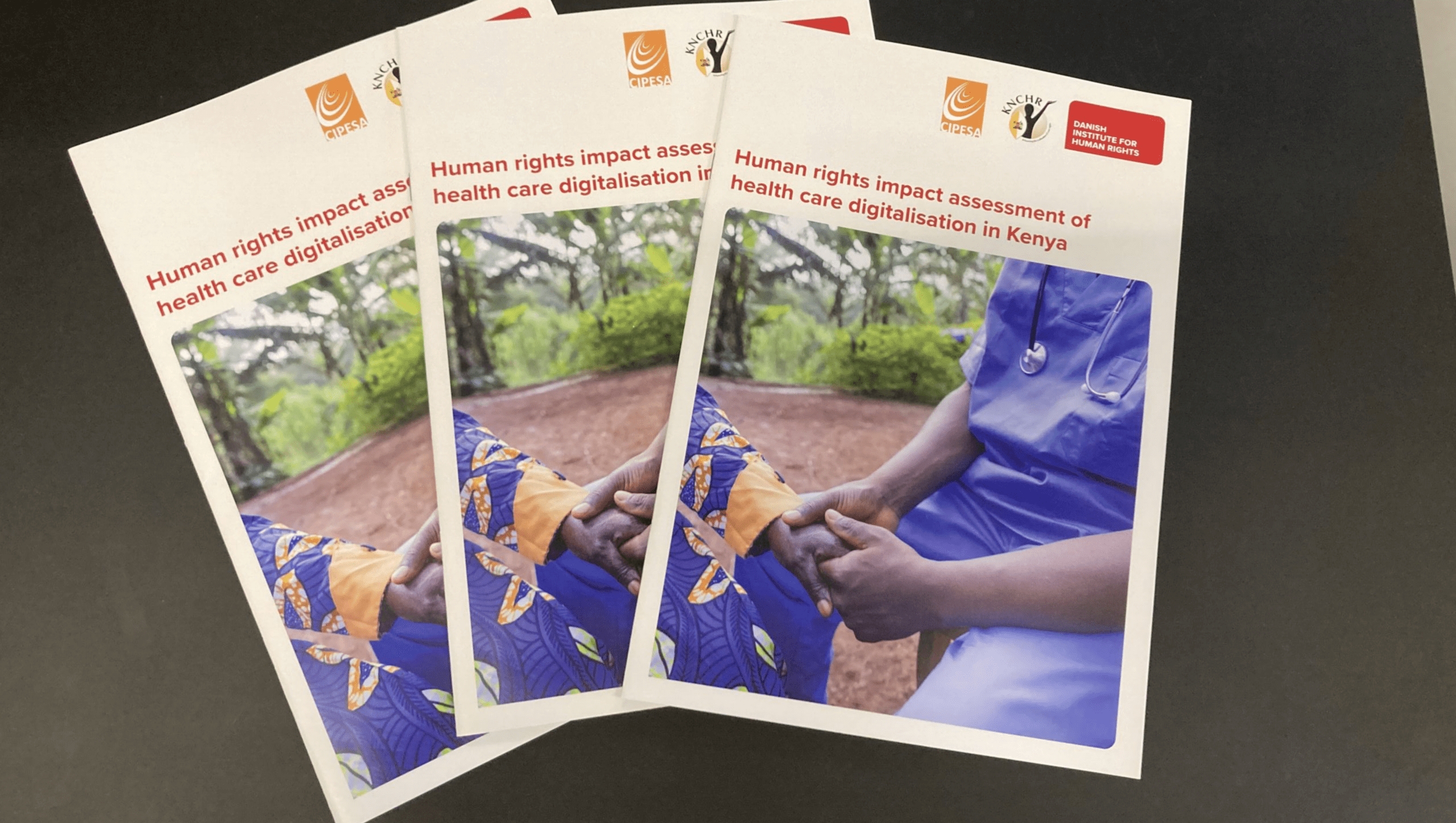
It is against this background that the Collaboration on International ICT Policy for East and Southern Africa (CIPESA), the Danish Institute for Human Rights and the Kenya National Commission on Human Rights (KNCHR) undertook a human rights impact assessment on digitalisation of the health care sector in Murang’a, Laikipia, Kisii and Homabay counties in Kenya. The assessment included the NHIF to SHIF transition, digitalised solutions in the sector and their potential impacts especially on Vulnerable and Marginalized Groups (VMGs) to access quality health care.
This report presents the findings of the assessment which was conducted through literature review and field data collection, as elaborated in the methodology section below. The report highlights the positive impacts of digitalisation of health services, pressing challenges, and impacts on the state of healthcare. It also provides targeted and actionable recommendations for improving the effectiveness, inclusivity, and human rights compliance of digital health initiatives in Kenya.
As an integral part of a human rights-based approach, this assessment took a gender-responsive approach to adequately reflect the experiences of women and to understand gender relations within households and communities. It included a gender-responsive context analysis and representative participation in engagements as well as the conceptualisation, adaptation, and utilisation of existing public sector digital infrastructure for enhanced gender responsiveness.
A Human Rights-Based Approach to public sector digitisation should include Human Rights Impact Assessments (HRIA) in the conceptualisation, development, implementation, and monitoring of digital solutions, and the results thereof should be made publicly available. As such, HRIA is often called for, but examples of such assessments are hard to come by, making few public examples of HRIA of public digitalisation products. Therefore, this assessment documents and shows outcomes that may serve as a model and practical guidance for conducting future human rights impact assessments in the public sector in Kenya and beyond.
Read the full report here.