
By Edrine Wanyama |
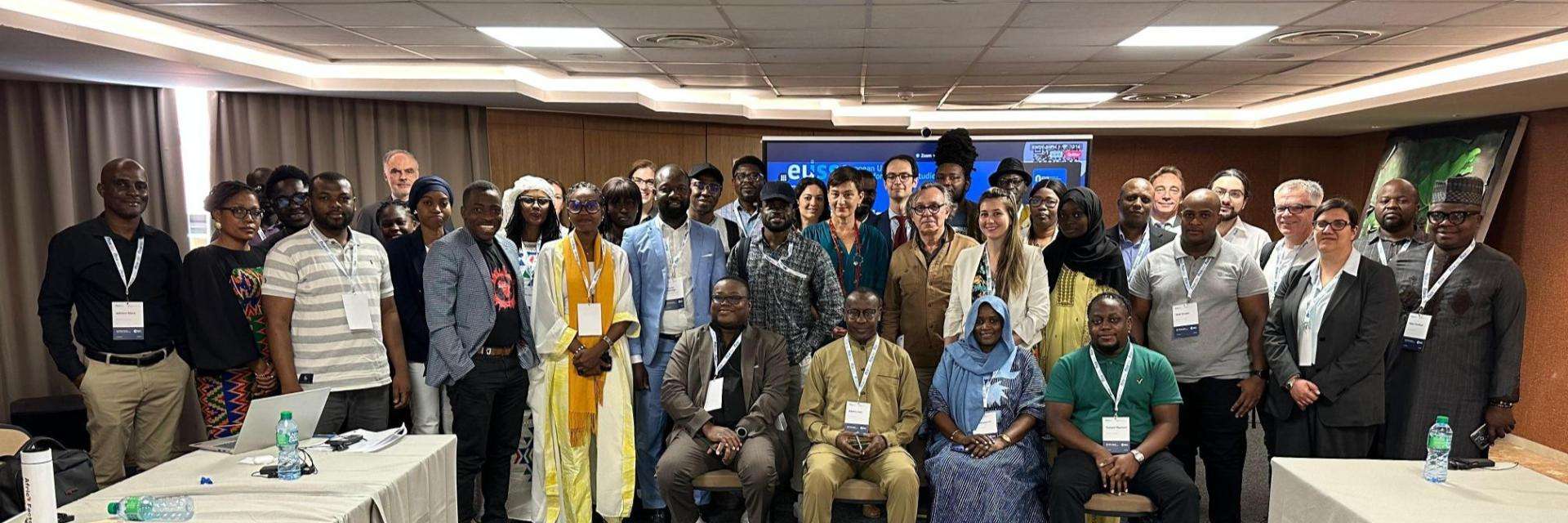
On February 10-11, 2026, researchers and experts convened in Dakar, Senegal, for the first Africa Forum on Countering Foreign Interference (CFI). The forum brought together participants from Africa, Europe and America to examine the growing challenge of foreign information manipulation and its implications for governance, media ecosystems, and digital rights across the African continent.
The Forum was organised under the CFI project implemented by the European Union Institute for Security Studies (EUISS), in cooperation with the Service for Foreign Policy Instruments (FPI) at the European Commission and the European External Action Service (EEAS). The project aims to strengthen EU capacities to prevent, deter and counter information manipulation in the digital space.
Around the world, foreign information manipulation and interference (FIMI) has become a major threat to information integrity, human rights, democratic discourse, and public trust. In Africa, the phenomenon has taken on new dimensions as geopolitical competition plays out in the digital sphere. Already, many African countries such as the Democratic Republic of Congo, Ethiopia, Kenya and South Africa are facing a complex terrain of disinformation. Consequently, disinformation practices are expected to continue shaping and adversely affecting human rights and democracy, amidst the growing repression and curtailment of digital spaces in Africa.
Foreign state and non-state actors have been linked to sponsorship of disinformation campaigns in Africa, to promote their strategic, political and business interests. They include China with its authoritarian capitalism agenda and Israel with its strategic security agenda. Similarly, Russia aims to displace Western influence in Africa, Saudi Arabia and the United Arab Emirates, which are in rivalry over ports and the strategic security architecture of the Red Sea, and Qatar with mass economic interests. The United States of America is also associated with the drive of narratives that seek to neutralise its adversaries, especially China and Russia, and also to secure and utilise critical minerals from the African continent in countries such as the Democratic Republic of Congo and Zambia.
The forum highlighted the critical role of independent research in understanding disinformation trends, causes, effects and control measures, local socio-political dynamics, and media ecosystems.
The Collaboration on International ICT Policy for East and Southern Africa (CIPESA), the European University Institute, Tech Global Institute, International Press Institute, Media Monitoring Africa, Moxii Africa and Intelwatch, shared insights on potential response strategies to counter information manipulation. In particular, CIPESA stressed that efforts to counter information manipulation must safeguard human rights and should not be used as a justification for restrictive policies that undermine digital rights.
Participants at the Dakar forum noted that Africa’s information ecosystem faces various vulnerabilities that make it susceptible to manipulation. Limited access to data, under-resourced research institutions, inappropriate legal frameworks, and financial pressures within the media sector were noted as major challenges.
Today, foreign agents account for the extension of disinformation machinery with troll farms, local influencers and bots deployed across the continent to influence and shape public narratives and perceptions. Similarly, a multiplicity of lies are told about mining, trade and investment, security structures, agriculture and education sectors on the continent as a tool to help investors secure contracts without public participation and scrutiny.
Journalism, which is a key sector that should promote transparency and accountability, has not been spared by FIMI. Economic pressures faced by the local media and media actors make them susceptible to influence from foreign actors.
In other circumstances, they have been sighted to enter into agreements and memorandums of understanding which largely undermine media professionalism and integrity. Such undertakings are emerging as conduits for propaganda and carry the largest portion of blame for a declining media profession.
Unfortunately, Journalists and media practitioners opposed to the agreements and distorted narratives are often harassed and intimidated to pave the way for gendered disinformation or become primary targets of fellow practitioners who are often paid off or are benefiting from foreign actors.
Notably, African regional human rights institutions and civic actors are increasingly engaging with the issue of information integrity. The African Commission on Human and Peoples’ Rights (ACHPR) has acknowledged the risks posed by the growing foreign interference in the digital space. Its Resolution 630, issued in 2025, in paragraph 7 specifically addresses the need for technology companies to maintain information integrity. It observes that foreign interference is potentially harmful to information integrity.
Furthermore, the Special Rapporteur on Freedom of Expression and Access to Information is currently developing guidelines aimed at supporting African states to address harmful content without undermining fundamental freedoms.
Civil society organisations like CIPESA also play a vital role in these conversations by advocating for the rights-respecting governance of platforms, transparency in content moderation and improved accountability measures for tech companies.
Participants at the Dakar forum made several recommendations:
- Multi-stakeholder collaboration to counter foreign interference by involving governments, civil society, researchers, media organisations and technology companies.
- Strengthening independent media through the creation of national and regional funds to support investigative journalism and reduce vulnerability to foreign influence.
- Conducting training for journalists to identify and counter FIMI.
- Conducting nationwide media and digital literacy to help citizens guard against FIMI.
- Governments should undertake measures including collective negotiation with multi-national tech companies to ensure effective content moderation by platforms.
- Governments should support ACHPR processes to counter FIMI, such as through timely provision of resources and implementation of its resolutions.
- Promote transparency in strategic sectors such as mining and energy by requiring full public disclosure of contracts to guard against disinformation.