
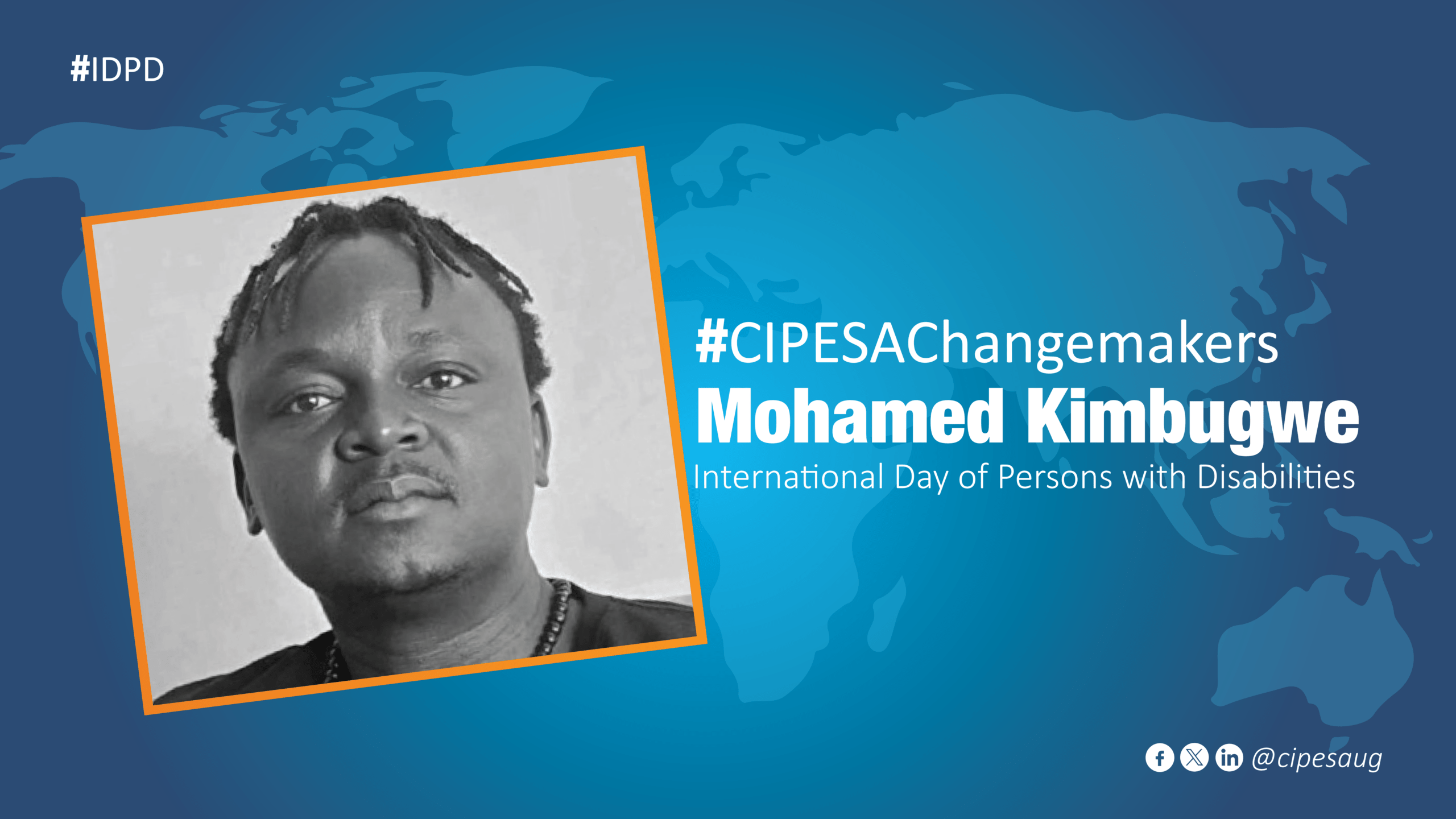
Who is Mohamed Kimbugwe?
My name is Mohamed Kimbugwe, an International Development Practitioner with over one and a half decades of experience and expertise in Human-centred Digital Transformation and Innovation. As a disability, digital rights, and inclusion expert and advocate, I believe in a world that works for all, including in the digital realm. I believe that digital technologies have the power to surpass traditional barriers and open a world of opportunities for persons with disabilities. Living with a hearing disability myself, I know more than anyone else the power of accessible technologies and how much they offer from education to work, communication, and all spheres of human endeavour. I also know how limiting it can be if digital technologies are not designed either to accommodate disability or accelerate the inclusion of persons with disabilities.
It all started with the onset of my hearing loss around 2007. That’s when it dawned on me that unless workplaces were inclusive, my work life and career growth would be an uphill task. Communication, as I knew it, became limited, and I was growing increasingly isolated from social activities. Around the same time, social media and digital messaging platforms were taking root. I was captivated by the opportunities they all offered. Being able to stay in touch with friends, build my own network, and even pursue remote employment opportunities online.
However, it quickly dawned on me that it wasn’t all glitter. I started bumping into videos without captions. I realised then that while digital spaces were opening immense opportunities, they had their limitations, and we had to work deliberately towards removing barriers and making digital spaces fully accessible.
There has been significant progress over the years. The digital rights and inclusion movement has gained momentum, and there’s increased awareness. It is not uncommon to find accessibility as a core aspect of continental, regional, and national digital transformation policies, frameworks, and strategies. Digital Accessibility conversations are now an integral part of continental forums such as the Forum on Internet Freedom in Africa.
Countries like Kenya, South Africa, and Rwanda have strengthened their commitment to disability-inclusive technology policies, promoting accessible digital services, inclusive design, and equal access to public digital platforms. At the continental level, frameworks such as the Protocol to the African Charter on the Rights of Persons with Disabilities and Agenda 2063 have reinforced these commitments. Alongside policy, the availability and use of assistive digital tools (screen readers, sign-language translation apps, hearing-assist technologies, e-learning accessibility features, and AI-powered communication support) have grown, with local innovators developing low-cost solutions tailored to African contexts.
Accessible e-government services are also expanding in countries like Rwanda, Namibia, Egypt, Mauritius, and South Africa, incorporating voice navigation, multilingual options, simplified interfaces, and accessible application systems for social services, education, and healthcare. National digital skills programs and innovation hubs are increasingly supporting young persons with disabilities, with initiatives from the Australian Government, GIZ, UNICEF, UNESCO, Microsoft, and local organisations enhancing training in coding, digital entrepreneurship, and online freelancing. Disabled People’s Organisations (DPOs) are gaining influence in digital policy, data protection, and AI governance, while inclusive tech communities are growing across Kenya, Nigeria, Uganda, South Africa, and Ghana. Public and private institutions are beginning to adopt global accessibility standards, such as the Web Content Accessibility Guidelines (WCAG), signalling a rising awareness and momentum for truly inclusive digital spaces.
Progress in digital inclusion in Africa remains limited, with connectivity expensive, interventions scattered, and stakeholders often working in silos, which restricts scaling and impact. Both public and private sector funding is minimal, enforcement of accessibility and inclusion policies is weak, the skills gap is widening, and interoperability between accessible platforms and widely used systems remains a challenge.
The cost of connectivity and assistive technologies, including data prices, smartphones, and devices, remains high, making them largely unaffordable for many. To address this, we must prioritise subsidised data bundles, tax exemptions for assistive technologies, zero-rating disability-related content, and supporting the local production of affordable assistive devices.
Emerging technologies are evolving faster than inclusion efforts. AI systems, digital IDs, e-learning tools, and mobile apps are often developed without considering accessibility, which can lead to algorithmic bias and exclusion. It is therefore crucial to entrench accessibility-by-design in all public digital services and extend disability inclusion from national AI and emerging tech policies into practice.
The scarcity of context-specific and inclusive data for AI systems threatens to deepen exclusion, making it essential to develop African disability-inclusive datasets and ensure representation of persons with disabilities in testing, training, and regulation.
Digital safety threats, online harassment, and cybercrime disproportionately affect persons with disabilities, especially women, yet digital safety tools are often inaccessible. Integrating accessible digital safety education into skills programs and ensuring platforms adopt WCAG-compliant safety features, such as accessible reporting tools, audio guidance, and captioning, is critical to protecting and empowering marginalised users in digital spaces.
Building trust and strengthening collaboration in Africa’s disability rights movement requires intentional structures, shared accountability, and clear mechanisms for co-creation across governments, intergovernmental bodies, civil society, industry, media, and academia.
Trust is earned not through statements but through consistent, transparent, and inclusive action. To achieve this, it is crucial to establish inclusive and permanent multi-stakeholder platforms that move beyond short-term, project-based collaborations to sustainable partnerships with formal structures and established processes. Equally important is building and sharing a common evidence base: harmonised data standards, a continental digital inclusion observatory, and unified research agendas ensure that decisions are informed by shared facts, strengthening credibility and trust.
Promoting genuine co-creation rather than tokenistic participation is essential, ensuring that persons with disabilities are involved throughout the design lifecycle of policies, technologies, and services, not just at the end. Strengthening accountability and transparency is also crucial, as trust erodes when commitments are not met.
This can be achieved through annual digital accessibility scorecards for governments and service providers, publishing commitments and progress as open data, and including independent monitoring mechanisms led by coalitions of Disabled Persons’ Organisations, human rights bodies, and academic institutions. Together, these pathways create a collaborative, credible, and sustainable approach to advancing disability rights and digital inclusion across Africa.
To ensure that persons with disabilities and other marginalised groups, such as women, youth, and older persons, are included in digital rights and inclusion efforts in Africa, we must adopt a holistic, rights-based approach.
This includes creating and enforcing inclusive laws and policies, designing accessible technologies and platforms, and promoting affordable assistive tools. Targeted digital literacy programs, community hubs, and mentorship initiatives can build skills and confidence, while awareness campaigns and success stories help shift social norms. Affordable internet, devices, and support for digital entrepreneurship remove economic barriers, and disaggregated data, inclusive governance, and cross-sector collaboration ensure accountability and sustained impact. Inclusion is achieved when policy, technology, education, and advocacy work together to remove barriers and empower all members of society.