By Ashnah Kalemera
The issue of internet users’ privacy and security has been widely debated since the Edward Snowden revelations last June put a magnifying glass on the extremes that some governments, such as the U.S., are prepared to go to in the fight against terrorism and cybercrime.
To-date, debate rages on amongst human rights activists, government, media, academia and the private sector on the effects of surveillance on internet freedoms. It is also becoming apparent that some developing countries are also taking to surveillance of their citizens’ communications.
These discussions continued at this year’s Stockholm Internet Forum (SIF), themed “Internet: privacy, transparency, surveillance and control”. The annual forum hosted by the Swedish Ministry for Foreign Affairs in partnership with the country’s Internet Infrastructure Foundation (.se) and the Swedish Development Cooperation Agency (Sida), took place in Stockholm, Sweden, May 27–28, 2014.
In her opening address, Anna-Karin Hatt, Sweden’s Minister for Information Technology, said there would be grave consequences to basic human rights if states across the world continued to undertake unrestricted surveillance.
“During the last year, we have had more than one reason to discuss the behaviour between states and the behaviour of states within their borders,” she said. “The most valuable lesson has been that all surveillance must be subjected to strict limitations.” She added that “no system of surveillance must be justified because it is technologically possible.”
Rather, where legitimate cause exists, “surveillance must be proportional to the benefits it brings to citizens in terms of reduction in crime and improved security”. Furthermore, she argued, it must be based on transparent laws that are adopted through democratic processes.
She also noted that the last year had seen many multi-stakeholder meetings and processes on the matter. These included the 2013 global Internet Governance Forum, NetMundial, the Freedom Online Coalition, and the 2014 Cyber Dialogue. However, she added, it was still important to continue these discussions with participation from a broad range of state and non-state stakeholders in order to reach a consensus.
According to the International Telecommunications Union (ITU), only 19% of Africans use the internet compared to 75% (Europe), 32% (Asia) and 65% (the Americas). Africa also has the lowest mobile phone penetration rates. Low literacy levels, high cost of accessing and owning ICT, acute shortages of electricity, gender inequalities and a shortage of skilled human resources have contributed to the continent’s low ICT use. Even with this limited access, internet use is further impeded by government policies and practices that threaten internet freedom.
While African governments may not be blatantly or capably conducting surveillance on the scale of the National Security Agency (NSA) in the U.S., in recent years they have not shied away from requesting for social media users’ information and seeking content take downs. This is a reflection of the growing interest in what citizens are doing online.
According to the recently published State of Internet Freedom in East Africa report, national constitutions and a number of legislations on the continent provide for freedoms of expression, assembly, privacy and access to information. However, various recently enacted laws take away from citizens’ enjoyment of these freedoms in the online space.
James A. Lewis, director and senior fellow at the American Centre for Strategic and International Studies, asserted that post-Snowden, the debate had shifted from freedom of expression to privacy versus security. The latter were not guaranteed on the internet. “I have never seen a government that does not conduct surveillance on its own citizens. The challenge is extending sovereignty without sacrificing human rights,” he said.
But what is the perception in the developing world where it is estimated that the next billion internet users will come from? Should Africa prioritise access over security? Alison Gillwald, executive director of Research ICT Africa, noted that many people on the continent are more concerned about getting access to the internet and less so their privacy online.
Meanwhile, emerging threats from terrorist and militia groups in Africa seem to have influenced the way some governments perceive internet freedom. In Nigeria, Gbenga Sesan noted that the abduction of 300 schoolgirls by a Muslim extremist group had re-enforced state surveillances measures. “The government is using such incidents to justify ‘rule of law’: ‘if we should provide you with more security, we need to access your privacy’,” said Mr. Sesan.
Perhaps, as Eileen Donahue, Director of Global Affairs at Human Rights Watch pointed out, even with continued discussion and research on the matter, “we may not be able to figure out how to proactively reconcile the internet and human rights.”

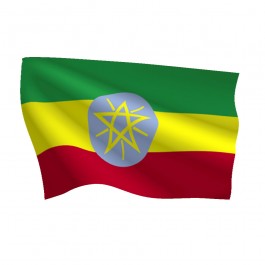
Internet Freedom in Ethiopia: Firmly gripped on(line) communications
As a country with one of the lowest levels of ICT use in Africa, Ethiopia’s online presence is further hampered by regressive laws on surveillance and interception of digital communications. The country’s sole service provider, the state-owned Ethio Telecom, makes it easy for government to monitor and control citizens’ communications.
Unlike Ethiopia, all the other countries in the East African region have opened up their telecommunications sector to multiple players, which has contributed to increased ICT access levels. See table below indicating number of service providers per country in East Africa.
| Country | Number of Mobile/Fixed Line service providers | Number of Internet Service Providers |
| Burundi | 4 | 8 |
| Ethiopia | 1 | 1 |
| Kenya | 4 | 32 |
| Rwanda | 4 | 10 |
| Tanzania | 12 | 40 |
| Uganda | 7 | 30 |
Ethiopia like other countries in East Africa [See Regional summary],has passed numerous laws that contradict its constitution in the areas of free speech, privacy and freedom of expression online
“Everyone has the right to freedom of expression without any interference. This right shall include freedom to seek, receive and impart information and ideas of all kinds, regardless of frontiers, either orally, in writing or in print, in the form of art, or through any media of his choice.”
Article 29 of the Ethiopian Constitution
Laws that pertain to the media, anti-terrorism, and telecoms fraud do more to detract from the rights of citizens than they do to protect them. These laws also give overwhelming powers to state organs to interfere with citizens’ online freedoms, with limited judicial or legislative safeguards. The overbearing mandate held by the Information Network Security Agency (INSA) and the National Intelligence and Security Service (NISS), allows for rampant invasive monitoring and surveillance of mobile networks and internet, mainly targeted at those known or perceived to be critical of the one-party regime. This has prompted widespread self-censorship among online users as the penalties are tough.
The law restricts the use of voice-over-internet protocol services such as Skype and Google Talk, which undermines citizens’ internet rights and reinforces the position of the sole service provider.
The government justifies these stringent controls on the telecoms sector and the affronts to online freedoms to a need to prevent threats to the country’s socio-economic progress and political stability. Most recently, on April 25, 2014, six bloggers of the independent activist group ‘Zone 9’ and a prominent Ethiopian journalist were arrested for allegedly working with foreign organisations and rights activists through “using social media to destabilise the country.” See article here. The group, which has a strong following on social media, had temporarily suspended their activities earlier this year after accusing the government of harassing their members.
Although the National ICT Policy of 2009 lists encouraging public participation in political processes among its objectives, it offers no protection to those who criticise the state nor does it stipulate the ways in which ICT can be used by citizens monitoring governance and transparency.
Despite these restrictions in the online sphere, the country experienced a surge in access to ICT with mobile subscriptions tripling from 6.8 million subscribers in 2010 to 20.5 million subscribers in 2012. Internet usage is estimated at 1.5% of the country’s population of just under 90 million.
The Internet Freedom in East Africa Regional Summary Report indicates a growing demand for internet services throughout the region, but for Ethiopian citizens, the monopoly by Ethio Telecoms and rampant intrusion into citizens’ communications severely limit citizens’ internet freedoms.
Read more on the status of the policies, legislative environment, and threats to online freedoms in Ethiopia in the 2014 Internet Freedom in Ethiopia Report prepared by CIPESA as part of the OpenNet Africa initiative.
Internet Governance Forum (IGF) 2013
The annual Internet Governance Forum (IGF) today opened in Bali, Indonesia. Taking place from October 22-25 2013, the main theme of this year’s forum is ‘Building Bridges: Enhancing Multi-Stakeholder Cooperation for Growth and Sustainable Development’.
An initiative of the United Nations, the IGF is a multi-stakeholder dialogue forum open to representatives from Government, NGOs, academia, private sector, as well as any other entities and individuals interested in Internet Governance issues.
CIPESA is participating in the forum in events organised by the Association for Progressive Communications (APC), of which it is a member. Read more about APC’s participation at the IGF here.
Furthermore, CIPESA is also participating in events as part of the Cyber Stewards Network. Read more about the network’s work during the IGF here.
Information about the IGF is available here.
CIPESA, Partners to Host Uganda Internet Governance Forum 2013
The Collaboration on International ICT Policy in East and Southern Africa (CIPESA) in partnership with the Internet Society Chapter Uganda and the ICT Association of Uganda (ICTAU) will host the Uganda Internet Governance Forum (UIGF) at the Hive Colab, Kamyokya on September 18, 2013.
The one-day Forum, whose theme is “Harnessing Internet Development in Uganda: Connecting the last mile”, is a multi-stakeholder event that involves representatives from government, civil society, academia, private sector entities and individuals interested in Internet Governance (IG) issues.
The objectives of this Forum are to discuss obstacles to internet access in Uganda, establish the key current internet governance issues relevant to the country, and build consensus on national and regional positions around IG issues. The national forum will also discuss the outcomes from the regional East Africa Internet Governance Forum held in Burundi last month.
Since its inauguration in 2006, the UIGF has continued to discuss and address internet policy issues in Uganda and East Africa. The proceedings of this year’s Forum will also be presented at the Second African Internet Governance Forum to be held in Nairobi September 24-26, 2013 and the global Internet Governance Forum in Bali, Indonesia October 22-25, 2013.
Tentative Programme
| Time | Activity | Speaker/moderator |
| 08:00am – 08:30am | Arrival and registration of participants | ISOC Uganda |
| 08:30am – 08.45am | Welcome Remarks | Lillian Nalwoga |
| 08:45am – 09:00am | Keynote Address | Dr. David Turahi, Director for Information Technology and Information Management Services – Ministry of ICT] |
| 09:00am – 09:30am | Presentation: Online discussions report | Daniel Nanghaka (ISOC Uganda) |
| 09:30am – 10:00am | Q&A session | Sarah Kiden (ISOC Uganda) |
| 10:00 am – 10:15am |
Morning break |
|
| 10:15am – 11:15am | Panel discussion (15 mins each): – Achieving affordable internet access in Uganda – infrastructure and affordability; what have we achieved so far and how can we utilise the existing infrastructure | Mr. Bob Lyazi, Director RCDF – UCC (TBD)Mr. Mike Barnard, Director – Uganda Internet Exchange Point (UIXP)Mr. Julius Torach, Director of egovernment, NITA – UJoseph Munuulo, Systems Administrator – Uganda Registration Services Bureau. Hari Kurup – Roke Telecom |
| 11:15 am – 11:45am | Q&A session and discussion | Sarah Kiden |
| 11:45am – 12:45pm | Panel Discussion (15 mins each): Online freedoms – Privacy, data protection, surveillance and censorship: what needs to be balanced? | Mr. Peter Kahiigi, Director Information Security – NITA – UMs. Ashnah Kalemera, OpenNet Africa Initiative.Mr. Peter G. Mwesige, Director Africa Center for Media Excellence. |
| 12:45pm – 01:15pm | Q&A session and discussion | Mr. Albert Mucunguzi – ICTAU |
| 01:15pm – 02:00pm |
Way forward, closure and Lunch |
Lillian Nalwoga |
See past reports from the Uganda IGF here: 2011 Forum Report, 2011 Online Discussions and 2012 Forum Report.
See past reports from the East Africa IGF here:
Africa Internet Summit Opens Next Week in Zambia
Taking it to the Summit: AFRINIC and AfNOG to host the 1st Africa Internet Summit – AIS’13 – from 9-21 June 2013 in Lusaka, Zambia
The much-awaited Africa Internet Summit (AIS) will be held in Lusaka, Zambia, on 9-21 June. The meeting will be held at the InterContinental Hotel in Lusaka, Zambia. The focus this year will be the role and impact of the Internet in African development. The brainchild of AFRINIC, the Regional Internet Registry for Africa, and the African Network Operators’ Group (AfNOG), the Africa Internet Summit is the premier multi-stakeholder event combining conference, training and networking for the Internet industry. The annual summit attracts internationally renowned speakers to share knowledge and experiences on technology developments, changes, uses and effects. Experts from different sectors, both public and private, ICT Industry leaders and technical experts including Internet Service Providers (ISP), government, regulators, academia, business, civil society, and interested groups, among others are expected to attend this major event. It is a great opportunity for networking among peers and businesses.
The AIS addresses the current and future needs of operators from the ICT industry. It is open to members and entrepreneurs in ICT, the business community and civil society. The AIS is focused on popular and emerging ICT industries such as mobile telephony and its impact around the world. It is the ideal platform for networking and keeping abreast with cyber security. “While the Internet will remain at the centre of the discussions, workshops and various meetings, the event will also deal with other important matters relating to emerging technologies, particularly mobile telephony, their use, and how they can contribute to both social and economic development in Africa. The forum thus aims at meeting the ever-changing expectations of the ICT Industry and goes beyond core IP engineering to integrate the real world use and impact of IP technologies. The AIS includes sessions that cover business and technical aspects of the Internet: Policy, Content and Names, Internet Numbers, Research, Infrastructure, Capacity building, and Security” says Adiel Akplogan, the CEO of AFRINIC.
Please contact Mrs Vymala Thuron [email protected] if you require any more information or have any questions.
For more information on the Summit please visit our websites: http://www.internetsummitafrica.org/