
Mapping the Impact of Digital Technology from Network Disruptions to Disinformation

By Rocio Campos |

Signed by African journalists during a United Nations Educational, Scientific and Cultural Organization (UNESCO) seminar in May 1991, the Declaration of Windhoek is a statement of free press principles that led to the proclamation of World Press Freedom Day (WPFD) on 3 May by the UN General Assembly in 1993.  This year, the Global Network Initiative(GNI) is proud to join UNESCO, the African Union, and the Government of Ethiopia for the 26th celebration of WPFD in Addis Ababa under the theme, “Media for Democracy: Journalism and Elections in Times of Disinformation.

On 3 May, GNI Policy Director Jason Pielemeier and representatives from GNI members the Committee to Protect Journalists (CPJ), Collaboration on International ICT Policy for East and Southern Africa (CIPESA), Facebook, and the International Media Support (IMS), together with the Ethiopian journalist Abel Wabella will participate in the session: “Understanding Electoral Information Flows: Mapping the Impact of Digital Technology from Network Disruptions to Disinformation.” This workshop will build on an earlier colloquium organized by GNI and UNESCO titled Improving the Communication and Information Ecosystem to Protect the Integrity of Elections.

In 2019, 62 countries will elect leaders who will govern 3.28 billion people worldwide. Hence, it is paramount to understand the impacts of digital technology on information flows during elections and bring to the table the perspectives of different stakeholders.

Are Transparency and Access to Information Enough to Secure Free Elections?

According to UNESCO “Internet and digital technologies allow candidates a direct means by which to communicate with the voting public. However, some digital technologies used to influence people’s choices escape scrutiny — such as whether, for example, advertising complies with the rules of electoral authorities. Without effective access to information and transparency, the integrity and legitimacy of elections can be compromised. We need technology companies and governments that are more transparent, and that respect the rules and regulations of elections, in order to guarantee free and fair elections.”

GNI information and communications technology (ICT) company members face increasing orders from governments to disrupt networks and restrict access to Internet services. Such orders often take place during protests or elections with significant consequences for users and journalists around the world. GNI members (ICT companies, human rights and press freedom organizations, academics, and investors) work to counteract these trends and protect freedom of expression and privacy rights in a variety of ways. For instance, on the issue of network interference, Netblocks’ Internet observatory has collected evidence of blocking of a political party website in Pakistan in the 2018 election and CIPESA released a report that documents the relation between network disruptions and elections in Africa. Others like the #KeepItOn coalition have developed infographics guiding users on how to install Virtual Private Networks (VPNs) anticipating Internet disruptions, as seen in the Nigerian election last February.

Elections have also become the focus of disinformation campaigns, making online platforms vulnerable targets for the dissemination of divisive and false narratives. Multistakeholder engagement can play a key role to confront this evolving assault on the Internet affecting democratic processes. In July 2017, Google and Jigsaw unveiled Protect Your Election with free tools to help voters get accurate information in the Kenyan election.[1] In the U.S., Pen America recently released a report, which analyzes efforts to counter fraudulent news in the 2018 midterm election, stressing the importance of social media platforms, candidates and political parties stepping up efforts to keep fraudulent news from polluting the 2020 election cycle. Research centers like the Center for Data Innovation are discussing the use of Artificial Intelligence (AI) to fight disinformation in European elections, while organizations like Freedom House have developed tools that estimate Internet censorship, i.e., Internet Freedom Election Monitor.

GNI‘s session will take advantage of the expertise of panelists and participants to map the different ways in which digital technology impacts election-relevant information flows, as well as the inter-relationships between these impacts. The goal is to help policymakers, companies, elections administrators, elections observers, media, and other stakeholders identify and mitigate risks, improve planning and coordination, and enhance transparency around their efforts to support elections. Active multistakeholder engagement can play a key role to strengthen transparency and access to information and prevent them from being compromised during elections.

Don’t miss GNI’s panel on 3 May at 14:00–15:30 EAT and follow IMS’ @andreasr | Addis Zeybe’s @Abelpoly | CIPESA’s @ChewingStones | CPJ’s @muthokimumo ‏| Facebook’s @emigandhi | GNI’s @pielemeier #WorldPressFreedomDay

Relevant resources:

[1] See: Freeman, Bennett, Shared Space Under Pressure Business Support for Civil Freedoms and Human Rights Defenders, p.74
This article was originally posted here

CIPESA Submits Comments to Uganda Communications Commission on Improving Access to ICT for Persons With Disabilities

By Daniel Mwesigwa |

Last year, Uganda’s communications regulator commissioned a study to establish the status of access and usage of Information and Communications Technology (ICT) by Persons With Disabilities (PWDs). In response to a call for comments, CIPESA made submissions to the commission, which could help various government agencies to devise strategies that meaningfully improve usage of digital technologies by PWDs.

According to Uganda’s statistics bureau, persons with disabilities comprise 16% of the country’s population of 37.5 million. However, they face various limitations in accessing and using ICT tools and services. The draft report of the study commissioned by the Uganda Communications Commission (UCC) shows that national ownership of a radio and a mobile phone among PWDs was high at 70% and 69% respectively. Ownership of fixed-line telephones, desktop computers and laptops was very low at 0.5%, 1% and 3.9% respectively. However, 15% of respondents’ households had access to the internet.

Below are highlights from CIPESA’s submission:

1. Disaggregate results by type of disability

While the report highlights respondents’ type of disability (61% had a physical disability, 31% were visually impaired, and 2% had a hearing impairment), it does not show how the nature of disability affects access and usage of ICT. Persons with disabilities are not a homogeneous group and the nature of disability influences how they may perceive, be able to access and to use ICT. It may not be possible therefore to address the distinct needs of different categories of PWDs if data is not disaggregated by type of disability – as indeed it should be disaggregated based on gender, location, income, among other demographics.

2. Comparative analysis of data

The report provides ICT access and usage figures for PWDs (e.g. 69.4% mobile phone ownership; 3.9% had laptop computers and 1% desktop computers; 15% of households had access to the internet). However, these numbers need to be presented and analysed alongside overall national statistics on access and usage if they are to offer direction on the remedial actions needed.

3. Taxes deepening exclusion

Only 14% of respondents had access to a bank account compared to 86% that accessed financial services through other mechanisms such as mobile money, and village savings and loan associations. One third (33%) had access to mobile money, which is lower than the national average of 55%. Further, 41% of the respondents lacked access to any form of financial services, compared to the national average of 22% that is financially excluded.

Worryingly, majority of PWDs (66%) said their use of social media had reduced with the introduction last July of the Over The Top (OTT) tax, while 26% said they were no longer using social media. Only 8% had not changed their usage levels. According to the report, 52% of PWDs access social media on their phones, while 12% access it on their computers.

As CIPESA has previously found, OTT platforms and mobile money networks had considerably eased the lives of PWDs. For example, platforms like WhatsApp were used to disseminate critical information among individuals with hearing impairment before the added cost of using social media rendered them unaffordable to many, who already faced challenges in finding employment and often relied on financial support from others. For UCC and other relevant Uganda Government institutions, these findings should not be taken lightly and should inform policy in this area.

4. Awareness and usage of assistive technologies

Assistive technologies are products, devices, or equipment, used to maintain, increase, or improve the functional capabilities of individuals with disabilities. A very concerning finding in the Report is that 76% of PWDs were not aware of the low-cost Assistive Technologies like manual Perkins Brailler, hand-held magnifiers, hand frames/slates and communication boards. Only 14% of respondents were aware of the Perkins Brailler yet its usage was low at 4%. Just 13% of the respondents were aware of magnifiers yet only 2% used them. Issues of awareness of these technologies, their cost and availability, are apparent. The UCC should offer subsidies for assistive technologies through the universal service access fund, the Rural Communications Development Fund (RCDF).

5. Privacy and data protection

The right to privacy is a core entitlement for every individual under article 27 of the Uganda Constitution. The Persons With Disabilities Act, 2006, section 35 protects PWDs from arbitrary or unlawful interference with their privacy. However, the report does not assess PWDs awareness of their privacy rights or data security skills. Such an assessment is necessary to inform remedies including on capacity development.

6. Public and private sector compliance

Consistent with international conventions and instruments such as the UN Convention on the Rights of Persons with Disabilities (CRPD) and the Sustainable Development Goals (SDGs), as well as domestic laws such as the national constitution, Persons With Disabilities Act 2006, and the National IT and Disability Policy, the emphasis on inclusion and non-discrimination for PWDs cannot be overlooked if the country is to attain her development goals.

As the government works towards implementing the ICT and Disability Policy, the emphasis on Website Accessibility Guidelines (WAG) can be fast-tracked by auditing compliance with the 2014 ‘Guidelines for Development and Management of Government Websites’ which were developed by the National Information Technology Authority Uganda (NITA-U). Entities that do not comply with universal accessibility standards should be sanctioned.

Further, the Equal Opportunities Commission, working with other relevant entities, should require government ministries, departments and agencies (MDAs) and private enterprises which offer public services to prepare annual statements in which they report on how they have worked towards increasing accessibility and inclusiveness for PWDs.

The full submission can be read here.

Is the future of the internet in Africa fractured?

By Daniel Mwesigwa |
At its founding, in the late 80s, the internet promised to democratize information, level uneven grounds, and the destroy barriers associated with distance, space, and time. Through promoting communication, coordination, integration at a pace and scale beyond the ability of any government to halt, the connectivity set a foundation for dichotomies so often aligned with colonialism, imperialism, and globalization.
Today the internet is not just about inscrutable abstracts on the potential merits of its ubiquity but rather its impact and probable effects on a global scale. If anything, the weaponization of algorithms, speech, objectivity, and people has been pronounced in the recent past. For example, Facebook and Cambridge Analytica have accepted responsibility for abetting electoral malfeasance in America and other states by enabling the manipulation of electorates through an à la carte of sensational news and unsubstantiated political advertising only meant to swing and tilt public opinion.
That is why it might be hard to assess whether governments will continue to sit back and watch powerful technology companies from the west continue to prowl over strategic industries in their backyards, or whether they will take to the ‘commanding heights’ to steer the internet’s governance, at the expense of an open and decentralized internet, within their jurisdictions.
But how did we get there? An Xiao Mina’s instructive take on the potential effects of censorship on the future of the global internet and the attendant effects on the public sphere predicts not only deeper digital divides but also bolder and even more daring abuses to democracy by nation-states. She’s not alone, Google’s former chairman, Eric Schmidt, and internet theorist and scholar Evgeny Morozov have made similar pronouncements: the internet is splintering due to policy dilemmas in the realms of sovereignty and globalization.
In spite of all; bad laws, technical upheavals, spam, and disruptions, the popular narrative is that we could not kill the “global” internet even if we tried. However, through technical disruptions (covert and overt) and an array of legal and regulatory guises, governments in Africa have institutionalized attacks on the internet at a level not experienced before.
Censorship is arguably one of the leading factors threatening the future of the internet. And China is the pariah. It has been particular to institutionalize censorship through remodelling its own internet reality in what the Communist party president, Xi Jinping, calls ‘internet sovereignty’. The Republic augmented her stringent controls on free speech and tightened media regulations in the real world onto the internet through even tighter controls on content, privacy and security. Through ambitious projects like the infamous “Great Firewall” and the more recent proposal to create a dystopian future where citizens are assessed for the good and bad through a “national social rating system”, China has asserted her position on her internet governance despite the internet’s original ideals on openness and decentralization. Indeed, China’s ethos on “internet sovereignty” are being evangelized and promoted in fragile, and weak nation-states. Zimbabwe is reported to be in the process of adopting a Chinese sanctioned facial recognition system to surveil high traffic areas such as airports and malls. For its renowned poor human rights record, such surveillance capabilities pose a danger to a free society.
Further, African governments have been renown for clandestinely shutting down the internet for all sorts of reasons—twice in Uganda during the 2016 presidential elections and over three months in the English-speaking region of Cameroon—usually in defence “national security”. Such censorships have been arbitrarily executed despite the punitive economic costs associated. Some governments have even flirted with the idea of developing local alternatives to popular social networking sites such as Facebook and Twitter so as to have full control over the knobs of social media must the need arise.
But also the censorship has been effected through particularly prohibitive laws meant to derail social media use and charge social critics and other dissenting voices. For example, the cybercrime laws of countries such as Tanzania give the police the mandate to arrest anybody they deem in breach of cyber laws without the necessary legal oversight. Tanzania has introduced a $900 tax for bloggers, Uganda has slapped a “gossip tax” on social media use and other OTT services, Zambia has levied a cost on internet voice calls. If the feel of the contours is anything to go by, censorship has taken unique and complex forms. It seems like many African governments are operating from the same template.
Meanwhile, if we might on what the future of the internet might look like, despite the attacks, we know it will largely be multimedia and highly, rather unsurprisingly, localized. The internet in the past faced severe infrastructural deficits. For example, before the first landfall of transatlantic fibre optic cables at the coast of East Africa in 2009, the internet was not only accessed through more expensive options such as satellite links, generally suffered lower speeds and was inaccessible with the greater part of the region.
The global interconnection through the fibre and terrestrial optic cables enabled further access and connectivity within the region. Most remarkably, local peering and Content Delivery Networks (CDN) increased internet capacity. Loosely defined, local peering means that instead of a webpage directly loading from some server located in an obscure location in North Carolina, a local copy of the same data would be stored on servers hosted locally, in Africa. This bolsters the user experience and also enables the reduction of costs associated with extending the internet to the last mile.
Of course, such developments are welcome but technology companies and giants predominantly from Silicon Valley have taken over these alternative connectivity methods to further affordable internet access to the “last mile”. However, they also have deep financial and corporate interests at heart. In fact, content companies such as Facebook are laying more fibre optic cables than traditionally renowned telecommunications carrier/infrastructure companies. Facebook has laid its first fibre in sub-Saharan Africa, in Uganda at a cost estimated at $100 million. Google had previously done the same in Uganda and Ghana. Overall, major countries seem to have some sort of connectivity experiment going on involving the use of low frequency, wifi hotspots, rockets and other novel technologies—again, spearheaded by Western tech giants. Such moves have raised concerns on issues regarding net neutrality, data protection and privacy, local content, among others. Technology companies seen through the lenses of benevolence might appear as benign catalysers of internet access. Yet by mere ownership of the plumbing that powers the internet effectively makes their services synonymous with the open internet itself. Indeed, it would not be surprising to find people who think Facebook is the internet. Technology companies could not only influence the internet’s direction but also act as a chokepoint, especially when deciding what geographical areas or income groups to serve or not.
While globalization was mostly lauded for is the discovery of previously unchartered territories and the opening of new frontiers, a lot of how it happened was characterized with pillage and violence—often at the expense of conquered states’ sovereignties. The globalization of the world through the internet promised trade and commerce, education and research, government and service delivery through instantaneous communication, on levelled grounds. But many of the paradigm shifts have enabled good use of the internet insofar as they have enabled abusive, problematic use. Now governments seem to have taken centre stage in steering what directions their internet takes, powerful corporations, on the other hand, have grown so powerful since they can algorithmically control and mediate the internet’s content, and emotions, that they threaten democracy and other virtues of good governance, especially in fragile states. As for the users, disparate realities of the internet look not so far away, some Facebook (through Free Basics) is touted to better than no Facebook (or internet) at all. Balkanization of the internet is at rather happening at an unprecedented pace. Is the future of the internet in Africa fractured?
This article was first published on December 19, 2018, African School on Internet Governance

NetBlocks and the Internet Society Launch Tool to Calculate the Cost of Internet Censorship Worldwide

News Update |

A new tool to support internet freedom is being launched by NetBlocks and the Internet Society, a global non-profit organisation dedicated to the open development, use and evolution of the Internet.

Launch COSTRun the Cost of Shutdown Tool

The organisations have partnered up to build COST, a tool that seeks to measure the economic cost of internet disruptions to support the adoption of rights-based internet governance around the world.

The Cost of Shutdown Tool (COST) launches today to mark the 70th Anniversary of the adoption of the Universal Declaration of Human Rights enacted by the United Nations on December 10, 1948.

COST is a data-driven policy tool that automates the task of assessing the economic impact of internet shutdowns, mobile data blackouts and social media restrictions including throttling.

COST performs calculations by country, type of disruption and length of time, combining thousands of development indicators in real time to offer insights into the impact of internet governance and misgovernance on sustainable development, human rights and digital prosperity.

“This tool will empower the next stage of data-driven advocacy. By calculating numbers in real time, COST will allows us to communicate to governments and technology companies on how much revenue they’re losing when they disrupt the internet. We hope by the tool will make governments think twice before threatening internet freedom, ” Hannah Machlin, Global Advocacy Manager for the NetBlocks Group, said.

“ We believe the opportunities brought by the Internet should be available for everyone and a tool such as COST can help governments understand the economic impact of shutting down or blocking the Internet.  While we can’t quantify the human cost of switching off the Internet, this helps quantify the economic cost,” explains Constance Bommelaer de Leusse, Senior Director Global Internet Policy for The Internet Society.

The COST tool is built upon established research papers published by the Brookings Institution for global coverage and a specialised model by CIPESA for sub-Saharan Africa, taking into account indirect economic factors and informal economies that play a major role in the region. Economic indicators are integrated from open data sources including the World Bank, ITU and Eurostat.

You can read more about it here.

East and Central Africa: More Advocacy Needed for Progressive ICT Laws and Regulations

Statement |
Civil society representatives, lawyers, and journalists from East and Central Africa have called upon their governments to develop policies that protect citizens’ digital rights and promote the use of the internet for free expression and for pursuing economic and education opportunities. The call was made amidst growing concerns that an increasing number of African countries are taking measures that restrict rather than promote the use of the internet. These measures include introduction of taxes that hinder access and use of  Information and Communications Technology (ICT) and laws that hamper freedom of expression through ICT.
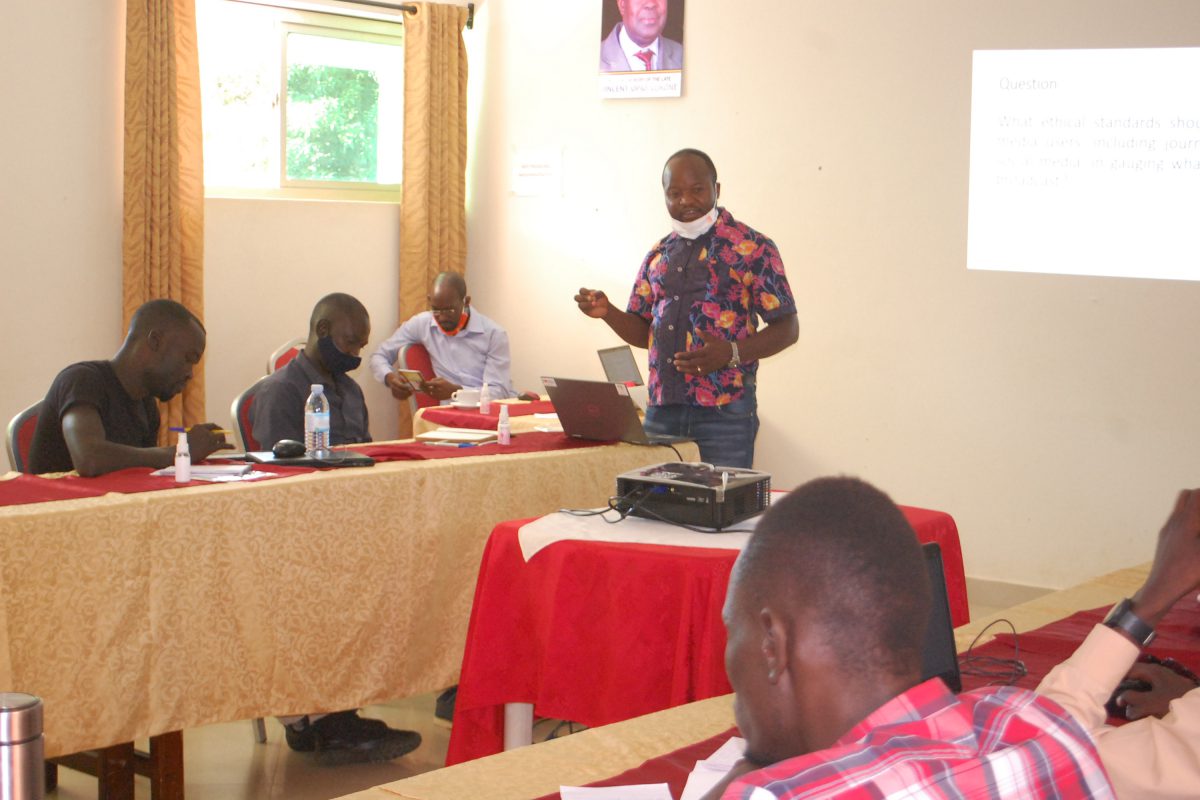
The call was made following a workshop on ICT Policy and Advocacy for actors from East and Central Africa, which took place in Goma, Democratic Republic of Congo. Hosted by the Collaboration on International ICT Policy for East and Southern Africa (CIPESA) and Rudi International on November 4–6, 2018, alongside the Haki Conference, the workshop drew 29 participants from Burundi, Kenya, DR Congo, Rwanda and Uganda.
Participants noted that the region faces similar challenges such as a lack of data protection laws, mass data collection efforts by governments and business entities, rising self-censorship by individuals and groups who fear reprisals for their online activities, gender-based cyber violence, and high perceptions of undue government surveillance on citizens’ communications. Moreover, some countries in the region have registered blockage of critical websites at the instigation of state authorities, while intimidation and harassment of independent bloggers and activists remain rampant, which affects freedom of expression and the free flow of information online.
In particular, participants urged the Rwanda government to amend its law on interception of communications to strictly define officers who can apply for warrants for monitoring of communications, to strengthen judicial oversight over interceptions activity, and to strictly guard the possibility for mass electronic surveillance.
Burundi was urged to enact a strong access to information law that requires state agencies to pro-actively release information, protects whistleblowers, and effectively advances citizens’ access to information online and offline.
Meanwhile, Burundi, DR Congo, Rwanda and Uganda, were urged to speed up the enactment of comprehensive privacy and data protection laws that strongly protect the integrity of users’ data and severely punish those who misuse such data. None of the countries in the region has a data protection law, although all require mandatory registration of SIM cards and are undertaking various exercises to collect massive amounts of citizens’ data.
In DR Congo, the lack of up-to-date laws to govern the telecommunications sector was noted with concern. Participants called on the National Assembly to expedite the enactment of the bill to update the outdated 2002 law on telecommunications, which is currently before the legislature. However, the parliament should widely consult civil society and the private sector and meaningfully integrate their inputs into the law to be adopted. Moreover, the DR Congo government should enact other ICT-related laws, such as on cyber crime and data protection; and take decisive measures to increase access to affordable fibre around the country, particularly in rural and under-served areas, and meaningfully invest Universal Service Funds in improving broadband access.
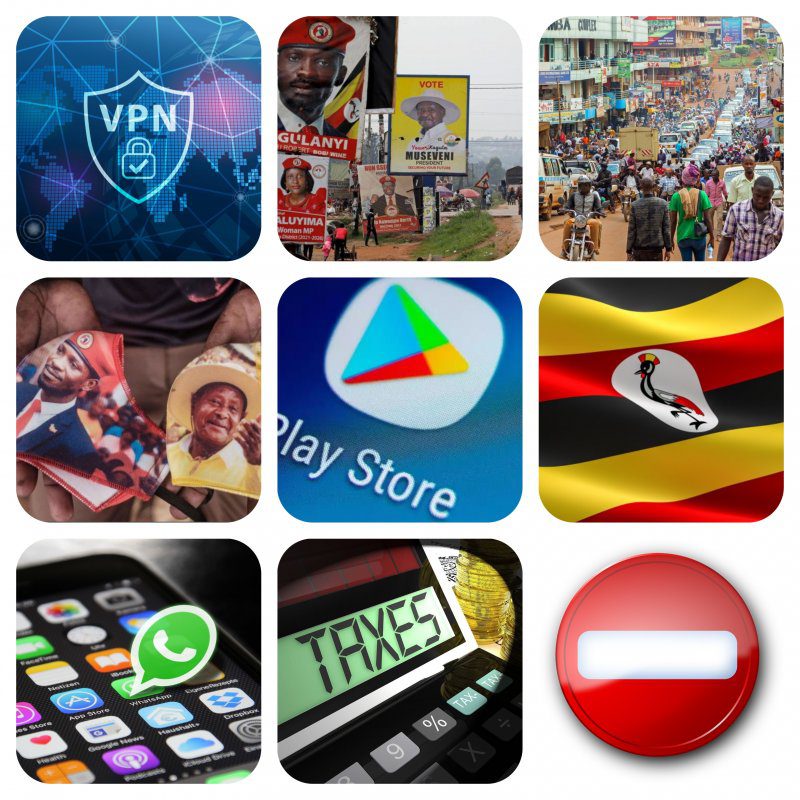
The region has this year seen the introduction of online content regulations that undermine the use of ICT. Tanzania and Uganda have started licensing online content producers at a fee, while in July, Uganda set a precedent by introducing taxes to access social media sites including Facebook, Whatsapp and Twitter. The DR Congo, which has ordered various internet disruptions in the last two years, also issued regulations in 2018 that require online publishers to register. .
Indeed, in the wake of these developments, participants called on states to develop laws that robustly stimulate the affordability and usage of the internet and related technologies as opposed to curtailing access to digital communications and stifling freed expression and access to information. The participants also shared their views at DR Congo’s first digital rights conference that concluded with the issuance of the Goma Declaration (French). The training in DR Congo was part of the CIPESA-run OpenNet Africa project (www.opennetafrica.org) which is working to grow the network of individuals and groups that work on advancing internet freedom and building their capacity to engage in digital rights advocacy.