The Ugandan State Should Respect the Right to Peaceful Protest

Statement |

The Collaboration on International ICT Policy for East and Southern Africa (CIPESA) condemns today’s arrest of peaceful and unarmed protesters by Ugandan police and security forces.

The protesters are mostly young people who had for weeks vowed to march peacefully to Parliament to protest against corruption and abuse of office. This followed months of online activism in demand for transparency and accountability from duty bearers. The protest was also inspired by the #RejectTheFinanceBill2024 picketing in neighbouring Kenya.

Among the demands of today’s protesters were the resignation of Speaker Anita Among and the four Commissioners who awarded themselves “service awards”, as well as the reduction of the size of Parliament and the allowances of Members of Parliament (MPs).

Ahead of the protest, law enforcement authorities responded, typically, by announcing that they would not allow it because they had intelligence that “criminal elements” wanted to take advantage of it to disrupt public order and incite violence. They added that they would not allow demonstrations in crowded cities or towns because of the threat of disruption of commercial activities.

In a national address on July 20, President Yoweri Museveni weighed in with a warning to the protesters that they were “playing with fire” and that “we cannot allow you to disturb us”.

What has followed is the wanton disregard of the Constitution that we have witnessed today. Up to 60 protesters have been arrested, many of them violently.

Today’s clampdown on peaceful protesters comes on the heels of a worrying trend of arresting individuals that use social media such as Facebook, X, and TikTok to criticise the government. These developments present a major threat  to citizens’ enjoyment of the right to freedom of expression.

The right to “assemble and to demonstrate together with others peacefully and unarmed and to petition” is protected by Article 29 of the Constitution of Uganda. We are aware that there are limitations on such rights, but Article 43 of the Constitution is also very clear that such limitations must be “acceptable and demonstrably justifiable in a free and democratic society”.

The Constitutional Court has previously held that the Police have no powers to prohibit a demonstration from proceeding but a duty to regulate it so that it happens within what is allowed by law. It is in that spirit that the Court struck down Section 8 of the Public Order Management, which Police had previously used to stop or justify restrictions on public meetings. 

The Court has also rightfully held that inconvenience, disruption or annoyance from a peaceful protest must be tolerated in the interest of protecting the rights to freedom of expression and assembly.   

CIPESA urges authorities to release all the peaceful protesters who have been arrested today, and to guarantee that all citizens can enjoy the right to peacefully demonstrate and petition leaders.

ABOUT CIPESA

The Collaboration on International ICT Policy for East and Southern Africa (CIPESA) works to defend and expand the digital civic space to enable the protection and promotion of human rights and to enhance innovation and sustainable development.

For further information, please contact [email protected]

Civil Society Joint Brief on the UN Global Digital Compact

Joint Statement |

The Collaboration on International ICT Policy for East and Southern Africa (CIPESA) has joined several civil society organisations and individuals in a joint brief on the United Nations (UN) Global Digital Compact (GDC). The signatories to the joint brief have actively engaged in the GDC process since its inception and express concerns regarding the state of the GDC from a human rights perspective.

The joint brief is prompted by the recent decision of Member States to break the silence procedure on the UN GDC Revision 3, initially set for 16 July 2024, at 3:00 pm EDT. Notably, unlike all previous revisions, Revision 3 has not yet been made publicly available.

Countless hours have been dedicated over the past two years to inform and guide the GDC  process, including participating in online and onsite consultations, conducting deep dives, hosting events, and engaging in conferences to center the discussion on those most impacted by digital policies. It is critical for the UN and its Member States to openly address how technology affects its mandate and efforts to promote human rights, peace and security, the rule of law, and development.

However, the current GDC outcome document does not reflect the realities witnessed on the ground and in diverse communities across the Global Majority and Global North. It falls short of addressing the critical issues faced daily.

Find the full brief here, originally published on the Access Now website.

CIPESA Partners with AfricTivistes for the Forum on Internet Freedom in Africa 2024 (FIFAfrica24)

Announcement |

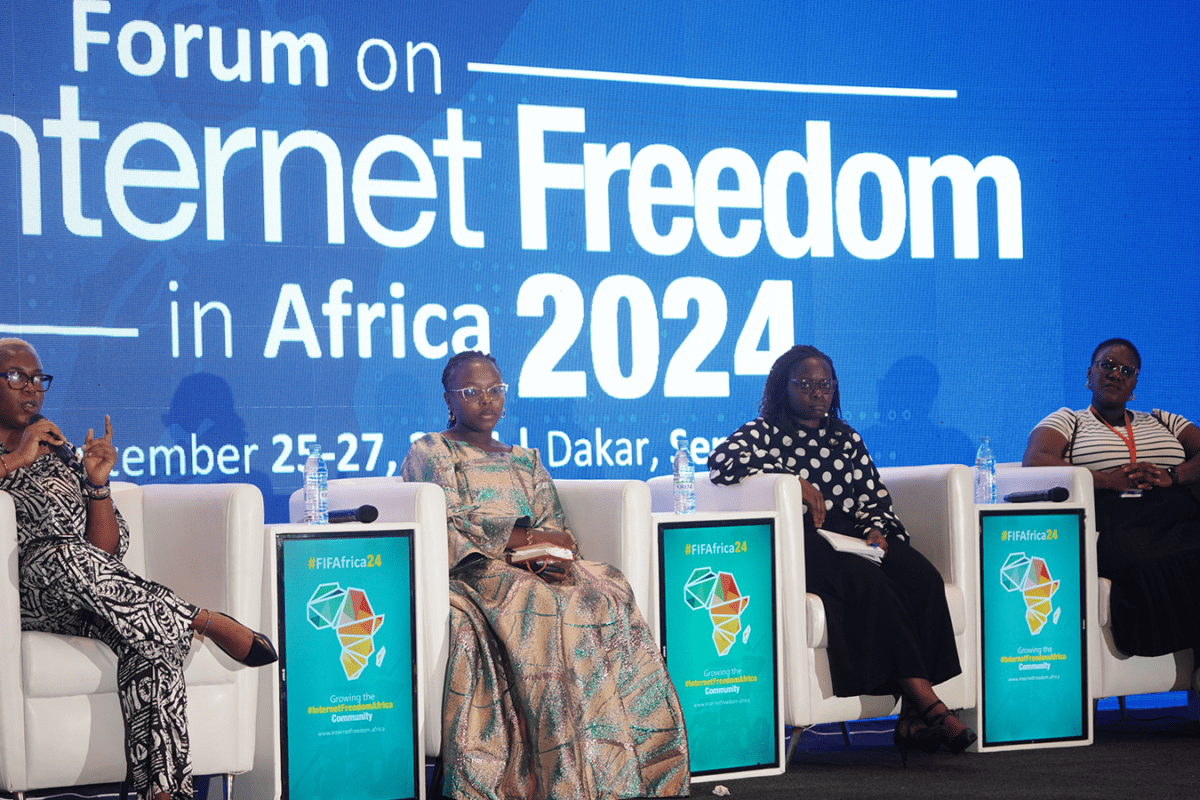
The Collaboration on International ICT Policy for East and Southern Africa (CIPESA) is pleased to announce a partnership with the Dakar-based AfricTivistes for the upcoming Forum on Internet Freedom in Africa 2024 (FIFAfrica24) set to take place on September 25-27, 2024 in Senegal. This partnership marks a significant milestone in ongoing efforts to advance digital democracy by both entities.

Established in 2015, AfricTivistes – the African League of Cyber-Activists and Bloggers for Democracy is a pan-African organisation that promotes and defends democracy, good governance and human rights through digital means. Across its programs, AfricTivistes works to foster digital transformation and enhanced citizenship in Africa led by change actors.

Indeed, AfricTivistes’ mission resonates with the goals of CIPESA and, ultimately, FIFAfrica, thus marking the foundation for an inclusive, informative, and responsive conference. Through its extensive network of actors, AfricTvistes brings to the Forum regional expertise and an in-depth understanding of advocacy and engagement for civic, social and political transformation.

“This partnership with CIPESA to organise a successful FIFAfrica is essential, as it will enable highlighting the state of participatory democracy in this region of Africa where it faces numerous challenges, and ultimately advance digital democracy by all stakeholders.”, noted Cheikh Fall, President of AfricTivistes.

The CIPESA-AfricTivistes partnership follows in FIFAfrica’s track record of galvanising multi-stakeholder efforts for shared strategies for advancing rights, participation and innovation online. Co-hosts of previous editions have included the Tanzania Ministry of Information, Communication and Information Technology (2023), the Zambia Ministry of Technology and Science (2022), Ministry of Foreign Affairs of Slovenia, Presidency of the Council of European Union (EU) 2021 (2021) and Paradigm Initiative (2020). The 2019, 2018 and 2017 editions of FIFAfrica were co-hosted with the Ethiopia Ministry of Innovation and Technology (MINT), Media Foundation for West Africa (MFWA) and the Association for Progressive Communications (APC), respectively.

This year, FIFAfrica24 – the first edition to be hosted in Francophone Africa – will serve as a key channel that feeds into the way ahead for digital rights in Africa and the role that different stakeholders need to play to realise the Digital Transformation Strategy for Africa and Declaration 15 of the 2030 Agenda for Sustainable Development. The Declaration notes that the spread of information and communications technology and global interconnectedness has great potential to accelerate human progress, to bridge the digital divide and to develop knowledge societies.

FIFAfrica24 objectives:

  1. Enhance Networking and Collaboration:  the Forum provides a platform that assembles African thought leaders and networks working on internet freedom from diverse stakeholder groups.
  2. Promote Access To Information: Since inception, FIFAfrica has commemorated September 28, the International Day for Universal Access to Information (IDUAI), creating awareness about access to information offline and online and its connection to wider freedoms and democratic participation.
  3. Practical Skills and Knowledge Development: The Forum features pre-event practical training workshops for various stakeholders on a range of internet freedom issues, including technical aspects of internet access, policy developments, digital resilience, and advocacy strategies.
  4. Showcase Advocacy Efforts: FIFAfrica provides a space for entities advancing digital rights to showcase their work through artistic installations, photography, reports, interactive platforms and physical stalls with organisational representatives.
  5. Connect Research to Policy Discussions: The annualState of Internet Freedom in Africa report, a themed report produced by CIPESA, has been launched at FIFAfrica since 2014. The report has served to inform policy and advocacy efforts around the continent.
  6. Strategic Networks: FIFAfrica has served as a platform for strategic meetings to be held, offering various African and global networks the opportunity to directly engage with each other and with the extended digital rights community.

We encourage all stakeholders, including policymakers, civil society organisations, technology experts, academics, and members of the media, to join us in Dakar, Senegal, for FIFAfrica24 in person or remotely. Registration is required and can be completed here.

For more information and updates, please visit www.internetfreedom.africa and stay tuned for announcements regarding the event including agenda and speaker line-ups.

Together with AfricTivistes, we are committed to fostering an environment where digital rights are upheld, and internet freedom is a reality for all Africans.

For further information contact [email protected].

Is Foreign Malign Influence Inspiring Digital Authoritarianism in Uganda?

By CIPESA Writer |

A new policy brief by the Collaboration on International ICT Policy for East and Southern Africa (CIPESA) on the deteriorating state of digital rights in Uganda examines whether the east African country is drawing inspiration from China for its brand of digital authoritarianism.

Uganda is ranked as “Partly Free” by Freedom House’s annual Freedom on the Net report, with the biggest contributing factor being the repressive laws governing the digital civic space and surveillance, particularly those that enable internet censorship, network disruptions, and deployment of surveillance technologies such as spyware and video surveillance.

China has been a notable source of support in developing Uganda’s digital communication and other infrastructure. For example, Chinese telecom firm Huawei helped set up a video surveillance system for the Uganda Police, and reportedly aided security agencies to spy on political opponents in the country. China has also organised numerous study tours for Ugandan officials and journalists that are centred on popularising its economic and governance systems.

The brief illuminates how China and its model of governance and state surveillance may be influencing or inspiring retrogressive laws and undermining digital rights in Uganda. It explores the legal reforms necessary to advance digital rights in Uganda and the role that legislators, civil society organisations, human rights defenders (HRDs), and journalists should play.

Uganda has mirrored some practices from China, a country which various global indices consider a leading player in digital authoritarianism. While it is not patently clear whether China has directly influenced legislation in Uganda, the brief notes that “it has arguably inspired some of the legal frameworks and practices that fuel digital authoritarianism in the east African country.”

There is ample evidence indicating that African autocracies are exploiting the adoption of Chinese technology and model of internet controls to roll back democratic gains through surveillance and censorship.

China invested more than USD 110 million in Uganda’s National Backbone Data Transmission Project and also supported the National Fibre-Optic Project. There are suggestions that the national backbone and fibre-optic projects are part of a digital infrastructure that has enhanced the Uganda government’s surveillance capabilities that violate the right to privacy and freedom of expression.

China has continually buttressed its influence over Uganda’s social-economic development through the seemingly no-strings-attached loan schemes that have often been acknowledged and praised by President Museveni. This non-interference policy in the internal affairs of other countries allows their governments greater leeway to suppress dissent and democratic processes without facing criticism or repercussions from China.

By contrast, the Uganda government or senior public officials have during 2023 and 2024 attracted sanctions by the United States of America, the United Kingdom, and the World Bank over governance and human rights concerns. As such, the Chinese no-governance-strings-attached model is criticised for emboldening authoritarian tendencies in the countries it partners with.

However, the brief states that claims of China actively seeking to export its governance model and influencing local laws and practices in Africa are often anecdotal and inconclusive. Moreover, such claims and, often, the evidence they advance, assume that African governments are incapable of developing home-grown systems of governance and thoughtlessly rely on models from other continents.

Recommendations

Uganda should resist all foreign influence and models that promote digital authoritarianism and undermine democracy. The country’s laws must respect internationally recognised human rights standards and promote the use of a free, open, and safe internet.

The brief makes several recommendations, such as:

  • Parliament should strengthen legal and regulatory frameworks by amending or repealing regressive and oppressive frameworks to ensure responsible and ethical use of surveillance technology.
  • Parliament should enact laws that specifically protect journalists, whistle-blowers, human rights defenders, and activists from wanton threats, arrests, and prosecutions over legitimate online communications and activism that advances social accountability, respect for human rights, and good governance.
  • Civil society should conduct evidence-based research into the actions of foreign actors and how they adversely impact local laws, policies, and democratic governance.
  • Various stakeholders, including academia, the media, and lawyers, should engage in public interest litigation to challenge provisions in legislation that limit the exercise of digital rights.

See the full policy brief here.

CIPESA Joins Call Against Internet Shutdowns In Kenya During #RejectTheFinanceBill2024 Picketing

Statement |

The Collaboration on International ICT Policy for East and Southern Africa (CIPESA) has joined the Kenya ICT Action Network (LICTANET), Paradigm Initiative, and Internet Society Kenya Chapter in a call against internet shutdowns in Kenya during the ongoing #RejectTheFinanceBill2024 picketing.

The call states. “We strongly urge the Kenyan government to refrain from enforcing any Internet shutdowns or information controls in response to the ongoing protests against the Finance Bill 2024 through the hashtag #RejectFinanceBill2024. Such measures would infringe on the fundamental rights and freedoms of Kenyans as well as negatively impact Kenya’s economy, democracy, and reputation in the eyes of the international community.”

Kenya’s constitution and international human rights legislation safeguard the fundamental rights to freedom of expression, access to information, and picketing, which would be violated by internet shutdowns, censorship, and other information controls. By preventing citizens from engaging in public conversation and holding the government accountable, internet disruptions subvert democratic processes.

A blackout of the internet in Kenya will have disastrous economic effects for example:

  1. Kenya’s thriving e-commerce business would be severely disrupted. Kenya’s e-commerce market is predicted to reach US$801.4 million (Ksh 103 billion) by the end of 2024. The Internet Society’s Pulse NetLoss calculator estimates that a total Internet outage may cost Kenya’s economy Ksh 810 million (US$6.3m) in lost Gross Domestic Product (GDP) every day.
  2. Millions of Kenyans who depend on these services for daily transactions including banks, would be impacted by the paralysis of the mobile money industry, which includes M-Pesa, which handles over Ksh 6 billion transactions annually valued at over Ksh 6.4 trillion (US$50 billion).
  3. There would be major setbacks for Kenya’s digital startup sector, which attracted Ksh 141.3 billion (US$1.1 billion) in funding in 2022 and would cause investor confidence to decline.
  4. However short-lived, Internet disruptions affect many facets of the national economy and their effect persists far beyond the days on which access is disrupted. They carry reputational risk, hurt investor confidence, disrupt supply chains, and can discourage foreign direct investments (FDI).
  5. The tourism sector, which makes up a sizeable portion of Kenya’s GDP, would suffer because travelers rely mostly on internet connectivity to make reservations and obtain information.
  6. Furthermore, Internet shutdowns would hinder emergency services and access to vital information during crises. They would also damage Kenya’s reputation as a hub for technology and innovation in East Africa, as well as Africa’s Silicon Savannah.

The #FinanceBill2024 has already encountered strong opposition, and in particular, using digital activism. This has prompted the Kenya government to withdraw several contentious clauses. This illustrates the value of having open lines of communication between the public and the government and the influence that public discourse may have.

We urge the government to respect democratic values, have an honest conversation with demonstrators, and answer their concerns transparently.

A peaceful resolution of the current crisis and the maintenance of Kenya’s democratic and economic development depend on keeping lines of communication open and protecting and prioritizing Internet access.

For any clarification and media briefing, contact [email protected]