Uganda: CIPESA Submits Comments on the Computer Misuse (Amendment) Bill, 2022 to Parliament

By Edrine Wanyama |

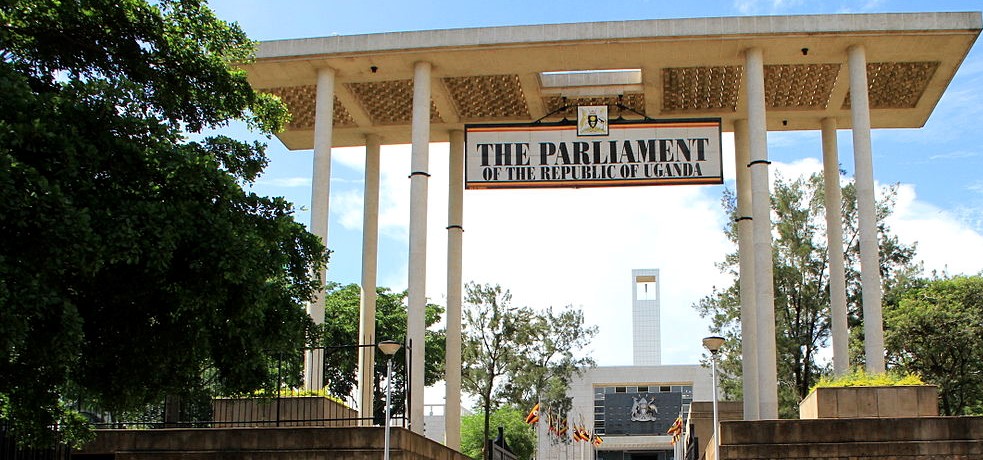
The Collaboration on International ICT Policy for East and Southern Africa (CIPESA) has made a submission on emerging concerns from the proposed Computer Misuse (Amendment) Bill, 2022 (the Bill) to the Parliamentary Committee on Information and Communications Technology. In its submission, CIPESA analyses the changes proposed by the Bill which are a blow to online civil liberties in Uganda.

The private members Bill is seeking to amend the Computer Misuse Act of 2011and  argues that existing laws “do not specifically address regulation of information sharing on social media” or are “not adequate to deter the vice”. The objectives of the amendment are: to enhance the provisions on unauthorised access to information or data; prohibit the sharing of any information relating to a child without authorisation from a parent or guardian; prohibit the sending or sharing of information that promotes hate speech; prohibit the sending or sharing of false, malicious and unsolicited information; and to restrict persons convicted of any offence under the Computer Misuse law from holding public office for a period of 10 years.

While the amendment could be justified by advancements in technology, upsurge in cybercrime, disinformation, and hate speech (clause 4), experience has shown that the law since enactment has been used to suppress digital rights including free expression and access to information.

The underlying provisions of the bill including clause 5 which seeks to prohibit the sending or sharing of unsolicited information through a computer, and clause 6 on prohibition of sharing malicious or misleading information, could be misused and abused by the government and its agencies to curtail sharing and dissemination of information, which would limit freedom of expression and access to information. Moreover, such restriction would counter the ruling by Supreme Court in Charles Onyango Obbo and Another v Attorney General that the penalisation of the publication of false news under Section 50 of the Penal Code is unconstitutional.

The Bill also duplicates existing laws including the Regulation of Interception of Communications Act, 2010 and Data Protection and Privacy Act in as far as it relates to unlawful interception of communications and unlawful access to and sharing of personal information under clause 2 and  prohibition of processing and sharing information about children under clause 2.

Similarly, the Bill proposes the adoption of very punitive and prohibitive penalties which could not only hinder expression and access to information but also transparency and accountability in governance. The penalties proposed stretch to UGX 15 million (USD 3,900), imprisonment not exceeding 10 years, or both for unauthorised access, interception, recording and sharing of information under clause 2. On the other hand, sharing information related to children (clause 3), hate speech (clause 4), unsolicited information (clause 5) and misleading or malicious information (clause 6) are punished with imprisonment not exceeding seven years.

While specifically targeting leaders, Clause 7 of the Bill seeks to bar persons convicted under the Computer Misuse Act from holding public office for a period of 10 years, and to further dismiss convicted personsfrom public offices that they were holding.  In addition to the restrictions under the  Official Secrets Act  it may discourage the disclosure of information by duty bearers where such disclosure would be necessary for enforcing transparency and accountability.

The Computer Misuse Act has been previously used to suppress digital rights including free expression and access to information. For instance, academic and social critic Dr. Stella Nyanzi was arrested for insulting the president in a social media post. In 2019, she was convicted of cyber harassment contrary to section 24 of the Act but acquitted of offensive communications, which is proscribed under section 25. Other individuals who have suffered the wrath of the same law include former presidential aspirant Henry Tumukunde who was arrested over alleged treasonable utterances in radio and television interviews, the Bizonto comedy group who were arrested over alleged offensive and sectarian posts, and author Kakwenza Rukirabashaija who was arrested, detained and prosecuted over offensive communication against the president and his son.

While the need for amendment of the Computer Misuse Act might be eminent to address emerging technologies, the proposed provisions are unfounded and redundant, and stipulate highly punitive penalties. They fail to address existing retrogressive provisions including section 24 on cyber harassment and section 25 on offensive communication, which have been used to criminalise freedom of expression. Moreover, trolling, cyber harassment, unauthorised sharing of intimate images, and other forms of online violence against women and girls are not addressed.

Read CIPESA’s full submission!

DataBytes: Strengthening the Data Confidence of Africa Digital Rights Fund Grantees

By Data4Change |

“Numbers? Yes, but I was never very good at maths.”
“Data? Sure, but I don’t know how to use spreadsheets.”

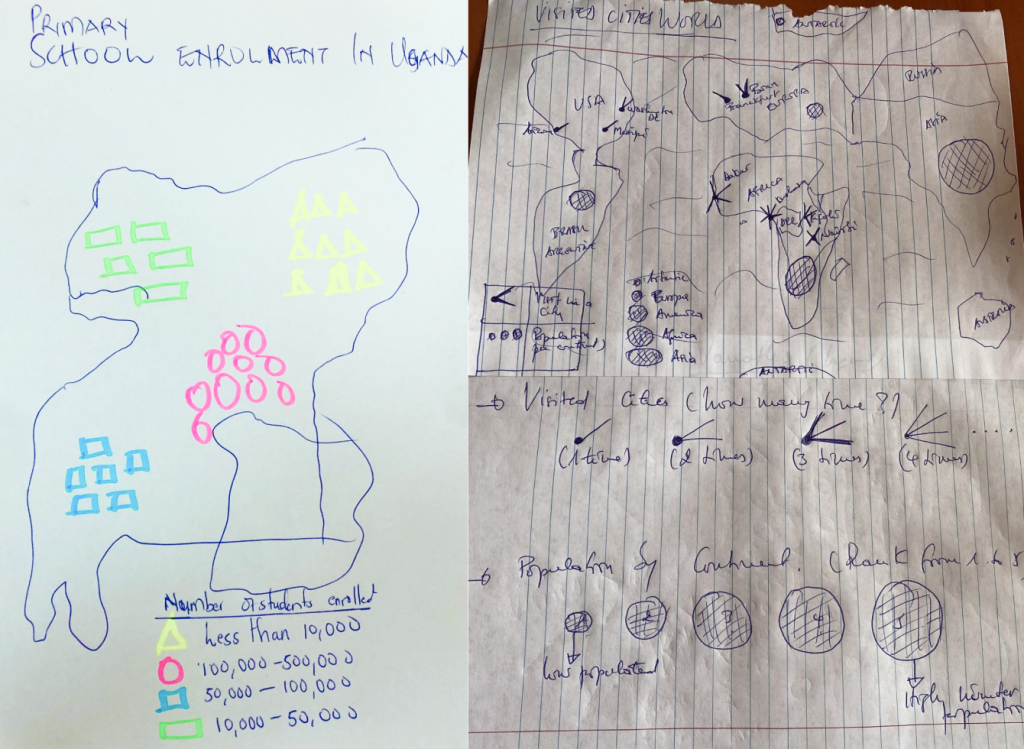
Mathematical anxiety is real. These expressions are often heard from people who think data isn’t for them. For advocates, data-driven storytelling and investigations can support powerful campaigns to raise awareness and engage relevant stakeholders. Data4Change has designed an immersive and practical introduction to using data for advocacy. Dubbed DataBytes, the four-week remote programme shows data advocacy is for everyone, and that sometimes all you need is a pen and paper.

Image: Visual prototypes designed by participants in the Sketch a Data Story workshop

DataBytes itself uses a unique data-led approach. In the preparatory stage, participants take a Data Personality Quiz and chat with “Dot the Bot.” The data generated through these two activities helps the Data4Change facilitators understand the key strengths and potential areas of work for each specific participant.


Image: Data4Change’s quiz calculates a data personality type for respondents

DataBytes was piloted by Data4Change and the Collaboration on International ICT Policy for East and Southern Africa (CIPESA) as part of institutional capacity building efforts under the Africa Digital Rights Fund (ADRF). The ADRF provides rapid response and flexible grants to initiatives advancing digital rights in Africa.

Targeting grantees of the fifth round of ADRF, the programme combined interactive questionnaires, games, offline self-study courses and live sessions (with simultaneous translation to French) to boost data confidence among participants.

“Numbers help understand the urgency and magnitude of the problem. It helps to legitimise our advocacy and creates more impact in our reporting” – DataBytes participant

The 16 participants, representing nine countries – the Democratic Republic of Congo, Kenya, Malawi, Sierra Leone, Somalia, South Africa, Tanzania, Togo and Uganda – gained hands-on experience in getting, cleaning, understanding and communicating with data.

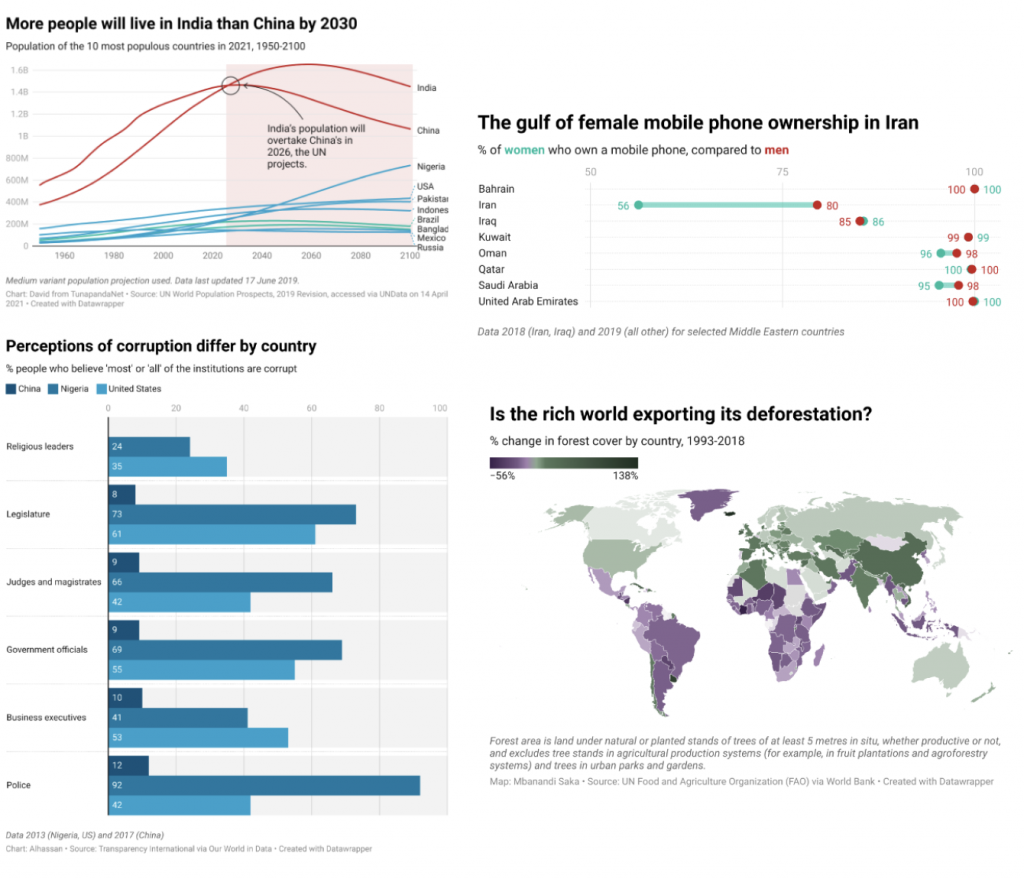
Participants also learned to read datasets and develop data communication techniques as they produced their own bar and line charts, range plots, choropleth maps and scatter plots to uncover trends and patterns.

Image: A selection of charts created in Datawrapper by DataBytes participants

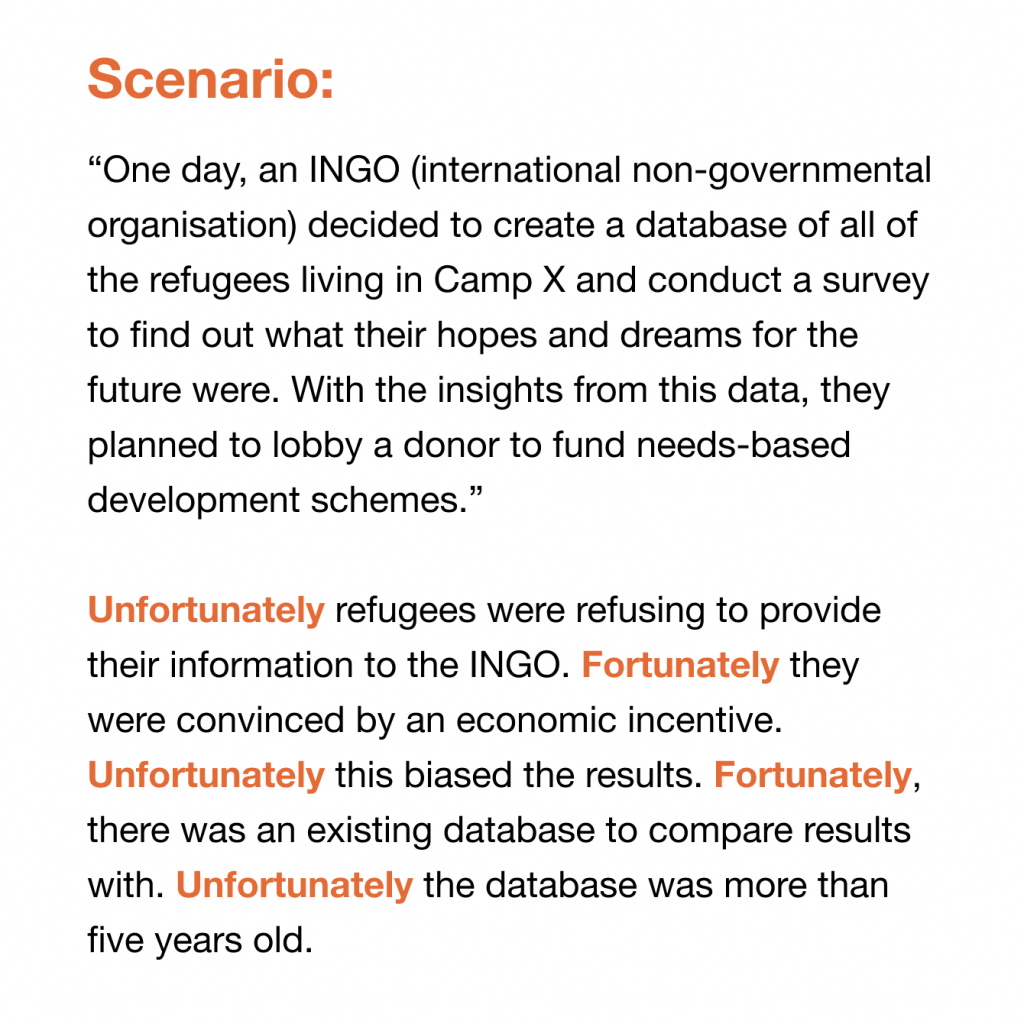
The programme closed with a much-needed conversation around Data Values and Data Ethics which explored the issues of data extractivism, real consent, and the ethics around data collection and processing. These complex topics were interrogated through a game of “Fortunately, Unfortunately” where participants collaboratively analysed possible scenarios where data collection ethics could be at stake.

Image: One of the “Fortunately, Unfortunately” scenarios created by DataBytes participants

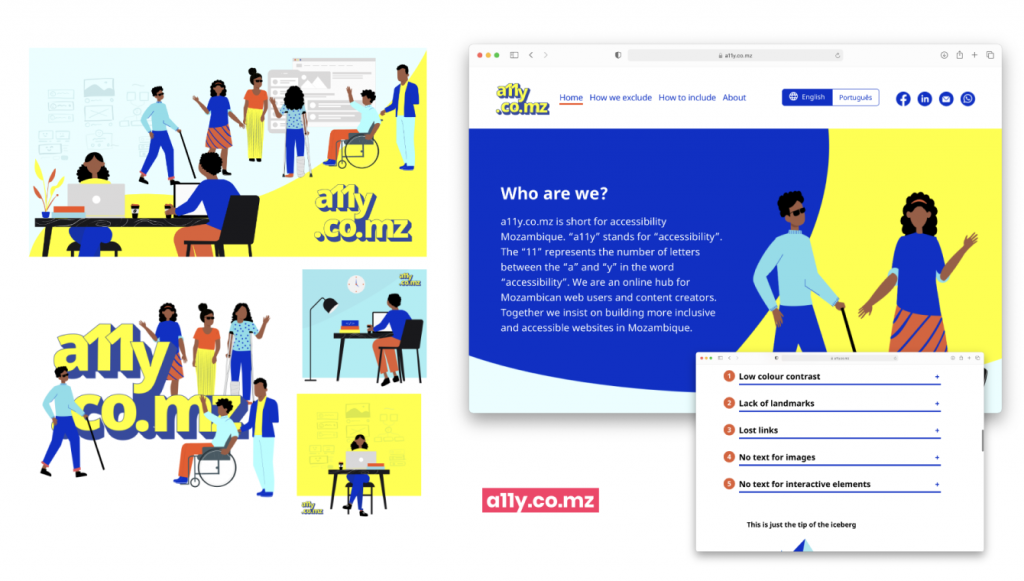
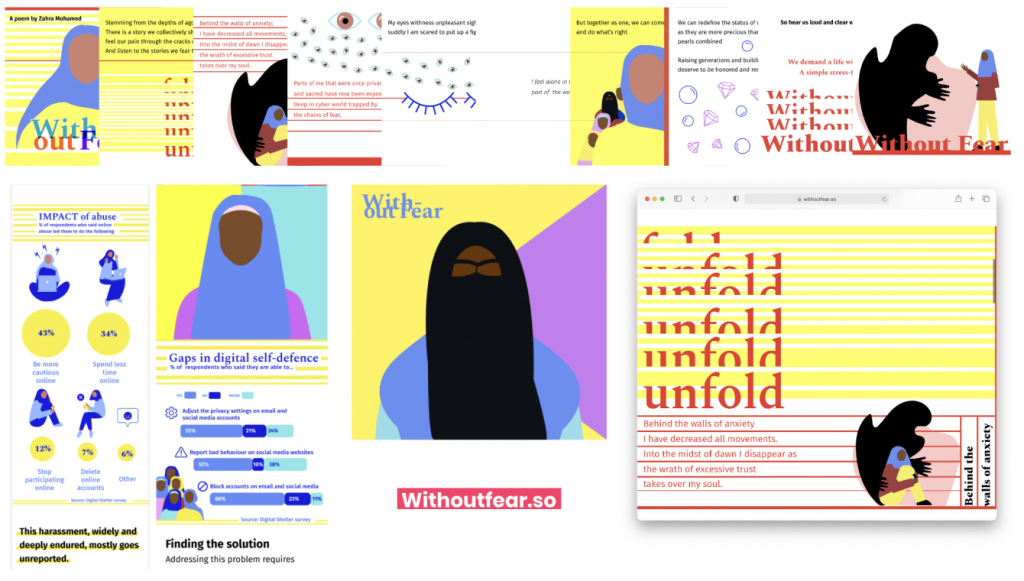
The DataBytes programme builds on earlier joint efforts by CIPESA and Data4Change in strengthening data advocacy among digital rights actors in Africa. Previous efforts, targeted at the first and second round of ADRF grantees, featured capacity assessments followed by data workflow and visualisation workshops – foundational and advanced levels. Two ADRF grantees – the Mozambique Disabled Person’s Organisation (FAMOD) and Digital Shelter – went on to be supported to develop data-driven campaigns. FAMOD’s campaign promotes web accessibility for persons with disability in Mozambique, while that of Digital Shelter is on women’s inclusion and safety online in Somalia.


Images: A selection of screenshots from campaigns co-created with FAMOD and Digital Shelter

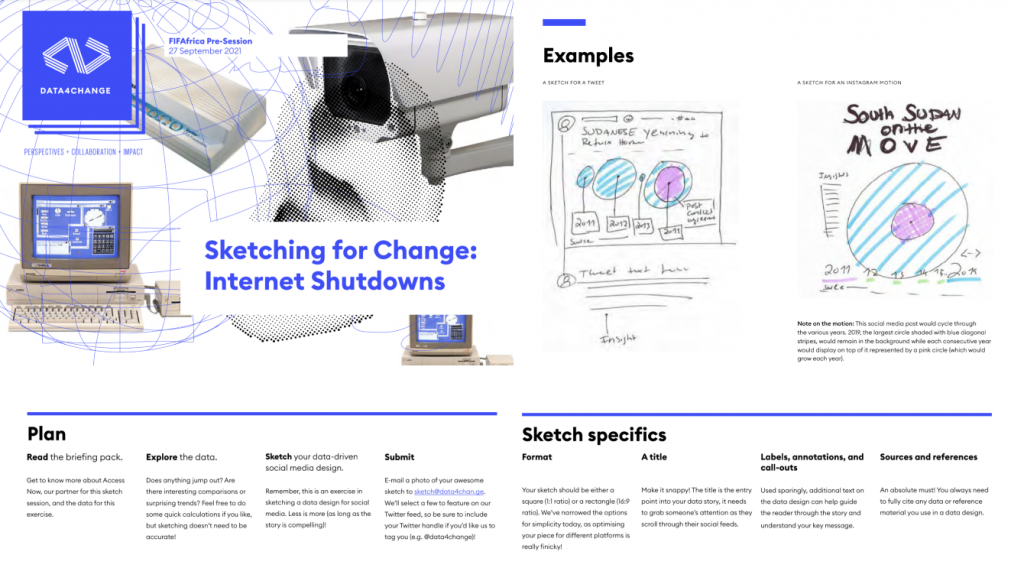
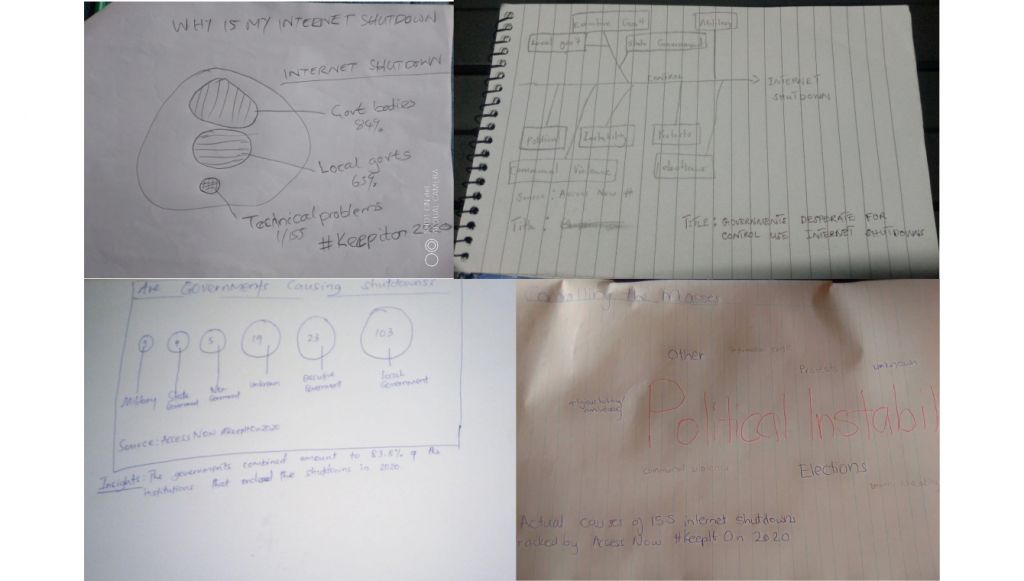
Furthermore, CIPESA and Data4Change conducted a data-driven Sketchathon for digital rights at the 2021 Forum on Internet Freedom in Africa (FIFAfrica) targeting actors in Lesotho, Mozambique, Tanzania, Uganda, Zambia, and Zimbabwe.

Image: The cover of the Sketching Shutdowns workbook

Image: Sketches created during the Sketching Shutdowns Workshop

Événement en ligne: Échange Régional sur les Indicateurs d’Universalité d’Internet (IUI)

Événement en ligne |

Le 16 Mars 2022, la Collaboration sur la Politique Internationale des TIC pour l’Afrique Orientale et Australe (CIPESA), en partenariat avec l’Organisation des Nations Unies pour l’éducation, la science et la culture (UNESCO), accueillera un dialogue régional sur les Indicateurs d’Universalité d’Internet (IUI). L’événement mettra en évidence les leçons tirées des évaluations de l’IUI menées au Bénin, en Éthiopie, au Ghana, au Kenya, au Niger et au Sénégal en 2021 dans le but de recueillir les meilleures pratiques en matière d’évaluations nationales des médias et des écosystèmes Internet.

L’événement s’appuie sur les efforts de la CIPESA et de l’UNESCO pour sensibiliser à l’intersection de l’accès à l’information et de l’application de l’IUI initiées lors des célébrations de la Journée Mondiale de la Liberté de la Presse en 2018 et du Forum sur la liberté de l’internet en Afrique de la même année dans le cadre des célébrations de la Journée Internationale de l’Accès Universel à l’Information (IDUAI) qui se tiennent chaque 28 Septembre.

Évolution des Indicateurs d’Universalité d’Internet (IUI)

En 2015, la 38e Conférence générale de l’UNESCO a approuvé une nouvelle définition de l’université de l’internet basée sur quatre principes – droits, ouverture, accessibilité à tous et participation multipartite – les principes ROAM. Les quatre principes, sur lesquels repose l’IUI, définissent un cadre d’évaluation des paysages numériques nationaux en vue de promouvoir la croissance et l’évolution de l’internet et la réalisation des objectifs de développement durable.

L’ajout d’indicateurs transversaux en 2018 a abouti au cadre d’indicateurs ROAM-X comprenant 303 indicateurs qui évaluent la mesure dans laquelle les parties prenantes nationales, y compris les gouvernements, les entreprises et la société civile, se conforment aux principes ROAM.

En 2008, le Programme international pour le développement de la communication (PIDC) de l’UNESCO a approuvé les Indicateurs de Développement des Médias (IDM) qui servent à évaluer l’environnement global du développement des médias dans un pays. Un autre cadre d’évaluation du PIDC est les Indicateurs de Sécurité des Journalistes (JSI), qui servent à identifier les mesures prises par les différentes parties prenantes concernées pour promouvoir la sécurité des journalistes et lutter contre l’impunité au niveau national.

Ensemble, l’IUI, le MDI et le JSI sont d’importants outils pour examiner les écosystèmes d’Internet et des médias, mais pour favoriser les collaborations numériques et stratégiques aux niveaux national, régional et international.

Pourquoi les Indicateurs sont Pertinents pour la Communauté de la Gouvernance de l’Internet et les Acteurs en Afrique.

Malgré la diversité croissante des médias et du paysage numérique en Afrique, la pluralité, la neutralité, la sécurité et la liberté d’expression font face à des affronts continus. Le secteur est également aux prises avec des préoccupations concernant la confidentialité des données, l’abordabilité de l’accès à Internet, la modération du contenu et la surveillance, entre autres.

Ces facteurs font en sorte que les médias de plusieurs pays ne sont pas à la hauteur des IMD et des JSI, tandis que les changements régressifs croissants dans l’accès et l’utilisation d’Internet par les citoyens et les médias affectent également la performance des États sur les IUI. Cependant, une évaluation approfondie et structurée peut mieux révéler la mesure dans laquelle les États fonctionnent réellement et permettre de parvenir à une réforme des politiques et des pratiques fondées sur des données probantes.

Voie à Suivre

En accueillant l’échange régional, on espère que davantage d’acteurs susciteront l’intérêt en utilisant les indicateurs pour éclairer le plaidoyer en faveur de la liberté des médias et des droits numériques

Inscrivez-vous au webinaire ici.

Prochains pays d’Intérêt

À la suite du webinaire, des sessions de formation nationales sur les indicateurs seront organisées au Cameroun, en Somalie, en Namibie, au Malawi et en Ouganda. Pour vous impliquer, envoyez un courriel à [email protected].

Online Event: Regional Exchange on The Internet Universality Indicators (IUIs)

Online Event |

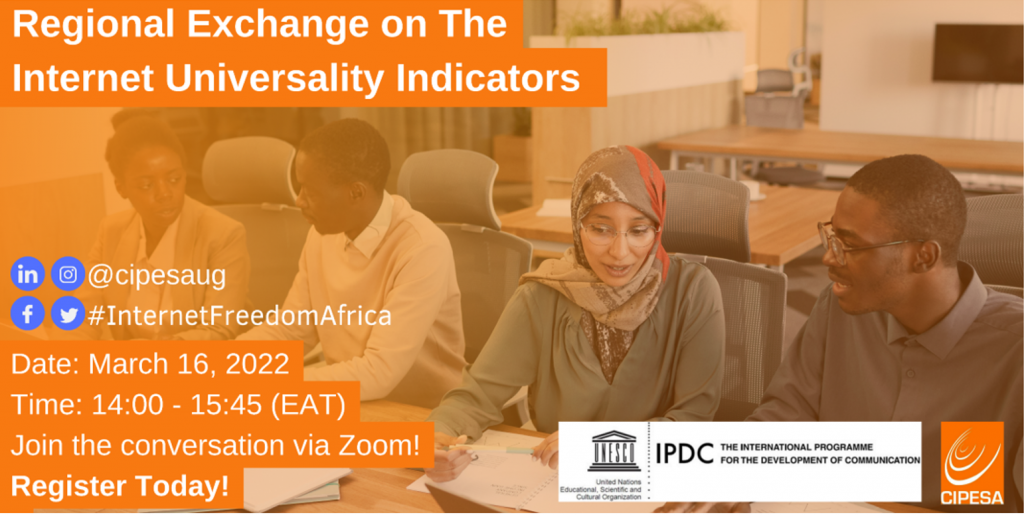
On March 16, 2022, the Collaboration on International ICT Policy for East and Southern Africa (CIPESA) in partnership with the United Nations Educational, Scientific and Cultural Organisation (UNESCO) will host a regional dialogue on the Internet Universality Indicators (IUI). The event will highlight lessons from IUI assessments conducted in Benin, Ethiopia, Ghana, Kenya, Niger and Senegal during  2021 in a bid to garner best practices in national assessments of media and internet ecosystems.

The event builds on CIPESA and UNESCO efforts on raising awareness about the intersection of access to information and application of the IUI initiated at World Press Freedom Day celebrations in 2018 and the same year’s Forum on Internet Freedom in Africa as part of the International Day for Universal Access to Information (IDUAI)  celebrations held every September 28.

Evolution of the Internet Universality Indicators (IUIs)

In 2015, the 38th General Conference of UNESCO endorsed a new definition on the university of the internet based upon four principles – Rights, Openness, Accessibility to all and Multi-stakeholder participation- the ROAM principles. The four principles, against which the IUI are based outline a framework for assessment of national digital landscapes towards promoting the growth and evolution of the internet, and the achievement of the Sustainable Development Goals.

The addition of cross-cutting indicators in 2018 resulted in the ROAM-X Indicator framework comprising of 303 indicators that assess the extent to which national stakeholders, including governments, businesses and civil society, comply with the ROAM principles.

Back in 2008 the UNESCO International Programme for the Development of Communication (IPDC) endorsed the Media Development Indicators (MDI) which serve to assess the overall environment for media development in a country. Another IPDC assessment framework is the Journalist Safety Indicators (JSI) which serve to identify the actions that are taken by the various relevant stakeholders in promoting journalists’ safety and fighting impunity at national level.

Together, the IUI, MDI and JSI are important tools for reviewing internet and media ecosystems but fostering digital and strategic collaborations at national, regional and international levels.

Why the Indicators Are Relevant To The Internet Governance Community and Actors in Africa

Despite growing diversity in Africa’s media and digital landscape, plurality, neutrality, safety, and freedom of expression face continued affronts. The sector is also grappling with concerns around data privacy, internet access affordability, content moderation and surveillance, among others.

These factors are causing the media in several countries to fall short of the MDIs and the JSIs, while increasing regressive shifts in internet access and use by citizens and the media alike are also affecting the performance of states on the  IUIs. However, indepth, structured assessment can better reveal the extent to which states are actually performing and allow for achieving evidence-based policy and practice reform.

Way Forward

Through hosting of the regional exchange, it is hoped that more actors will pick interest utilising the indicators to inform advocacy for media freedom and digital rights

Register for the webinar here.

Next Countries of Interest

Following on from the webinar, in-country training sessions on the indicators will be conducted in Cameroon, Somalia, Namibia, Malawi and Uganda. To get involved send an email to [email protected].

CIPESA Joins over 125 Organisations and Academics In Submitting Letter to the UN Ad Hoc Committee on Cybercrime

The Collaboration on International ICT Policy for East and Southern Africa (CIPESA) has joined over 125 organisations and academics who work to protect and advance human rights, online and offline in submitting a letter to the United Nations Ad Hoc Committee on Cybercrime. The letter stresses that the process through which the Ad Hoc Committee does its work includes robust civil society
participation throughout all stages of the development and drafting of a convention, and that
any proposed convention include human rights safeguards applicable to both its substantive and
procedural provisions. The first session of the Ad Hoc Committee, which was scheduled to begin on January 17, 2022, has been rescheduled to begin on February 28, 2022, due to the ongoing situation concerning the coronavirus disease. See the full letter below.

————————————————————————————————————————————-

December 22, 2021

H.E. Ms. Faouzia Boumaiza Mebarki

Chairperson

Ad Hoc Committee to Elaborate a Comprehensive International Convention on Countering the Use of Information and Communication Technologies for Criminal Purposes

Your Excellency,

We, the undersigned organizations and academics, work to protect and advance human rights, online and offline. Efforts to address cybercrime are of concern to us, both because cybercrime poses a threat to human rights and livelihoods, and because cybercrime laws, policies, and initiatives are currently being used to undermine people’s rights. We therefore ask that the process through which the Ad Hoc Committee does its work includes robust civil society participation throughout all stages of the development and drafting of a convention, and that any proposed convention include human rights safeguards applicable to both its substantive and procedural provisions.

Background

The proposal to elaborate a comprehensive “international convention on countering the use of information and communications technologies for criminal purposes” is being put forward at the same time that UN human rights mechanisms are raising alarms about the abuse of cybercrime laws around the world. In his 2019 report, the UN special rapporteur on the rights to freedom of peaceful assembly and of association, Clément Nyaletsossi Voule, observed, “A surge in legislation and policies aimed at combating cybercrime has also opened the door to punishing and surveilling activists and protesters in many countries around the world.” In 2019 and once again this year, the UN General Assembly expressed grave concerns that cybercrime legislation is being misused to target human rights defenders or hinder their work and endanger their safety in a manner contrary to international law. This follows years of reporting from non-governmental organizations on the human rights abuses stemming from overbroad cybercrime laws.

When the convention was first proposed, over 40 leading digital rights and human rights organizations and experts, including many signatories of this letter, urged delegations to vote against the resolution, warning that the proposed convention poses a threat to human rights.

In advance of the first session of the Ad Hoc Committee, we reiterate these concerns. If a UN convention on cybercrime is to proceed, the goal should be to combat the use of information and communications technologies for criminal purposes without endangering the fundamental rights of those it seeks to protect, so people can freely enjoy and exercise their rights, online and offline. Any proposed convention should incorporate clear and robust human rights safeguards. A convention without such safeguards or that dilutes States’ human rights obligations would place individuals at risk and make our digital presence even more insecure, each threatening fundamental human rights.

As the Ad Hoc Committee commences its work drafting the convention in the coming months, it is vitally important to apply a human rights-based approach to ensure that the proposed text is not used as a tool to stifle freedom of expression, infringe on privacy and data protection, or endanger individuals and communities at risk.

The important work of combating cybercrime should be consistent with States’ human rights obligations set forth in the Universal Declaration of Human Rights (UDHR), the International Covenant on Civil and Political Rights (ICCPR), and other international human rights instruments and standards. In other words, efforts to combat cybercrime should also protect, not undermine, human rights. We remind States that the same rights that individuals have offline should also be protected online.

Scope of Substantive Criminal Provisions

There is no consensus on how to tackle cybercrime at the global level or a common understanding or definition of what constitutes cybercrime. From a human rights perspective, it is essential to keep the scope of any convention on cybercrime narrow. Just because a crime might involve technology does not mean it needs to be included in the proposed convention. For example, expansive cybercrime laws often simply add penalties due to the use of a computer or device in the commission of an existing offense. The laws are especially problematic when they include content-related crimes. Vaguely worded cybercrime laws purporting to combat misinformation and online support for or glorification of terrorism and extremism, can be misused to imprison bloggers or block entire platforms in a given country. As such, they fail to comply with international freedom of expression standards. Such laws put journalists, activists, researchers, LGBTQ communities, and dissenters in danger, and can have a chilling effect on society more broadly.

Even laws that focus more narrowly on cyber-enabled crimes are used to undermine rights. Laws criminalizing unauthorized access to computer networks or systems have been used to target digital security researchers, whistleblowers, activists, and journalists. Too often, security researchers, who help keep everyone safe, are caught up in vague cybercrime laws and face criminal charges for identifying flaws in security systems. Some States have also interpreted unauthorized access laws so broadly as to effectively criminalize any and all whistleblowing; under these interpretations, any disclosure of information in violation of a corporate or government policy could be treated as “cybercrime.” Any potential convention should explicitly include a malicious intent standard, should not transform corporate or government computer use policies into criminal liability, should provide a clearly articulated and expansive public interest defense, and include clear provisions that allow security researchers to do their work without fear of prosecution.

Human Rights and Procedural Safeguards

Our private and personal information, once locked in a desk drawer, now resides on our digital devices and in the cloud. Police around the world are using an increasingly intrusive set of investigative tools to access digital evidence. Frequently, their investigations cross borders without proper safeguards and bypass the protections in mutual legal assistance treaties. In many contexts, no judicial oversight is involved, and the role of independent data protection regulators is undermined. National laws, including cybercrime legislation, are often inadequate to protect against disproportionate or unnecessary surveillance.

Any potential convention should detail robust procedural and human rights safeguards that govern criminal investigations pursued under such a convention. It should ensure that any interference with the right to privacy complies with the principles of legality, necessity, and proportionality, including by requiring independent judicial authorization of surveillance measures. It should also not forbid States from adopting additional safeguards that limit law enforcement uses of personal data, as such a prohibition would undermine privacy and data protection. Any potential convention should also reaffirm the need for States to adopt and enforce “strong, robust and comprehensive privacy legislation, including on data privacy, that complies with international human rights law in terms of safeguards, oversight and remedies to effectively protect the right to privacy.”

There is a real risk that, in an attempt to entice all States to sign a proposed UN cybercrime convention, bad human rights practices will be accommodated, resulting in a race to the bottom. Therefore, it is essential that any potential convention explicitly reinforces procedural safeguards to protect human rights and resists shortcuts around mutual assistance agreements.

Meaningful Participation

Going forward, we ask the Ad Hoc Committee to actively include civil society organizations in consultations—including those dealing with digital security and groups assisting vulnerable communities and individuals—which did not happen when this process began in 2019 or in the time since.

Accordingly, we request that the Committee:

●  Accredit interested technological and academic experts and nongovernmental groups, including those with relevant expertise in human rights but that do not have consultative status with the Economic and Social Council of the UN, in a timely and transparent manner, and allow participating groups to register multiple representatives to accommodate the remote participation across different time zones.

●  Ensure that modalities for participation recognize the diversity of non-governmental stakeholders, giving each stakeholder group adequate speaking time, since civil society, the private sector, and academia can have divergent views and interests.

●  Ensure effective participation by accredited participants, including the opportunity to receive timely access to documents, provide interpretation services, speak at the Committee’s sessions (in-person and remotely), and submit written opinions and recommendations.

●  Maintain an up-to-date, dedicated webpage with relevant information, such as practical information (details on accreditation, time/location, and remote participation), organizational documents (i.e., agendas, discussions documents, etc.), statements and other interventions by States and other stakeholders, background documents, working documents and draft outputs, and meeting reports.

Countering cybercrime should not come at the expense of the fundamental rights and dignity of those whose lives this proposed Convention will touch. States should ensure that any proposed cybercrime convention is in line with their human rights obligations, and they should oppose any proposed convention that is inconsistent with those obligations.

We would be highly appreciative if you could kindly circulate the present letter to the Ad Hoc Committee Members and publish it on the website of the Ad Hoc Committee.

Signatories,*

  1. Access Now – International
  2. Alternative ASEAN Network on Burma (ALTSEAN) – Burma
  3. Alternatives – Canada
  4. Alternative Informatics Association – Turkey
  5. AqualtuneLab – Brazil
  6. ArmSec Foundation – Armenia
  7. ARTICLE 19 – International
  8. Asociación por los Derechos Civiles (ADC) – Argentina
  9. Asociación Trinidad / Radio Viva – Trinidad
  10. Asociatia Pentru Tehnologie si Internet (ApTI) – Romania
  11. Association for Progressive Communications (APC) – International
  12. Associação Mundial de Rádios Comunitárias (Amarc Brasil) – Brazil
  13. ASEAN Parliamentarians for Human Rights (APHR)  – Southeast Asia
  14. Bangladesh NGOs Network for Radio and Communication (BNNRC) – Bangladesh
  15. BlueLink Information Network  – Bulgaria
  16. Brazilian Institute of Public Law – Brazil
  17. Cambodian Center for Human Rights (CCHR)  – Cambodia
  18. Cambodian Institute for Democracy  –  Cambodia
  19. Cambodia Journalists Alliance Association  –  Cambodia
  20. Casa de Cultura Digital de Porto Alegre – Brazil
  21. Centre for Democracy and Rule of Law – Ukraine
  22. Centre for Free Expression – Canada
  23. Centre for Multilateral Affairs – Uganda
  24. Center for Democracy & Technology – United States
  25. Center for Justice and International Law (CEJIL) – International
  26. Centro de Estudios en Libertad de Expresión y Acceso (CELE) – Argentina
  27. Civil Society Europe
  28. Coalition Direitos na Rede – Brazil
  29. Código Sur – Costa Rica
  30. Collaboration on International ICT Policy for East and Southern Africa (CIPESA) – Africa
  31. CyberHUB-AM – Armenia
  32. Data Privacy Brazil Research Association – Brazil
  33. Dataskydd – Sweden
  34. Derechos Digitales – Latin America
  35. Defending Rights & Dissent – United States
  36. Digital Citizens – Romania
  37. DigitalReach – Southeast Asia
  38. Digital Rights Watch – Australia
  39. Digital Security Lab – Ukraine
  40. Državljan D / Citizen D – Slovenia
  41. Electronic Frontier Foundation (EFF) – International
  42. Electronic Privacy Information Center (EPIC) – United States
  43. Elektronisk Forpost Norge – Norway
  44. Epicenter.works for digital rights – Austria
  45. European Center For Not-For-Profit Law (ECNL) Stichting – Europe
  46. European Civic Forum – Europe
  47. European Digital Rights (EDRi) – Europe
  48. ​​eQuality Project – Canada
  49. Fantsuam Foundation – Nigeria
  50. Free Speech Coalition  – United States
  51. Foundation for Media Alternatives (FMA) – Philippines
  52. Fundación Acceso – Central America
  53. Fundación Ciudadanía y Desarrollo de Ecuador
  54. Fundación CONSTRUIR – Bolivia
  55. Fundacion Datos Protegidos  – Chile
  56. Fundación EsLaRed de Venezuela
  57. Fundación Karisma – Colombia
  58. Fundación OpenlabEC – Ecuador
  59. Fundamedios – Ecuador
  60. Garoa Hacker Clube  –  Brazil
  61. Global Partners Digital – United Kingdom
  62. GreenNet – United Kingdom
  63. GreatFire – China
  64. Hiperderecho – Peru
  65. Homo Digitalis – Greece
  66. Human Rights in China – China
  67. Human Rights Defenders Network – Sierra Leone
  68. Human Rights Watch – International
  69. Igarapé Institute — Brazil
  70. IFEX – International
  71. Institute for Policy Research and Advocacy (ELSAM) – Indonesia
  72. The Influencer Platform – Ukraine
  73. INSM Network for Digital Rights – Iraq
  74. Internews Ukraine
  75. InternetNZ – New Zealand
  76. Instituto Beta: Internet & Democracia (IBIDEM) – Brazil
  77. Instituto Brasileiro de Defesa do Consumidor (IDEC) – Brazil
  78. Instituto Educadigital – Brazil
  79. Instituto Nupef – Brazil
  80. Instituto de Pesquisa em Direito e Tecnologia do Recife (IP.rec) – Brazil
  81. Instituto de Referência em Internet e Sociedade (IRIS) – Brazil
  82. Instituto Panameño de Derecho y Nuevas Tecnologías (IPANDETEC) – Panama
  83. Instituto para la Sociedad de la Información y la Cuarta Revolución Industrial – Peru
  84. International Commission of Jurists – International
  85. The International Federation for Human Rights (FIDH)
  86. IT-Pol – Denmark
  87. JCA-NET – Japan
  88. KICTANet – Kenya
  89. Korean Progressive Network Jinbonet – South Korea
  90. Laboratorio de Datos y Sociedad (Datysoc) – Uruguay
  91. Laboratório de Políticas Públicas e Internet (LAPIN) – Brazil
  92. Latin American Network of Surveillance, Technology and Society Studies (LAVITS)
  93. Lawyers Hub Africa
  94. Legal Initiatives for Vietnam
  95. Ligue des droits de l’Homme (LDH) – France
  96. Masaar – Technology and Law Community – Egypt
  97. Manushya Foundation – Thailand
  98. MINBYUN Lawyers for a Democratic Society – Korea
  99. Open Culture Foundation – Taiwan
  100. Open Media  – Canada
  101. Open Net Association – Korea
  102. OpenNet Africa – Uganda
  103. Panoptykon Foundation – Poland
  104. Paradigm Initiative – Nigeria
  105. Privacy International – International
  106. Radio Viva – Paraguay
  107. Red en Defensa de los Derechos Digitales (R3D) – Mexico
  108. Regional Center for Rights and Liberties  – Egypt
  109. Research ICT Africa
  110. Samuelson-Glushko Canadian Internet Policy & Public Interest Clinic (CIPPIC) – Canada
  111. Share Foundation – Serbia
  112. Social Media Exchange (SMEX) – Lebanon, Arab Region
  113. SocialTIC – Mexico
  114. Southeast Asia Freedom of Expression Network (SAFEnet) – Southeast Asia
  115. Supporters for the Health and Rights of Workers in the Semiconductor Industry (SHARPS) – South Korea
  116. Surveillance Technology Oversight Project (STOP)  – United States
  117. Tecnología, Investigación y Comunidad (TEDIC) – Paraguay
  118. Thai Netizen Network  – Thailand
  119. Unwanted Witness – Uganda
  120. Vrijschrift – Netherlands
  121. West African Human Rights Defenders Network – Togo
  122. World Movement for Democracy – International
  123. 7amleh – The Arab Center for the Advancement of Social Media  – Arab Region

Individual Experts and Academics

  1. Jacqueline Abreu, University of São Paulo
  2. Chan-Mo Chung, Professor, Inha University School of Law
  3. Danilo Doneda, Brazilian Institute of Public Law
  4. David Kaye, Clinical Professor of Law, UC Irvine School of Law, former UN Special Rapporteur on Freedom of Opinion and Expression (2014-2020)
  5. Wolfgang Kleinwächter, Professor Emeritus, University of Aarhus; Member, Global Commission on the Stability of Cyberspace
  6. Douwe KorffEmeritus Professor of International LawLondon Metropolitan University
  7. Fabiano Menke, Federal University of Rio Grande do Sul
  8. Kyung-Sin Park, Professor, Korea University School of Law
  9. Christopher Parsons, Senior Research Associate, Citizen Lab, Munk School of Global Affairs & Public Policy at the University of Toronto
  10. Marietje Schaake, Stanford Cyber Policy Center
  11. Valerie Steeves, J.D., Ph.D., Full Professor, Department of Criminology University of Ottawa