Digital Access As A Tool To Defend Democracy

By Juliet Nanfuka | 

The link between digital access and democracy has come to inform civic engagement, access to information and freedom of expression in Africa. With most of the continent navigating flawed or fragile democracies, digital access has become a tool of both empowerment for citizens, and a tool of control by states. This makes the International Day of Democracy a vital commemoration of what is at risk if democracy is not defended. 

This year, in various African countries, through affronts to the media, clampdown on critical voices and opposition actors as well as network disruptions, states have used their position to undermine human rights and breed  distrust in electoral integrity.

Since July 2024, a block to internet access remains enforced in the Equatorial Guinean island of Annobón following public protest against environmental degradation by Somagec, a Moroccan construction company. Despite the public outcries, the company’s operations on the island continue. Equatorial Guinea, is headed by Teodoro Obiang Nguema Mbasogo, Africa’s longest-serving president. His son serves as the Vice President and is accused of spending state funds on a lavish lifestyle.

In Kenya, in the wake of a May 2025 landmark ruling against network disruptions, a Telegram block was initiated. The disruption occurred close to the anniversary of the June 2024 protests against the rising cost of living in the country that resulted in the #RejectThefinanceBill outcry. The May ruling noted that disruptions to digital access are unconstitutional and amount to the violation of fundamental rights.

On September 6, 2025, the online license of the popular online discussion group, JamiiForums was suspended by the Tanzania Communications Regulatory Authority (TCRA)  for three months for reportedly publishing content that violates the Electronic and Postal Communications Regulations regarding online content. In a public post, Jamii Forums noted that TCRA’s decision arose from the platform’s publication of details of share ownership in Tanzania’s largest coal mine (Ngaka), as well as reports about meetings between the President of Tanzania and controversial Zimbabwean businessman Wicknell Chivayo  “without verifying the facts.” In a statement, Community to Protect Journalists (CPJ) Regional Director Angela Quintal noted that, “JamiiForums’ suspension is the latest sign of the Tanzanian government’s deepening suppression of public discourse and raises concerns about access to information ahead of the October 29 elections.”

Meanwhile, Uganda remains in the shadow of a Facebook block initiated nearly five years ago ahead of the 2021 elections. On January 11, 2021 Facebook suspended the accounts of a number of government officials and members of the ruling National Resistance Movement (NRM) party  for what it described as Coordinated Inauthentic Behaviour (CIB) aimed at manipulating public debate. Twitter (now X) also suspended similar accounts. The state consequently blocked social media access and thereafter access to the entire internet and mobile money services. Although access to the internet and mobile money services was restored a few days after the January 14, 2021 election, access to Facebook remains blocked. Uganda heads to the polls in early 2026 and will see incumbent Yoweri Museveni run for re-election in a bid to extend his 40-year rule.

In the 2024 edition of the State of Internet Freedom in Africa report, the Collaboration on International ICT Policy for East and Southern Africa (CIPESA) highlighted the interplay between technology and elections and the practice of the majority of authoritarian governments to selectively limit access as a tool to exert power.

The report indicated various concerns including the intensification of digital authoritarianism amidst shrinking civic space. It noted that digital surveillance has become a defining tool of state power, moving beyond traditional intelligence agencies into everyday governance through digital ID  projects, biometric databases, Closed Circuit Television (CCTV) networks, and covert spyware. All this in contexts where there are weak safeguards for personal data and insufficient regulatory oversight, leaving citizens vulnerable.

Meanwhile, misinformation and disinformation, significantly enhanced by Artificial Intelligence (AI) generated content, adds yet another threat electoral processes. It is increasingly distorting public perception and undermines informed decision-making, particularly in contexts with low digital literacy. This is in addition to the use of bots and paid  influencers to amplify propaganda and “demote” opposing views, making inauthentic content appear genuine. Social media platforms are often criticised for deploying insufficient resources for content moderation in Africa, leading to slow responses and poor enforcement of policies against harmful content, including online gender-based violence.

Ultimately, more actors in the digital ecosystem including civil society organisations, the tech community, media and academia should leverage their watchdog role to document digital rights abuses; educate and raise awareness on the importance of access to information, free expression, data privacy; and promote equitable AI governance, in order to advance transparency and accountability of platforms and governments.
At the upcoming September 24-26, 2025, Forum on Internet Freedom in Africa (FIFafrica25), a series of sessions will critically examine digital democracy on the continent. The goal is to chart practical pathways for strengthening civic participation and ensuring that Africa’s digital future is inclusive, accountable, and rights-respecting.

CIPESA Endorses the Johannesburg Declaration of the M20 Summit

By Juliet Nanfuka | 

The Collaboration on International ICT Policy for East and Southern Africa (CIPESA) has endorsed the Johannesburg Declaration, adopted at the M20 Summit held in Johannesburg, South Africa, on September 1-2,2025. The Summit, convened by the South African National Editors’ Forum (SANEF) and Media Monitoring Africa (MMA) is a parallel independent initiative to the Group of Twenty (G20) – an international forum of both developing and developed countries that seeks to find solutions to global economic and financial issues. CIPESA was proud to not only support the Summit but to also participate and to contribute to the drafting process of the Declaration. 

The Declaration is a response to the global crisis in the integrity of information, peace and respect for human rights, including environmental rights. It serves as a call to the media, the G20 and the wider public to recognise that the information integrity crisis is “intensifying as the spaces for independent news media and civic engagement contract.”

Further, the Declaration reinforces the fact that democratic societies grow through the supply of reliable information in a timely manner. Yet today there is a widescale erosion of sources of information and knowledge. The Declaration also notes that independent journalism is a vital public good, and fundamental to people’s right of access to information, and to the sustenance of peace and democratic governance. 

CIPESA joins over fifty organisations in this call that serves an injunction to everyone to do more to protect press freedom, and support the role of journalism, and a human rights-based media ecosystem in its contribution to the public good. 

You can read the full text of the Johannesburg Declaration here.

Information integrity has featured on CIPESA programming including in May 2025 when Media Monitoring Africa (MMA) and UNESCO officially launched regional consultations to develop the African guidelines for monitoring technology companies’ roles in ensuring information integrity on their platforms. CIPESA participated in a high-level panel discussion on the March 2025 adoption of the Resolution on developing Guidelines to assist States monitor technology companies in respect of their duty to maintain information integrity through independent fact checking – ACHPR/Res.630 (LXXXII) 2025 by the African Commission on Human and Peoples’ Rights (ACHPR). The discussion was held at the Digital Rights and Inclusion Forum (DRIF) 2025 hosted by Paradigm Initiative (PIN),

CIPESA has also made a series of recommendations to the Resolution which instructs the Special Rapporteur to collaborate with civil society, regulators, and technology companies to create Guidelines that enable effective monitoring of platforms, including assessing the role and effectiveness of independent fact-checking initiatives.

At the September 2025 Forum on Internet Freedom in Africa (FIFAfrica25), information integrity is among the themes up for debate and discussion including through a dedicated consultation on  ACHPR/Res.630 (LXXXII) 2025.  

CIPESA’s endorsement of the Johannesburg Declaration serves as a testament to the belief that a free, plural, and rights-respecting information ecosystem is the cornerstone of Africa’s digital and democratic future.

The FIFAfrica25 Agenda and Speaker Lineup Is Live!

By FIFAfrica |

The Forum on Internet Freedom in Africa (FIFAfrica25) is fast approaching, and the excitement is building. This year’s edition, hosted by the Collaboration on International ICT Policy in East and Southern Africa (CIPESA) in partnership with the Namibian Ministry of Information and Communication Technology (MICT) and the Namibia Internet Governance Forum (NamIGF), will take place in Windhoek, Namibia, from 22–26 September 2025. We are pleased to announce that the speaker line-up and full agenda is now available, offering a comprehensive line-up of conversations, experiences, and networking opportunities.

This year’s Forum will serve as yet another edition in FIFAfrica’s 12-year history of assembling digital rights defenders, policymakers, technologists, academics, regulators, journalists, and the donor community, who all have the shared vision of advancing internet freedom in Africa. FIFAfrica25 promises to build on this legacy, with an agenda that is engaging and inclusive of the many shifts we have witnessed since last year.

Here is What You Can Expect

Pre-Events by invitation (September 22-24, 2025)
FIFAfrica25 kicks off with a series of pre-events designed to engage allies, stock-take and build skills and knowledge ahead of the main programme. These include community-driven workshops, closed-door strategic dialogues, and network member meetings that allow participants to dive deeper into niche areas of digital rights and governance. Over the years, pre-events have served as an exciting avenue for various organisations to connect early, showcase their work, sharpen ideas, and prepare new communities for the various sessions at the main event.

The pre-events are by invitation only. However, limited spots are available for additional participants in select events. Are you arriving in Windhoek early and interested? Express interest in attending a pre-event here.

A Diverse Main Programme (September 25-26, 2025)
The main agenda features plenary sessions, workshops, consultations, breakout discussions, and networking moments. Sessions cover a wide array of topics reflecting themes that emerged from our public call for proposals, including digital inclusion, digital resilience and safety; freedom of expression & access to information; platform accountability; the implications of AI; digital economy; and digital democracy.

Strategic Consultations
As part of the Forum, various strategic meetings have been set up with the goal of deeper-level discussion and interrogation of specific issues and processes. These include efforts aimed at influencing action on areas such as various resolutions of the African Commission on Human and People’s Rights (ACHPR) and Digital Public Infrastructure. Additionally, this year a book launch on internet shutdowns features amongst the strategic engagements. These engagements will allow for frank exchanges on some of the challenges in the digital ecosystem, but will likely also cast a light on more opportunities for collaboration across Africa and beyond.

Immersive Experience
This year, we want participants at FIFAfrica to “Be the experience!” Accordingly, the Forum will encourage attendees, onsite or participating remotely to partake in various interactions that  bring digital rights issues to life.  These experiences aim to break down barriers between complex digital rights policy concepts and real-world lived experiences.

These include:

  • An interactive FIFAfrica25 exhibition showcasing research, campaigns, and various digital resilience tools.
    • Storytelling spaces where the #InternetFreedomAfrica community can share personal accounts of resilience and advocacy in digital spaces.
    • An art and activism installation reflecting FIFAfrica’s tradition of merging creativity with digital justice.
    • For the third time, the Digital Security on Wheels is back on a one-of-a-kind journey which will see biker Digital Security expert Andrew Gole set off from Kampala, Uganda, weaving through Kenya, Tanzania, Malawi, Mozambique, Zimbabwe, and Botswana before crossing the finish line in Windhoek, Namibia just in time for the opening of FIFAfrica25. His route back to Uganda will also include Zambia and Rwanda.
    • The Run for Internet Freedom in Africa aims to bring together participants to jog, or walk in solidarity with the call for a free, fair and open internet. More details to follow.

Celebrating the International Day for Universal Access to Information
FIFAfrica25 will continue the practice of commemorating the International Day for Universal Access to Information (IDUAI) celebrated annually on September 28. While the Forum this year precedes the IDUAI, many sessions and plenary discussions will highlight the essential role of access to information in enabling civic participation, inclusion, and digital democracy. This year’s global theme, “Ensuring Access to Environmental Information in the Digital Age”, focuses on the vital importance of timely, comprehensive, and cross-border access to environmental information in an increasingly digital world and resonates deeply with many of the Forum’s discussions.

Join Us in Windhoek

We invite you to explore the full agenda on the FIFAfrica website and begin planning your journey through the sessions, meetings, and immersive experiences (remember to register on the event platform and join the community there). Whether you are a policymaker, activist, journalist, academic, technologist, or artist, FIFAfrica25 will have a space for you to contribute.

Here are The Pre-Events Warming Up for #FIFAfrica25

FIFAfrica |

In the lead-up to the Forum on Internet Freedom in Africa (FIFAfrica25), a series of pre-events will set the stage for engaging discussions and actions. These sessions set to be held between September 22-24, 2025, serve as a build-up to the Forum by creating avenues for deeper engagement with critical themes that resonate with the content of the Forum. This year, a diverse range of partners have established a series of pre-event sessions focused on various aspects of digital rights, governance, and advocacy across Africa with the goal of addressing the evolving digital landscape. Several common themes emerge from the upcoming pre-event sessions, which are by invitation or by registration.

Find the full list of Pre-events below (Some limited slots are open for registration) | Find the full FIFAfrica Agenda here

Various pre-event sessions include inter-organisational collaboration and capacity building within African networks. These include meetings to be hosted by the African Internet Rights Alliance (AIRA), Digital Rights Alliance Africa (DRAA), and the Association for Progressive Communications (APC).

Some sessions place a significant focus on understanding and influencing digital rights and data governance. This includes training National Human Rights Institutions (NHRIs) on Artificial Intelligence (AI) and human rights, preparing them for regional consultations on protecting digital civic space from human rights harms. Meanwhile, a session on the “United Voices: Media & Civil Society for African Data Governance” will address how the pervasive nature of datafication has fractured the symbiotic relationship between media and civil society. A session on “Gender Transformative Data Governance in Africa” will highlight the need for a gender-responsive approach to data governance, built upon addressing the minimal representation of diverse gender perspectives and the dominance of private sector interests.

A series of litigation surgeries hosted by Media Defense will be dedicated towards building expertise and capacity among lawyers across Sub-Saharan Africa to protect and advance freedom of expression. Participants will receive expert-led training on international and regional legal frameworks, engage in collaborative case analysis, and strengthen their ability to litigate before national courts and international human rights bodies.

Some pre-events are dedicated towards amplifying the achievements of leveraging advocacy and international mechanisms such as the Universal Periodic Review (UPR) to advance digital rights. These sessions hosted by the Civil Alliance for Digital Empowerment (CADE), Small Media, and CIPESA, aim to build the digital advocacy capacities of civil society and policymakers in Africa. These efforts are also extended to the youth and will see the European Partnership for Democracy (EPD) host an advocacy training for young activists on the African Union system.

An Africa Regional Consultation on Global Policy and Legal Action, collaboratively hosted by the Danish Human Rights Institute, the International Commission of Jurists (ICJ), and CIPESA, aims to provide clarity on state obligations and company responsibilities regarding digitally mediated human rights harms, supporting civil society advocacy against disinformation and the shrinking of democratic/civic space. The “Spaces of Solidarity (SoS) Forum”, hosted by DW Akademie, also focuses on compiling and updating advocacy positions on freedom of expression and media freedom, including the impact of shrinking international funding. The “African MILE Production” workshop, also hosted by DW Akademie further promotes open exchange on media production, digital campaigning, and cross-border collaboration to strengthen regional media impact.

FIFAfrica25 will also be the home for a “Digital Rights Academy” hosted by NamTushwe and Paradigm Initiative (PIN). The Academy aims to raise awareness and knowledge of digital rights and inclusion, enhancing stakeholders’ capacity to foster inclusive and rights-respecting legislation in their countries.

Digital resilience is a key component of the Forum and also features as a key component of several pre-event sessions including the “Africa Cybersecurity Advocacy Workshop” hosted by the Internet Society (ISOC) a “Digital Security and Localization Workshop” hosted by the Localization Lab. Both sessions are aimed at enhancing digital skills and practices amongst various stakeholders. There is also a led session on “From Harm to Justice: Reimagining Digital Safety for Women and Girls in Africa,” which explores the increasing incidence of online gender-based violence (TFGBV), including image-based abuse and algorithmic amplification of harmful content, and how systemic inequality and weak legal enforcement contribute to these harms.

Line-up of Pre-Events at FIFAfrica25 (Full details can be found in the Agenda)
September 22, 2025 
Pre-Event NameHost/s
Litigation SurgeryMedia Defense
Safety of Voices Meeting Association for Progressive Communications (APC)
United Voices: Media & Civil Society for African Data GovernanceData Governance in Africa Research Fund, Media Institute of Southern Africa, Namibia Media Foundation and DW Akademie.
September 23, 2025
NHRI Training on Artificial Intelligence (AI) and Human RightsDanish Human Rights Institute and CIPESA (Register – limited slots available)
Litigation SurgeryMedia Defense
Digitalise Youth Project: Advocacy TrainingEuropean Partnership for Democracy (EPD)
Annual Convening and Capacity BuildingAfrican Internet Rights Alliance (AIRA)
Africa Cybersecurity Advocacy WorkshopInternet Society (ISOC)
Spaces of Solidarity Forum: Strategic Dialogue on the Policy Agenda in Southern AfricaDW Akademie
From Harm to Justice: Reimagining Digital Safety for Women and Girls in AfricaEquality Now  (Register – limited slots available)
Africa Members MeetingAssociation for Progressive Communications (APC)
Amplifying Achievements of Digital Rights Advocacy through the Universal Periodic Review (UPR): Testimonies from our PartnersCADE, Small Media and CIPESA  (Register – limited slots available)
Digital Rights Alliance Africa (DRAA) Member MeetingInternational Centre for Non-for-Profit Law (ICNL) and CIPESA
Digital Security and Localization WorkshopLocalization Lab, the Digital Society of Africa and NamTushwe
September 24, 2025
Africa Regional Consultation on Global Policy and Legal ActionDanish Human Rights Institute, International Commission of Jurists
 (ICJ) and CIPESA  (Register – limited slots available)
Litigation SurgeryMedia Defense
Digitalise Youth Project: Consortium MeetingEuropean Partnership for Democracy (EPD)
Annual Convening and Capacity BuildingAfrican Internet Rights Alliance (AIRA)
Africa Cybersecurity Advocacy WorkshopInternet Society (ISOC)
Digital Rights AcademyNamTushwe and Paradigm Initiative (PIN)
Gender Transformative Data Governance in AfricaPollicy
African MILE Production: Putting the Advocacy Message into Practice!DW Akademie
AFEX Member MeetingMedia Foundation for West Africa (MFWA)
Amplifying Achievements of Digital Rights Advocacy through the Universal Periodic Review (UPR): Testimonies from our Partners CADE, Small Media and CIPESA (Register – limited slots available)
Digital Rights Alliance Africa (DRAA) Member MeetingInternational Centre for Non-for-Profit Law (ICNL) and CIPESA

CIPESA Delivers Training to Ugandan Editors on AI in the Newsroom

By CIPESA Writer |

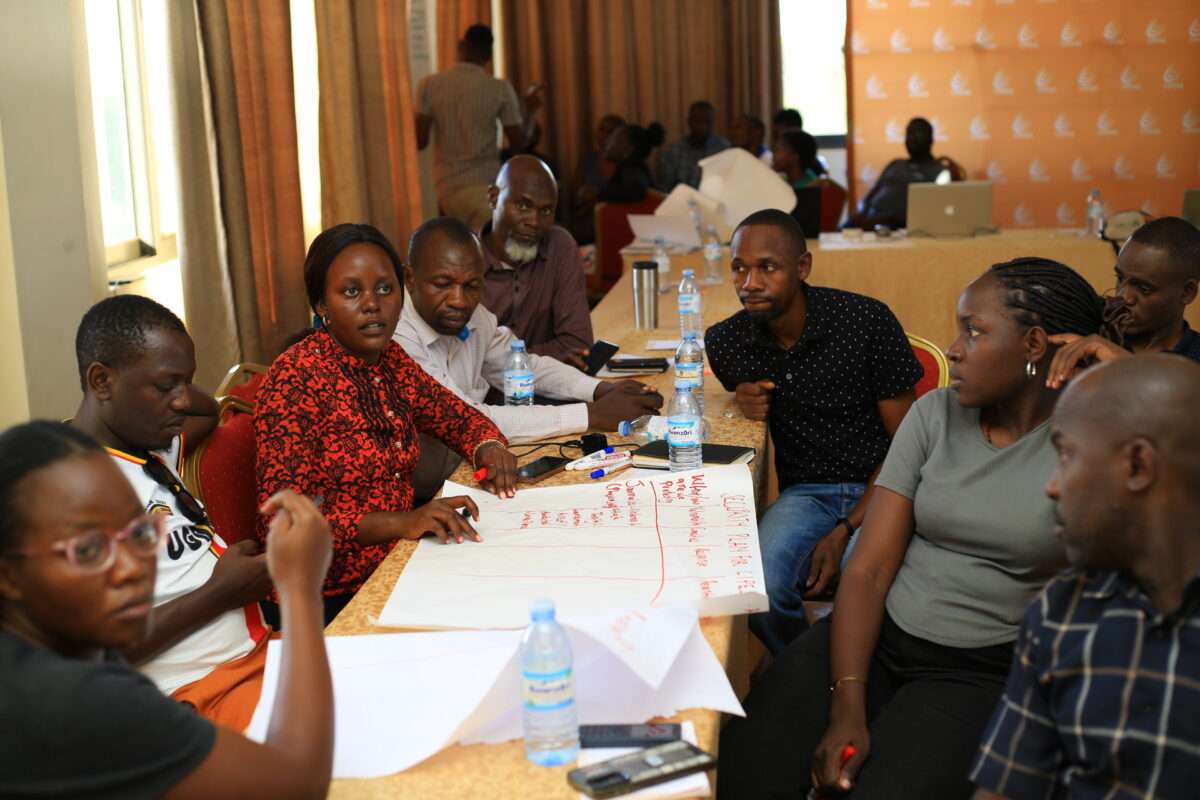
Artificial intelligence (AI)-related legal and national policy frameworks were the focus for Ugandan editors at an August 20, 2025, workshop organised by the Uganda Editors Guild and World Association of News Publishers (WAN IFRA). The training deliberated on responsible adoption of AI tools by newsrooms and saw participants brainstorm how to effectively navigate the complexities that AI poses to the media industry and the practice of journalism.

WAN-IFRA WIN Deputy Executive, Operations, Jane Godia emphasised that artificial intelligence is evolving rapidly and media houses can no longer afford to ignore the shift. “What we’re really focused on is how to embrace AI in ways that strengthen the core of journalism, and not to replace it, but to enhance its usage while safeguarding credibility and editorial independence,” she said.

Godia urged newsrooms to develop clear AI policies to guide ethical and responsible reporting in this new era in order to promote meaningful conversations about establishing practical, well-defined policies that harness the power of AI without compromising journalistic ethics.

At the workshop, the Collaboration on International ICT for East and Southern Africa (CIPESA) presentations focused on the state of artificial intelligence regulation and noted with concern, the lack of an AI-specific legislation in the country. However, there are several laws and policies in which provisions that touch the application and use of AI can be drawn. CIPESA highlighted existing legal frameworks enabling AI deployment, current regulatory gaps, and the consequent implications of AI on newsrooms.

The key legal instruments highlighted include the Uganda Data Protection and Privacy Act enacted in 2019, which provides for the protection and regulation of personal data, and whose data protection rights and principles apply to processing of data by AI systems. Section 27 of this Act specifically provides for rights related to automated decision-making, which brings the application of AI directly under the section.

The other instruments discussed include the Copyright and Neighboring Rights Act, which protects the rights of proprietors and authors from unfair use, and the National Payment Systems Act, which regulates payment systems and grants the Central Bank regulatory oversight over payments. Furthermore, the National Information Technology Authority, Uganda (NITA-U) Act establishes the National Information Technology Authority with a mandate to enhance public service delivery and to champion the transformation of livelihoods of Ugandans using information and communication technologies (ICT). While these laws do not specifically mention AI, some of their provisions can be utilised to regulate AI-related practices and processes.

Other laws discussed include the Uganda Communications Act enacted in 2013, which establishes the Uganda Communications Commission as the communications sector regulator that, among others, oversees the deployment of AI in the sector. Meanwhile, the Regulation of Interception of Communications Act (RICA) enacted in 2010, requires telecommunication service providers in section 8(1)(b) to aid interception of communications by installing hardware and software, which are essentially AI manned. Also relevant is the Anti-Terrorism Act provides for the interception of communication for persons suspected to be engaged in perpetration of acts of terrorism and the Computer Misuse Act provides for several offences committed using computers.

In addition to the laws, various AI-linked policy frameworks were also presented. These include Vision 2040, which is intended to drive Uganda into a middle-income status country by 2040; the National Fourth Industrial Revolution (4IR) Strategy (2020), which aims to position Uganda as a continental hub for 4IR technologies by 2040; and Uganda’s third National Development Plan (NDP III), which is a comprehensive framework to guide the country’s development. These strategic frameworks cover some areas of Machine Learning and AI integration by virtue of being technology-oriented.

Making reference to the Artificial Intelligence in Eastern Africa Newsrooms report, Edrine Wanyama,  Programmes Manager-Legal at CIPESA, highlighted the advantages of AI in newsrooms as extending to increased increased productivity and efficiency in task performance, decrease in daily workload, faster reporting of news stories, quicker fact-checks and detection of disinformation and misinformation patterns.

On the flip side, the workshop also highlighted the current risks associated with use of AI in newsrooms, including facilitating disinformation and misinformation, the tradeoff of accuracy for speed by journalists and editors, over-reliance on AI tools at the cost of individual creativity, the erosion of journalistic ethics and integrity, and the threat of job loss that looms over journalists and editors.

Dr. Peter G. Mwesige, Chief of Party at CIPESA, urged editors to think beyond what AI can do for journalists and newsrooms, and treat AI itself as a beat to be covered critically. Citing trends from other markets, he observed that media coverage is often incomplete, swinging between hype and alarm, and called for explanatory, evidence-based reporting on the promise and limits of AI. He noted that one of AI’s most compelling capabilities is processing large data sets, such as election results, rapidly and at scale.

On the ethical front, Dr. Mwesige emphasised the need for transparency, saying journalists should disclose material use of AI in significant editorial tasks. He urged newsrooms to adopt clear internal policies or integrate AI guidance into existing editorial guidelines.

Dr. Mwesige concluded that while AI can assist with brainstorming story ideas, editing, and transcription, among others, “journalists must still put in the hard work.”
Following the deliberations, CIPESA presented recommendations that challenged the use of AI in the newsroom and the protection of the participants, if AI is to be used meaningfully and ethically without compromising integrity and professionalism.

  • Ethically use AI by, among others, complying with acceptable standards such as the Paris Charter on AI, respect for copyright and acknowledge sources of works.
  • In collaboration with other newsrooms and media houses, develop best practices including policies to guide the integration and application of AI in their work.
  • Media houses should collaboratively invest resources in training journalists in responsible and ethical use of AI.
  • Employ and deploy the use of fact-checkers to deal with information disorders like misinformation, disinformation and deepfakes.
  • Respect other people’s rights, such as intellectual property rights and the right to privacy, while using AI.
  • Use AI under the exercise of extra caution when generating content to avoid cases of unethical usage that often undermines journalism’s ethical standards.
  • Prioritise human oversight over the application and use of AI to ensure that all cases of excessive intrusion by AI are ironed out and a human aspect is added to generated content.