CIPESA is participating in the 2nd East Africa Data Governance Conference held in Nairobi, Kenya, on March 10 and 11, 2026, convened under the theme ‘Navigating Duality in Data Governance: Innovation and Accountability in East Africa’.
Innovation and accountability are often treated as competing imperatives. In reality, they must evolve together. The 2026 theme focuses on the duality that defines East Africa’s digital moment: a region building new systems of data-driven governance while grappling with heightened concerns around privacy, power, surveillance, exclusion, and fragmentation. The conference explores how East Africa can build digital governance ecosystems that enable innovation without sacrificing justice, rights, or public trust.
The conference features sessions on regulatory sandboxes as governance instruments for DPI – a space of active interest to CIPESA as we develop our thinking on rights-centred approaches to digital infrastructure governance in East Africa.
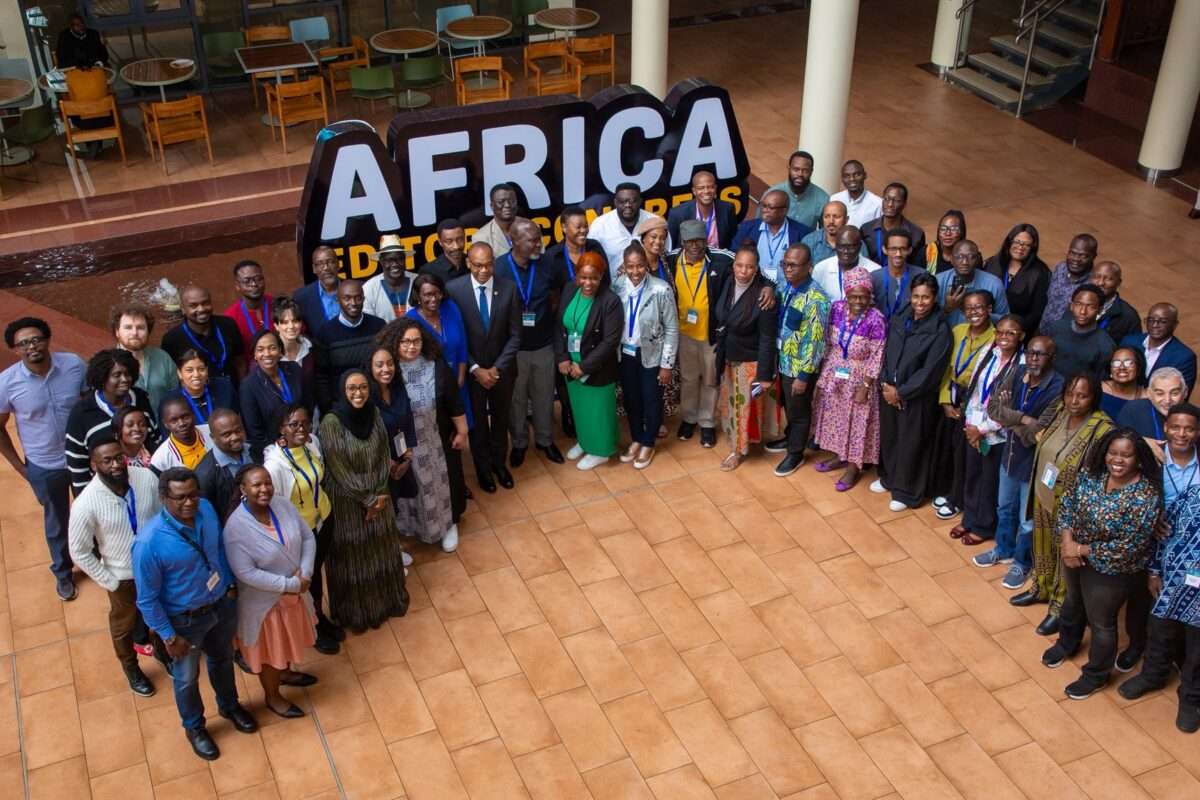
The inaugural Africa Editors Congress 2026, held on February 23-24, 2026, assembled over 150 of Africa’s senior editors, newsroom leaders, and media executives from across the continent. The Congress sought to confront the various threats that contemporary journalism faces. A key theme emerging from deliberations was that in the age of artificial intelligence and the increasing concentration of power by platforms, journalism is more essential to democracy than it has ever been.
A communiqué emerging from the Congress articulated various arguments for reclaiming media value, rebuilding public trust, and redefining sustainable journalism in Africa’s increasingly digital landscape. The media is navigating an ever-changing information ecosystem where platform dominance, algorithmic opacity, media viability challenges, and the weaponisation of digital infrastructure itself have made the practice of independent journalism exponentially harder.
The Congress called for urgent structural reforms to safeguard information integrity and the sustainability of independent journalism in the face of platform dominance, fragile business models, and the rapid evolution of digital repression. These priorities align with the work of the Collaboration on International ICT Policy for East and Southern Africa (CIPESA), which aims to promote the effective and inclusive use of ICT for improved governance and livelihoods in Africa.
During the Congress, CIPESA presented on the African Commission on Human and Peoples’ Rights (ACHPR) Resolution 620: “Guidelines on Promoting and Harnessing Data Access for Advancing Human Rights in the Digital Age,” which establishes that journalists must have meaningful access to both public and platform-held data to conduct investigative reporting and hold power to account. The Congress’s communiqué reinforces this principle, recognising that data is indispensable for modern investigative journalism and democratic accountability.
Communiqué of the Inaugural Africa Editors Congress
Nairobi, Kenya | 5 March 2026
At a defining moment of profound transformation for journalism, democracy, and the global information ecosystem, editors and media leaders from across Africa convened in Nairobi for the inaugural Africa Editors Congress, organised by The African Editors Forum (TAEF) on February 23-24, 2026. Bringing together editorial leadership from diverse regions of Africa and the world, markets, and media traditions, the Congress marked a significant step toward building coordinated continental responses to the structural challenges reshaping journalism and public-interest information ecosystems.
Participants acknowledged that African journalism is confronting a convergence of pressures: platform dominance, rapid technological disruption, shifting audience behaviour, and fragile business models. Deliberations addressed both the economics and the practice of journalism, recognising that financial sustainability and editorial integrity are mutually reinforcing foundations of credible public-interest media. A central focus of the Congress was the growing impact of artificial intelligence (AI) on journalism, and the urgent need to entrench ethical AI use in newsrooms while establishing fair and transparent compensation frameworks.
The Congress affirmed that independent journalism is an essential infrastructure for democratic and economic development. Markets, institutions, and public policy processes cannot function effectively without access to trusted information and data. The sustainability crisis confronting journalism, therefore, represents not only an industry challenge but a broader developmental risk for African economies and democratic processes.
Editors emphasised that rebuilding trust requires renewed commitment to strong professional practice alongside adaptation to a rapidly evolving information ecosystem. Participants recognised that public-interest content is increasingly produced beyond traditional newsroom structures, and that self-regulatory bodies should be broadened to include content creators committed to accountability, transparency, and accuracy while maintaining defined professional standards.
Participants expressed concern that existing copyright regimes were not designed for the large-scale extraction and use of journalistic content by generative AI systems. Discussions emphasised the need for rights-based approaches that secure equitable value for journalistic work, strengthen African agency within the global technology ecosystem, and address power imbalances between media organisations and dominant platforms. Competition-based remedies and coordinated regulatory approaches, such as the South African Competition Commission’s Media and Digital Platforms Market Inquiry report, were identified as important reference points for advancing sustainable outcomes in Africa.
Participants agreed that fragmented responses by individual African publishers or national markets are insufficient to address systemic challenges. Coalition-building and coordinated continental advocacy were identified as essential to shifting structural imbalances and ensuring that African perspectives shape global debates on media sustainability, technology governance, and information integrity. These include advancing normative frameworks such as the M20 Johannesburg Declaration and Resolutions 620, 630, and 631 of the African Commission on Human and Peoples’ Rights (ACHPR), which carry direct implications for the path of African media within shifting technology ecosystems. Enhanced collaboration in policy-making processes is fundamental to building the African media’s agency in the global tech ecosystem and to strengthening public interest journalism on the continent. Delegates appreciate growing attention from the African Union (AU) on matters of media freedom, especially through the ACHPR, and propose more collaborative efforts between editors and the continental/regional and sub-regional mechanisms to promote media freedom and sustainability.
The Congress highlighted several areas of emerging consensus and ongoing work:
a) Development of coordinated frameworks for collective engagement with global technology platforms, including approaches to fair compensation, bargaining power, and access to data.
b) Advancement of public-interest-oriented regulatory frameworks aligned with digital realities and freedom of expression principles.
c) Strengthening African editors’ societies as key institutional pillars for advocacy, coordination, and professional solidarity.
d) Expansion of collaborative editorial strategies to improve coverage of emerging economic domains shaping Africa’s future, including technology and extractive sectors.
e) Exploration of mechanisms to support small and community newsrooms through shared services, collaboration, and sustainable funding pathways.
f) Continued dialogue on African-led funding approaches that reinforce editorial independence and long-term resilience.
Participants noted that existing continental mechanisms have not sufficiently prioritised coordinated responses to the structural challenges facing journalism. In this context, the Congress resolved that TAEF should be strengthened and properly resourced to serve as a central convening and coordinating platform capable of advancing shared priorities across the continent.
The Congress further resolved to:
i) Strengthen cross-border collaboration among African newsrooms and ethical public-interest content creators.
ii) Advance rights-based approaches to media regulation that protect freedom of expression and access to information while addressing harms within digital information environments.
iii) Promote high standards of journalistic practice that contribute to informed public discourse, accountable governance, and inclusive economic development.
iv) Facilitate evidence-based research, knowledge exchange, and capacity-building initiatives driven by African leadership.
v) Engage constructively with policymakers, regulators, civil society, and global partners to ensure African editorial perspectives inform governance debates shaping the future of information ecosystems.
vi) Journalism/media and communications training in colleges and universities should update and incorporate these resolutions into their professional training tool kit.
The inaugural Africa Editors Congress represents an important milestone toward building a unified, resilient, and forward-looking African public-interest media ecosystem grounded in collaboration, collective leadership, and shared responsibility for strengthening democratic and economic resilience across the continent.
Adopted in Nairobi, Kenya, on 24 February 2026
Endorsed by the following partners:
Media Leadership Think Tank, GIBS
Network of Independent Media Councils in Africa (NIMCA)
SOS Support Public Broadcasting Coalition
Wits Centre for Journalism, South Africa
Collaboration on International ICT Policy for East and Southern Africa (CIPESA)
M20
About The African Editors Forum (TAEF)
The Africa Editors Forum (TAEF) is a continental network of editors, senior newsroom leaders, and media executives committed to strengthening independent journalism and advancing media freedom across Africa. TAEF works to promote ethical standards, defend press freedom, deepen professional solidarity, and support editorial innovation in response to the evolving political, economic, and technological landscape shaping the continent. Through convenings such as the Africa Editors Congress and strategic partnerships with regional and global institutions, TAEF provides a platform for dialogue on journalism’s role in democracy, development, and African agency in emerging domains. The Forum also champions fair compensation for journalism as a public good, newsroom resilience in the digital age, and collaborative responses to threats facing journalists and media organisations. TAEF serves as a collective voice for Africa’s editors, advancing a journalism culture rooted in independence, public interest, and lasting excellence.
At the Global India AI Summit held on February 16-21, 2026, the Collaboration on International ICT Policy for East and Southern Africa (CIPESA) endorsed the call for ReGenAI: A New Deal for the AI Economy. Led by IT for Change, the initiativeemerged out of the Towards Regenerative AI conference, which was held as a pre-summit event last year.
The endorsement followed the Roundtable on AI Governance: Redlines to Baselines discussion held on February 18, 2026. The roundtable convened more than 40 leading civil society organisations, researchers, and policy practitioners from across the Global South, alongside various institutions from the North, to rethink and reshape current debates on AI governance.
The roundtable was organised by the Global Digital Justice Forum (Data Privacy Brasil, Derechos Digitales, EngageMedia, ETC Group, IT for Change, Research ICT Africa, Tech Global Institute) Ada Lovelace Institute, Centre for Communication Governance – National Law University Delhi, Planetary AI Network – University of Edinburgh, and The Future Society.
The discussion built on the framework outlined in ReGenAI: A New Deal for the AI Economy, which calls for a shift in the AI paradigm toward meaningful and dignified work, diversified economies, pluralistic knowledge societies, and planetary flourishing.
The meeting highlighted the need for a New Deal that advances an agenda that challenges the dominance of today’s prevailing AI models and calls for systems built upon justice, dignity, inclusion, and sustainability. It argues that the current AI paradigm is defined by the invisibility of workers, the concentration of data value in the hands of a few powerful actors, the extraction of knowledge from communities without recognition or reciprocity, and ecological harm driven by economic interests.
By endorsing the New Deal for AI at the summit, CIPESA adds its voice to a growing movement demanding a more democratic and accountable AI future. It also serves as a reminder that Africa’s role in the global AI conversation should expand beyond supplying data, labour, or markets for technologies developed elsewhere.
African governments have been urged to move beyond pilot projects and develop a Digital Public Infrastructure (DPI) that is open, secure, nationally owned and capable of operating at a full national scale to truly serve citizens.
This call was made today in Morocco during the launch of the MOSIP Connect 2026 conference. Speaking at the event, Prof. Debabrata Das, Director of the International Institute of Information Technology (IIIT) – Bangalore, emphasized that DPI cannot remain at the pilot stage indefinitely.
“DPI must be scaled to operate at national levels,” he said, highlighting that such systems are not just technology projects but national assets that underpin citizens’ access to services like education, health, social protection, and payments.
DPI refers to government-backed digital systems and platforms designed to provide citizens with secure, accessible, and efficient services. These systems include national digital IDs, e-government portals, digital payment platforms, and health and social service databases.
Across Africa, countries are making significant strides in implementing DPI, though progress varies widely. Ghana’s national ID system, the Ghana Card, has been linked to banking, mobile verification, and social services, while Rwanda has achieved over 90 percent coverage of adults with digital IDs integrated into multiple government services.
Kenya’s Maisha Namba program seeks to consolidate several identity databases into a single, unified platform. Despite these advances, many initiatives remain fragmented or confined to pilot projects, limiting their ability to deliver services nationwide.
Prof. Das stressed that for DPI to deliver real public value, it must be open-source, secure, respect national and data sovereignty, and be designed to evolve with changing policies, technologies, and citizen needs.
“DPI is not regular software development. When embraced, it becomes part of the relationship between citizens and the state. That means it must be based on evidence, transparency, accountability and continuous learning.”
According to him, six principles should guide next-generation DPI development: open-source technology, respect for national and data sovereignty, neutrality in partnerships, reusability of systems, commitment to national-scale deployment and the ability to evolve as policies, technologies and citizens’ needs change.
Additionally, he added that building successful national digital systems requires three elements working together: strong technology platforms and standards, governance structures that ensure accountability, and institutional and user capacity to adopt the systems. Without all three, pilot programs risk failing to scale.
“Data creates power. Countries must retain control over the data generated through digital systems. This is why sovereignty considerations are central to MOSIP’s approach when working with governments,” he added.
The Modular Open Source Identity Platform (MOSIP)a IIIT-Bangalore project, offers countries modular and open-source technology to build and own their national identity systems. The project aims to provide governments with the tools for meaningful digital transformation, established on a bedrock of good principles and human-centric design.
Speaking at the same event, Abdelhak Harrak, Director of Information Systems and Telecommunications, Ministry of the Interior, Kingdom of Morocco said that the success of a digital identification system does not rely solely on technical solutions, however advanced they may be, it also depends on strong governance and the sustained mobilization of teams responsible for rigorously managing complex transformations involving numerous field actors. It is this synergy that ensures both the security and the sustainability of a national identification system.
“Technology alone cannot drive change; it is the alignment of people, processes, and purpose that turns innovation into lasting impact,” said Harrak.
He also highlighted the role of private-sector and civil-society partners in building sustainable digital ecosystems. He described them as “essential” rather than peripheral, noting that innovation often comes from organizations that build localized solutions on top of open platforms.
This article was first published by Science Africa on February 12, 2026.
The Africa Media Festival is a gathering for journalists, editors, storytellers, creators, and media builders from across the continent and the diaspora.
The festival is a meeting place for those working in reporting, production, technology and creative enterprise who are asking real questions about the future of media and how it is made, funded and sustained.
This year’s edition continues to expand pathways for participation across Africa and beyond. The two days of conversation, learning and collaboration will centre on the ideas, challenges and opportunities shaping media and creative work today.