Namibia and Sierra Leone’s Digital Rights Record to be Assessed at the 38th Session of the Universal Peer Review

By Edrine Wanyama |

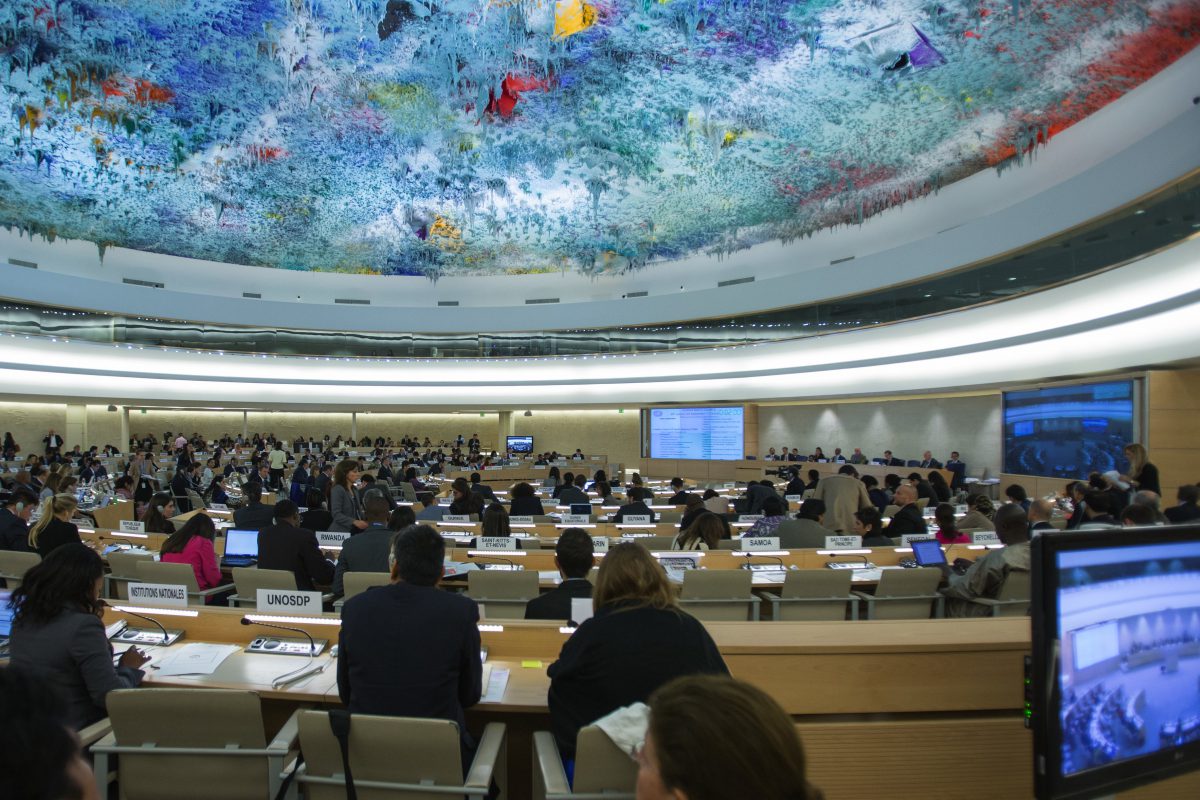
Namibia and Sierra Leone are among the countries that will undergo their Universal Periodic Review (UPR) at the upcoming 38th session of the United Nations Human Rights Council slated to take place in May 2021. The two countries have distinct human rights and governance track records, accompanied by  increasing digitalisation, making it important that the UPR recommendations for both states reflect the need for the protection of fundamental freedoms both online and offline.

Despite being coastal countries with direct connection to  submarine cables, internet penetration rates remain low – 36.8% in Namibia and 13.2 % in Sierra Leone. Namibia continues to suffer from high income inequality which exacerbates internet affordability and  service delivery. These factors contribute to its poor ranking at 84 out of the 100 countries assessed as part of  the 2020 Inclusive Internet Index on internet availability, affordability, relevance of content and readiness. For its part, Sierra Leone ranks at 57 out of 61 countries assessed by the Alliance for Affordable Internet on  internet affordability. Prevailing challenges include poor service delivery and reported  misappropriation of funds.

                See insights on digital access by our Africa Digital Rights Fund (ADRF) Grantee, Global Voices

Out of the 218 recommendations made to Namibia by 88 countries in the second cycle of the UPR in 2016, only one reference was made to freedom of expression and the press. Understandably, it is the highest ranked African country  on the global press freedom index – 23rd in  2019 and 2020 out of 180 countries assessed. Namibian Courts have also been instrumental in upholding freedom of expression and other related rights as reflected in a judgment in which an appeal by the Namibia Central Intelligence Service (NCIS) that sought to stop the publication of an article about corruption was dismissed. Similarly, the Supreme Court in 2018 ruled that the collection of licensed operators’ turnover by the Communications Regulatory Authority of Namibia was unconstitutional since the Universal Service Fund which is provided for by Section 57 of the Communications Act, 2009 (Act No. 8 of 2009) was not operational yet.

Nonetheless, there are freedom of expression challenges in Namibia including government threats to media independence, harsh criticisms of the media, calls to gag social media under the guise of  fighting misinformation and cybercrime, and preferential treatment accorded to state-owned media. Further, there are reported cases of harassment, assault and threats against media practitioners such as the assault of two journalists by the President’s Security Unit during the opening of the Covid-19 isolation facility. During the elections in 2019, there were blatant attacks on media practitioners over alleged influence of elections, while the government warned citizens against bullying and irresponsible use of social media platforms, which purportedly endangers lives. The publication of false or misleading statements on Covid-19 was outlawed in April 2020 with a potential penalty of a fine of up to 2,000 Namibian Dollars (USD 134) or imprisonment of up to six months. Since the outlaw, various incidents of arrests and detention of citizens have been reported.

On access to information, Namibia’s proposed access to information bill contains wide ranging exemptions that could negatively impact on the exercise of digital rights and freedoms if passed into law. Some of the notable exemptions include information and records pertaining to national security, proceedings of the cabinet, confidentiality of judicial functions, and information in possession of some public bodies.

In comparison, at the second UPR cycle, Sierra Leone received 213 recommendations from 88 countries, of which  seven recommendations were on freedom of expression. Ranked at 85 on the global press freedom index, the country continues to grapple with press freedom as witnessed in the arrests and arbitrary detention of individuals over online expression on allegations of incitement and subversion, false news and defamation. Moreover, the recent Independent Media Commission (IMC) Act 2020 creates room for censorship of media by empowering the Independent Media Commission to shut down media houses on ambiguous grounds of “public interest”. In July 2019, the IMC threatened  to suspend 12 media houses for non-payment of fines.

Progressive developments in Sierra Leone have included the cabinet move to decriminalise defamation and libel by repealing Part V of the Public Order Act . However, there have been instances where freedom of expression online has been undermined. In March 2018, the internet was shut down on the general election day consequently denying party affiliates an opportunity to receive results from the National Electoral Commission, and citizens and the media the opportunity to engage freely at this critical time. This block to digital access to information was contrary to Sierra Leone’s Access to Information law, 2013 which provides for disclosure of information held by public authorities or by persons providing public services. Notwithstanding the 2013 law’s promotion of openness, there are wide ranging exemptions  under Part II. These include, among others, information related  to national security and defense, international relations, investigations and law enforcement, economic and commercial interests related information.

On data protection, both countries are yet to enact legislation, which has left citizens’ right to privacy and personal data at risk of abuse and misuse. Amidst reports of state sponsored surveillance and online violence against women, the draft bill in Namibia has been undergoing consultations since early 2020. Sierra Leone’s Cybersecurity Bill engenders aspects of privacy and data protection. However, it is yet to be passed by parliament.

As part of the upcoming UPR for both countries, it is important to fasttrack the protection of fundamental human rights and basic freedoms both online and offline against the national, regional, and international human rights obligations. Accordingly, the Collaboration on International ICT Policy for East and Southern Africa (CIPESA) and Small Media, together with civil society organisations made joint stakeholder submissions on digital rights in the two countries. The Sierra Leone submission was made in partnership with Campaign for Human Rights and Development International, Sierra Leone Reporters Union, Citizens Advocacy Network and the The Institute for Governance Reform while that for Namibia was in partnership with the Internet Society (ISOC) Namibia chapter.

The submissions among others recommend for the two countries to:

  • Repeal and or amend laws to remove erroneous restrictions on freedom of expression and access to information. Notably, for Namibia – Article 21(2) of the Constitution, the Protection of Information Act, 1982, and Section 4 of Central Intelligence Services Act, 1997; and for Sierra Leone – Independent Media Commission Act, 2020
  • Uphold privacy of the individual by among others, repealing section 9 of the Communications Act (Namibia), and enacting Cybercrime, Data Protection and Privacy legislation through participatory and consultative processes (both countries)
  • Operationalise the Universal Service Funds and continue efforts to promote equitable access and inclusion for minority, marginalised and underserved communities
  • Abstain from arbitrary arrests and detention of journalists, media workers and critics over the exercise of their right to freedom of expression online or offline.
  • Comply with the established regional and international human rights standards and obligations on freedom of expression and access to information online and offline.

Read the full submissions, Namibia and Sierra Leone.
How Telecom Companies in Africa Can Respond Better to Internet Disruptions

By Victor Kapiyo |
In recent years, disruptions to the internet and social media applications have emerged as a common and growing trend of digital repression especially in authoritarian countries in Africa. Since 2019, countries such as Algeria, Benin, Burundi, Cameroon, Chad, Côte d’ivoire, Democratic Republic of Congo (DR Congo), Ethiopia, Gabon, Guinea, Mali, Nigeria, Sierra Leone, Sudan, Tanzania, Togo, Uganda and Zimbabwe have either restricted or blocked access to the entire internet.
Internet disruptions are often ordered by governments requiring intermediaries such as telecommunications and internet service providers to slow internet speeds, block commonly-used social media sites, or block all internet access. As internet disruptions become widespread across the continent, it is important to examine the role of internet intermediaries in facilitating or impeding them.
A February 2021 brief by CIPESA shines the spotlight on intermediaries’ responses to government orders and indicates that while the intermediaries facilitate transactions, access to online information and services, and provide platforms for interaction, expression and citizen participation, they are usually caught up in the overarching control of their activities by the autocratic governance of host governments who usually place political control and dominance over the enjoyment of digital rights.
Consequently, intermediaries’ responses to internet disruption orders on the continent have almost always been of quiet obedience. Most have failed to take any steps to push back against government excesses. Airtel (Chad and Uganda), Africell (Uganda), Gabon Telecom, MTN (Cameroon and Uganda), Tigo Chad, and Zimbabwe’s Econet Wireless are among those that unquestioningly acquiesced to censorship orders by governments in compliance with their license conditions but also to safeguard their business interests. They appeared to remain silent even in the face of pressing demands to restore the internet, and in some instances denied having blocked the internet on their networks.
However, other intermediaries such as MTN Benin, Orange Guinea, and Lesotho’s Econet and Vodacom pushed back. These intermediaries shared publicly the government letters ordering disruptions, identified the government officials ordering the shutdowns, and disclosed the basis for the shutdowns. In some instances they engaged with authorities to make the case for maintaining uninterrupted access, resisted or declined to implement unlawful orders, apologized to the public for disruptions, or even compensated their customers for the downtime arising from the disruptions.
While some of these steps are laudable, more needs to be done by local intermediaries to resist future shutdowns, uphold consumer protection, and promote respect for human rights online. Many of these intermediaries seem to lack the backbone to resist or challenge in court the legality of internet shutdown directives. It remains problematic that they seem to put their business interests first, while paying limited attention to the human rights, social and economic implications of internet disruptions.
The CIPESA brief recommends that intermediaries improve transparency reporting; always insist on written instructions and orders from authorities, and promptly make these orders public; expand their partnerships and engagements with civil society and join key platforms that aim to collaboratively advance a free and open internet.
The brief also recommends that intermediaries give users sufficient notice of impending disruptions; engage regulators and push back against licensing conditions (and laws governing the telecoms sector) that are vague, or that could potentially lead to the violation of human rights; and speak out publicly about the harms which network disruptions cause to their subscribers and to the intermediaries themselves.
Further, intermediaries should develop and make public policies that specifically state their position on shutdowns and how they address any shutdown orders from governments; and strive to comply with the UN Business and Human Rights Principles (UNBHR).
The brief also calls upon individuals and the business community to challenge the actions of intermediaries before national, regional and international mechanisms for accountability and compensation of losses incurred as a result of their actions.
See the brief here.

Uganda's 2021 Election: A Textbook Case of Disruption to Democracy and Digital Networks in Authoritarian Countries

By Juliet Nanfuka |

Uganda’s 2021 election, in which a president who has been in power for 35 years is seeking re-election, is a textbook case of how recent polls in authoritarian African countries go: disrupted internet, rampant disinformation campaigns, opposition candidates routinely arrested, peaceful protesters shot dead, and the media and civil society profoundly harassed.

If he wins the election, incumbent Yoweri Museveni, 76, will take his tally as Uganda’s president to 40 years. His main challenger Robert Kyagulanyi, 38, is a popular musician commonly known as Bobi Wine who joined politics in early 2017. Kyagulanyi has regularly been arrested, barred from radio stations and stopped from campaigning in most of the country. Other strong presidential contenders, notably Patrick Oboi Amuriat of the Forum for Democratic Change (FDC), have similarly been harassed.

The blockage of social media and other digital platforms dealt a heavy blow to opposition candidates’ efforts to canvass support. The country is conducting a so-called “scientific election”, one where the media and digital platforms provide the main campaign platforms, with physical meetings largely barred due to Covid-19 social distancing protocols. But the internet disruption also denied citizens access to vital information crucial to their informed decision-making in the poll and undermined electoral transparency in a country where the ruling party is routinely accused of electoral fraud.

Museveni’s ruling National Resistance Movement (NRM) accuses Kyagulanyi’s National Unity Platform (NUP) supporters of fomenting violence and flouting electoral regulations that bar large campaign crowds so as to prevent the spread of Covid-19. But critics say Covid-19 handed the government a ready excuse to trample citizens’ rights and hinder civic engagement and mobilisation by its opponents. They also accuse police and the Electoral Commission (EC) of cracking down on opposition candidates while turning a blind eye to NRM candidates’ breach of Covid-19 Standard Operating Procedures (SOPs).

Much like the police, the communications regulator, Uganda Commissions Commission (UCC), has been faulted for treating Museveni’s challengers partially and unfairly. Before ordering this week’s blockage of social media and other digital services, the commission had ordered all content producers (including live streaming channels and bloggers) to seek its authorisation in order to operate. That move cast a chill on free expression, as it promoted self-censorship and restricted the engagement of citizens in online platforms.

In another move that cast doubt on the independence of the communications regulator, last month it asked Google to block 14 YouTube channels sympathetic to opposition candidate Kyagulanyi. The UCC said the channels were misleading the public and inciting violence. The commission’s decision to single out only opposition-leaning channels was questionable. The UCC had argued that these channels were used to mobilise protests last November that left more than 50 people dead. However, it is through these channels that repeated cases of blatant police and army brutality were documented and reported. Google declined to consider the blockage request since it was not accompanied by a court order.

Now, it turns out that the order to block social media was not the result of an independent assessment by the UCC, but a directive handed to it by the NRM, and possibly by President Museveni. In a January 12 television address, Museveni said the blockage was in retaliation for Facebook banning accounts of his supporters. “We can not tolerate this arrogance of anybody coming to decide for us who is good and who is bad,” Museveni said of Facebook.

On January 11, Facebook suspended the accounts of a number of government officials and NRM party officials for what it described as Coordinated Inauthentic Behaviour (CIB) aimed at manipulating public debate ahead of key elections. Twitter also suspended similar accounts.

The decisions by Facebook and Twitter were backed by an investigation by the DFRLab that uncovered a collection of Twitter accounts and Facebook pages engaging in suspicious online behaviour, including posting verbatim messages supporting the Ugandan government and damaging to the opposition. Facebook’s internal investigation attributed the network to a group within Uganda’s Ministry of Information and Communications Technology.

While both platforms are currently embroiled in global debates which include their roles in content moderation and deplatforming, they have publicly supported their actions in Uganda, with Facebook stating that, “Given the impending election in Uganda, we moved quickly to investigate and take down this network.”

For its part, Twitter stated: “Earlier this week, in close coordination with our peers, we suspended a number of accounts targeting the election in Uganda.” Twitter added, “If we can attribute any of this activity to state-backed actors, we will disclose to our archive of information operations.” During the 2016 elections, research showed that the NRM had deployed up to 5,000 Twitter bots to influence online discourse on the election in favour of Museveni.

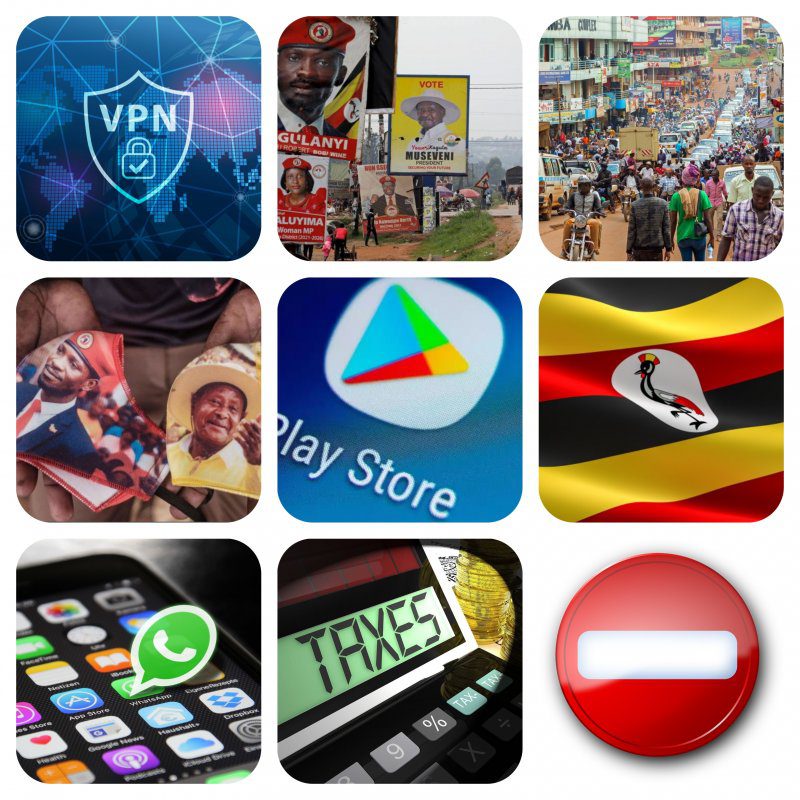
The process of disrupting digital communications commenced on January 9 with applications download platforms like Google Play and Apple’s App Store being affected, and by January 11,  social media platforms such as Facebook, Twitter, Instagram, and Whatsapp also started being blocked.  While rising numbers of users are relying on Virtual Private Networks (VPN) to stay connected, the government is understood to have ordered that several VPN providers be blocked too.

 Over the years, Uganda has made it a habit to disrupt communications during elections.  Often, the protection of national security and public order has been cited as the basis for disruptions to digital communications. In 2006, Uganda blocked websites critical of Museveni. In 2011, it censored short message service (SMS) and blocked social media during the post-election #WalkToWork protests. In 2016, it blocked social media and mobile money services on election day and again during Museveni’s swearing in (only social media).

While Uganda is categorised as a hybrid regime – one that has democratic and authoritarian tendencies –  CIPESA research has shown that the less democratic credentials a government possesses, the higher the likelihood that it will order internet disruptions. It has also shown a correlation between a leader’s longevity in power and the likelihood of ordering network disruptions.

In recent weeks, the government has increasingly been hostile to dissenting opinions and cracked down on the political opposition, civil society, and the media.

Earlier this month, the Inspector-General of the Uganda Police stated in a public address that the police would continue to assault journalists for “their own safety”. The statement came in the wake of increased police brutality against journalists covering opposition candidates. On December 27, at least three journalists were injured by the police, one of them seriously; and earlier that month police beat up six journalists who were covering Kyagulanyi in Lira town in northern Uganda.

The assault on media freedom was further highlighted when the state-backed Uganda Media Council issued a directive in December for journalists to register with the council in order to cover the elections – and threatened criminal charges against any media houses, both local and international, including freelance journalists, who failed to register. Some argued that the cost (UGX 200,000/USD 54) associated with the registration was an extra limitation for poorly paid journalists in addition to the suspicious timing of the directive just weeks to the election, which appeared like a means to curtail press freedom.

Meanwhile, in a press statement the police warned that journalists who had not registered with the Media Council would be blocked from covering campaigns and other electoral activities.  Civic actors described this as a “move by the government to manage information about election campaigns that have been marred by violence against leading opposition candidates and their supporters.”

Due to the Covid-19 pandemic, citizens in Uganda are increasingly reliant on digital technologies  for information crucial to their health, education, economic livelihoods, and political participation. Disrupting digital communications as Uganda has done not only raises concerns about its commitment to democracy and transparency during this critical time but also has far-reaching repercussions for the developing country’s economy and the lives of ordinary citizens.

Viewed together with the violence that state agents meted out on opposition supporters, the media and civic actors, and the partiality of regulatory agencies such as UCC and the EC, Uganda’s 2021 election is likely to have lasting effects on the social, economic and political arena of the country.

Three Days of Digital Rights at #FIFAfrica20! Two Day Down, One to Go!

#FIFAfrica20 |

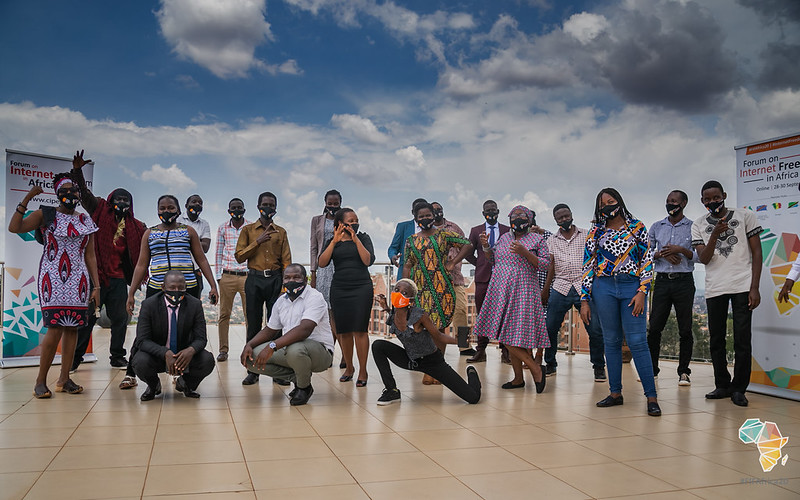
Day two of the Forum on Internet Freedom in Africa 2020 (FIFAfrica20) has wound down, with yet more engagement, experience sharing, skills building, assembly of thought leadership, insights and opinions on digital rights from across the continent and beyond.

The third and final day will be just as inspiring, kicking off with a dialogue on internet accessibility for persons with disability during Covid-19 at the remote hub in Abidjan, Côte d’Ivoire. Virtually, discussions on inclusion of persons with disability in the digital society will see GSMA host a talk on digital assistive technologies in low and middle income countries in Africa and Asia. Based on a landscape study, GSMA’s session will highlight the characteristics of the digital inclusion of women with disabilities including opportunities for innovators, the mobile industry and other stakeholders. On the first day of FIFAfrica, CIPESA explored how the telecommunications sector has largely excluded persons with disabilities from their service offerings in many African states.

Further on non-discrimination online, a collaborative session exploring where African women are placed – or left out of – on the internet will navigate a series of issues including imagining inclusive gender connectivity, the implications of Covid-19 on online African feminist movement building through to feminist research and the roles these are playing in the digital rights movement.

Internet users that are able to overcome discrimination and access barriers are faced with more challenges – among them the spread of false and misleading information online. Indeed, disinformation has come to play a concerning role on the internet, often fuelled by limited digital literacy and/or increasingly sinister motives. Media Monitoring Africa (MMA) will host a session on exploring how disinformation causes harm, undermines democracy, spreads fear, anxiety and deepens exclusion. In particular, MMA’s session will focus on the role that platforms should play in ensuring that public interest is maintained in efforts to combat disinformation online.

Meanwhile, Global Partners Digital (GPD) will highlight government responses to  disinformation in Africa over the past decade including during the heightened context of the Covid-19 pandemic. Drawing on expertise from Africa-based civil society groups that have jointly developed a disinformation policy tracker to track and analyse disinformation laws, policies and patterns of enforcement across Sub-Saharan Africa, the GPD session, which will also feature academia and private sector representatives, will advocate for a shift towards a more rights-respecting and evidence-based approach to combating disinformation online.

As deployment of Artificial Intelligence (AI) across the world gains momentum, its impacts are far-reaching. Yet still, conversations around responsible AI, have generally excluded the global south and in turn, this is likely to have consequences in the way in which AI technologies are designed, developed, and deployed for the region! The session will call for the decolonisation of AI in Africa and explore the need for inclusivity of more stakeholders in the development of AI in Africa.

The Centre for Human Rights, University of Pretoria will unpack the right to privacy within the revised Declaration of Principles on Freedom of Expression and Access to Information in Africa.  AccessNow, the #KeepItOn coalition lead will amplify the diverse strategies being employed  by activists, journalists, technologists, individuals among others to fight against the worrying trend of increased internet shutdowns  around the world. The session will build on day one and two of FIFAfrica20 engagements including catalysts for collaboration in digital rights strategic litigation.

Furthering the topic of strategic litigation, a Media Defence session will also outline experiences of strategic litigation in the context of digital rights.  The goal is to allow litigators to discuss with internet freedom and freedom of expression communities the practical realities of litigating digital rights, often against a hostile political backdrop. Media Defence will also use the session to develop relationships and widen its collaboration with other organisations that may benefit from legal expertise and/or financial support in these cases.

The tone for the close of FIFAfrica20 will be set by the presentation of the African Internet Rights Alliance (AIRA), a  coalition of civil society organisations working to advance digital rights in all aspects of life, governance and the economy on the continent. The AIRA session will share insights into the Alliance’s work over the past three years and discuss the need for transnational collaboration, partnerships and coalition-building to protect and expand digital rights across Africa.

Find the report here.

Report: The State of Internet Freedom in Africa 2020

#FIFAfrica20 |

Today, September 29, 2020, the Collaboration on International ICT Policy for East and Southern Africa (CIPESA) has released a new report, State of Internet Freedom in Africa 2020. The report focuses on the impact of the coronavirus disease (Covid-19) measures adopted by governments to contain its spread on digital rights and freedoms including freedom of expression and information, assembly and association, and the right to privacy.  

The report, which investigated the measures implemented by governments in Africa in fighting the Covid-19 pandemic shows that the highhandedness with which the governments and their agencies enforced the different Covid-19 preventive measures, including the suspension of rights through emergency declarations and the gagging of critical voices calling for transparency and accountability in handling the pandemic has greatly affected digital rights on the continent.

According to the report, prior to and during the pandemic period, several countries enacted retrogressive laws and implemented oppressive measures that served to strengthen the state’s repressive hand at the expense of citizens’ rights.

Onslaught on Freedom of Expression and Access to Information

Efforts to combat misinformation and disinformation related to Covid-19 had a direct effect on the enjoyment of the rights to freedom of expression and information. Whereas there were some bright spots, these were overshadowed by the negative.

Several governments enacted vague and overly broad laws and implemented repressive practices that curtailed freedom of expression and restricted access to information through censorship, filtering of content, closure of media houses, threats, arbitrary arrests, illegal detentions, prosecution, intimidation and harassment of journalists, online activists and bloggers.

Punitive sanctions and the criminalisation of the work of media houses and journalists in countries such as Tanzania, Chad, Uganda, Nigeria, Niger, and Ethiopia, in effect gagged the media, and restricted the flow, quality and quantity of information available to journalists and the general public.

Invasion of Privacy and Personal Data Breaches

The fight against COVID-19 has been characterised by an assortment of measures that led to the violation of privacy in numerous countries. The new Covid-19 legislation as well as pre-existing laws that were cited in implementing pandemic-related emergency measures such as in Chad, Mauritius, Kenya, Uganda, South Africa and Zambia authorised the searching of homes and individuals, and required the reporting of individuals suspected to be carrying the virus. 

Further, the laws required the collection of personal information of individuals, contact tracing and surveillance activity in countries like Burundi, Kenya, Nigeria, South Africa, and Tunisia, as well as mandatory testing in Zimbabwe. These measures mostly had the effect of undermining individuals’ data rights.

The infringement on individual privacy was aggravated by the absence of strong or recommended  data protection safeguards in most of the affected countries. while some of the countries had laws on privacy and data protection, they did not offer strong protection but rather facilitated privacy invasion. 

Accelerating Digital Exclusion

The report reveals that while Covid-19 has illuminated the centrality of technology in the lives of individuals and communities, it has also brought to the fore the glaring digital divide in the region, and indeed deepened the digital exclusion. Several individuals including persons with disabilities have been locked out of active participation in the digital society, with the exclusion being manifested in accessing education, remote work, and participating in democratic processes, among others. In some countries, internet costs remained very high while in others like Uganda, tax on social media continued to subsist. The high costs and taxes went to the root of affordability ICTs. 

Undermining Citizen Participation

The report also demonstrates that the fight against Covid-19 has eroded the ability by citizens to participate in civic matters and the conduct of public affairs. Stringent measures including clamp down on media platforms, intimidation, arrests, detention and prosecution. These high-handed measures including in Algeria, Burundi, Egypt, Ethiopia, Kenya, Morocco, Rwanda, Tanzania, Uganda and Zimbabwe  have cowed citizens, activists, and the media for fear of attracting reprisals. These measures have, in turn, forced human rights defenders, journalists, activists, the political opposition, and ordinary citizens to self-censor, disengage from participating in public affairs, and refrain from exercising their rights to participate.

Recommendations

The report calls upon governments, their agencies and authorities to drop all regressive measures that curtail digital rights and freedoms and instead adopt and undertake measures that promote the protection and enjoyment of digital rights and freedoms in the region.

Civil society organisations, telecommunication companies, and other stakeholders are called upon to work jointly towards ensuring that individuals realise and enjoy their rights and freedoms in the digital space by among others engaging in advocacy, developing policies that address individuals needs.

Find the report here.

Â