
By CIPESA Writers |
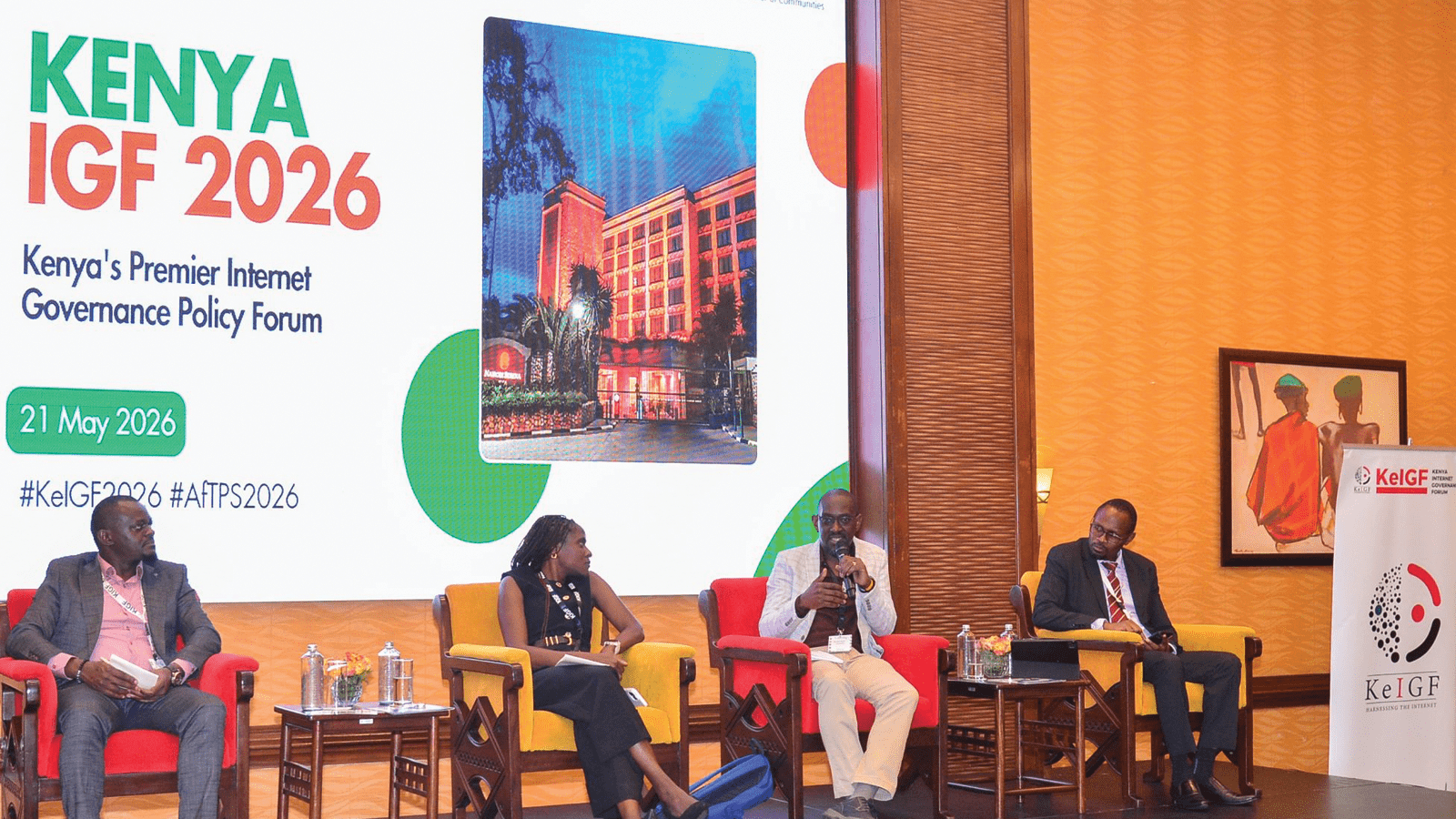
On May 21, 2026, more than 300 delegates convened in Nairobi, Kenya, for the 19th edition of the Kenya Internet Governance Forum (KeIGF) to discuss the state of digital rights and internet governance on the continent.
The KeIGF was held three weeks after the continent’s digital landscape was jolted by the Zambian government’s decision to postpone RightsCon, the global digital rights forum, four days before it was scheduled to start. Efforts to resolve the issue yielded no positive results, and Access Now, the event organiser, decided to cancel the conference.
According to the Access Now statement, officials in Zambia’s Ministry of Technology and Science had reached out to them with concerns raised by diplomats from the People’s Republic of China, who were “pressuring” the Zambian government over the planned in-person participation of Taiwanese civil society.
Proceeding with the event while excluding some participants at the behest of certain countries would have set a bad precedent. The RightsCon cancellation, however, had a ripple effect. Several in-person sessions of the World Press Freedom Day 2026 Global Conference, which was to be held alongside the RightsCon conference at the Mulungushi International Conference Centre in Lusaka, were cancelled, while others were rescheduled to later dates.
These events highlight the growing influence of national governments on the success or failure of regional and international digital rights convenings. As Access Now explained, such convenings often involve extensive diplomatic engagement between conference organisers and host countries to secure their commitments, among other things, to respect the fundamental human rights of all participants and to ensure smooth logistical preparations. For example, in March 2026, the Zambian Ministry of Technology and Science issued a statement announcing that the government would be a co-host of the RightsCon conference.
Access Now’s decision was a timely reminder that fundamental human rights, including digital rights, are non-negotiable and interdependent, and that national governments should not be at liberty to choose which rights to respect.
Growing Incidents of Foreign Malign Influence in Africa
Foreign governments’ interference in the internal affairs of African countries is not new, and while incidents of foreign malign influence in Africa’s trajectory toward digital authoritarianism have been well documented, the RightsCon cancellation was possibly the first time a foreign entity worked so blatantly to influence the direction of a digital rights convening itself. This clearly demonstrated the dangers posed by the growing economic and power imbalances between African countries and their trading partners.
Because many African countries have turned to China and Russia for support for their economic and security agendas, respectively, they have inadvertently surrendered part of their sovereignty to these superpowers due to what is referred to as the “debt trap”.
For example, in April 2026, China was reported to have scrapped tariffs on all African countries except Eswatini, which maintains diplomatic relations with Taiwan, a move that contributed to friction between Access Now and the Zambian government. Earlier in 2022, the Chinese government was reported to have “forgiven” 23 interest-free loans to 17 African nations after it had also cancelled more than USD 3.4 billion in debt and restructured around USD 15 billion in debt in Africa between 2000 and 2019.
Reports by the Institute for Security Studies (ISS) and the Collaboration on International ICT Policy for East and Southern Africa (CIPESA) have shown that geopolitical interests have often crossed national boundaries, with powerful nations exerting influence on the legal landscapes and digital public infrastructure of many African countries.
According to an Institute of Development Studies study that mapped smart surveillance technologies in 11 African countries, many African countries that have embraced smart city surveillance have tended to rely on China for financing their digital public infrastructure, including tools, software, and capacity-building, which are often deployed to conduct digital surveillance of their citizens. Digital rights actors and individual government critics have often borne the brunt of these surveillance practices.
Unfortunately, the deployment of these digital surveillance tools and software is often characterised by limited oversight and a lack of transparency regarding their purchases and operations, raising serious concerns about their intentions and their impact on human rights.
In April 2026, a team of United Nations Experts raised serious concerns about the proliferation of digital surveillance technologies, including artificial intelligence (AI), noting that their misuse by states in law enforcement, counter-terrorism, border management, and national security and military contexts poses serious human rights risks.
Disinformation and Information Warfare
Africa has also become a battlefield for disinformation campaigns as different superpowers scramble to expand their spheres of influence. Foreign disinformation campaigns are particularly prominent during periods of contestation, such as elections, protests, and civil strife.
Because they are more covert, disinformation campaigns have become more insidious as they are rarely noticeable or easily associated with foreign actors. For example, in countries such as Kenya, Ethiopia, Ghana, and Nigeria, Russia has worked with locally based influencers and digital content creators to amplify pro-Kremlin narratives and messaging while keeping their connections to Russian-backed initiatives a secret.
In 2024 alone, there were at least 80 documented cases of Russian-linked disinformation campaigns targeting more than 22 African countries. Indeed, several of Africa’s fragile autocracies, such as Burkina Faso, the Central African Republic (CAR), Mali, and Sudan, have come to rely on Russia’s well-coordinated digital propaganda to sustain their stay in power.
Mitigating the Malign Influence
Foreign malign influence has continued to thrive in Africa, partly due to African countries’ overreliance on the “generosity” of superpowers seeking to shape Africa’s political, social, and economic landscape. While development partnerships and support are critical to a country’s development, these should be anchored in rights-respecting frameworks and geared towards benefiting ordinary citizens.
Taken together, the various aspects of foreign malign influence are undermining the democratic practices of many African countries, including electoral processes, while emboldening autocratic leaders to embrace digital authoritarianism.
For digital rights activists, especially in Africa, it is therefore important to understand and address the factors driving the expansion of foreign digital malign influence and to develop strategies to counter it, including mechanisms to hold governments accountable when they purchase and deploy digital surveillance tools and software.
More specifically, digital rights actors should:
- Strengthen Digital and Media Literacy
Because foreign malign influence most often thrives in contexts with limited media and information literacy, weak media systems, and digital inequalities, it is important that rights actors build systems that promote information integrity, such as media independence, fact-checking, and independent journalism, to counter information manipulation. In most of Africa, the media and information ecosystems are so integrated, enabling the viral spread of misinformation through influencers and digital content creators with large followings. Quite often, media houses amplify the disinformation tapped from influencers with large followings without verification.
- Build Stronger Coalitions and Regional Networks
In many African countries, governments have often used the tried-and-tested “divide and rule” approach, mischaracterising digital rights actors as either sympathetic to them or “enemies”. The main purpose is always to isolate certain actors deemed too critical.
To mitigate the risks associated with engaging with less democratic governments, digital rights actors should aim to build synergies and support systems, ensuring that collective voices among like-minded organisations, such as academia, media, and telecom companies, can, among other things, challenge government excesses. This could include issuing joint statements, which is critical as it does not expose any entity; and providing technical and financial assistance to more at-risk organisations.
- Leverage Digital Rights Convenings
Digital rights convenings such as the Forum on Internet Freedom in Africa (FIFAfrica) and Internet Governance Forum have become strategic platforms for digital rights advocacy and engagements, especially with national governments. It is therefore important that digital rights actors use these platforms to continuously ask duty bearers the hard questions regarding the conduct of due diligence reports on any technologies imported into the continent and their impact on fundamental human rights.
For example, Africa will host several international and regional digital rights convenings, including the 21st Global Internet Governance Forum, which will be held in Kenya in December 2026, the fourth time the event will be held on the continent. In September, Mauritius will host the 13th FIFAfrica edition, while Ghana will host the 15th Annual Africa Internet Governance Forum in November 2026.
These events present great opportunities for digital rights actors to reflect on Africa’s digital rights record and the progress made so far, and to table concrete African positions on digital rights, including data sovereignty, Artificial Intelligence, and platform accountability.