By FIFAfrica19 |
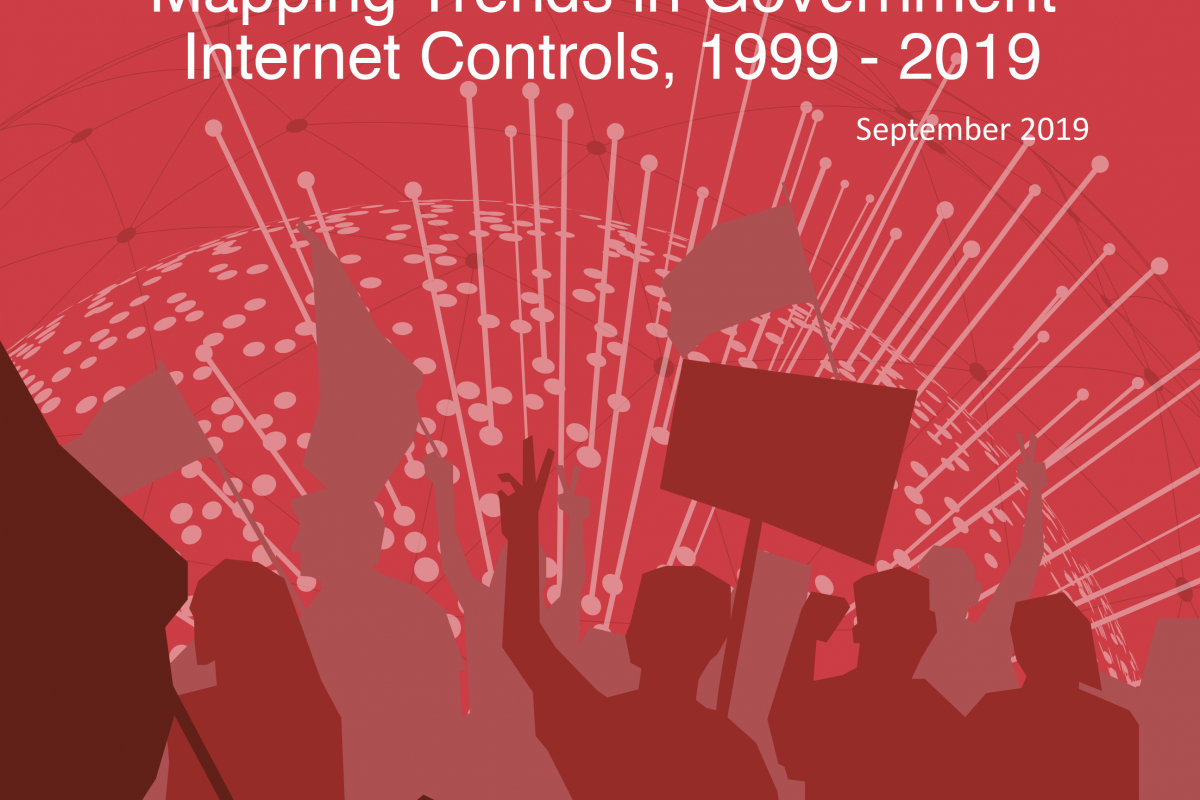
For the last 20 years, African countries have been broadening and enhancing control measures that govern the use of digital communications including the internet.
According to a new report by the Collaboration for International ICT Policy for East and Southern Africa (CIPESA), these controls when viewed collectively, continue to undermine democracy and cement authoritarians hold on political power.
With only 24.4% of Africans using the internet, increasingly, the countries reviewed have since 1999 adopted a similar pattern of internet control measures across the board. The key reasons given by governments are the need to safeguard national security, fight cybercrime and maintain public order.
Each successive period since 1999 came with some notable developments in internet controls, including establishment of regulatory agencies. By 2005, a few regional countries were beginning to realise the need to intercept communications, including digital communications.
Ethiopia was probably the first sub-Saharan African country to begin blocking internet sites, with the first reports of blocked websites appearing in May 2006 when opposition blogs were unavailable. During this period, laws governing media and journalism were the main way to control freedom of expression, including of voices that questioned government actions.
Between 2006 and 2010, several governments started to take dedicated moves to regulate the digital sphere, including proscribing various actions related to the use of Information Communication Technology (ICT). There was a flurry of legislation to enable the interception of communications, or to criminalise the use of certain services (as was the case with Ethiopia’s Anti-Terrorism Proclamation- No 652/2009, under which it is estimated that over 900 individuals were indicted over their online activity).
This period also witnessed numerous cases of blockage of critical websites in countries such as Burundi and Uganda. Distinctly, this period saw the start of systematic disruption of communications and other internet freedom infringements during election periods, although the target was critical websites (such as in Ethiopia and Uganda) and short messaging services, for instance in Ethiopia and Kenya).
The 2011-2015 period saw an increase in the government internet control measures with dedicated efforts to regulate and control citizens’ online actions. Many more citizens were arrested and prosecuted over alleged offences and crimes committed through online mediums. More governments ordered disruptions to communications.
Cybercrime laws enacted in this period (for example in Nigeria, Tanzania, and Uganda) became the main pieces of legislation used to undermine internet freedom through arrests and prosecution of ICT users. These laws provide vague definitions of cyber offenses and have been used to arrest and intimidate voices of dissent.
The 2016-2019 period was the “golden era” of network disruptions (commonly known as internet shutdowns). During this period, nearly half the countries in Africa, at least 22 countries experienced a government-ordered network disruption, with popular social media sites such as Facebook and Twitter being the main target. Some countries also ordered blockage of SMS, or of the entire internet, and in Uganda, Chad and DRC, mobile money services were disrupted. In 2019 alone, five countries registered network disruptions to include – Chad, Democratic Republic of Congo, Gabon, Sudan and Zimbabwe).
The report recommends several remedies for governments, companies, media, academia, technical community and civil society.
Find the full report here.
#FIFAfrica19: Just Days Away
FIFAfrica19 News |
Season of Changes
We are now just days away from this year’s edition of the Forum on Internet Freedom in Africa (#FIFAfrica19) which will be held in Addis Ababa, Ethiopia. In the lead up to FIFAfrica19, we have witnessed some interesting developments in Africa’s digital landscape.
Among them is the Policy and Regulatory Initiative for Digital Africa (PRIDA) convening at the African Union (AU), which was aimed at shaping the African digital transformation agenda through fostering universally accessible and affordable broadband across the continent to unlock future benefits of internet-based services. Further, the operational phase of the Africa Continental Free Trade Area (AfCFTA) was launched and is touted to be the world’s largest free trade area once it’s fully up and running. Meanwhile, at the recently concluded World Economic Forum (WEF), the untapped digital potential of the continent was recognised, with the need for better digital infrastructure and affordable data highlighted.
Coincidentally, in the FIFAfrica19 host country, Ethiopia, the parliament passed the Communication Regulatory Proclamation, which aims to liberalise the telecommunications sector and under which licenses will be awarded to two private mobile companies.
FIFAfrica19: A Platform to Hold Up the Mirror On Africa’s Digital Landscape
While all these developments sound promising, there remains a fundamental need for a multistakeholder approach that addresses the persisting gaps in legislation and practices related to Information and Communications Technology. As such, FIFAfrica provides an avenue for identifying and deliberating on these gaps, in addition to providing recommendations, including by marginalised and vulnerable communities such as persons with disabilities. Some of these are captured in this brief: Digital Rights in Africa: Challenges and Policy Options.
FIFAfrica presents a wide-ranging lineup of workshops and sessions among them, consultations on Internet Rights, the Sustainable Development Goals (SDGs) and Collaborative Advocacy hosted by the Global Network Initiative (GNI).
Meanwhile, AfricanFeminism.Com will assemble actors win the African feminist movement at the Forum in a session titled “End of Politeness: African Feminist Movements and Digital Voice”. The collective will illustrate how the current pan-African feminism movement is thriving on access to technologies that earlier generations did not have, to advance women’s rights to self-expression and access to information.
Ahead of the Forum on September 23 –24, there will be a series of meetings and workshops, including a policy round table discussion hosted by the Center for International Private Enterprise (CIPE). This discussion will bring together public, private, and civil society stakeholders from across the continent to discuss regional opportunities for inclusive economic and entrepreneurial development in an increasingly digital future. Topics at the policy roundtable will include data flows and privacy, eCommerce and eTrade, e-payments and financial inclusion, and the future of entrepreneurship.
FIFAfrica19 will also feature a photographic exhibition hosted by Afrophilia Magazine titled “If I were free. If we were free…” The exhibition will showcase art from Africa and the diaspora with the aim of challenging narrative about the continent online and offline. Other exhibitors will include the Ministry of Innovation and Technology (Ethiopia), Small Media, Together!, Jigsaw, Cyrilla Collaborative, Netblocks, the Democratic Principles for an Open Internet, Localization Lab, Electronic Frontier Foundation (EFF), SafeSisters and the Internet Society.
These are just a few of the numerous sessions, workshops and exhibitions that will be taking place next week among others including on topics such as biometrics and facial recognition technology, digital rights and revolution, refugees and access to technology, censorship, ICT and persons with disabilities, elections, internet shutdowns, and the right to associate and assemble in the digital age among many others. See the latest agenda.
Participants at the Forum will also have access to the Digital Security Hub, hosted by experts from Access Now, DefendDefenders, the Digital Security Alliance, Defenders Protection Initiative, and Greenhost.
Unable to attend #FIFAfrica19 in person
We have you covered. Be sure to join the discussions online using #FIFAfrica19 and #InternetFreedomAfrica. A live-stream will be available on our YouTube Channel as well.
Important Notices On Attendance and Registration
Please note that the Forum is in two parts
23–24 September, are days dedicated towards closed meetings and invitation only workshops.
25–26 September, are days open to all registered attendees.
By now, all recipients of travel support have received their information on flights and visas. For further information please refer to the travel note. If you have any further visa related queries please email [email protected]
Any Further queries? Please contact [email protected] and copy [email protected] if you have any queries.
Spread The Word
We look forward to seeing you at #FIFAfrica19 in person and online. We encourage you to share your thoughts on internet freedom with us and the wider community online. Please use the hashtags #FIFAfrica19 and #InternetFreedomAfrica.
Code of Conduct
Interactions at FIFAfrica include many different opinions and experiences hence it is essential to uphold respect and ensure comfortable participation for all attendees, staff and support personnel. Attendees of the Forum must follow the Code of conduct which covers the main Forum events and all Forum-related social events such as parties, gatherings at restaurants, bars and hotels. It also covers the conduct of participants on online platforms during the Forum. The Code of conduct is aimed at building a community that is free from intimidation, discrimination, or hostility by upholding dignity, decency, and respect among participants.
Please read the #FIFAfrica Code of Conduct.
Global Network Initiative (GNI) to Hold Consultations on Internet Rights, SDGs and Collaborative Advocacy at FIFAfrica19
FIFAfrica19 |
Over the last six months, the Global Network Initiative (GNI) has been convening diverse stakeholders from sub-Saharan Africa to discuss pressing freedom of expression and privacy issues in the region. Research and consultations conducted by the GNI to-date indicate that government-enabled surveillance and network disruptions are of particular concern across multiple stakeholder groups, as well as other issues like social media taxes and data protection. Through these discussions, participants representing companies, civil society, and academia, among others, have exchanged important insights into these issues and identified ways multi-stakeholder efforts could advance shared aims.
At the upcoming Forum on Internet Freedom in Africa 2019 (FIFAfrica19), GNI will convene a session to continue the conversation about pressing freedom of expression and privacy issues in sub-Saharan Africa. The aim is for the pan-African assembly of participants to share updates and insights into pressing policy issues as well as collectively identify areas for possible collaborative advocacy between companies and civil society, such as through the development of shared statements or the identification of areas that need more research.
This session will be held on Wednesday September 25 under Chatham House rules and is open to attendees of FIFAfrica19. Please register in advance.
The consultations will extend to a panel taking place on September 26, also convened by GNI, titled “Disrupting Development: How Internet Shutdowns Impede the Sustainable Development Goals”. Speakers on this panel will demonstrate how open and unrestricted access to the internet facilitates achievement of the Sustainable Development Goals (SDGs). They will also discuss the consequences of disruptions for the achievement of SDGs, using recent examples of network disruptions in Africa to highlight these effects, and how governments can pursue the SDGs while respecting human rights. As an outcome of this session, attendees will understand the role of the internet in achieving the SDGs and will be equipped with ways to analyse how network disruptions impact their country’s realisation of the goals.
Panellists: Zama Ndege Godden, Blacked Out, Cameroon | Alp Toker, NetBlocks, Turkey | Berhan Taye, AccessNow, Ethiopia
Moderator: Jason Pielemeier, GNI
The GNI is a global multistakeholder network, composed of leading ICT companies, civil society organizations, academics, and investors. GNI’s mission is to protect and advance freedom of expression and privacy in the ICT industry by setting a global standard for responsible company decision making and by being a leading voice for freedom of expression and privacy rights.
Tomiwa Ilori

Tomiwa was a Fellow at CIPESA during his Master’s in Human Rights and Democratisation programme. The fellowship was as a result of the partnership between CIPESA, Makerere University and the Centre for Human Rights, University of Pretoria during which Tomiwa he worked on a couple of projects with CIPESA that focused on internet freedoms and the digital ecosystem in Africa.
Tomiwa has worked with Paradigm Initiative in Nigeria where he provided legal support on the first digital rights legislation in Africa, the Digital Rights and Freedom bill and also worked on several tech policy analysis briefs, strategic advocacy on internet freedoms in Africa. he also had a brief stint with MainOne Cable Company.
He is currently a Doctoral candidate at the Centre for Human Rights, University of Pretoria where he also works as a Researcher at the Democracy, Transparency and Digital Rights Unit of the Centre.
Sotheavin Doch

Sotheavin Doch holds a bachelor degree in Environmental Science and a masters degree in Disaster Risk and Resilience. She was a Research Assistant for the BBC Media Action in Cambodia and is a Research and Partnership Officer with Open Development Cambodia (ODC). She supports ODC’s team to promote and teach use of ODC’s site as an open data platform. She organises training for citizens citizen journalists local authorities and others stakeholders to access information of public services’ services/fee digitized on ODC’s website and also conducts training on ‘data-driven journalism’ to journalist students in Cambodia to generate and analyse data into their news reports to develop a new way of telling stories with data or evidence.
Sotheavin joined CIPESA as part of the South South Media Lab (SSMLab) in-residence program which aims at increasing networking and collaboration within the media sector between South-East Asia and East Africa. The residencies took place during November and December 2018.
As part of the fellowship, Sotheavin worked on the use of open data and open source technology to promote public service delivery. She also conducted a training for journalists on data-driven reporting methods, through engagements and needs assessments with ICT4Democarcy Network partners CIPESA, Women of Uganda Network (WOUGNET) and Transparency International (TI) Uganda.