Localisation Des Donnees, Base De Donnee Biometrique Et Identite Numerique

Par Astou Diouf |

L’étude de la gouvernance des données personnelles intervient dans un contexte où le Sénégal
dispose d’un centre national de données pour promouvoir la souveraineté des données
conformément à la Stratégie numérique 2025. A cet effet, les agences de l’État sont tenues
d’héberger toutes leurs données dans le centre de données de Diamniadio.

La gouvernance des données doit nécessairement promouvoir une politique et des pratiques
efficaces en matière de collette et traitement des données des citoyens, de l’administration
publique et du secteur privé d’une part et d’autre part, à tenir compte de l’impact de la
localisation des données, de la biométrique, du paysage de l’identification numérique et de tous
les droits numériques tels que la vie privée et les données personnelles.

À cela s’ajoute une croissance exponentielle d’acteurs non régulés comme les réseaux sociaux
ou moins régulés comme les prestataires de service d’information sur les comptes et la
prolifération des contenus haineux, racistes, antisémites, des atteintes à la vie privée, des
fausses nouvelles, de la désinformation et de la manipulation de l’information. L’ensemble de
ces facteurs incitent la société civile du secteur du numérique à s’interroger sur la gouvernance
des données personnelles au Sénégal.

La méthodologie qui a été adoptée pour cette étude comprend essentiellement la recherche
documentaire et de données disponibles auprès des bibliothèques, des centres de
documentation.

Ce travail scientifique est le résultat d’une étude sur : « la gouvernance des données personnelles
au Sénégal », afin de permettre un plaidoyer pour une gouvernance des données participative
et inclusive au Sénégal.

En outre, une étude sur la gouvernance des données personnelles nécessite une note introductive
de l’évolution des TIC et une bonne compréhension des concepts qui ne sont pas souvent
familiers aux lecteurs. C’est dans cette suite logique que des éléments de réponse
mériteraient d’être apportés à la problématique de la gouvernance des données personnelles au
Sénégal. L’Etat, acteur principal de la gouvernance des données intervient pour encadrer la
collette et le traitement des données dans un cadre normatif et institutionnel. Il est de coutume que le traitement et la collecte des données personnelles est souvent source d’atteinte
aux droits fondamentaux des personnes.

Des risques potentiels peuvent résulter des programmes de collecte de données biométriques
numériques, de localisation des données ainsi que des politiques d’institution d’identité
numérique (V). Pour se faire, on s’efforcera de conclure et de formuler des
recommandations à l’endroit des parties prenantes concernées (Administration, secteur privé,
société civile) pour une protection efficace des données à caractère personnel.

Localisation Des Donnees, Base De Donnee Biometrique Et Identite Numerique

Are Tech Companies Skirting their Responsibilities to Journalists’ Safety?

By CIPESA Writer |

The proliferation of technology has created new opportunities but also threats to journalists and journalism in Africa. Online harassment, criminalisation of aspects of journalism, disinformation and misinformation, surveillance, and trolling, are among the common threats. Often, these threats translate into physical violence, and they are undermining the safety and independence of journalists, and  are leading to the erosion of freedom of expression.

A report by the International Press Institute (IPI) and Konrad Adenauer Stiftung (KAS) on safety of journalists in Africa reveals that media freedom is under assault amidst an increase in attempts to stifle independent media and spiralling attacks on journalists. According to this report, “in a bid to control the public narrative and maintain their hold on power, authoritarian regimes and, in some cases, even democratically elected governments, have been brazenly silencing critical voices and undermining freedom of expression.”

In the lead up to the 10th anniversary of the United Nations (UN) Plan of Action on the Safety of Journalists, the UNESCO Section of Freedom of Expression and Safety of Journalists and the Collaboration on International ICT Policy for East and Southern Africa (CIPESA) organised a dialogue on tech platform responsibilities for safety of journalists in Africa. The last 10 years have witnessed various social, economic and technological processes that have introduced new dimensions to democracy, governance and human rights. The exponential growth of digital technologies, for example, has given rise to new concerns about the use and misuse of digital platforms, as well as the role of internet companies in mediating freedom of expression.

In his address at the dialogue, which was held as part of the ninth edition of the Forum on Internet Freedom in Africa (FIFAfrica22), Guilherme Canela, Chief, Section of Freedom of Expression and Safety of Journalists at UNESCO, said the evolving digital ecosystem not only offers enormous opportunities for fostering human rights but also increases risks that compromise fundamental rights like freedom of expression. “Journalists are also part of this equation, benefitting a lot from these opportunities but also suffering from the problems of the digital ecosystem including the viability of the news media sector and the online violence against journalism, journalists, and in particular women journalists,” he said. “Our job therefore is to enhance the opportunities to mitigate the risks and to prosecute the harms.” , Zoe Titus, Director at Namibia Media Trust, stated that authoritarian governments  are closing democratic space and targeting journalists, especially their personal integrity, through laws and policies that are against international norms.

But it is not only governments stifling journalists, as politicians and their supporters are unleashing targeted disinformation to undermine the credibility of independent media. For instance, the August 2022 general election in Kenya saw a spike in coordinated attacks against the media and its credibility. “There were fake news websites, and a continuous tug of war between different media and journalists depending on which candidate they supported. They would attack what the journalists were reporting, then attack their media house and finally the individual journalists and link them to a specific candidate,” said Catherine Muya, Programme Officer- Digital, ARTICLE19.

According to Anriette Esterhuysen, of the Association for Progressive Communications (APC), with increased use of social media, many journalists are vulnerable “but the attacks take a special streak when directed [at] or targeting women”. The various violations were being compounded because tech companies were not being held sufficiently responsible for the harm perpetrated on their platforms. As a result, the tech companies were not taking swift and adequate measures to tackle content that undermines journalists’ safety.

On the other hand, there are concerns that, in pandering to state expectations and demands, some tech companies are targeting innocent and genuine content under the guise of offending guidelines that govern content on their platforms. “Legitimate content has been rejected on these flimsy grounds,” said Muya, citing results of research conducted by ARTICLE 19 in Kenya as part of the Social media for peace project.

Muya added that content or accounts flagged for alleged offensive messages are temporarily or permanently blocked without notification or due process: “They just summarily do this and escalation or reactivation is hard.” Such account holders need to go through intermediaries like The Oversight Board to seek redress, and reporting to platforms and receiving a response from  them is  tedious, Muya said.

In the circumstances, the role of technology companies in regulating content, protecting journalists and enabling the prosecution of the perpetrators of violations against journalists came under focus at the dialogue. Speakers called for more transparency and consistency in the moderation of content online by tech companies, arguing that the companies could do a lot more in sanitising the internet and in  protecting the safety of journalists.

Tech companies can do more, especially on transparency and in anticipating and mitigating risks to journalists. Accordingly, UNESCO and its partners are developing a risk assessment framework for the safety of journalists, which could have two major components. The first would be identification of the principal risks faced by journalists by type and consequence. The second component could be a risk management strategy which would articulate the appropriate risk controls and mitigations, means of monitoring and methods of reporting such risks.

Further, platforms would need to document these attacks and be more transparent with data about the attacks, and how they were handled. “Documenting and sharing data is crucial, for instance on incidents of harmful content, including attacks on journalists such as by direct abuse and threats or disinformation campaigns, and actions taken,” said Wairagala Wakabi, CIPESA’s Executive Director. He added that it was essential to properly research safety concerns such as  sexualised attacks against journalists, including the extent of the problem and its effects, in order to devise effective remedial measures.

Zambia Ministry of Technology and Science Partners with CIPESA on FIFAfrica22

FIFAfrica 22 |

The Zambia Ministry of Technology and Science has partnered with the Collaboration on International ICT Policy for East and Southern Africa (CIPESA) to co-host the 2022 edition of the Forum on Internet Freedom in Africa (FIFAfrica22). The partnership is premised on the Ministry’s mandate to collaborate with industry and the wider private sector actors towards accelerating digital transformation.

“We are delighted to welcome you to Lusaka for the ninth edition of the Forum on Internet Freedom in Africa (FIFAfrica22) from 26th to 29th September 2022. Zambia has embarked on an ambitious journey to transform its economy by leveraging on the benefits of technology, and innovation among others”, said Honourable Felix C. Mutati, MP, Minister of Technology and Science in a statement.

 Honourable Mutati added that the Ministry was working to create an enabling policy and legal environment for multi-stakeholder participation in the process which is buoyed by government’s commitment to:

  1. The implementation of the digital economic transformation agenda which aims to position the republic of Zambia as key for partnerships and investments;
  2. Enhancing the role of science, technology and innovation by, among other things, strengthening partnerships in research, innovation and technology development and adoption such as nuclear and space sciences; and
  3. Enhancing the development of skills for the actualisation of the above.

“You will be amazed at the vast potential that this country possesses. From the energy and enthusiasm of the young innovators to a government that is keen to support multi-stakeholder engagements. At FIFAfrica22, my team and I will be ready to meet with you, deliberate with you and guide you towards opportunities for collaboration and investment in the areas of innovation and internet freedom,” stated the Minister.

Indeed, the decision to host FIFAfrica22 in Zambia was in recognition of the country’s progress in digitalisation and democracy.

“We are honoured to be co-hosting FIFAfrica with the Ministry of Technology and Science. The partnership speaks to the Forum’s success in attracting the support of governments that are keen to understand and engage on their countries’ positions and actions on technology, the digital economy, rights and governance,” said CIPESA’s Executive Director, Dr. Wairagala Wakabi.

FIFAfrica22 will be the third edition of the annual Forum to be hosted in partnership with a government entity. In 2019, the Forum was hosted alongside the Ethiopian Ministry of Innovation and Technology while in 2021, CIPESA partnered with the Ministry of Foreign Affairs of Slovenia, Presidency of the Council of European Union 2021 towards promoting Europe-Africa cooperation on digital rights.

Previous editions of the Forum have been co-hosted in various countries and in partnership with global and pan-African digital rights organisations. In 2017 the Forum was co-hosted with the Association for Progressive Communications (APC) in South Africa, and in 2018 FIFAfrica was hosted alongside the Media Foundation for West Africa (MFWA) in Ghana. In 2020, a hybrid edition was hosted in partnership with Nigeria-based Paradigm Initiative.

FIFAfrica22: Biker To Ride From Uganda To Zambia Imparting Digital Security Skills At Stops in Six Countries

By FIFAfrica22 |

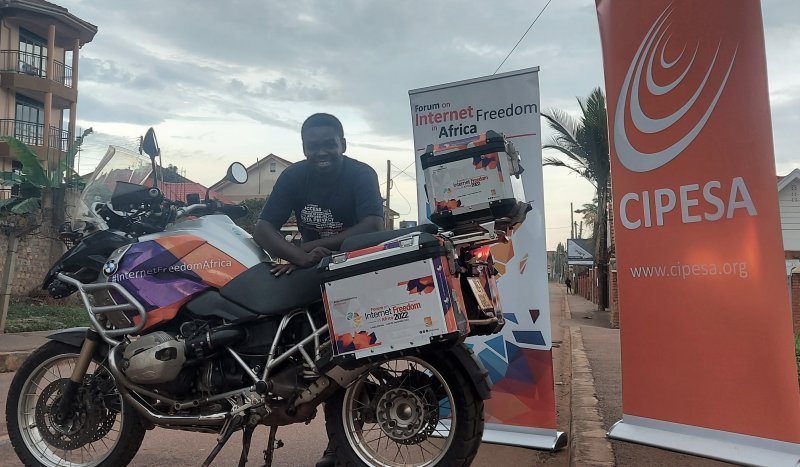
The distance between Kampala, Uganda and Lusaka, Zambia is approximately 3,300 kilometres by road. As part of a road trip to the Forum on Internet Freedom in Africa 2022 (FIFAfrica22), Ugandan digital security expert Andrew Gole will travel between the two countries over 28 days on his motorbike, making multiple stops to impart tips and advice on digital security.

Gole’s trip will take him through Uganda before crossing into Rwanda, Tanzania, Malawi, and finally to the FIFAfrica22 host country Zambia. The return trip will include stops in Tanzania, Zanzibar and Kenya. Gole will interact with human rights organisations and communities along the way in addition to human rights organisations on the value of securing devices and communications as a means of protecting their digital rights.

“Through my work with various communities, I have seen the positive impacts and benefits of digital security,” noted Gole who has done extensive work skilling users across the region, including through the Level-Up programme.  “Pair this [expertise] with a bike and the places I can go and people I can reach are unlimited,” says Gole. He has previously completed road trips across Uganda addressing the digital security concerns of rural-based civil society organisations.

 “Everyone is heading in the direction of the digital ecosystem. Everyone will be in it. If we do not address some of the challenges people are facing now, we will have a generation of people using systems without knowing the risks present online. We all need it. We need to future-proof the internet experience.” Noted Gole who revealed that some people are self-taught but still lack some important capacities when it comes to securing their personal or organisational online security concerns.

Gole’s Digital Security on Wheels initiative was founded in 2020 when much of the world was at a  near standstill due to the Covid-19 pandemic. In Uganda, private and public transportation was limited, yet digital security concerns went on the rise due to the increased reliance on digital communication. Recognising the digital security gap in areas outside the capital, Gole embarked on a journey to the Eastern and Northern regions of Uganda. What started off as a 14-day trip ended up being a 21 day trip due to the extensive digital security needs of the various organisations he went to engage.

“Some problems simply couldn’t be solved in the short amount of time available. I had to extend my stay with eth organisations to address their problems, otherwise the effort would be meaningless.”

At FIFAfrica22, Gole will join the multi-lingual (English, French, Swahili, Arabic) Digital Security walk-in clinic/help desk,  which comprises Access Now, the Collaboration on International ICT Policy for East and Southern Africa (CIPESA), Digital Society of Africa, Encrypt Uganda, Internews, Greenhost, Jigsaw (a technology incubator created by Google), Defend Defenders and Zaina Foundation. The Hub will allow FIFAfrica22 participants to access new innovative Internet freedom technology, privacy and data protective tools, measures and platforms in order to respond to their emergent digital security concerns. It will also offer immediate support and demos of various digital security tools and advisory on improving organisational security and resilience against threats and dangers when working, engaging, socialising and organising online.

Elsewhere at FIFAfrica22 digital security experts will participate in skills-sharing workshops and panel discussions.  Sessions include: Utilizing Collaborative Digital Resilience Mechanisms for Efficient Rights Protection and Advocacy in growing IOT Society hosted by the entities running the walk-in clinic/help desk; South-to-South Peer Learnings on Digital Resilience for Social Justice hosted by the Global Network for Social Justice and Digital Resilience; , Privacy and Anonymity Online hosted by the Tor Project and Usability Design and Developing Scenario Personas for Digital Rights Tools hosted by La Poiema.

Meanwhile, FemTech-Africa, an Internews pilot programme will host a feminist digital security exhibition to showcase gendered approaches to digital security. The exhibition will provide similar services as the digital security clinic but with a focus on behavioural change and strategies for online safety specifically for women human rights defenders and journalists. Women human rights defenders (WHRDs) and journalists face peculiar internet freedom challenges, such as trolling, cyberbullying and other forms of online violence against women, which have far-reaching impacts on their safety and on rights protection, not least free expression and democratic participation.

The exhibition will disseminate safety guide comic series and online safety for women booklets localised in up to five languages. The exhibition will feed into the panel discussion on women’s rights online including on Resistance & Connection: An African Feminist Perspective for Decolonising the Internet.

In 2020 and 2021, the hybrid formats of FIFAfrica also featured digital security components. At FIFAfrica20, a digital security and risk assessments workshop was held for investigative journalists and human rights activists in Kinshasa, Democratic Republic of Congo. In addition, a multilingual (English, French and Arabic) digital security hub provided virtual digital security support through a chat widget, email or messaging during the three days of FIFAfrica20. The virtual digital security hub was also run during FIFAfrica21.

Be part of the online conversation using #FIFAfrica22 and share your vision for #InternetFreedomAfrica! | Follow @cipesaug on Facebook, Twitter, LinkedIn

Visit the event website

About FIFAfrica

The Forum on Internet Freedom in Africa (FIFAfrica) is an annual landmark event which convenes a spectrum of stakeholders from across the internet governance and digital rights arenas in Africa and beyond. Hosted by the Collaboration on International ICT Policy for East and Southern Africa (CIPESA), the Forum offers a platform for government representatives, civic actors, journalists, policymakers and technologies to engage in the latest developments and trends in technology policy and digital rights.


Uganda Passes Regressive Law on “Misuse of Social Media” and Hate Speech

By Edrine Wanyama |

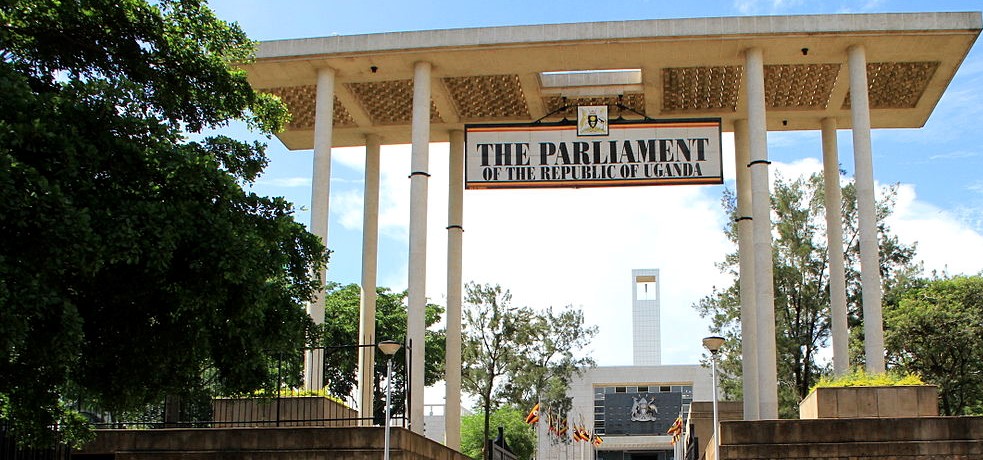
Uganda’s parliament on September 8, 2022 passed a draconian law that criminalises various uses of computers and digital technologies and largely curtails digital rights.

Among the key regressive provisions is the prohibition of the “misuse of social media”, described in clause 6 as publishing, distributing or sharing information prohibited under Uganda’s laws. A highly punitive penalty has been prescribed for the offence: imprisonment of up to five years, a fine of up to UGX 10 million (USD 2,619), or both.

Other retrogressive provisions in the Computer Misuse (Amendment) Bill 2022 are prohibition of sending or sharing of unsolicited information through a computer, and prohibition of sending, sharing or transmitting of malicious information about or relating to any person.

Prior to the enactment of the law, the Collaboration on International ICT Policy for East and Southern Africa (CIPESA) presented its analysis of the Bill to parliament’s Committee on Information and Communications Technology (ICT), which indicated that the proposed amendments would be a blow to the enjoyment of online civil liberties. However, the committee has disregarded most of the feedback received from stakeholders listed in the Committee report, many of whom raised concerns on the digital rights gaps within the Bill..

In presentations to the parliamentary  committee, CIPESA argued that rather than introducing new, poorly defined offences, the amendments should have focussed on addressing existing retrogressive provisions in the law on computer misuse, such as section 24 on cyber harassment and section 25 on offensive communication, which have been used severally to criminalise freedom of expression, including through arrests and prosecution of journalists, activists and government opponents. Moreover, trolling, cyber harassment, unauthorised sharing of intimate images, and other forms of online violence against women and girls, are not addressed either.

Gorreth Namugga, the shadow minister for ICT and a member of parliament’s ICT Committee, said in a minority report that the issue of misuse of social media was not discussed in the committee and was not among the clauses the Computer Misuse (Amendment) Bill sought to amend. She added that the ICT Committee did not make a deep analysis of the issue, and none of the organisations and individuals consulted by the committee offered any input on the matter.

In introducing the offence of misuse of social media, the committee reasoned that, while considering the Bill, it observed that “the information technology evolution had created a new medium of communication called social media that is not fully regulated in the existing laws, yet it is “the commonest platform of Computer Misuse.” The committee therefore deemed it fit to define social media and to regulate it.

Accordingly, the Bill defines social media as a set of technologies, sites, and practices which are used to share opinions, experiences and perspectives. It cites as examples YouTube, WhatsApp, Facebook, Instagram, Twitter, WeChat, TikTok, Sina Weibo, QQ, Telegram, Snapchat, Kuaishou, Qzone, Reddit, Quora, Skype, Microsoft Team and Linkedin.

The new law will provide that “a person who uses social media to publish, distribute or share information, prohibited under the laws of Uganda or using disguised or false identity, commits an offence.” It adds that where “prohibited” information is published, shared or distributed on a social media account of an organisation, the person who manages the organisation’s social media account shall be held personally liable for the commission of the offence.

There remain questions as to how the committee introduced provisions on misuse of social media that were not in the Bill, not subjected to stakeholder consultation and, according to the minority report, not discussed by committee members. Moreover, the term, “under the laws of Uganda” with reference to prohibited information is very broad and ambiguous. This could be used by the government and its agencies to target critics and would largely curtail freedom of expression and access to information.

Uganda is not new to regressive control of digital technologies. In 2018, the east African country introduced a tax through the Excise Duty (Amendment) Act that required users to pay a daily tax in order to access social media services. The tax, which dismally failed to raise the anticipated revenues, was  replaced  with a 12% levy tax on internet data. The country’s digital taxation regime has become a key impediment to inclusive access and affordability, with millions of citizens still left out of the digital society. Uganda also routinely blocks access to the internet and social media. Since January 2021, Facebook has been blocked in Uganda on orders of the government.

While the new law attempts to define “unsolicited information” as meaning “information transmitted to a person using the internet without the person’s consent, but does not include an unsolicited commercial communication.” The guidance offered by the provision only extends to interpretation of the earlier blanket provision that had been proposed in the Bill. It does not provide any guarantees for the protection and enjoyment of freedom of expression and access to information.

In submissions to parliament, CIPESA stated that, besides undermining civil liberties, many provisions of the Bill duplicated existing laws such as the Regulation of Interception of Communications Act, 2010 and the Data Protection and Privacy Act, 2019, and would be difficult to implement

According to the minority report, all the clauses in the Bill are already catered for in existing legislation and in some instances offend Uganda’s constitution. The report states: “The fundamental rights to access information electronically and to express oneself over computer networks are utterly risked by this Bill. If passed into law it will stifle the acquisition of information. The penalties proposed in the Bill are overly harsh and disproportionate when compared to similar offences in other legislations. This Bill, if passed, will be a bad law and liable to constitutional petitions upon assent.”

Despite the largely regressive law, there are some positives, such as defining and proscribing hate speech and i the law provides and if rightly employed they could potentially improve on certain aspects regarding the digital civic space. Thus;

  • The addition of the element of intent in clause 3 in the definition of the offence of unauthorised access is quite progressive. It potentially helps to exonerate innocent individuals from wanton prosecution of what would constitute criminal access over innocent and unintended access. The Bill did not have the element of intent which is core to determination of criminal liability to qualify the offence.
  • Clause 3 was initially overly broad to the extent of discouraging the public from sharing information to the best interests of the child such as their protection from danger and harmful practices. The amendment in clause 3 in as far as it provides for circumstances under which information about children may be shared will serve to ensure that while privacy of the child is paramount, their best interest should not be disregarded.
  • Clause 4 of the Bill defines hate speech which was not previously provided for. It goes milestones in addressing hate speech which has for decades posed challenges to public order, security and persons. Furthermore, section 41 of the Penal Code Act on sectarianism presented uncertainties having limited the definition of sectarianism to groups of religion, tribe, ethnic or regional origin.
  • The law recognizes other laws on disciplinary action against errant leaders. Thus, the deletion of clause 7 is commended. It is a progressive move against a potentially excessive and discriminatory provision as was initially presented in the Bill.

The newly passed Bill is a threat to digital rights and digital civic space and falls short of the key international minimum standards. As such, it is imperative for the law to be challenged in court and for the president to deny its assent and return it to parliament for reconsideration.