Reflections From the WSIS+20 Africa Regional Stakeholder Workshop

By Lillian Nalwoga and Patricia Ainembabazi

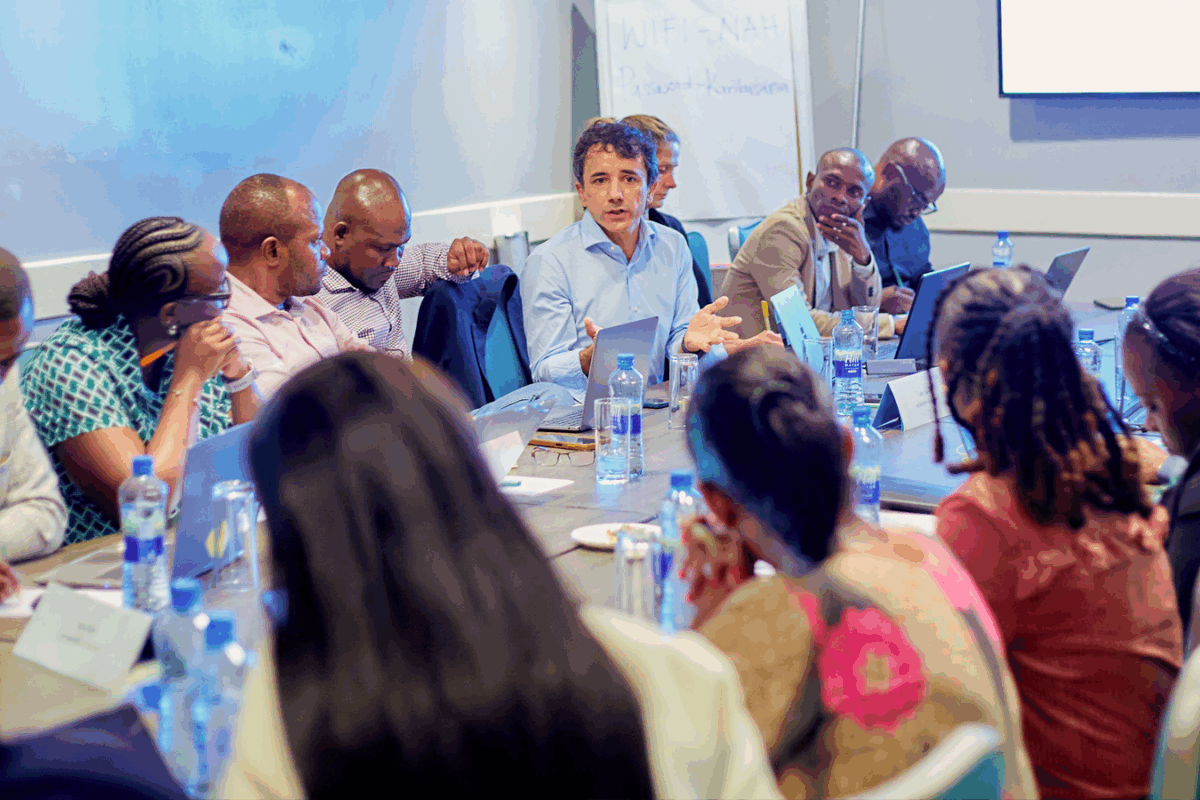
As the twenty-year review of the World Summit on the Information Society (WSIS+20) approaches, the need for inclusive, well-coordinated, and well-informed African participation has become more urgent than ever. In response, the Collaboration on International ICT Policy for East and Southern Africa (CIPESA), with support from the Civil Society Alliances for Digital Empowerment (CADE) project  the Global Network Initiative (GNI), and Global Partners Digital (GPD), convened a regional stakeholder workshop on May 28, 2025, in Dar es Salaam, Tanzania. Held as a pre-event to the 2025 Africa Internet Governance Forum (AfIGF), the workshop gathered 37 participants for a multi-stakeholder dialogue on WSIS progress, the future of the Internet Governance Forum (IGF), and funding equity in global internet governance processes.

Revisiting WSIS and Its Evolving Landscape

The meeting commenced with an overview of WSIS’s significance in shaping global internet policy since its inception in 2003, highlighting the journey from the Geneva and Tunis phases to the current +20 review (WSIS+20). Participants underscored how WSIS frameworks continue to underpin digital policy efforts, especially in developing regions.

Special attention was given to how the WSIS+20 review intersects with emerging frameworks such as the Global Digital Compact (GDC). Discussions emphasized the importance of strengthening Africa’s position in both processes and cautioned against duplicative or conflicting multilateral efforts. Participants called for a harmonised approach that prioritizes human rights and inclusive development.

Regional Dynamics and Country-Level Perspectives

A key component of the meeting focused on lessons learned from country and regional engagement with WSIS+20. Common challenges identified included low public awareness of the process, inadequate coordination mechanisms at the national level, and limited participation in global negotiations. Participants stressed the need to designate clear national focal points and to disseminate accessible information on WSIS milestones and upcoming consultations. They also urged the African Union Commission (AUC) and sub-regional bodies like the United Nations Economic Commission for Africa (UNECA) to consolidate African positions, reflecting shared concerns around digital access, online rights, and capacity-building for local actors.

Funding Inequities and Digital Diplomacy Imbalances

A prominent theme was the uneven distribution of financial and institutional support across regions and thematic areas. Delegates observed that limited participation in global forums such as the IGF, WSIS, and the GDC often mirror existing geopolitical and economic disparities, resulting in underrepresentation of African stakeholders due to limited travel support, language barriers, and technical capacity gaps. Participants called for the urgent need for donor and partner commitments to develop equitable funding models. Such models should prioritize grassroots organizations, youth-led initiatives, and actors outside urban areas. Furthermore, participants called for empowering African UN missions in Geneva, New York, and other capitals with the necessary expertise to influence global digital policymaking.

Civil Society’s Role in Shaping Future Digital Governance

Participants also recognised the role of Civil society organizations (CSOs) as a key stakeholder group in advancing digital governance and policy debate especially on issues such as digital rights, access, disinformation, cybersecurity, and feminist internet principles. A call for the WSIS+20 to produce tangible commitments to safeguard online freedoms, protect civic space, and enhance stakeholder inclusiveness was made.

Participants reiterated the importance of maintaining the IGF’s relevance as a multistakeholder platform and urged for sustainable financing, improved intersessional activities, and stronger linkages to policy outcomes to address the fragmentation increasingly seen in digital governance.

Voices from Parliament and the Legal Sector

Lawmakers and legal experts provided insights into domestic legislative processes and how international norms can be integrated into enforceable national frameworks. Discussions centered on data protection legislation, content regulation, and digital inclusion policies, emphasizing the need for increased legislative scrutiny and cross-border cooperation to foster policy coherence across Africa.

Media and Fact-Checking in the Digital Age

Journalists and fact-checkers reflected on the growing threats to information integrity in digital spaces. They emphasized the vital roles of press freedom, online safety, and accountability, highlighting the importance of partnerships between media outlets and civil society to counter disinformation, especially during elections and crises.

Next Steps and Recommendations

To make WSIS+20 and the GDC processes more inclusive and sustainable, participants proposed several key actions:

  • Strengthen national coordination structures for WSIS+20 and GDC engagement 
  • Develop regional position papers ahead of upcoming UN sessions such as the UN Commission on Science and Technology for Development (CSTD) and the UN General Assembly (UNGA) 
  • Leverage the 2025 AfIGF as a platform for broader African input into WSIS+20 
  • Establish a knowledge-sharing platform for African stakeholders to exchange resources, experiences, and policy insights

Conclusion

The WSIS+20 regional stakeholder workshop underscored Africa’s critical need to take a more assertive role in global digital governance. Amid rising geopolitical tensions, rapid technological change, and the increasing importance of digital tools in daily life, it is both a challenge and a chance for Africa to assert its digital future on its own terms.
Amplifying African Voices in Global Digital Governance

By CIPESA Writer |

The Collaboration on International ICT Policy for East and Southern Africa (CIPESA) will be participating at the 2025 Internet Governance Forum (IGF) in Norway. The IGF serves as key  global multistakeholder platform that facilitates the discussion of public policy issues pertaining to the Internet. This year, the Forum takes place from June 23-27, 2025 in Lillestrom, Norway under the overarching theme of Building Our Multistakeholder Digital Future.

CIPESA will contribute expertise across multiple sessions that examine digital rights in the Global South. These include discussions on repressive cyber laws and their impact on civic space, inclusive and harmonised data governance frameworks for Africa, and the barriers to participation in global technical standards development. CIPESA will also join sessions highlighting cross-regional cooperation on data governance, digital inclusion of marginalised groups, and the need for multilingual accessibility in global digital processes. CIPESA will also support a booth (number #57) hosted by the Civil Society Alliances for Digital Empowerment (CADE)  of which it is a member. The booth will showcase activities and resources, including the winners of the AI Artivism for Digital Rights Competition, the Youth Voices for Digital Rights programme, and much more. Through these engagements, CIPESA enhance and amplify African perspectives on platform accountability, digital justice, and rights-based approaches to internet governance.The insights gathered and shared at the IGF will also inform the upcoming 2025 edition of the Forum on Internet Freedom in Africa (FIFAfrica25) – an event convened annually by CIPESA. The Forum, now in its 12th year ranks as Africa’s leading platform for shaping digital rights, inclusion, and governance conversations. This year, the Forum will be hosted in  Windhoek, Namibia and will take place on September 24–26, 2025.

Here is where to find CIPESA @ IGF2025 ..

Monday, June 23 | 16:00-17:00 (CEST) – Workshop Room 3

Day 0 Event #257:  Enhancing Data Governance in the Public Sector  

This session will examine the state of data governance in the public sector of developing countries, emphasizing the importance of inclusive, multi-stakeholder engagement. It highlights how current frameworks often centre government institutions while neglecting interoperability, collaboration, and broader policy cohesion. Using global case studies—particularly from Papua New Guinea—it will spotlight challenges and propose innovations like centralized oversight bodies, interoperable platforms, and adaptive governance. Best practices such as real-time analytics, data partnerships, and capacity building will be explored to support scalable and context-specific governance solutions.

Tuesday, June 24 |  14:45–15:45 (CEST) – Workshop Room 4

Open Forum #56: Shaping Africa’s Digital Future: Multi-Stakeholder Panel on Data Governance

As Africa advances its digital transformation, harmonized data governance is critical to unlocking the continent’s potential for inclusive growth and digital trade. Fragmented national policies and inconsistent cross-border data frameworks create barriers to innovation, privacy, and cybersecurity. This session will convene stakeholders from government, industry, and civil society to explore strategies for regulatory alignment, trusted data flows, and climate-resilient governance models. Aligned with the AU Data Policy Framework, it will highlight best practices to build a unified, rights-respecting digital economy in Africa.

Tuesday, June 24 | 13:30-15:30 (CEST) –  Room  Studio N

Parliamentary session 4: From dialogue to action: Advancing digital cooperation across regions and stakeholder groups

Host: UN, Stortinget (Norwegian Parliament) and Inter Parliamentary UnionInternet (IPU)

Building on the outputs of the 2024 IGF Parliamentary Track and the discussions held so far in 2025, this multi-stakeholder consultation will bring together MPs and key digital players to reflect on how to operationalize concrete, inclusive and collaborative policymaking efforts. All groups will be invited to propose cooperative approaches to building digital governance and identify practical steps for sustaining cooperation beyond the IGF.

Wednesday, June 25 | 17:30 -19:00(CEST) – Workshop room 4, NOVA Spektrum 

Side event: Aspirations for the India AI Impact Summit

Hosts: CIPESA, Centre for Communication Governance at National Law University Delhi (CCG), United Nations Office for Digital and Emerging Technologies (UN ODET).

This closed-door dialogue aims to spark early conversations toward an inclusive and representative Global AI Impact Summit, focusing on the participation of Global Majority experts. It will explore meaningful engagement in Summit working groups, side events, and knowledge sharing, especially building on insights from the Paris Summit. The session is part of a broader effort to host multiple convenings that strengthen diverse stakeholder participation in global AI governance. By addressing foundational questions now, the dialogue seeks to shape intentional, impactful, and inclusive discussions at the upcoming Summit.

Wednesday June 25 | 09:00-09:45 (CEST) – Workshop Room 4

Networking Session #93: Cyber Laws and Civic Space – Global South–North Advocacy Strategies

Host: CADE

Many governments are enacting cyber laws to address online crime, but these often contain vague provisions that enable repression of journalists, activists, and ordinary citizens. In practice, such laws have facilitated mass surveillance, curtailed privacy, and been weaponised to stifle dissent, particularly under authoritarian regimes. This session brings together Global North and Global South civil society actors to exchange experiences, resources, and strategies for resisting repressive cyber legislation. It will focus on how collaborative advocacy can support legal reform and safeguard digital rights through shared tools, solidarity, and policy influence.

Wednesday, June 25 | 14:15–15:30 (CEST) – Workshop Room 4

Open Forum #7: Advancing Data Governance Together – Across Regions

Hosts: CIPESA, Deutsche Gesellschaft für Internationale Zusammenarbeit (GIZ) GmbH, The Republic of The Gambia

As cross-border data flows grow rapidly, effective data governance is essential for fostering trust, security, and inclusive digital development. However, fragmented national regulations and inconsistent privacy and cybersecurity standards pose challenges to regional and global cooperation. This session brings together stakeholders from Africa, the Eastern Partnership, and the Western Balkans to explore harmonized, interoperable governance models that support responsible data sharing and economic growth. Through collaborative dialogue, the session will identify strategies for aligning data governance with digital rights, innovation, and sustainable development across diverse regional contexts.

Thursday, June 26 | 12:30–13:00 (CEST) – Open Stage

Lightning Talk #90: Tower of Babel Chaos – Tackling the Challenges of Multilingualism for Inclusive Communication

Host: CADE

This interactive session, led by members of the Civil Alliances for Digital Empowerment (CADE), highlights the communication challenges faced in global digital forums due to linguistic, gender, and geographic diversity. Using a flash-mob-style simulation, participants will experience firsthand the difficulties of multistakeholder dialogue when multiple native languages intersect without common understanding. The session underscores that language is often the most significant barrier to meaningful inclusion in global digital governance. It aims to provoke thought on the urgent need for more multilingual and accessible participation in international digital policy spaces.

Thursday, June 26 | 16:00-17:00 (CEST) – Workshop Room 6

WS #214: AI Readiness in Africa in a Shifting Geopolitical Landscape

Host: German Federal Ministry for Economic Cooperation and Development (BMZ), supported by GIZ

AI has vast potential, but without proper governance, it risks deepening inequality and reinforcing Africa’s dependency on global tech powers. Despite growing local engagement, Africa remains underrepresented in global AI development due to limited investment, regulatory gaps, and the dominance of multinational firms, raising concerns about digital exploitation. This session will bring together diverse voices to explore how Africa can build inclusive, locally rooted AI ecosystems that protect rights and serve regional needs.

Friday, June 27 | 09:00–10:00 (CEST) – Workshop Room 2

Open Forum #34: How Technical Standards Shape Connectivity and Inclusion

Host: Freedom Online Coalition

Technical standards are essential to enabling global connectivity, interoperability, and inclusive digital access, but their development often excludes voices from the Global Majority and marginalized communities. This session will examine how open and interoperable standards can bridge the digital divide, focusing on infrastructure such as undersea cables, network protocols, and security frameworks. It will explore barriers to inclusive participation in standard-setting bodies like the ITU, IETF, IEEE, and W3C, and identify strategies for transparency and multistakeholder engagement. By promoting equitable, rights-respecting technical governance, the session aims to support digital inclusion and advance sustainable development goals.

Friday, June 27 | 11:45–12:30 (CEST) – Workshop Room 6

Networking Session #74: Mapping Digital Rights Capacities and Threats

Host: Oxfam

This session will present findings from multi-country research on digital rights capacities and threats, with a focus on historically marginalised groups in the Global South. It will showcase innovative strategies and tools used to build digital literacy and awareness, using poster presentations from Bolivia, Cambodia, Palestine, Somalia, and Vietnam. Participants will engage in a moderated discussion to share practical approaches and collaborate on building a more inclusive, rights-based digital ecosystem. The session will also contribute to a shared online repository of tools, fostering international cooperation and capacity-building through the ReCIPE program led by Oxfam.

Friday, June 27 | 11:45–12:30 (CEST) – Workshop Room 5

Networking Session #200 – Cross-Regional Connections for Information Resilience 

Host: Proboxve

This networking session brings together participants from diverse regions to connect, share experiences, and develop collaborative strategies for safeguarding information integrity in electoral processes while upholding internet freedoms. The session will address critical challenges such as disinformation, censorship, foreign interference, platform manipulation, and civic education, emphasizing the importance of protecting digital rights, especially during elections.

Join CIPESA’s Critical Research on Biometric Data Privacy in Uganda

In an era where biometric data collection is rapidly expanding across Uganda’s public and private sectors, the need for expert oversight has never been more critical. From national ID systems to voter registration and SIM card verification, these digital transformations are reshaping privacy rights and surveillance capabilities in ways that demand careful scrutiny.

CIPESA is seeking a qualified consultant to peer review groundbreaking research on biometric data collection and its implications for digital rights in Uganda.

This consultancy offers a unique opportunity to:

  • Shape policy recommendations on digital rights and data protection in Uganda
  • Contribute to protecting citizens’ privacy rights in an increasingly digital ecosystem
  • Work with a leading organization at the intersection of technology and human rights
  • Deliver meaningful impact in just 15 days of focused work

The ideal candidate will bring:

  • An advanced degree in Law, international human rights law, or related field
  • Deep understanding of digital rights and data protection frameworks
  • Proven research and analytical capabilities
  • Strong track record in producing clear, actionable reports

Ready to contribute to this vital work? Submit your application by January 27, 2025 (18:00 EAT), including:

  • Cover letter
  • CV
  • Two samples of research work
  • Financial proposal

Download Research Consultant ToRs here.

Send your application to [email protected] with cc to [email protected].

This project is supported by Enabel and the European Union.

ANALYSIS: Zambia’s Proposed Cyber Laws Facilitate Suppression of Civil Liberties

Zambia has published the Cyber Security Bill, 2024 and the Cyber Crimes Bill, 2024, which would repeal the Cyber Security and Cyber Crimes Act of 2021. These proposed laws’ objective of combating cyber crimes and promoting a safe and healthy digital society is welcome, as is the need for the country to strengthen its cyber security posture, including through legislation.

However, the current drafts of the laws not only miss the opportunity to cure some of the deficiencies in the 2021 cyber crimes law they are repealing but also introduce several, more regressive provisions.

In an analysis of the two Bills, the Collaboration on International ICT Policy for East and Southern Africa (CIPESA) and the Bloggers of Zambia, who also hosts the Zambia CSO Coalition on Digital Rights, point to the retrogressive and vague provisions in the two Bills, and offer recommendations that can render the proposed laws more robustly rights-respecting and effective in combating cyber crimes.

The bills have some progressive provisions, such as the separation of cybersecurity and cybercrime functions; the structured cybersecurity governance that includes the creation of dedicated bodies such as the Cyber Security Agency and the Cyber Incident Response Teams (CIRTs); and provision of a framework for mutual legal assistance and cooperation with foreign entities. The bills also introduce new offences in response to emerging cyberthreats, such as identity-related crimes, attacks on critical information infrastructure, cyber harassment, cyber terrorism, and “revenge pornography”.

However, the list of concerns is much longer, as detailed below:

  1. Weak Human Rights and procedural safeguards: The bills do not affirm adherence to regional and international human rights standards and obligations, such as privacy, freedom of expression, access to information, or due process. Also, enforcement measures lack comprehensive human rights and due process safeguards to ensure provisions and practices are proportionate, necessary, and pursue legitimate aims. 
  1. Potential for abuse of power: The bills provide law enforcement agencies significant discretion in applying their provisions, thereby increasing risks for political interference, unchecked surveillance and the widespread targeting of dissenters. These are aided by broad surveillance powers and ambiguous definitions of terms and offences, which create room for subjective interpretation and arbitrary application. These could be used to suppress freedom of expression and legitimate public discourse.
  1. Weak oversight and governance: There are limited independent or judicial review processes mandated for surveillance, data collection, or search and seizure activities. Further, the centralised control of the Cyber Security Agency and Central Monitoring and Co-ordination Centre (CMCC) and the absence of independent oversight mechanisms raise accountability concerns. Also, there is no clear separation of cybersecurity functions from the cybercrime-related functions between the two bills, which could lead to duplication and implementation challenges.
  2. Overly broad surveillance powers: Law enforcement is granted broad interception powers including real-time data collection and communication interception and extensive search-and-seizure powers. The provisions do not include clear limits or provide sufficient safeguards such as judicial oversight, proportionality, or transparency and accountability.
  1. Insufficient safeguards for privacy: The bills enable widespread surveillance and interception without clear provisions on data retention limits, purpose limitation, secure handling of intercepted data and oversight. This could allow for indefinite storage of data, increasing the risk of misuse or unauthorised access. Also, the absence of anonymity protections for whistleblowers, journalists, and researchers could criminalise legitimate anonymous or pseudonymous activities. The provisions limit privacy rights, and are in total disregard of the country’s Data Protection Act, 2021.

General Recommendations

  1. Provide adequate human rights and procedural safeguards: Incorporate a dedicated section affirming the bill’s compliance with Zambia’s constitutional and international human rights obligations. Further, align the bills with the Declaration of Principles on Freedom of Expression and Access to Information in Africa and the African Union Convention on Cybercrime and Personal Data Protection. In addition, conduct a Regulatory and Human Rights Impact Assessment and require periodic review of the bill’s implementation for potential human rights impacts.
  2. Strengthen oversight and governance mechanisms: Introduce mandatory independent judicial oversight, notification and documentation and annual reporting requirements on the use of powers under the bill, ensuring accountability and public trust. Establish independent oversight mechanisms for the Cybersecurity Agency, CMCC and surveillance practices. 

Review the structure and functioning of the newly established agencies vis-a-vis the roles of other agencies e.g. Office of the President, Ministry of ICT, Zambia Information Technology Authority (ZICTA), security agencies, among others, to enhance coordination and avoid duplication of roles and fragmentation. It is also important to have clear delineation of cybersecurity functions and cybercrime functions to avoid confusion or duplication of roles.

  1. Ensure proportionality: Many offences in the Cyber Crimes Bill criminalise minor or vague conduct without proportionality thresholds. Introduce proportionality clauses limiting criminalisation to significant harm, or graduated scales that enhance penalties based on severity, complexity and impact of offences on victims, critical infrastructure or organisations.
  2. Invest in capacity building: Provide a framework for training of law enforcement, prosecution and judiciary officials on applying the law proportionately, balancing enforcement with human rights protection.
  3. Ensure compliance with data protection laws: Ensure the bills align with the provisions of Zambia’s Data Protection Act, 2021, to protect individuals’ privacy rights.

The full analysis can be found here.

The Ugandan State Should Respect the Right to Peaceful Protest

Statement |

The Collaboration on International ICT Policy for East and Southern Africa (CIPESA) condemns today’s arrest of peaceful and unarmed protesters by Ugandan police and security forces.

The protesters are mostly young people who had for weeks vowed to march peacefully to Parliament to protest against corruption and abuse of office. This followed months of online activism in demand for transparency and accountability from duty bearers. The protest was also inspired by the #RejectTheFinanceBill2024 picketing in neighbouring Kenya.

Among the demands of today’s protesters were the resignation of Speaker Anita Among and the four Commissioners who awarded themselves “service awards”, as well as the reduction of the size of Parliament and the allowances of Members of Parliament (MPs).

Ahead of the protest, law enforcement authorities responded, typically, by announcing that they would not allow it because they had intelligence that “criminal elements” wanted to take advantage of it to disrupt public order and incite violence. They added that they would not allow demonstrations in crowded cities or towns because of the threat of disruption of commercial activities.

In a national address on July 20, President Yoweri Museveni weighed in with a warning to the protesters that they were “playing with fire” and that “we cannot allow you to disturb us”.

What has followed is the wanton disregard of the Constitution that we have witnessed today. Up to 60 protesters have been arrested, many of them violently.

Today’s clampdown on peaceful protesters comes on the heels of a worrying trend of arresting individuals that use social media such as Facebook, X, and TikTok to criticise the government. These developments present a major threat  to citizens’ enjoyment of the right to freedom of expression.

The right to “assemble and to demonstrate together with others peacefully and unarmed and to petition” is protected by Article 29 of the Constitution of Uganda. We are aware that there are limitations on such rights, but Article 43 of the Constitution is also very clear that such limitations must be “acceptable and demonstrably justifiable in a free and democratic society”.

The Constitutional Court has previously held that the Police have no powers to prohibit a demonstration from proceeding but a duty to regulate it so that it happens within what is allowed by law. It is in that spirit that the Court struck down Section 8 of the Public Order Management, which Police had previously used to stop or justify restrictions on public meetings. 

The Court has also rightfully held that inconvenience, disruption or annoyance from a peaceful protest must be tolerated in the interest of protecting the rights to freedom of expression and assembly.   

CIPESA urges authorities to release all the peaceful protesters who have been arrested today, and to guarantee that all citizens can enjoy the right to peacefully demonstrate and petition leaders.

ABOUT CIPESA

The Collaboration on International ICT Policy for East and Southern Africa (CIPESA) works to defend and expand the digital civic space to enable the protection and promotion of human rights and to enhance innovation and sustainable development.

For further information, please contact [email protected]