
By Tsion Meingstu and Paul Kimumwe |
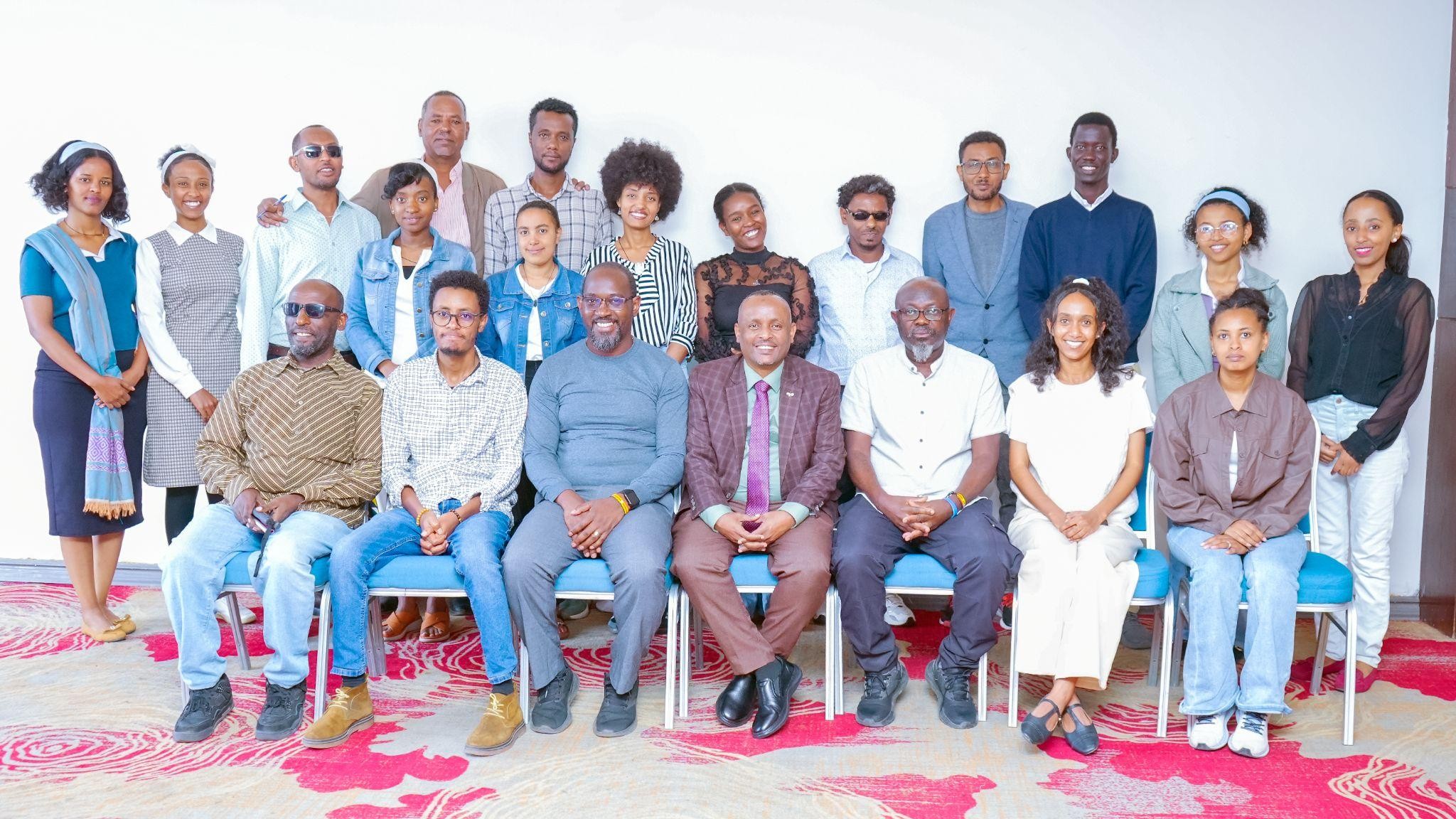
As part of efforts to strengthen the integration of digital inclusion and digital accessibility for persons with disabilities and older persons into its human rights monitoring and oversight mandate, the Ethiopia Human Rights Commission (EHRC) held a two-day capacity-building workshop for its staff on September 21st and 22nd, 2026.
The workshop, which was facilitated by experts from the Collaboration on International ICT Policy for East and Southern Africa (CIPESA), sought to equip participants with foundational knowledge and skills in digital accessibility and inclusion, how to design and implement monitoring checklists for the digital rights of persons with disabilities and older persons, and how to communicate and advocate for the digital rights of persons with disabilities and older persons.
The staff capacity building workshop was one of the Commission’s key deliverables under a ten-month grant from CIPESA’s Africa Digital Rights Fund (ADRF). Other activities under the grant include monitoring and assessing the impact of digital technologies’ (in)accessibility on the daily lives of older persons and persons with disabilities, and organising advocacy activities to raise awareness of digital rights for persons with disabilities and older persons among relevant government and non-government stakeholders to foster inclusive practices.
During the workshop, Shimels Ashagre, Senior Human Rights Officer for Disability Rights and Rights of Older Persons at the EHRC, presented a draft monitoring toolkit developed as part of the grant that will be used to assess the state of digital inclusion for persons with disabilities and older persons in Ethiopia.
The toolkit is organised around eight key dimensions of digital inclusion, with specific questions tailored to both persons with disabilities and older persons. It draws on the UN Convention on the Rights of Persons with Disabilities (CRPD), the UN Principles for Older Persons, the Madrid International Plan of Action on Ageing (MIPAA), the African Union Protocol on the Rights of Older Persons, and the Web Content Accessibility Guidelines (WCAG 3.0).
The Commission will use the findings from the assessment to inform the design and implementation of advocacy activities about the digital rights of persons with disabilities and older persons.
Opening the workshop, the thematic Commissioner for Disability Rights and Rights of Older Persons, Mohammed Ahmed, emphasised that the world is undergoing rapid digital transformation, with technology increasingly shaping how people access information, services, and opportunities. While these advancements bring significant benefits, they also raise important human rights considerations that must not be overlooked.
He stressed that particular attention should be given to the rights of vulnerable groups, including persons with disabilities and older persons, who often face barriers to accessing and benefiting from digital technologies. Commissioner Mohammed underscored that digital inclusion and accessibility are not merely technical issues but fundamental human rights concerns that require deliberate action from governments, institutions, and other stakeholders.
Dr Wairagala Wakabi, the Executive Director of CIPESA, noted that digital inclusion for persons with disabilities and older persons has become a central thematic area for CIPESA, which is why it partners with institutions such as the EHRC to strengthen their capacity to monitor and promote digital inclusion. He noted that through the ADRF, CIPESA provides financial and technical support to organisations that are championing digital inclusion.
For example, in the last round of the ADRF grant, USD 320,000 was awarded to 18 initiatives in 14 countries to support efforts to advance digital rights, inclusion, and online safety. Three of the recipients, including Ethiopia’s Human Rights Commission, the Zimbabwe Council for the Blind, and the Rwanda-based Organisation d’Integration et de Promotion des Personnes Atteintes d’Albinisme (OIPPA), are focusing on Digital Accessibility for Persons with Disabilities and Older Persons.
Dr Wakabi noted that for effective advocacy around digital rights, participants need to understand how digital technologies intersect and affect the rights of persons with disabilities. And for Human Rights Commissions, this understanding helps them to integrate digital rights into their monitoring and oversight mandates of human rights.
Reactions from the participants:
“The training was very fascinating. I gained a tremendous amount of knowledge about digital rights and how they are directly related to human rights and their intersection. This was beginner-friendly training that provided participants with a foundational experience in the field.” Female participant
“Overall, the training was highly informative and educational. Prior to attending the training, I did not have a clear understanding of the concept of digital technologies and their practical applications. However, the training helped me develop a solid understanding of the subject and enhanced my knowledge of key digital concepts.” Male participant
The sessions on digital rights, as well as the rights of older persons and persons with disabilities, significantly broadened my perspective and enhanced my understanding of inclusion and accessibility from a digital technologies’ perspective. The knowledge gained has provided me with a clear framework for integrating these concepts into my future work, particularly on emerging issues related to the rights and participation of older persons and persons with disabilities.
Additionally, the training focus on Technology-Facilitated Gender-Based Violence (TFGBV) offered valuable and thought-provoking insights into an important and evolving area. Overall, the training was highly informative, practical, and relevant to my professional responsibilities.”
The training was attended by 18 individuals (10 men and 8 women) drawn from various departments of the commission, including the Disability Rights and Rights of Older Persons Department, Human Rights Education Department, Women and Children’s Rights Department, Office of the Chief Commissioner, Monitoring and Investigation Department, and the Refugees, Internally Displaced Persons, and Migrants’ Rights Department.