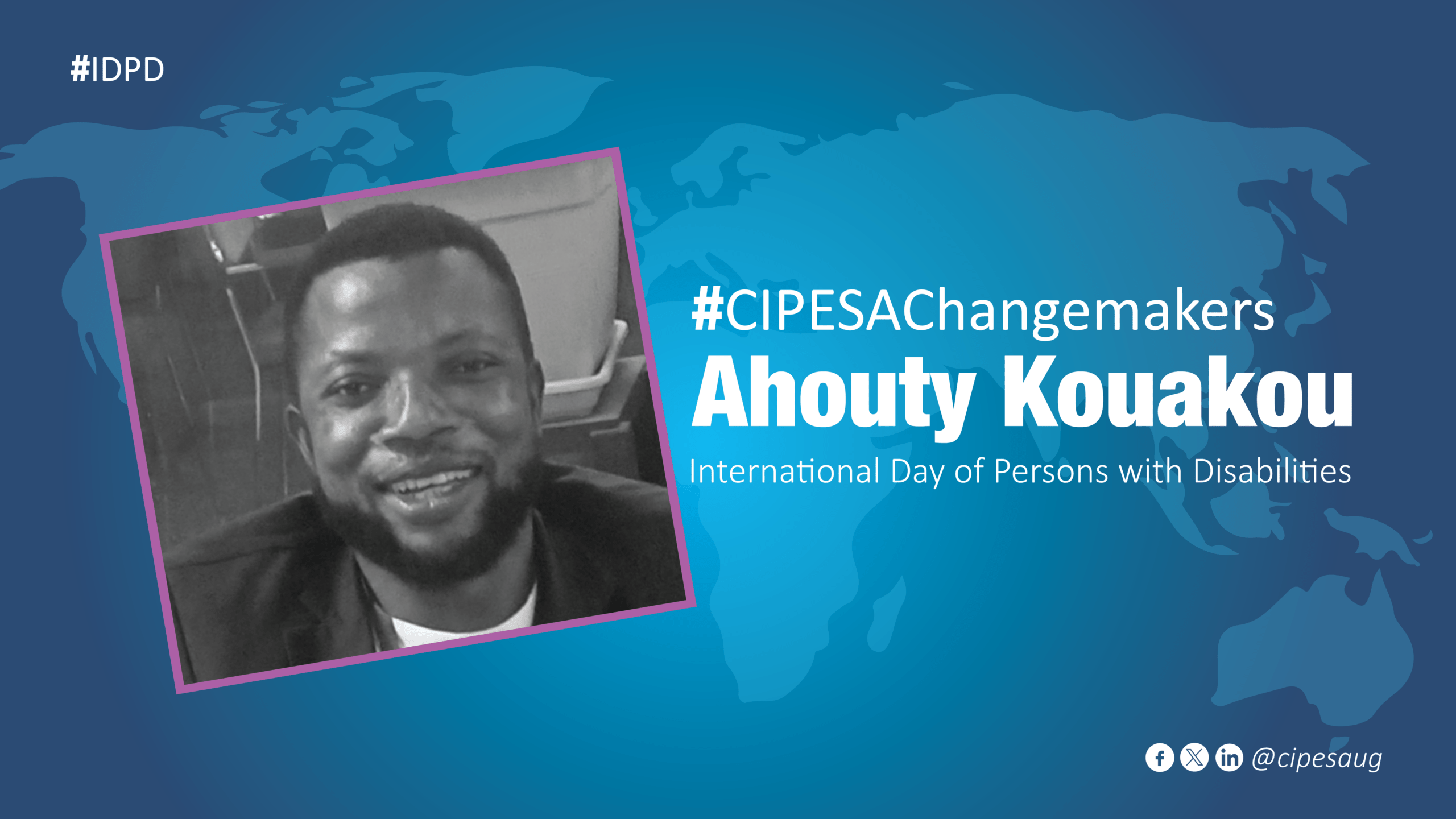
Who is Ahouty Kouakou?
I am Ahouty Kouakou, an Ivorian living in Abidjan, Côte d’Ivoire. I am a wheelchair user. I contracted this mobility impairment due to poliomyelitis when I was 4 years old. My disability did not, however, prevent me from attending school and pursuing higher university studies. Today, I hold two bachelor’s degrees in Communication and Anthropology from the University Felix Houphouet Boigny of Abidjan, Côte d’Ivoire. I have also attended several short courses and earned certificates. In 2013, my ambition to transform the lives of marginalised communities drove me to establish a disability rights organisation called Action et Humanisme, to give persons with disabilities a chance to reach their full potential and thrive, utilising various factors, including digital technology. My work has been recognised internationally. For example, I am a 2022 D30 Disability Impact List Honoree of Diversability, an international organisation dedicated to empowering persons with disabilities.
My motivation came from the realisation that while the Internet and other emerging technologies offered great opportunities online, access was not guaranteed to persons with disabilities. The lack of Internet infrastructure in remote areas and the high cost of Internet data and technology devices meant that persons with disabilities, the majority of whom do not have the necessary resources, were excluded from the digital world. Most of the local cyber cafes were, and still are, inaccessible to persons with disabilities due to the lack of ramps and elevators. Digital illiteracy is also a significant barrier. Additionally, there is a lack of political will and strong digital enforcement by African governments. Persons with disabilities, therefore, miss out on several opportunities, including education, access to quality information, entertainment, and job opportunities, that are offered online. These issues drove me to become a frontline defender of digital rights for persons with disabilities. I believe in our mantra of leaving no one behind.
Calls are being made for harmonised legal frameworks and more consistent accessibility standards in both public and private sectors.
The African Union Protocol on the Rights of Persons with Disabilities has entered into force, strengthening their rights to barrier-free access to the physical environment, transportation, and information.
Access to digital services can transform the lives of persons with disabilities in Africa, opening doors to education, employment, and civic participation.
There are several emerging threats to achieving digital rights and inclusion for persons with disabilities in Africa, such as
- Some of the policies are not disability friendly and offer lip service to the digital rights of persons with disabilities.
- The lack of accessibility: progress in digital accessibility for persons with disabilities is slow, uneven, and inequitable.
- High rates of illiteracy and poverty hinder access to technologies such as smartphones and computers.
- The high cost of internet data.
- The risk associated with Artificial Intelligence for persons with disabilities.
- The lack of knowledge about digital citizenship and the associated risks of the internet.
To cope with these issues, we can:
- Strengthen the sensitisation and education of persons with disabilities on digital citizenship and online threats.
- Partner with governments and enterprises to make technology and websites accessible to persons with disabilities.
- Support under-resourced human rights and organisations of persons with disabilities through grants and capacity building so that they can effectively advocate for the rights of persons with disabilities.
- Mitigate the digital divide by enhancing access to technology and offering training to individuals with disabilities.
- Establish multi-stakeholder partnerships and work in synergy to achieve the goals of disability rights and inclusion.
- African governments must take concrete action to implement digital laws that promote the digital inclusion of persons with disabilities.
- Promote international cooperation to pool efforts.
- Encourage collaboration across human rights movements.
Strengthen policy and regulatory frameworks to enable women, young people, older persons, and persons with disabilities to access digital technology effectively.
Promote access to education and digital skills in schools and within communities.
Develop inclusive digital social protection systems to meet the needs of marginalised communities in Africa, including women, youth, and persons with disabilities.
Support organisations and initiatives that defend and promote the interests of persons with disabilities in Africa. Most organisations lack funding to develop solutions that contribute to improving the quality of life for persons with disabilities.
Put in place mechanisms that include persons with disabilities in the decision-making process when it directly affects them. Nothing about us without us!