
CIPESA |
In partnership with Enabel, the European Union, and the Uganda Ministry of Gender, Labour, and Social Development, the Collaboration on International ICT Policy for East and Southern Africa (CIPESA) is implementing “The Advancing Respect for Human Rights by Businesses in Uganda (ARBHR) project”. Launched in November 2024, the project seeks to among others reduce human rights abuses connected to business activities in Uganda, particularly those impacting women and children.
With a focus on Uganda, the project is being implemented in the regions of Busoga (Iganga, Mayuge, Bugiri, and Bugweri), Albertine (Hoima, Kikuube, Masindi, Buliisa, and Kiryandongo) and Kampala Metropolitan (Kampala, Mukono, and Wakiso). While working in these regions, CIPESA is enhancing awareness on business and human rights concerns through evidence based advocacy, sensitisation campaigns, reporting and redress mechanisms, as well as through public and private sector policy dialogues.
More details about the project can be found here.
Connecting Business to Digital Rights
Many Ugandan businesses, particularly small and medium enterprises (SMEs), lack a comprehensive understanding of digital rights principles and their obligations in upholding them. A significant portion of Uganda’s population lacks access to the internet and modern digital technologies, limiting the reach and impact of digital rights initiatives.
According to the telecommunications regulator, as of June 2023, Uganda had a total of 34.9 million telephone subscriptions which translates to a 77% penetration rate. At 27.7 million internet subscriptions, internet penetration is at 61%. According to a 2018 nation-wide survey by the National Information Technology Authority of Uganda (NITA-U), 76.6% of respondents named high cost as the main limitation to their use of the internet. The same reason was reported in the 2022 survey, which also cited the rural-urban divide (84.9% vs 92.1% vs) and a gender gap (84.6% female and 89.6% male) in mobile phone ownership.
Businesses often prioritise short-term economic gains over long-term investments in responsible digital practices such as data privacy and user security. The existence of insufficient digital infrastructure, especially in rural areas, hampers the effective implementation and enforcement of digital rights protections. Businesses face increasing cybersecurity threats that compromise data privacy and other digital rights, necessitating robust security measures.
Related reading: See this commentary on the Future of work in Uganda: Challenges and Prospects in the Context of the Digital Economy
#BeeraSharp Campaign
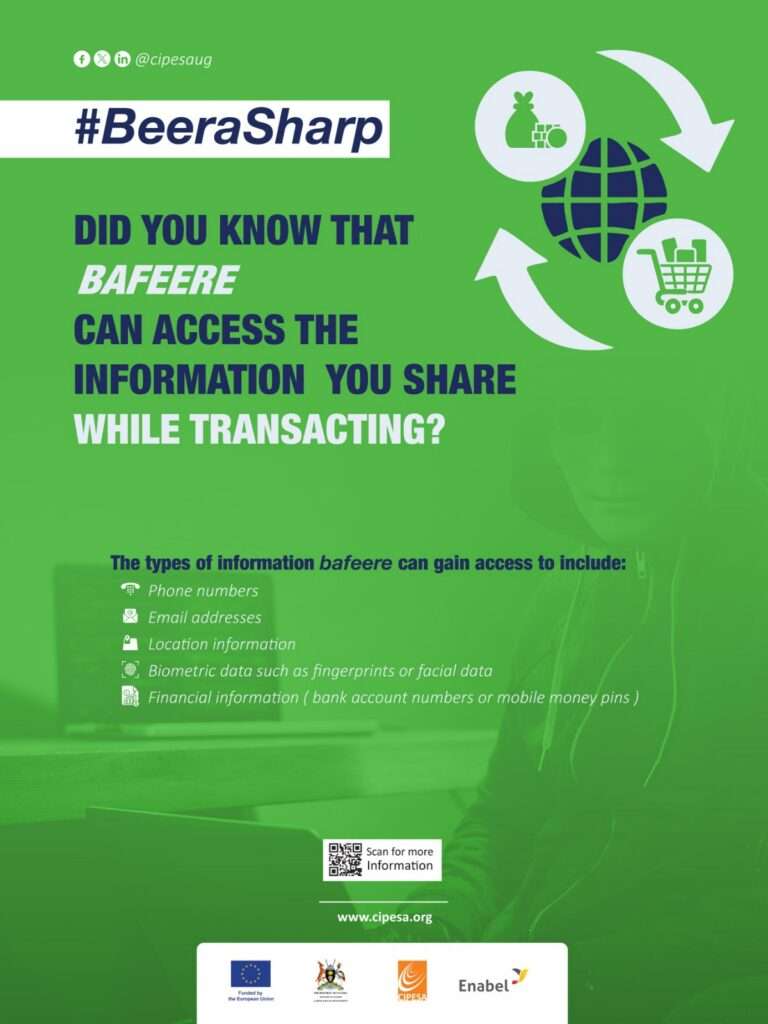
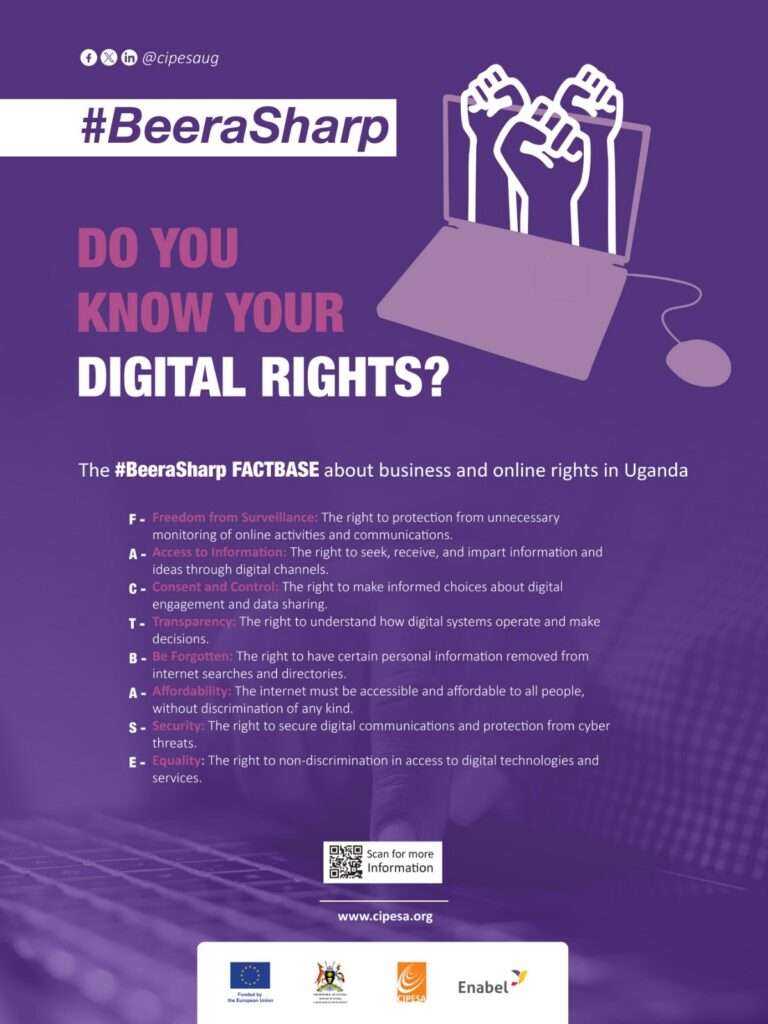
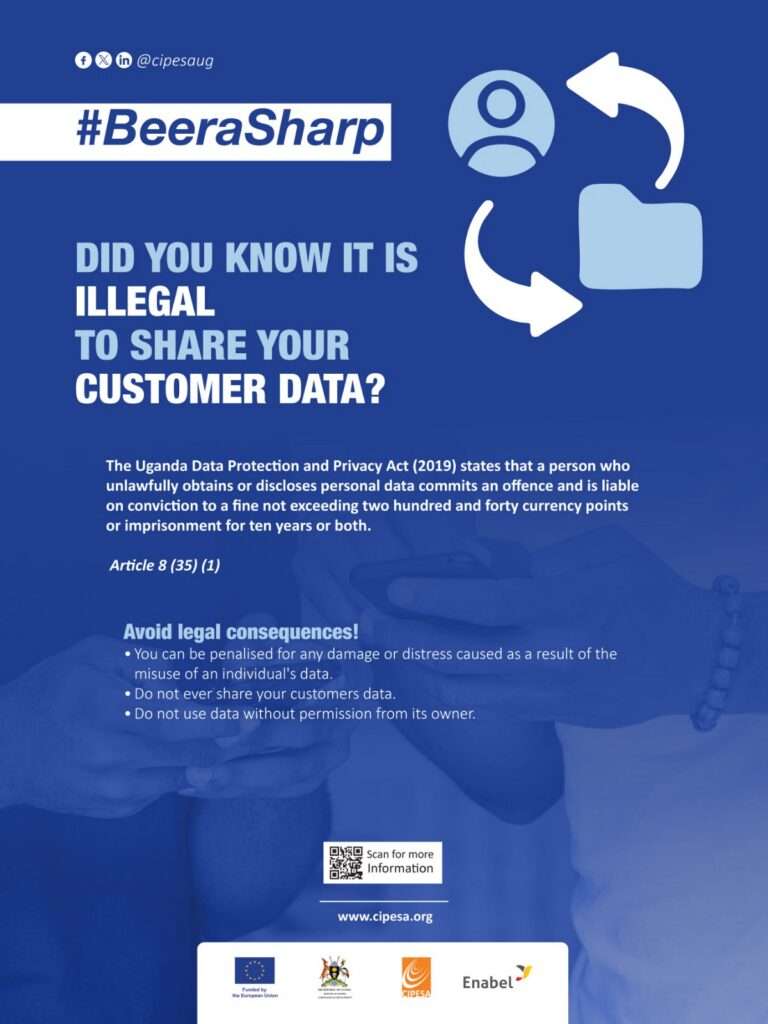
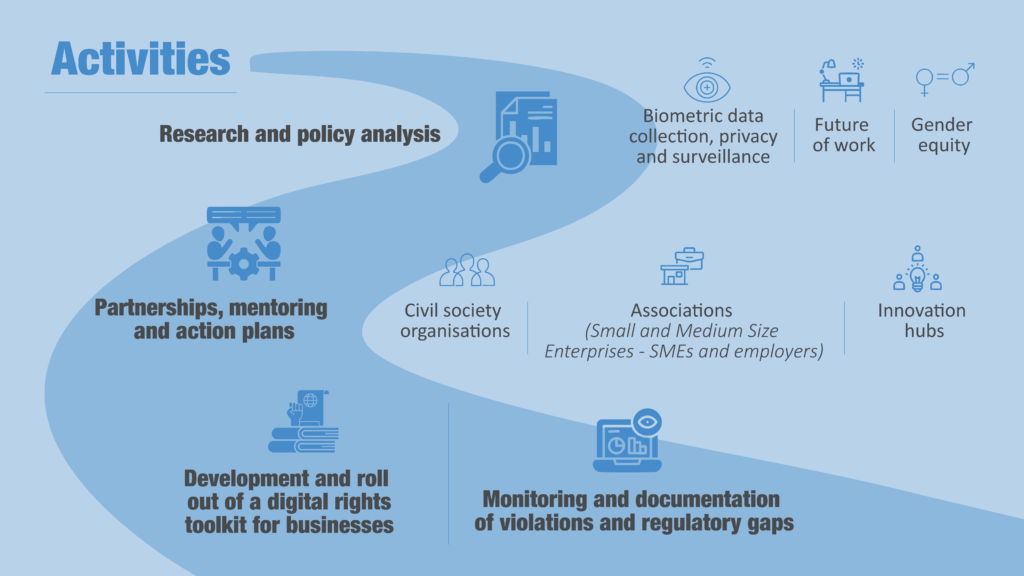
The #BeeraSharp (“be smart” in Luganda) campaign is our response in addressing the gaps that Ugandan businesses face when navigating digital rights, online spaces and digital data. It aims to fill key knowledge gaps on the understanding of business legal obligations through adopting secure and ethical digital practices to build a smarter, safer, and more resilient business ecosystem in Uganda.