State of Internet Freedom in Africa 2022: The Rise of Biometric Surveillance

FIFAfrica22 |

Digital biometric data collection programmes are becoming increasingly popular across the African continent. Governments are investing in diverse digital programmes to enable the capture of biometric information of their citizens for various purposes.

A new report by the Collaboration on International ICT Policy for East and Southern Africa (CIPESA) documents the emerging and current trends in biometric data collection and processing in Africa. It focuses on the deployment of national biometric technology-based programmes in 16 African countries, namely Angola, Cameroon, Central African Republic, Democratic Republic of Congo, Kenya, Lesotho, Liberia, Mozambique, Nigeria, Senegal, Sierra Leone, Tanzania, Togo, Tunisia, Uganda, and Zambia.

The report published today is the ninth consecutive one issued by CIPESA since 2014 under the State of Internet Freedom in Africa series. It was released at the Forum on Internet Freedom in Africa (FIFAfrica), which is taking place in Lusaka, Zambia.

The biometric data collection programmes reviewed by the report include those related to civil registrations, such as the issuance of National Identity cards, biometric voter registration and identification programmes, government-led CCTV programmes with facial recognition capabilities, national ePassport initiatives, refugees’ registration, and mandatory biometric SIM card registration.

The report highlights the key trends, potential risks, challenges and gaps relating to biometric data collection projects in the continent. These include limited public engagement and awareness campaigns; inadequate legal frameworks that heighten risks to privacy; exclusion from accessing essential services; enhanced surveillance, profiling and targeting; conflicting interests and the wide powers of third parties; and limited capacity and training. 

Consequently, the study notes that these biometric programmes are being implemented in countries with poor digital rights records, declining democracy and rising digital authoritarianism, which casts doubt on the integrity of biometric data collection programmes and the resultant databases. Thus, viewed collectively, the developments, trends and risks outlined in the report heighten concern over the growing threats to the right to privacy of personal data and potential violations of digital rights on the continent. 

Finally, the report presents recommendations to various stakeholders including the government, civil society, the media, the private sector and academia, which, if implemented, will go a long way in addressing data protection and privacy gaps, risks and challenges in the study countries. 

The key recommendations include a call to:

  • Governments to implement the laws and policy frameworks on identity systems and data protection and privacy while paying keen attention to compliance with regionally and internationally recognised principles and minimum standards on data protection and privacy for biometric data collection and require the adoption of human rights-based approaches. 
  • Countries without data protection and privacy laws such as Liberia, Mozambique, Sierra Leone and Tanzania should expedite the process of enacting appropriate data protection laws so as to guarantee the data protection and privacy rights of their citizens. 
  • Governments to ratify the AU Convention on Cyber Security and Personal Data Protection (Malabo Convention) to ensure government commitment to regional data protection and privacy as a means to hold them accountable.
  • Governments to establish independent and robust oversight data protection bodies to regulate data and privacy protection including biometric data.
  • Civil society to engage in advocacy and lobby governments to develop, implement and enforce privacy and data protection policies, laws and institutional frameworks that are in compliance with regional and international minimum human rights standards.
  • Civil society to monitor, document and report on the risks, threats, abuses and violations of privacy and human rights associated with biometric data collection programmes, and propose effective solutions to safeguard rights in line with international human rights standards.
  • The media to progressively document and report on initiatives such as advocacy by civil society and other stakeholders to keep track of developments. 
  • The media to conduct investigative journalism to identify and expose privacy violations arising from the implementation of biometric data collection programmes.
  • The private sector to take deliberate efforts to ensure that all their respective biometric data collection programmes and systems are developed implemented and managed in compliance with best practices prescribed by the national, regional and international human rights standards and practices on privacy and data protection, including the UN Guiding Principles on Business and Human Rights.
  • The private sector to ensure that they progressively adopt and develop comprehensive internal privacy policies to guide the collection, storing and processing of personal data. 
  • The private sector to take deliberate efforts aimed at involving data subjects in the control and management of their personal data by providing timely information on external requests for information. 
  • Academia to conduct evidence-based research on data protection and privacy including biometrics, highlighting the challenges, risks, benefits and trends in biometric data collection programmes. 

The full State of Internet Freedom in Africa 2022 Report can be accessed here.
Journalists in DR Congo and Rwanda Grapple with Disinformation and Hate Speech. Here’s What They Should Do

By CIPESA Writer |

As disinformation and hate speech intensify during periods of armed conflict and political unrest, journalists can play a critical role in countering falsehoods by providing accurate, unbiased information to the public. Yet, journalists often lack the skills and resources to identify, fact-check, and call out disinformation.

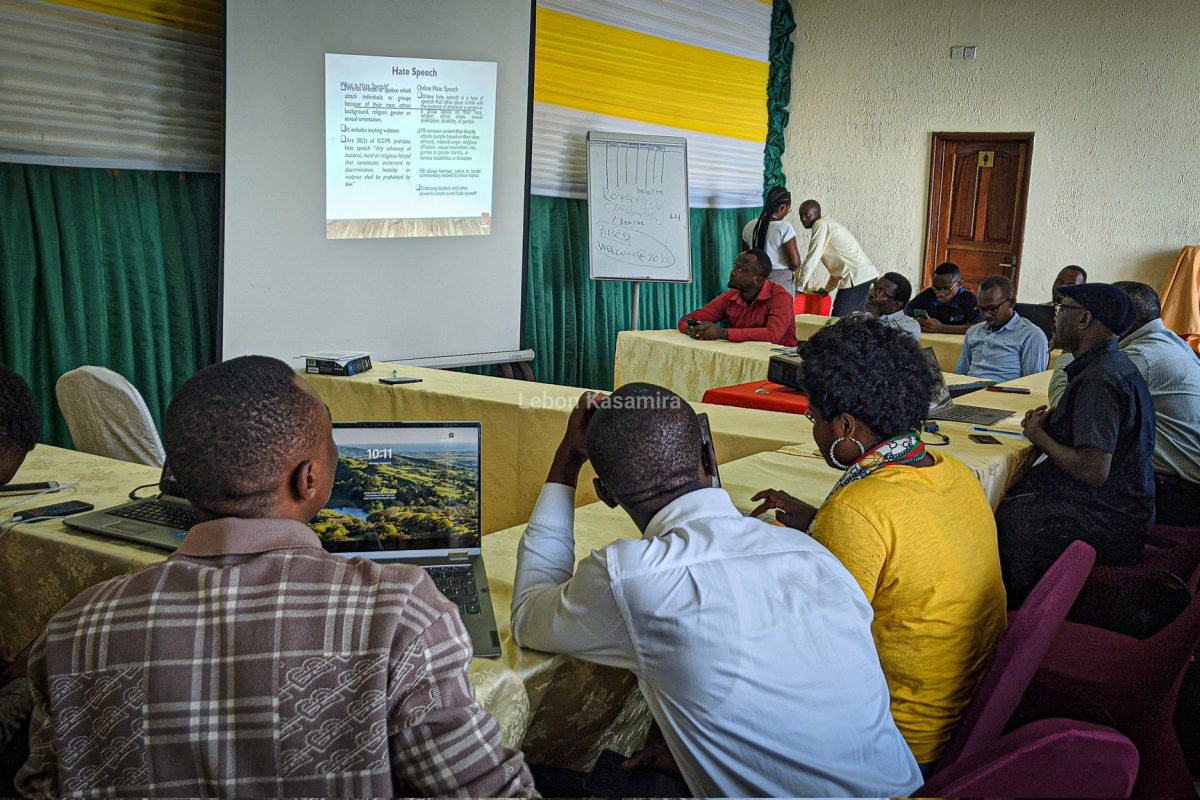
Last month, the Collaboration on International ICT Policy for East and Southern Africa (CIPESA) convened a consultative meeting in Rwanda’s border town of Rubavu for Congolese and Rwandan journalists to discuss how they can play a more effective role in countering disinformation in the conflict between the two countries while providing accurate information in their reporting. The meeting discussed the nature of the disinformation and its key instigators and spreaders, media pluralism, and factual reporting.

The Conflict

In recent months, the governments of the Democratic Republic of Congo (DR Congo) and Rwanda have traded accusations of supporting rebel forces destabilising each other’s country, with disinformation and hate speech taking centre stage in the conflict and fuelling hostilities between the neighbours.

The Congolese government is engaged in armed conflict against the M23 rebel group, which it says is supported by the Rwanda government. A recent United Nations (UN) report corroborated the allegations, indicating that Kigali supports the M23 rebels and other militia operating in the troubled North Kivu province. Rwanda denies the allegations and in turn accuses its neighbour of supporting the Democratic Forces for the Liberation of Rwanda (FDLR) armed rebels that have bases inside eastern Congo from where they purportedly make occasional incursions into Rwanda.

This ongoing conflict has also sucked in the UN peacekeeping force in DR Congo, commonly known as the United Nations Organization Stabilization Mission in the Democratic Republic of the Congo (MONUSCO). There are increased calls for its withdrawal from the central African nation amidst accusations that it has failed to stop the M23 rebel advances and killings by other militia. According to media reports, 36 people including four UN peacekeepers were killed in late July amid protests against MONUSCO.

Information Disorder

The Congolese online space is fraught with calls for a boycott of Rwandan goods and businesses, as well as calls for expulsion of Rwandan nationals. In late May, Congo suspended Rwanda’s national carrier Rwandair’s flights from its territory. The hashtag #RwandaIsKilling trended online in July 2022 as some Congolese citizens and their government accused Rwanda of supporting the resurgence of attacks by the M23 rebels that claim to protect ethnic Rwandans that are native to eastern Congo, especially the Tutsi ethnic group.

The disinformation is particularly pronounced on social networking and sharing platforms such as Facebook, Twitter, and WhatsApp. However, some mainstream media, including private radio and television stations, have played an active role in manipulating information and entrenching hate speech against some members of the Congolese Kinyarwanda-speaking communities and Rwandan nationals.

Yet it is not media actors on one side of the border that are actively promoting disinformation. Journalists and media houses on the Rwandan side were also accused of propagating anti-Congo disinformation, notably that related to the Congolese government’s alleged support for anti-Rwanda armed groups. Often, those who promote the pro-Rwanda narrative are engaged in exchanges with the pro-Congo influencers on social media, with both sides utilising disinformation.

Participants at the Rubavu meeting noted that politicians have been at the forefront of using disinformation to push nationalistic and populist agendas against the Rwandan community living in Congo’s North Kivu and the South-Kivu provinces. As one Congolese journalist explained, “The disinformation and hate speech narratives have been mostly pushed by politicians and this has been done for petty political and personal interests.”

Yet another journalist, who operates from the Congolese city of Goma, noted that some prominent members of the community, “such as religious leaders, influential civil society leaders, and grassroots leaders have also played a major role in peddling and spreading false narratives and fake news.”

Participants also identified political analysts, social media influencers, bloggers, local civic leaders and ordinary citizens, as some of the actors behind the current spate of hate speech and disinformation within the digital space of the two countries.

It was noted that many journalists, both in DR Congo and Rwanda, lacked the capacity to verify the information and had become complicit, knowingly and unknowingly, in spreading disinformation. Furthermore, because most citizens could not easily identify disinformation and tended to believe most information they received through mainstream and social media platforms, fake news was thriving and spreading rapidly.

Nadine Kampire from the Goma-based media network Afia Amani Grands Lacs, said the Rubavu meeting was timely, as fake news and hate speech were rampant on various Congolese and Rwandan social media. It was therefore necessary for journalists to appreciate the extent of the problem, to develop skills in fact-checking, and to build networks for sharing credible information with counterparts across borders.

The Effects

For the residents of Goma and Rubavu, the effects of disinformation and hate speech on regional peace and stability are all clear. The disinformation, escalation of conflict and whipping up of hate speech, have led to a substantial decline in the movement of people and goods and continue to undermine cross-border trade. As a result, this has negatively affected the livelihoods of hundreds of small-scale traders and community members.

Further, the standoff between the two countries has prevented many learners from attending school as they fear crossing the border. Notably, many Rwandans in Rubavu attend schools in the much larger city of Goma across the border.

Fidèle Kitsa, a Congolese journalist working with Star Radio in Goma, noted that hate speech and disinformation have caused negative social, economic and educational consequences within communities in the border towns. He said the price of food and commodities increased, the population has been radicalised, pessimism towards certain information on social media increased, and the peaceful coexistence of the populations in two cities has been harmed. These effects are evident beyond the border towns, all the way to the Congolese capital Kinshasa.

The tension is palpable, even here in the capital [Kinshasa] where we really see acts of xenophobia between the Congolese and Rwandans all day long. All it takes is one click, one video, one publication and it can quickly go viral, because in our minds, our subconscious, the information is there. We are just waiting for something to trigger it. – Dandjes Luyila, Journalick, CongoCeck

A Rwandan editor summed up the effects: “The rampant spread of fake news, political propaganda, and hate speech across social media and through the mainstream media has breached trust and the social relationship between the communities living on both sides of the border.”

Recommendations

At the end of the meeting, a number of recommendations were made that can help to stem the spread of disinformation in DR Congo and Rwanda.

Journalists:

Journalists:

  • Abide by ethical standards that promote accuracy, fairness, and objectivity in the coverage of news.
  • Fact-check every piece of information before disseminating it.
  • Provide news and information in an unbiased way.
  • Actively promote peace and security.

Media development agencies:

  • Hold regular training on fact-checking for journalists.
  • Provide small grants to support journalists to pursue in-depth stories on the ongoing conflict in the region as a way of providing accurate information to the public.
  • Enhance collaboration between journalists within the East and Central African region. This includes the creation of a regional association of journalists and media professionals.
  • Support media initiatives that are working towards identifying and fighting disinformation and fake news.
  • Support fact-checking initiatives for journalists.

Privacy Imperilled: Analysis of Surveillance, Encryption and Data Localisation Laws in Africa

By Evelyn Lirri |

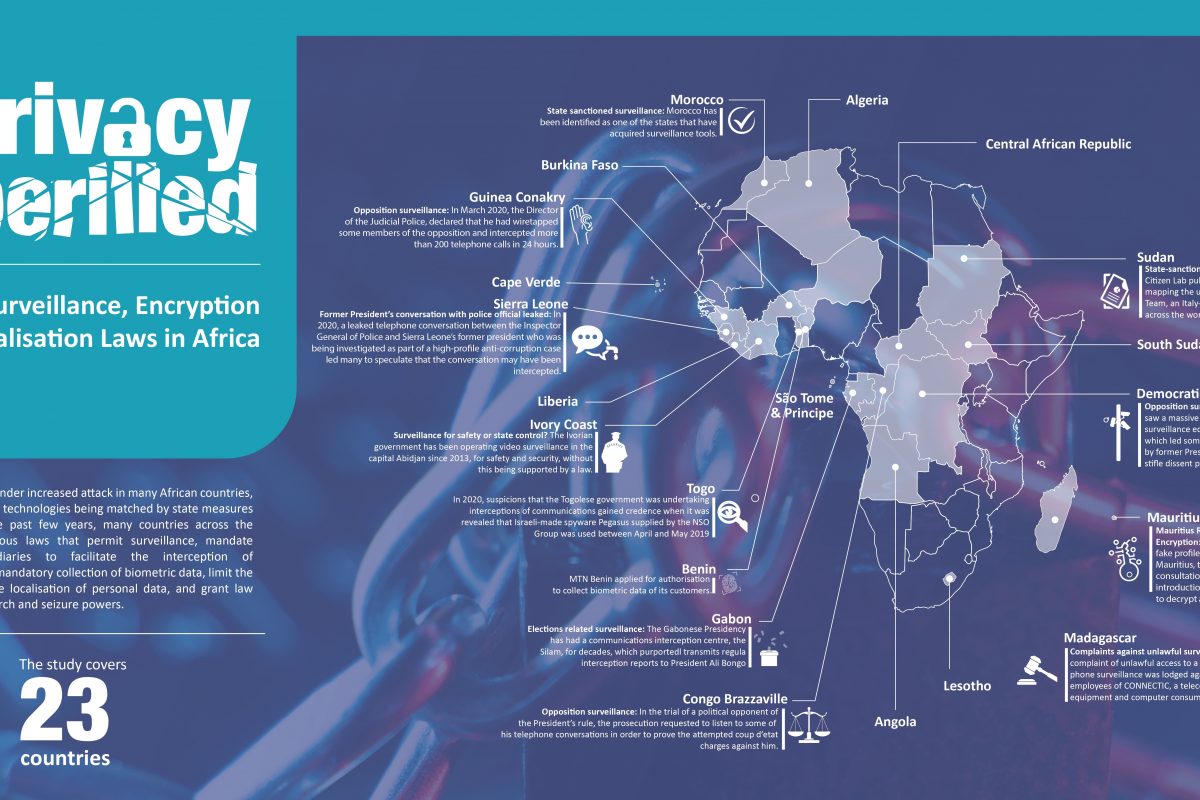
Across Africa, the proliferation of digital technologies is being matched by state measures that negate the right to privacy. The accelerated adoption of digital technologies has come with increased collection and sharing of large quantities of personal data, which is a major concern as several countries lack data privacy laws and many that have them are not implementing the laws. 

As a result, the right to privacy has come under growing siege, which is in turn negatively impacting the enjoyment of other rights, including freedom of expression, association, and access to information online.

In this report, the Collaboration on International ICT Policy for East and Southern Africa (CIPESA) analyses country-specific laws that various governments on the continent have enacted and how they impact privacy and data security through surveillance, restrictions on encryption, data localisation, and biometric databases. The report covers 23 countries – Algeria, Angola, Benin, Burkina Faso, Burundi, Cape Verde, the Central Africa Republic (CAR), Congo Brazzaville, the Democratic Republic of Congo (DRC), Gabon, Guinea Conakry, Ivory Coast, Lesotho, Liberia, Madagascar, Mauritania, Morocco, Niger, Sao Tome and Principe, Sierra Leone, South Sudan, and Togo.

According to the report, governments across the continent continue to collect and process personal data, intercept communications and permit surveillance without putting in place the requisite oversight mechanisms and adequate remedies, despite being signatories to regional and international conventions that recognise the right to privacy and provide safeguards for data protection, such as the revised Declaration of Principles of Freedom of Expression and Access to Information in Africa, the International Covenant on Civil and Political Rights, and the Universal Declaration of Human Rights.

Weak Oversight of Surveillance Operations 

One of the emerging concerns is the lack of independent judicial oversight over surveillance operations. In some countries, surveillance operations are entirely carried out and overseen by bodies within the executive, with parliaments and courts of law excluded. In Lesotho, interception warrants may be issued by the Minister responsible for the National Security Services, while in Niger, interception is ordered by the President. In South Sudan, this responsibility is vested with the Director General of the National Security Service, while in The Gambia it lies with the Minister of Interior. In Togo, the Prime Minister, and the Ministers responsible for the economy and finance, defence, justice, and security and civil protection can trigger interception of communications.

In countries such as Benin, the Democratic Republic of the Congo (DRC), Morocco, Niger, and Togo, justification for surveillance is specified under the law. The reasons provided include the preservation of national security or defence, investigation of crimes, prevention of terrorism, organised crime, and activities that undermine public peace or public order. However, these crimes are not defined or are vaguely defined, which gives latitude to state authorities to broadly interpret the laws in undermining the rights of critics and opponents.

 Limitations on Encryption

The use of encryption is critical in helping citizens to protect their data and communications while enjoying the right to privacy and freedom of expression. In several countries, however, this right is being threatened as governments impose restrictions that require the registration of encryption service providers, ban certain types of encryptions, and compel service providers to hand over decrypted data.

In Algeria, individuals and organisations that want to acquire and use encryption services must be granted authorisation by the country’s Regulatory Authority of Post and Electronic Communications. On the other hand, in countries such as the Democratic Republic of Congo, the Central Africa Republic, Niger, Benin, Guinea Conakry, Ivory Coast, Congo-Brazzaville, Morocco, Togo and Burkina Faso, an authorisation may be sought if the encryption is not exclusively for providing authentication or integrity control functions. Failure to seek authorisation or using prohibited encryption could attract a heavy penalty including jail time, a fine, or both.

Countries like Mali, Tanzania, and Malawi also require service providers to disclose specific software to be used for encryption. Such prohibitive provisions undermine privacy and freedom of expression that access to encryption accords.

Compelled Assistance by Service Providers

Governments are also using compelled assistance – where state agencies seek access to data from service providers, including through courts of law and regulators, to gain access to individuals’ private data. This includes access to the secret code of encrypted data, or to decrypted data, and generally requiring service providers to render assistance to state agencies in the interception of communications.     

Laws in countries like Benin, Ivory Coast, Congo-Brazzaville, Gabon, Guinea Conakry, and Sierra Leone specify grounds on which the state can access encrypted data of individuals and also facilitate lawful interception of communications. Laws in several countries require intermediaries such as telecom companies and Internet Service Providers (ISPs) to facilitate surveillance.

 As the report notes, compelled service provider assistance as stipulated in some countries’ laws is quite worrisome as it gives governments and their agencies unfettered access to individuals’ private data beyond limits prescribed by law or permissible by international standards.

Data Localisation

Various countries have enacted laws to control the cross-border transfer of personal data for a multitude of reasons, including national security, personal data protection, and data sovereignty. Algeria, Niger, Morocco, Benin, Cape Verde, Madagascar, Guinea Conakry, Ivory Coast, Congo Brazzaville, Sao Tome & Principe and Togo have laws that prohibit cross-border transfer of personal data unless authorised by data protection authorities.

However, as the report’s findings show, despite having laws in place, enforcement remains weak. Further, data localisation requirements could, in the absence of robust legal and practical safeguards, further facilitate efforts by state and non-state actors to undermine privacy-related rights. Morocco, Algeria, and Ivory Coast are some of the countries where data localisation measures are being implemented.

 Biometric Data Collection

Recent years have seen a number of African countries undertake mass collection, processing and storage of personal data through initiatives such as mandatory SIM card registration, electronic biometric passports, IDs, and driving licences. Although many countries have also passed laws on data protection and privacy, weak implementation mechanisms, coupled with the absence of the requisite safeguards, remain a threat to individual privacy. This is particularly so in instances where regulatory authorities have the power to direct telecom operators to hand over information such as that contained in the SIM card databases.  

Furthermore, the existing oversight mechanisms and provisions for remedies in the case of data breaches have not been effective enough to protect the personal information and communication of individuals in line with internationally recognised human rights standards.    Many countries have enacted data protection laws but have additional legislation that gives the state and its agencies power to access citizens’ biometric information, often under the guise of protecting national security. This is the case with countries such as Kenya, Gabon, Uganda, Lesotho, Mauritius, Morocco, Niger, Sao Tome, Togo, Algeria, Congo Brazzaville, and Ivory Coast.

 Recommendations

 Government:

  • Enact data protection laws in countries such as Liberia, Sierra Leone and South Sudan to provide for and guarantee protection of personal data.
  • Review existing laws, policies and practices on surveillance, including COVID-19 surveillance, biometric data collection, encryption and data localisation, to ensure they comply with article 9 of the African Charter and with the principles in the African Commission on Human and Peoples’ Rights Declaration of Principles on Freedom of Expression and Access to Information in Africa 2019.
  • Cease blanket compelled service provider assistance and provide for clear, activity-bound and court-mandated assistance.
  • Submit periodic reports to the different international human rights treaty body monitoring mechanisms such as the African Commission on Human and Peoples’ Rights, the Human Rights Committee and the Universal Periodic Review process, on the measures taken to guarantee the right to privacy and data protection.

Civil Society:

  • Work collaboratively with stakeholders such as the private sector and academia, including through litigation to challenge laws and measures that violate privacy rights.
  • Monitor and document privacy rights violations through evidence-based research.
  • Conduct regular analysis of proposed laws to identify the gaps and propose revisions before they are enacted into law.
  • Advocate for the promotion and protection of the right to privacy and data protection through various advocacy engagements.

Private Sector: 

  • Develop, publish and implement internal privacy and data protection policies and best practices in handling customer data so as to guarantee customers’ data protection and privacy.
  • Regularly publish transparency reports that highlight all cases of personal data and information disclosure to government agencies as well as other assistance offered to governments to enable communication interception and monitoring.
  • Develop technologies and solutions and use privacy-enhancing technologies that embed and integrate privacy principles by design and default.
  • Comply with the United Nations Business and Human Rights Principles by conducting human rights impact assessments to ensure that measures undertaken do not harm individual rights to privacy and data protection.

Find the full report here: Privacy Imperilled: Analysis of Surveillance, Encryption And Data Localization Laws in Africa  

See another CIPESA report Mapping and Analysis of Privacy Laws in Africa that maps privacy-related laws in 19 other countries.

Kenya’s 2022 Political Sphere Overwhelmed by Disinformation

Ahead of the August 9, 2022, general elections, Kenya has been hit by a deluge of disinformation, which is fanning hate speech, threatening electoral integrity, and is expected to persist well beyond the polls. Last month, the Kenya ICT Action Network (KICTANet) and CIPESA convened stakeholders in Nairobi to disseminate the findings of research on the nature, pathways, and effects of disinformation in the lead-up to the election, and the actions required to combat disinformation. Below is a summary of the report findings and takeaways from the dissemination event, as captured by KICTANet:

There is a lot of strange information going on around the country, and this has been happening for a while. During the Kenya Internet Governance Forum (IGF) week, the Kenya ICT Action Network (KICTANet) in partnership with the Collaboration on International ICT Policy in East and Southern Africa (CIPESA) held a workshop to disseminate a report on  Disinformation in Kenya’s Political Sphere: Actors, Pathways and Effects. The research is part of a regional study conducted by CIPESA, that explores the nature, perpetrators, and effects of misinformation in Cameroon, Ethiopia, Uganda, Nigeria, and Kenya.

As Kenya nears the 2022 general elections, disinformation remains at its peak levels, both at grassroots and national levels. The availability of sophisticated technology and its ease of use has enabled a wide range of political actors to act as originators and spreaders of disinformation.

Currently, there is no law that clearly defines or distinguishes between misinformation and disinformation. However, it is an offense to deliberately create and spread false or misleading information in the country. False publications and the publication of false information are punishable under the Computer Misuse and Cyber Crimes Act under Sections 22 and 23. It is a crime to relay false information with the intent that such information is viewed as true, with or without monetary gain. However, these same laws can also be used to silence dissent, making it a double-edged sword.

The study identifies different forms of disinformation that take place both physically and online. They include deep fakes, text messages, WhatsApp messages, and physical copies such as pamphlets and fliers. These are spread through the use of keyboard armies on social media, where politicians up to the grassroots levels hire influencers, and content creators who spread messages around them or against their opponents. This is done through mass brigading and document and content manipulation. The rationale is driven by the desire to get ahead politically or economically and is fuelled by an ecosystem that is fertile for the spread of this vice.

According to Safaricom, in the year 2017, 50% of its communications department time was spent monitoring fraud and fake information at different times. The instigators of this disinformation are influencers, politicians themselves, people they work with, and their parties.

There is a flow to how the fake news gets to the audience, and disinformation does not start with the pictures but with a plan that is part of a bigger political strategy. It starts with identifying the target audience, choosing the personnel and people to push the message, and then narrative development is done. This is followed by content development, which includes videos, pictures or memes, and audio files. Once this is done, the content is then strategically released to the unknowing public, who, without critically analyzing the information, spread it far and wide to a wider audience. This results in diminished trust in democratic and political institutions and restricted access to reliable and diverse information.

This can be addressed by having increased government engagement on social media as opposed to it being reactive only. For example, the government needs to be an active contributor to accurate information. Considering there is a space in which disinformation thrives, in particular where there is a lack of response, rumors spread. Civil society should also engage with policymakers and media representatives on enhancing digital literacy and fact-checking skills. The intermediaries should increase transparency and accountability in content moderation measures and conduct cross-sectoral periodic policy reviews.

Key Takeaways

  1. The weakest link in disinformation is the citizen, and therefore, one of the most effective ways to tackle the issue is to empower the citizenry to be able to detect and respond wisely to misinformation. If the general public is not informed, it is a lost battle.
  2. There is a thin line between misinformation and mal-information and it can easily be blurred.
  3. The Computer Misuse and Cyber Crimes Act 2018 is a double-edged sword that censors yet tries to get some accountability from the general public in regard to spreading misinformation.
  4. Safaricom reported that during the 2017 election, 50% of its time was spent monitoring fraudulent interactions.

Skilling Justice Actors in Digital Rights Advocacy in Africa

CIPESA Staff |

In June, 2022, the Collaboration on International ICT Policy for East and Southern Africa (CIPESA) conducted a regional capacity building workshop aimed at equipping participants with thematic understanding of key digital rights trends in the region, including disinformation, alongside practical skills development in impactful digital rights advocacy and communication.

Hosted in Lusaka, Zambia, the two-days workshop (June 28 and 29), attracted 20 participants from 10 African countries – Eswatini, Ethiopia, Kenya, Malawi, Mozambique, Rwanda, South Africa, Uganda, Zambia, and Zimbabwe.

According to Ashnah Kalemera, CIPESA’s Programme Manager, the training was part of various interventions through which, CIPESA is developing the capacity of different social justice organisations with the requisite skills to effectively engage in digital rights advocacy  including research methodology and communications, designing evidence-based advocacy strategies, as well as digital resilience.

“There is limited understanding of digital rights among traditional human rights defenders,  with many yet to make the direct link between technology, social justice and human rights as part of their advocacy efforts. Meanwhile, many are working in hostile environments, with shrinking civic space both online and offline,” said Kalemera. 

Although there has been a growing number of civil society and justice actors responding to and challenging government excesses over the years, there are still knowledge and skills gaps among actors that hinder their  engagement in meaningful policy advocacy. Findings from a 2017 joint research study conducted by CIPESA, Small Media, DefendDefenders, and the Centre for Intellectual Property and Information Technology Law (CIPIT) showed that in all of the countries surveyed (Burundi, Rwanda, Tanzania, and Uganda), civil society organisations (CSOs) failed to demonstrate a baseline of digital security knowledge, and/or failed to implement practices effectively.

The report notes that although the internet and related technologies have empowered CSOs to engage with the public, share information, and advocate for citizens’ rights in sometimes challenging and closed political environments, it has also offered means and tools that are used by state and non-state actors to interfere with their work, surveil them, and censor their voices.

In addition, digital security and safety skills are lacking among some of the most at-risk groups, yet trainers and support networks are in short supply. Without adequate digital security capacity, activists and human rights defenders are not able to meaningfully undertake advocacy and engagements around human rights, transparent and accountable governance.

CIPESA’s capacity building interventions are therefore designed and structured to provide both skills and knowledge modules and serve as a platform for developing collaborative advocacy strategies for advancing digital rights in the region. The training in Lusaka covered topics such as the interplay between technology, democracy and human rights; trends in digital rights violations such as arrests and intimidation of online users, internet blockages, surveillance and interception of communications. 

Other topics covered during the workshop were disinformation and human rights, which explored the implications of false and misleading information on online mobilisation and participation. Elsewhere, the workshop explored digital inclusion, with Zambia-based activist, Matha Chilongoshi of Revolt Media emphasising the need for increased engagement on the digital divide, online violence against women and girls and digital accessibility for persons with disabilities. In this regard, Kamufisa Manchishi, a Lecturer at the Mulungushi University – Zambia noted that the existing  digital disparities are a result of access and affordability barriers including failure by governments to design and implement universal service fund policies that prioritise equity. This calls for proactive efforts in policy influence for an inclusive digital society.

Indeed, as highlighted by Apolo Kakaire, the Advocacy and Communication Manager at the African Centre for Media Excellence (ACME), “in order for civil society’s work in Africa to impact government policy, help change attitudes and behaviour in society, and ultimately result in greater protections for internet freedom, there is a need to develop and implement robust advocacy and impactful communication strategies.

Post-evaluation of the training workshop indicated increased understanding of the key terms and concepts covered including the link between disinformation and freedom of expression, disinformation and internet shutdowns, and commitment by participants to apply the acquired knowledge and skills, including acting as infomediaries within their communities and organisations through awareness raising among colleagues, and conducting information verification prior to sharing.

“As a communication officer, I will cross-check and make sure that all the information I am sharing is not deceitful while encouraging others to do the same,” noted one participant. Another participant indicated that they would work to get more involved in advocacy regarding disinformation laws that are detrimental to human rights. “We are planning to have a workshop with the grassroots women human rights defenders on disinformation and human rights and develop a digital rights advocacy and communication strategy.” The planned workshop will take place in Kenya’s largest urban informal settlement, Kibera, led by Tunapanda.