Join the FIFAfrica23 Excitement: Here’s How You Can Spread the Word!

By CIPESA Writer |

Are you as excited as we are? We can’t wait to engage with you next week!

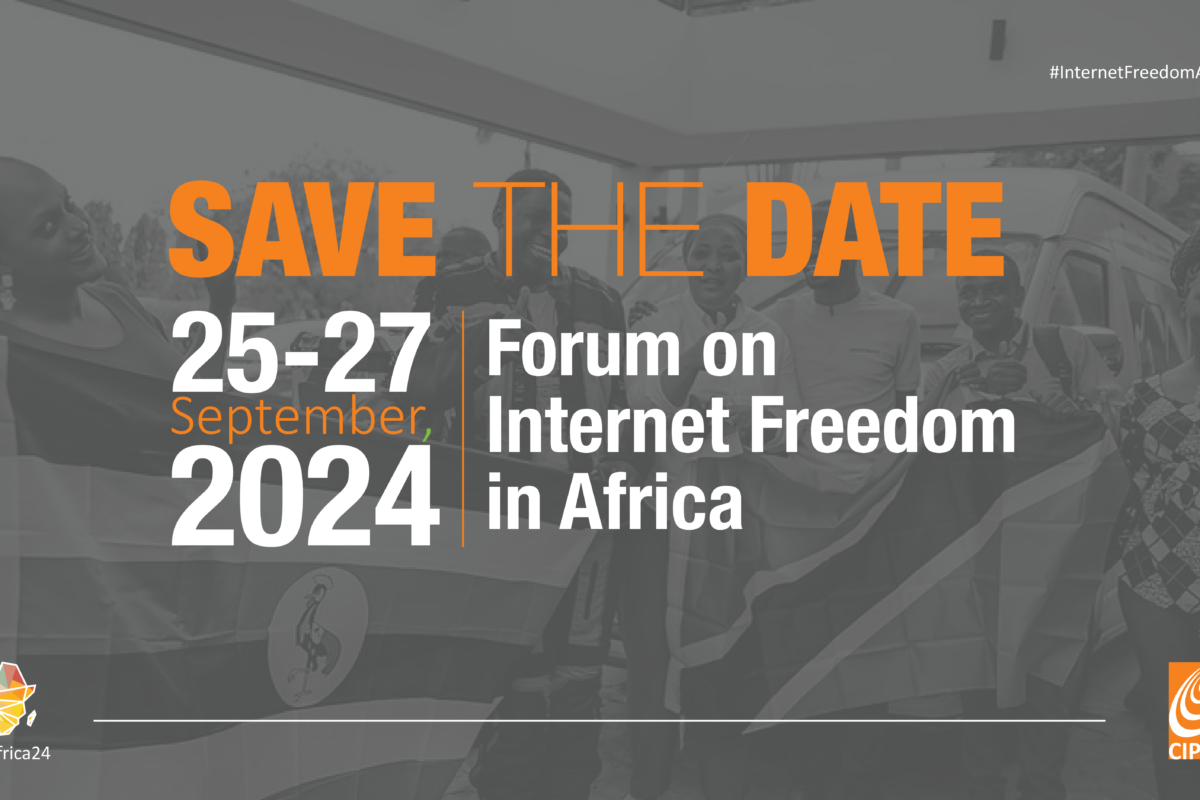
Over the years, the community attending the Forum on Internet Freedom in Africa (FIFAfrica) has grown. Many have gone on to collaborate on advocacy efforts, research, campaigns and projects. We look forward to keeping the spirit of advancing internet freedom in Africa going this year, in addition to growing the community.

As we get closer to the Forum, be sure to share your excitement, thoughts and insights on social media. Not sure what to say? Below are a few text ideas you can use in your own social media platforms:

  • Join me at #FIFAfrica23, where activists, technologists, policy-makers, and industry experts converge to shape the future of #InternetFreedomAfrica! Let’s be part of this transformative journey together. See more: www.internetfreedom.africa
  • Excited to be part of #FIFAfrica23 by @cipesaug, where we’ll dive into pressing issues shaping and informing #InternetFreedomAfrica. Together, we can forge a path towards a more open and inclusive digital landscape. See you there! www.internetfreedom.africa 
  • Calling all champions of internet freedom! #FIFAfrica23 is THE event to be at. Let’s amplify our collective voice for a free and open internet in Africa. Can’t wait to connect with you all!  #InternetFreedomAfrica @cipesaug
  • Thrilled to attend #FIFAfrica23 and discuss how we can advance digital rights in Africa. As a community, we’ll drive change, promote inclusivity, and foster innovation. See you at the forefront of this vital conversation online and offline! #InternetFreedomAfrica @cipesaug

Media Support. Send media queries to: [email protected]

Reflecting on the State of Internet Freedom in Africa Reports

 By CIPESA Writer |

As we approach the Forum on Internet Freedom in Africa (FIFAfrica23), we’re excited to share vital insights about a cornerstone of the event. Our flagship annual ‘State of Internet Freedom in Africa Report’ illuminates trends in internet freedom across Africa. 

Since its inaugural edition in 2014, we’ve published a series regional reports and numerous country-specific analyses, solidifying the impact and influence of the report in the field.

The State of Internet Freedom in Africa has come serve as a reference point for a diverse array of stakeholders, both governmental and non-governmental, offering essential context and generating robust evidence to inform policy-making and practice in the ICT sector. Additionally, it amplifies awareness regarding internet freedom matters on the continent, sparking meaningful dialogues among digital rights advocates throughout Africa.

Below is a quick summary of what the reports have covered over the years. 

Documenting the State of Internet Freedom in Africa 

2022 – The Rise of Biometric Surveillance: The report highlights the increasing risks in the use of biometric technologies by governments for surveillance and social control in Africa. The report raises concern that in the absence of adequate safeguards, biometric technologies such as facial recognition, fingerprinting, and iris scanning could be abused to monitor citizens’ activities, track their movements, and limit their freedoms.
2021 – Effects of State Surveillance on Democratic Participation in Africa: The report documents how surveillance practices are becoming more pervasive in Africa, with governments using advanced technologies to monitor citizens’ online activities and infringing on their right to privacy. These practices have had a chilling effect on freedom of expression, association, and assembly, and limited opportunities for civic participation and engagement.
2020 – Resetting Digital Rights Amidst the Covid-19 Fallout: The report focuses on the impact of the COVID-19 pandemic on digital rights and freedoms in Africa. It also highlights how the pandemic led to an increase in internet censorship, surveillance, and online violence against women, as well as the negative impact of internet shutdowns on access to information and public health messaging.
2019 – Mapping Trends in Government Internet Controls 1999-2019: The report provides an overview of the evolution of government internet controls in Africa over the past two decades. It highlights how African governments have increasingly adopted internet censorship and surveillance practices, implementing internet disruptions and arresting online activists, bloggers and journalists.
2018 – Privacy and Data Protection in the Digital Era: Challenges and Trends in Africa: The report highlights how African countries are lagging behind other regions in enacting data protection laws and regulations. It also highlights the increased risks of data breaches and other privacy violations and the impact on internet freedom.
2017 – Intermediaries’ Role in Advancing Internet Freedom in Africa: Challenges and Prospects: The report provides an overview of the role of intermediaries, such as internet service providers (ISPs) and social media platforms, in promoting internet freedom in Africa. It also highlights how African governments censor and control online content and the challenges faced by intermediaries in balancing their obligations under legal and regulatory frameworks and promoting internet freedom.
2016 – Case Studies from Select Countries on Strategies African Governments Use to Stifle Citizens’ Digital Rights: The report provides an overview of the various strategies employed by African governments to restrict citizens’ digital rights and examines case studies from a number of African countries, highlighting specific incidents of internet censorship, surveillance, and the persecution of online activists and journalists.
2015 – Survey on Access, Privacy and Security Online: The report surveyed internet users in six African countries and highlights the challenges that they face in accessing the internet, protecting their privacy and security online, and accessing information. It also examines the role of governments in regulating the internet and calls for greater transparency and accountability in their policies and practices.
2014 – An Investigation into the Policies and Practices Defining Internet Freedom in East Africa: The report provided an analysis of the policies and practices of governments and Internet service providers in Burundi, Ethiopia, Kenya, Rwanda, Tanzania, and Uganda. It also identified the key challenges facing internet users in these countries, such as censorship, surveillance, and online harassment.

What would you like future reports to explore? Share your thoughts on social media and tag us (@cipesaug). Remember to use the hashtag #InternetFreedomAfrica and/or #FIFAfrica23!

Visit our extensive report library here.

Media Support

Send media queries to: [email protected]

  • Excited to be part of #FIFAfrica23 by @cipesaug, where we’ll dive into pressing issues shaping and informing #InternetFreedomAfrica. Together, we can forge a path towards a more open and inclusive digital landscape. See you there! www.internetfreedom.africa 
  • Calling all champions of internet freedom! #FIFAfrica23 is THE event to be at. Let’s amplify our collective voice for a free and open internet in Africa. Can’t wait to connect with you all!  #InternetFreedomAfrica @cipesaug
  • Thrilled to attend #FIFAfrica23 and discuss how we can advance digital rights in Africa. As a community, we’ll drive change, promote inclusivity, and foster innovation. See you at the forefront of this vital conversation online and offline! #InternetFreedomAfrica @cipesaug

Media Support. Send media queries to: [email protected]

CIPESA Joins International Initiative to Develop “AI Charter in Media”

By CIPESA Writer |

The Collaboration on International ICT Policy for East and Southern Africa (CIPESA) has joined a conglomeration of  international organisations and experts to develop a charter aimed at guiding the use of Artificial Intelligence (AI) in the media. 

According to Reporters Without Borders (RSJ), the group that is coordinating the development of the Charter, 16 partner organisations, as well as 31 media, AI and academic professionals representing 18 different nationalities, are involved in the process. The CIPESA Executive Director, Dr. Wairagala Wakabi, is among the experts on the committee that is led by journalist and Nobel Peace Prize laureate Maria Ressa.

The RSJ stated that the growing interest in the project highlights the real need to clearly and collaboratively develop an ethical framework to safeguard information integrity, at a time when generative AI and other algorithm-based technologies are being rapidly deployed in the news and information sphere.

Part of the committee’s responsibility is to develop a set of principles, rights, and obligations for information professionals regarding the use of AI-based systems, by the end of 2023. This is a response to the realisation that the rapid deployment of AI in the media industry presents a major threat to information integrity.

See here details about the initiative, the partner organisations and experts.

Inscrivez-vous au Forum sur la liberté d’Internet en Afrique (#FIFAfrica23) !

Par FIFAfrica |

Êtes-vous passionné par la liberté d’Internet et les droits numériques en Afrique ? Souhaitez-vous rejoindre et vous engager avec la communauté qui fait avancer les droits numériques en Afrique ? Inscrivez-vous pour participer à l’édition 2023 du Forum sur la liberté d’Internet en Afrique (FIFAfrica23), et rejoignez une communauté de diverses parties prenantes de tout le continent et d’ailleurs, pour débattre des questions les plus urgentes et des opportunités pour améliorer les libertés en ligne. Les inscriptions sont ouvertes pour une participation en présentiel ou à distance !

FIFAfrica23 se tiendra à Dar es Salam, en Tanzanie, les 26 et 27 septembre (pré-événements uniquement sur invitation) et les 28 et 29 septembre (conférence principale) 2023. L’événement est organisé par la Collaboration sur la politique internationale des TIC pour l’Afrique de l’Est et australe (CIPESA), en partenariat avec le ministère tanzanien de l’information, des communications et des technologies de l’information. L’événement aura lieu au Hyatt Regency Dar es Salaam.

Le Forum marquera une décennie de rassemblement de décideurs politiques, de régulateurs, de défenseurs des droits de l’homme, d’universitaires, de représentants de la loi, de médias et d’autres acteurs pour discuter des lacunes, des préoccupations et des possibilités de promotion de la vie privée, de la libre d’expression, de la non-discrimination, de la libre circulation de l’information et de l’innovation en ligne.

Le programme de FIFAfrica23 comprend 10 thèmes sur une diversité de sujets émergeant des soumissions retenues dans le cadre d’un récent appel à sessions.  Ces thèmes comprennent des panels, des présentations, des conférences éclair, des discours liminaires et des ateliers méticuleusement sélectionnés, à travers lesquels les participants au Forum pourront sonder le paysage des droits numériques et de la liberté de l’internet en Afrique, ainsi que les interventions collaboratives pour relever les défis et exploiter les opportunités d’un internet plus ouvert et plus inclusif en Afrique.

Vous pouvez vous inscrire ici et prendre note du Code de Conduite de l’événement et de la Note de voyage qui comprend des informations logistiques.

Ne manquez pas l’occasion de participer à cet événement historique et de contribuer à faire progresser la liberté de l’internet en Afrique !

Ne manquez pas de suivre @cipesaug sur les médias sociaux et de participer à la conversation en ligne en utilisant les hashtags #FIFAfrica23 #InternetFreedomAfrica.

Tanzania Ministry of ICT to Co-Host the 2023 Forum on Internet Freedom in Africa

Announcement |

The Ministry of Information, Communication and Information Technology of the United Republic of Tanzania has announced that it will co-host the 2023 edition of Forum on Internet Freedom in Africa (FIFAfrica23). The move is in line with the country’s digital transformation and wider digitalisation efforts.  

“We are pleased to support such an important event in Africa. In recent years, we have steadily worked at enhancing our digital transformation through the Tanzania Digital Economy Framework to enhance our capacities within the government and for the citizens of Tanzania to enjoy digital services. We value this opportunity to showcase our commitment to promoting internet access in the country and the region. As a Ministry, we have made significant strides in expanding internet access and are committed to ensuring that the internet is a safe and enabling space for all users, especially women, youth, and marginalised groups,” stated Hon. Nape Nnauye, the Minister of Information, Communication and Information Technology.

An initiative of the Collaboration on International ICT Policy for East and Southern Africa (CIPESA), FIFAfrica is the largest and most influential gathering on technology’s role in driving socio-economic and political development in Africa. It brings together policymakers, regulators, human rights defenders, academia, law enforcement representatives, media, and other stakeholders from across Africa and beyond to discuss the most pressing issues and opportunities for advancing privacy, free expression, inclusion, free flow of information, civic participation, and innovation online.

The government of Tanzania, joins those of Ethiopia (2019) and Zambia (2022), as well as the Slovenia Presidency of the European Union (2021), in partnering with CIPESA to co-host FIFAfrica. Scheduled to take place in Dar es Salaam, Tanzania, September 27-29, 2023, the Forum, now in its 10th year, will feature diverse voices and perspectives through carefully curated sessions (training workshops, alliance meetings, panel discussions, exhibitions and lightning talks) which emerged from a public call

“We are pleased to co-host FIFAfrica23 alongside the Tanzania Ministry of Information, Communication and Information Technology. This partnership is a testament to the shared vision and commitment of CIPESA and the Government of Tanzania to promote an open and inclusive internet in Africa,” said Dr. Wairagala Wakabi, CIPESA’s Executive Director.

CIPESA announced that its decision to host FIFAfrica in Tanzania is in recognition of the country’s progressive shift to advance digitalisation for sustainable development. Under the leadership of its first female President, Samia Suluhu Hassan, a proponent for civil rights and women’s rights, the country has undergone political and legal reforms aimed at enhancing civic space and the digitalisation agenda. Notably, a data protection law has been enacted, the law governing media operations is being revised, and the  Online Content Regulations 2020 were revised to make them more supportive of online speech, privacy and access to information.

The Forum has previously been held in Uganda, Ghana, Ethiopia, Zambia and South Africa. As a platform for unpacking challenges and developing collaborative responses, hosting FIFAfrica in different countries opens up the space for experience sharing, learning and exchange, but also gives life to the CIPESA’s commitment to ensuring broader regional representation and deepening dialogue across the continent.
FIFAfrica23 will be hosted at the Hyatt Regency Dar es Salaam, The Kilimanjaro and is expected to assemble at least 400 participants from across the continent and beyond. Follow @cipesaug on social media for updates. Use the hashtags #FIFAfrica23 and #InternetFreedomAfrica to share your vision for digital rights in Africa.