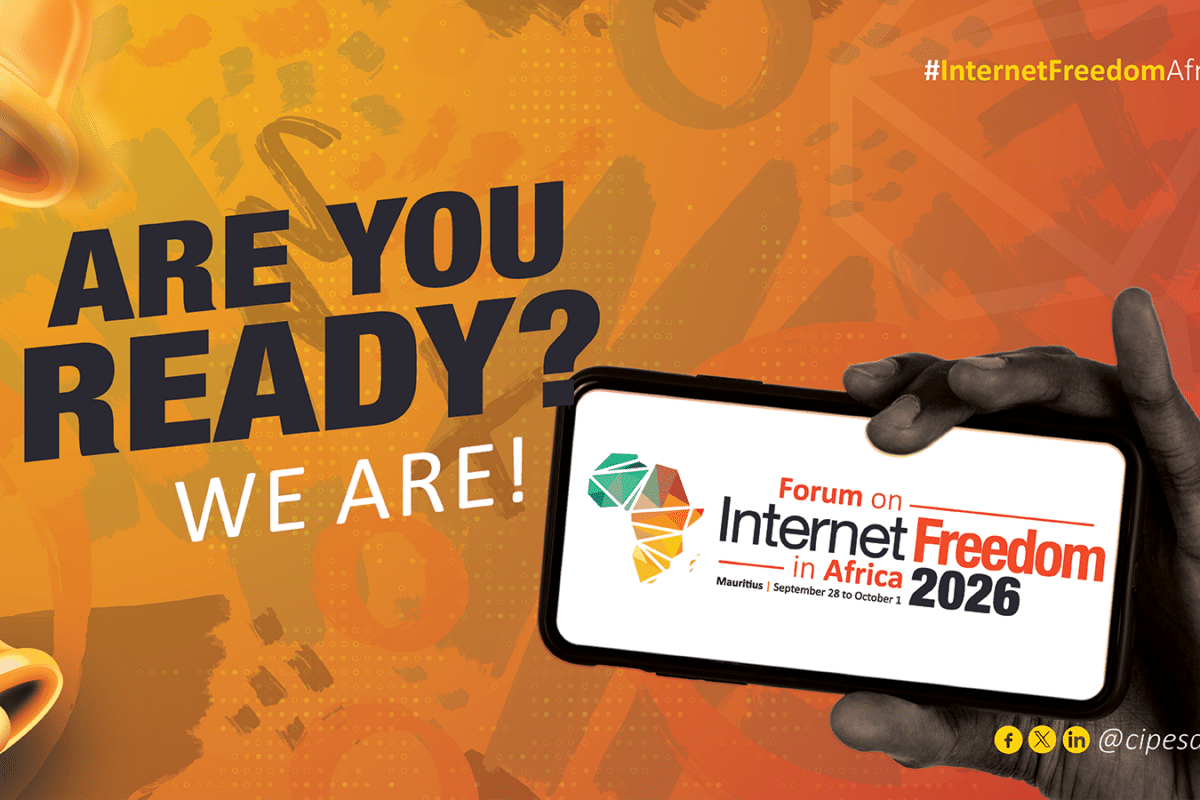
For four days, the Forum on Internet Freedom in Africa (FIFAfrica26) brought together voices from across Africa and beyond to engage in discussions and debates on the state and future of internet freedom in Africa. The Forum concluded with the launch of the 2026 edition of the State of Internet Freedom in Africa report.
This year’s report examines how Digital Public Infrastructure (DPI) systems are reshaping the relationship between states and citizens, particularly in relation to digital rights, democratic governance and civic participation. Much of the existing work on DPI has focused on technical design, economic efficiency and service delivery outcomes, with far less attention given to the human rights implications of DPI governance and implementation.
The report was officially launched during the FIFAfrica26 closing ceremony by Dr the Hon. Avinash Ramtoh, Minister of Information and Communication Technology of Mauritius. “DPI is a critical infrastructure in any forward-looking country,” he said. “We must make our internet more inclusive, accessible and rights-respecting.”
The report documents how DPI deployment is affecting human rights, governance and democratic participation across 11 African countries: Egypt, Ethiopia, Ghana, Kenya, Nigeria, Senegal, South Africa, Tunisia, Uganda, Zambia and Zimbabwe. It provides evidence that can support civil society organisations, policymakers, development partners, regional institutions and technology providers in strengthening rights-respecting DPI governance frameworks before these systems become further entrenched in public administration and everyday life.
DPI is increasingly positioned as a foundation for digital transformation, offering systems that can support services such as digital identification, payments and data exchange. Across Africa, governments and development actors are investing in these systems as part of broader efforts to modernise public services and expand digital economies.
Hosted in Mauritius, FIFAfrica26 created space for policymakers, researchers, civil society organisations, journalists, technologists, activists, development partners and others to exchange experiences, challenge assumptions and interrogate some of the most pressing questions facing Africa’s digital society.
Since its inception in 2014, FIFAfrica has become an important convening space for shaping debates on digital rights, internet governance and civic freedoms across the continent. Its continued relevance lies in its ability to remain closely attuned to the changing realities of Africa’s digital landscape.
Across conversations on artificial intelligence, digital public infrastructure, data governance, platform accountability, digital inclusion, civic participation and digital security, the theme that remained constant was that technology is not separate from society. The systems we build, the rules that govern them and the choices made about their use have consequences for rights, participation and power.
As Africa’s digital transformation accelerates, these questions are becoming increasingly important. The systems being built today will shape how people access services, engage with governments, participate in public life and exercise their rights for years to come.
The Forum on Internet Freedom in Africa (FIFAfrica) has evolved in tandem with the prevailing concerns related to the internet in Africa. At its inception in 2014, discourse centred around who is connected and how to access information. While this remains pertinent today, Africa’s digital ecosystem has become far more complex.
This year, the Forum is hosted by the Collaboration on International ICT Policy in East and Southern Africa (CIPESA) in partnership with Mauritius-based Halley Movement Coalition. The keynote speech will be delivered by the Minister of Information Technology, Communication and Innovation of Mauritius.
FIFAfrica has become one of the continent’s most important convening spaces for shaping debate on digital rights, internet governance, and civic freedoms. Its continued relevance lies in its ability to remain closely attuned to the changing realities of Africa’s digital landscape, since its inception in 2014.
Within Africa’s digital rights ecosystem, the Forum serves the strategic function of connecting research, advocacy, policymaking, movement building, and public interest engagement in one forum. FIFAfrica is particularly significant because it places African digital rights interests within wider global conversations on technology governance, including for the Internet Government Forum (IGF), the World Summit on the Information Society (WSIS), and numerous others. At a time when decisions on Artificial Intelligence (AI), digital public infrastructure, content moderation, cross-border data governance, and online freedoms are increasingly shaped through international processes, FIFAfrica positions African stakeholders to contribute evidence and shape narratives in ways that are rooted in the continent’s own political, economic, and social contexts.
The four-day Forum kicks off with two days of 18 pre-events, followed by two days of the main programme which features 41 stand-out sessions, with participants from across Africa and beyond. The Forum has eight thematic areas covering digital democracy and civic participation, data governance and sovereignty, AI and emerging technologies, platform accountability, digital inclusion, digital economy and trade, movement building, and digital security and safety.
The agenda is built out of a selection of submissions received from more than 450 proposals received via a public call for sessions and travel support. The diversity of sessions submitted and selected is a reflection of the multiplicity of issues that the African tech ecosystem needs to address, many of which cannot be addressed in isolation. Questions about human rights and democracy increasingly intersect with technology and information. Meanwhile, data governance is tied to economic interests, while AI raises questions about exploitation, information integrity, access to information, and discrimination.
There will be strategic engagement between regulators, parliamentarians and the judiciary from across Africa on the Malabo Convention in a session hosted by Mzalendo Trust in partnership with CIPESA and the African Parliamentary Network on Internet Governance (APNIG). Further sessions engaging National Human Rights Institutions (NHRIs) on human rights and technology will be hosted by the Danish Human Rights Institute in partnership with CIPESA and the International Commission of Jurists (ICJ). The Forum will also serve as the host of the pre-launch of the Copenhagen Principles for the Protection of Human Rights in the Digital Age.
Meanwhile, AI remains a focus area of discussion due to its intersection with data protection, worker rights, access to information, information integrity, and democracy. Entities including Digital Action, the Global Center on AI Governance, the Electronic Frontier Foundation (EFF), the African Internet Rights Alliance (AIRA), the Digital Rights Alliance of Africa (DRAA), BBC Media Action, UNESCO, Article 19, Lighthouse Reports, Africa Uncensored, the Office of the United Nations High Commissioner for Refugees, and the Oversight Board will explore these concerns, including through the lens of child online safety, migration, media regulation, digital markets, and digital democracy.
Further sessions entail discussions on the state of data governance, civic space, strategic litigation, technology and human rights, digital identity, DPI, gender and civic participation as part of broader debates on data, power and emerging technologies. Speakers will be drawn from entities such as Oxfam, Pan African Lawyers Union (PALU), and the Digital Impact Alliance (DIAL).
Platform accountability is also a key area of interest, including how it can be humanised, while sessions on corporate power and the push-back against internet shutdowns will involve speakers from Nguvu Collective, Lumate, and the Oversight Lab. Long-term FIFAfrica partner, Access Now, will host a session marking a decade of the #KeepItOn campaign. Internet shutdowns remain key violations of freedom of expression and access to information on the continent and also have significant economic and infrastructural consequences.
For years, platform regulation has often been framed around content moderation and how platforms should respond to harmful content. However, various FIFAfrica26 sessions are extending the debate into how platforms collect and use data, how they design recommendation and advertising systems, how they assess risk, how they respond to government demands, how they conduct due diligence, and what remedies they provide to people harmed by their systems. This is particularly important in Africa, where the global scale of technology companies is vastly greater than the capacity of national regulators and courts to scrutinise them. Entities such as CIPESA, GIZ, the Oversight Board, and EFF will host sessions challenging these narratives.
Sessions at the Forum will also reflect on shrinking civic space online and offline across the continent, including learnings from the cancellation of Rightscon and the rise in authoritarian practices across the continent. These will be candidly addressed by Access Now, RightsCon, and Amnesty International.
Practical sessions also form part of the agenda, with Masakhane, International Research & Exchanges Board (IREX) and the Human Rights Foundation (HRF) each hosting skills workshops on Safety By Design for African tech ecosystems, AI and languages, as well as Bitcoin as a tool for human rights activism and civil society respectively.
FIFAfrica26 continues in its path of inclusion and will entail language interpretation and adherence to a code of conduct that encourages active participation and contribution online and offline.
Mauritius is the meeting point for some of Africa’s most pressing conversations about technology, rights and digital governance as the annual Forum on Internet Freedom in Africa 2026 (FIFAfrica26) takes place from September 28 to October 1, 2026 at the InterContinental Resort in Balaclava.
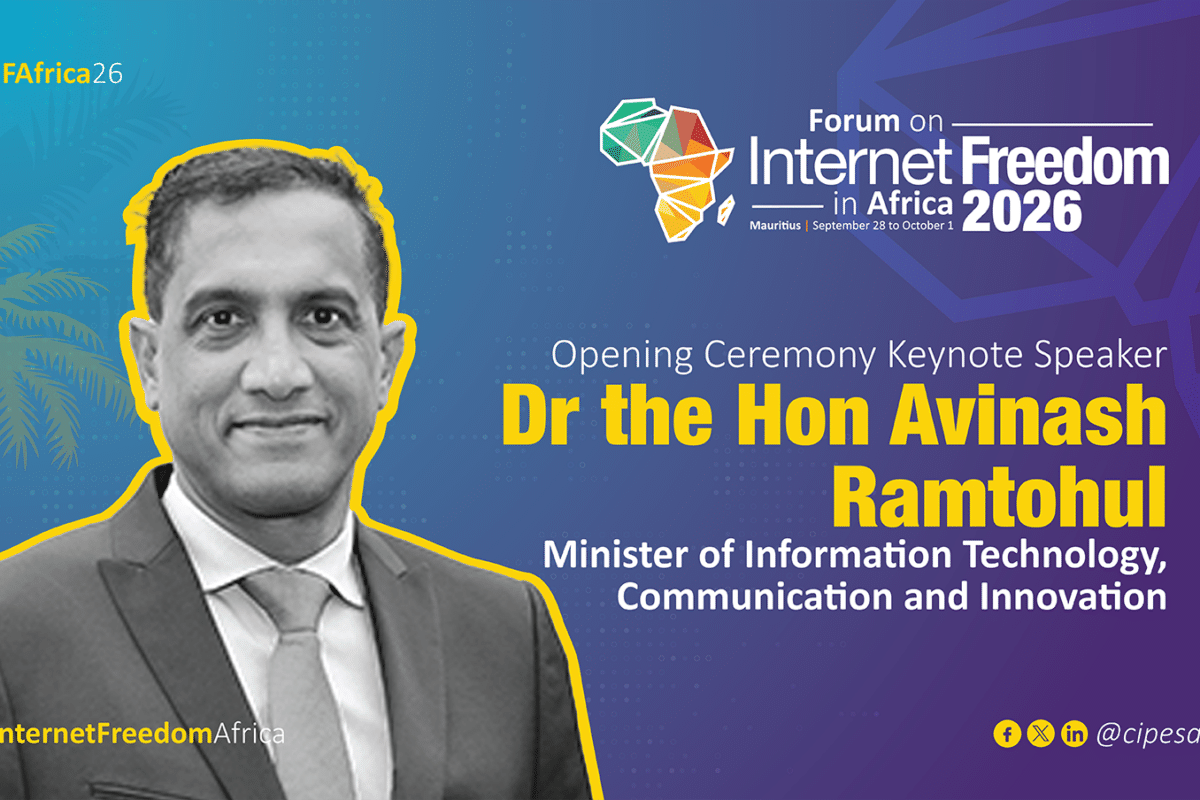
The Forum is set to be opened by Dr. Avinash Ramtohul, Minister of Information Technology, Communication and Innovation (Mauritius).
The 13th edition of FIFAfrica is hosted by the Collaboration on International Policy for East and Southern Africa (CIPESA) in partnership with Mauritius-based Halley Movement Coalition. Previous editions have been held in Ethiopia, Ghana, Namibia, Senegal, South Africa, Tanzania, Uganda, and Zambia.
More than 500 participants from across Africa and beyond, including policymakers, technology practitioners, researchers, journalists, civil society organisations, private sector actors and digital rights advocates are set to attend the event (in person and virtually). Attendees will address data governance and sovereignty; Artificial Intelligence (AI) and emerging technologies; platform accountability; digital inclusion; the digital economy and trade; digital democracy and civic participation; and digital security and safety.
Mauritius was selected as the host for the 2026 edition as it is Africa’s most stable democracy, with strong rule of law and robust protection for freedom of expression, both offline and online. The country is also a pioneer in technology-driven governance and digital transformation. The country offers a space for policy-oriented discussions on data governance, regulation of AI, platform accountability, and digital trade within a context that is progressively navigating these transitions.
Dr. Wairagala Wakabi, CIPESA’s Executive Director stated that, “The Forum creates an opportunity for Mauritian perspectives to enter a broader African conversation at a time when countries across the continent are making consequential decisions about the technologies and systems that will shape their societies. Mauritius brings its experiences and learning from policies to the continental table, while participants from across Africa bring questions about digital inclusion, regulation, innovation, civic participation ,and digital rights.”
The Forum comes at a significant moment for Mauritius as the country is implementing its Digital Transformation Blueprint 2025–2029, which identifies digital public infrastructure, digital skills, private sector innovation, cyber resilience, data governance and AIas key components of its digital transformation agenda. In April, Mauritius also launched its National AI Strategy and FAIR Guidelines, setting out principles around fairness, accountability, inclusiveness, integrity and responsibility in the development and use of AI. The FIFAfricaagenda reflects many of these developments and how they are being engaged with across Africa.
Mahendranath Busgopaul, the Halley Movement Secretary General, notes that, “Africa’s digital future is one that we have to put in effort to shape. The decisions that we make about digital transformation, inclusion, protection and access will determine what kind of digital societies we will have in the future. Hosting FIFAfrica26 in Mauritius gives us an opportunity to bring our experiences to the continental conversation, learn from others, and collectively shape a digital future that is responsive to the diversity of the continent.”
Across Africa, the expansion of digital access and services has resulted in concerns around privacy, cybersecurity, access, accountability and trust. It is within this evolving landscape that FIFAfrica26 will explore what responsible digital transformation should look like for the people who use, depend on and are affected by digital technologies every day.
FIFAfrica26 will begin with pre-event activities on 28 and 29 September 28 and 29, followed by the main Forum on September and October 1, 2026 at the InterContinental Resort, Balaclava, Mauritius.
About the co-hosts of FIFAfrica26
CIPESA: CIPESA works to defend and expand the digital civic space to enable the protection and promotion of human rights and to enhance innovation and sustainable development. CIPESA’s work responds to a shortage of information, research, resources and actors consistently working at the nexus of technology, human rights and society. Indeed, CIPESA’s establishment in 2004 was in response to the findings of the Louder Voices Report for DFiD, which cited the lack of easy, affordable and timely access to information about ICT-related issues and processes as key barriers to effective and inclusive ICT policy making in Africa.
Since 2014, CIPESA has convenedFIFAfrica in collaboration with government ministries, international agencies and local partners. It has built each edition through partnerships that reflect the priorities, realities and emerging challenges of Africa’s digital societies. Visit the website
Halley Movement Coalition: TheHalley Movement was founded in 1989 and is the lead organisation for theMauritius Internet Governance Forum & Africa-Indian Ocean Island States IGF. The Movement is a coalition of charitable organisations that works in partnership with the private sector, governmental institutions and other international and national organisations. Visit the website
This time next week, FIFAfrica26 will be underway in Mauritius!
The conversations we have been planning, the ideas we have been shaping, and the connections we have been looking forward to will finally shift into actions, debates, and new learning!
Across four days, FIFAfrica26 will bring together conversations on digital democracy and civic participation, AI and emerging technologies, data governance and sovereignty, platform accountability, digital inclusion, digital economy and trade, movement building, and digital security and safety.
Here is what you can look forward to:
Two days of engaging pre-event sessions (Be sure to sign up, as spaces are limited!)
Two days of an action-packed main event agenda, with in-depth sessions featuring speakers from across Africa and beyond. Be sure to explore the Agenda and meet the Speakers!
A Digital Rights Fun Run – come ready with your running shoes!
A Digital Reality Walk through Paths, Traps and Safe Passages.
An exhibition where you can discover new work, explore resources and meet the people behind some of the amazing digital rights work happening across the continent.
FIFAfrica is a unique opportunity to discover new work and organisations, exchange ideas and insights, make connections, and encounter conversations that expand how you think about the digital rights ecosystem. There will be plenty of opportunities to connect, contribute and make FIFAfrica26 your own.
As artificial intelligence reshapes economies and everyday life, the essential question for African countries is not simply whether AI will be safe. It is whether African societies will have the power, infrastructure, skills, resources, and representation to shape how AI is built and used.
The Inaugural UN Global Dialogue on AI, held in July 2026, among its priorities called for the need for “safe and inclusive AI” among others. However, the message from African delegates pointed to a broader concern. Safety without sovereignty and agency is not enough. Delegates pointed to limiting factors such as the lack of access to computing power, locally relevant data, technical expertise, financing, and meaningful influence over global AI rules. The speed of AI development intensifies these challenges. The preliminary report of the Independent International Scientific Panel on AI rightly warns that technological advances are moving faster than governments’ ability to adapt. This could create risks that can be severe, further worsening existing inequalities and undermine digital rights. The report further notes that steps to close these gaps do exist, but they require sustained investment in Member States’ capacity to shape, evaluate, and deploy AI.
Many African countries are now developing AI strategies and policies with the goal to harvest opportunities and mitigate AI risks. However, regulating alone without the necessary infrastructure, data, and human capacity are unlikely to deliver the desired outcomes. Moreover, as noted in the preliminary report, current global AI systems often overlook indigenous languages and cultures resulting in inaccurate outputs and systems that are poorly suited to local realities.
The need to protect data sovereignty was another issue that emerged clearly from the dialogue. Africa member states emphasized the need to have control over how their data is used, while ensuring that cross-border data arrangements are fair and mutually beneficial. For this to manifest, African countries would require access to computing capacity, high-quality data, skilled talent, sustainable financing, reliable electricity, and robust digital infrastructure to support meaningful AI development.
These concerns were further highlighted by the governments of Rwanda and Uganda, who noted that more than half of the world’s data centers are located in just a handful of wealthy countries, while Africa possesses less than 1 percent of global AI computing capacity. This systemic inequality risks entrenching dependence on foreign platforms, cloud providers, and AI models that are not designed for African contexts. Despite its significant contribution to the global AI economy in terms of critical mineral resources and social data, Africa is still too often positioned as a consumer rather than a shaper of AI technologies, standards, and governance.
This imbalance cannot be solved by ethical principles alone. From an African perspective, AI governance is not only a regulatory exercise; it is an infrastructure, development, and justice agenda. African member states at the Dialogue reinforced this message. Government delegates from Rwanda and Kenya for instance highlighted the need to expand access to infrastructure and financing, invest in skills and talent, reduce regulatory fragmentation, and build on regional initiatives such as the Africa Declaration on Artificial Intelligence. Other delegates similarly stressed that AI must be transparent, accountable, and subject to meaningful human oversight. The protection of underrepresented languages, cultures, and data, as well as concrete forms of international cooperation, was also highlighted.
The priorities identified by African stakeholders. This distinction should define the future of the Dialogue. Unlike what was seen at the India AI Summit, the UNGDIA drew many high-level African government delegations, who clearly voiced the continent’s priorities for advancing AI. African participation and that of the Global South must go beyond consultation after key decisions have been made. Stakeholders from the Global South should play a leading role in setting priorities, developing standards, and monitoring AI implementation. The challenge for the Dialogue is therefore not only to identify risks but also to ensure that countries have the capacity to prevent them and to benefit from AI on fair and equitable terms. The choice should not be between innovation and rights. The Dialogue must ensure that AI advances development without compromising dignity, privacy, equality, or democratic participation. This is also anchored in calls by civic actors from the Global South, who have long called for not merely inclusion in global AI discussions but also a South-led rights-based AI paradigm grounded in planetary limits, democratic participation, and intergenerational justice. Additionally, CIPESA’s research on AI impact in Africa has highlighted the need for a human-rights approach to AI regulation and the adoption of a human- centred AI governance in Africa, through deliberated and inclusive approaches.
Moreover, the UN Global Dialogue on AI can make a meaningful contribution by moving from issuing broad statements to practical, measurable actions anchored in Africa’s sovereignty, agency, and capacity to shape its own digital future. As the dialogue moves into its intersessional phase, it must shift from discussion to action. Global South governments and civil society are demanding equal footing in AI governance, and the UN must listen. One way to do this would be for the UN to champion a consolidated fund for AI development and capacity building in the Global South. The UN Secretary-General suggested creating a Global Fund on AI with a target of $3 billion to facilitate building basic AI capacity in developing countries. According to him, this is “less than one per cent of the annual revenue of a single tech company.” If successfully adopted, it could help launch AI development initiatives in many Global South countries. However, relying solely on tech companies is unlikely to address Africa’s and the wider Global South’s AI challenges. That is why African countries are calling for a holistic approach to AI investment. The 2025 Africa Declaration on Artificial Intelligence proposes the creation of a $60 billion Africa AI Fund financed by public, private, and philanthropic capital. The fund will support AI infrastructure, African AI businesses, workforce development, and domestic research capacity. It still remains unclear when these funds will take effect.
Nonetheless, more efforts are still needed to create public awareness on the ethical use of AI while also strengthening civil society voices in advocating for human rights respecting AI development.