New Year, Old Habits: Threats to Freedom of Expression Online in Kenya

By Juliet Nanfuka |
The beginning of 2016 has been marked with a series of arrests and summonses of individuals in Kenya as a result of content shared through social media platforms. Contrary to the constitutional right to freedom of expression, the incidents that relate to up to 10 individuals illustrate the Kenya Government’s continued use of vague legal provisions to stifle online content critical of the state or well-connected business people and high-ranking officials.
On January 22, news broke of an attack by Al-Shabaab militants on the Kenya Defence Forces at the El Adde camp in Somalia. The following day, journalist and blogger Yassin Juma was arrested over updates and pictures  posted on social media relating to the attack. Juma was charged under Section 29 of the Kenya Information and Communications (KIC), 2013 for the improper use of a telecommunication system.
Section 29 of KIC on improper use of system states:
A person who by means of a licensed telecommunication system—

(a) sends a message or other matter that is grossly offensive or of an indecent, obscene or menacing character; or
(b) sends a message that he knows to be false for the purpose of causing annoyance, inconvenience or needless anxiety to another person, commits an offence and shall be liable on conviction to a fine not exceeding fifty thousand shillings, or to imprisonment for a term not exceeding three months, or to both.

On January 25, nine bloggers were summoned by the Directorate of Criminal Investigations (DCI) for questioning over alleged misuse of a licensed telecommunications system. According to DCI investigation officer John Kariuki, the nine bloggers were under investigations following undisclosed complaints made against them. “We have complaints and that is why we are investigating them. No one is targeting them wrongly,” said Kariuki.
In a statement condemning the arrests and intimidation of Kenyans online, the Bloggers Association of Kenya (BAKE) stated that the events were tantamount to “criminalization of civil matters” with users being arrested on charges that ultimately infringe upon freedom of expression. BAKE’s statement lists the arrest and detentions of the following:

  • Anthony Njoroge Mburu (alias Waime Mburu) – arrested and charged for allegedly posting false information under Section 66(1) of the Penal code for content posted on Facebook accusing Kiambu Governor William Kabogo of importing substandard eggs. He is also alleged to have posted content intended to cause harm to Charlotte Wangui, who heads Sea Cross Farm in Kwale.
  • Patrick Safari (alias Modern Corps), a prison warden – arrested for comments on the Al Shabaab attack. He spent a night in jail, and police retained his three phones and laptop after his release.
  • Judith Akolo, a journalist with the Kenya Broadcasting Corporation (KBC) – summoned for questioning by the DCI for retweeting a post from Patrick Safari (@moderncorps) about a DCI advertisement of jobs within the department which was made public on deadline day (31st December 2015). Her phone was confiscated and her pin code requested. Eddy Reuben Illah – arrested for allegedly sharing images of Kenyan soldiers killed in an Al Shabaab attack on a WhatsApp group called “Youth People’s Union”. He was charged for the “misuse of a licenses telecommunication device”.
  • Cyprian Nyakundi – arrested after tweeting about a construction company that was linked to Mombasa Governor Hassan Joho, in alleged violation of Section 29 of KIC Act on the “misuse of a licensed telecommunication device”.
  • Elijah Kinyanjui – arrested for sharing a photo of a governor’s daughter on Whatsapp. He was also charged under Section 29 of KIC Act.

These arrests and summons add to a history of arrests made under laws marked by vague definitions and excessive powers granted to the state. The KIC (Amendment) Act, 2013 does not clearly define what constitutes content that causes “annoyance, inconvenience or needless anxiety to others,” while the Penal Code has no clear definition of a “rumour” or “report which is likely to cause fear and alarm to the public or to disturb the public peace.”
Further, the Security Laws (Amendment) Act, 2014 allows blanket admissibility in court of electronic messages and digital material regardless of whether it is not in its original form. Meanwhile, the Media Council Act, 2013 contains “broad” speech offences further reinforced by the Cybercrime and Computer related Crimes Bill, 2014.
Kenya’s technology sector is one of the fastest growing in Africa. The high internet penetration rate of 74% has bred a wave of citizen journalism which has flourished in the absence of the checks and balances present in traditional media and  seeks to place social justice and accountability through ICT at the forefront of the country’s governance.
While these  incidents in Kenya are the result of hate speech and rising terrorism fears, they are no doubt placing a chill on freedom of expression for citizens and the media and contributing to self-censorship for the fear of arrest.

Dialogue on Internet Rights and Freedom in Kenya

By Marilyn Vernon |
In Kenya, whereas the use of the internet had expanded into all areas of day to day living, the threat of government surveillance and interference has impacted upon user confidence in the security of their online interactions. This comes after several local bloggers and social media users have been arrested and in some cases charged with misuse of licensed telecommunications equipment.
“The Kenya Government continues to use national security as a bigger right that trumps constitutional rights,” said Henry Maina, Regional Director of Article 19 East Africa. He said arrests and intimidation of government critics for expressing their opinions online “had become the norm” under the guise of national security.
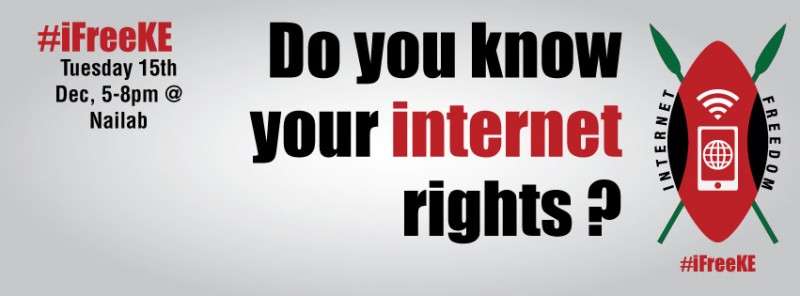
Maina was speaking at an event aimed at promoting awareness on internet freedoms in Kenya. Organised by the Bloggers Association of Kenya (BAKE) under its Internet Freedoms Citizen Education Campaign, the event also aimed to help participants develop a deeper understanding of human rights online based on the African Declaration on Internet Rights and Freedoms. The declaration outlines 13 principles of human rights standards in internet policy formulation and implementation in Africa. These include openness, internet access and affordability, freedom of expression, right to information, and freedom of association and assembly.
The other principles are cultural and linguistic diversity, right to development and access to knowledge, privacy and personal data protection, security, stability and resilience of the internet, equality (gender and marginalized groups), right to due process, and democratic multi-stakeholder internet governance.
Kenya has one of the fastest growing rates of internet users in Sub-Saharan Africa, with the Communications Authority of Kenya (CAK) reporting an internet penetration rate of 54.8%. Coupled with the installation of fibre optic networks, the country also boasts the highest bandwidth with the fastest speed within the East African Community.
Social media remains a key contentious area on internet freedom in Kenya, where content posted has resulted in prosecution on unclear grounds. In December 2014, blogger Robert Alai was arrested and charged with undermining the authority of a public officer contrary to Section 132 of the Penal Code, by allegedly calling President Kenyatta an “adolescent president” in a blog. He was again arrested in February 2015 for offending a businessman online by linking him to a land saga that involved the illegal acquisition of the Langata Primary School playground.
Journalist Abraham Mutai was arrested following tweets he posted on corruption in the Isiolo County Government and was charged with the “misuse of a licensed communication platform to cause anxiety.”Another case in January 2015, involved a Kenyan student, Alan Wadi who was prosecuted and jailed for one year for insulting President Uhuru Kenyatta on social media.
More recently, the eruption of a Twitter storm dubbed #uhuruinkenya which mocked government spending on foreign trips had led to the alleged take down of a website created under the same hashtag. However, the Kenya Network Information Centre (Kenic), Kenya’s domain registry operator, denied taking down the site. The website isuhuruinkenya.co.ke which, is set to display a “YES” or “NO” when the president is in or out of the country respectively, has since been restored and is accessible within the country.
Also speaking at the event, Nanjira Sambuli, iHub Research Manager, stated that such incidents demonstrated that user vulnerability “is a very real threat” and reiterated the need to help users understand and make sense of digital safety and security, particularly the Terms of Service for social media platforms.
The issue of hate speech across ethnic and religious lines was also discussed, during which participants highlighted the need for user ethics and responsibility such as questioning and verifying sources before sharing information. “Security starts with you as the user,” noted Sambuli.
Kenya is party to a number of international human rights instruments and is a member of the Freedom Online Coalition – an intergovernmental coalition committed to advancing freedom of expression, association, assembly, and privacy online – worldwide. In 2012, Kenya hosted the Annual Freedom Online Coalition meeting in Nairobi. The previous year, it had hosted the global Internet Governance Forum (IGF) under the theme Internet as a catalyst for change: access, development, freedoms and innovation. However, these positive steps in the country’s recognition of internet freedom are subject to legislative and institutional hurdles, thereby making it difficult for citizens to freely enjoy their rights online.
The online conversation around the event was conducted with the hashtag #iFreeKE.
For further reference on what internet freedom means to Kenyan users see the Kenya Internet Freedoms campaign video.


Thanks to ICT, government secrets get ever fewer

By John Walubengo |

Have ICTs enhanced political participation, social accountability, public service delivery and citizen engagement in East Africa in the recent past?
These were the research questions behind a study commissioned by CIPESA, a regional think tank focusing on ICTs in East and Central Africa.
In Kenya’s case, the answers are found in its recently published ICTs in Governance report. Some, which make for interesting reading, are highlighted below.
ICT IN POLITICS
During the last general elections, Kenyans flocked onto social media platforms in support of their parties and presidential candidates.
Parties also embraced ICTs and used it to extensively engage with supporters in dynamic and interactive ways that were previously impossible.
Blogs, Facebook walls, Twitter pages and websites were constantly updated with real-time information about campaign events, meetings, party manifestos amongst others.
However, the ugly side of ICTs was later to emerge after the Supreme Court validated the hotly contested presidential results.
With the ICC case hanging in the background, many say that Kenyans opted for “electronic” rather than the “physical” post-election violence experienced in 2007/8.
Social media tools were deployed to mount vitriol against perceived enemies, along the usual tribal contours that define our politics while degrading our capacities as a united nation.
This ethnicised use of ICT continues to be worrying as we move towards the 2017 elections.
ICTs AND SOCIAL ACCOUNTABILITY
ICTs have proved to be a strong platform for enhancing transparency and accountability. Many government agencies have deployed ICT platforms to share documents that were previously inaccessible in their “hard-copy” state.
Parliament’s website has regularly updated copies of the Hansard, the Treasury has recent copies of the Budget, with the Controller of Budget regularly reporting on how it is administered.
Publicly procured contracts are also frequently listed and updated by the Public Procurement Oversight Authority.
Various commissions have also adopted ICTs with the Commission for the Implementation of the Constitution, the body mandated to ensure that the Constitution is implemented deploying a bill tracker – a tool for monitoring proposed, pending and enacted constitutional bills.
The problem, however, is that Kenyans do not read or visit such useful sites, preferring instead the easier route of embracing, without filtering, whatever they get from their political, religious and so-called FM radio “celebrities”.
ICTs and PUBLIC SERVICES 
The report observes that due to the high penetration of mobile services, the government has been able to improve services.
Mobile money markets have also helped in making electronic payments and reducing the risks associated with handling physical cash.
Notable mentions go to the Kenya Revenue Authority’s iTax system, the government financial system IFMIS, the Huduma Centres and the eCitizen portal. Local governments have also not been left behind, with many of them adopting electronic revenue systems such as Nairobi’s parking system.
The challenge, however, remains, in that corruption persists both in the public and private sector. Just because money was paid electronically doesn’t mean it can’t also be stolen electronically.
ICTs AND CITIZEN ENGAGEMENT
Here is where Kenyans have excelled, particularly Kenyans on Twitter (#KOT). Using the power of social media, the report cites several instances where Twitter campaigns were mounted, leading to a change of action or policy.
#SpeechYa500K led the government to abandon flying the President’s Madaraka Day speech to far-flung counties at the cost of 500,000 shillings while #AngloLeasing got the government hard-pressed to explain why it was making further payments to shadowy contractors.
#SomeoneTellCNN has also been used to get CNN to apologise for negative publicity, while #TintedWindows spared Kenya’s middle class from a police directive that would have compelled them to remove their much-valued tinted film from their car windows.
In summary, ICTs have indeed come a long way and have played a significant role in the governance framework. We must be cautious, however, since ICTs cut both ways – they can be used positively or negatively.
This article was first published by the Daily Nation.

ICT in Governance in Kenya – Policies and Practice

In November 2014, internet statistics source Socialbakers estimated that there were 3.6 million Kenyans on Facebook, with 64% of them male and 36% female. The majority of Facebook users (75%) were aged 18-34 years. As of September 2015, the Kenyan Twitter account with the highest number of followers was @UKenyatta, the Kenyan President’s account that had over one million followers, followed by @ntvkenya with 979,838 followers.”

This report reviews government and non-government Information and Communication Technology (ICT) initiatives in Kenya, and examines how ICT-related policies and other legislation affect citizen participation and democratic governance. Among others, the study covers the link between ICT and political participation, social accountability, public services delivery and citizen engagement. The report is based on policy analysis,
stakeholder interviews and literature review, and aims to inform awareness raising initiatives and advocacy for more progressive policies and practices regarding the use of ICT in governance and civic participation in Kenya.

CIPESA Promotes Digital Safety Awareness and Skills for Media Practitioners in Kenya

By Marilyn Vernon & Liz Orembo |
Threats to citizens’ access to information, privacy, security and freedom of expression online are increasingly coming under scrutiny in East Africa. According to the World Press Freedom Index, Kenya who was ranked number 71 out of 180 countries in 2013, dropped 29 places to number 100 in 2014. Meanwhile, cybercrime is also on the rise in the country. The Kenya Cyber Security Report 2014 shows a 108% increase in detected cyber threat incidents, from 2.6 million attacks in 2012 to 5.4 million in 2013.
The Cyber Security Report attributes the surge in criminal activity to the increasing value of information and the lower risk of detection and capture. Businesses and individuals are susceptible to threats stemming from spyware, social media, unsecured email, and theft of mobile computing devices.
Kenya’s ranking in the World Press Index reflects the deteriorating relationship between the media and the state. The steady decline is partly attributed to the passing of prohibitive legislation, most notably the Kenya Information and Communications (Amendment) Act and the Media Council Act of 2013, which subjects violators to heavy fines and asserts undue state control over media practice.
A few journalists in Kenya have boldly reported on sensitive topics at the risk of imprisonment or financial penalties. Reported cases of assassination, disappearance, destruction of property, confiscation of equipment, and arrests are among the list of violations committed against journalists and activists.
Notably, controversial blogger Bogonko Bosire, who worked for Agence France Presse (AFP), went missing two years ago. He was known for his criticism of President Uhuru Kenyatta’s administration during the International Criminal Court (ICC) proceedings. It is reported that Bosire had been threatened multiple times, and his website Jackal News suffered at least one digital attack. Various rumors surrounding his fate spread online, but his whereabouts remain unknown.
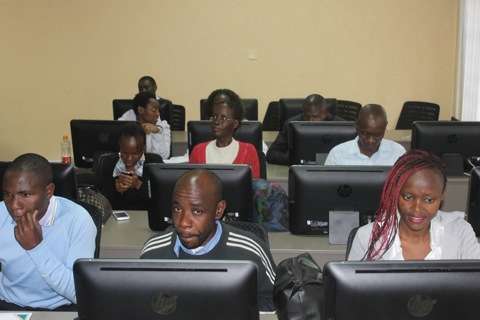
In a digital safety and security training workshop conducted last month by the Collaboration on International ICT Policy for East and Southern Africa (CIPESA) in partnership with Kenya ICT Action Network (KICTANet), journalists, bloggers and activists admitted to using the Internet for research, communication and reporting but with little or no understanding of the existing digital threats.
“Why do I need security?” and “I’m not that important for anyone to waste time looking for information in my gadgets” were some of the comments participants made.
Other shortcomings identified in the pre-workshop assessment included poor organisation IT mobility policies whereby, just like other business organisations in Kenya, media houses allow their employees to carry their own devices to the workplace. Some of these devices are also used in public places by employees to meet their work targets. This increases the risks of journalists having their data lost or compromised especially since theft of mobile and computing devices is rampant in the country.
Freelance journalists indicated being unable to acquire the necessary digital safety resources as often availed to counterparts fully employed by the media houses. Besides, there was a widespread use of free web-based email services such as Yahoo, Google mail and Hotmail through which practitioners felt “sensitive communication can be intercepted since some of these email service companies have histories of being hacked”.
Accordingly, the CIPESA-KICTANet training workshop set out to equip participants with the necessary tools and knowledge needed to protect their digital information and communication, and to respond to various types of digital threats. The workshop topics ranged from the importance of digital security, secure communication and data storage, to PC and mobile device security, as well as the ethical and legal aspects of digital communication on social media platforms.
The interactive sessions enabled a knowledge-sharing environment in which participants were able to evaluate their security vulnerabilities and to choose security tools they would use to protect themselves and their work. Attendees engaged in group discussions, lab demonstrations, and case studies of ethical blogging. Participatory sessions demonstrated how to encrypt emails, create strong memorable passwords, and identify built-in security features on mobile devices to determine which are important for personal safety – taking into account that security features are only effective when used well.
As a means to protect information and guard against digital threats, the workshop facilitator, Harry Karanja, encouraged participants to use tools such as anonymous internet navigation settings, data encryption, and virtual private networks (VPN). He also recommended use of IP anonymisation and signing up with secure anonymous email services.
Participants were also urged to refrain from sharing personal identifiable information online, perform regular updates to the latest versions of operating systems, and back up their data.
Recommendations from participants for future workshops included partnering with learning institutions to train student journalists on digital security prior to engaging in professional work and the development of online tutorials for ongoing reference.
The workshop, held at Riara University in Nairobi, Kenya on June 17-18 2015, had 24 participants from Kenyan print, broadcast, and online news agencies. It is the fourth in a series of digital safety awareness and capacity building trainings conducted this year by CIPESA under its OpenNet Africa initiative. The others have been held in Tanzania and Uganda.