By Catherine Kamatu |
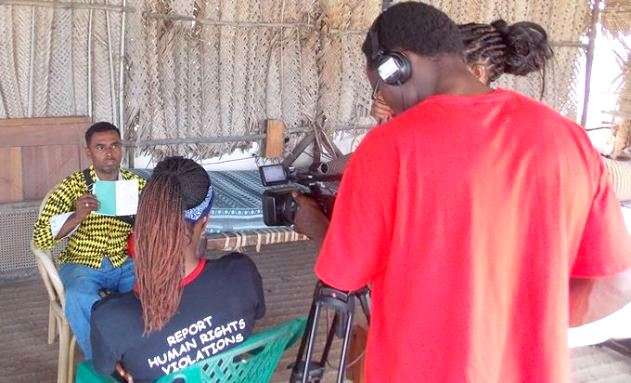
Joseph Kitaka, a resident of Yatta in Machakos County, Kenya, has always had an interest in defending human rights. His community is faced with numerous challenges, including gender-based violence, police brutality and many other human rights violations. Mr. Kitaka had little hope of utilising Information and Communication Technology (ICT) to advance his ambition in bettering his community, until he was elected the chairman of Yatta Paralegal Network, a local Human Rights Network (HURINET).
Today, Yatta, is among 15 HURINETs in Kenya that are being supported by the Kenya Human Rights Commission (KHRC) to strengthen democratisation by widening civil society use of ICT to advance political accountability, freedom of expression and respect for human rights. The initiative is part of the ICT4Democracy in East Africa Network, a regional coalition of civil society organisations coordinated by the Collaboration on International ICT Policy for East and Southern Africa (CIPESA).
The network maintains various ICT platforms and undertakes activities including research, capacity building, mentoring, advocacy and civic engagement toward strengthening democracy. The network’s partners use digital technologies to hold leaders accountable to citizens, fight corruption, enhance communication and the right to freedom of expression, as well as the right to seek, receive and impart information and respect for human rights.
In Kenya, KHRC maintains an SMS short code and crowd mapping platform which enable citizen reporting of human rights violations, and building a vibrant social movement of citizens who monitor government performance toward a society free of human rights violations.
Through KHRC’s project, 10 HURINETs have received computers, modems, generators and digital cameras to support their work. Mr. Kitaka received a modem, a computer and a digital camera to enable the smooth operations of his network. He asserts that the equipment greatly eased information sharing among the networks and other human rights defenders.
“Three years ago, sharing information was a challenge. It took very long for human rights defenders to share reports, it was also very expensive since we could only access ICT equipment in cyber cafes at a cost. With the equipment given to us by KHRC, everything is moving on well,” he said.

Earlier in 2014, KHRC conducted two community outreaches in the Kibera and Kangemi informal settlements in the capital of Kenya where active audiences of 109 and 138 respectively were trained in the use of ICT platforms for promoting human rights and good governance. These engagements enabled hundreds of ordinary citizens to use web tools (such as SMS, Facebook, HakiReport, HakiZetu) to report on governance processes.
Kenya has high rates of access to digital technology, with mobile access rates at 80% and internet access rates at 57%. However, most citizens do not have the skills to use simple technology tools in pursuance of good governance at a time the Kenyan government is making laws and regulations that limit freedom of expression.
In a bid to enhance the quality of the content generated by the human rights networks, KHRC further trained human rights defenders on communications skills in February 2015. The training focused on news writing, multimedia use, interview skills, social media and use of the KHRC e-library as a research tool.
The training was attended by 15 local human rights workers, who will collectively contribute to the newsletter Mizizi ya Haki (The Roots of Justice), which focuses on activities of human rights networks. “From the skills obtained from the communications training facilitated by KHRC, I have managed to train other human rights defenders on how to file good reports,” added Mr. Kitaka.
The training evaluation indicated an overall change in the knowledge, skills and attitudes of all beneficiaries. Social media and article writing were indicated as the most useful training sessions toward the beneficiaries’ more effective human rights work.
However, further training needs were also identified, including digital security, media laws and multi-media content generation. Participants also identified a need for training in proposal writing and resources mobilisation as well as in paralegal work.
Read the full evaluation report here http://bit.ly/1Pu1w6h
The work of KHRC and the ICT4Democracy Network is supported by Swedish International Development Cooperation Agency (Sida).
Is Kenya Putting the Chill on Internet Freedoms?
By Juliet Nanfuka |
The rights of Kenya’s digital citizens are fast shrinking in the face of new restrictive laws and increased arraignment of individuals for expressing online opinions which authorities deem in breach of the law.
The Security Laws (Amendment) Act 2014, assented to by President Uhuru Kenyatta last December, allows blanket admissibility in court of electronic messages and digital material regardless of whether it is not in its original form.
It is feared that retrogressive provisions in this law could be used to put the chill on internet freedoms in East Africa’s most connected country where mobile phone penetration stands at 80% and internet access at 50% of the population.
Part V of the new security law regarding “special operations” has raised particular concerns, as it expands the surveillance capabilities of the Kenyan intelligence and law enforcement agencies without sufficient procedural safeguards.
It gives broad powers to the Director General of the National Intelligence Service to authorise any officer of the Service to monitor communications, “obtain any information, material, record, document or thing” and “to take all necessary action, within the law, to preserve national security.”
In addition, the amendments also contain unclear procedural safeguards especially in the interception of communications by “National Security Organs” for the purposes of detecting or disrupting acts of terrorism.
Even though there is a provision for a warrant to be issued by a court of law, the broad definition of ‘national security’ leaves no room for restrictions on the extent of power the law grants to National Intelligence Service when it comes to accessing personal data, information and communications.
In February 2015, the Kenya High Court struck some clauses from the security law. The government says it may appeal.
Government says the new law is necessary to fight al Shabaab militants who have repeatedly rocked the country with fatal attacks such as the Westgate shopping centre attack on September 21, 2013, which left 67 people dead. Human rights activists blame President Kenyatta’s government for steadily shrinking the space for civil actors, a pattern they say was manifested in the Kenya Information and Communications (Amendment) Act 2013 and the Media Council Act 2013. These laws, they say, placed restrictions on media freedom and general freedom of expression.
The proposed Cybercrime and Computer related Crimes Bill (2014) also falls short of constitutional guarantees as it is contains “broad” speech offences with potentially chilling effects on free speech. See a full legal analysis of the Bill by Article 19. Proposed regulations to the law governing non-government organisations, which cap the funds received from foreigners at 15% of their overall budgets, have also been criticised as aimed to curtail and control the activities of civic groups engaged in governance and human rights work.
Over the 2012-2013 election period, several individuals were charged in court over their online communications. The National Cohesion and Integration Act of 2008 has been used to charge many for promoting hate speech – which some Kenyan citizens found justifiable given the role that hate speech played in the 2007 to 2008 post-election violence.
Hate Speech is defined by the 2008 Act as speech that is “threatening, abusive or insulting or involves the use of threatening, abusive or insulting words” with the intention to stir up ethnic hatred or a likelihood that ethnic hatred will be stirred up. Authorities, however, seem to be shifting gear and using this charge among others against online journalists and bloggers that criticise the Kenyatta government.
In December 2014, blogger Robert Alai was arrested and charged with undermining the authority of a public officer contrary to Section 132 of the Penal Code by allegedly calling President Kenyatta an “adolescent president” in a blog. He was again arrested in February 2015 for offending a businessman online by linking him to a land saga that involved the illegal acquisition of the Langata Primary School playground.
Meanwhile, Allan Wadi – a student – was also arrested for “hate speech” and jailed in January 2015 for posting negative comments on Facebook about the president. In the same month, journalist Abraham Mutai was arrested following tweets he posted on corruption in the Isiolo County Government. He was charged with the “misuse of a licensed communication platform to cause anxiety.”
Nancy Mbindalah, an intern with the department of finance
at the Embu County Government, was charged on similar grounds for social media posts dating as far back as 2013 in which she is alleged to have abused County Governor Martin Wambora.
In all instances, some social media users claimed there were “selective” arrests and prosecution of those critical of government. Critics cited the case of Moses Kuria, a Member of Parliament (MP) for Gatundu South, who allegedly made remarks on Facebook against the Luo Community but did not face the same punitive actions.
A recent news report, however, indicates that the National Cohesion and Reconciliation Commission and the Public Prosecutor are calling for the MP’s case to be revisited for the “incitement to violence, hate speech and fanning ethnic hatred.”
The incidents of arrest, prosecution and law amendments demonstrate a recurring theme of clamping down on dissenting citizen voices, a concern that was highlighted by the Kenya Human Rights Commission and the International Federation for Human Rights following the enactment of the Security Laws (Amendment) Act.
While the country remains on a constant alert for terror attacks, this has been used to strengthen the control that the state has on freedom of expression and surveillance. The lack of laws that limit state access to citizens’ information further exacerbates this concern.
In Search of Local Knowledge on ICTS in Africa
By reviewing and comparing literature on the role of ICTs in statebuilding and peacebuilding in Africa, with a particular focus on neighboring Somalia, Kenya, and Ethiopia, this paper examines whether the claims of the transformative power of ICTs are backed by evidence and whether local knowledge – e.g., traditional mechanisms for conflict resolution – is taken into consideration by ICT-based initiatives. Several key findings emerged, including: 1) empirical evidence on the successful use of ICTs to promote peacebuilding and statebuilding is thin; 2) few differences exist between scholarship emanating from the Global North and from Africa; and 3) the literature exhibits a simplistic assumption that ICTs will drive democratic development without sufficient consideration of how ICTs are actually used by the public.
Download the full paper here.
AfricaICTResearch.org: New Portal on ICTs, State and Peace Building Research in Africa
Although the use of Information and Communication Technologies by citizens and governments in Africa is growing exponentially, there is limited evidence of how these technologies are affecting statebuilding and peace building on the continent. Where such evidence exists, it is often in diverse locations and hard to reach for researchers, practitioners, the media and government bodies.
In order to increase access to information on ICTs in Africa, the Centre for Global Communications Studies (CGCS) at the University of Pennsylvania has launched a new website that offers news and updates on research and events related to ICTs, peace building and governance. The portal features a repository of reports and articles with empirical evidence on the role of ICTs in peace building and governance.
In addition, the website offers access to articles typically blocked by journal paywalls by obtaining pre-print versions of articles from authors.
As a partner in CGCS’s project titled “Reframing Local Knowledge: ICTs, State building, and Peace building in Eastern Africa”, CIPESA undertook a review of literature on the role of ICTs in governance, peace-building and state-building in Africa, with a focus on three neighbouring countries: Ethiopia, Kenya, and Somalia.
An increasing number of Africa’s estimated one billion people are accessing modern communication technologies. According to the International Telecommunications Union, as of 2013, internet penetration stood at 16% and mobile access at 63% of Africa’s population.
It follows that online service provision, placing a wide array of information in the public domain, an empowered citizenry that holds leaders to account and smartly embrace ICT, could potentially catalyse peace, democracy and good governance in Africa.
There is a considerable amount of research by scholars, government agencies, civil society, development partners and many more on the use of ICTs in governance in Africa, covering a broad range of definitions and dimensions. A central place to find this research has hitherto been lacking, which is why scholars, practitioners and public officials will find the new portal a vital resource.
The work for the project is being carried out in collaboration with the Programme in Comparative Media Law and Policy (PCMLP) at the University of Oxford, the Centre for Intellectual Property and Information Technology at Strathmore University (Kenya), the School of Journalism and Communication at Addis Ababa University (Ethiopia), CIPESA, The Heritage Institute for Policy Studies and SIMAD University (Somalia).
Read more about the project here.
Online Freedoms Under Siege as African Countries Seek Social Media Users’ Information
Only a small fraction of requests made by law enforcement officials to Facebook, Google and Twitter for users’ identities or to block content originate from Africa, but there is cause to worry.
Facebook, whose popularity across Africa is growing exponentially, lists Botswana, Egypt, Ivory Coast, South Africa, and Uganda among the countries that requested users’ details in the first half of 2013. Meanwhile, last year saw seven African countries ask Google to remove content compared to only one request from the continent – by Libya – in 2010 and 2011. The beauty is that most of those requests were rejected.
No African country made a request for user account information either to Google or Twitter in the first half of 2013.
Facebook
In the first half of 2013, Botswana made three requests to Facebook related to seven users. Egypt had eight requests regarding 11 accounts, the Ivory Coast lodged four requests, Uganda one request and South Africa 14 requests on nine users. All requests from Africa were denied.
Table 1: Facebook Data Requests (By Author from Facebook Global Government Requests Report)
| Country | Total Requests | Users/Accounts requested | Compliance rate |
| Botswana | 3 | 7 | 0% |
| Egypt | 8 | 11 | |
| Ivory Coast | 4 | 4 | |
| Uganda | 1 | 1 | |
| South Africa | 14 | 9 | |
| Global Highest | |||
| India | 3,245 | 4,144 | 50% |
| United States of America | 11,000 – 12,000 | 20,000 – 21,000 | 79% |
Google
Eight African countries have made at least one content removal request to Google since 2010. Djibouti’s 2012 request to block YouTube videos containing the movie Innocence of Muslims on the grounds of “religious offense” was rejected. But a similar request by Egypt was temporarily complied with, because of the “difficult circumstances” in this country at the time.
Meanwhile, a Kenyan request to remove content from blogger, arising out of a court order in a defamation case, was rejected. The Island nation of Mauritius made two content removal requests in the first half of 2012. Both were for reasons of defamation; both were rejected. Madagascar’s two requests were court-mandated on defamation grounds but Google accepted only one. Sierra Leone made one request regarding 60 items on Youtube which it wanted blocked as they portrayed or promoted violence. Google declined the request, which was made by executive not court order.
In the first half of 2012, South Africa had three court-ordered removal requests related to 11 items and Google fully complied. In the second half of 2012, Pretoria made three court ordered requests related to eight items and 33% was complied with. All South African requests were related to defamation.
Previous Google reports show that in the period July – December 2010, Libya made 68 requests for a total of 203 items to be removed from Youtube. Of these requests, 31% were complied with, either by some or all of the content being removed. In the subsequent six months, Libya’s two requests regarding five items were denied. All of Libya’s requests were not backed by a court order
Twitter
South Sudan, the continent’s youngest nation, is the only African country that made a user information request to Twitter between July and December 2012. Juba’s request was denied.
A Catalogue of Infringements
While only a handful of African countries are making these requests, there is nonetheless evidence of a worrying trend, in which African countries are taking both legal and non-legal measures to curtail the freedoms of individuals to express themselves on the internet.
The last year has seen a spiral of activity against online freedom of expression in numerous African countries. In fact, 2013 might go down as a record year in terms of curtails on internet rights on the continent.
Gambia has passed a law under which those who publish “false news” online about the government can be handed a 15 year jail term and fined up to US$90,000. Meanwhile, Zambia president Michael Sata’s government in July blocked access to the Zambian Watchdog website, accusing it of promoting hate speech. Two journalists arrested on suspicion of working with the online publishers were due to appear in court. Another website, Zambia Reports, was blocked too. Some observers said blocking the websites was part of the government’s campaign to silence independent critics.
Next door in Zimbabwe, security agencies spent several weeks in the run-up to the July 2013 general elections looking for ‘Baba Jukwa’, whose Facebook page published popular exposes of the excesses of President Robert Mugabe’s government. Three weeks before election day, there were reports Mr. Mugabe’s machinery had staked a US$300,000 bounty to unearth the identity of the whistleblower as it moved to block access to the site.
There have also been cases of bloggers charged in court in Kenya and others sought by authorities over their Facebook, blogger and Twitter posts, amidst concerns that authorities were infringing citizens’ right to free expression. The country also asked internet intermediaries to monitor their traffic for messages deemed “inflammatory” or “divisive” in a move some observers believed could be an invasion of privacy. Kenya has also ordered the blocking of access to some websites, such as Mashada.
Burundi – always a high-flying culprit in clamping on free expression – in May ordered the online newspaper www.iwacu-burundi.org to block readers’ comments for 30 days, after accusing it of publishing comments that violated media law on “national unity, public order and security, inciting ethnic hatred, defending criminal activity and insulting the head of state.”
Perhaps more than any other country in Africa, Ethiopia regularly blocks websites, undertakes surveillance of websites and social media, and charges journalists over content published offline and online. In May 2013, the Supreme Court upheld the conviction and 18-year prison sentence for journalist and blogger Eskinder Nega, convicted last year of “terrorism acts” related to his writing. The state-run telecom monopoly Ethiopia Telecom has for many years been used to filter content and hundreds of websites remain blocked. These include blogs and websites of a number of recently convicted individuals, news organisations, political parties, bloggers, and international organisations.
In Uganda, where authorities have in the past ordered internet service providers to block access to certain websites and services, the government announced it would form a social media monitoring center “to weed out those who use this media to damage the government and people’s reputations” and also targeted at those “bent to cause a security threat to the nation.” Many other countries on the continent have variously interfered with citizen’s internet rights – many times unjustifiably.
The number of requests made by African countries is therefore not reflective of the state of online freedom on the continent. This is because most governments have unilateral means of dealing with situations they do not like, without going through multilateral intermediaries. As we are witnessing, they can enact national legislations, issue uncontested orders to local intermediaries, or use extra-legal measures.
With more people on the continent getting online (mobile penetration in Africa stands at 63%, internet usage at 16% of the population), governments are likely to infringe more on citizens’ online freedoms. A challenge then is to promote awareness about protecting and promoting online freedoms. There is also a need to continuously promote responsible user behaviour online, as not all state efforts to monitor citizens’ actions online are unjustifiable.
Download the full OpenNet Africa Brief here.
To learn more about CIPESA’s OpenNet Africa project and its monitoring of online freedoms, or to share an idea or report a violation, write to: [email protected].