Zambia’s Mixed Record on ICT Access and Free Expression Online

By Ashnah Kalemera |
The first-ever Lusaka Internet Forum (LIF17) was hosted in Zambia’s capital on May 10-11 as a platform for discussing the various factors impacting internet use in the country, particularly in driving agricultural sustainability, gender equality and freedom of expression online.
The southern African country presents a mixed record: ICT access is growing (a mobile phone penetration rate of 75% and internet penetration rate of 32%), but is undermined by high data and voice usage costs that entrench the digital divide between men and women and between rural and urban areas. Moreover, while the country is investing in extending services to rural and underserved areas, national laws largely undermine free expression and the communications regulator is criticised for undermining citizens’ rights to free expression.
In the last two decades, Zambia has recorded some firsts on internet use – both positive and negative. In 1996, one of the first documented acts of government censorship of online content in Africa happened when Zambia’s government ordered the take down of content from the online edition of The Post newspaper, after threatening to prosecute the country’s main Internet Service Provider (ISP), Zamnet.


The content was banned under the Preservation of Public Security Act for allegedly containing a report based on leaked documents that revealed secret government plans for a referendum on the adoption of a new constitution. A presidential decree warned the public that anyone caught with the banned edition, including the electronic version, would be liable to prosecution.
Since 1996, a number of interruptions to online communication have been reported. Access to some online news outlets, such as the Zambia Watchdog, has been blocked at different intervals, particularly between 2012 and 2014, over publication of content critical of the government. This alongside physical intimidation, arrests and seizure of devices such as journalists’ laptops and mobile phones. Meanwhile, in August 2016, internet connectivity interruptions were reported during the election period but these could not be verified as deliberately orchestrated by the state or service providers.
Despite these affronts to freedom of expression, in 2014 Zambia was the first African country to implement Facebook’s Free Basics initiative that allows users to access prescribed sites without the need for data. Ongoing initiatives by the Zambia Information and Communication Technology Authority (ZICTA) to promote access include the establishment of ICT training centres, acquisition of equipment for ICT-based learning and examinations under the education ministry, and the development of a computer assembly plant.
This mixed record on ICT access and internet freedom formed the backdrop of the discussions at LIF17, during which participants cited gender barriers, high illiteracy and poverty levels, and high data costs as undermining internet use in the country.


Some participants stated that the country’s laws appear to target curtailing citizens’ rights, and faulted the regulator for lacking independence and failing to protect users from abuses by service providers and government agencies such as the police. “Let’s use the laws progressively not to block access to information or to [unjustifiably] control how the media work,” said a blogger. He noted that the ICT Act of 2009 does not speak to current realities, with some of its provisions criminalising freedom of expression.
There are also widespread perceptions of unwarranted surveillance of citizens’ online communications. The right to privacy is threatened by the mandatory registration of SIM cards provided for under the ICT Act and the Statutory Instrument on the Registration of Electronic Communication Apparatus of 2011. Registration requires subscribers to provide their personal details and identity cards, in the absence of a data protection and privacy law.
The Electronic Communications and Transactions Act of 2009 provides for lawful interception of communications upon issuance of a court order, and online monitoring of information in the public domain. Nearly 15 years since tabling a draft freedom of information bill, it is yet to be enacted.
Meanwhile, activists criticised the Independent Broadcasting Authority (IBA) director general for misusing their extensive powers to curtail media freedom. Last August, the IBA suspended the broadcasting licences for Muvi TV, Komboni Radio and Itezhi Tezhi Radio for “unprofessional conduct posing a risk to national peace and stability”. Activists also reported increasing attacks on individuals who use radio and TV stations to voice opinions critical of the government.
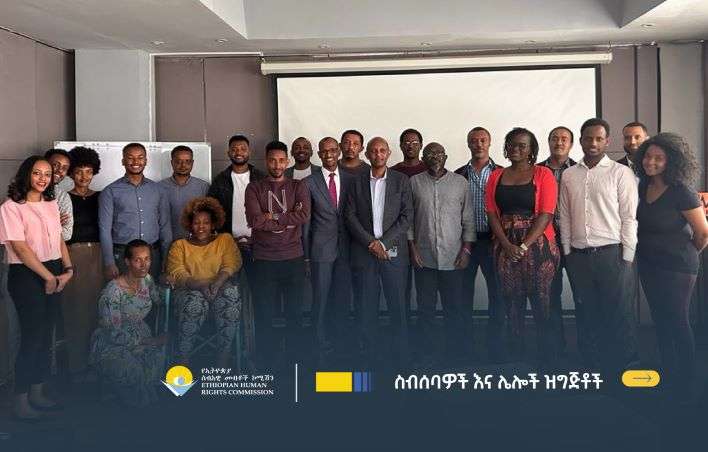
As such, following the LIF17, CIPESA led an ICT policy training workshop for human rights defenders, activists, media and social media enthusiasts to increase their understanding of relevant ICT policies in Zambia and how these affect human rights online. The workshop entailed developing their strategies in advocating for a free, open and secure internet through the innovative use of both traditional and new media.
During the training, participants were taken through mechanisms for policy engagement such as stakeholder submissions, the analysis of bills and continued activism and campaigns online including through documentation and reporting of internet freedom violation incidents.


LIF17 was organised by the Swedish Embassy in Zambia and partners including the Zambia Governance Foundation as a satellite event in the lead up to the Stockholm Internet Forum. Thematic sessions on agriculture, gender, and freedom of expression were hosted by the technology innovation hub Bongo Hive, the Asikana Network, the Swedish Programme for ICT in Developing Regions (Spider) and CIPESA.
Read more about internet freedom in Zambia in CIPESA’s State of Internet Freedom in Zambia 2016 report.
CIPESA’s work in Zambia is supported by AccessNow and the Mozilla Foundation.
 

Open Letter To Cameroonian Government On Internet Connectivity In Anglophone Regions

Open Letter |
On January 22, 2017, Civil Society Organizations from around the world sent the following open letter to The President of Cameroon, Minister of Posts and Telecommunications, and Minister of Communication, on ongoing Internet blackout in anglophone regions of the country.

Internet Sans Frontières - CC BY-NC-SA 3.0 FR

Internet Sans Frontières – CC BY-NC-SA 3.0 FR

Re: Internet Connectivity in the Republic of Cameroon
Your Excellencies,
We are writing to urgently request that you restore Internet access in the South West and North West regions of Cameroon. Multiple reports, including ours, indicate that your government ordered operators to block communications over the internet in the anglophone regions of the country. [1]
We implore you to keep the internet on.
Research shows that internet shutdowns and violence go hand in hand. [2] Shutdowns disrupt the free flow of information and create a cover of darkness that allows repression to occur without scrutiny. Worryingly, the Republic of Cameroon would be joining an alarming global trend of government-mandated shutdowns around election issues, a practice that many African Union member governments have recently adopted, including:  Burundi, Congo-Brazzaville, Chad, Gabon, Egypt, Sudan, the Central African Republic, Niger, Democratic Republic of Congo. [3], [4], [5], [6], [7], [8], [9]

Internet shutdowns — with governments ordering the suspension or throttling of entire networks, often during elections or public protests — must never be allowed to become the new normal.

Justified for public safety purposes, shutdowns instead cut off access to vital information, e-financing, and emergency services, plunging whole societies into fear and destabilizing the internet’s power to support small business livelihoods and drive economic development. In addition, a study by the Brookings Institution indicates that shutdowns drained $2.4 billion from the global economy last year. [10]
The Internet shutdown imposed in anglophone territories of Cameroon will hit hard on the burgeoning digital economy, which is blossoming in Cameroon’s Silicon Mountain, Buea. [11]
International Law
A growing body of jurisprudence declares shutdowns to violate international law. The United Nations Human Rights Council has spoken out strongly against internet shutdowns. In its 32nd Session, in July 2016, the Council passed by consensus a resolution on freedom of expression and the internet with operative language on internet shutdowns. The resolution, A/HRC/RES/32/13, « condemns unequivocally measures to intentionally prevent or disrupt access to or dissemination of information online in violation of international human rights law and calls on all States to refrain from and cease such measures. » The Council intended this clear declaration to combat the blocking and throttling of networks, applications, and services that facilitate the freedoms of expression, opinion, and access to information online. In addition, the African Commission on Human and Peoples’ Rights stated in its November 2016  Resolution on the Right to Freedom of Information and Expression on the Internet in Africa that it was “Concerned by the emerging practice of State Parties of interrupting or limiting access to telecommunication services such as the Internet, social media and messaging services, increasingly during elections.” [12]
In 2015, various experts from the United Nations (UN) Organization for Security and Co-operation in Europe (OSCE), Organization of American States (OAS), and the African Commission on Human and Peoples’ Rights (ACHPR), issued an historic statement declaring that internet “kill switches” can never be justified under international human rights law, even in times of conflict. [13] General Comment 34 of the UN Human Rights Committee, the official interpreter of the International Covenant on Civil and Political Rights, emphasizes that restrictions on speech online must be strictly necessary and proportionate to achieve a legitimate purpose. Shutdowns disproportionately impact all users, and unnecessarily restrict access to information and emergency services communications during crucial moments.
The internet has enabled significant advances in health, education, and creativity, and it is now essential to fully realize human rights including participation in elections and access to information.
We humbly request that you use the vital positions of your good offices to:

  • Ensure that the internet connectivity, including social media, is restored in the anglophone regions of the republic of Cameroon in the coming period
  • Publicly declare your commitment to keep the internet on, including social media
  • Encourage telecommunications and internet services providers to respect human rights, including through public disclosures and transparency reports.

We are happy to assist you in any of these matters.
Sincerely,

  • Access Now
  • Internet Sans Frontières
  • Internet Sans Frontières-Togo
  • Africtivistes
  • Cameroon Ô Bosso
  • Droit au Droit
  • Réseau des blogueurs du Burkina Faso
  • Réseau Panafricain des Défenseurs des Droits Humains
  • Afrika Youth Movement
    Voice of Women Initiative
    Coexistence with Alternative Language and Action Movement- Tunisia
  • The Collaboration on International ICT Policy in East and Southern Africa (CIPESA)
  • Pen Plus Bytes
  • Unwanted Witness Uganda
  • Center for Media Research
  • Media Foundation for West Africa
  • Campaign for Human Rights and Development
  • African Freedom of Expression Exchange (AFEX)
  • Center for Democracy and Technology
  • Paradigm Initiative Nigeria
  • Internet Freedom Forum
  • ADISI-Cameroun
  • Société des Amis de Mongo Beti (SAMBE)

Notes:
[1] Julie Owono, Regional Internet Blackout In Cameroon (Report by Internet Sans Frontières, 20 January 2017) <http://internetwithoutborders.org/fr/regional-internet-blackout-in-cameroon/
[2] Sarah Myers West, ‘Research Shows Internet Shutdowns and State Violence Go Hand in Hand in Syria’ (Electronic Frontier Foundation, 1 July 2015) <https://www.eff.org/deeplinks/2015/06/research-shows-internet-shutdowns-and-state-violence-go-hand-hand-syria> accessed 18 February 2016.
[3] ‘Access urges UN and African Union experts to take action on Burundi internet shutdown’ (Access Now 29 April 2015) <https://www.accessnow.org/access-urges-un-and-african-union-experts-to-take-action-on-burundi-interne/> accessed 18 February 2016.
[4] Deji Olukotun, ‘Government may have ordered internet shutdown in Congo-Brazzaville’ (Access Now 20 October 2015) <https://www.accessnow.org/government-may-have-ordered-internet-shutdown-in-congo-brazzaville/> accessed 18 February 2016.
[5]  Deji Olukotun and Peter Micek, ‘Five years later: the internet shutdown that rocked Egypt’ (Access Now 21 January 2016) <https://www.accessnow.org/five-years-later-the-internet-shutdown-that-rocked-egypt/> accessed 18 February 2016.
[6] Peter Micek, ‘Update: Mass internet shutdown in Sudan follows days of protest’ (Access Now, 15 October 2013) <https://www.accessnow.org/mass-internet-shutdown-in-sudan-follows-days-of-protest/> accessed 18 February 2016.
[7] Peter Micek, ‘Access submits evidence to International Criminal Court on net shutdown in Central African Republic’(Access Now 17 February 2015) <https://www.accessnow.org/evidence-international-criminal-court-net-shutdown-in-central-african-repub/> accessed 18 February 2016.
[8] ‘Niger resorts to blocking in wake of violent protests against Charlie Hebdo cartoons.’ (Access Now Facebook page 26 January 2015) <https://www.facebook.com/accessnow/posts/10153030213288480> accessed 18 February 2016.
[9] Peter Micek, (Access Now 23 January 2015) ‘Violating International Law, DRC Orders Telcos to Cease Communications Services’ <https://www.accessnow.org/violating-international-law-drc-orders-telcos-vodafone-millicon-airtel/> accessed 18 February 2016.
[10] Darrell West, (Brookings Institution, October 2016) “Internet shutdowns cost countries $2.4 billion last year”https://www.brookings.edu/wp-content/uploads/2016/10/intenet-shutdowns-v-3.pdf
[11] Julie Owono, Cameroon’s Reflection on the “false news” debate stirs censorship fears (Report by Internet Sans Frontières, 22 November 2016) <http://internetwithoutborders.org/fr/cameroonian-governments-dangerous-stance-against-a-free-and-open-internet/
[12] African Commission on Human and Peoples’ Rights, (November 2016) ‘362: Resolution on the Right to Freedom of Information and Expression on the Internet in Africa – ACHPR/Res. 362(LIX) 2016’ http://www.achpr.org/sessions/59th/resolutions/362/
[13] Peter Micek, (Access Now 4 May 2015) ‘Internet kill switches are a violation of human rights law, declare major UN and rights experts’ <https://www.accessnow.org/blog/2015/05/04/internet-kill-switches-are-a-violation-of-human-rights-law-declare-major-un&gt; accessed 18 February 2016.
Originally published here – French Version available here

Analysis of the Relationship Between Online Information Controls and Elections in Zambia

By Arthur Gwagwa |
The defining era in Zambia’s current rise in online political and civic activism can be traced back to the period between 2011 and 2013. This is when the late President Sata embraced social media as part of his political and public diplomacy strategy.  As the country now prepares for the August 2016 General Elections, government, its agencies, such as the Election Ccommission of Zambia (ECZ), the opposition and civil society are all immersed in social media.
As the country’s August 2016 polls draw nearer, government has recently increased its presence on social media to abet and encourage horizontal flows of information. This is in contrast to vertical flows, where information generated by societal actors is gathered by the government through usage of a range of methods, ranging from “responsiveness” on social media to media monitoring.
This paper explores reports of information controls and filtering of the ruling regime, whose leader, Edgar Lungu, strives to  balance the dictates of political survival and his reputation as a lawyer who has previously defended press freedoms. The paper analyses past and current key political events that implicate the relationship between internet-based information controls and elections in Zambia. Finally, the paper  extrapolates likely scenarios in the build up to the 2016 General Elections and Constitution Bill of Rights Referendum to be held on 11 August 2016.
Read the full report here.

Analysis of Twitter Activity During the 2016 Presidential Debates in Uganda

By CIPESA Writer |
The 2015/2016 electioneering season in Uganda set a precedent in the use of social media as a means for politicians to reach out and engage with citizens. It was the first time in Uganda that a candidate announced they would run for President via YouTube and also saw candidate Yoweri Museveni (the incumbent) seek out a more tech-savvy media team to keep abreast with the widening channels of civic engagement.
While some of the candidates maintained personal Twitter accounts and actively engaged in the online conversations, others remained dormant, although they had Twitter accounts.
In partnership with Outbox we present the first of a three-part series into the key themes shaping the online conversation of Ugandans during the electioneering process.
The report explores the level of Twitter activity, interaction and conversational trends with specific focus on the #UgDebate16 hashtag during the 1st presidential debate held on January 15, 2016 and 2nd debate, which was held on February 13, 2016. During both debates, the hashtag trended locally and gained popularity as far as South Africa.
See the full report here: Analysis of Twitter Activity During the 2016 Presidential Debates in Uganda – Monitoring Uganda Elections Series 01 #UgDebate16


New Year, Old Habits: Threats to Freedom of Expression Online in Kenya

By Juliet Nanfuka |
The beginning of 2016 has been marked with a series of arrests and summonses of individuals in Kenya as a result of content shared through social media platforms. Contrary to the constitutional right to freedom of expression, the incidents that relate to up to 10 individuals illustrate the Kenya Government’s continued use of vague legal provisions to stifle online content critical of the state or well-connected business people and high-ranking officials.
On January 22, news broke of an attack by Al-Shabaab militants on the Kenya Defence Forces at the El Adde camp in Somalia. The following day, journalist and blogger Yassin Juma was arrested over updates and pictures  posted on social media relating to the attack. Juma was charged under Section 29 of the Kenya Information and Communications (KIC), 2013 for the improper use of a telecommunication system.
Section 29 of KIC on improper use of system states:
A person who by means of a licensed telecommunication system—

(a) sends a message or other matter that is grossly offensive or of an indecent, obscene or menacing character; or
(b) sends a message that he knows to be false for the purpose of causing annoyance, inconvenience or needless anxiety to another person, commits an offence and shall be liable on conviction to a fine not exceeding fifty thousand shillings, or to imprisonment for a term not exceeding three months, or to both.

On January 25, nine bloggers were summoned by the Directorate of Criminal Investigations (DCI) for questioning over alleged misuse of a licensed telecommunications system. According to DCI investigation officer John Kariuki, the nine bloggers were under investigations following undisclosed complaints made against them. “We have complaints and that is why we are investigating them. No one is targeting them wrongly,” said Kariuki.
In a statement condemning the arrests and intimidation of Kenyans online, the Bloggers Association of Kenya (BAKE) stated that the events were tantamount to “criminalization of civil matters” with users being arrested on charges that ultimately infringe upon freedom of expression. BAKE’s statement lists the arrest and detentions of the following:

  • Anthony Njoroge Mburu (alias Waime Mburu) – arrested and charged for allegedly posting false information under Section 66(1) of the Penal code for content posted on Facebook accusing Kiambu Governor William Kabogo of importing substandard eggs. He is also alleged to have posted content intended to cause harm to Charlotte Wangui, who heads Sea Cross Farm in Kwale.
  • Patrick Safari (alias Modern Corps), a prison warden – arrested for comments on the Al Shabaab attack. He spent a night in jail, and police retained his three phones and laptop after his release.
  • Judith Akolo, a journalist with the Kenya Broadcasting Corporation (KBC) – summoned for questioning by the DCI for retweeting a post from Patrick Safari (@moderncorps) about a DCI advertisement of jobs within the department which was made public on deadline day (31st December 2015). Her phone was confiscated and her pin code requested. Eddy Reuben Illah – arrested for allegedly sharing images of Kenyan soldiers killed in an Al Shabaab attack on a WhatsApp group called “Youth People’s Union”. He was charged for the “misuse of a licenses telecommunication device”.
  • Cyprian Nyakundi – arrested after tweeting about a construction company that was linked to Mombasa Governor Hassan Joho, in alleged violation of Section 29 of KIC Act on the “misuse of a licensed telecommunication device”.
  • Elijah Kinyanjui – arrested for sharing a photo of a governor’s daughter on Whatsapp. He was also charged under Section 29 of KIC Act.

These arrests and summons add to a history of arrests made under laws marked by vague definitions and excessive powers granted to the state. The KIC (Amendment) Act, 2013 does not clearly define what constitutes content that causes “annoyance, inconvenience or needless anxiety to others,” while the Penal Code has no clear definition of a “rumour” or “report which is likely to cause fear and alarm to the public or to disturb the public peace.”
Further, the Security Laws (Amendment) Act, 2014 allows blanket admissibility in court of electronic messages and digital material regardless of whether it is not in its original form. Meanwhile, the Media Council Act, 2013 contains “broad” speech offences further reinforced by the Cybercrime and Computer related Crimes Bill, 2014.
Kenya’s technology sector is one of the fastest growing in Africa. The high internet penetration rate of 74% has bred a wave of citizen journalism which has flourished in the absence of the checks and balances present in traditional media and  seeks to place social justice and accountability through ICT at the forefront of the country’s governance.
While these  incidents in Kenya are the result of hate speech and rising terrorism fears, they are no doubt placing a chill on freedom of expression for citizens and the media and contributing to self-censorship for the fear of arrest.