Report |
Up to 22 African governments have ordered network disruptions in the last four years and since the start of 2019, six African countries – Algeria, the Democratic Republic of Congo (DR Congo), Chad, Gabon, Sudan and Zimbabwe – have experienced internet shutdowns.
A new report by the Collaboration on International ICT Policy for East and Southern Africa (CIPESA) titled Despots and Disruptions: Five Dimensions of Internet Shutdowns in Africa notes, however, that internet shutdowns remain the preserve of Africa’s most despotic states.
According to the report, 77% of the countries where internet shutdowns have been ordered in the last five years are categorised as authoritarian under the Democracy Index produced by the Economist Intelligence Unit. All the other African countries that have disrupted communications are categorised as hybrid regimes, meaning they have some elements of democracy with strong doses of authoritarianism.
The authoritarian regimes that have ordered network disruptions include Algeria, Burundi, the Central African Republic (CAR), Cameroon, Chad, DR Congo, Congo (Brazzaville), Egypt, Equatorial Guinea, Gabon, Ethiopia, Libya, Mauritania, Niger, Togo, Sudan, and Zimbabwe. Hybrid regimes that have ordered internet shutdowns include the Gambia, Mali, Morocco, Sierra Leone, and Uganda.
For countries that are classified as authoritarian but have not ordered shutdowns, the report states that it is likely that “the authoritarian state is so brutal or commanding that civil society or opposition organising and protests – online and offline – are unfathomable” or “internet control measures in place render ordering overt internet disruptions unnecessary.” These countries include Djibouti, Eritrea and Rwanda.
The report also notes that countries whose leaders have been in power for several years are more likely to order internet shutdowns. As of January 2019, of the 14 African leaders who had been in power for 13 years or more, 79% had ordered shutdowns, mostly during election periods and public protests against government policies.
These included Equatorial Guinea’s Teodoro Obiang Nguema (39 years); Cameroon’s Paul Biya (36); Congo Brazaville’s Denis Sassou Nguesso (34); Uganda’s Yoweri Museveni (33); Sudan’s Omar El Bashir (30); Chad’s Edris Deby (29); Algeria’s Abdelaziz Bouteflika (19); Mauritania’s Mohamed Ould Abdel Aziz (19); DR Congo’s Joseph Kabila (17); Togo’s Faure Gnassingbé (15); and Burundi’s Pierrie Nkurunziza (13).

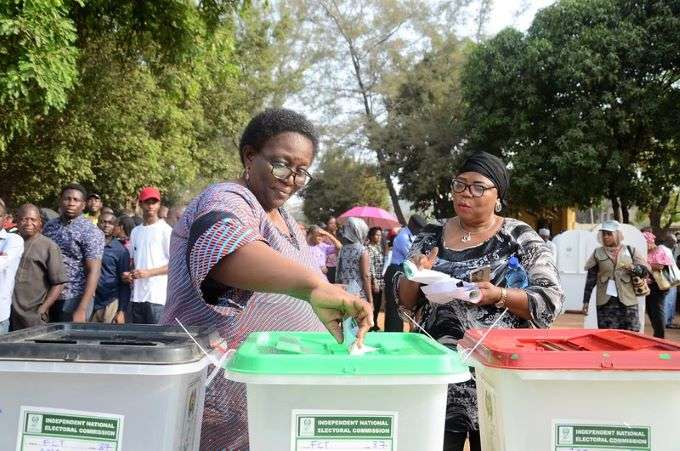
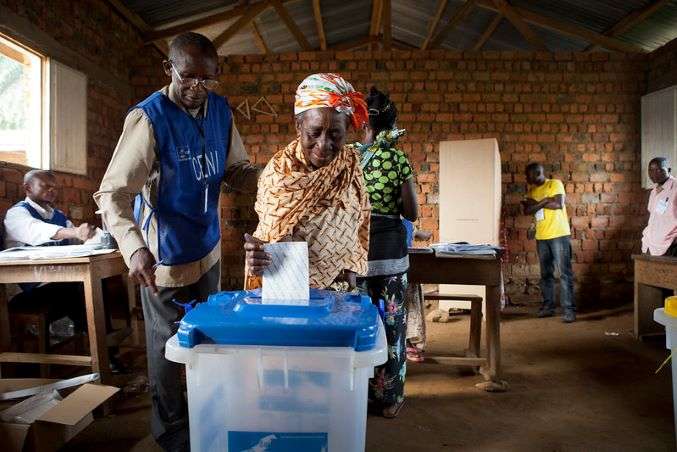
The report says 2019 could see a record number of network disruptions since at least 20 African states will hold various forms of elections including local, legislative, general or presidential.
Over the years, many network disruptions have typically occurred in autocratic African countries around election times, and among the states scheduled to conduct polls this year are those which have previously initiated various forms of shutdowns during elections periods (such as Equatorial Guinea), public protests (Cameroon, Togo), and national school exams (Algeria, Ethiopia).
Other highlights from the Despots and Disruptions: Five Dimensions of Internet Shutdowns in Africa report:
The report notes that governments that order disruptions and the Internet Service Providers (ISPs) that implement them now more openly acknowledged the disruptions. Governments often cite digital technologies’ increasing usage to spread disinformation, propagate hate speech, and to allegedly fan public disorder and undermine national security.
For their part, more ISPs and platform operators are making public their responses to shutdown directives as and to user information and interception requests from governments through transparency reports. This openness could represent the normalisation of shutdowns, implying that a growing number of governments feel no shame in openly acknowledging ordering shutdowns. However, it has positive elements too, as it can be the basis of litigation and push back advocacy.
The report reiterates that internet disruptions, however short-lived, affect many facets of the national economy and tend to persist far beyond the days on which access is disrupted. “If just five of the countries that have previously disrupted internet access and who are going to the polls this year disrupted access to internet including apps such as Twitter, Facebook and Whatsapp at a nationwide level for five days each, the estimated economic cost would be more than USD 65.6 million,” the report states.
Further, the report notes that the countries that disrupt internet access have some of the lowest internet usage figures and highest data prices in Africa. Conventional wisdom might suggest that low-internet usage countries would be the last to disrupt internet access as they might consider the population online too small to threaten “public order” or “national security” or to threaten the regime’s hold on power. On the contrary, says the report, it appears that African governments with democracy deficits, regardless of the numbers of their citizens that use the internet, fear the power of the internet in enabling citizen organising and empowering ordinary people to speak truth to power.
The report can be downloaded here.
Forum on Internet Freedom in Africa 2019 (FIFAfrica19)
Indeed, spreading the physical footprint of FIFAfrica across different regions of the continent ensures that the Forum lives up to its goal of unpacking internet freedom challenges and opportunities in sub-regions of Africa and developing responses that are collaborative, and informed by insights from the experience of other sub-regions of the continen.
See our FIFAfrica event page here. More information on FIFAfrica2019 coming soon.
FIFAfrica 2018: Taxes Sur les Réseaux Sociaux et Coupures Internet au cœur des Discussions
FIFAfrica18 Update |
Du 26 au 28 septembre 2018 se tenait à Accra la 5è édition du Forum on Internet Freedom in Africa (FIFAfrica), auquel participait Internet Sans Frontières. J’ai eu le privilège d’y représenter l’association. Co- organisé par le Collaboration on International ICT Policy for Eastern and Southern Africa, un organisme consultatif indépendant, et la Media Foundation for West Africa, ce forum se veut un haut lieu d’échanges entre différents acteurs sur l’état et les perspectives des libertés et droits numériques en Afrique.
Les Taxes sur l’utilisation des réseaux sociaux au cœur des discussions
Il a évidemment été question des législations visant à taxer auprès des utilisateurs l’usage des réseaux sociaux et applications de messagerie, quelques jour après qu’une régulation similaire ait été retirée au Bénin, suite à une forte mobilisation des béninois, soutenue par Internet Sans Frontières. Le panel consacré aux implications économiques et sociales des taxes sur les réseaux sociaux, auquel j’ai pris part pour Internet Sans Frontières, était modéré par Sandi Chimpala de TechTrends, aux côtés du Dr. Wairagala Wakabi de CIPESA, Broc Rademan de Research ICT Africa et Kojo Boakye de l’entreprise Facebook . Au delà de l’impact économique négatif, les panélistes ont rappelé ces taxes sont porteuse d’un relent autoritariste, en ce qu’elles font peser de réelles menaces sur la liberté d’expression, et l’accès l’information. L’occasion m’a été donnée de rappeler que la victoire historique et inédite des citoyens béninois face à leur gouvernement ne doit pas faire oublier que de nombreux utilisateurs en Ouganda, en Zambie subissent encore le poids de ces régulations injustes.

L’urgence en Afrique d’adopter des indicateurs de l’universalité de l’Internet
Internet Sans Frontières a également pris part à la session organisée par l’UNESCO sur les indicateurs de l’universalité de l’Internet : fruit d’une réflexion entamée en 2017, ces indicateurs doivent permettre à chaque pays d’auto-évaluer le niveau d’universalité de l’Internet disponible dans un territoire donné, en particulier vérifier que l’Internet est fondé sur les droits humains, s’il est ouvert, accessible à tous, et fruit de la participation de plusieurs acteurs. Aux côté de James Marenga, Vice-président de l’Institut des Médias pour l’Afrique Australe (MISA), de Damola Sogunro, Principal Computer Analyst au Ministère de la Communication et des Technologies du Nigeria et de Dorothy Gordon, activiste technologique ghanéenne et spécialiste du développement, j’ai pu rappeler
les nombreux obstacles qui entravent l’accès aux informations en ligne sur le continent Africain tels que les coupures d’Internet, la restriction des libertés et la criminalisation des discours en ligne, la faible protection de la vie privée, les taxes relatives à l’usage d’Internet et le manque de transparence par rapport aux activités des gouvernements.
Plaidoyer contre les coupures Internet et données
Le panel consacré au plaidoyer axé sur les données relatives aux coupures d’Internet en Afrique a permis de rappeler le travail d’Internet Sans Frontières contre cette forme grave de censure, aux côtés de ses partenaires Access Now, the Global Network Initiative, et Netblocks, tous membres de la coalition Keepiton fondée en 2016. Les données sont nécessaires dans cette lutte, notamment celles permettant de connaitre le nombre précis de coupures Internet, mais également l’impact économique et financier de celles-ci. En 2017, le premier calcul par Internet Sans Frontières du coût économique de la coupure totale d’Internet dans les régions anglophones du Cameroun, la plus longue à ce jour en Afrique, a permis d’intéresser un tout nouveau public au plaidoyer contre la censure sur Internet, en particulier les médias et institutions économiques et financières. D’où l’importance de l’outil COST (Cost of Shutdowns Tool), développé par l’organisation Netblocks, qui automatise le calcul du coût des coupures Internet.
FIFAfrica, un espace de discussion et de collaboration nécessaire
J’ai pu constater à travers ma participation que le FIFAfrica est un creuset qui permet de débattre de manière interactive et éclairée sur les enjeux et défis actuels de la société de l’information en Afrique.
Vous pouvez en apprendre d’avantage sur la 1ère participation d’Internet Sans Frontières à ce grand RDV africain dans ce podcast d l’émission Afrique 7 jours de la Deutsch Welle.
Zone 9 Bloggers To Speak on Censorship, Repression and Surveillance at the Forum on Internet Freedom in Africa 2018 (FIFAfrica18)
Announcement |
In order to contribute to the democratic discourse in Ethiopia, in May 2012, nine individuals formed the Zone 9 blogging collective – a loose network of activists regularly blogging and campaigning on human and democratic rights. However, two weeks after the launch of the initiative, the Ethiopian government blocked access to the collective’s online platform. In April 2014, six members of the collective were jailed on allegations of working with foreign organisations and rights activists by “using social media to destabilise the country.” The other three members fled into exile.
At the upcoming Forum on Internet Freedom in Africa 2018 (FIFAfrica18) members from the collective will share a stage and speak on their experiences of censorship, repression and surveillance. In an hour and half long session, members of the collective will share their stories including the tactics employed by the state to surveil and censor them, their trial, imprisonment for 15-18 months, and post-incarceration trauma. Their participation will serve as a means of raising awareness on the realities of being an activist in a repressive state and life after release from incarceration.
See draft Forum agenda
The collective gets its name from the eight zones of the notorious Kaliti prison in Addis Ababa where political prisoners are housed. The ninth zone is a metaphorical extension of the zones to apply to the rest of the country due to the harsh controls on freedom of speech and association across Ethiopia at the time.
In February 2018, after six years of facing charges that included terrorism and inciting violence, prosecutors in Ethiopia dropped all charges against the last members of the collective that still faced prosecution. The announcement came as part of ongoing economic and political reforms in the country since the resignation of former Prime Minister Hailemariam Dessalegn in February 2018, and appointment of a new premier, Abiye Ahmed, two months later.
Since then, the government has freed thousands of prisoners; announced measures to liberalise the telecom sector; and dropped charges against many opposition leaders, bloggers, and activists. Further, the new administration has lifted the state of emergency that had been reinstated in February 2018, reconnected mobile and broadband internet services that were cut off since 2016, and unblocked 246 websites, blogs, and news sites that had been inaccessible for over a decade.
See more about Ethiopia’s reforms.
Who are the Zone 9 Bloggers?

Zelalem Kibret is an Ethiopian scholar and blogger. He was previously a Scholar-at-Risk fellow at the Hutchins Center for African and African American Research, and the Center for Human Rights and Global Justice, at New York University School of Law. By training, Zelalem is a lawyer specialised in Public International Law. Until April 2014, he was a Professor of law at Ambo University in Ethiopia.
Among his interests is research which focuses on transitional politics and justice, traditional justice, individuals in international law, counter-terrorism, new social movements, and liberation technology.
Zelalem is the co-recipient of the 2015 Committee to Protect Journalists’ (CPJ) International Press Freedom award and the 2015 Reporter Sans Frontieres’ (RSF) Citizen-Journalist award. He earned his LL.M degree from Addis Ababa University in Public International Law.

Nathenael Feleqe Aberra is a co-founding member of Zone 9 Activists and Blogging collective. He is an active member of the Ethiopian Economics Association and a full time employee in a financial intuition in Ethiopia with close to eight years’ experience in Human Resource Management. His interest areas include Economic Development, Democracy and Human Rights.

Jomanex Kasaye | Born and raised in “the jewel of rift valley” – Adama also known as Nazareth located 90 km from the capital Addis Ababa, Jomanex is an Information Technology enthusiast, who has previously worked as a tutor and system administrator in addition to running his own businesses. He is a co-founding member of the Zone 9 Activists and Blogging collective and now lives in exile.
Befekadu Hailu Techane describes himself as a Management Information Systems (MIS) expert by profession who turned a writer by inclination. His novella titled “Children of Their Parents” won the Bill Burt Award for African Literature (Ethiopia) in 2012. He has worked as an editor for Enqu Magazine, editor-in-chief for Weyeyet Magazine and volunteering editor for Global Voices [all in Amharic]. His blogging and activism work has seen him jailed four times – including an 18 month detention period. Befekadu is among the co-founders of the Zone 9 Activists and Blogging collective.
He currently works as a columnist for Duestche Welle Amharic Service, as a freelancing journalist for ethiotube.net, an internet TV channel, and part-time program coordinator for Ethiopian Human Rights Project.

Atnafu Brhane is a blogger and human rights activist in addition to being one of the co-founders of the Zone 9 Activists and Blogging collective. He began his career as an IT expert for a local administration office in Ethiopia before joining the collective. He also worked with Article 19 East Africa to give digital security trainings for human rights activists and journalists.
His work with the collective saw him get arrested and charged with terrorism in 2014 following which he spent 18 months in prison. He currently works as Digital Media Coordinator and Campaigner for the Ethiopia Human Rights Project.
Abel Wabella describes himself as a passionate storyteller, who is fascinated by the commencement of the digital era. As a social media marketer, Abel has developed a sound knowledge of new media tools and techniques. Since he started blogging in 2011, he has engaged in social media activism, humanitarian advocacy, social justice projects, localisation and business projects.
As such, Abel shifted his career interests from mechanical engineering into the media arena. His work saw him detained, which served to further fuel his activism. Abel has a vast virtual office experience and is a member of the Global Voices volunteer community of more than 1,400 writers, analysts, online media experts, and translators, which localises its content into 40 languages including Amharic. He is also a co-founder of the Zone 9 Activists and Blogging collective.
Abel is currently working on newly established media called Gobena Street.
The Reforms Ethiopia Needs to Advance Internet Freedom
Policy Brief |
Since April 2018, the new Ethiopian government has been undertaking unprecedented political and economic reforms. This follows countrywide protests that forced the former Prime Minister Hailemariam Dessalegn to resign in February 2018, leading to the appointment of a young and charismatic new premier, Abiye Ahmed two months later. Since then, the government has freed thousands of prisoners; announced measures to liberalise the telecom, aviation, and transportation sectors; and dropped charges against many opposition leaders, bloggers, and activists. Further, the new administration has lifted the state of emergency that had been reinstated in February 2018, reconnected mobile and broadband internet services that were cut off since 2016, and unblocked 246 websites, blogs, and news sites that have been inaccessible for over a decade.
These changes in Ethiopia did not come at a whim. The protests that started in November 2015 in the Oromia region spread to other parts of the country. In response to these protests, the previous government continuously blocked social media sites and implemented national and regional internet blackouts, often claiming it aimed to safeguard national security or to stem cheating during national exams. Consequently, the Oromia region lost internet connectivity for two weeks in March 2018, three weeks before the new prime minister was sworn in. Moreover, as access to the internet deteriorated in the country, the government criminalised freedom of expression online and offline. The arbitrary arrests, detention, and torture of members of the Zone Nine bloggers collective showed how far the government was willing to go to suppress dissenting voices.
The new Prime Minister and his cabinet have promised to open the democratic space in the country and expand freedom of expression online and offline. However, these reforms should go beyond the unblocking of a few hundred websites; they should bring in real changes that will make it impossible to regress to old habits. Therefore, reforms to be implemented must expand internet penetration from the current 15%, to the larger offline majority. Laws that prosecute freedom of expression online and offline like the Anti-Terrorism Proclamation and Computer Crime Proclamation must undergo substantial revisions to meet international standards. Further, the changes within the law enforcement and intelligence agencies should go beyond replacing old officials with new ones, but must tame the undue power given to these bodies to conduct unwarranted surveillance and censorship of netizens. Lastly, the new government should desist from internet shutdowns and censorship.
See this brief titled The Reforms Ethiopia Needs to Advance Internet Freedom which gives a detailed description of prevailing challenges to internet freedom in Ethiopia and proposed reforms the Ethiopian government needs to undertake to improve internet freedom in the country.