Will Our Human Rights and Freedoms and a Free and Open Internet be the Next Victims of Cybercrime?

Manifesto Launch |

The Collaboration on International ICT Policy for East and Southern Africa (CIPESA) has joined civil society organisations and industry in a rally against the potential threat of cybercrime on human rights and freedoms as well as the open internet.

Day-by-day the effects of cybercrime continue to get worse. Although something clearly needs to be done, there is growing concern that any efforts to tackle this modern scourge come at the expense of fundamental human rights and that they threaten the open and free internet.

As countries are considering their input to the United Nations ahead of the scheduled January negotiations on a Cybercrime Convention, the CyberPeace Institute and the Cybersecurity Tech Accord have brought together a range of stakeholders to publish the Multistakeholder Manifesto on Cybercrime. The principles outlined in the Manifesto should be at the heart of any cybercrime legislation and to guide the negotiating process.

The Manifesto is supported by over 50 members of civil society, industry organizations (such as the Center for Democracy and Technology, World Wide Web Foundation, Cyber Threat Alliance, and Derechos Digitales) and individuals. Signatories to the Manifesto want to also ensure that any cybercrime convention preserves and upholds basic human rights and freedoms guaranteed under existing international UN and other treaties.

“Today, industry and civil society are coming together through a Multi-Stakeholder Manifesto on Cybercrime which provides a set of principles to guide governments in their negotiations at the United Nations” says Klara Jordan, Chief Policy Officer at the CyberPeace Institute. 

In the build up to the convention negotiations, this Manifesto is an urgent appeal to all UN member states, UN agencies, and others involved in the current process, to address concerns regarding the draft and align their submissions with the Manifesto.

The Manifesto also highlights the importance of ensuring cybercrime perpetrators are held accountable for their actions: “In an area as opaque as cyberspace, public-private partnerships are often an indispensable tool to gain insights into evolving cyber threats and those behind them,” said Annalaura Gallo, Head of Secretariat, Cybersecurity Tech Accord. “A new Cybercrime Convention should establish clear mechanisms for states to reduce the operating space for criminals,” added Annalaura Gallo

The Manifesto also tackles the challenges inherent in the current UN process, in particular the lack of multistakeholder participation. “We are concerned about the lack of consultation, inclusion and involvement of stakeholders from across civil society and industry”, said Klara Jordan, adding: “The participation of civil society entities is crucial to ensure that the impact of these crimes on society is properly taken into account.” “The technology industry is ready to offer its expertise and input to UN states in the upcoming negotiations on cybercrime. We hope that our input will be sought more consistently than has been the case in the past in discussions involving the security of our internet ecosystem,” emphasized Annalaura Gallo.

*********

About the CyberPeace Institute: Headquartered in Geneva, Switzerland, the CyberPeace Institute is a nongovernmental organization whose mission is to reduce the harms from cyberattacks on people’s lives worldwide, provide assistance to vulnerable communities and call for responsible cyber behaviour, accountability and cyberpeace.

About the Cybersecurity Tech Accord: The Cybersecurity Tech Accord is a coalition of over 150 technology companies committed to advancing peace and security in cyberspace. The group’s mission revolves around four foundational principles: strong defense, no offense, capacity building and collective response.

Africa Law Tech Festival 2021: CIPESA Underscores Strategies to Cutting Through Common Emerging Barriers To Access To Justice Despite the Covid-19 Pandemic

By the Lawyers hub |

At the onset of the COVID-19 pandemic, governments across Africa implemented measures to curb the spread of the virus that greatly disrupted judicial processes, slowing down access to justice. Such measures include suspension of all in- person court activities like mentions, hearings and appeals as well as execution of court judgements. Gradually, courts looked to adopting technological measures to aid in the delivery of justice; measures which despite the noble intentions, had to be grounded in law. 

These developments informed the Collaboration on International ICT Policy for East and Southern Africa (CIPESA)’s masterclass at the second edition of the Africa Law Tech Festival, a five-day annual conference that convenes different stakeholders in Africa to deliberate on digital policy issues. In line with this year’s theme, ‘Digital Policy for Economic Growth’, the class explored The Role of Lawyers and Courts digital access to Justice amidst the Covid 19 Pandemic. CIPESA affirmed that for many African countries, the basis for e-justice can be founded on the supreme law- the Constitution. In July 2020, the Supreme Court of Nigeria ruled in favour of virtual courts and  dismissed suits by Lagos and Ekiti States in which they sought to have virtual courts declared unconstitutional and null and void. 

Since the emergence of COVID-19, the African Judicial system has greatly changed. Courts have developed guidelines and practice notes for development of virtual courts and adopted online case management systems. As at December 2020, at least 20 African states had adopted e-filing and e-service and incorporated virtual hearings. Despite these successes, there are various challenges inhibiting the growth and adoption of virtual courts in Africa including:

The costs of acquisition of hardware and software needed for virtual courts. Africa has the lowest internet penetration rate caused by high cost of services and connectivity devices. In 2020, the Alliance for Affordable Internet reported that Africa had the least affordable smart devices globally costing about 62.8% of individual monthly income. Unaffordable devices raise the cost of connectivity for most Africans, pushing many offline. Conversely, those offline are not able to effectively utilize and participate in virtual courts, thus limiting access to justice. In Uganda, the judiciary obtained support from the UNDP to purchase zoom licenses. In Kenya, the judiciary partnered with the Ministry of ICT to acquire licenses for teleconferencing facilities and technical officers to provide support in respective court stations. 

Africa’s increasing digital divide has further degenerated access to justice. The International Telecommunication Union reports that Africa has the lowest percentage of persons using the internet globally. Moreover, urban areas have twice as much home internet access than rural areas. Despite having internet access, the reliability may be affected by constant power outages. Other justice actors like prisons would also need to be meaningfully connected. Previous efforts to implement the e-filling system and virtual courts by the judiciary in Kenya were slowed down due to lack of digital infrastructure and unreliable electricity in courts. As the adoption of virtual courts becomes widespread, it is crucial to ensure accessibility for all by addressing issues of digital infrastructure, device and broadband affordability otherwise justice would be discriminatory and a violation of their right to access to justice. 

Law and policies regulating the internet are not favourable. For instance, taxation of the internet leads to high data costs which in most cases aggravates digital exclusion. In 2021, Uganda replaced the unpopular social media tax of 200 shillings (USD 0.02) by introducing a 12% excise duty on the internet. In 2018 Zambia introduced a daily tax of USD 0.03 on internet voice calls following research that 80% of the citizens were using internet voice calls like WhatsApp, Skype and Viber. Recently, Kenya raised excise duty on internet services by from 15% to 20% further raising the cost of internet.  Such tax raises the cost of the internet, decreasing affordability for most citizens. Limitation on access and usage stifles innovation and ultimately access to justice as litigants would also be required to meet these high costs whether directly or indirectly. 

While digital security is important for a safe digital space, there has been a rise in cybercrimes during the COVID-19 pandemic. This includes malware that was previously dormant. The Communication Authority of Kenya reported a 152.9% increase in cybercrimes during the pandemic as cyber criminals exploit vulnerable computer systems. With recent cyberattacks in Uganda’s financial system as well as South Africa’s healthcare, there is concern over capacity to deal with cyberattacks given the sensitivity of judicial proceedings. Cyberattacks and crime are usually associated with a chilling effect on the use of digital platforms.

Meanwhile lack of the required digital skills pose a challenge to use of ICTs. While the goal remains to leave no one in Africa offline, African participation may be hindered by lack of digital skills. According to a study by the International Finance Corporation, by 2030,  over 200 million jobs in Africa will require digital skills. This means that Africans should strive to have the basic skills required that allows for full participation in virtual court system such as the filing of documents or attendance of virtual hearings. This is especially so in critical times like the pandemic where isolation could cause one to be away from those with the digital skills.   

From the aforementioned highlights, it is necessary to undertake practice measures that harness access and use of technology for justice. This would in turn lead to maximization of the benefits of e-justice. Similarly, governments should undertake a favourable licensing policy and legal frameworks that encourage investment and connectivity in ICTs. 

Digital Rights Advocacy Training for Human Rights Actors

Call for Applications |

The Collaboration on International ICT Policy for East and Southern Africa (CIPESA) is calling for applications from suitably qualified individuals interested in the nuts and bolts of digital rights advocacy to apply for a two-day virtual training. The training, which is scheduled for August 25th and 26th 2021, targets human rights defenders, academics, media, activists, technologists, and private sector actors from Lesotho, Mozambique, Tanzania, Uganda, Zambia, and Zimbabwe.

Topics to be covered will include:

  • Introduction to Digital Rights and Internet Freedom in Africa.
  • How State and Non-State Actors Curtail Internet Freedom.
  • Laws and Policies Governing Internet Freedom in Africa.
  • Internet Freedom Advocacy for Human Rights Defenders.
  • Researching and Communicating Digital Rights Issues in Africa
  • Developing an Internet Freedom Advocacy Strategy

CIPESA will cover participants’ internet connectivity costs.

Please send your application to [email protected]. The application should include;

  • Name
  • Organisation
  • Country
  • Experience in digital rights and internet freedom work.
  • Why this workshop is relevant to your work.
  • Also attach a CV (maximum 2 pages)

Deadline for application is 18th August 2021

Successful applicants will be notified on 20th August 2021

CIPESA, Small Media Make Stakeholder Submissions to the United Nations Human Rights Council on Digital Rights in South Sudan, Uganda and Zimbabwe

By Ashnah Kalemera |

The Collaboration on International ICT Policy for East and Southern Africa (CIPESA) together with Small Media last week made joint stakeholder submissions on digital rights in South Sudan, Uganda and Zimbabwe to the United Nations Human Rights Council.

The submissions were made as part of the Universal Periodic Review (UPR) mechanism which is an assessment of a country’s human rights under the auspices of the Human Rights Council. Every United Nations (UN) member state has its human rights record assessed, and all UN member states are involved in the review process. It happens every four-and-a-half years, for every state.

The submissions urge the three countries to ensure that rights to freedom of expression, freedom of information, equal access and opportunity as well as data protection and privacy are protected both offline and online pursuant to constitutional guarantees, regional and international instruments. Based on developments since the three countries’ previous UPR back in November 2016, the submissions make recommendations to be considered during the upcoming third cycle of the UPR, tentatively scheduled for November 2021.

The South Sudan submission was made in partnership with Defy Hate Now and supported by eight institutions – Rise Initiative for Women’s Rights Advocacy (RiWA), Freedom of Expression Hub, Koneta hub, Okay Africa Foundation, Anataban Initiative, IamPeace, Internet Governance Forum (IGF) South Sudan and Information Communication Technology for Development (ICT4D) Network.

The submission for Uganda was supported by Access Now, Freedom of Expression Hub, Women of Uganda Network (WOUGNET), Internet Society – Uganda Chapter and Pollicy.

Access Now, Paradigm Initiative, Zimbabwe Human Rights Association, Association for Progressive Communication (APC), Zimbabwe Lawyers for Human Rights, Zimbabwe Centre for Media and Information Literacy (ZCMIL), Media Alliance of Zimbabwe supported the Zimbabwe Submission.

Read the full submissions:

The three submissions bring to 14 the total number of UPR submissions made by CIPESA and Small Media on digital rights in Africa since 2018. Previous submissions made include: Ethiopia, the Gambia, Kenya, Malawi, Mozambique, Namibia, Nigeria, Rwanda, Senegal, Sierra Leone, and Tanzania

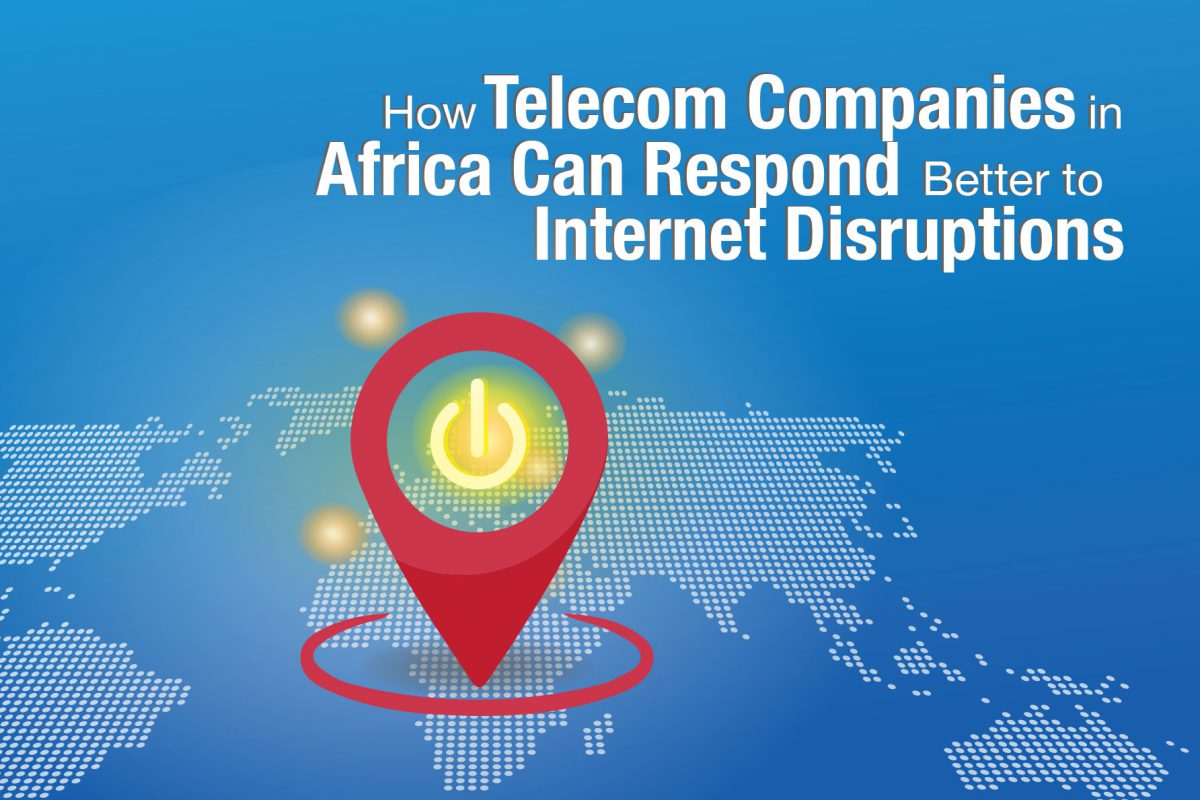
How Telecom Companies in Africa Can Respond Better to Internet Disruptions

By Victor Kapiyo |
In recent years, disruptions to the internet and social media applications have emerged as a common and growing trend of digital repression especially in authoritarian countries in Africa. Since 2019, countries such as Algeria, Benin, Burundi, Cameroon, Chad, Côte d’ivoire, Democratic Republic of Congo (DR Congo), Ethiopia, Gabon, Guinea, Mali, Nigeria, Sierra Leone, Sudan, Tanzania, Togo, Uganda and Zimbabwe have either restricted or blocked access to the entire internet.
Internet disruptions are often ordered by governments requiring intermediaries such as telecommunications and internet service providers to slow internet speeds, block commonly-used social media sites, or block all internet access. As internet disruptions become widespread across the continent, it is important to examine the role of internet intermediaries in facilitating or impeding them.
A February 2021 brief by CIPESA shines the spotlight on intermediaries’ responses to government orders and indicates that while the intermediaries facilitate transactions, access to online information and services, and provide platforms for interaction, expression and citizen participation, they are usually caught up in the overarching control of their activities by the autocratic governance of host governments who usually place political control and dominance over the enjoyment of digital rights.
Consequently, intermediaries’ responses to internet disruption orders on the continent have almost always been of quiet obedience. Most have failed to take any steps to push back against government excesses. Airtel (Chad and Uganda), Africell (Uganda), Gabon Telecom, MTN (Cameroon and Uganda), Tigo Chad, and Zimbabwe’s Econet Wireless are among those that unquestioningly acquiesced to censorship orders by governments in compliance with their license conditions but also to safeguard their business interests. They appeared to remain silent even in the face of pressing demands to restore the internet, and in some instances denied having blocked the internet on their networks.
However, other intermediaries such as MTN Benin, Orange Guinea, and Lesotho’s Econet and Vodacom pushed back. These intermediaries shared publicly the government letters ordering disruptions, identified the government officials ordering the shutdowns, and disclosed the basis for the shutdowns. In some instances they engaged with authorities to make the case for maintaining uninterrupted access, resisted or declined to implement unlawful orders, apologized to the public for disruptions, or even compensated their customers for the downtime arising from the disruptions.
While some of these steps are laudable, more needs to be done by local intermediaries to resist future shutdowns, uphold consumer protection, and promote respect for human rights online. Many of these intermediaries seem to lack the backbone to resist or challenge in court the legality of internet shutdown directives. It remains problematic that they seem to put their business interests first, while paying limited attention to the human rights, social and economic implications of internet disruptions.
The CIPESA brief recommends that intermediaries improve transparency reporting; always insist on written instructions and orders from authorities, and promptly make these orders public; expand their partnerships and engagements with civil society and join key platforms that aim to collaboratively advance a free and open internet.
The brief also recommends that intermediaries give users sufficient notice of impending disruptions; engage regulators and push back against licensing conditions (and laws governing the telecoms sector) that are vague, or that could potentially lead to the violation of human rights; and speak out publicly about the harms which network disruptions cause to their subscribers and to the intermediaries themselves.
Further, intermediaries should develop and make public policies that specifically state their position on shutdowns and how they address any shutdown orders from governments; and strive to comply with the UN Business and Human Rights Principles (UNBHR).
The brief also calls upon individuals and the business community to challenge the actions of intermediaries before national, regional and international mechanisms for accountability and compensation of losses incurred as a result of their actions.
See the brief here.