CIPESA and UNESCO Partner on Project to Strengthen Climate Change Information Integrity in Africa

By Juliet Nanfuka |

The Collaboration on International ICT Policy for East and Southern Africa (CIPESA), in partnership with UNESCO, is launching a new project to address the growing challenge of climate change disinformation and strengthen information integrity in the public sphere.

At a time when false and misleading narratives are weakening public trust and distorting public understanding of the climate crisis, the initiative will support fact-based public discourse and strengthen the ability of journalists and civil society actors to engage with climate issues using credible information.

Reliable climate information is essential to informed public debate and effective climate action. Yet journalists, content creators, and Civil Society Organisations (CSOs) working on climate and environmental issues often lack the resources and skills needed to verify information, identify disinformation and effectively communicate accurate findings to the public.

CIPESA’s research has documented some of these challenges. Journalists and activists working on climate-related issues, including environment, land and extractives, face significant information gaps and have to navigate disinformation and misinformation campaigns, often with limited avenues to independently verify information.

The initiative recognises that public communication relies on facts and the ability of credible voices to deliver information. The project is supported by the UNESCO-led Global Initiative for Information Integrity on Climate  Change, which was established to investigate, expose, and dismantle disinformation related to climate change.

The project will respond to these challenges by combining research, capacity building, and public communication. Research will map how climate disinformation spreads across African digital ecosystems, who drives it, and what tactics they use. Findings will inform a Fact-checking Masterclass at the upcoming 2026 Forum on Internet Freedom in Africa, an online training for journalists and civil society actors, and a communications campaign aimed at strengthening public awareness of climate disinformation and promoting credible sources of information.

This approach builds on the Declaration on Information Integrity on Climate Change, which commits its signatories to protect information integrity on climate change at international, national, and local levels. It also reflects the broader United Nations Global Principles for Information Integrity, which envision “an information ecosystem that delivers choice, freedom, privacy and safety for all,” and support those working to share facts in the public interest.

Reporting on climate change in Africa is increasingly taking place in a difficult information environment. Journalists, activists and human rights defenders covering environmental, land and extractives issues face surveillance, censorship, online harassment and coordinated disinformation campaigns. CIPESA’s research has documented these risks, as well as the limited digital security resources available to many of those doing this work.

The project will focus on Uganda and Ethiopia, both of which are experiencing a rise in misleading narratives related to climate change in their digital ecosystems. These narratives frequently revolve around issues such as deforestation, dam and water system developments, droughts, landslides, oil and gas exploration.

The project’s research will also track the information environment, including the public positions and communications of African governments ahead of the 31st Session of the Conference of Parties (COP31) scheduled for November 2026 in Ankara, Türkiye. The conference brings together nearly 200 nations under the United Nations Framework Convention on Climate Change (UNFCCC) to negotiate climate action, set emission-reduction targets, and coordinate policies to limit global warming.

Looking further ahead, Ethiopia’s hosting of the 32nd session of the (COP32) in 2027, will bring the global climate conversation back to Africa for the fifth time after Kenya (2006), South Africa (2011), Morocco (2016), and Egypt (2022). This makes the CIPESA-UNESCO partnership particularly timely.  As technology increasingly shapes how people access, interpret and contest information about the environment, there is a growing need to understand the evolving relationship between digital platforms, climate narratives, and the integrity of public debate.

CIPESA Urges Kenya to Align and Strengthen Its Draft AI Policy

By Raylenne Kambua |

In August 2026, the Collaboration on International ICT Policy for East and Southern Africa (CIPESA) submitted a detailed set of recommendations to the Committee on the Draft Kenya Artificial Intelligence (AI) and Other Emerging Technologies Policy, 2026. The submission calls for closer alignment of Kenya’s policy with regional and international AI frameworks, alongside stronger protections for fundamental human rights.

The submission emphasises the need for Kenya to strike a balance between its aspirations for AI governance and strong safeguards that protect human rights, people, and democratic values. Without these, the nation risks developing systems that are innovative but exclusive, unfair, and harmful.

CIPESA argues that since Kenya is simultaneously advancing multiple AI-related processes, including a national AI strategy, a proposed AI Bill, and this draft AI policy, there is a need to align and harmonise the different proposed frameworks to ensure coherence and mitigate the risks of duplication and contradictory provisions.

For example, under section 3.5.1, the Policy commits the government to develop a dedicated AI and other Emerging Technologies Governance Act to provide the legal framework for its governance in Kenya, including the establishment, powers, and functions of the Council, without acknowledging that a similar Bill is already before the Senate.

Kenya’s policy direction is influenced by constitutional obligations as well as wider regional and international commitments that underscore the importance of human rights, accountability, transparency, and inclusiveness. According to CIPESA’s submission, Kenya should incorporate these principles into legally binding policy measures rather than just mentioning them.

The submission further encourages collaboration within the East African region and across the African continent, pointing to the value of shared standards, combined knowledge, and coordinated advocacy in strengthening governance outcomes.

CIPESA’s Navigating the Implications of AI in Kenya report also highlights that AI is reshaping digital participation, information access, and democracy in Kenya. In the absence of explicit protections and clear safeguards, AI systems can perpetuate discrimination, facilitate surveillance, violate people’s right to privacy, restrict freedom of expression, and undermine livelihoods. A rights-based approach that includes mandatory human rights impact assessments will ensure that potential harms are identified and mitigated before systems are deployed.

While the draft policy outlines institutional structures and governance ambitions, CIPESA argues that effective oversight will depend on institutional independence, clear powers, and meaningful accountability. The submission raises concerns about the proposed AI Council’s institutional independence and recommends giving it explicit authority to audit, obtain information, enforce compliance, and report directly to Parliament.

In automated systems, decision-making processes are often opaque and distributed across multiple actors. CIPESA therefore recommends clearly defining responsibilities and liability so that individuals harmed by AI systems have effective redress mechanisms.

Effective AI governance requires technical expertise, resources, and coordination across multiple agencies, yet many institutions in Kenya remain under-resourced. Therefore, proposed governance frameworks should be realistic about the state’s ability to implement and enforce stronger oversight mechanisms by investing in institutional capacity and talent retention.

According to CIPESA’s research, AI content moderation on major platforms is built largely for the Global North, with low-resource African languages. Many AI systems deployed in African contexts are trained on datasets that do not reflect local realities, leading to biased outcomes with direct implications for fairness, inclusion, and accuracy. This necessitates strong local data ecosystems and locally relevant content moderation systems and languages.

Kenya’s 2025 High Court ruling on the Worldcoin iris-scanning project affirmed the need for stronger data protection measures and integration with AI-specific legislation. According to CIPESA, incorporating pre-deployment oversight would transform AI governance from a reactive to a proactive model, particularly regarding sensitive biometric data.

AI systems are resource-intensive, consuming a lot of energy and requiring large amounts of water for data centre cooling. They also emit carbon and ultimately contribute to electronic waste. The submission recommends environmentally sustainable approaches, including independent third-party verification of environmental disclosures and publication of verified information in the public Registry.

The African Union AI Strategy identifies disinformation as a distinct risk. AI can influence public discourse by deciding which information is promoted, suppressed, or amplified. Disinformation, manipulation, targeted harassment, technology-facilitated gender-based violence (TFGBV), and AI-generated deepfakes can create particular risks in civic and democratic spaces, with disproportionate effects on women and other vulnerable groups. CIPESA proposes explicit recognition of these threats, implementation of gender impact assessments for high-risk systems, and stronger oversight of AI use in elections, political advertising, and content moderation.

Another recommendation is the inclusion of civil society representation at the steering committee, which is the top decision-making level. This is to ensure meaningful participation and alignment with the African Union AI Strategy and the UNESCO Recommendation on the Ethics of AI, which call for inclusive, multi-stakeholder involvement in AI governance, especially where major decisions are made.

Inclusion and public participation also require accessible language and processes that enable broader public engagement with what are often complex and technical issues, through investments in digital literacy and public awareness.

The submission further underscores the importance of labour rights and the often invisible workforce behind AI systems, many of whom work in unfavourable conditions. By highlighting the need for fair labour standards, protections, and recognition of data work, CIPESA also recommends including the workforce that sustains AI ecosystems in high-level policy discussions.

Explainability and transparency are essential to accountable AI governance. For people to trust AI systems, they need to understand how AI-driven decisions are made and contest results they believe to be unfair.  To prevent AI systems from being treated as black boxes beyond public scrutiny, there must be clear documentation, disclosure standards, and rights to explanation. This builds accountability and trust, especially in high-risk sectors like public services, healthcare, and finance.

Finally, CIPESA highlights the necessity of continuous policy review and adaptation, emphasising that governance frameworks must remain adaptable and responsive as AI technologies evolve quickly. This includes establishing mechanisms for periodic review, stakeholder feedback, and iterative policy development to ensure that regulations remain relevant and effective over time.

CIPESA’s recommendations provide a mechanism to close the gap between ambition and accountability as Kenya works to finalise its AI policy. The decisions made at this point will influence not only the development, deployment, and application of AI but also the distribution of its benefits and risks.

Key recommendations from CIPESA:

  1. Align Kenya’s AI policy and legislation to avoid duplication and conflicting provisions.
  2. Make human rights and gender impact assessments mandatory for high-risk AI systems.
  3. Strengthen the independence and powers of AI oversight institutions, including audit, enforcement, and redress.
  4. Protect workers across the AI value chain, including data annotators and content moderators.
  5. Require environmental accountability for AI, including disclosure and independent verification of energy, water, emissions, and e-waste impacts.
  6. Ensure transparency and meaningful participation, including stronger safeguards for AI-generated political content and a formal role for civil society in AI governance.

Read the full submission here: CIPESA Submission on Kenya’s Draft AI and Emerging Technologies Policy.

Shaping the Agenda for the Forum on Internet Freedom in Africa 2026 (FIFAfrica26): Thank You for Your Proposals

FIFAfrica26 |

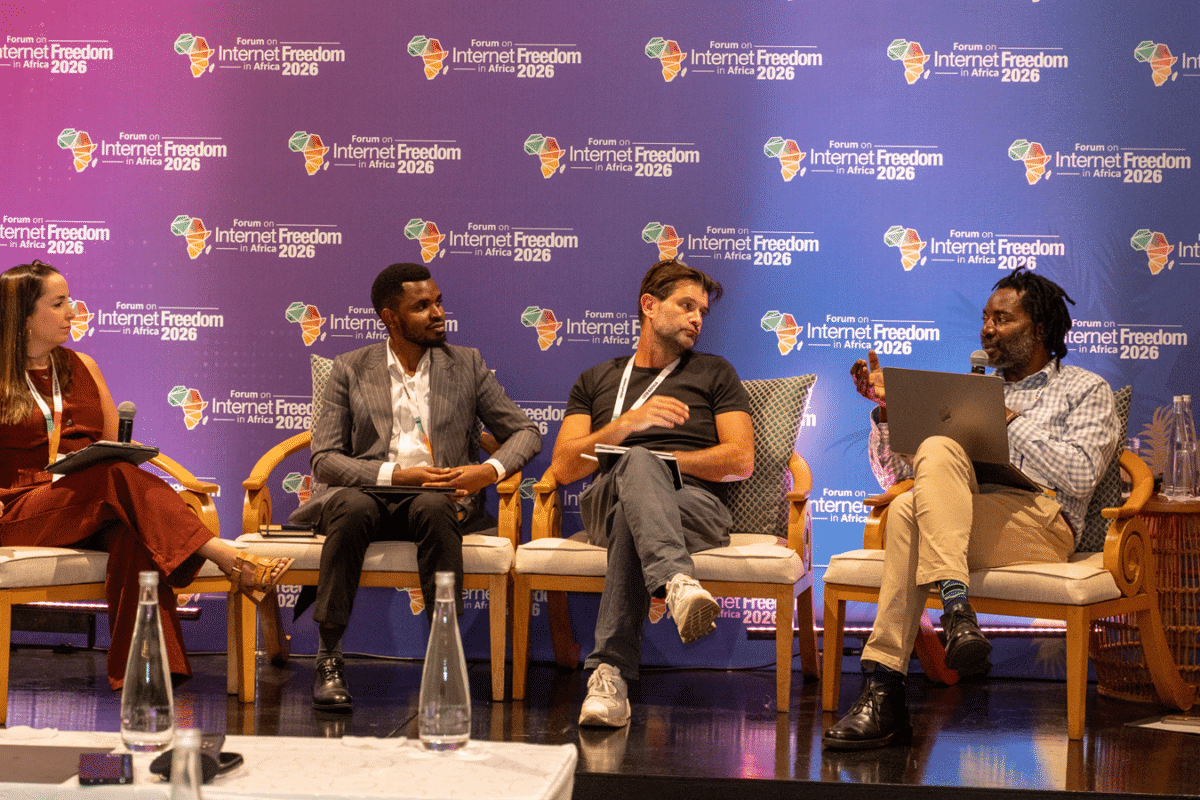
The organisers of the upcoming Forum on Internet Freedom in Africa 2026 (FIFAfrica26) extend sincere appreciation to everyone who submitted a session proposal or travel support application in response to the recent Call.

We received over 450 submissions, reflecting a rich diversity of interests spanning the current digital rights landscape in Africa and their intersections with global dynamics. The submissions collectively reflected the pressing issues shaping digital rights, online freedoms, and internet governance across the continent while also highlighting the vibrant community working to advance internet freedom in Africa.

Successful Applicants

Successful applicants have been notified directly. We are excited to confirm that their sessions and contributions will form the core of the Forum’s agenda. We look forward to working closely with them to shape the programme and to bringing their insightful proposals to life during the Forum.

For Those Not Selected

If you have not received a success notification, please know that this does not reflect a lack of value in your submission. The volume of high-quality proposals far exceeded the available session slots, and difficult decisions had to be made. We remain grateful for your engagement and encourage you to stay connected with the Forum as there will be future opportunities to contribute.

Next Steps in the Process

  • The FIFAfrica26 agenda will be shared publicly in the coming weeks.
  • All applicants will continue to receive Forum updates and are warmly invited to attend as participants online or in person.
  • Registration to attend the Forum remains open: secure your seat here.

Plan Your Travel to Mauritius

The Forum will be hosted at the InterContinental Resort, Fort Coastal Road, MU, Balaclava 21306, Mauritius. All participants, those receiving travel support from CIPESA and other partners as well as independent participants, should refer to the FIFAfrica26 travel note and plan accordingly.

Thank you once again for your time, expertise, and commitment to building a free, open, and inclusive internet in Africa. We look forward to engaging with you online or in person at FIFAfrica26.

Cybercrime Laws, “False News” Offences, and Online Expression in Africa

By CIPESA Writer |

As African societies become increasingly digital, governments are grappling with the balance between the protection of citizens from online harms while preserving the fundamental freedoms of free expression, access to information and freedom to participate in governance.   

The legal tools adopted to address these challenges are raising an equally pressing concern. Cybercrime and so-called “false news” laws are increasingly extending beyond their stated purpose of combating digital harm and are instead being used to regulate political speech, suppress dissent, and narrow civic space.

This emerging tension sits at the heart of CIPESA’s latest policy brief, Cybercrime Laws, “False News” Offences, and Online Expression in Africa. Drawing on legislative developments, court decisions, and recent cases from select countries, the brief examines how cybercrime legislation has evolved into one of the defining governance issues of Africa’s digital era.

Many countries have introduced offences such as “false information”, “offensive communication”, “malicious communication”, and “harmful content”. While these provisions are often justified as necessary responses to online abuse, they frequently suffer from vague drafting and broad enforcement powers. This creates uncertainty about what constitutes unlawful speech and allows authorities considerable discretion in deciding who should face criminal investigation or prosecution.

In several African countries, journalists, activists, bloggers, opposition politicians, and ordinary citizens have been arrested or prosecuted for online expression that would ordinarily fall within the boundaries of legitimate public debate. At the same time, restrictions on online speech increasingly operate alongside expanding surveillance powers, internet shutdowns, and growing state control over digital communications, reinforcing broader patterns of digital authoritarianism.

Importantly, however, this is not simply a story of shrinking freedoms. Encouraging developments in several jurisdictions demonstrate that alternative approaches are both possible and necessary. Recent constitutional decisions in Uganda and Kenya have reaffirmed that restrictions on freedom of expression must be clearly defined, proportionate, and consistent with constitutional protections. Similarly, in Nigeria legislative reforms illustrate how sustained engagement by civil society can improve legal frameworks, even if implementation challenges persist.

These developments highlight an important policy lesson as to how regulation can effectively address genuine digital harms without criminalising legitimate expression or weakening democratic accountability.

This policy brief explores these issues in greater depth, examining the emerging patterns across Africa, the evolving role of national and regional courts, and the reforms needed to ensure that cybercrime regulation strengthens both digital security and democratic governance. It concludes that the future of digital freedom in Africa will depend on how governments, courts, regional institutions, and technology companies navigate this balance.

The brief sets out concrete recommendations for four groups of actors. Governments should repeal or amend vague offences, including those relating to false information, offensive communication, and similarly broad categories, that have been used to criminalise legitimate online expression. They should prioritise civil remedies over criminal sanctions in defamation and reputation-related disputes, refrain from imposing internet shutdowns, and ensure that any restrictions on freedom of expression comply with international human rights standards.

Legislators and regulators should ensure that cybercrime and digital governance laws comply with the principles of legality, necessity, and proportionality. They should also require human rights impact assessments before introducing new cybercrime or disinformation laws and establish meaningful public participation throughout the law-making processes. Laws developed without meaningful public scrutiny and civil society engagement are more likely to undermine rights than protect them.

Regional institutions should strengthen the monitoring and implementation of regional human rights commitments and promote common standards on digital rights and accountable digital governance to guide national legal reforms across the continent.

Finally, technology platforms should invest in African language content moderation and local contextual expertise, improve transparency around content moderation decisions and algorithmic decision making, and strengthen grievance and appeals mechanisms for users in African countries, where existing processes often remain inaccessible or ineffective.

Please read the full Policy Brief here.

What Global South Civil Society Wants from AI Governance

By CIPESA Writer |

As global discussions on the future of Artificial Intelligence (AI) governance take place at the AI for Good Global Summit and the Global Dialogue on AI Governance, questions about who shapes AI systems, whose interests they serve, and how affected communities can participate in decision-making are becoming increasingly urgent.

The Collaboration on International ICT Policy for East & Southern Africa (CIPESA) is pleased to share this joint statement by the Global Digital Justice Forum and the Global South Alliance, of which it is a member. The statement reflects concerns that CIPESA has consistently raised through its research and policy engagement, namely, current approaches to AI development risk deepening existing inequalities, and meaningful AI governance requires stronger corporate accountability, equitable data governance, and investment in public-interest AI infrastructure.

Through submissions to national AI strategies in Africa, analysis of AI governance trends across 14 African countries, and engagement with global AI policy discussions, CIPESA has consistently advocated for inclusive, rights-based approaches that ensure communities most affected by AI developments have a meaningful role in shaping its future.

The statement below brings together civil society perspectives from across the Global South and calls for an AI governance approach grounded in human rights, equity, public interest, and meaningful participation.

Joint Statement issued by the Global Digital Justice Forum and the Global South Alliance in the lead-up to the Global Dialogue on AI Governance

July 2026

The current trajectory of Artificial Intelligence (AI) innovation has consolidated the neocolonial structures of development. Today, a handful of US and Chinese transnational corporations dominate global AI systems. Driven by massive capital, semiconductor manufacturing dominance, and hyperscale cloud infrastructure, these companies control over 90% of global AI data center capacity. Their market capitalization exceeds the combined national income of many countries in the Global South. The wealth and power amassed by these corporations come at a staggering cost, borne disproportionately by the South. From the devalued, dehumanizing labor that is essential for training AI models to the critical minerals, land, energy, and water, communities in the South continue to provide the scaffolding for the AI economy and society, without the voice and power to shape and benefit from this paradigm. These systemic injustices also perpetuate deep dependencies on current and future infrastructures — over which communities lack control and sovereign agency.

The Global Digital Justice Forum (GDJF) and the Global South Alliance (GSA) believe that the emerging AI order lacks legitimacy; it grants unbridled impunity to powerful corporations, while reducing humanity and nature to objects of limitless extraction. The many summits and conversations about AI governance have failed to tackle these core issues. 

Against this backdrop, we exhort the UN Global Dialogue on AI Governance to deliver on a South-led AI paradigm, anchored in a vision of rights-based development, respectful of planetary boundaries, and committed to intergenerational justice and human rights. We urge that the Global Dialogue on AI Governance commit to the following.

  • End AI extractivism 

A ‘move-fast-break-things’ approach to digital innovation aids profit, not people. In particular, the systemic and collective risks and harms associated with the violation of human rights, the erosion of democratic processes, the abuse of the environment, and the discrimination and invisibility of marginalized citizens in AI-driven decision-making in public services remain consistently ignored and underplayed in international consensus declarations. AI innovation must embrace the precautionary principle. It must be ethically and transparently developed, democratically accountable, and grounded in a globally agreed minimum floor for meaningful and dignified work, pluralistic knowledge, diversified economies, and planetary flourishing.

  • Apply the Common But Differentiated Responsibilities (CBDR) principle in international AI cooperation

The reckless path of data and AI technologies, designed and controlled by a few, has led to predatory value capture, strengthening the geo-economic and geo-political power of a handful of corporate actors and countries. The human and planetary costs arising from such opportunism are indeed a common concern. However, power diff erentials in international economic law have led to a status quo where trade, taxation, and Intellectual Property regimes clearly disadvantage developing countries, disproportionately enabling a massive transfer of wealth from the South to the North. This seriously undermines the development of digital infrastructure and human and institutional capabilities in developing countries. Such asymmetry must be remedied through global commitments to underwrite the development of regenerative, locally-led, AI infrastructures and models in the South.

  • Address corporate impunity in data and AI value chains

A global moratorium on the sale and use of AI systems that pose a high risk to human rights (such as remote biometric recognition, social scoring, spyware, and AI-driven autonomous weapons) is urgently needed. The proposed UN Binding Treaty on Transnational Corporations (TNCs) to hold global businesses accountable for human rights violations and environmental degradation in supply chains needs to be adopted without delay and appropriately future-proofed against the specific risks of harms and abuses in data and AI value chains.

  • Design a data governance framework that delivers on global equity

A ‘one-size-fits-all’ policy playbook for cross-border data flows governance will not deliver on equitable development. Development sovereignty must be recognized as a core principle in the global governance of cross-border data flows. Furthermore, the governance of the non-personal data commons requires a societal approach that includes safeguards for collective privacy and the rights of communities to steward the use and re-use of their data resources in innovation ecosystems, together with strong personal data protection rights.

  • Invest in the development of global public compute

The foundational infrastructure of compute is controlled by a few corporations. Even open-source AI models are often dependent on closed/proprietary infrastructure systems for their hosting and distribution. To ensure that data science and AI innovation deliver on public innovation, a global facility for public compute is needed. A ‘CERN for AI’ could support a distributed network of AI research centers coordinated by a central hub and provide access to innovators and researchers from developing countries.

The current trajectory of AI innovation is not working for the majority. The Global Dialogue on AI Governance must move the needle with conviction and courage towards people’s participation, planetary wellbeing, and public value. Anything less will not do justice to the people of the South.

Please find the links to prior submissions from GDJF and GSA to official consultations of the Global Dialogue below:
GDJF’s April 2026 submission
GSA’s April 2026 submission